FAMily Discovery Center
The FAMily Discovery Center is a giant pop-up-book–inspired, multisensory forest ecosystem spanning two stories and 5,000 square feet. Fully illustrated and animated through seasonality, movement, sound, humor, and discovery, the environment invites families into a living Indigenous worldview rather than a conventional exhibition.
Agency
Storyline Studio, LLC.
Practice Area
Client
First Americans Museum
Industry
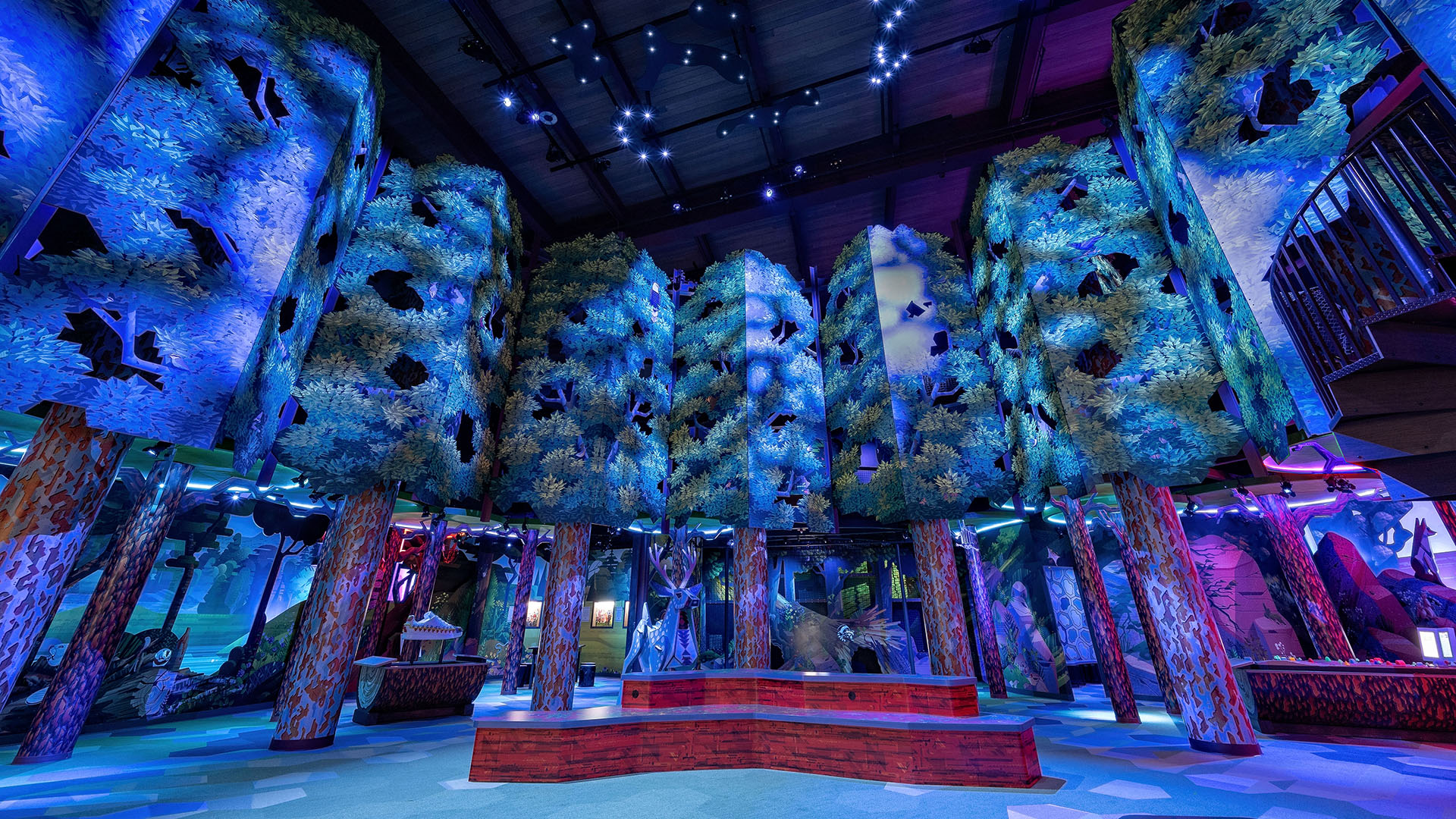
The design team and curators collaborated to create a space where Indigenous values are not explained or simplified—but experienced collectively. Rooted in Native cultural understandings, the experience centers communal learning, humor as a teaching tool, and the equal importance of past, present, and future. Visitors of all ages engage through shared exploration, storytelling, tactile play, and sensory immersion, forming memorable connections to place, each other, and the living world.
The Challenge
This project represents a paradigm shift in exhibition design, confronting Western interpretive frameworks and establishing Indigenous cultural sensibilities as the primary design authority. Conceived as a living environment rather than a traditional exhibition, it redefines what museum spaces can become when Indigenous worldviews guide form, function, and experience without compromise.
Equally transformative was the process. The exhibition emerged through reciprocal collaboration among Indigenous curators, experience designers, illustrators, fabricators, educators, facilities teams, and community advisors. Indigenous values were not layered onto an existing framework; they defined infrastructure, spatial logic, and experiential strategy from the outset. This required resisting conventional timelines, embracing uncertainty, and sustaining creative commitment through pauses and challenges without sacrificing cultural integrity.
The result is a space that functions simultaneously as a cultural environment and restorative place. Situated within an urban landscape, it reconnects visitors with nature year-round, offering an immersive setting that nurtures balance, presence, and shared experience.
Project Vision
The goal was to create an intergenerational space where families experience Indigenous values together through participation rather than instruction. This “Serious Fun” approach makes learning communal, where humor is essential. Present and future perspectives are as vital as history. These principles informed every design decision—from content development and spatial organization to graphic language, interactivity, sound, and materials.
Six larger-than-life animals anchor the experience. Inspired by traditional clan systems across distinct Indigenous cultures, they are not mascots but culturally encoded animal relatives recognizable to Native audiences. They ground the space in storytelling, inviting visitors into a worldview defined by reciprocity among humans, animals, land, and community.
This approach connects the cultural values of thirty-nine Tribal Nations while avoiding pan-Indigenous generalization. Complexity was addressed through consultation, co-curation, and Indigenous-led decision-making, ensuring cultural specificity and respect throughout the experience.

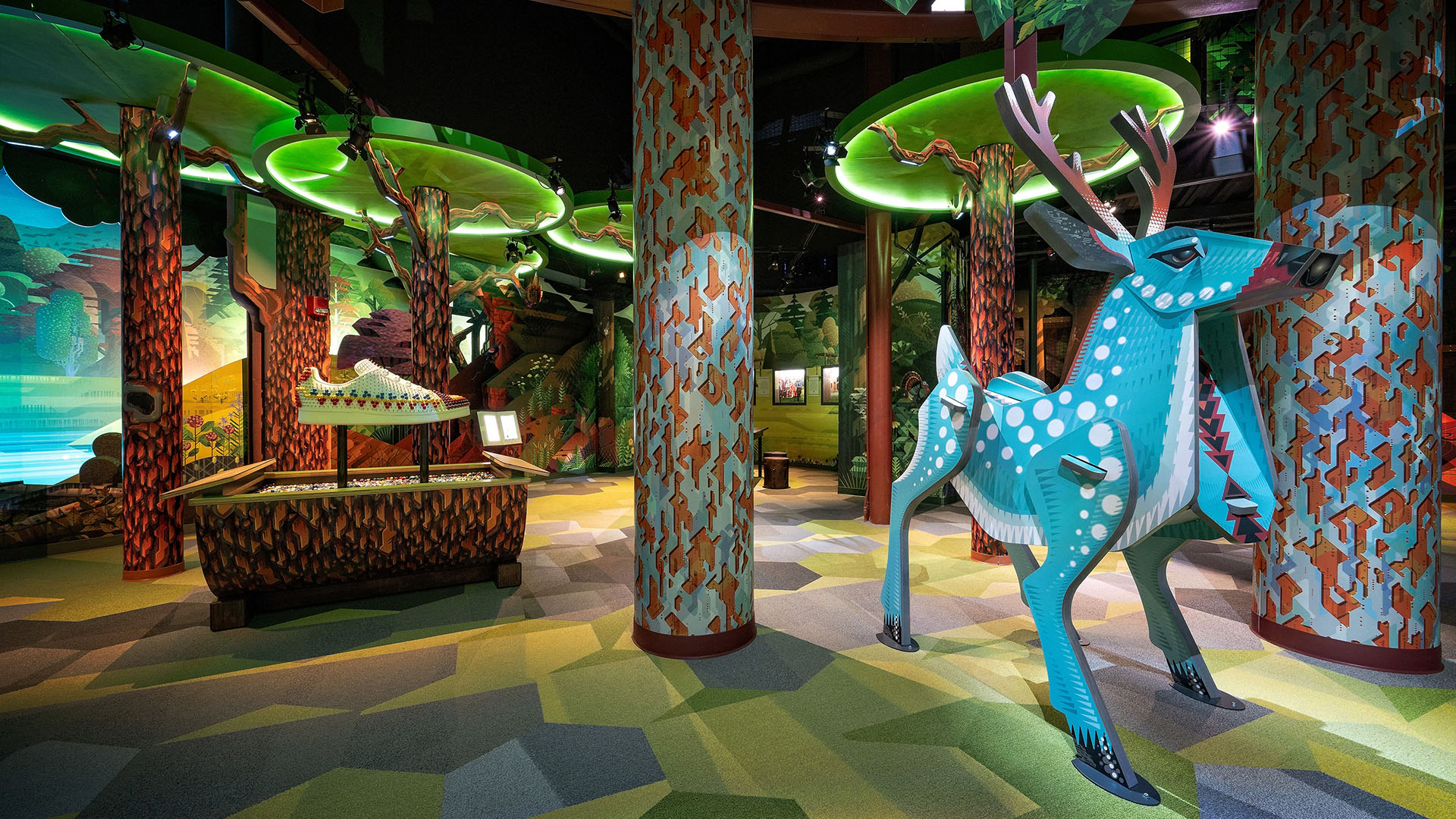
Beyond the 11-foot forest’s trees, which are filled with engaging interactives, Woody the blue deer reminds visitors to respect nature and one another.
Ben Winters
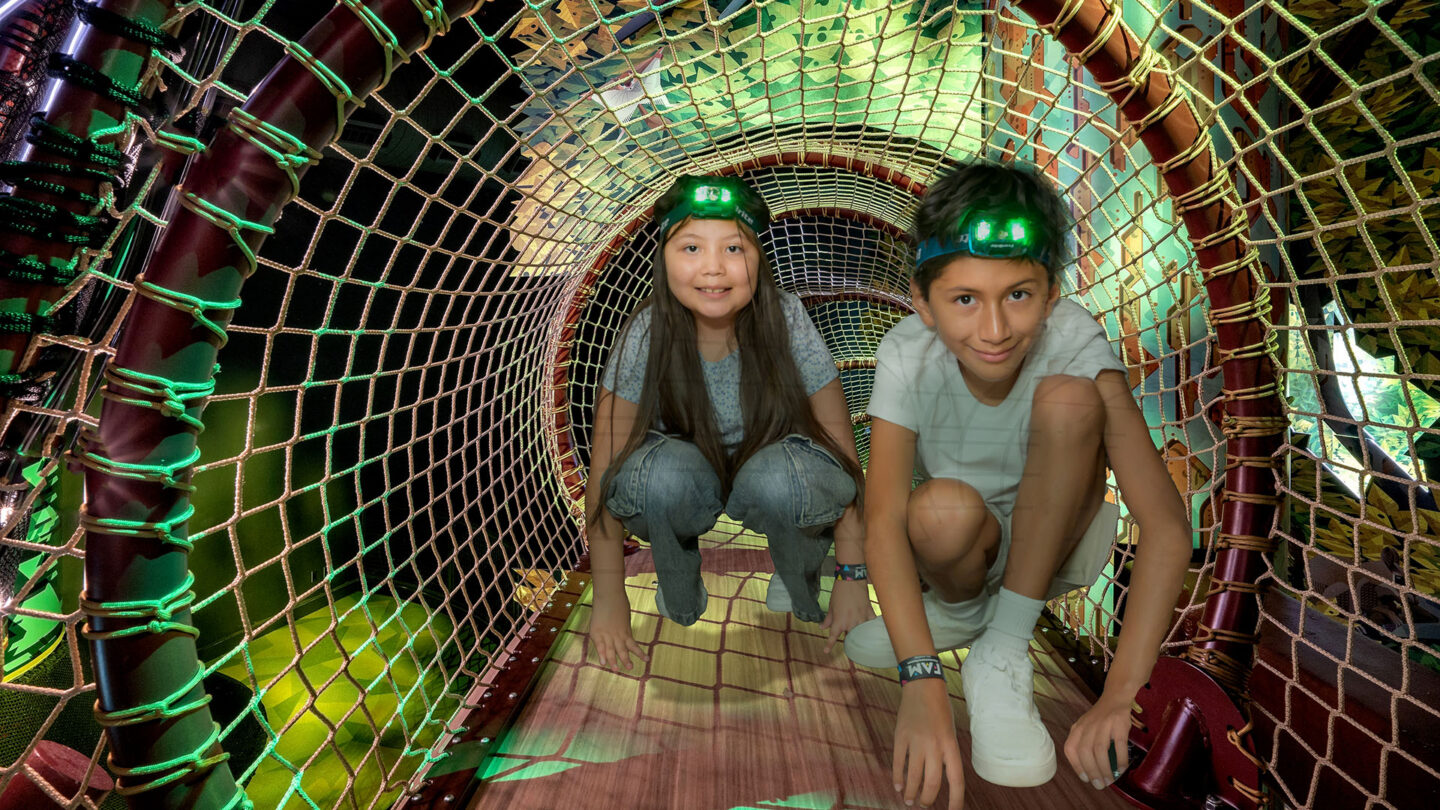
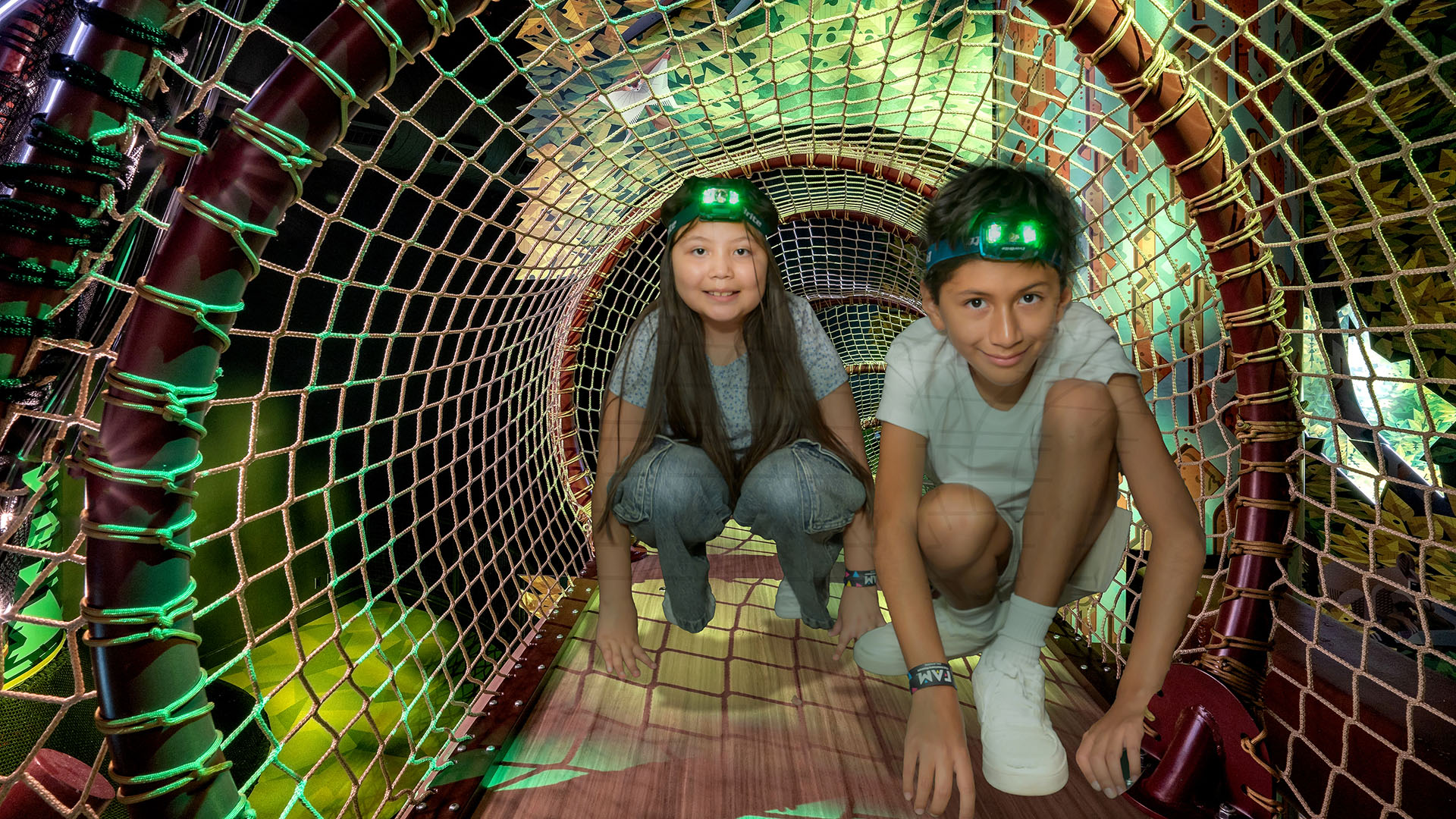
Children emerge from the treetop climbing trail, headlamps glowing as day turns to night, illuminating their path and transforming exploration into an evening adventure.
Ben Winters
Design + Execution
Rather than relying on content density, object hierarchy, or didactic interpretation, the exhibition prioritizes Native values of community, respect, reciprocity, and stewardship through engaging play. This intentionally disrupts Western conventions that privilege visual dominance, textual authority, linear narratives, and restricted touch—models that have historically positioned Indigenous cultures as static and past-tense.
Spatial design reflects Indigenous worldviews through an upper, middle, and lower world ethos, reinforcing perspective, balance, and interdependence. Interactivity is embedded within the forest itself—hidden in laughing and talking trees, indigenous markings used to create textural depth, and moments of surprise that encourage curiosity and discovery. Native voices, languages, and culturally specific expressions are woven throughout, establishing a strong sense of place.
Tactile STEAM-based challenges and collaborative play reinforce cultural knowledge through movement, sound, and touch. The experience is predominantly off-screen, prioritizing imagination, physical engagement, and presence over digital mediation.
Intergenerational engagement is central. Clear sightlines, shared activities, and open-ended exploration encourage caregivers and children to learn together. Children are trusted with safe independence, while adults are invited into play—rebalancing traditional museum power dynamics.
For non-Native visitors, humor and familiar animals invite exploration without correction or instruction. For Native visitors, it is affirming: a museum space where they see themselves reflected, hear recognizable expressions, and are valued in the present tense.
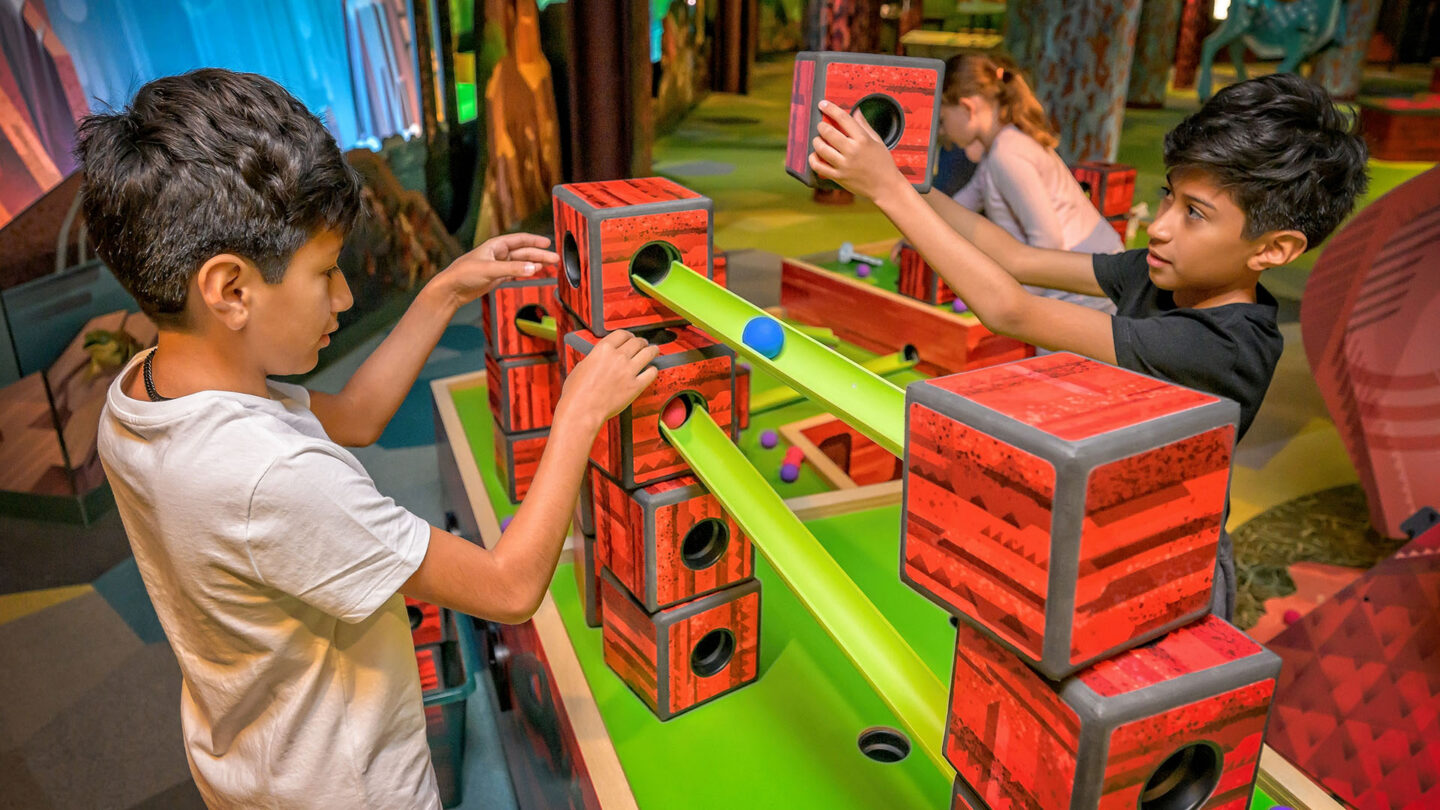
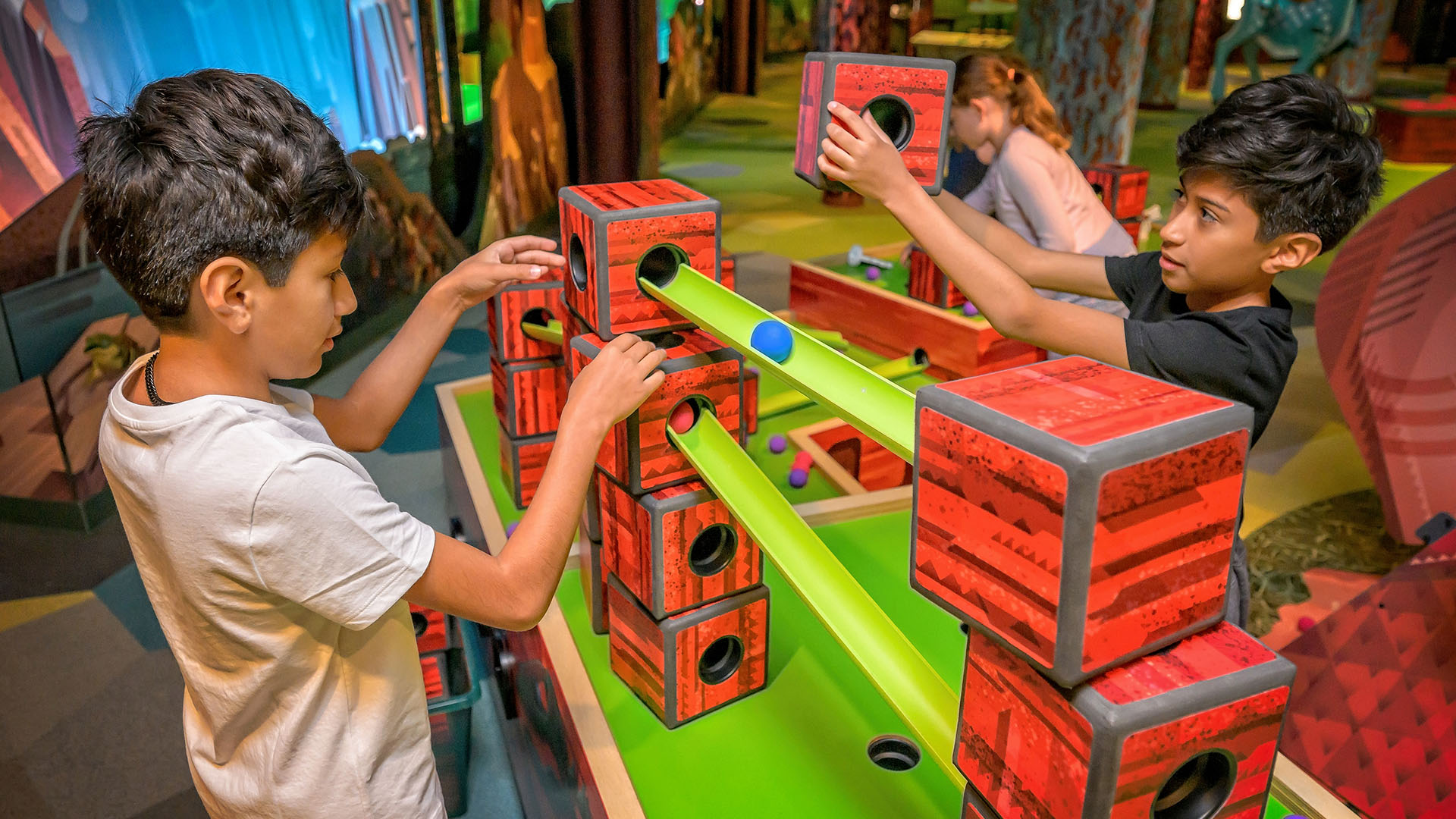
Kids work together building tunnels for the ant community, discovering how collaboration, patience, and shared effort create something greater than any individual could build alone.
Ben Winters
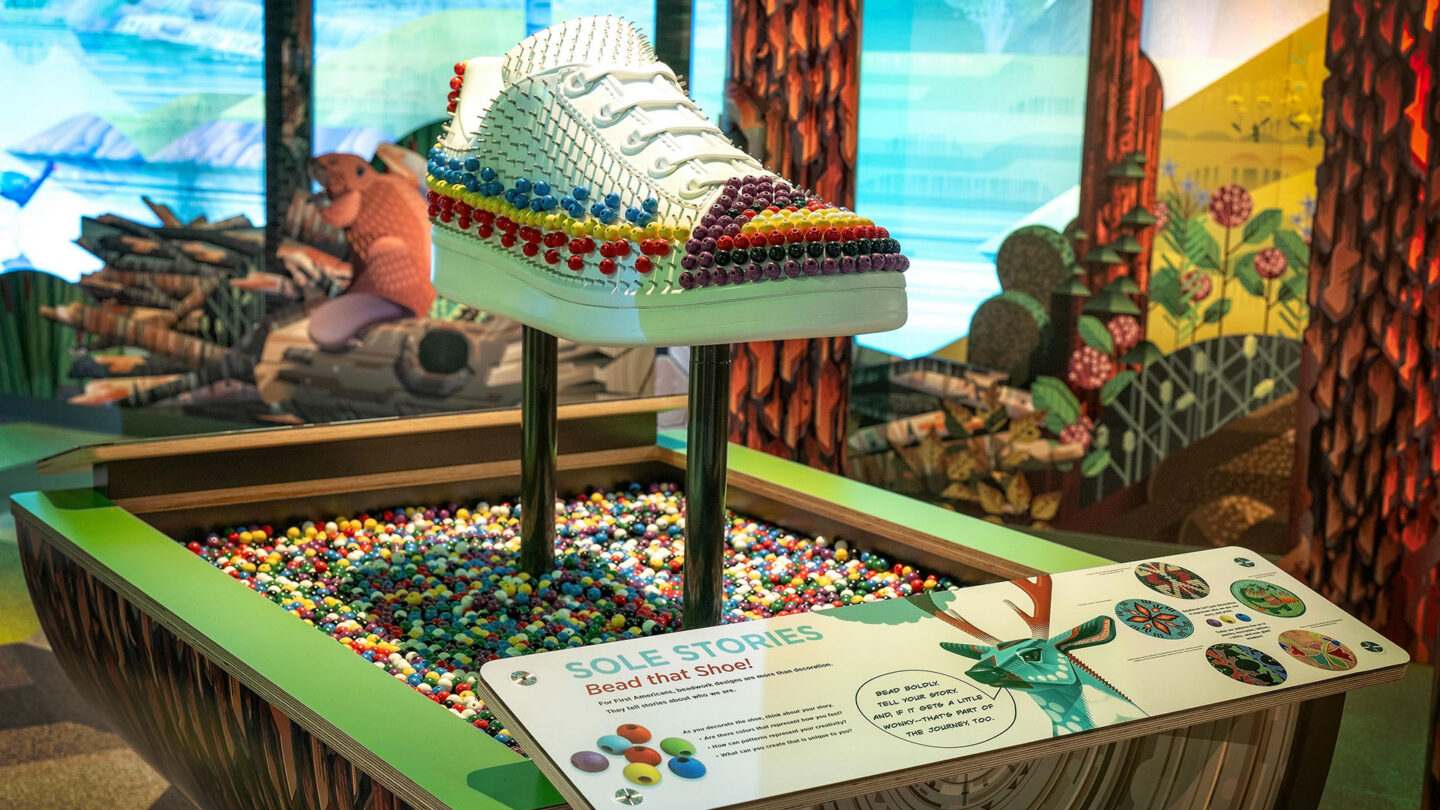
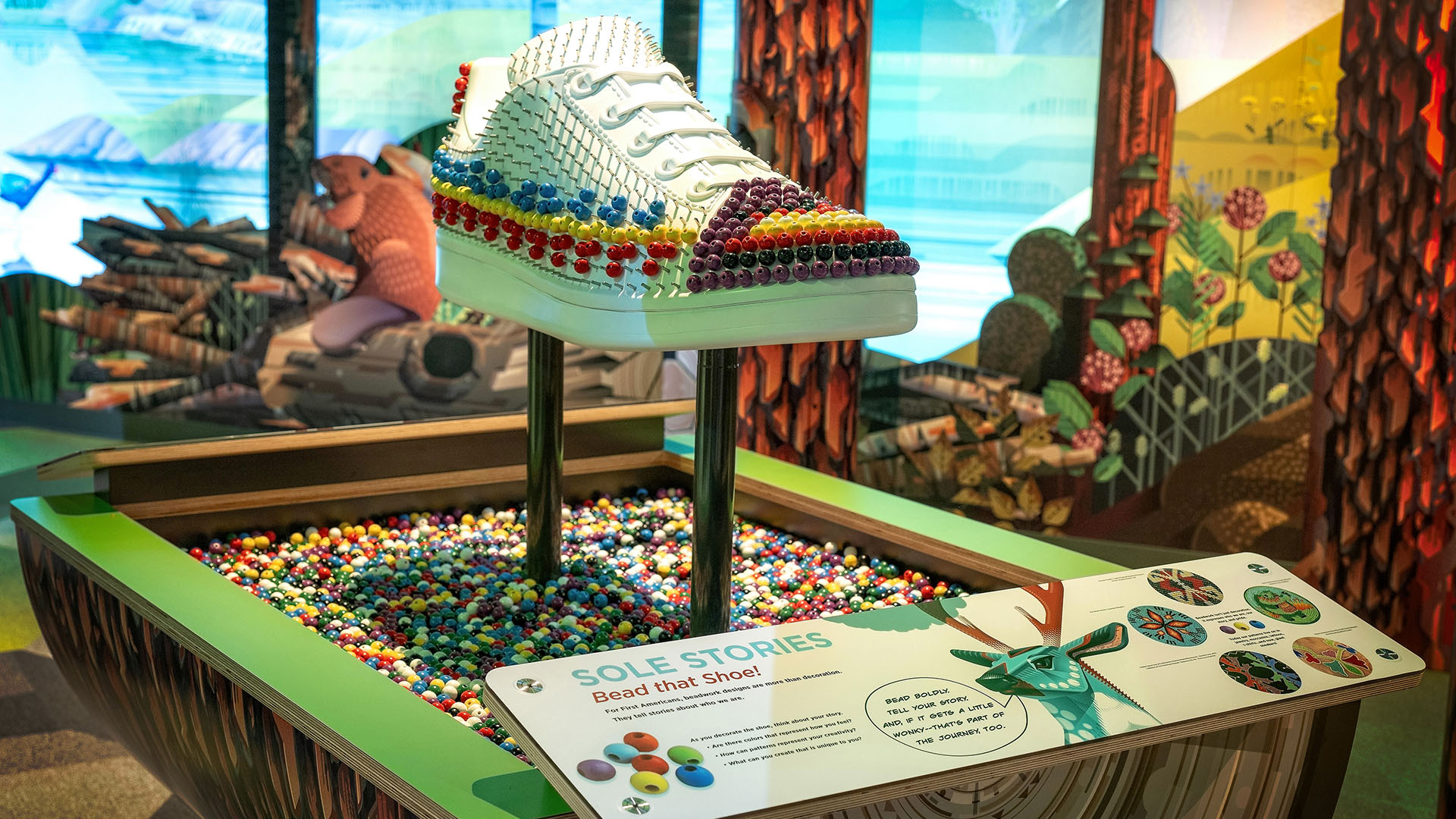
Choose from over a thousand colorful beads, letting the imagination run wild to express creative “Sole Stories” as beadwork designs on a giant tennis shoe.
Ben Winters
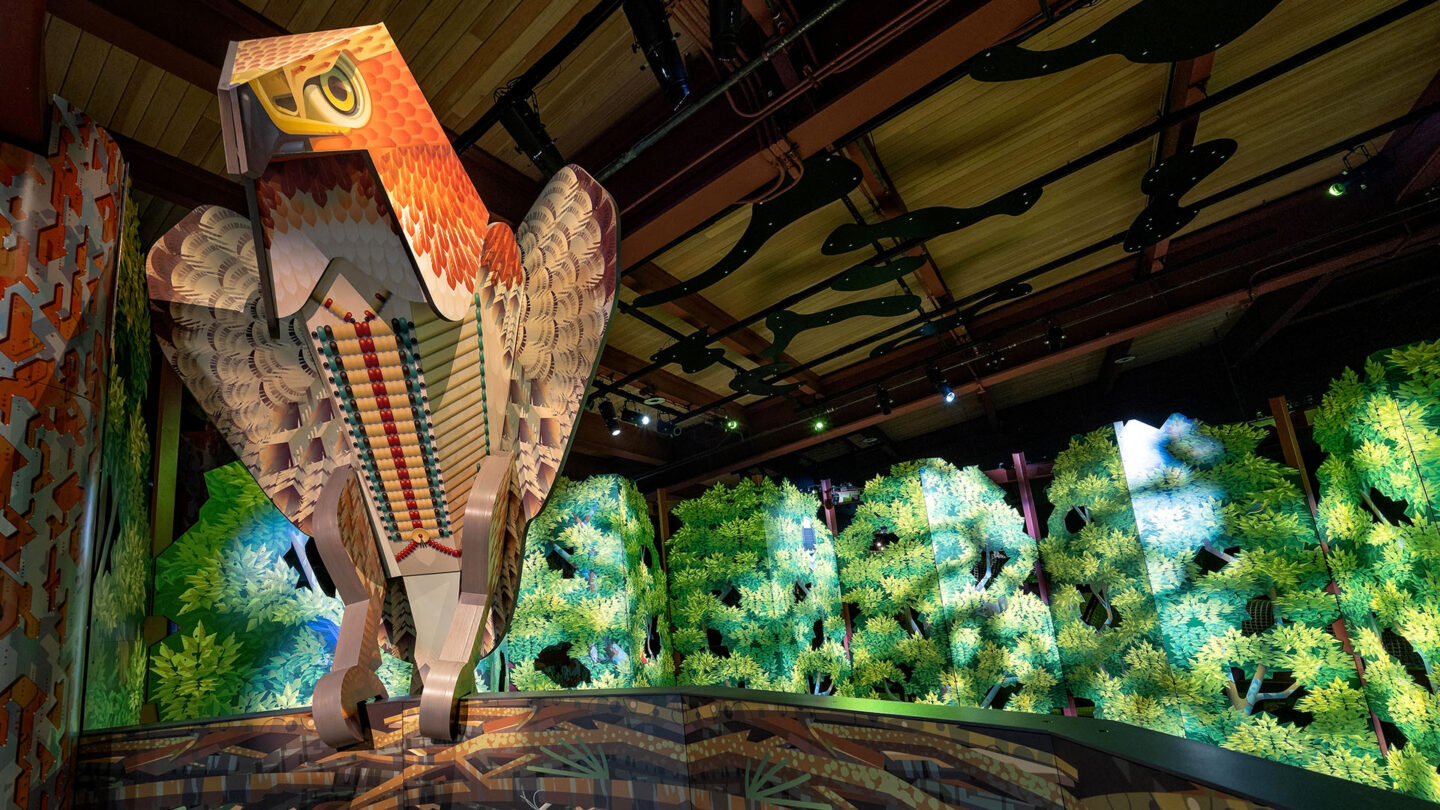
From the second-story nest, visitors get a bird’s-eye view of the world, while the 10-foot-tall Red Tail Hawk sparks curiosity and shows the importance of seeing things in new ways.
Ben Winters
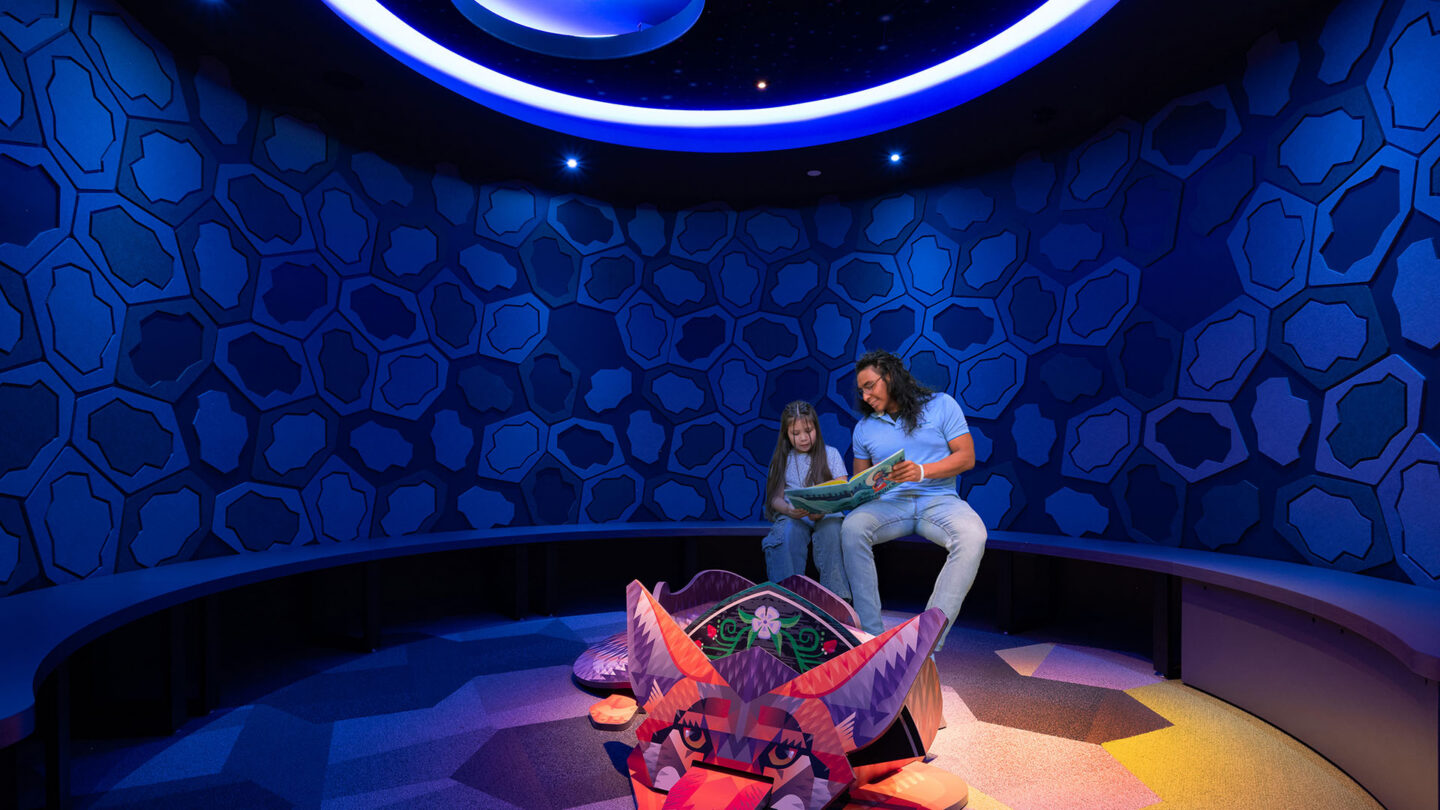
Step inside Coyote’s cozy den to feel resilience beneath a calm night sky, where native songs and stories invite visitors to slow down and enjoy a gentle, low-sensory quiet time.
Ben Winters
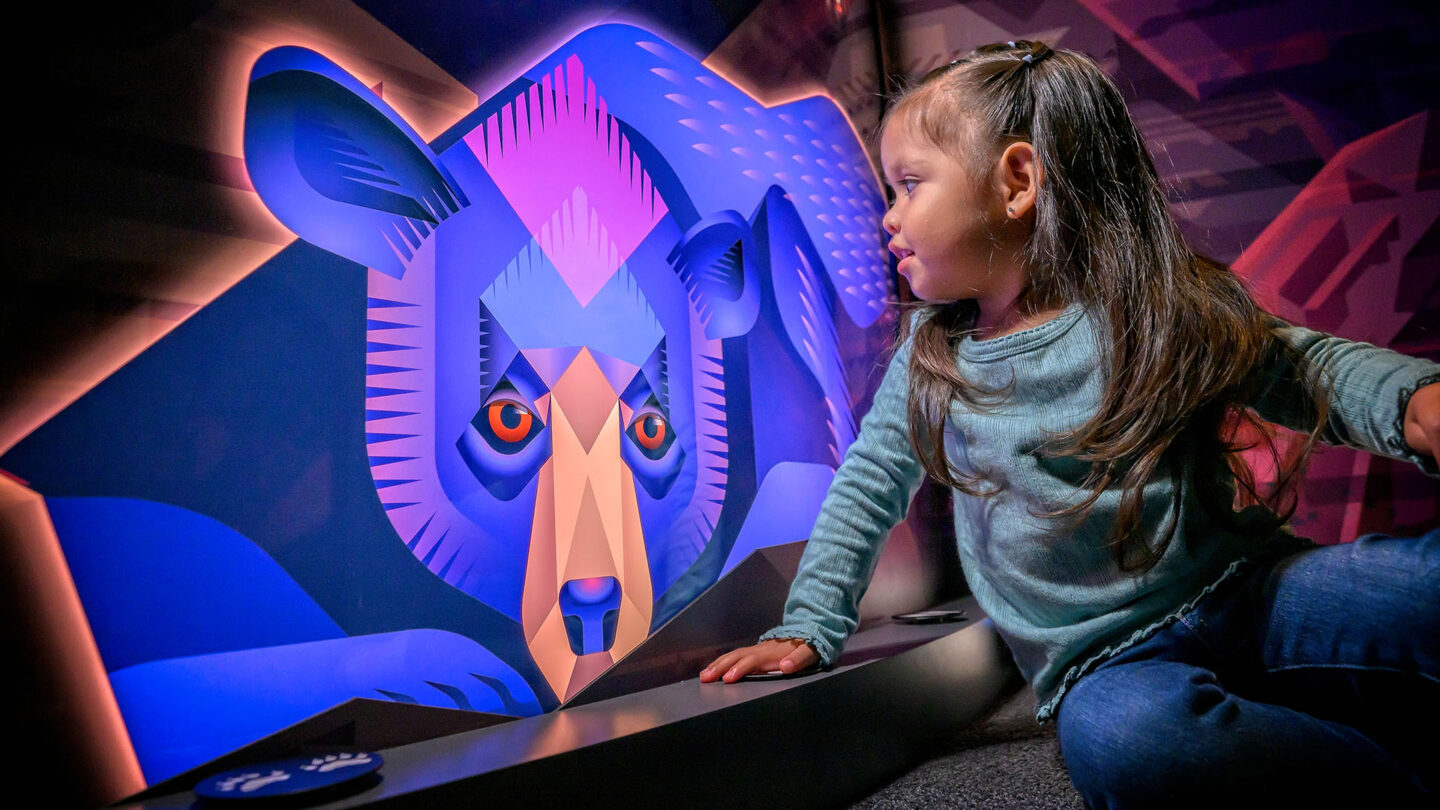
Crawl into a special cave for little ones, where glowing animal eyes spark curiosity. Press the big paw buttons to match eyes to animals—and hear them come to life!
Ben Winters
Project Details
‘Children’ of all ages must be drawn in by this wonderful realization of the mystery, beauty, and fun to be found in natural environments—especially this wonderful and playful expression.
I felt that the combination of the pop-up metaphor along with the indigenous understanding of the world created a powerful storytelling paradigm to teach audiences about the natural world. On top of this unique visual environment, the interactive experiences were well thought out and allowed this exhibition to connect to audiences of all ages.
Design Team
Kelli Mosteller (final design approval)
Shoshana Wasserman (co-curator)
Kimberly Rodriguez (co-curator)
William Smith, Stuart Lee (designer)
Jim Volkert (project advisor)
Tim Willis (design advisor)
Howard Litwalk (design advisor)
Melissa Stovall (project manager)
Collaborators
ADG Blatt (architecture)
Storyline Studio, LLC. (planning)
Exhibition Associates (planning)
Cinnabar (built environment)
Boss Display (climbing structure)
SRC Fixtures (exhibit components)
Deity Creative (exhibit component)
EOS Light Media (digital fabrication)
Storyline Studio, LLC. (digital fabrication)
Waystone, LLC. (digital fabrication)
Mark Oliver (illustrator)
Redhawk Construction (building construction)
Shawver & Son, Inc. (electrical and building lighting)
Lettering Express (graphics)
OKCity Paint (building paint)
CreekCo (infrastructure-welding)
Chuck Overcash (interactive design)
Brett Doar (interactive design)
DSA Signage (lightbox signage)
Title Concrete (concrete flooring)
Mitchell Acoustics & Drywall (glass storefront doors)
Metro Glass (glass storefront doors)
CJM Heating & Air Conditioning
Bryans Flooring (carpet installation and trim)
Eaton Quade (signage)
Semper Fire Protection LLC (fire suppression system)
KFC Engineering (infrastructure)
Greenlight 360 (3D scan)
Tribal Partners:
Absentee Shawnee Tribe of Indians of Oklahoma
Alabama-Quassarte Tribal Town
Apache Tribe of Oklahoma
Caddo Nation of Oklahoma
Cherokee Nation of Oklahoma
Cheyenne & Arapaho Tribes
Chickasaw Nation
Choctaw Nation of Oklahoma
Citizen Potawatomi Nation
Comanche Nation of Oklahoma
Delaware Nation of Oklahoma
Delaware Tribe of Indians
Eastern Shawnee Tribe of Oklahoma
Fort Sill Apache Tribe
Iowa Tribe of Oklahoma
Kaw Nation of Oklahoma
Kialegee Tribal Town
Kickapoo Tribe of Oklahoma
Kiowa Tribe of Oklahoma
Miami Tribe of Oklahoma
Modoc Nation, Muscogee Nation
Osage Nation
Otoe-Missouria Tribe
Ottawa Tribe of Oklahoma
Pawnee Nation of Oklahoma
Peoria Tribe of Indians of Oklahoma
Ponca Nation of Oklahoma
Quapaw Tribe of Oklahoma
Sac & Fox Nation
Seminole Nation of Oklahoma
Seneca-Cayuga Nation
Shawnee Tribe
Thlopthlocco Tribal Town
Tonkawa Tribe of Oklahoma
United Keetoowah Band of Cherokees in Oklahoma
Wichita & Affiliated Tribes of Oklahoma
Wyandotte Nation
Yuchi (Euchee) Tribe
Community Partners:
James Pepper Henry (Kaw/Muscogee)
Gena Timberman (Choctaw)
Exhibition Associates
Arigon Starr (Kickapoo/Muscogee)
J. Blake Wade (Williams, Box, Forshee & Bullard, P.C.)
Michael D. O’Neal (Williams, Box, Forshee & Bullard, P.C.)
Courtney Myers
Timothy Halloran
Oklahoma Forestry Department
Lee Allan Smith
Henk Dawson
Photo Credits
Ben Winters, Circle House Media (photography), courtesy of First Americans Museum, Valentina Gutiérrez, VGM Visual Storytelling (videography), video editing by Storyline Studio, LLC, courtesy of First Americans Museum.
Open Date
September 2025
More in Exhibition
All Projects-
Read more Sculpting History at the Valentine Studio: Art, Power, and the “Lost Cause” American Myth
Sculpting History at the Valentine Studio: Art, Power, and the “Lost Cause” American Myth
-
Read more Folger Shakespeare Library Museum

Folger Shakespeare Library Museum
-
Read more Hunterian Museum
Hunterian Museum
Casson Mann -
Read more Fallout: Atoms for War + Peace
Fallout: Atoms for War + Peace
Kudos Design Collaboratory, KASA Collective -
Read more Grand Egyptian Museum: Tutankhamun Gallery
Grand Egyptian Museum: Tutankhamun Gallery
ATELIER BRÜCKNER -
Read more Lost Shtetl Museum
Lost Shtetl Museum
-
Read more The Great Void. The Holocaust in Liepāja.
The Great Void. The Holocaust in Liepāja.
Design Studio H2E -
Read more Worcester Art Museum Arms and Armor Galleries
Worcester Art Museum Arms and Armor Galleries
TSKP x IKD -
Read more 12th SITE SANTA FE International: Once Within a Time
12th SITE SANTA FE International: Once Within a Time
A Practice for Everyday Life