Folger Shakespeare Library Museum
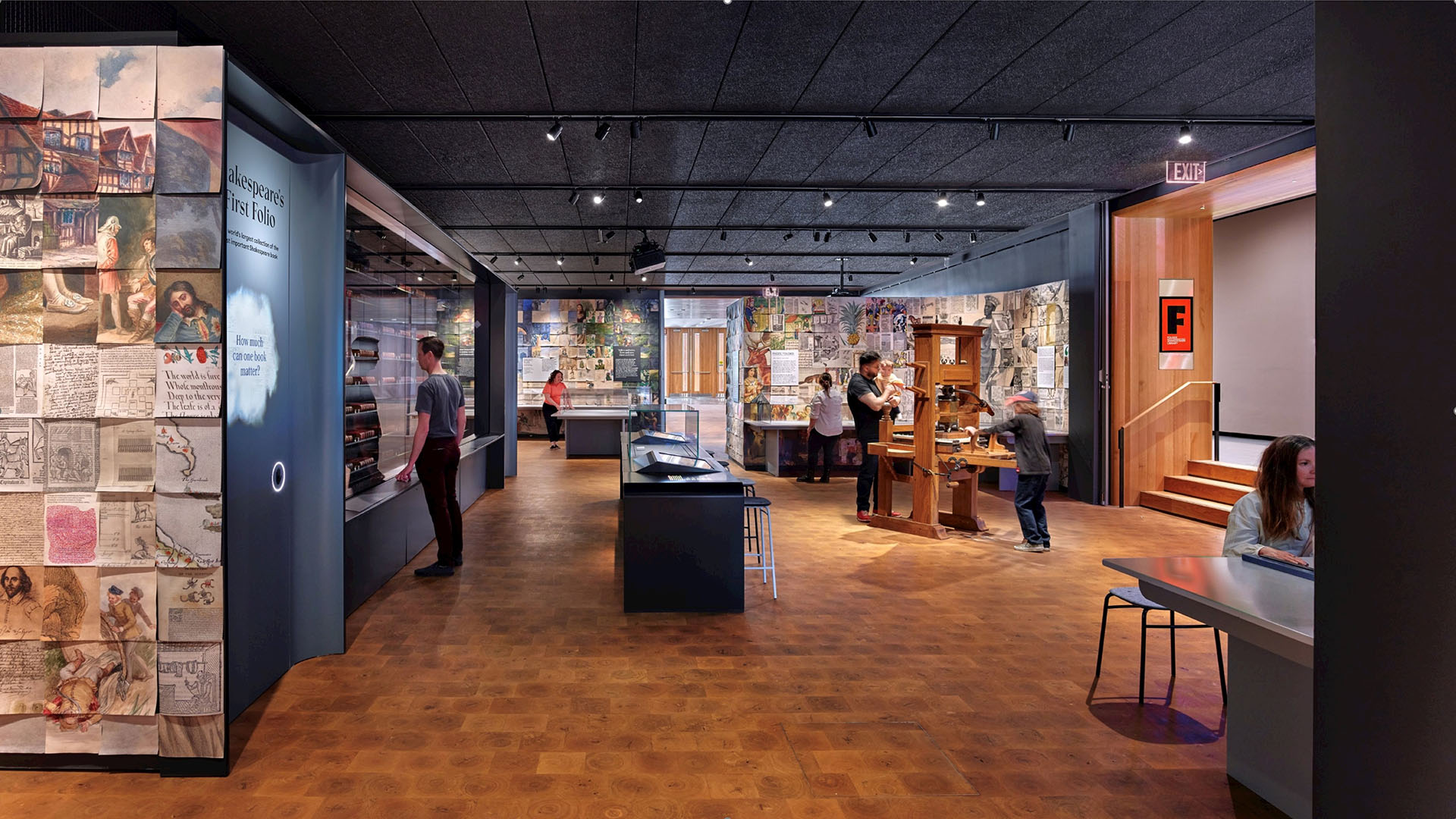
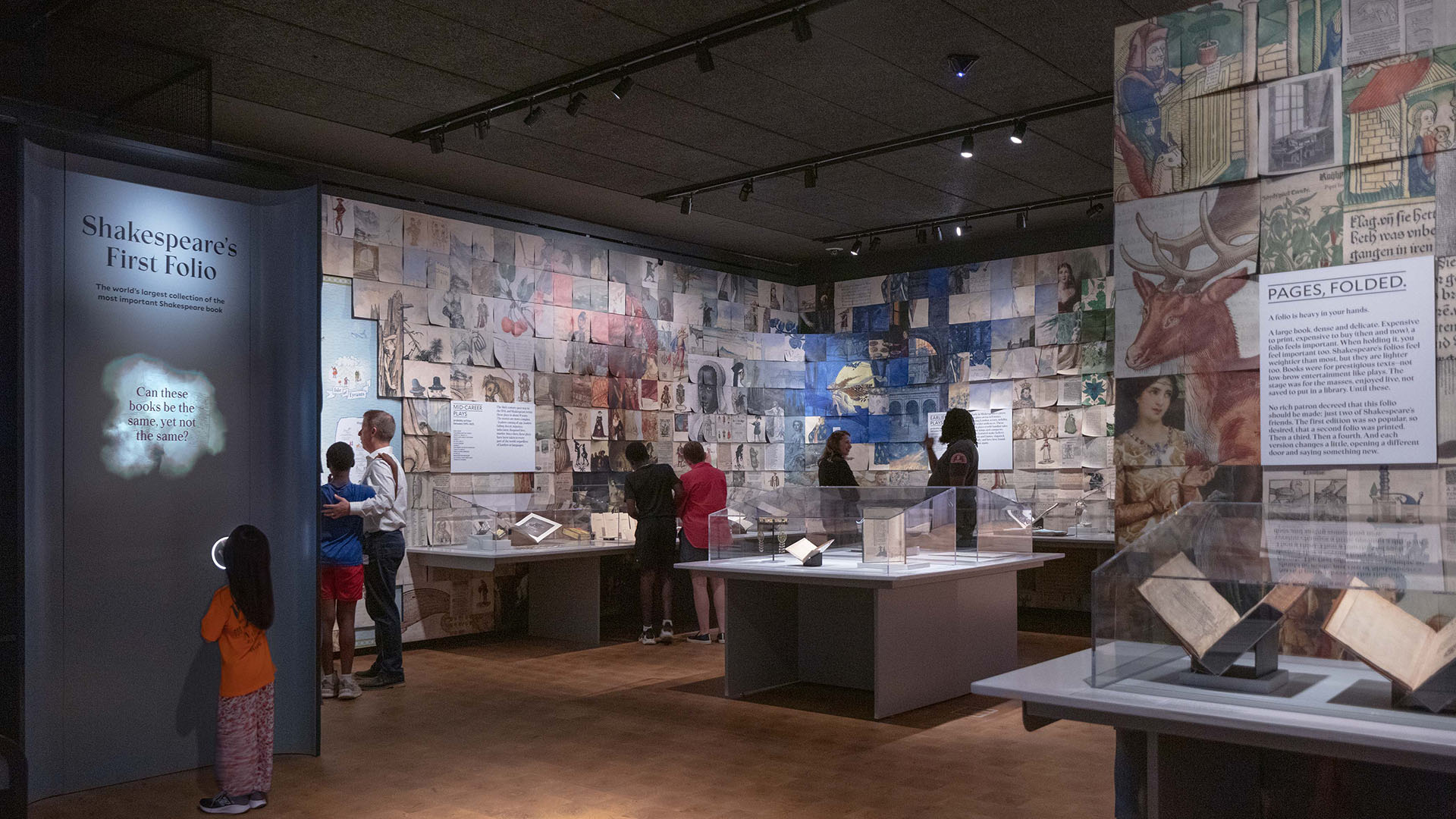
Founders Henry Clay Folger and his wife, Emily Jordan Folger, established The Folger Shakespeare Library (FSL) in 1932 as a gift to the American people. It has the world’s most extensive collection of printed works by William Shakespeare. The Library has expanded its holdings, becoming a world-class research center. Yet, the lack of meaningful public engagement with the collections limited the FSL’s impact in the Washington community and with tourists. An extensive architectural expansion created a new public entry and two large galleries. The North Gallery’s content centers on Shakespeare, the man, his works, times, and legacy. It includes their 83 First Folios, surrounded by a playful armature of illustrations, artifacts, numerous interactive media, and hands-on experiences. The South Gallery houses an area for shared exploration and “Out of the Vault,” a dense display of collections.
Agency
Practice Area
Client
Folger Shakespeare Library
Industry
The Challenge
The design premise is to take Shakespeare off his pedestal and bring his works to everyone. There is no “Shakespeare test,” but rather questions, insights, and gentle provocations—adapt the sacred, embrace the profane, reframe Shakespeare worship, and relish in the playful, mundane, and irreverent. The design challenge was creating an exciting visitor experience that would bring Shakespeare to all via works on paper while adhering to the highest conservation requirements.
Project Vision
The Folger Shakespeare Library renovation reimagines Shakespeare’s legacy by making his works accessible to all through interactive exhibitions, innovative conservation design, and immersive storytelling, featuring the world’s largest collection of First Folios, hands-on printing experiences, and dynamic media that bring history to life in an engaging and inclusive space.
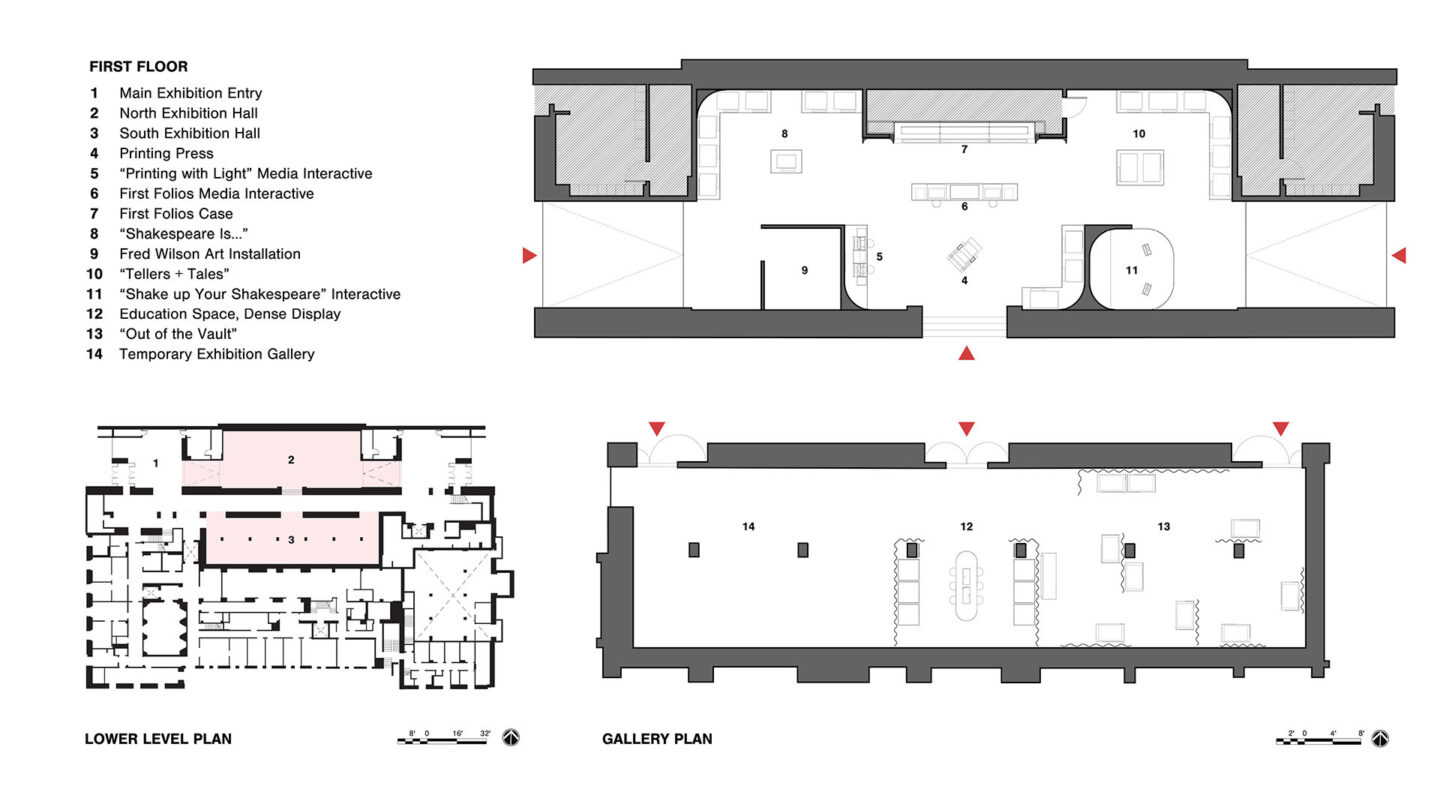
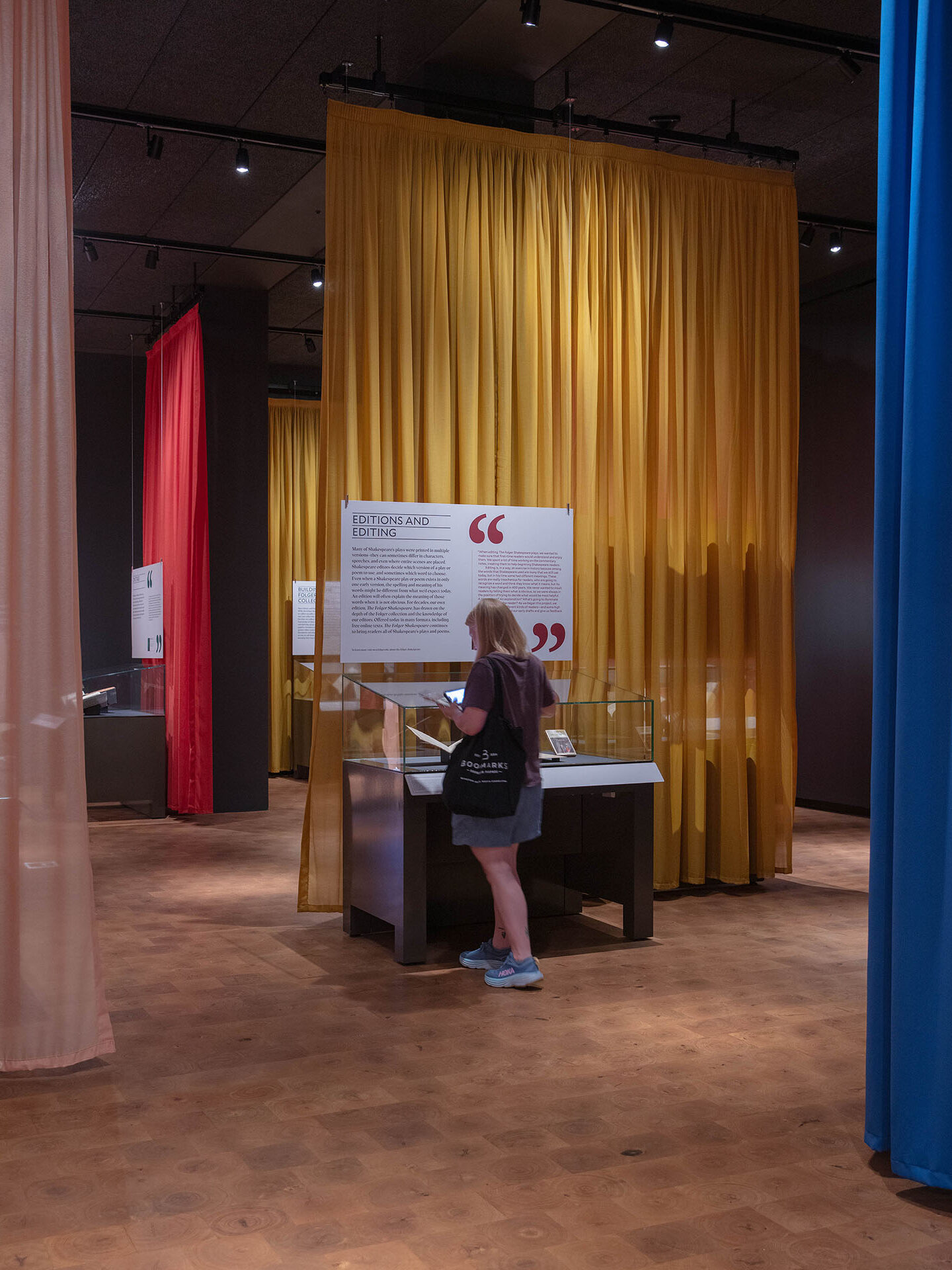
Two subterranean galleries at the Folger Shakespeare Library showcase Shakespeare’s life and legacy. The South Gallery features rotating exhibits, a community space, and east and west entrances.
Studio Joseph
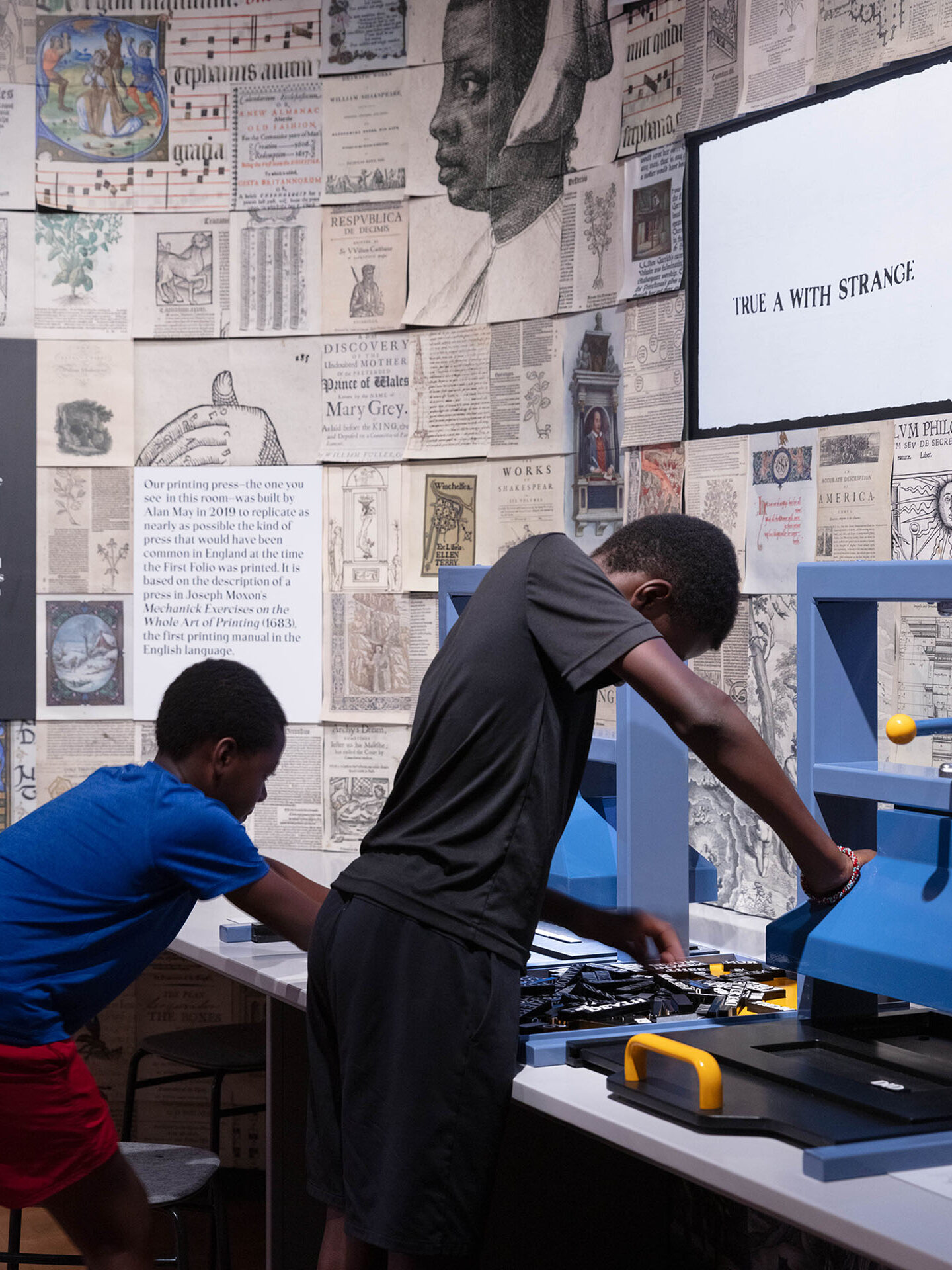
“Printing with Light” lets visitors create phrases using facsimile blocks, offering a fun, accessible experience that demystifies the printing process, where words are assembled upside down and backward.
Naho Kubota
Design + Execution
The project offers a fresh perspective on Shakespeare’s legacy. It feels alive, accessible, and relevant to today’s audiences. In tandem with a large-scale architectural expansion that introduced a new public entrance, the project features two immersive galleries that strike a balance between bold storytelling and high-level conservation. The team collaborated with Folger’s leadership to integrate media, layered visuals, and flexible exhibit spaces, inviting curiosity and hands-on exploration that appeals to all generations. Every element—from the climate-controlled First Folio case to the playful physio-digital experiences—was carefully executed to break down barriers between visitors and the world of Shakespeare.
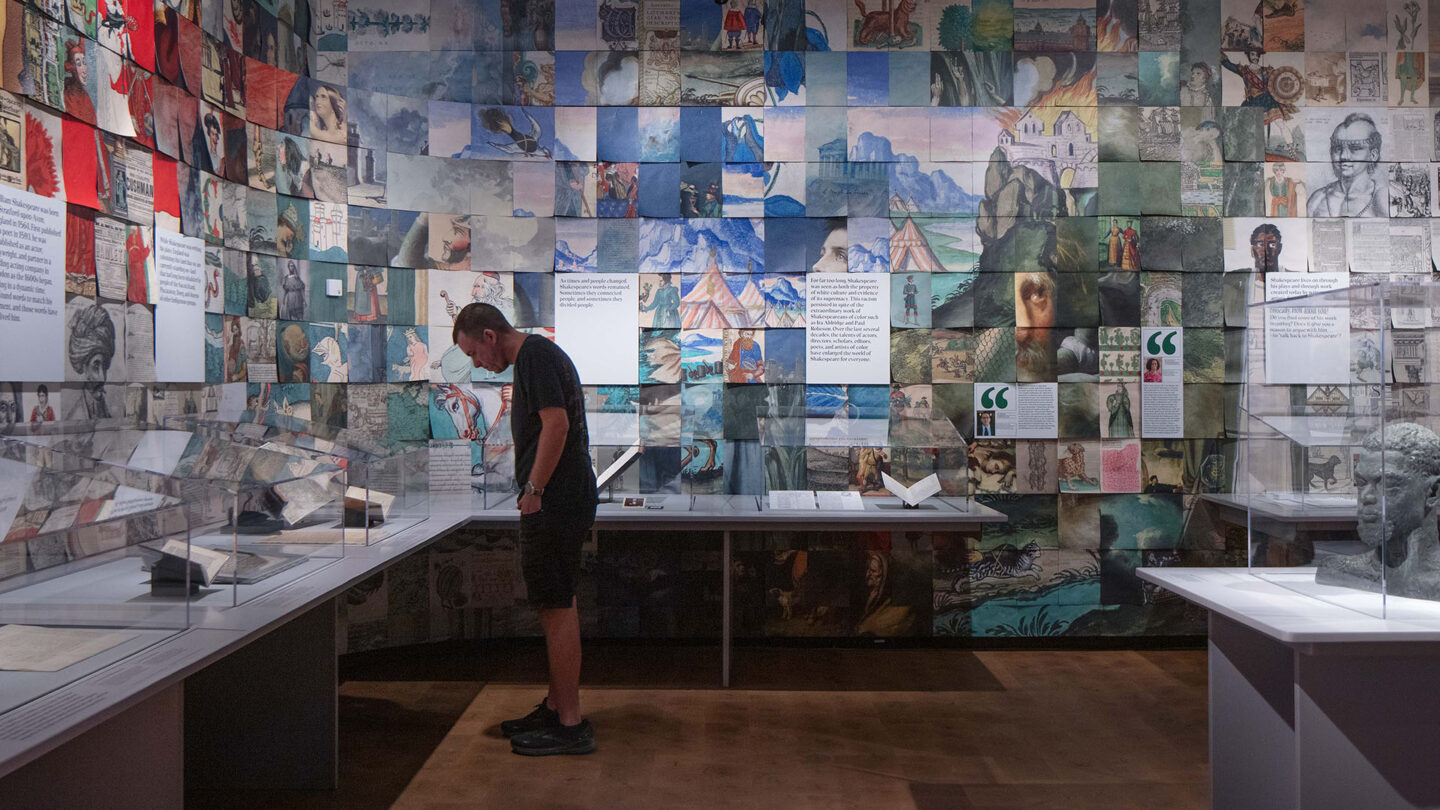
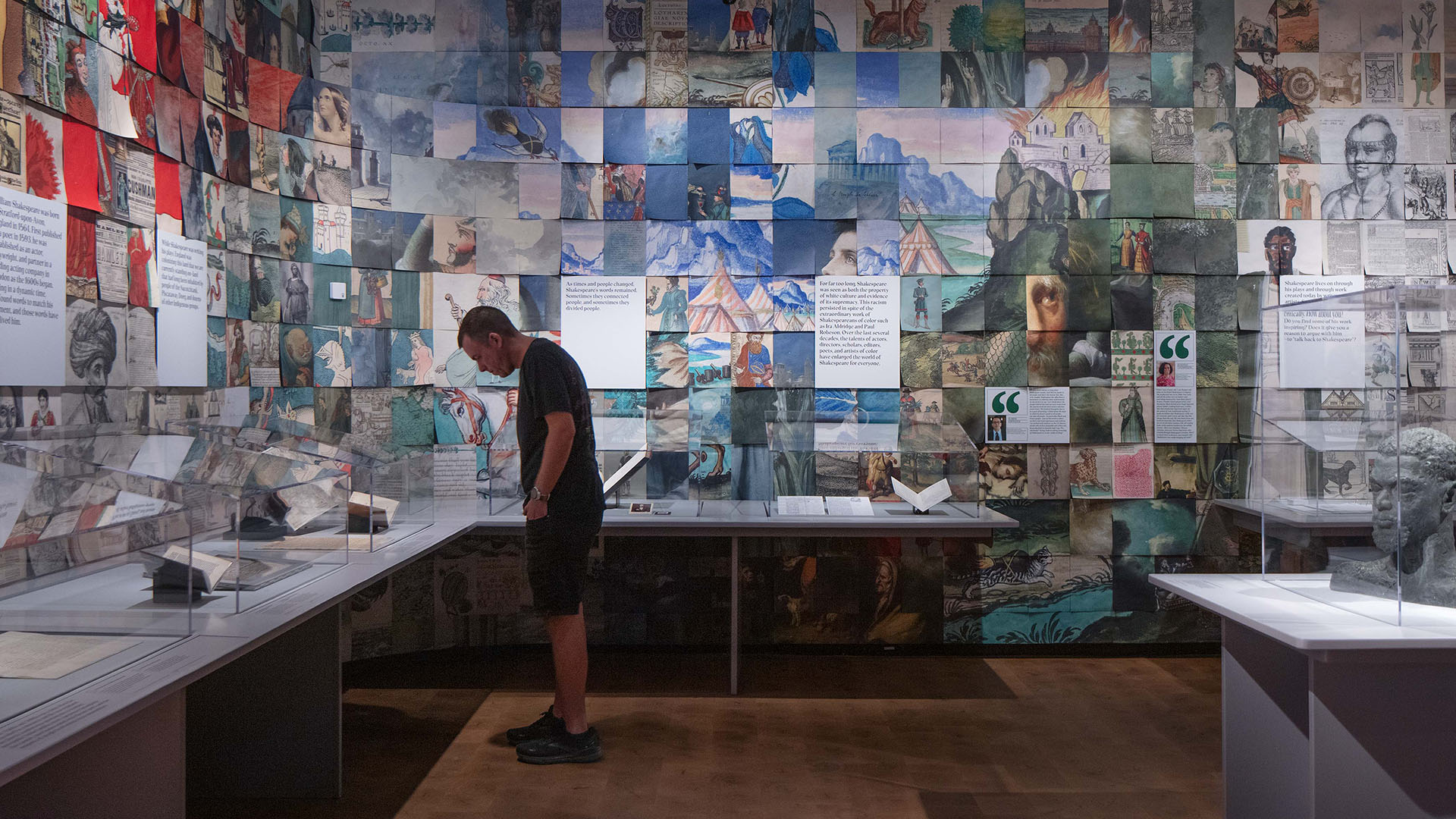
The gallery features narrative graphics on curling Tyvek sheets, creating a textured environment. These stories immerse visitors in the fascinating, often obscure world of historical documents, maps, and cultural artifacts.
Naho Kubota
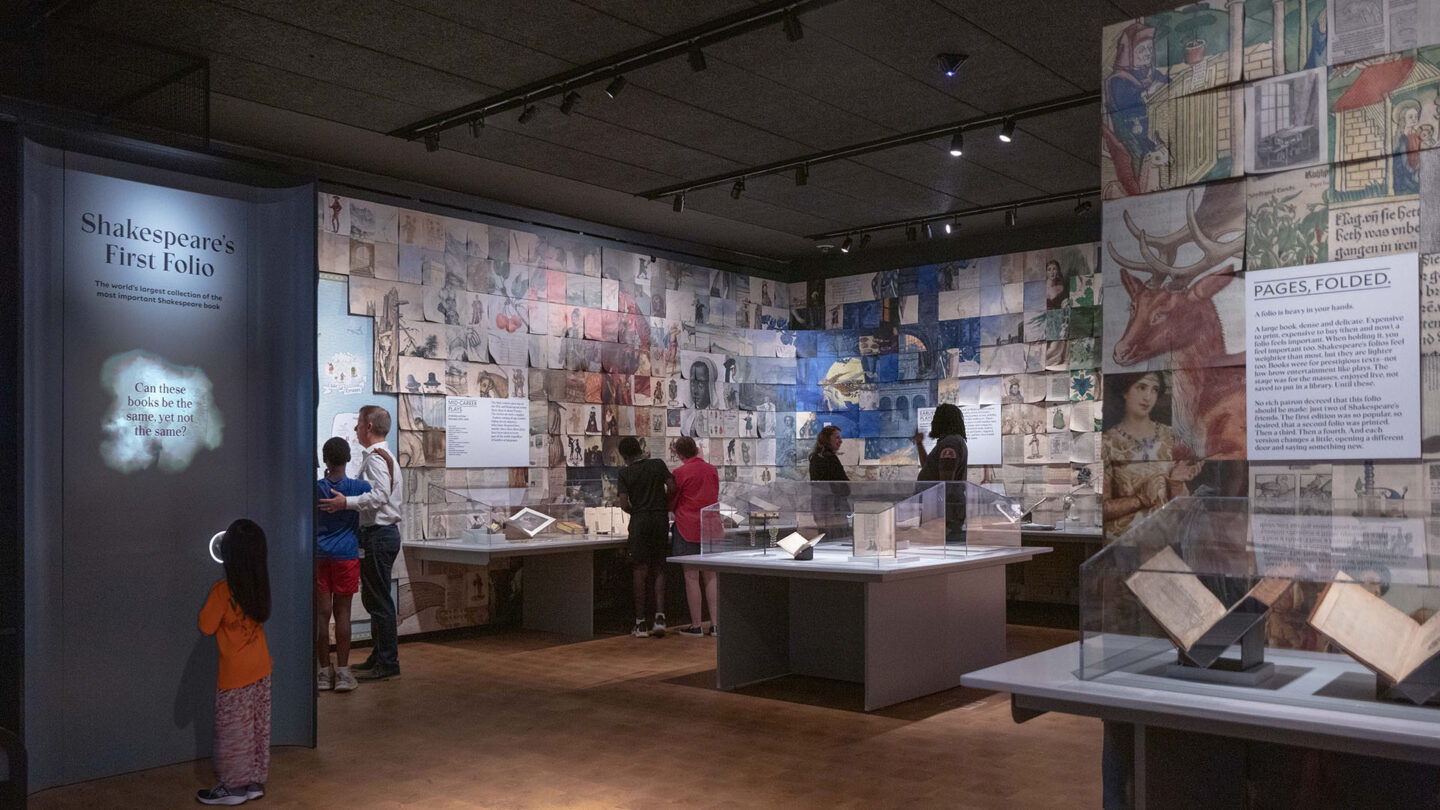
The gallery features narrative graphics on curling Tyvek sheets, creating a textured environment. These stories immerse visitors in the fascinating, often obscure world of historical documents, maps, and cultural artifacts.
Naho Kubota
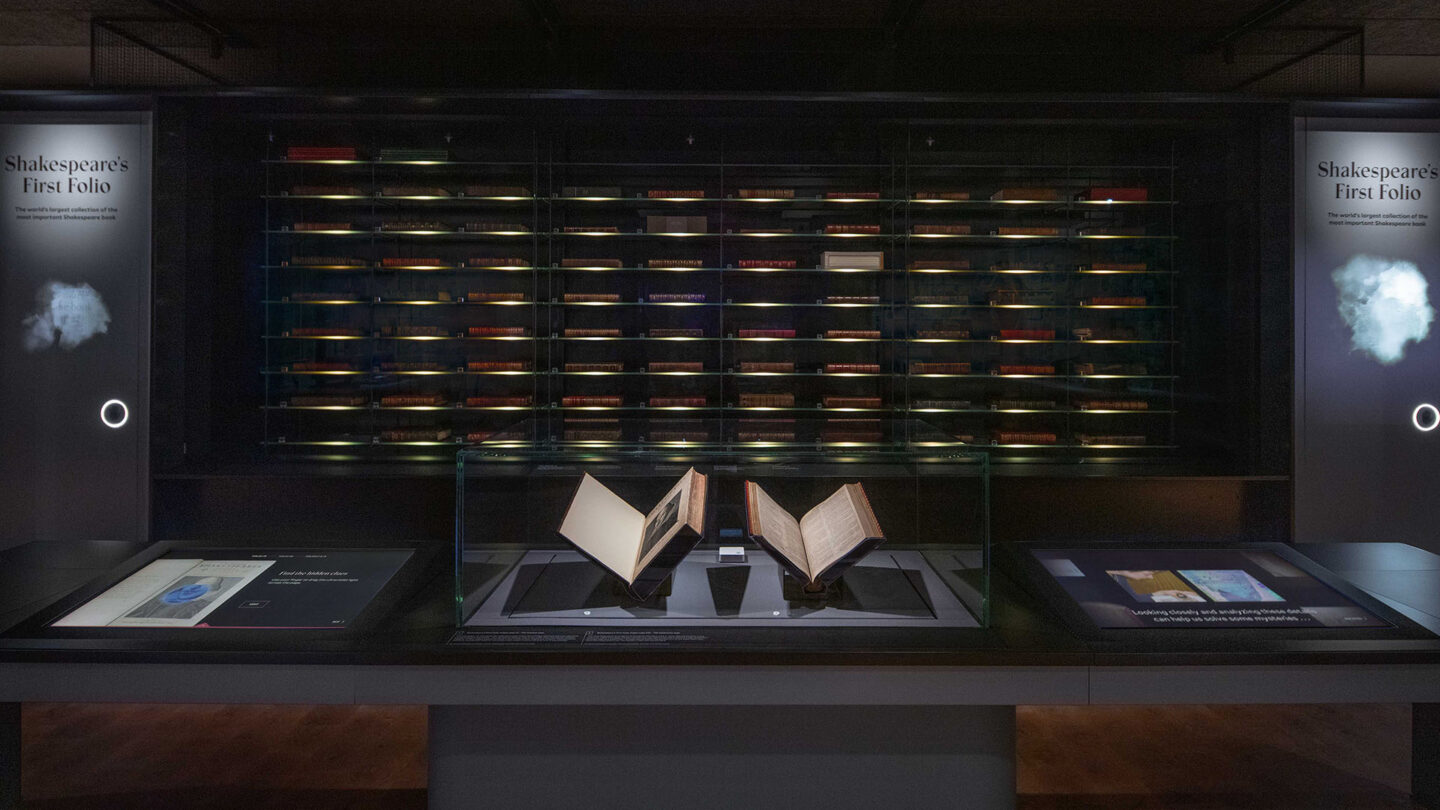
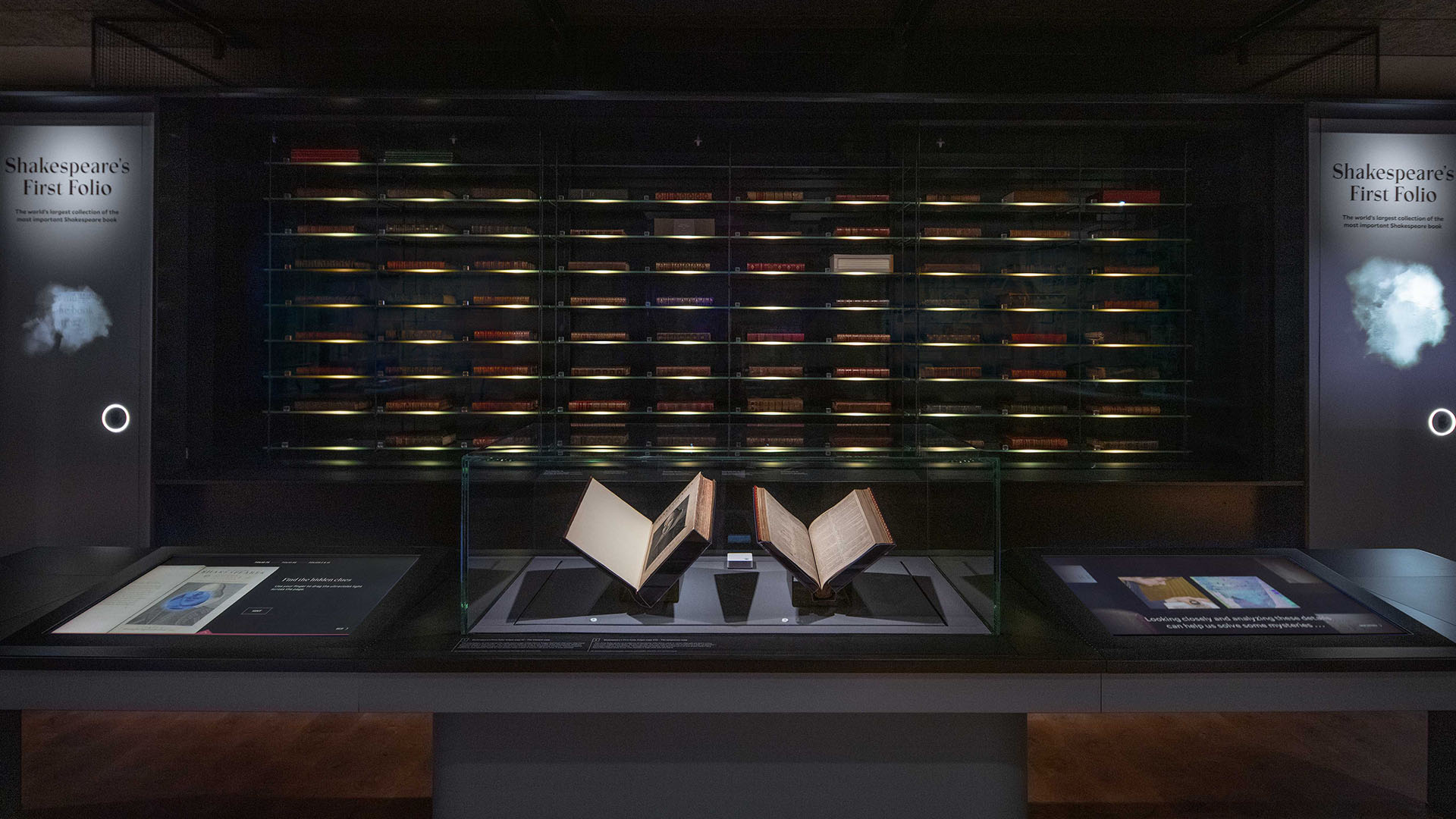
At the gallery’s center, a high conservation case displays 83 first folios. Two media-driven experiences flank the case, offering interactive content about ownership, marks, and syncing lighting with storytelling.
Naho Kubota
Flanking the case are two physio-digital interactive experiences that are illustrated and easily legible. They tell the story of how the folios were printed and Shakespeare’s creative process.
Naho Kubota
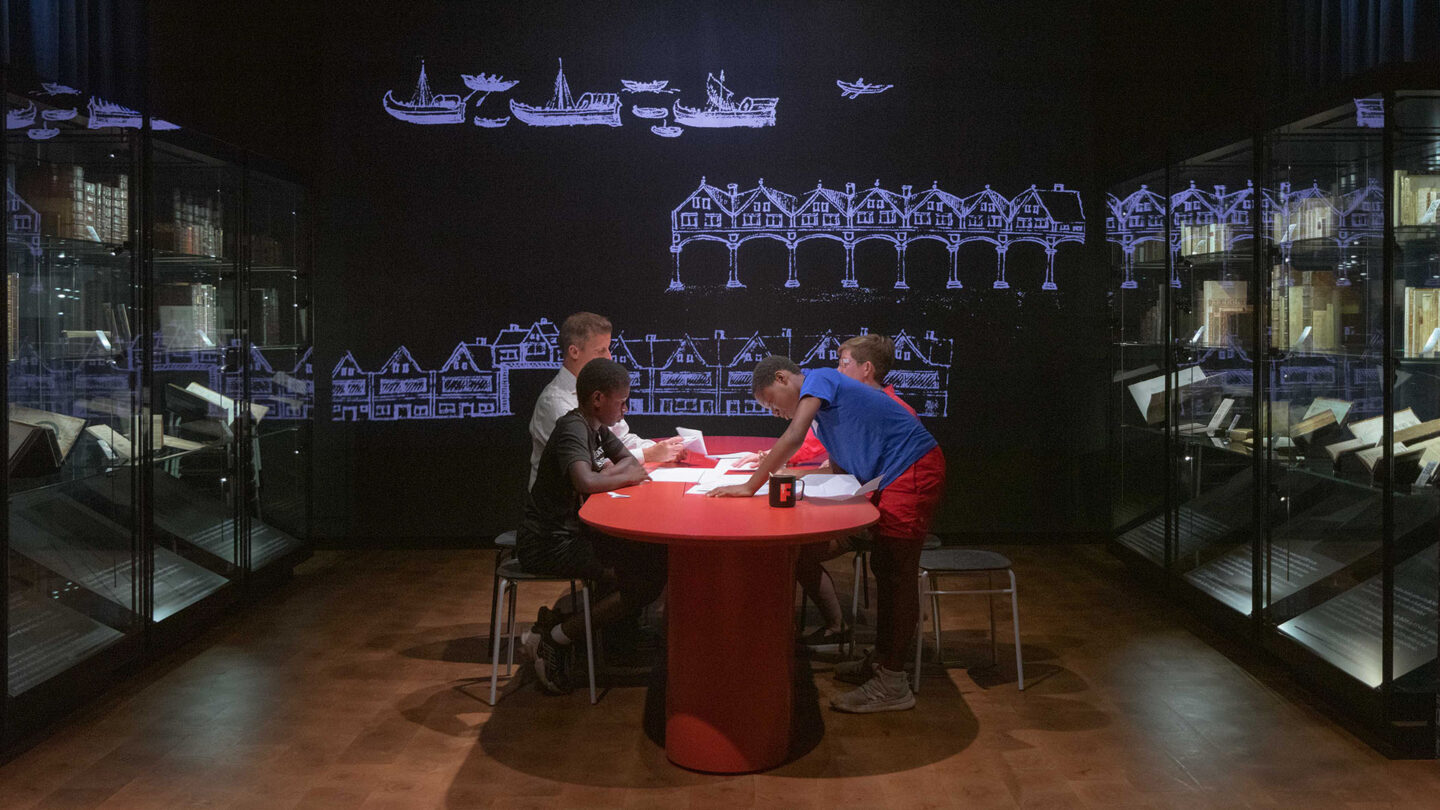
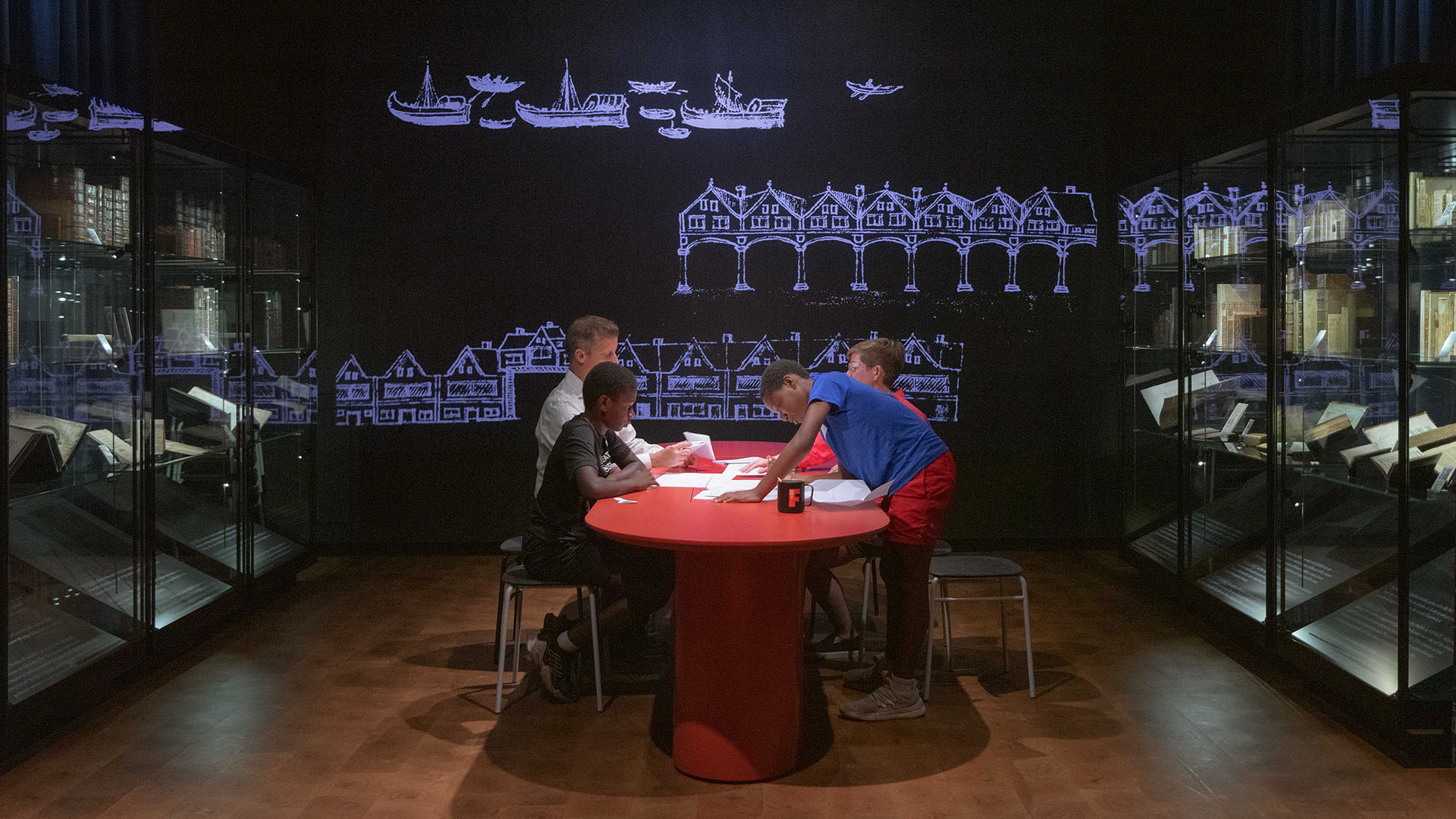
The gallery’s center features dense displays, video projections, and hands-on experiments. Visitors engage in docent-led or self-guided activities around a table, fostering community learning with synchronized archival materials and projections.
Naho Kubota
Project Details
Design Team
Wendy Evans Joseph (principal)
Monica Coghlan (design partner in charge)
Ksenia Dynkin (interpretive strategy)
Charlotte Kasper (research)
Daniel Toretsky (designer)
Shuo Yang (designer)
Alexandra Adamski (designer)
Brandon Studer (graphic designer)
Anthony Roy (graphic designer)
Dominique Jean Louis (interpretation)
Shriya Sanil (designer)
Chris Spadazzi (technical design for casework)
Collaborators
Kieren Tiberlake Architects (architecture)
Olin (landscape architecture)
Kubik Maltbie (fabrication)
Photo Credits
Naho Kubota (photography, videography)
Open Date
April 2024