The Great Void. The Holocaust in Liepāja.
The exhibition “The Great Void. The Holocaust in Liepāja” offers an emotionally deep and visually powerful spatial experience of the historical events of the Holocaust in Liepāja. The exhibition reveals the pre-war life of the Jewish community and its obliteration during the Holocaust, and relates stories of hope about the people who risked their lives to save others.
Agency
Design Studio H2E
Practice Area
Client
The Uniting Foundation, The Liepaja Museum
Industry
The Challenge
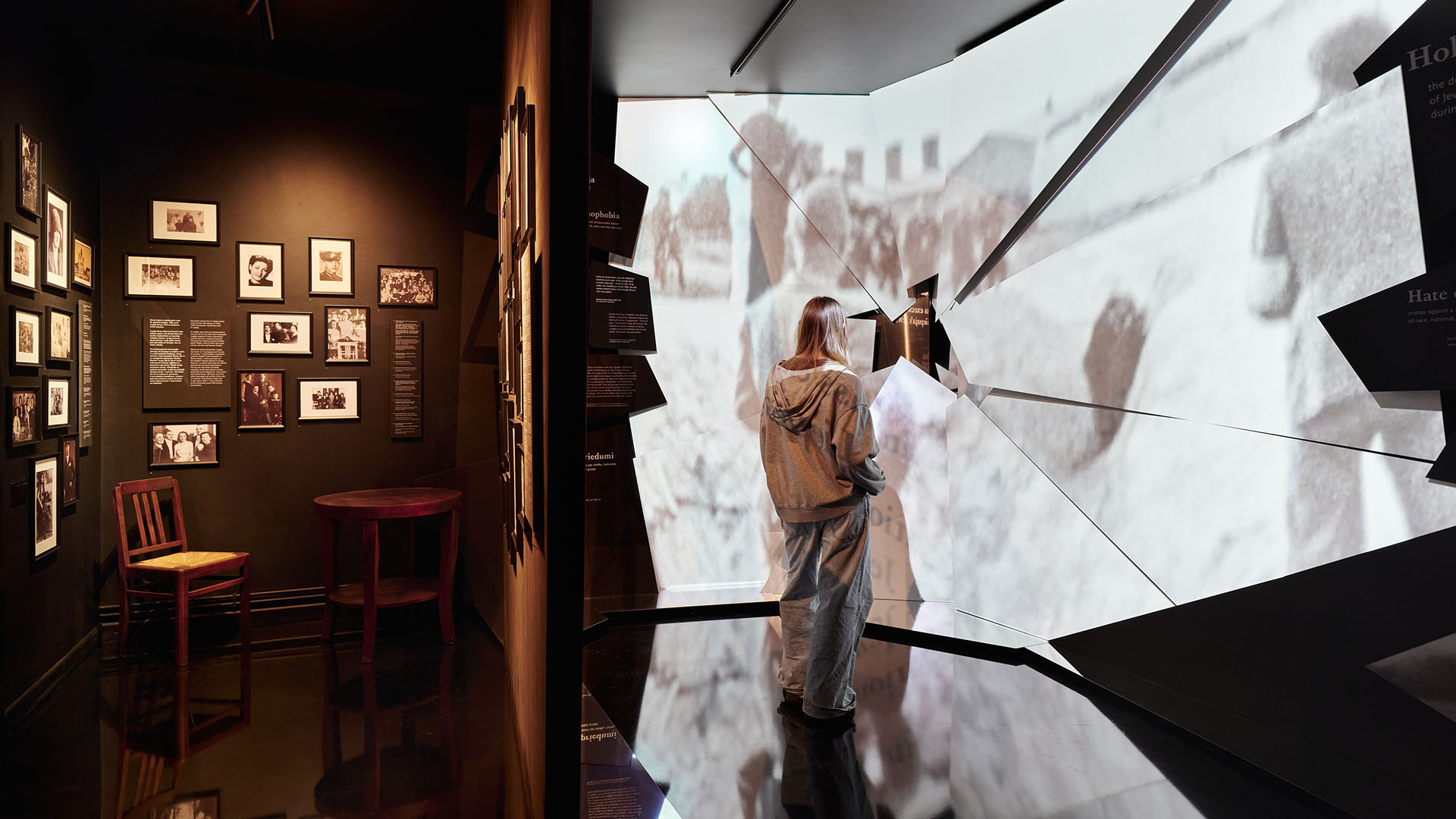
The challenge of the exhibition was its small 30 meters square space and limited budget, within which an emotional three-part story had to be created. As the target audience is young people, right from the outset we engaged the city’s youth community, conducting a survey and organizing a joint creative workshop, defining hopes and worries related to the contemporary tasks of the exhibition.
Project Vision
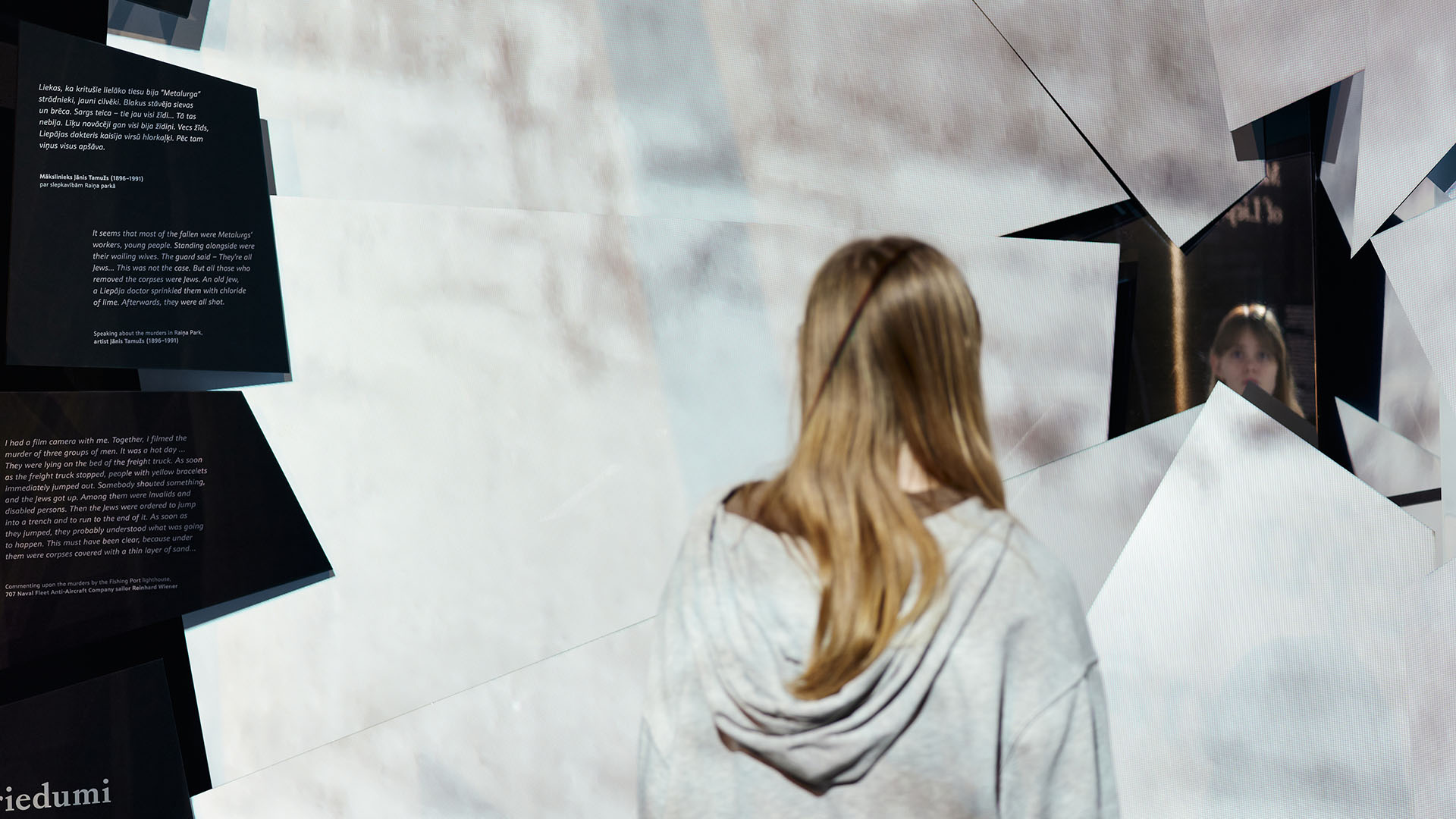
The centerpiece of the exhibition is the historical video material of the annihilation of Jews in July 1941 in Liepāja, which we expand and reflect throughout the space, enabling the viewer to experience the collapse of the world and the terror that ravaged a vibrant community and destroyed people’s respect.
All three sections are subordinate to the fulcrum of the exhibition – the video of the execution of Jews beside the Liepāja lighthouse.
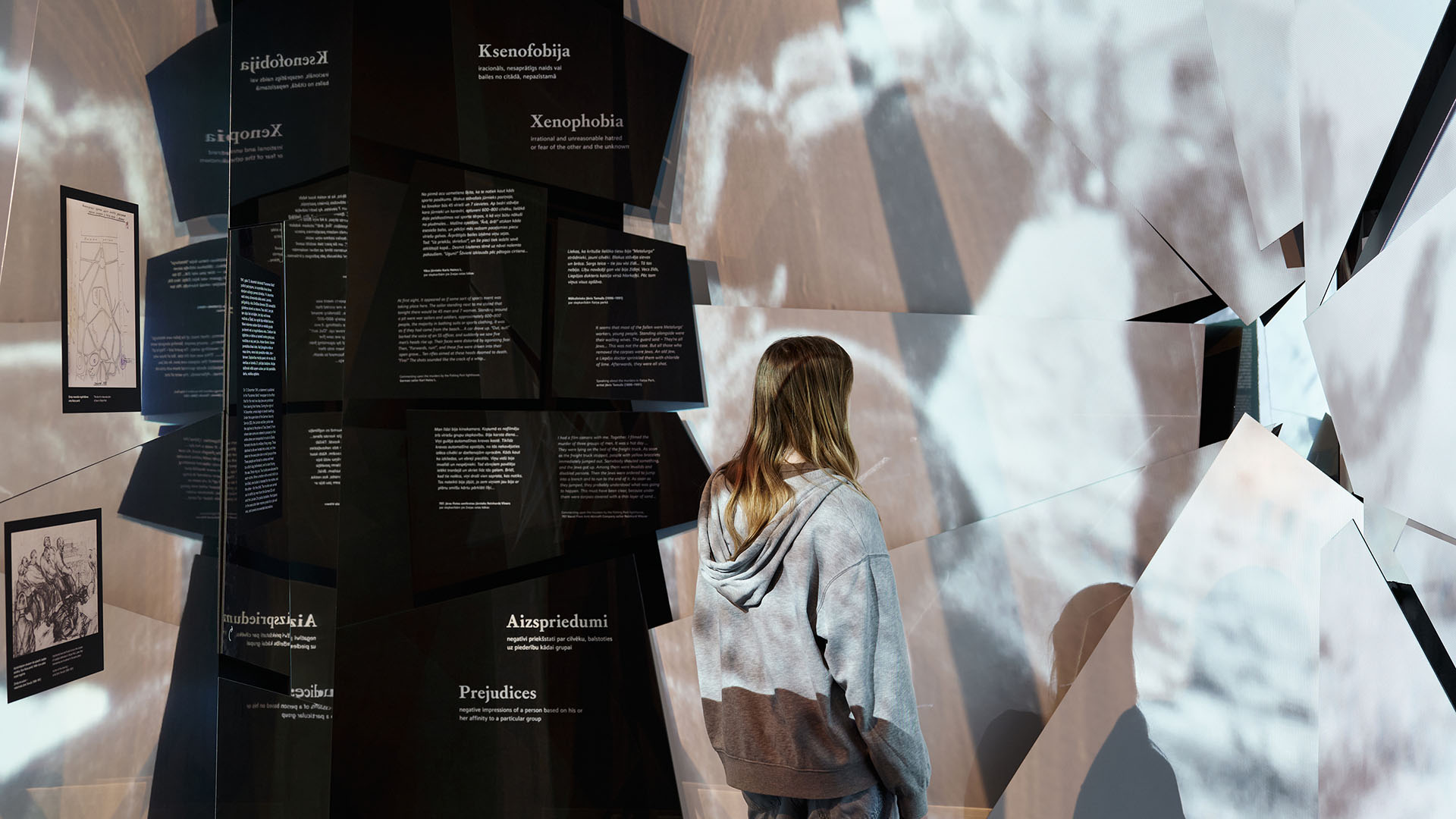
In addition, text fragments are included detailing the prejudices of antisemitism and the nature of the Holocaust, giving viewers a deeper understanding of historical events and their social impact.
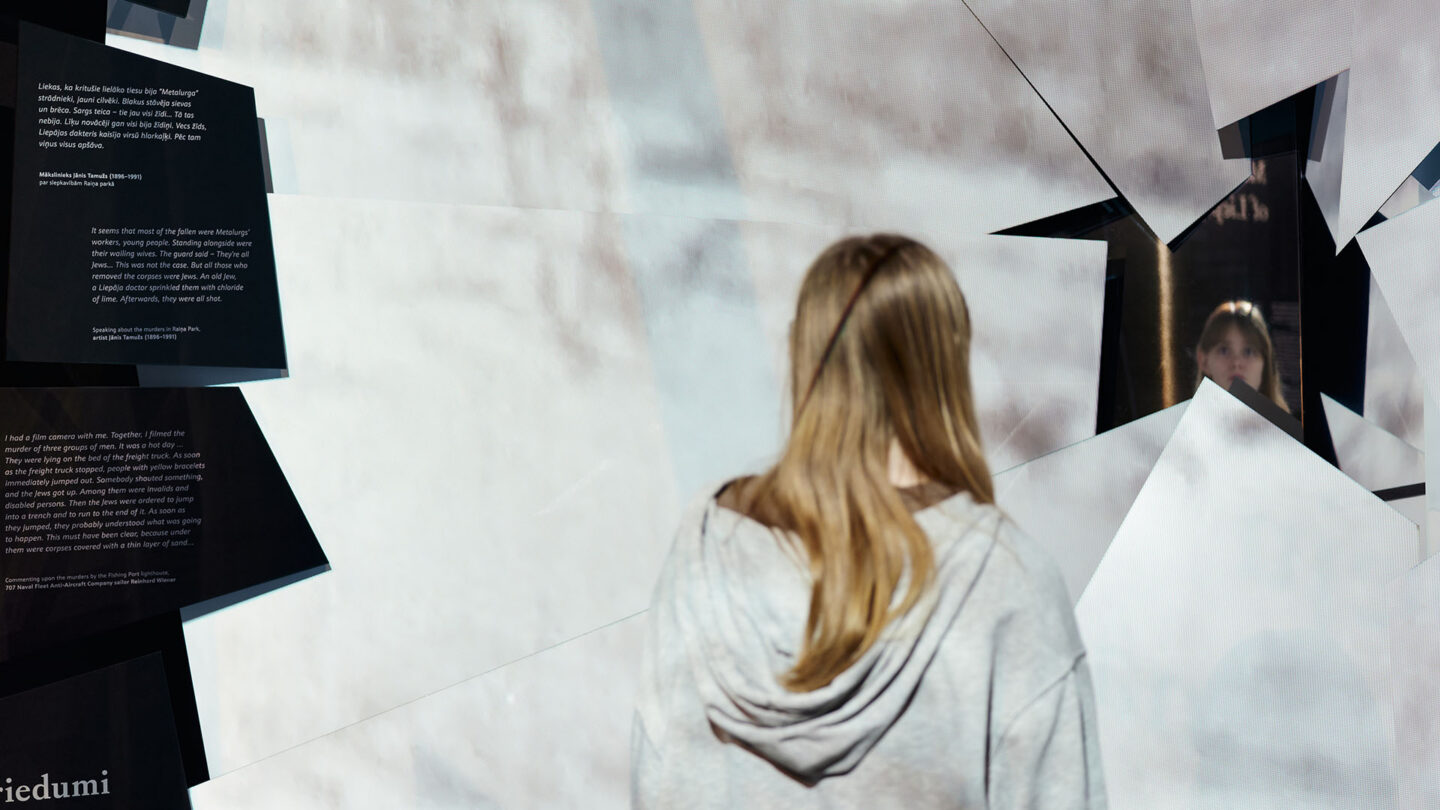
Liepāja’s name is etched in Holocaust history through mass killings. At the center of the exhibition is emptiness, where visitors see themselves, realizing anyone could have been.
Design Studio H2E, Anna Olsen
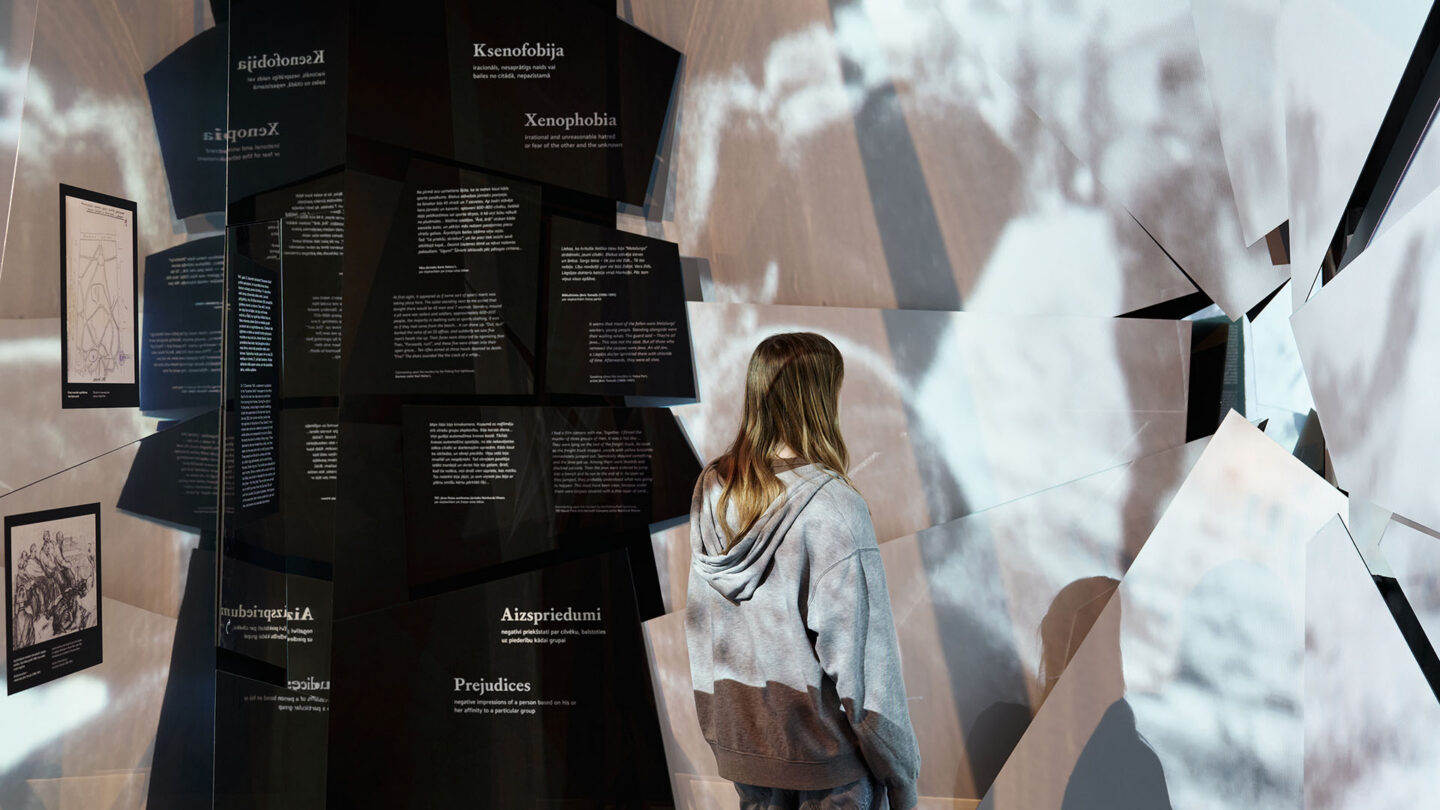
The dramaturgy of the exhibition is to create a contrast between peaceful life and the horrors of destruction.
Design Studio H2E, Anna Olsen
Design + Execution
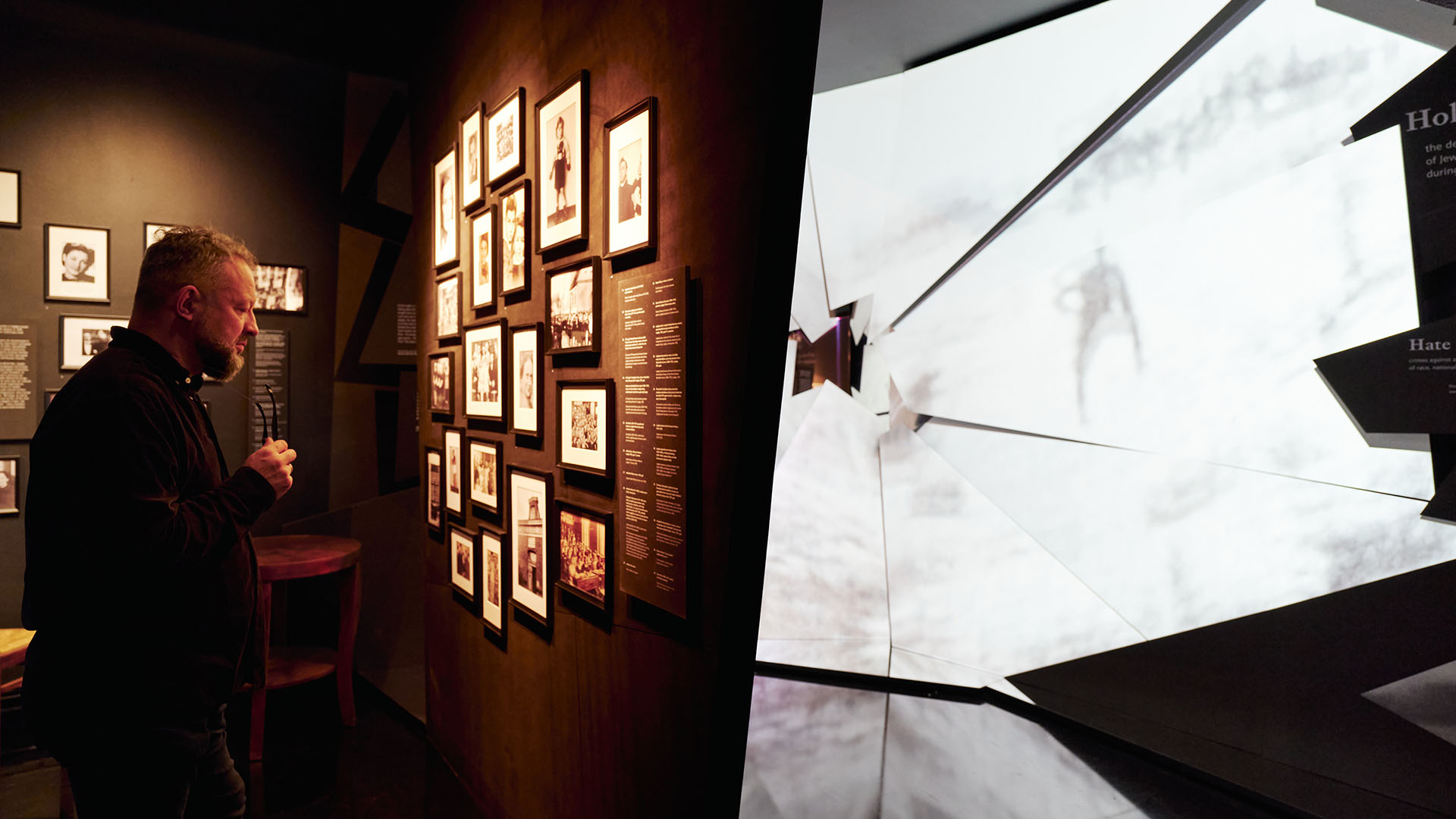
The design team created the space as a novel, relating the drama of humanity in three parts: the first tells the story of inclusive, vibrant life before the war, in contrast to the second part, which documents terrible and unfathomable events, where the earth beneath one’s feet literally disappears and the world disintegrates, whereas the third part illuminates hope in utter darkness in the persons of the saviors and the people they saved in Liepāja.
The composition of the space in each section differs: in the first section, it is composed and warm, whereas in the second section it is dynamic; as the world explodes, the viewer is engaged by the video projection and clasped by the accompanying singing sung in a synagogue. Subsequently, the third section manifests hope by interpreting the subject of refuge.
Here we find information about the saviours and the people they saved, as well as the testimonies of survivors. Hand in hand, curatorial and design work create an all-encompassing experience.
The team used the method of experiential design to prompt viewers to experience the space on an emotional level in order to engender diversity, equity and inclusivity.
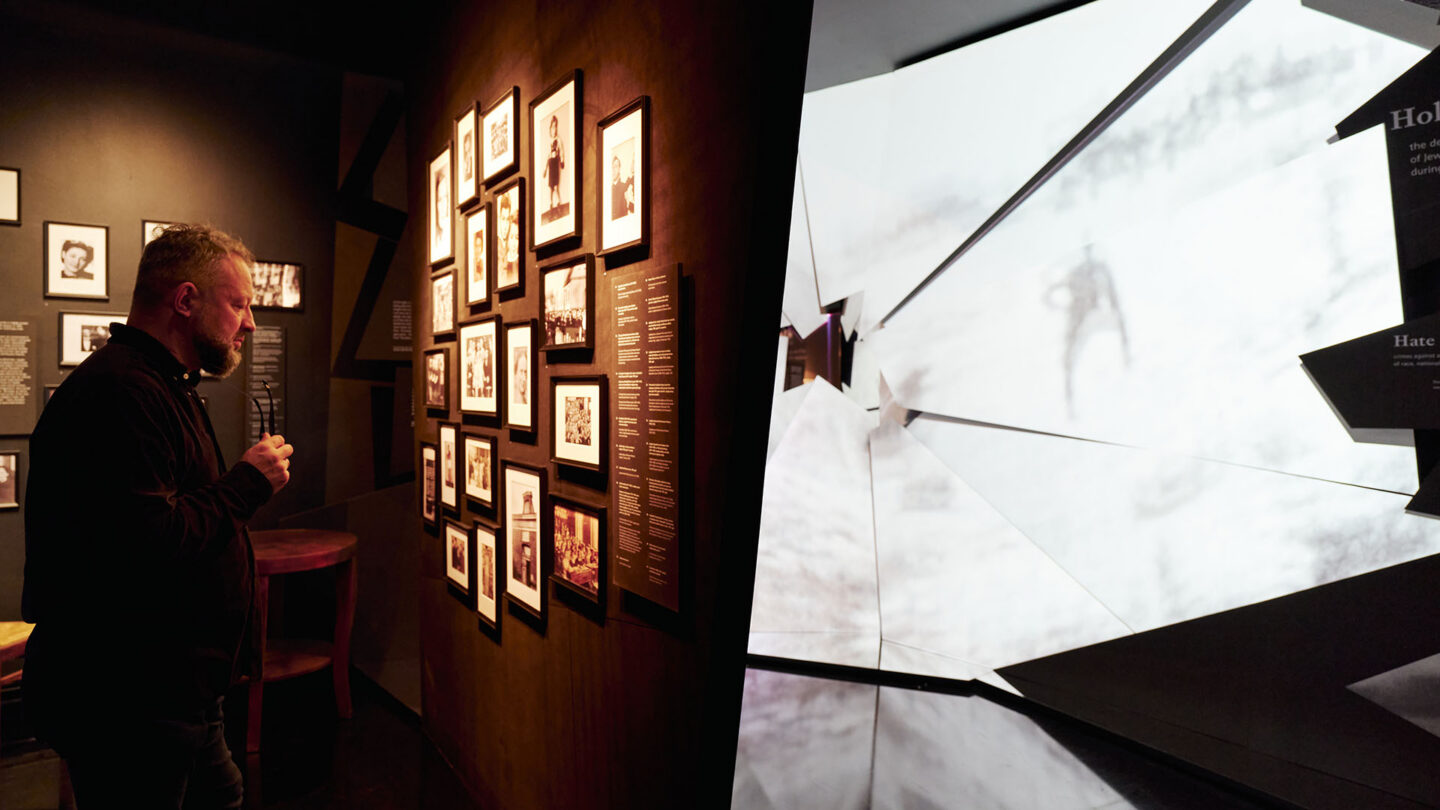
The dramaturgy of the exhibition is to create a contrast between peaceful life and the horrors of destruction.
Design Studio H2E, Anna Olsen
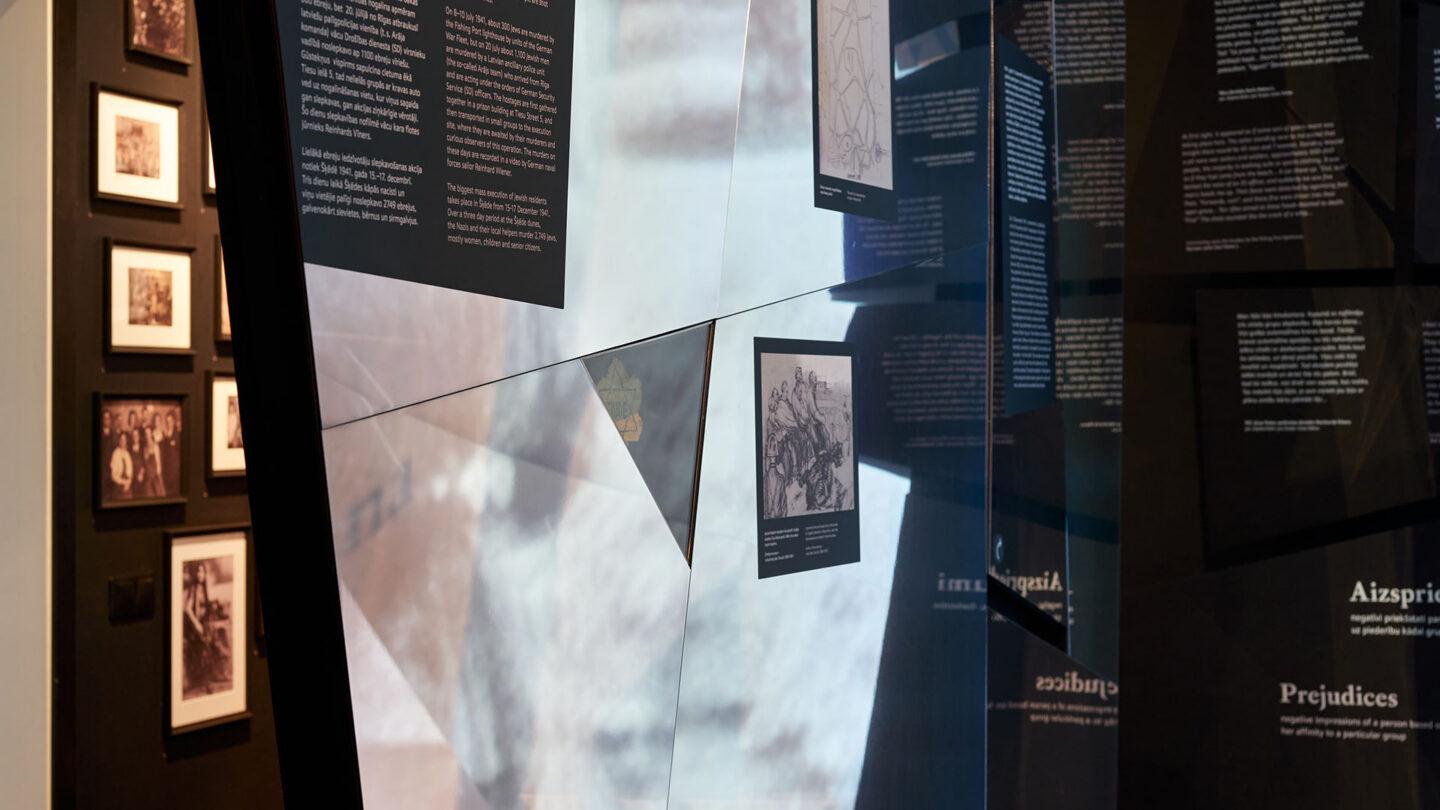
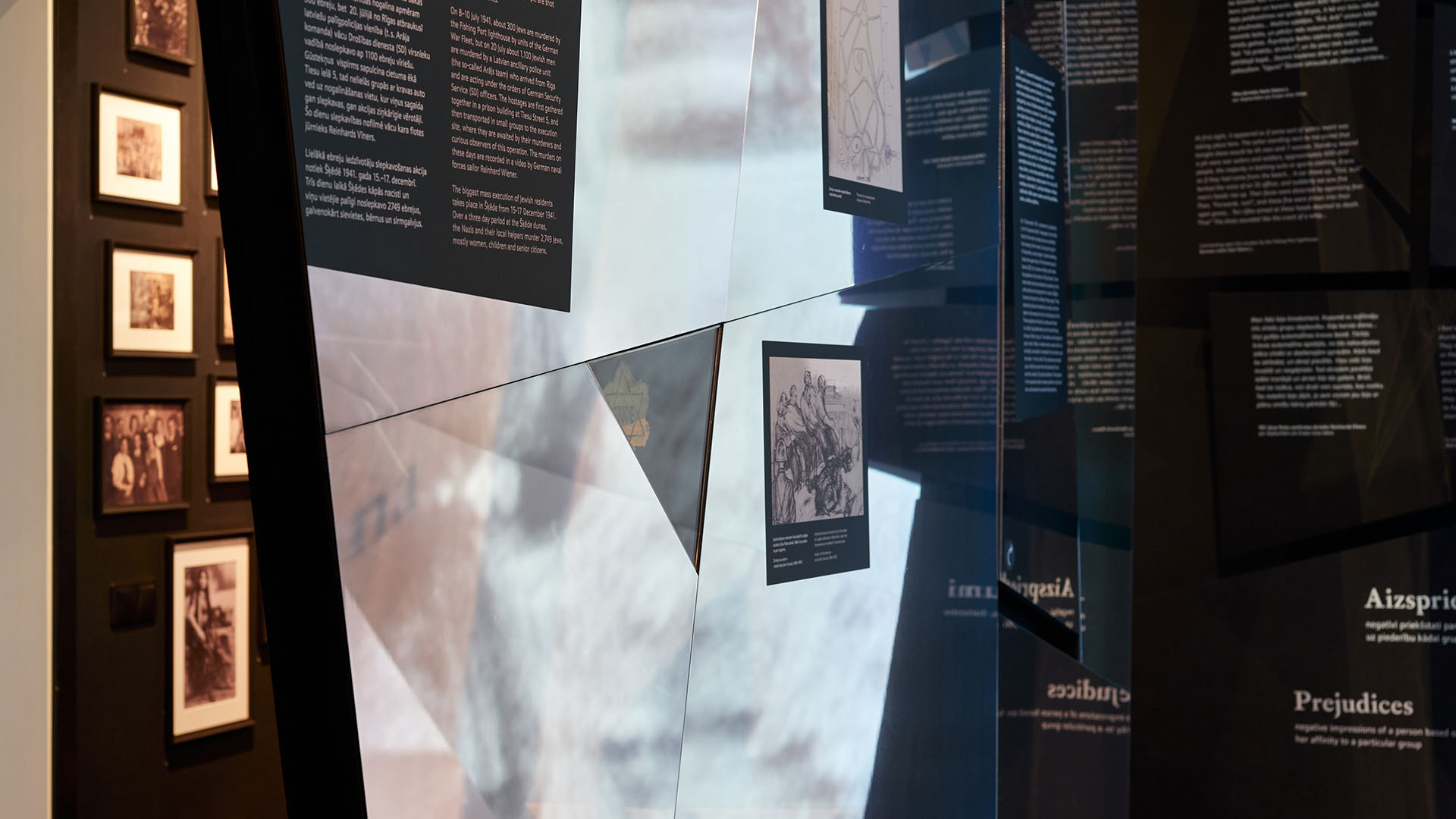
A mirrored wall with a display case holding a Star of David patch and opening doors revealing chilling photographs of the destructive processes faced by the Jewish community.
Design Studio H2E, Anna Olsen
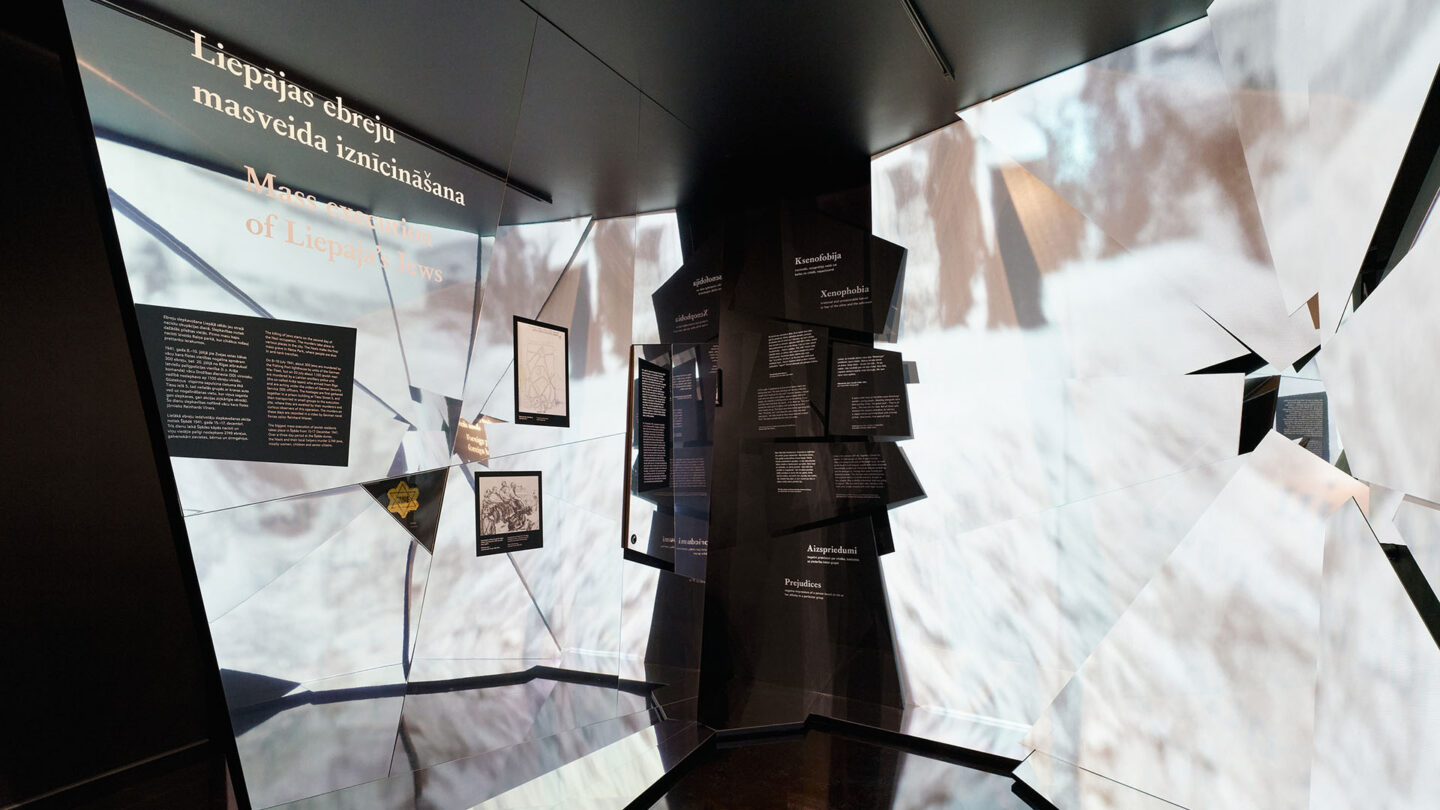
The space’s dramaturgy is heightened by reflective floors and walls that mirror video frames, creating an immersive experience, complemented by a hymn sung in the synagogue.
Design Studio H2E, Anna Olsen
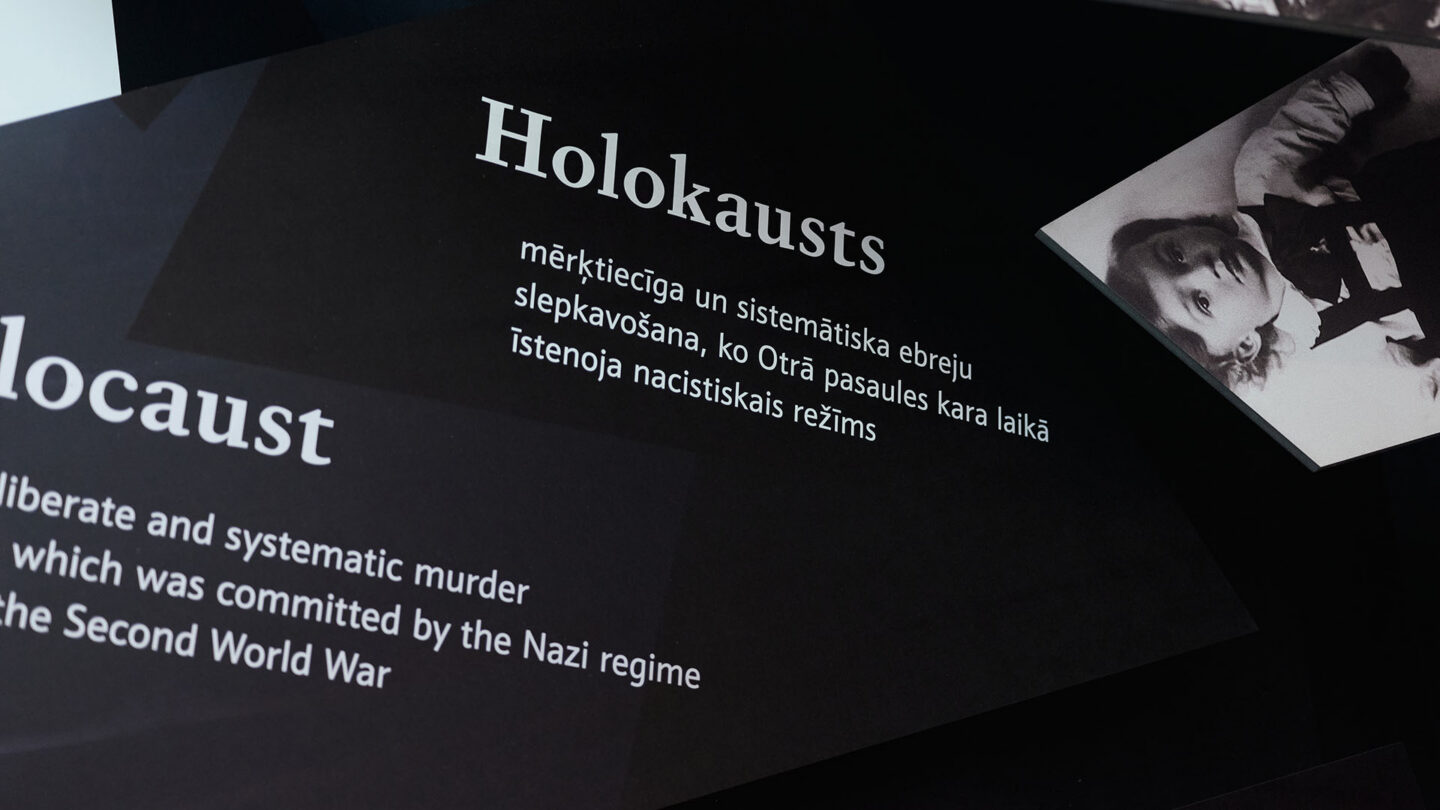
The Holocaust began with antisemitism, which still exists in various forms around the world today. Therefore, it is important to educate about the consequences of every manifestation of hatred.
Design Studio H2E, Anna Olsen
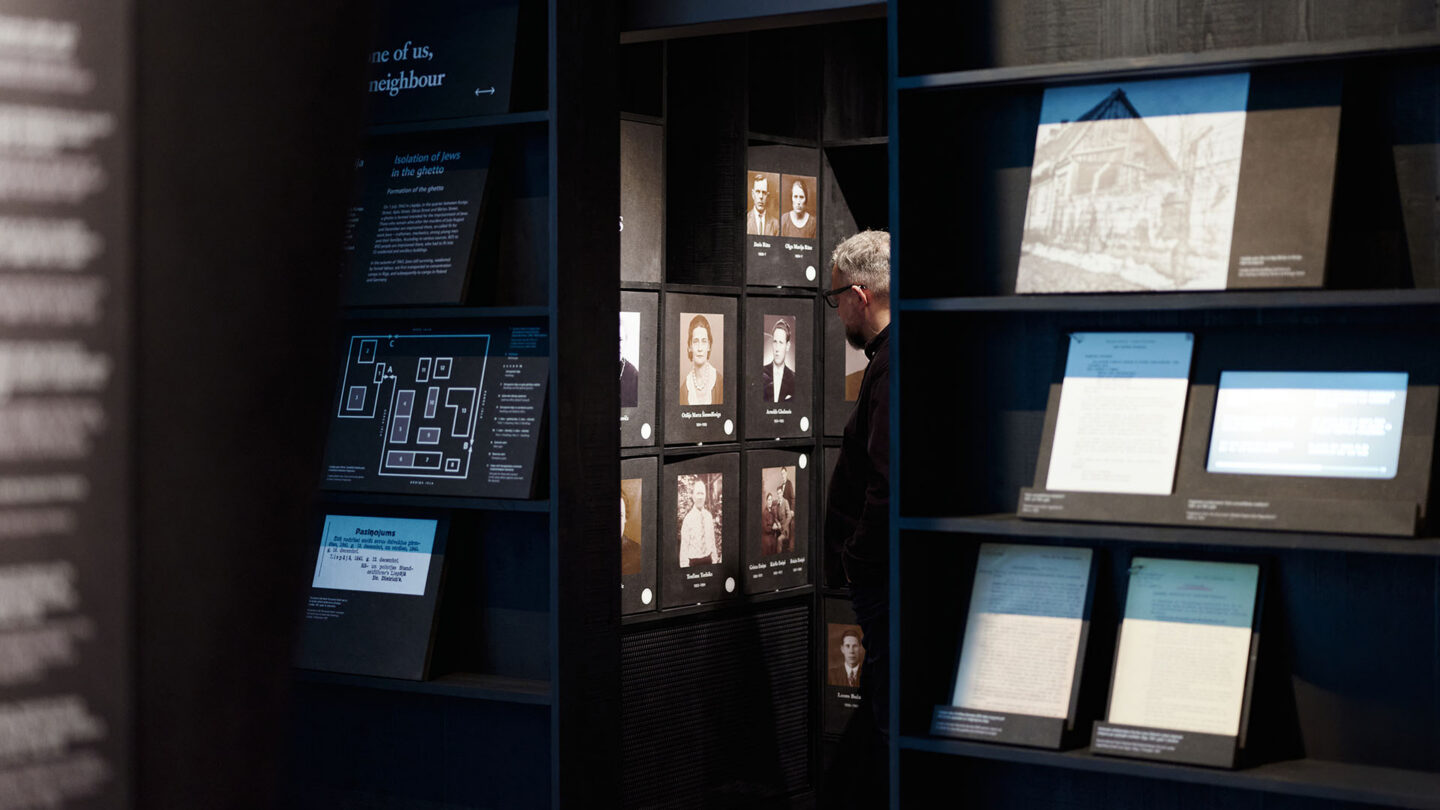
The third part of the exhibition, designed as an interpretation of a hiding place, commemorates humanity and the people who hid and saved Jews.
Design Studio H2E, Anna Olsen
Project Details
An enriching experience with a thoughtful narrative that brings the dark, traumatizing history of the Holocaust to life in an accessible and interactive way.
The target audience is young people – a difficult ask with this content – the Holocaust in Liepaja. At the centre of the story is a historical video of the annihilation of the Jews in July 1941. We felt every aspect of the design – from the materiality – especially the sliding interpretation panels that, by using them, visitors reveal hiding places within the space as a powerful interactive. This is asking questions relevant today to support that we must learn lessons from the past. We felt the overall design was a profoundly moving exhibition – fabricated and produced with a very small budget.”
Design Team
Ingūna Elere (creative director)
Holgers Elers (lead designer)
Mārtiņš Vītols (designer)
Laura Lorence (graphic designer)
Baiba Grīnberga (project assistant)
Linda Rudzīte (project manager)
Lauris Gundars (copywriter)
Collaborators
Uniting foundation (content):
Elīna Škļara
The Liepāja Museum (content):
Inna Gīle, Dace Kārkla
Sandra Šēniņa
Aija Raudina
Jews in Latvia museum (content):
Iļja Ļenskis
Jānis Šiliņš, (content)
Maija Meiere–Oša, (content)
Normunds Rudēvičs, (content)
Telman Guzhevsky (vocal)
LTD REVERIE Trading Group (digital solution)
Photo Credits
Anna Olsen (photography, videography)
Open Date
January 2025
More in Exhibition
All Projects-
Read more Sculpting History at the Valentine Studio: Art, Power, and the “Lost Cause” American Myth
Sculpting History at the Valentine Studio: Art, Power, and the “Lost Cause” American Myth
-
Read more Folger Shakespeare Library Museum

Folger Shakespeare Library Museum
-
Read more Hunterian Museum
Hunterian Museum
Casson Mann -
Read more Fallout: Atoms for War + Peace
Fallout: Atoms for War + Peace
Kudos Design Collaboratory, KASA Collective -
Read more FAMily Discovery Center
FAMily Discovery Center
Storyline Studio, LLC. -
Read more Grand Egyptian Museum: Tutankhamun Gallery
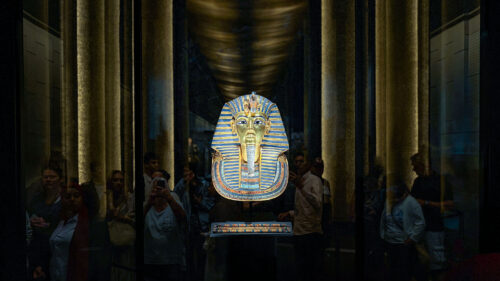
Grand Egyptian Museum: Tutankhamun Gallery
ATELIER BRÜCKNER -
Read more Lost Shtetl Museum
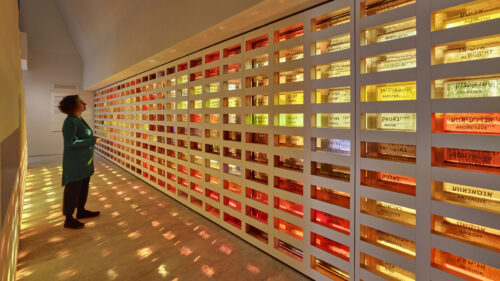
Lost Shtetl Museum
-
Read more Worcester Art Museum Arms and Armor Galleries
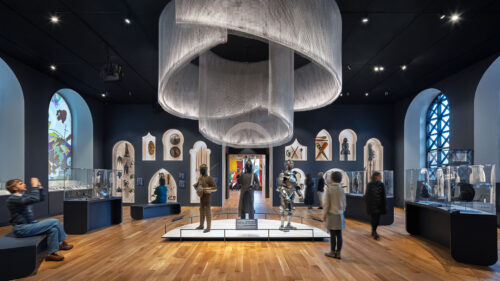
Worcester Art Museum Arms and Armor Galleries
TSKP x IKD -
Read more 12th SITE SANTA FE International: Once Within a Time
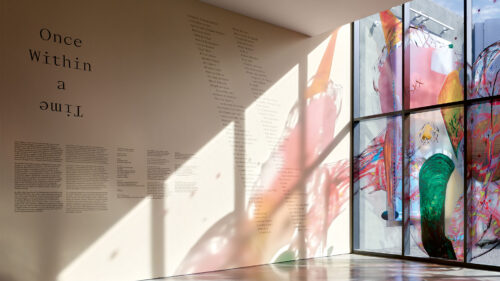
12th SITE SANTA FE International: Once Within a Time
A Practice for Everyday Life