Lost Shtetl Museum
The Lost Shtetl Museum invites visitors to rediscover the vanished world of Eastern European “shtetls” or small Jewish towns. The exhibition tells the stories of the shtetl Šeduva, Lithuania preserved by survivors and descendants. It explores the interwar years (1918-1940), when religious, civic, social and commercial life thrived. Sadly, this era also marked the final chapter of Jewish life in Šeduva and Lithuania. Rooted in one small town, the museum offers a powerful lens on the broader history and massacre of Lithuanian and European Jews.
Agency
Practice Area
Client
Public Establishment “Lost Shtetl” – Museum of Seduva Jewish History
Industry
The Challenge
The design firm approached the Lost Shtetl Museum as a new generation of Holocaust and Jewish history museum—one that moves away from distance and abstraction and instead presents memory in an intimate, personal way. While the history is rooted in the past, the focus on daily life, aspirations, and human resilience allows these stories to feel immediate and relevant today. Through investigative, poetic, and carefully crafted exhibition techniques, the museum invites visitors to connect emotionally with individual lives, making memories something felt rather than simply observed.
Project Vision
As visitors move through the museum, the hope is that they experience something deeply meaningful and lasting—an encounter that stays with them long after they leave. For many, especially first-time visitors, the museum is intended to feel like a pilgrimage: personal, reflective, and emotionally resonant.
The Lost Shtetl Museum offers an experience that is singular in Lithuania—and globally—because it is inseparable from its site in Šeduva. Its direct relationship to the restored cemetery and memorial pits grounds the visit in authenticity, creating a powerful connection between place, memory, and history.
At the same time, the museum brings life, color, and energy to the story of Jewish shtetl life in Lithuania, emphasizing culture, creativity, and human vitality alongside loss. Ultimately, it stands as a testament to contemporary Jewish communities—those living in Lithuania, those with roots there, and those across the world—who assert the continued presence of their history, memory, and voice in Europe today.
Andrew Lee
Andrew Lee
Design + Execution
At the Lost Shtetl Museum, absence and memory are expressed as spatial and sensory experiences, from architecture through exhibition design, signage, and media.
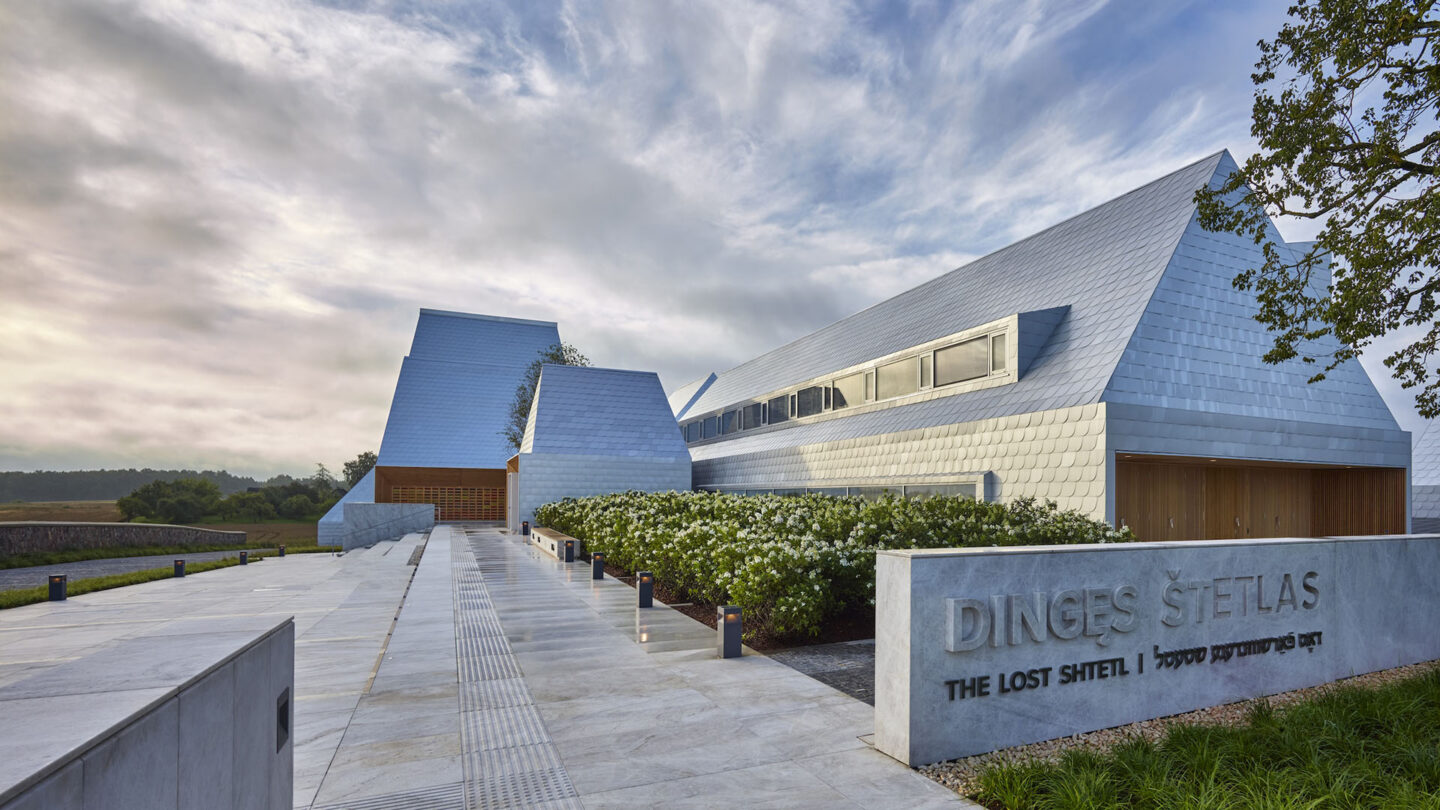
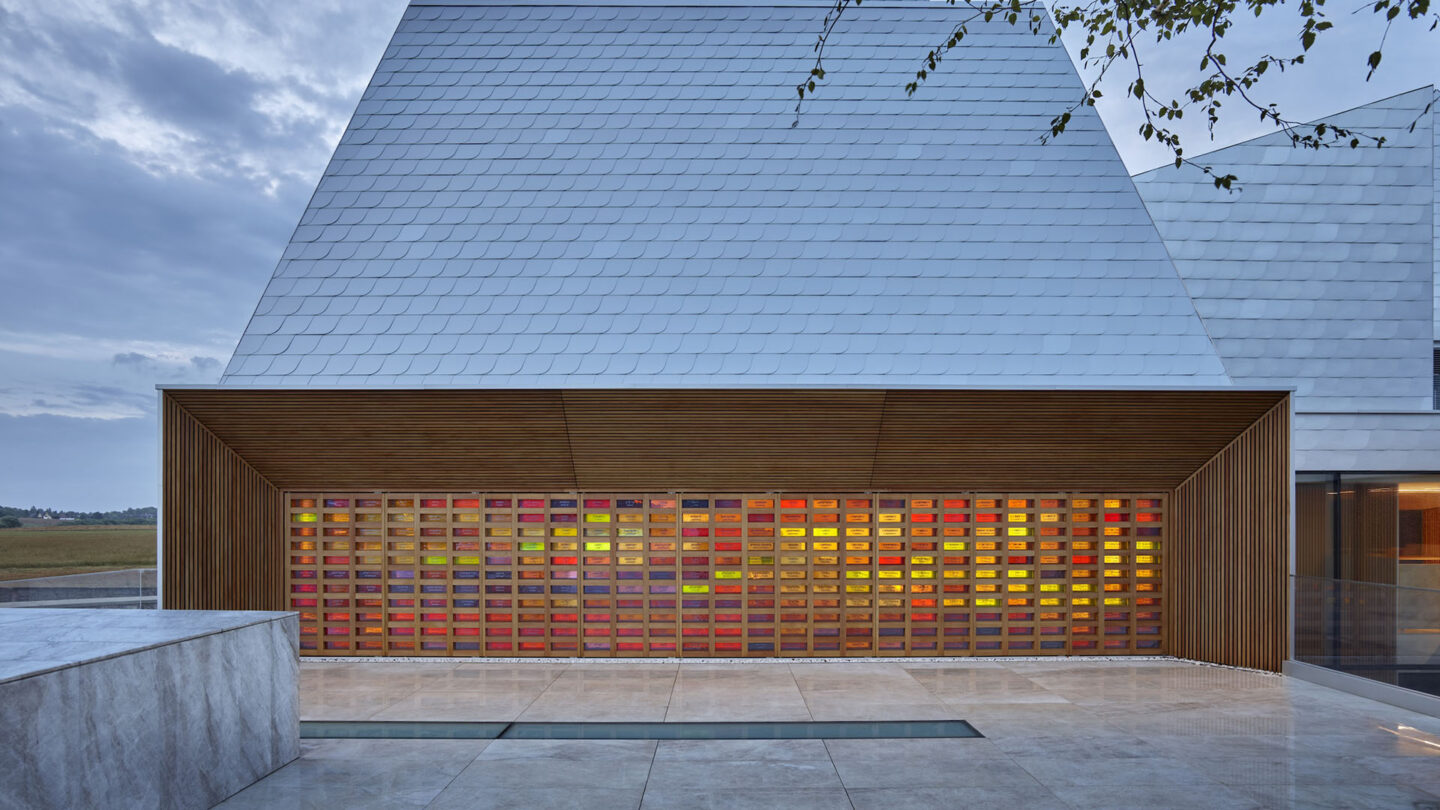
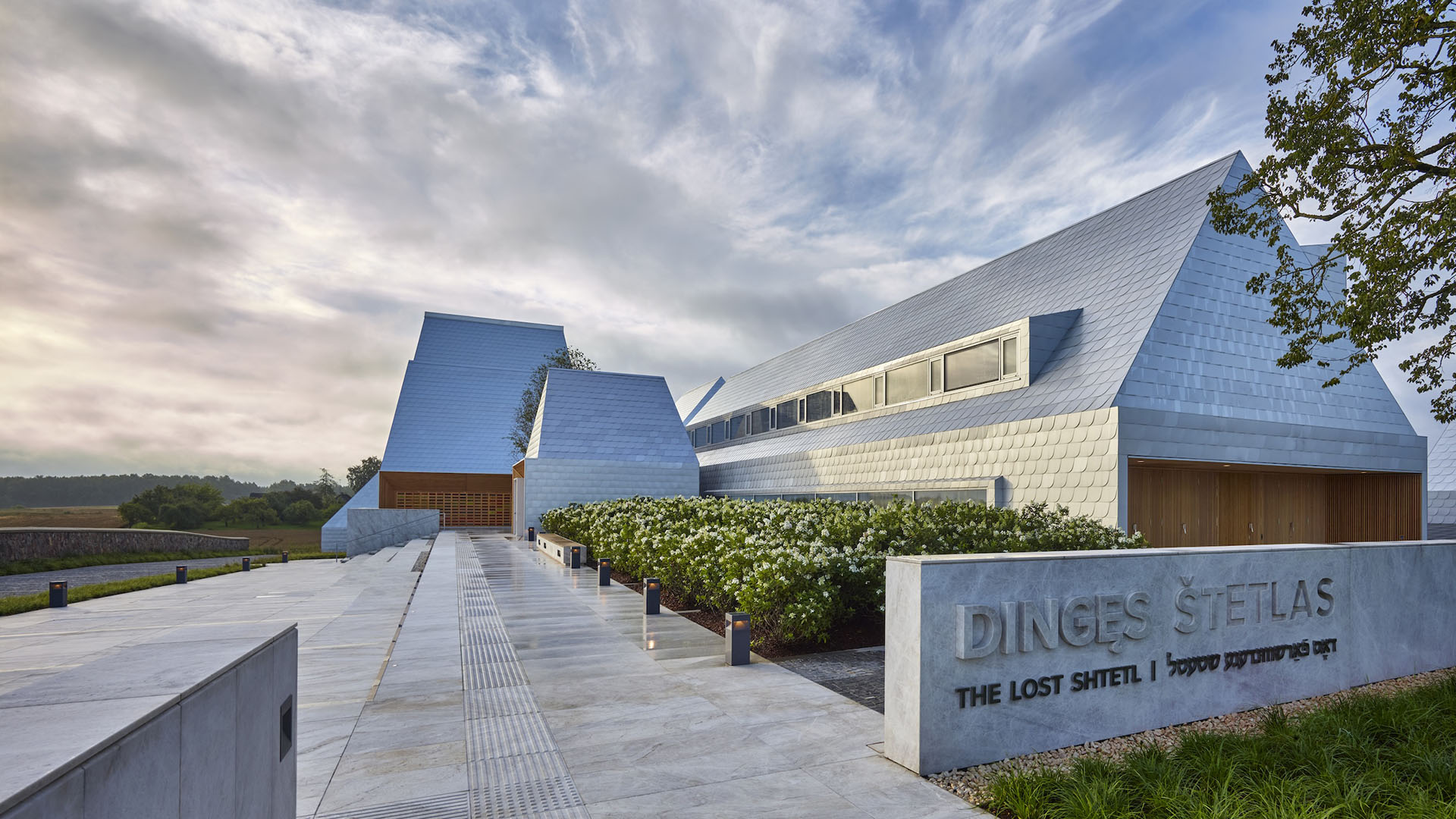
The building itself is conceived as a “ghost” of a shtetl, emerging in the Lithuanian landscape in front of the restored Jewish cemetery in Šeduva. Its anodized aluminum shingle façade reflects light and weather so that, under cloudy skies or snow, the building nearly disappears—an intentional architectural gesture of loss and impermanence.
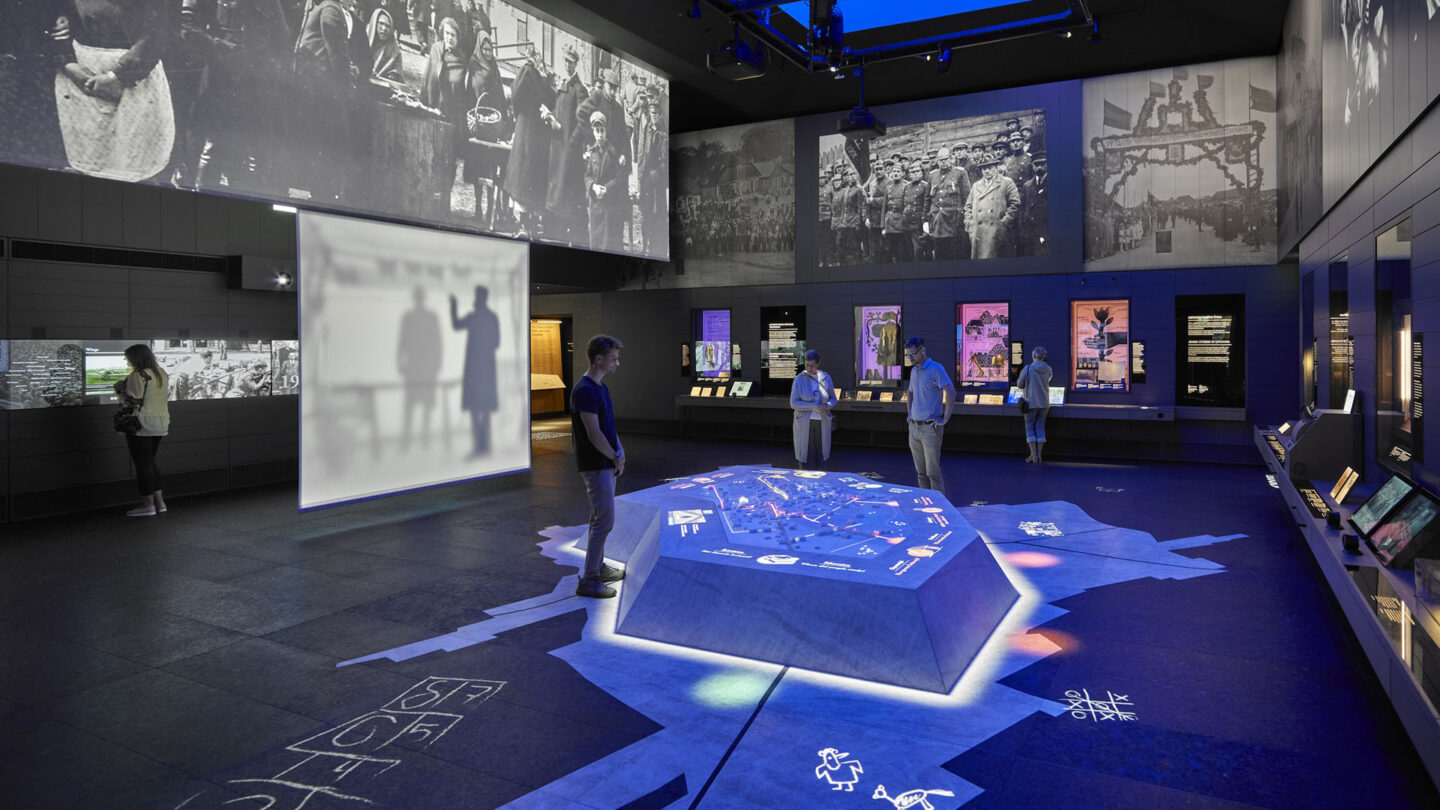
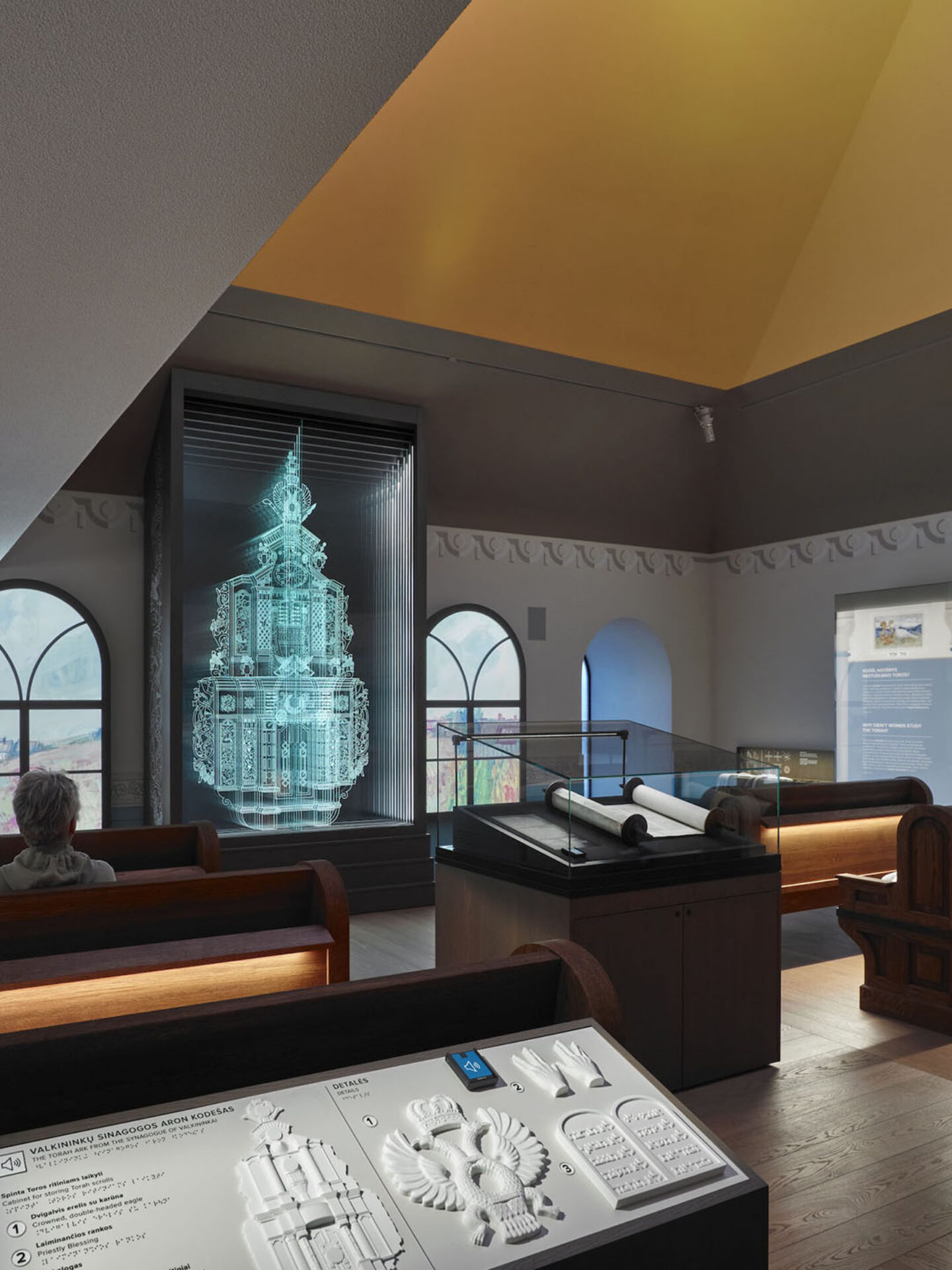
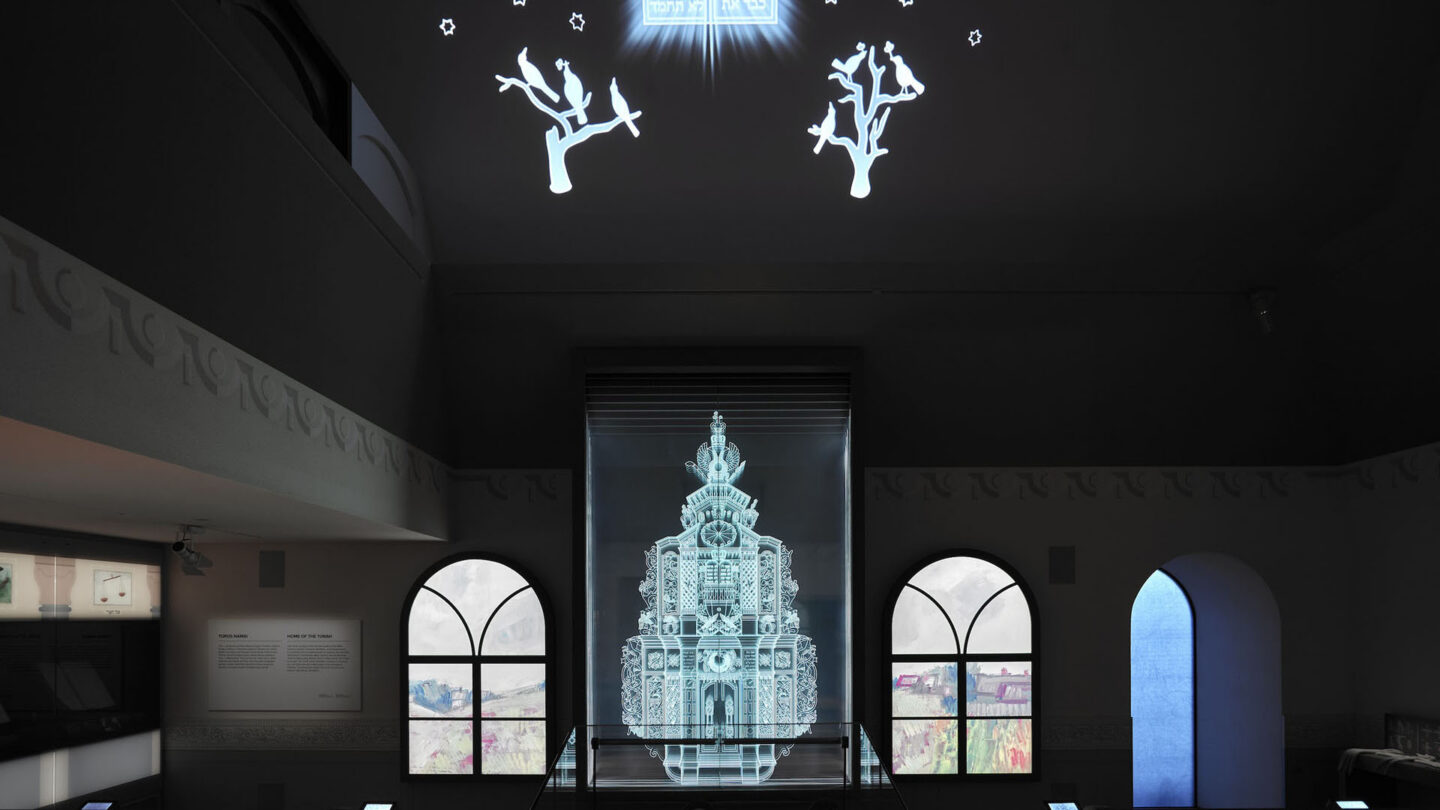
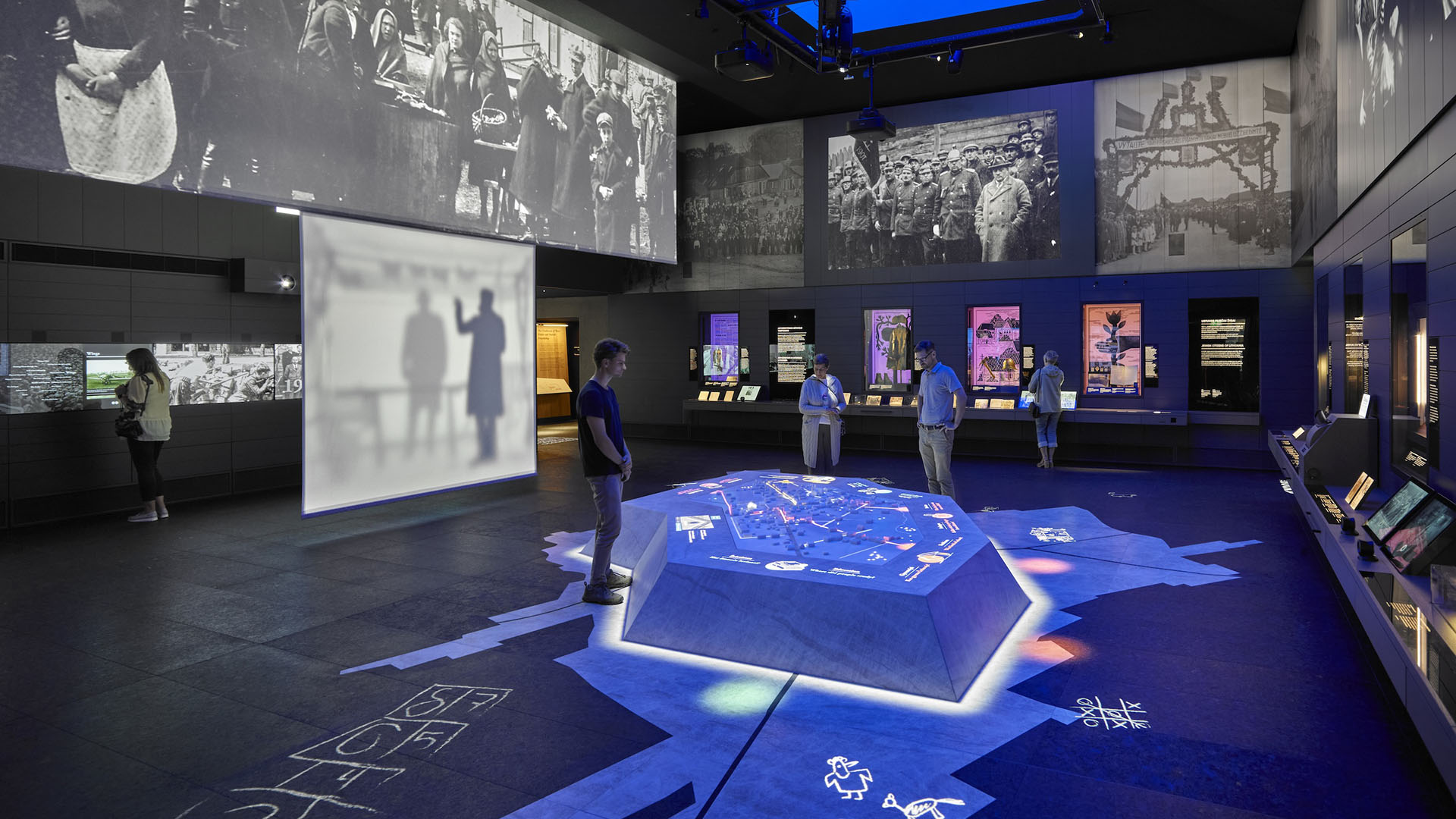
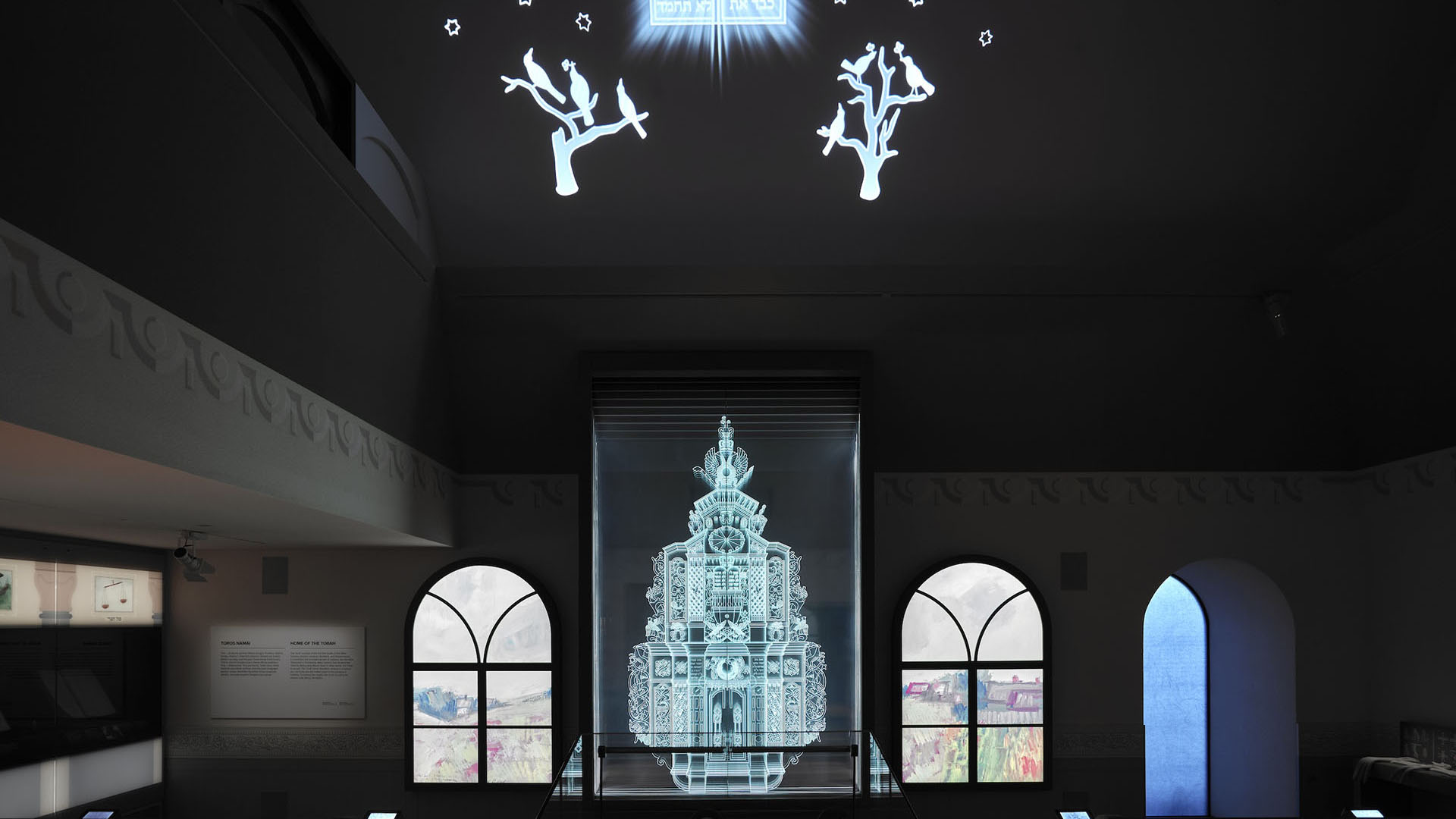
This idea continues throughout the exhibitions, which tell the story of Jewish life that once flourished in Šeduva and Lithuania. Visitors are encouraged to physically interrupt projections and environmental graphics, referencing the historical interruption of Jewish lives. A central moment is the etched, layered glass Torah ark sculpture, designed as a “ghost,” animated by breathing light that activates its details and projects Jewish symbols onto the ceiling—momentarily bringing presence back into absence.
The Lost Shtetl was created by an international team of curators, designers, builders, and experts. Architect Rainer Mahlamäki (Lahdelma & Mahlamäki Architects) drew inspiration from the surrounding landscape and the simple, saddle-roofed forms of traditional buildings to imagine a shtetl re-emerging from the land. The museum rises from Lithuanian farmland before a restored Jewish cemetery. Its anodized aluminum shingle façade catches and reflects the light, allowing the building to seemingly vanish and reappear in shifting weather.
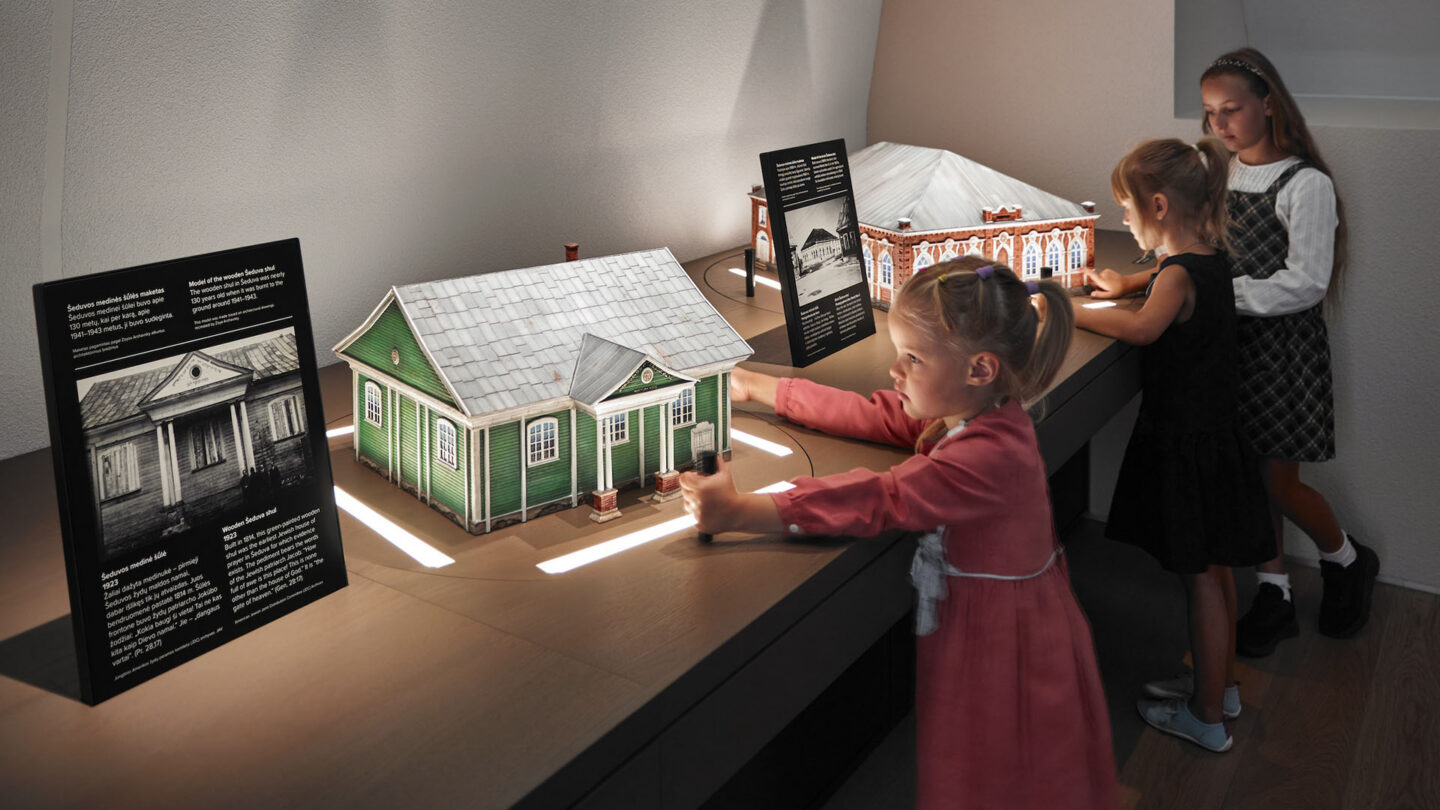
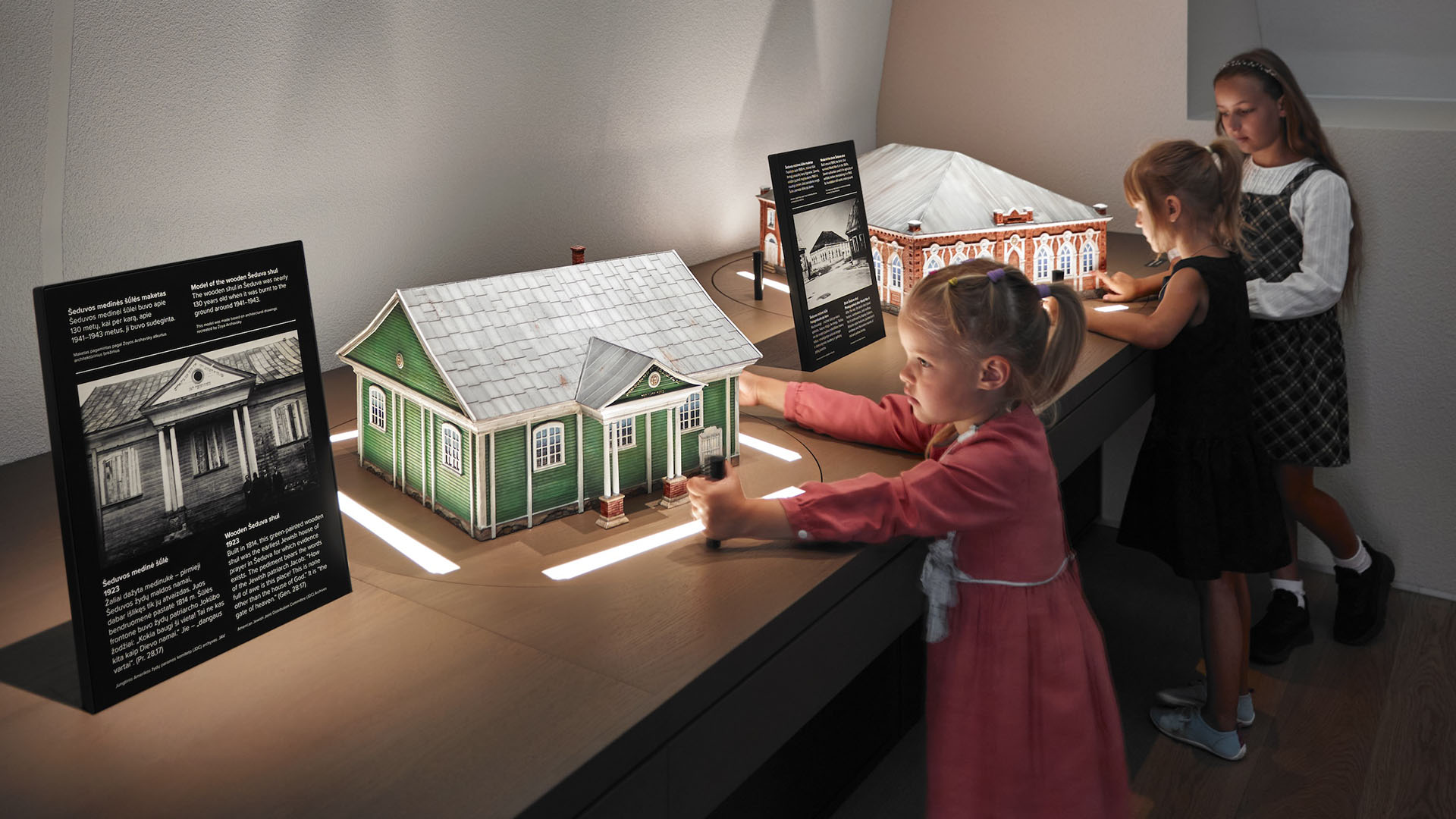
The exhibition embraces the “Lost Shtetl” concept, honoring the once-thriving Jewish life of Šeduva. Dedicated to preserving what remains, the museum brings together hundreds of objects and photographs collected from descendants worldwide—forming a living scrapbook that safeguards the memory of a Lithuanian shtetl and shtetls throughout Eastern Europe.
The exhibitions were custom-designed to reflect and honor this unique history. Main galleries celebrate the richness of shtetl culture, with design elements that subtly reference absence and memory. Media experiences include cinematic displays of shtetl life and celebrate Litvak culture. The museum serves as a memorial to over 600 Jews of Šeduva and almost 200,000 Jews of Lithuania, an overwhelming majority of whom perished during the Holocaust.
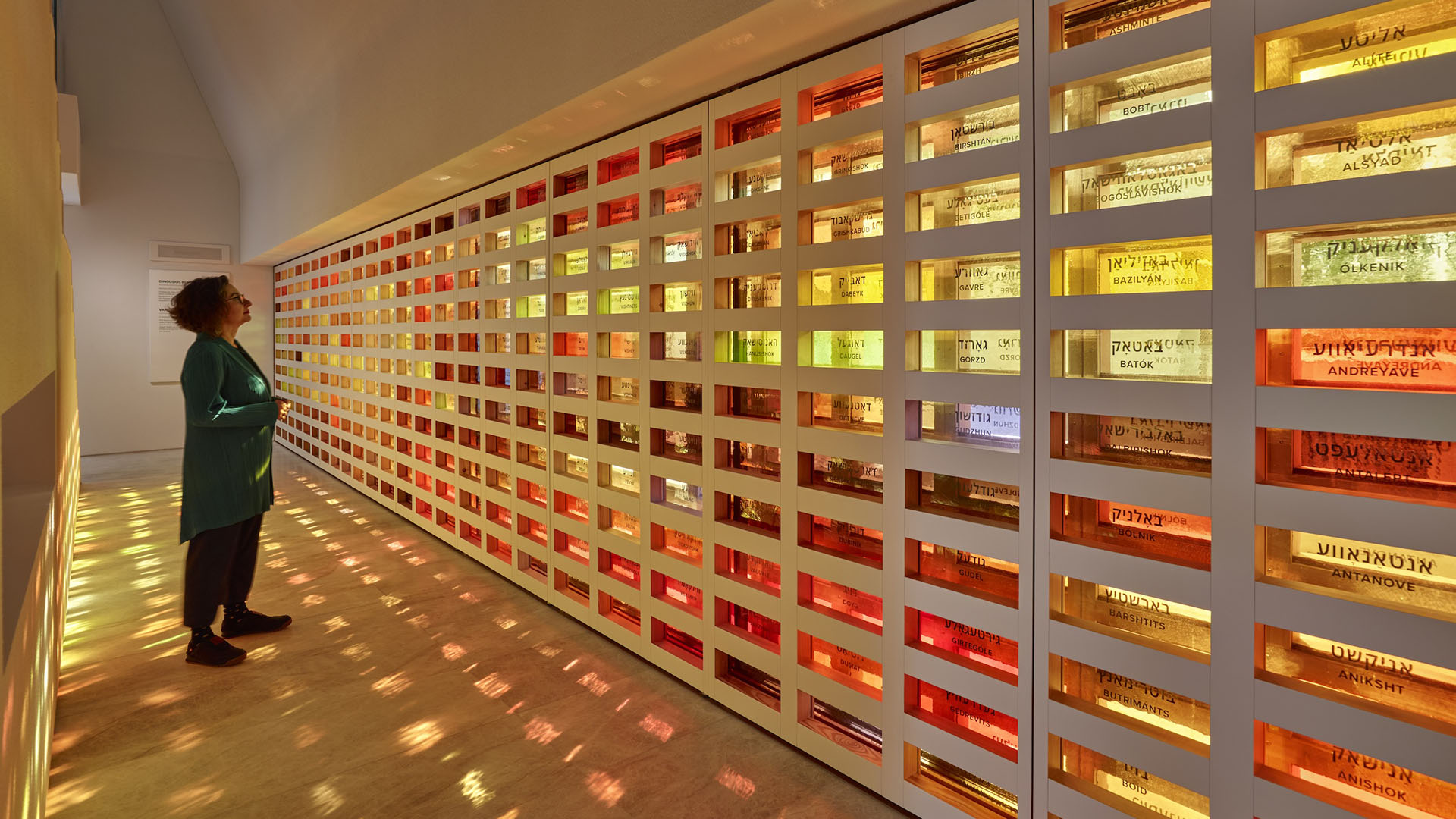
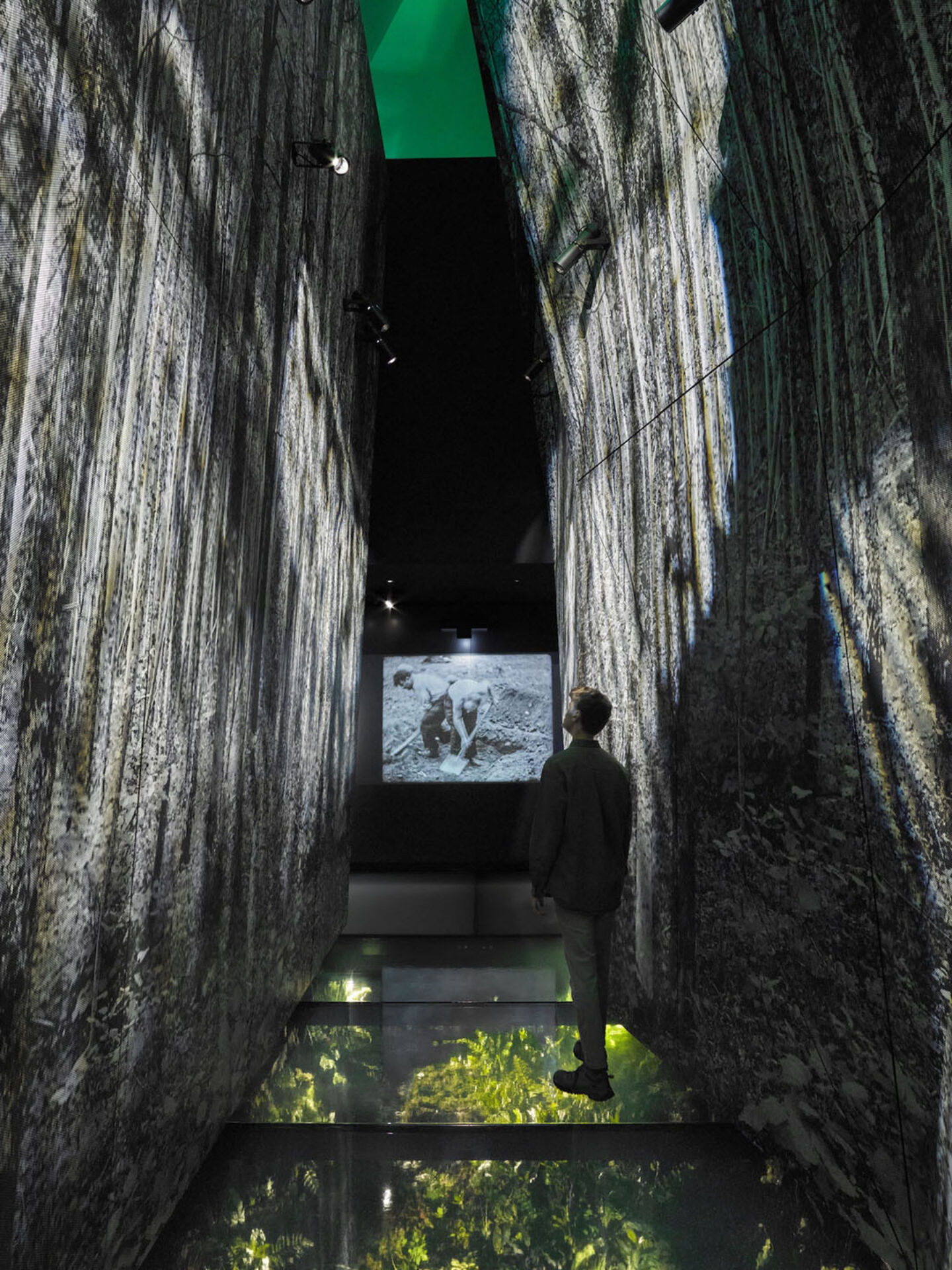
The journey begins in the world of the shtetl, radiant with community life, culture and tradition, while grounded in history: invasion, occupation, and the Holocaust that silenced Šeduva’s Jewish community. From this loss, remembrance emerges, where names preserve the memory of Šeduva’s Jews and all Lithuania’s lost shtetls. In the final chapter of the exhibition, images and paintings summon the community one last time, inviting reflection, before giving way to the Canyon of Hope, which overlooks the restored cemetery—a space of silence, resilience, and renewal.
Andrew Lee
Andrew Lee
Andrew Lee
Andrew Lee
Andrew Lee
Project Details
The realization of the intangible concepts of loss and remembrance through physical place and form creates a haunting environment that connects past lives to modern day.
Few exhibitions weave the multi-disciplinary components together so seamlessly and fluidly—extending events beyond the building to even the transition from physical structure to its outdoor environment.
Design Team
Büke Kumyol (creative director, project manager)
Rick Sobel (project director)
Carlin Wragg (director, RAA media)
Paul Williams (senior content developer)
Kirsten Amundsen (lead content manager)
Maggie Jacobstein (content manager)
Areej Kahn (visual designer)
Mary Choueiter (visual designer)
Robert Homack (visual designer)
Jesen Tanadi (visual designer)
Kelsey Mitchell (visual designer)
Steve Lancefield (graphic production designer)
Fabio Gerardi (senior visual designer)
Christina Stone (physical designer)
Daniel Greenfield (physical designer)
Natalia Oliveri (physical designer)
Sean Pattison (visual director, renderings)
Graham Kervin (model maker)
Andrew Papa (head of production)
Katarzyna Kozera (lead media designer)
Jamie Boud (lead motion designer)
Elena Kindy (executive production coordinator)
Collaborators
Lahdelma & Mahlamäki Architects (architecture)
Enea (landscape architecture)
Hypsos (exhibit fabricator)
Studio 2A (architect of record)
Ecas (project manager)
Trias (av integrator and software developer)
50 Lux (exhibit lighting designer)
Heli Nikunen (architectural and exhibition lighting designer)
Sehner (museum display cases)
Tactile Studios (inclusive wayfinding and tactile designer)
Mutrox (speciality sound theater designer)
Karl Bucher (furniture and millwork)
Schorimaffioli (architectural stone and speciality stone)
Glass Mäder (speciality glass)
Baltijosplienas, Incorpus (general contractors)
Spice Metal (speciality metal works)
Dot Crew (interactive multimedia design)
Made Music Studio (sound design)
SideXSide Studios (documentary producer)
UAB Starlinga (exhibition videography)
Photo Credits
Andrew Lee (photography), RAA Media (videography)
Open Date
September 2025
More in Exhibition
All Projects-
Read more Sculpting History at the Valentine Studio: Art, Power, and the “Lost Cause” American Myth
Sculpting History at the Valentine Studio: Art, Power, and the “Lost Cause” American Myth
-
Read more Folger Shakespeare Library Museum

Folger Shakespeare Library Museum
-
Read more Hunterian Museum
Hunterian Museum
Casson Mann -
Read more Fallout: Atoms for War + Peace
Fallout: Atoms for War + Peace
Kudos Design Collaboratory, KASA Collective -
Read more FAMily Discovery Center
FAMily Discovery Center
Storyline Studio, LLC. -
Read more Grand Egyptian Museum: Tutankhamun Gallery
Grand Egyptian Museum: Tutankhamun Gallery
ATELIER BRÜCKNER -
Read more The Great Void. The Holocaust in Liepāja.
The Great Void. The Holocaust in Liepāja.
Design Studio H2E -
Read more Worcester Art Museum Arms and Armor Galleries
Worcester Art Museum Arms and Armor Galleries
TSKP x IKD -
Read more 12th SITE SANTA FE International: Once Within a Time
12th SITE SANTA FE International: Once Within a Time
A Practice for Everyday Life