Fallout: Atoms for War + Peace
Fallout: Atoms for War & Peace chronicles the global development of the nuclear industry, tracing its dual legacy of peaceful applications and military destruction. Two days before the outbreak of World War II, a scientific paper described the theoretical process of nuclear fission, in which the controlled splitting of an atomic nucleus releases a vast amount of energy. Over the next decade, scientists worldwide perfected this process, producing two of the most impactful inventions of the modern era: the nuclear bomb and the nuclear power station.
Agency
Kudos Design Collaboratory, KASA Collective
Practice Area
Client
Poster House
Industry
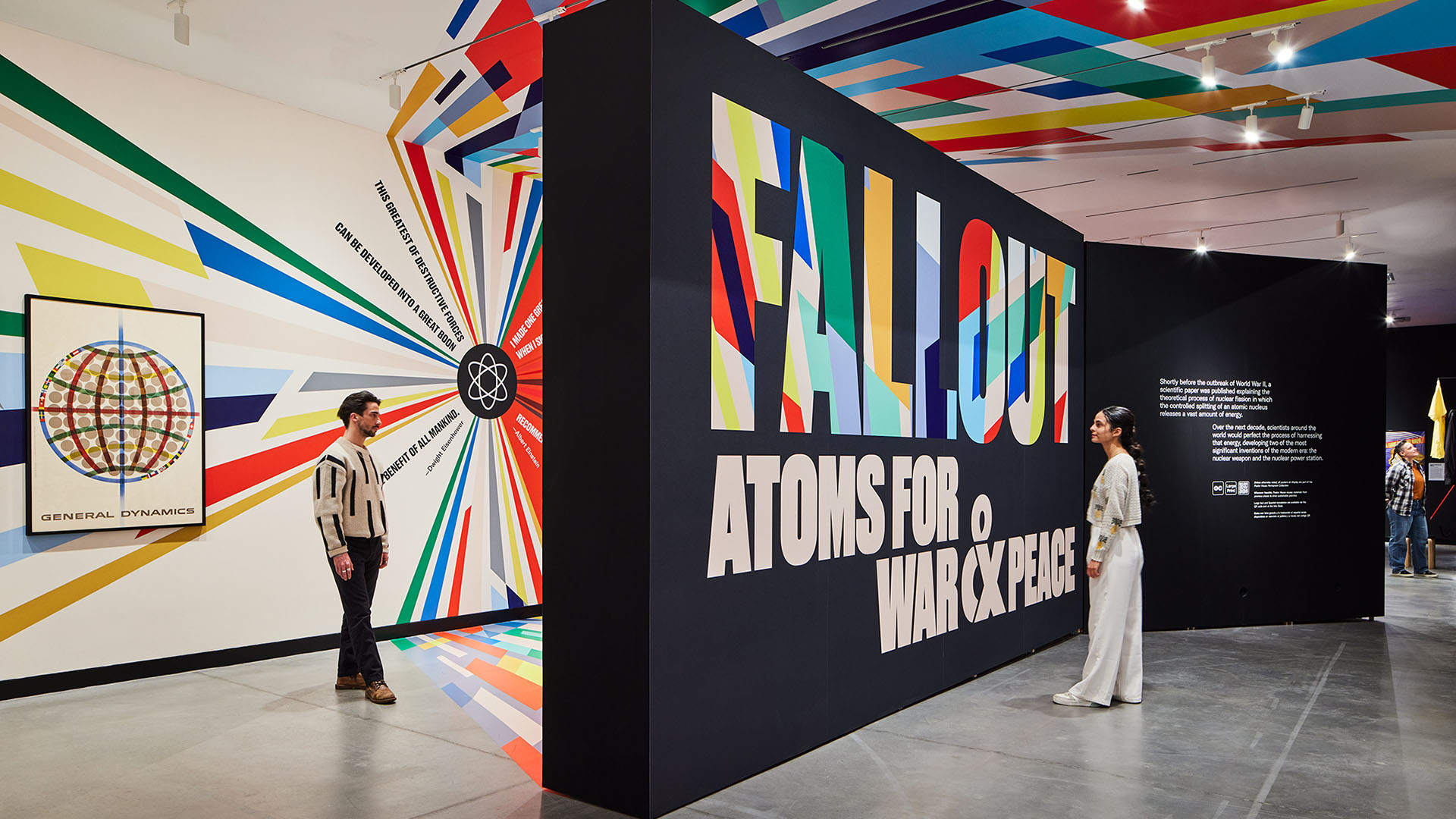
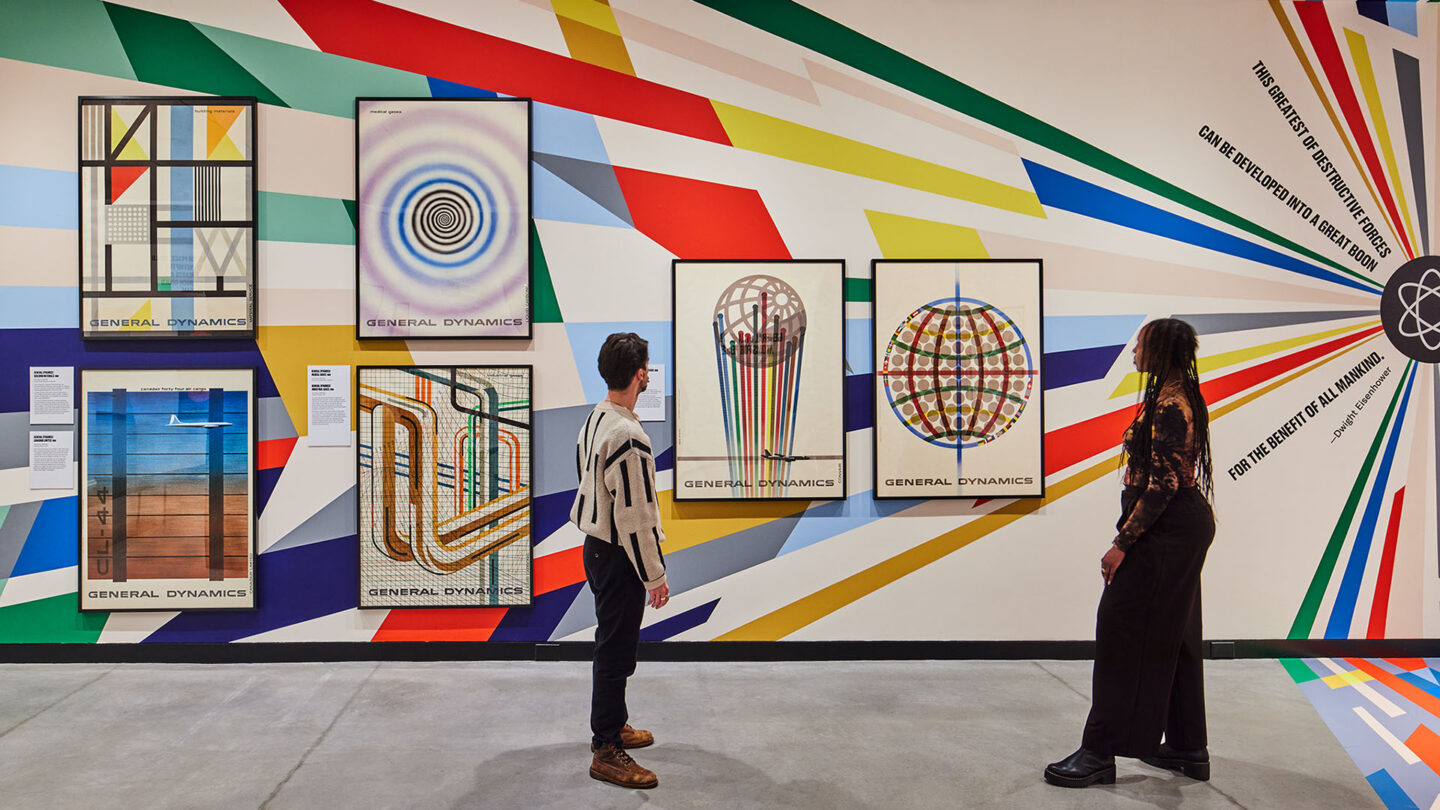
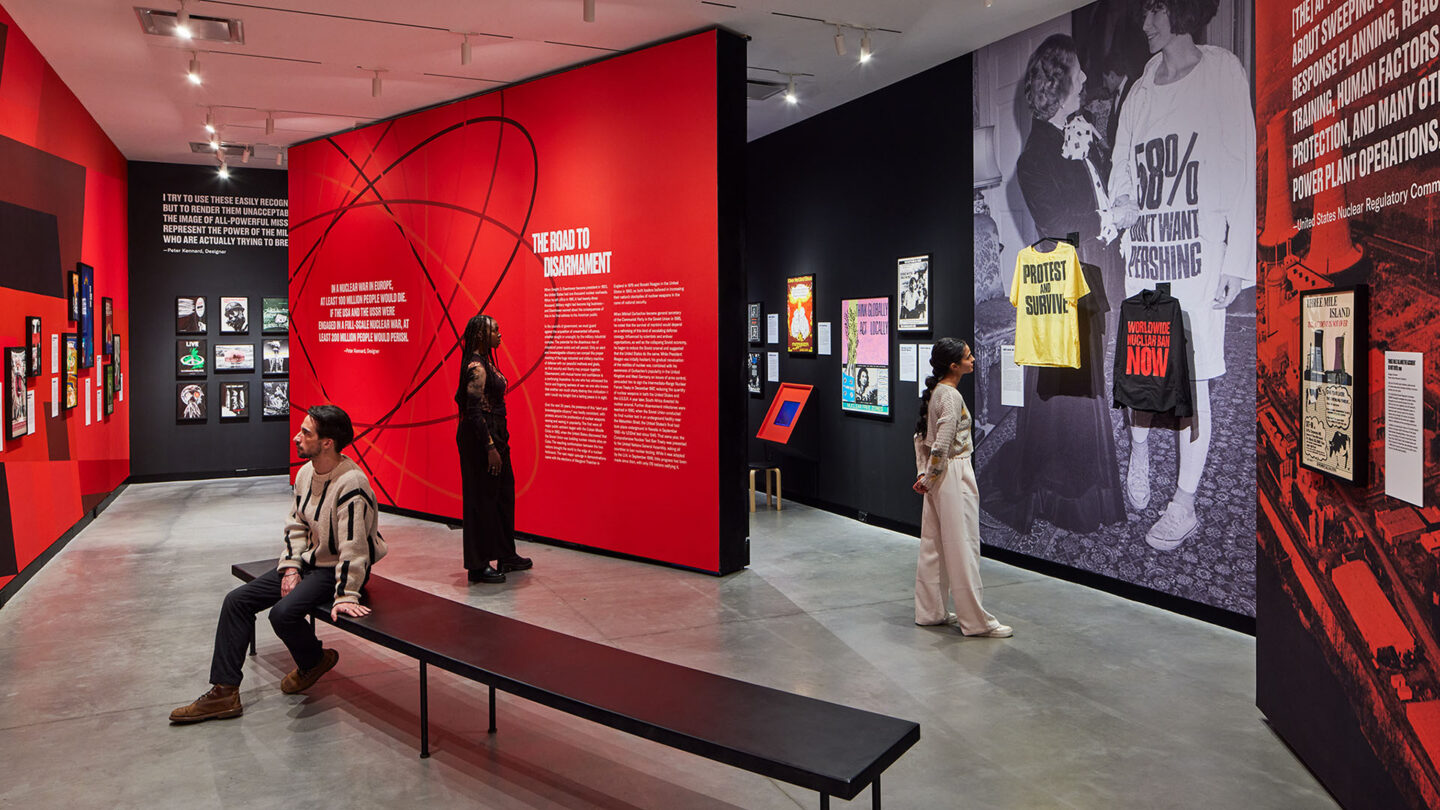
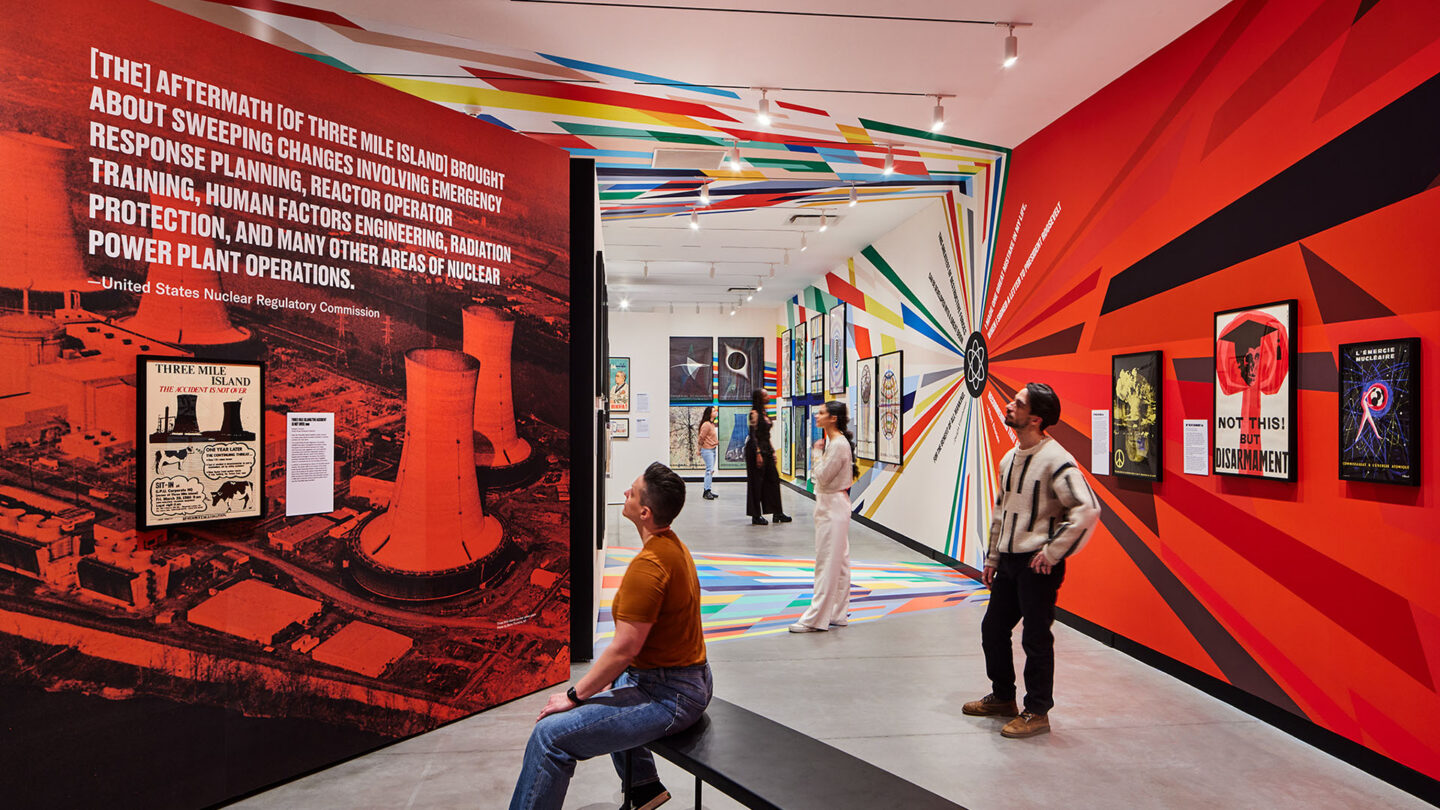
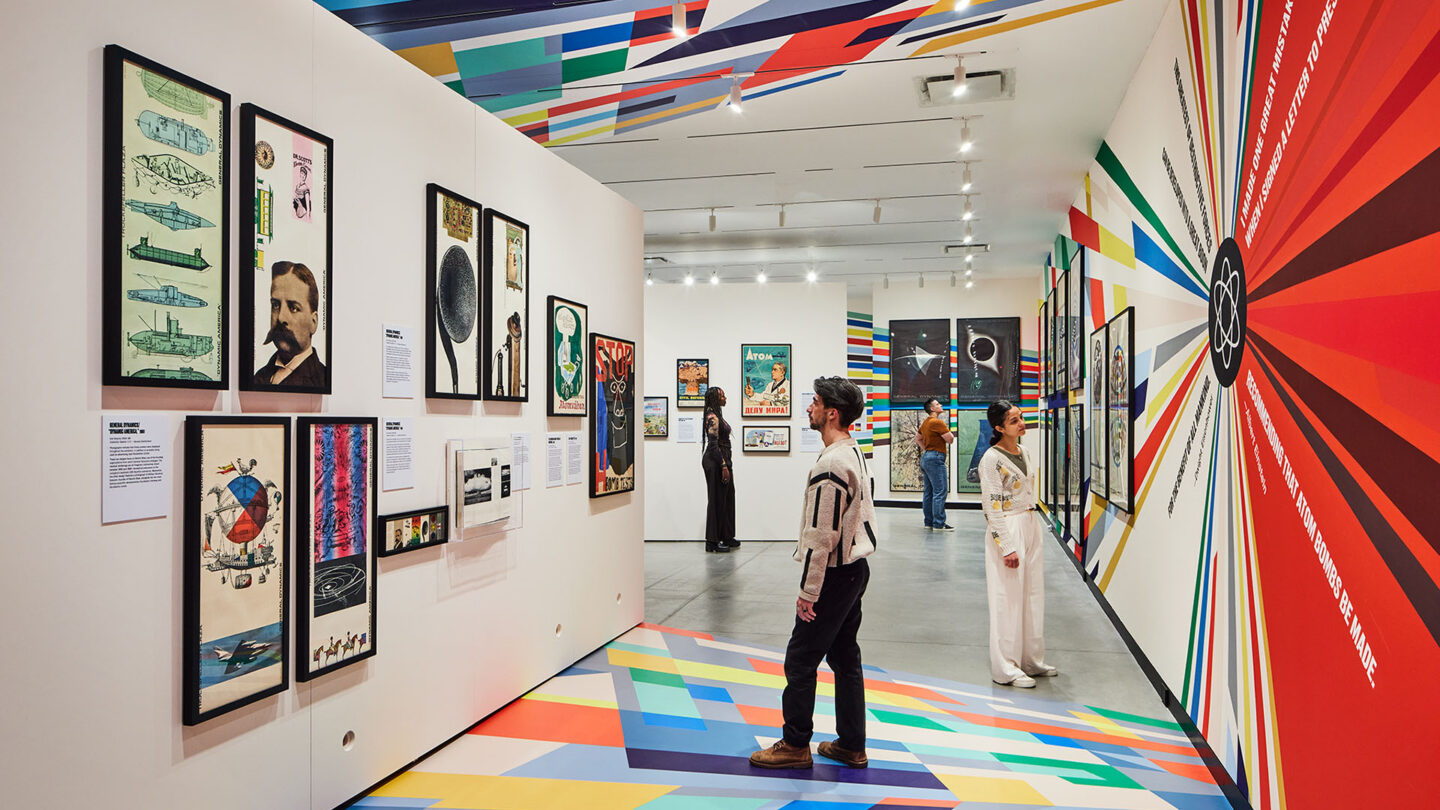
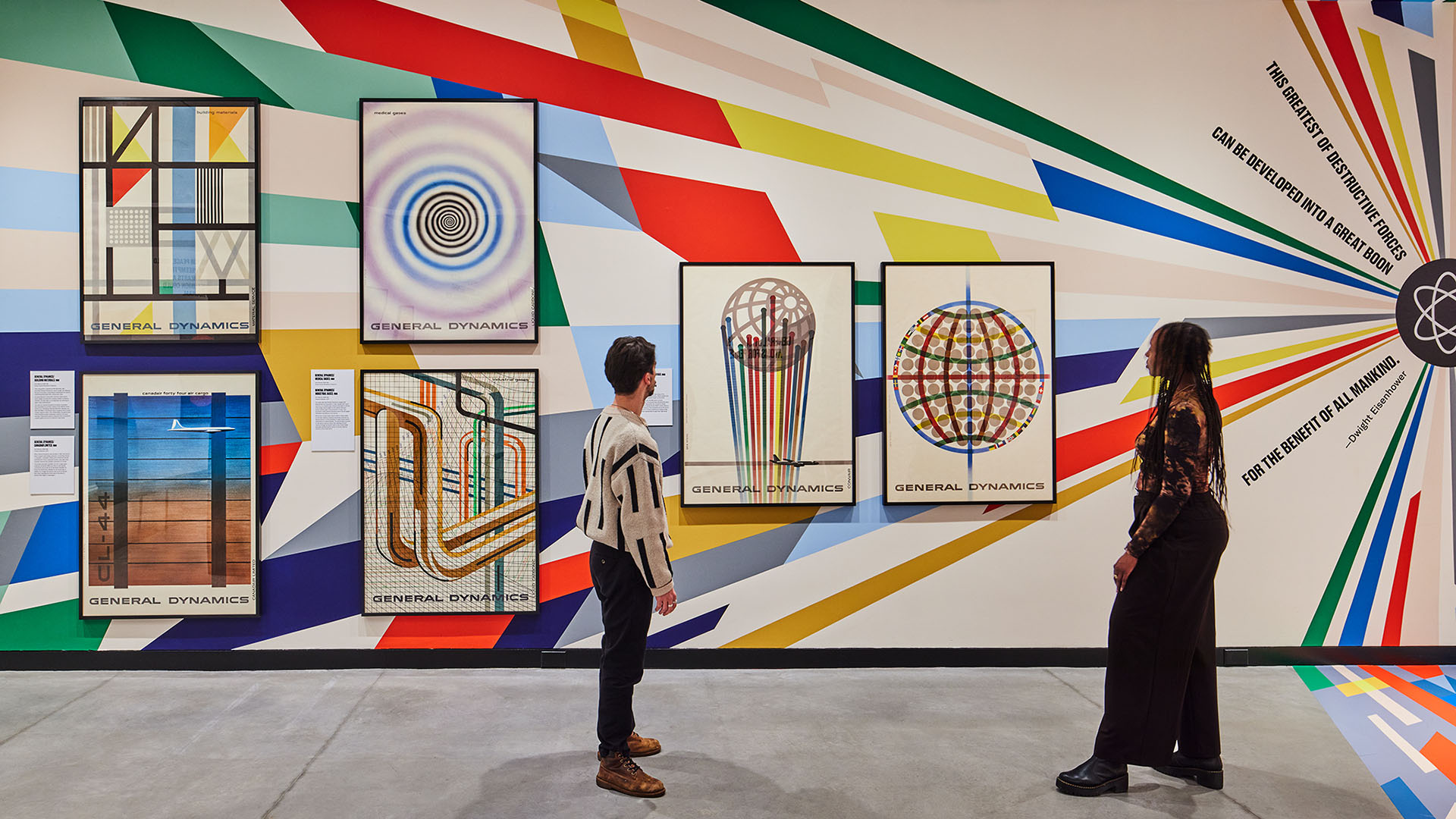
The exhibition examines the visual culture surrounding this transformative technology, featuring posters that both promoted and protested nuclear energy throughout the second half of the 20th century. Central to the exhibition is the complete General Dynamics poster series, widely regarded as the finest examples of corporate propaganda ever created, alongside more than 60 other posters critiquing the proliferation of nuclear technology. Curated by Angelina Lippert and Tim Medland, the exhibition situates these works within a historical and cultural context that explores ambition, fear, and the politics of power.
The Challenge
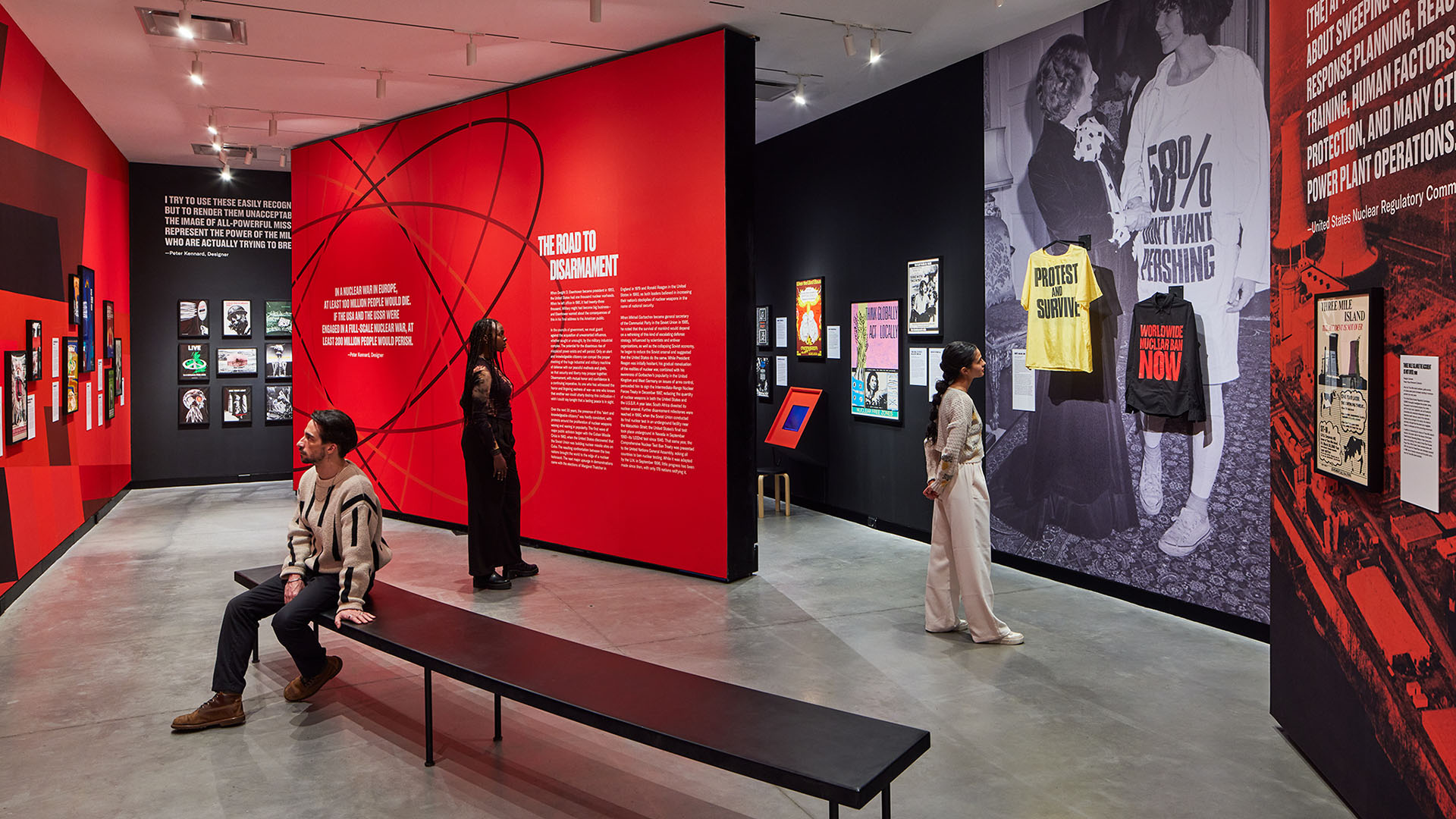
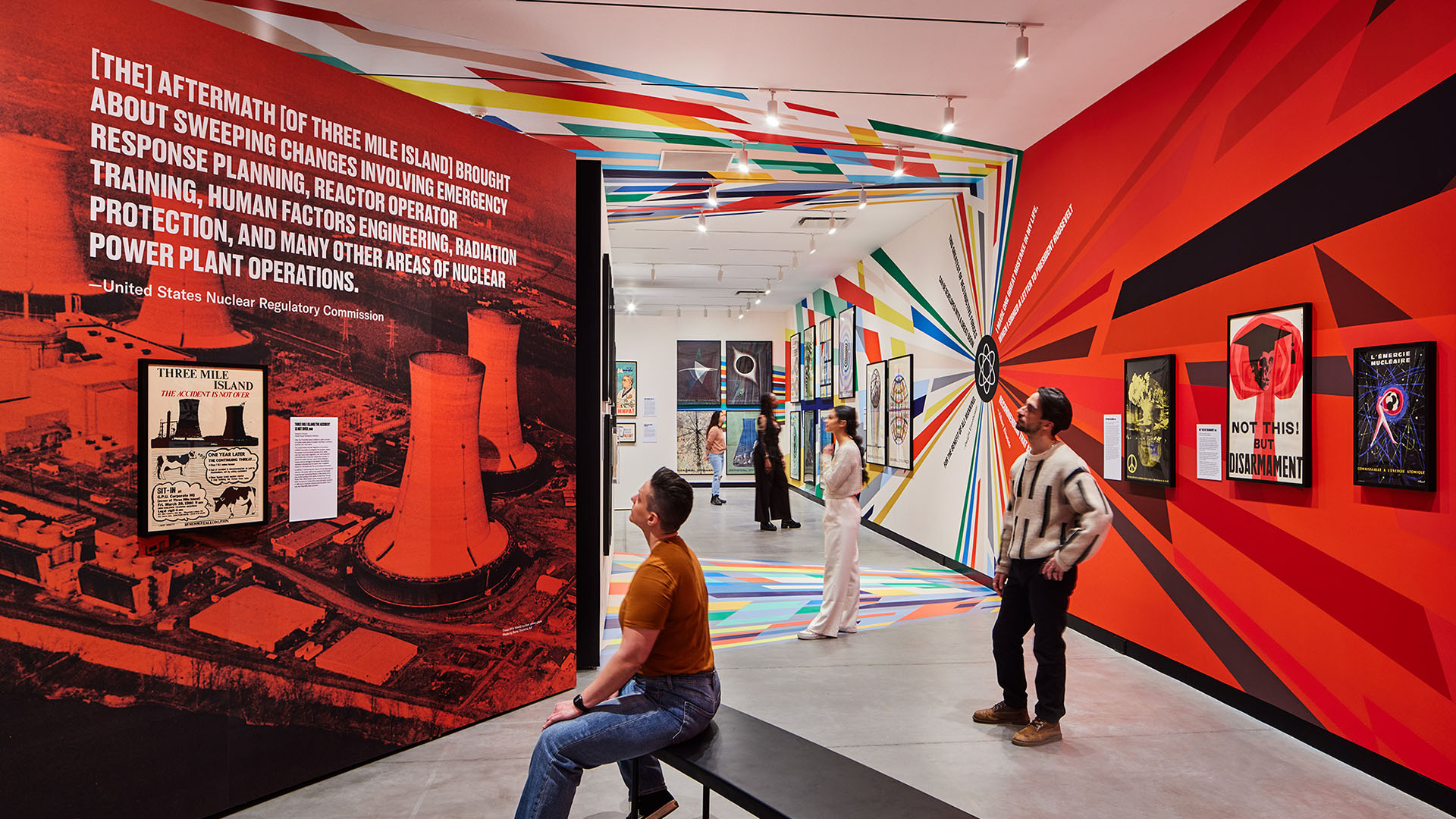
One of the central challenges of Fallout: Atoms for War & Peace was translating a nuanced curatorial narrative into a physical experience that could communicate the ideological split at the heart of nuclear technology. The exhibition needed to balance two opposing histories—optimism surrounding scientific advancement and the fear generated by nuclear warfare and environmental catastrophe—while maintaining a cohesive visitor journey. Organizing the material into juxtaposed thematic groupings required an exhibition design that could dramatically shift tone and atmosphere between the two major sections of the show without disrupting the overall narrative flow.
Project Vision
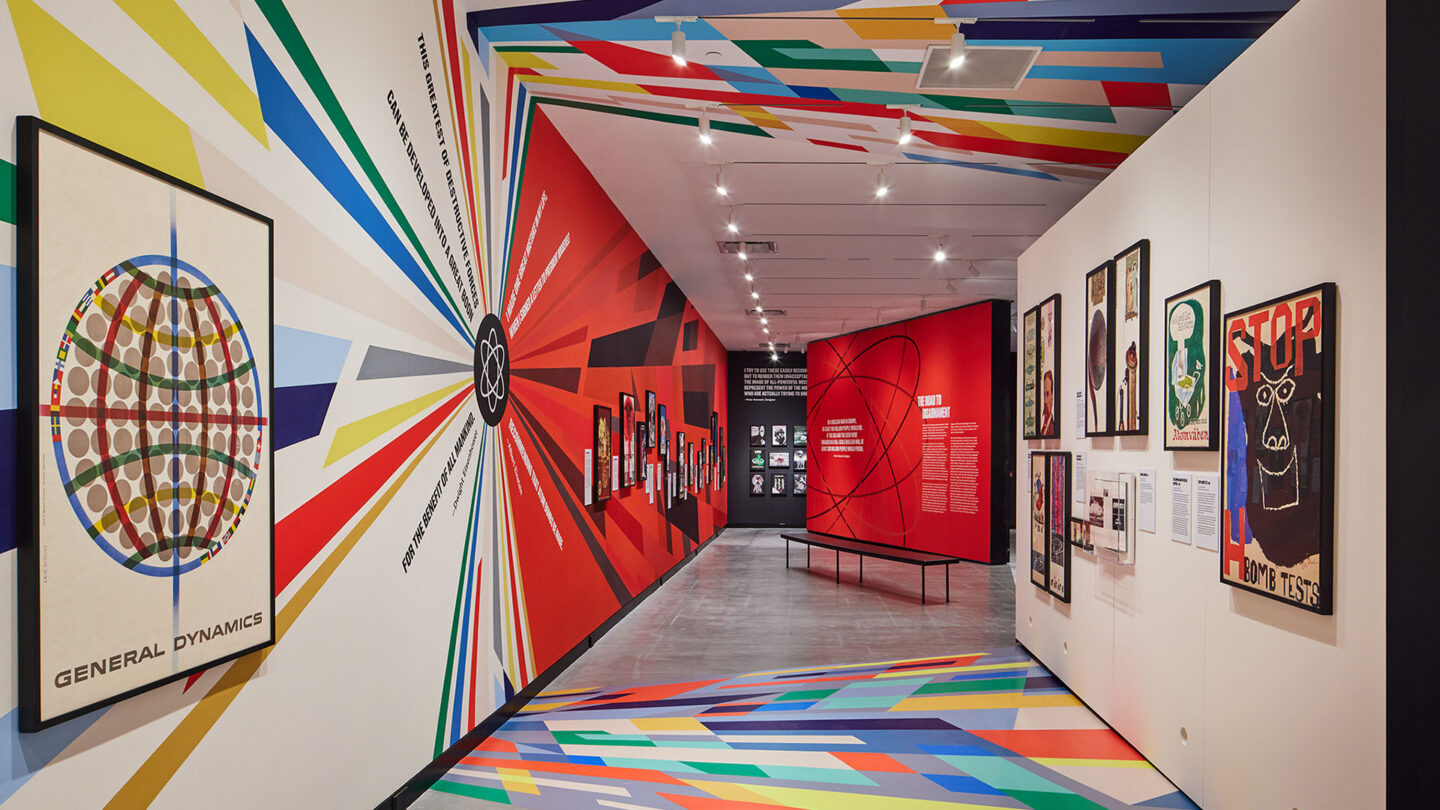
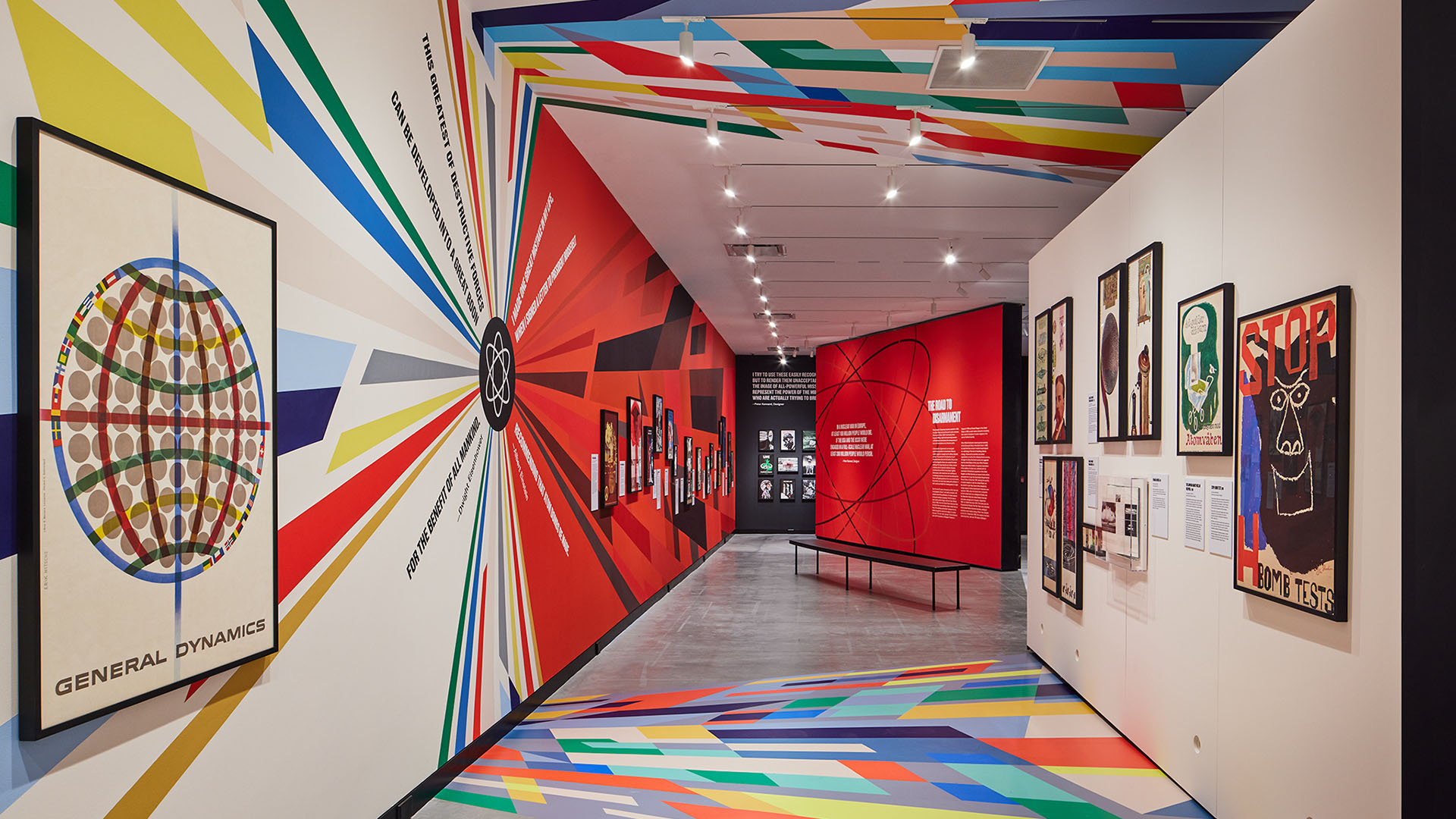
The vision for the exhibition was to immerse visitors in the cultural and emotional contradictions embedded within the nuclear age. Drawing inspiration from Erik Nitsche’s Atoms for Peace poster and its visualized “explosion” of opposing ideologies, the exhibition sought to create a dynamic spatial experience that mirrored the promise and peril of atomic energy. The design aimed to move visitors from the vibrant optimism of postwar technological ambition into the increasingly urgent and fear-driven anti-nuclear movements of the late 20th century, using visual language, color, scale, and spatial transitions to reinforce the curatorial narrative.
Samuel Morgan Photography, curtesy of Poster House
Samuel Morgan Photography, curtesy of Poster House
Design + Execution
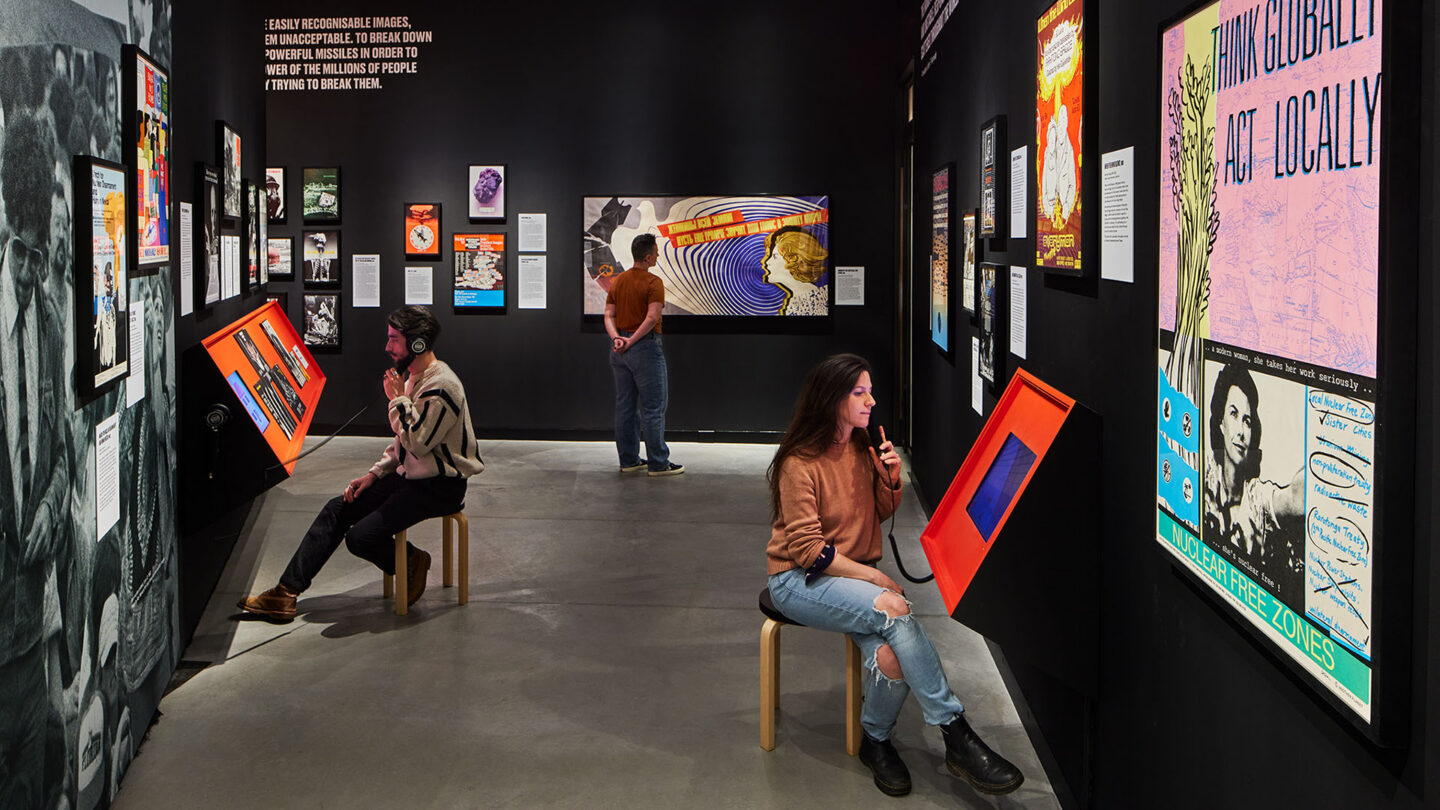
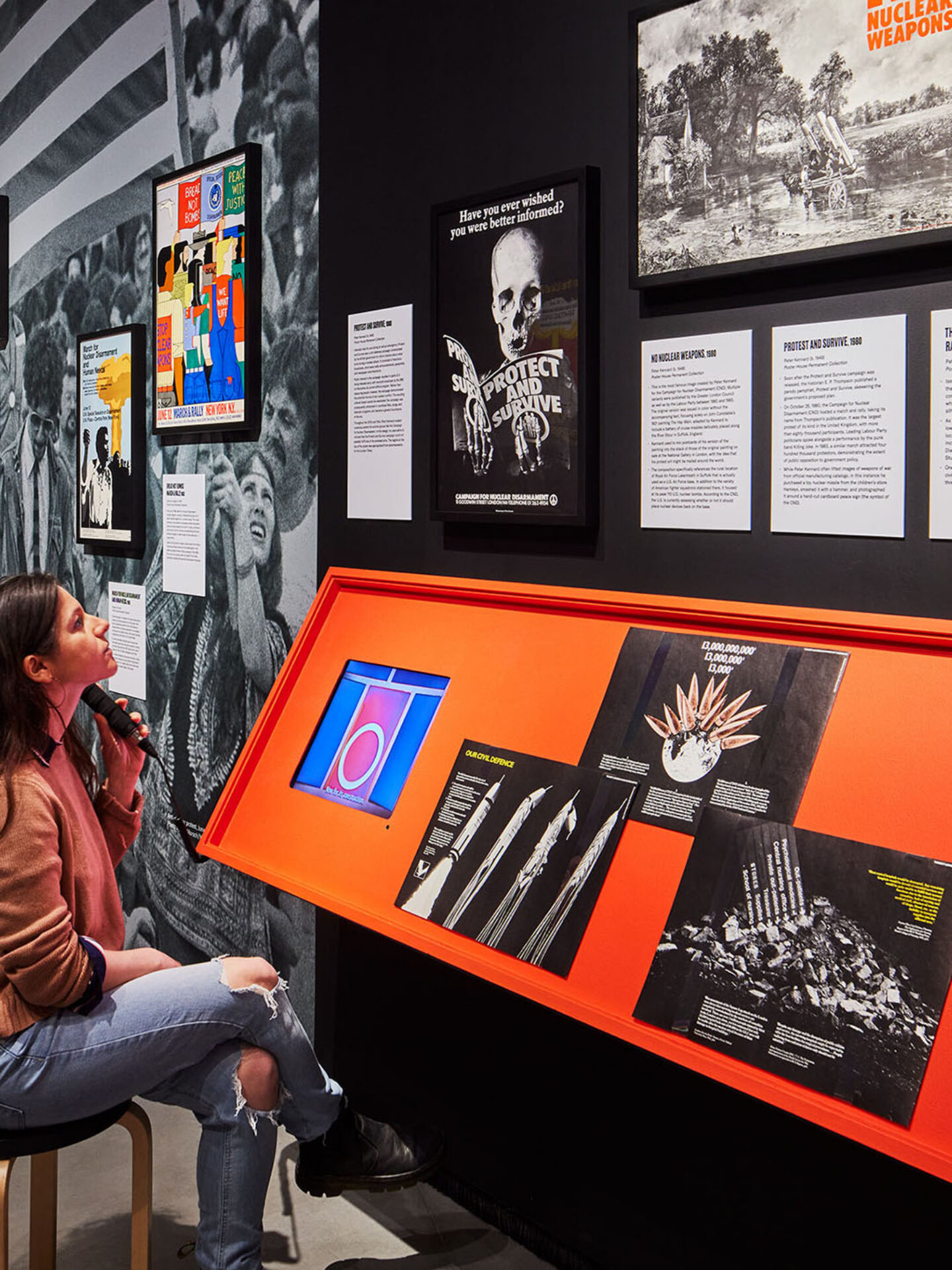
The exhibition design extrapolated from the compositional energy of Nitsche’s work, using bold graphics, angled architectural interventions, and layered sightlines to evoke the dispersal of energy, information, and political ideology. The first section embraced bright, expansive color palettes and optimistic visual rhythms inspired by corporate propaganda and visions of technological progress. As visitors progressed through the exhibition, the atmosphere shifted dramatically through darker tones, sharper contrasts, and more compressed spatial relationships that reflected the anxiety and urgency of anti-nuclear activism. Large-scale reproductions of posters amplified the impact of typography and image-making, while walls and partitions guided visitors through carefully orchestrated moments of contrast, tension, and reflection.
Samuel Morgan Photography, curtesy of Poster House
Samuel Morgan Photography, curtesy of Poster House
Samuel Morgan Photography, curtesy of Poster House
Samuel Morgan Photography, curtesy of Poster House
Samuel Morgan Photography, curtesy of Poster House
Project Details
Dynamic graphics effectively activated the exhibition experience and unified the space.
Beautifully executed system for an already stunning collection of posters. The graphics complement the content that doesn't take away from the boldness of the posters themselves and brings a legible viewing experience.
Design Team
John Kudos (creative director)
Robert de Saint Phalle (3d creative director)
Amanda Knott (project manager)
Fay Qiu (designer)
Collaborators
Full Point Graphics
Drive 21 (fabrication)
Ola Baldych (creative producer)
Mihoshi Fukushima Clark (production designer and manager)
John F. Lynch (installation manager)
Rob Leonardi (builder)
Diego Cadeña (lead installer)
Photo Credits
Samuel Morgan (photography, videography)
Open Date
March 2025
More in Exhibition
All Projects-
Read more Sculpting History at the Valentine Studio: Art, Power, and the “Lost Cause” American Myth
Sculpting History at the Valentine Studio: Art, Power, and the “Lost Cause” American Myth
-
Read more Folger Shakespeare Library Museum

Folger Shakespeare Library Museum
-
Read more Hunterian Museum
Hunterian Museum
Casson Mann -
Read more FAMily Discovery Center
FAMily Discovery Center
Storyline Studio, LLC. -
Read more Grand Egyptian Museum: Tutankhamun Gallery
Grand Egyptian Museum: Tutankhamun Gallery
ATELIER BRÜCKNER -
Read more Lost Shtetl Museum
Lost Shtetl Museum
-
Read more The Great Void. The Holocaust in Liepāja.
The Great Void. The Holocaust in Liepāja.
Design Studio H2E -
Read more Worcester Art Museum Arms and Armor Galleries
Worcester Art Museum Arms and Armor Galleries
TSKP x IKD -
Read more 12th SITE SANTA FE International: Once Within a Time
12th SITE SANTA FE International: Once Within a Time
A Practice for Everyday Life