Grand Egyptian Museum: Tutankhamun Gallery
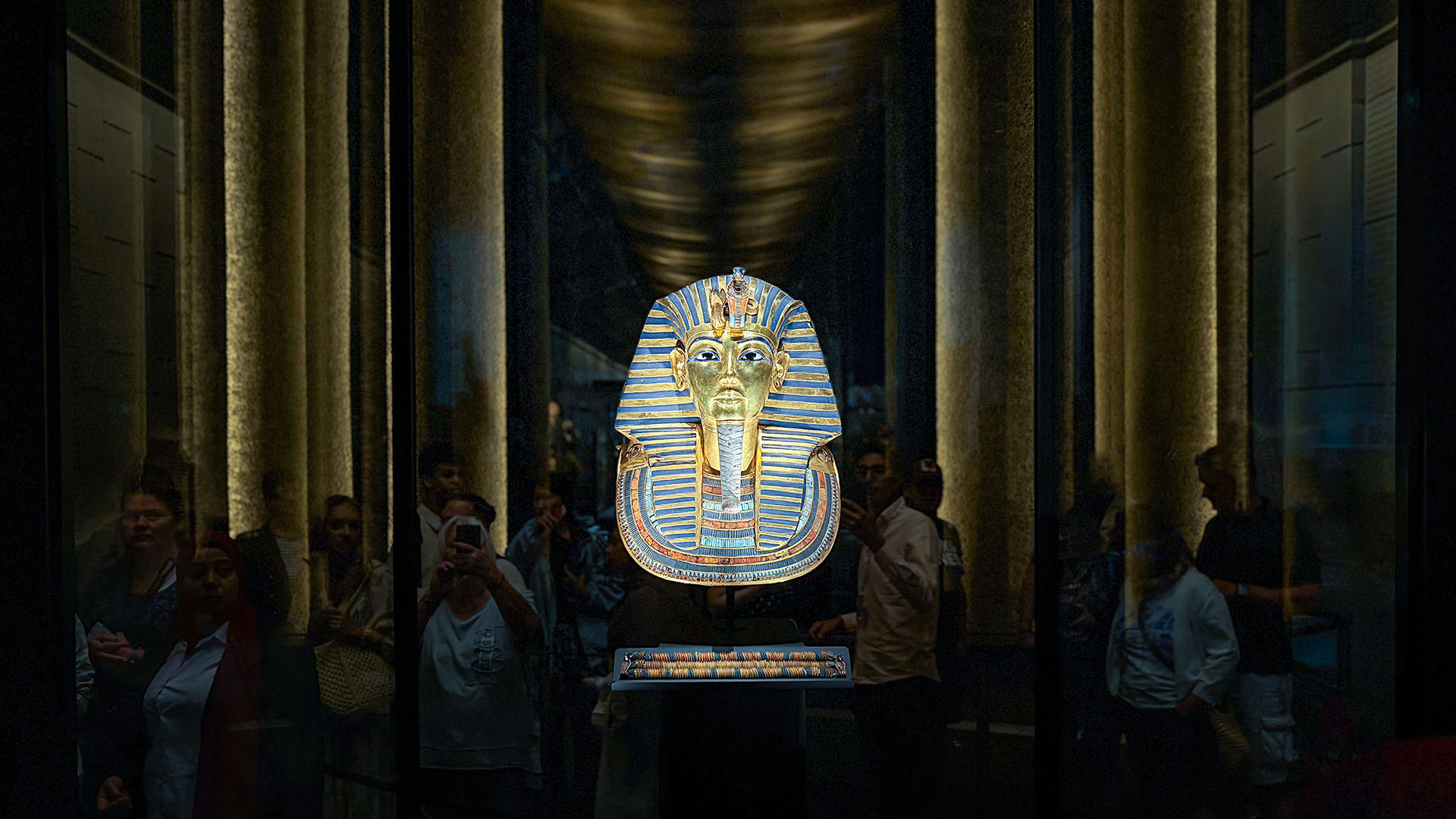
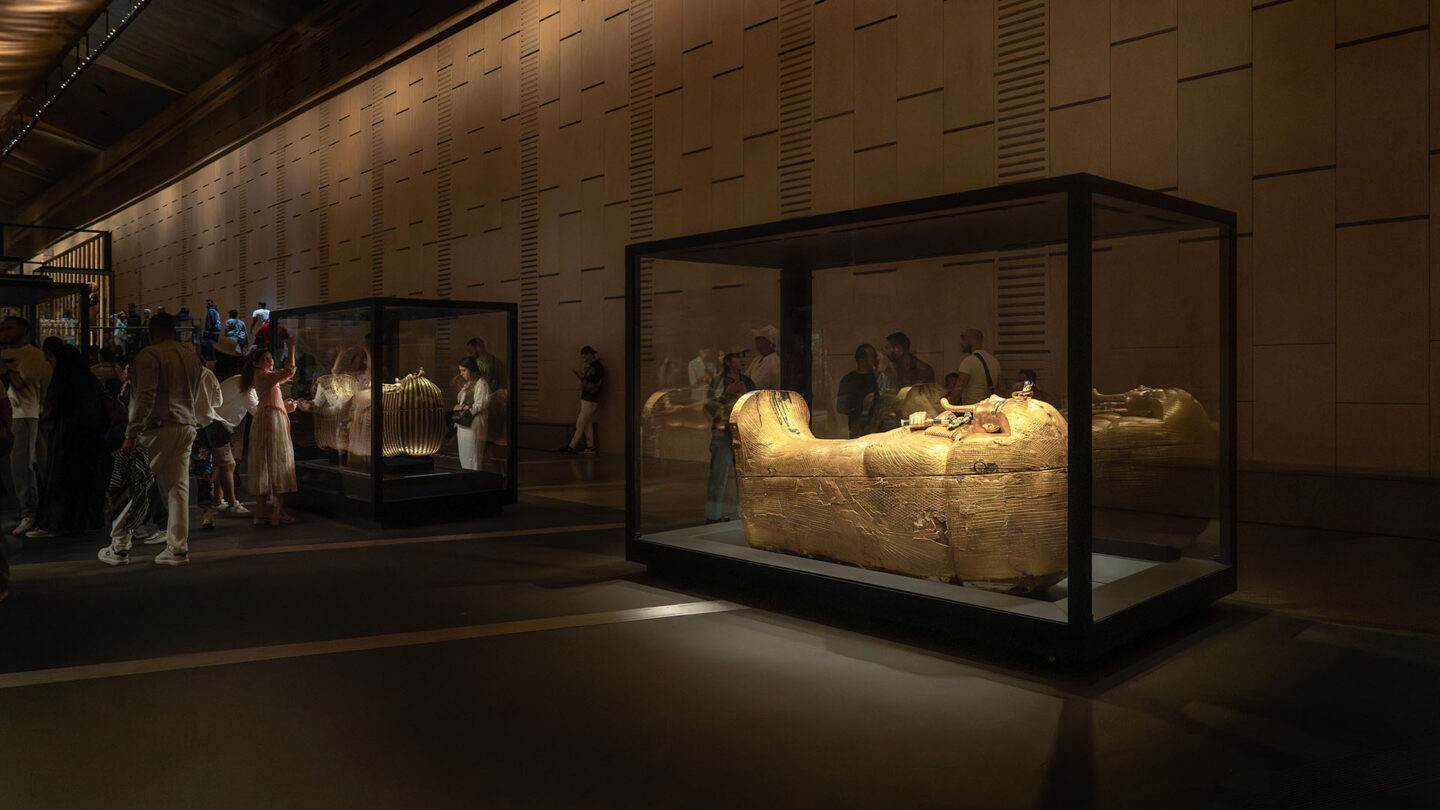
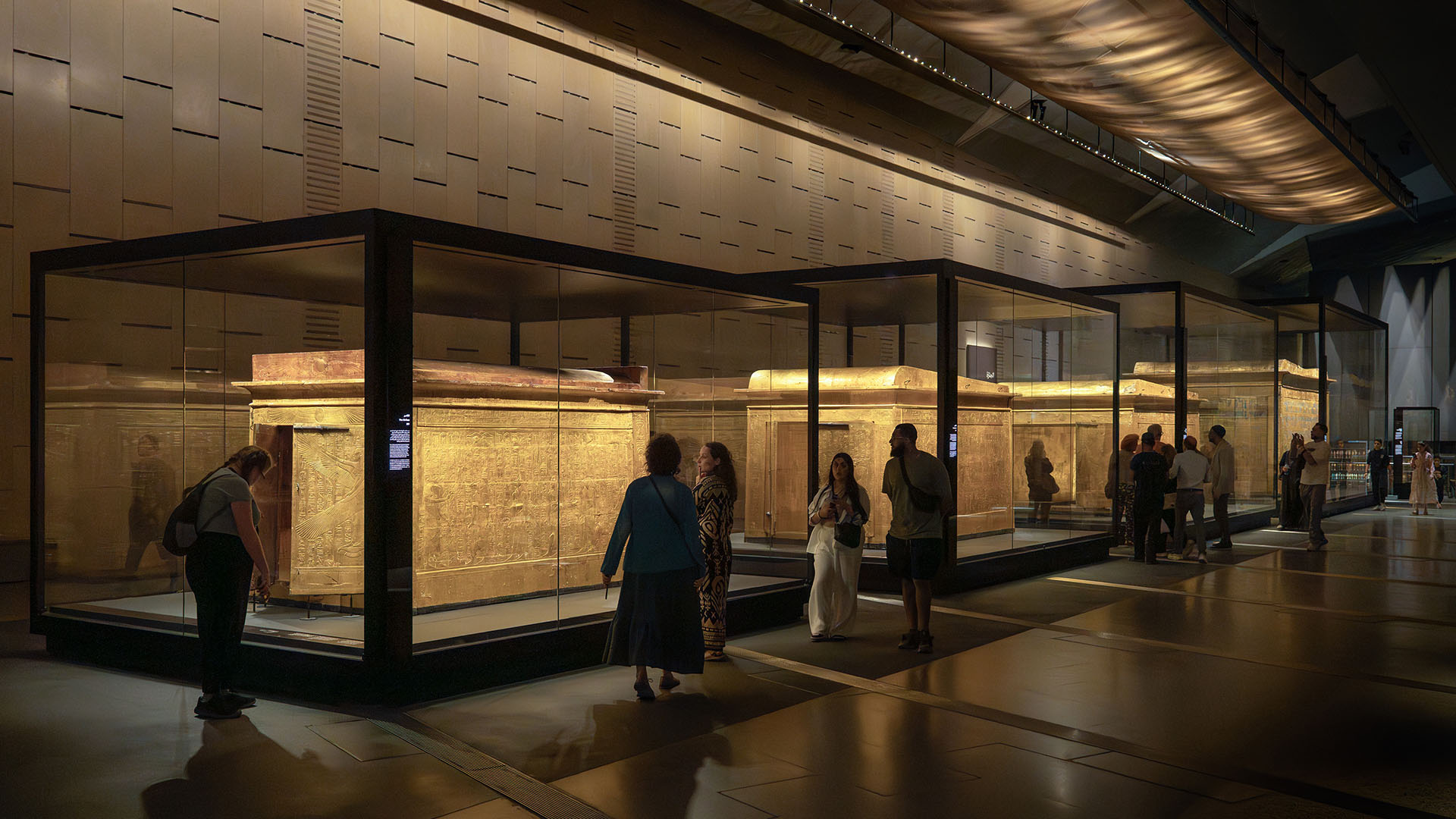
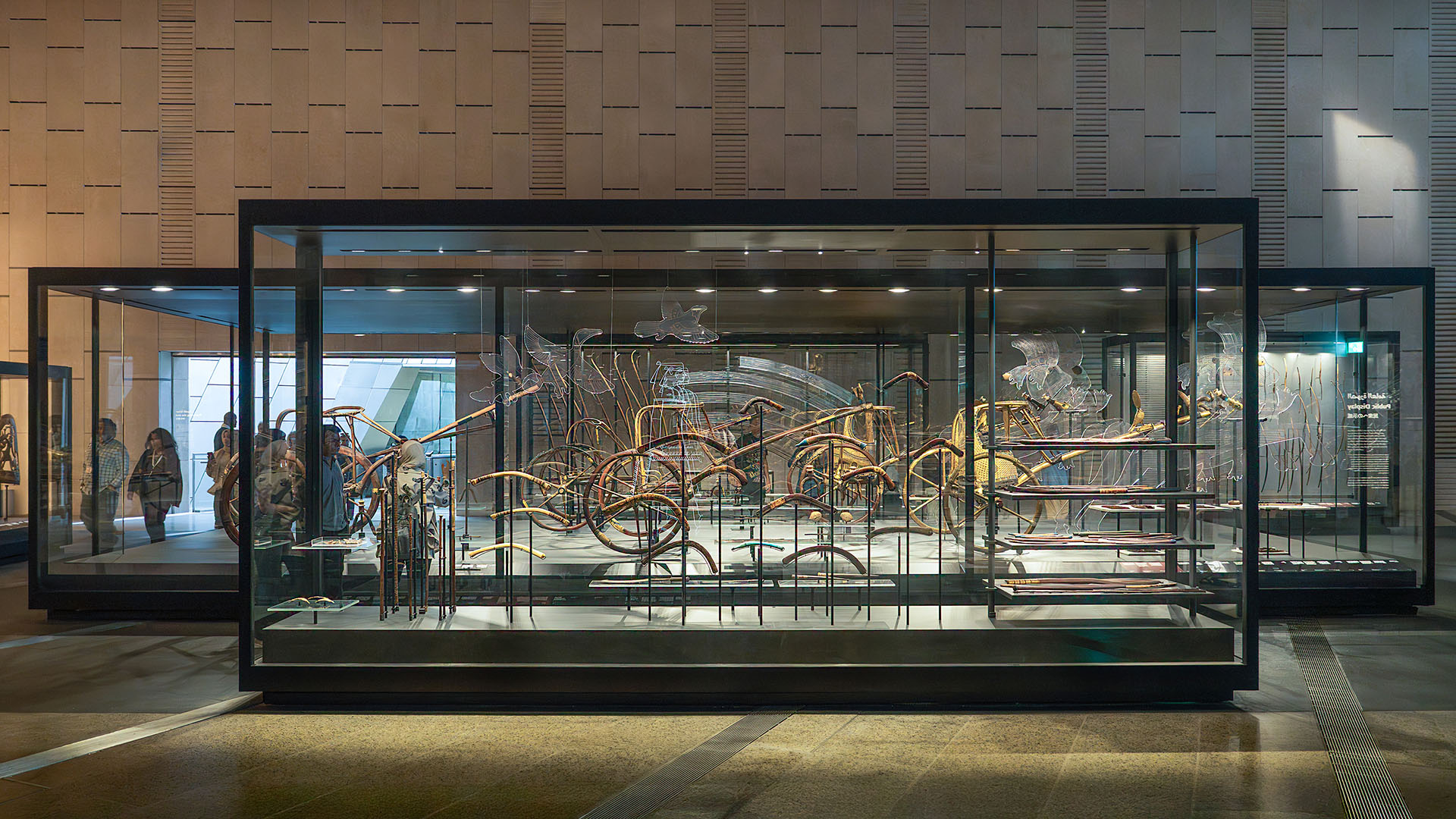
The Tutankhamun Gallery is the centerpiece of the Grand Egyptian Museum (GEM) in Giza, the world’s largest museum dedicated to Egyptian culture. Spanning 7,500 square meters, the gallery presents for the first time the complete burial treasure of the legendary boy king Tutankhamun – approximately 5,600 artifacts, including around 3,000 objects never previously displayed to the public.
Agency
ATELIER BRÜCKNER
Practice Area
Client
Ministry of Antiquities
Industry
The Challenge
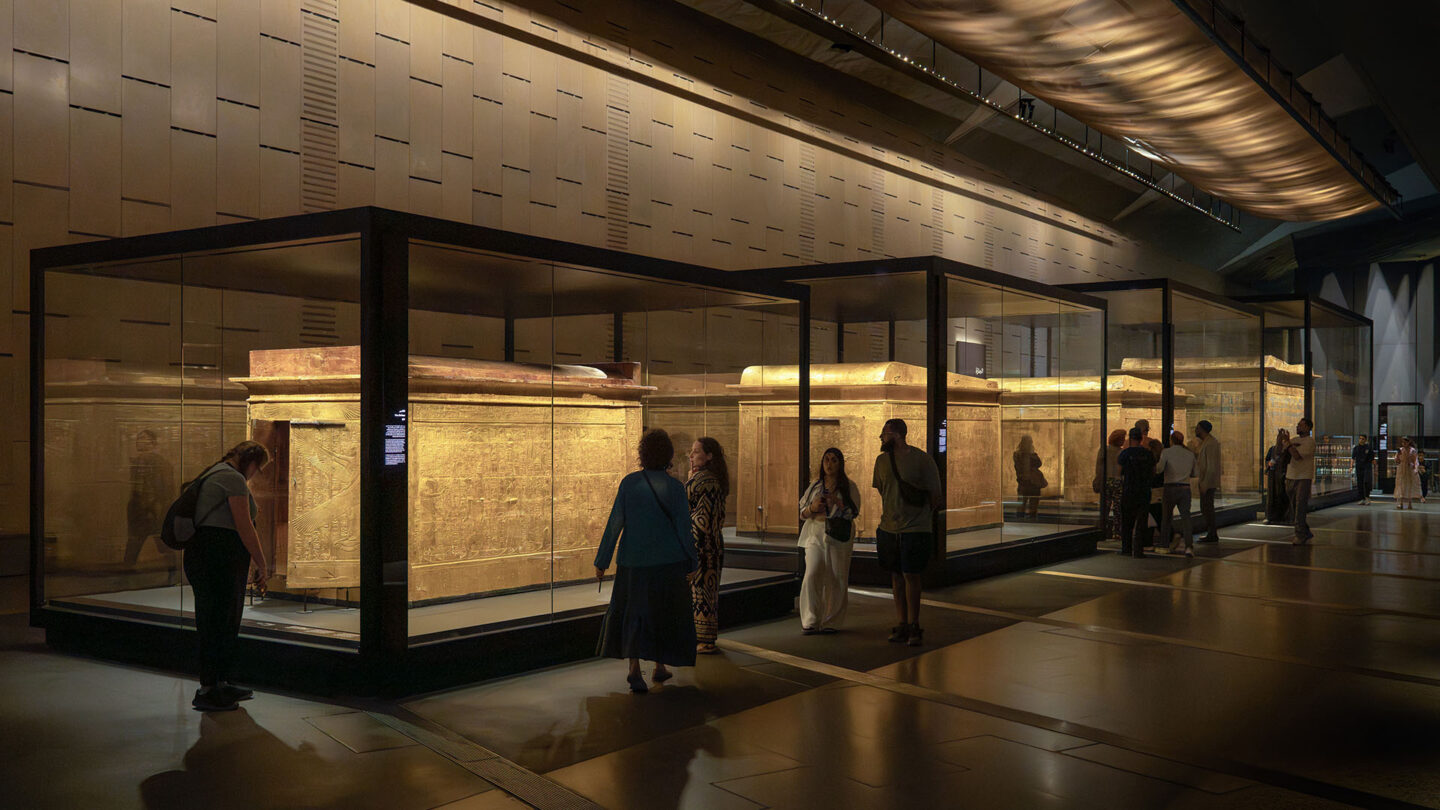
One of the central challenges of the project was translating an archaeological collection of extraordinary global significance into an accessible, emotionally engaging, and operationally functional museum experience. The design needed to accommodate approximately 5,600 artifacts within two monumental gallery wings, each 180 meters long and up to 16 meters high, while maintaining a strong emotional connection between visitors and individual objects.
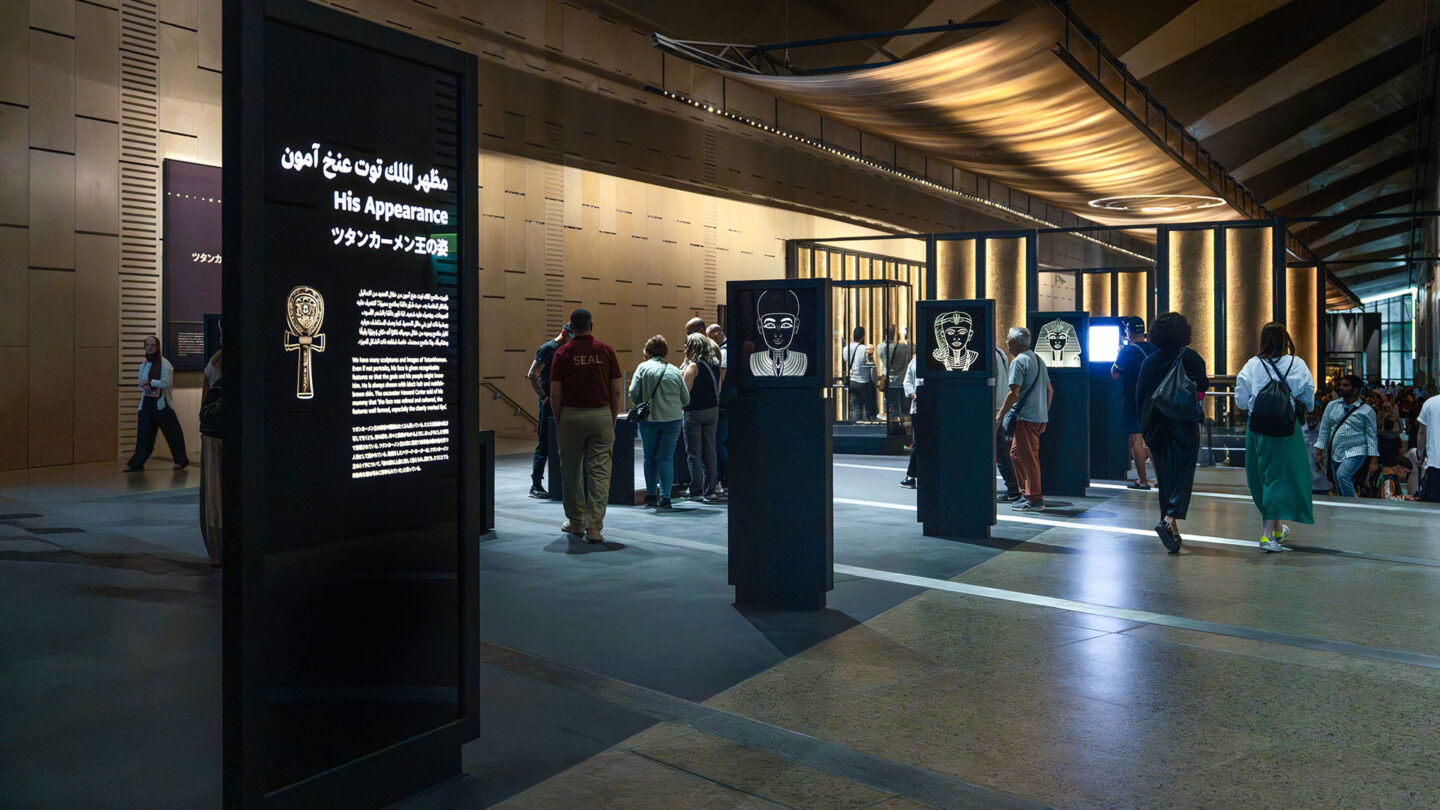
Another major challenge was the museum’s anticipated visitor volume of up to 15,000 visitors per day. The exhibition therefore had to ensure intuitive orientation, efficient visitor flow, and varying levels of engagement for audiences with different backgrounds, interests, and timeframes. The gallery needed to function equally well for visitors seeking a quick overview and for those wishing to engage deeply with the content.
The project also required balancing the highest international conservation standards with a contemporary visitor experience. Thousands of highly sensitive artifacts had to be integrated into a spatial narrative that respected their cultural and historical importance while making ancient Egyptian civilization accessible to contemporary global audiences.
Project Vision
The vision for the Tutankhamun Gallery was to create more than a traditional archaeological exhibition.We sought to transform the complete burial treasure into a spatial narrative that humanizes ancient Egypt and allows visitors to emotionally connect with Tutankhamun as both a historical figure and a cultural symbol.
The project aimed to establish a new benchmark for immersive museum storytelling by combining scientific content, emotional dramaturgy, and architectural scale. Through the principle of “storytelling through objects,” the exhibition gives artifacts an active narrative role, enabling visitors to understand not only their artistic value, but also what they reveal about belief systems, rituals, politics, and everyday life in ancient Egypt.
At the same time, the gallery contributes to the broader vision of the Grand Egyptian Museum as a global cultural landmark – positioning Egypt alongside the world’s leading museum institutions while strengthening cultural identity, education, and international cultural exchange.
Josef Sindelka
Josef Sindelka
Design + Execution
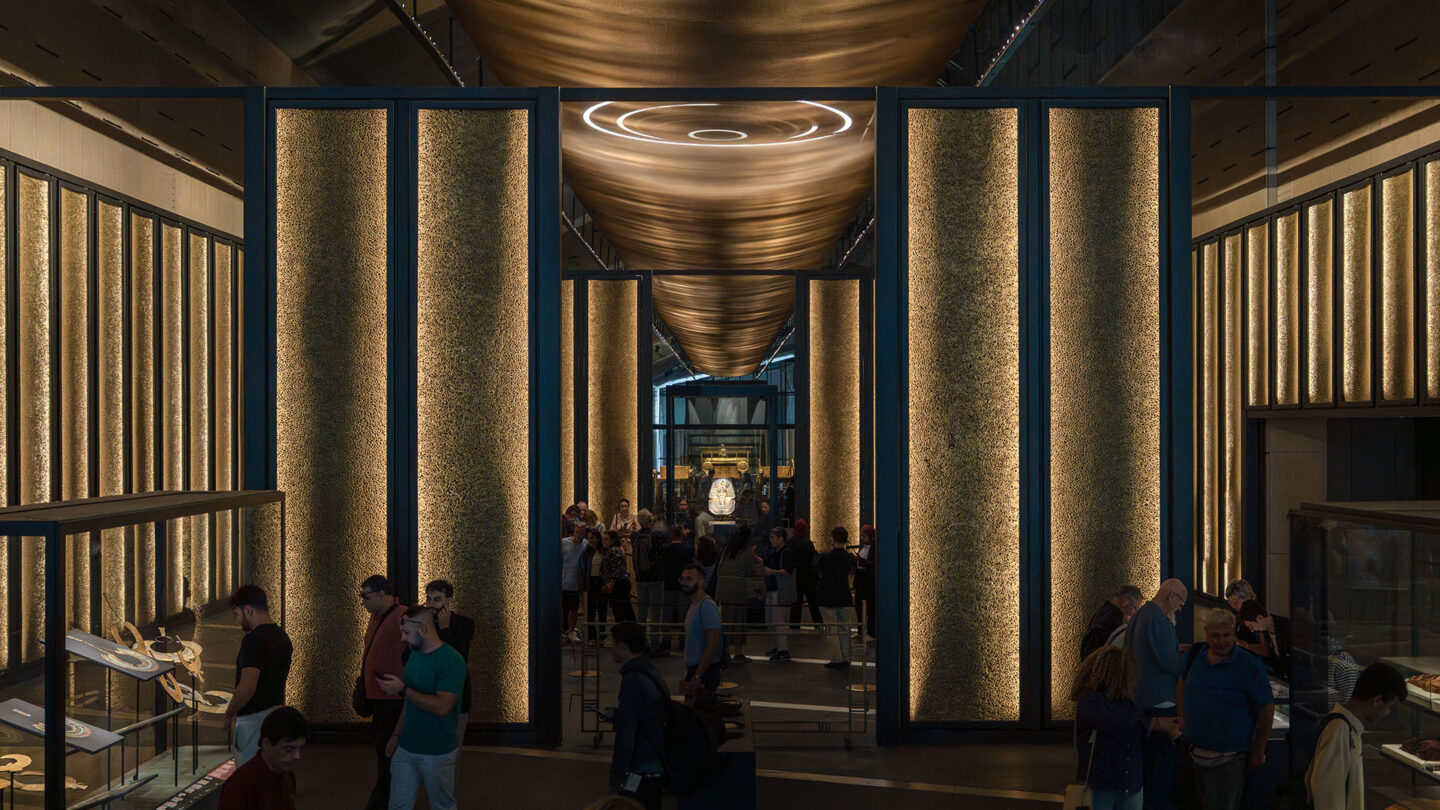
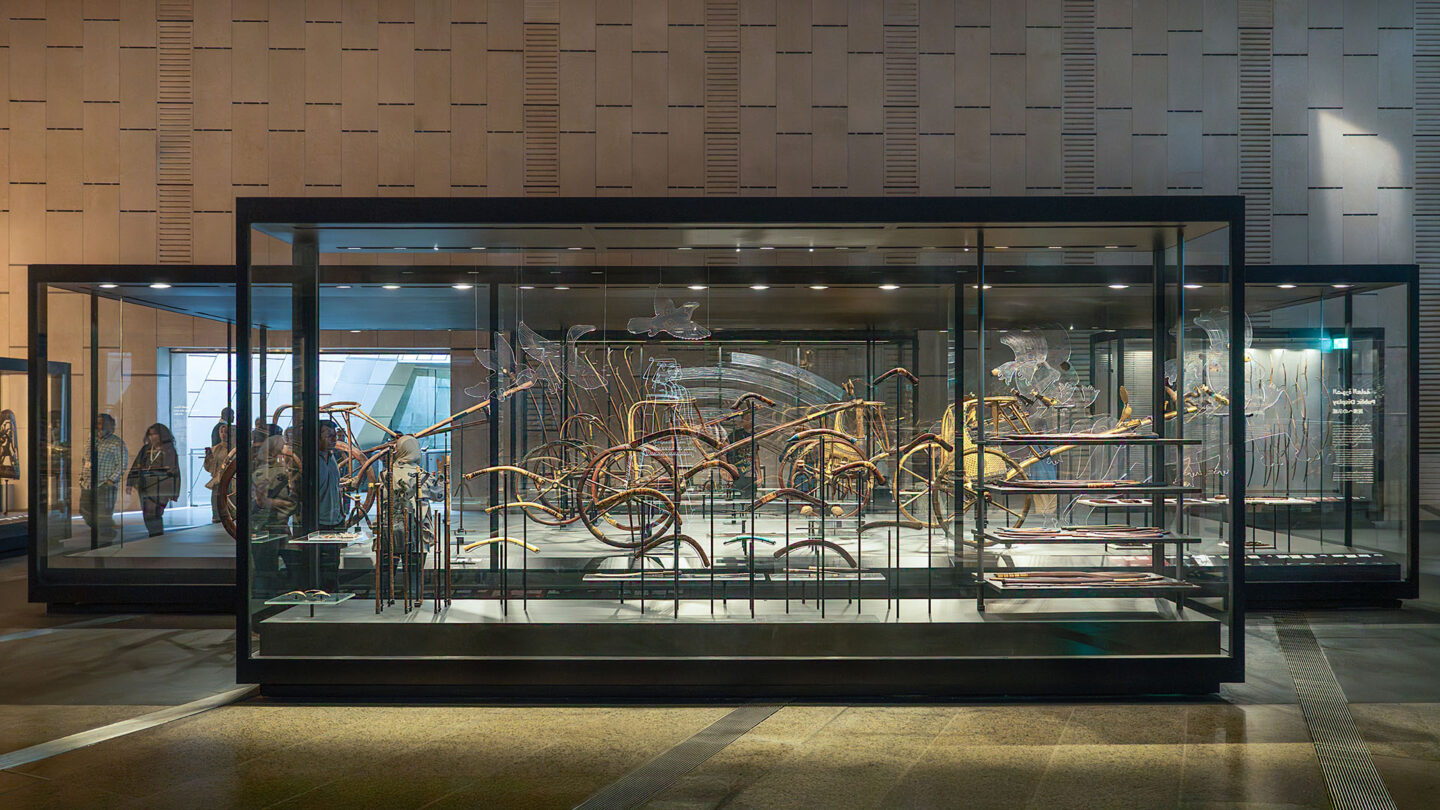
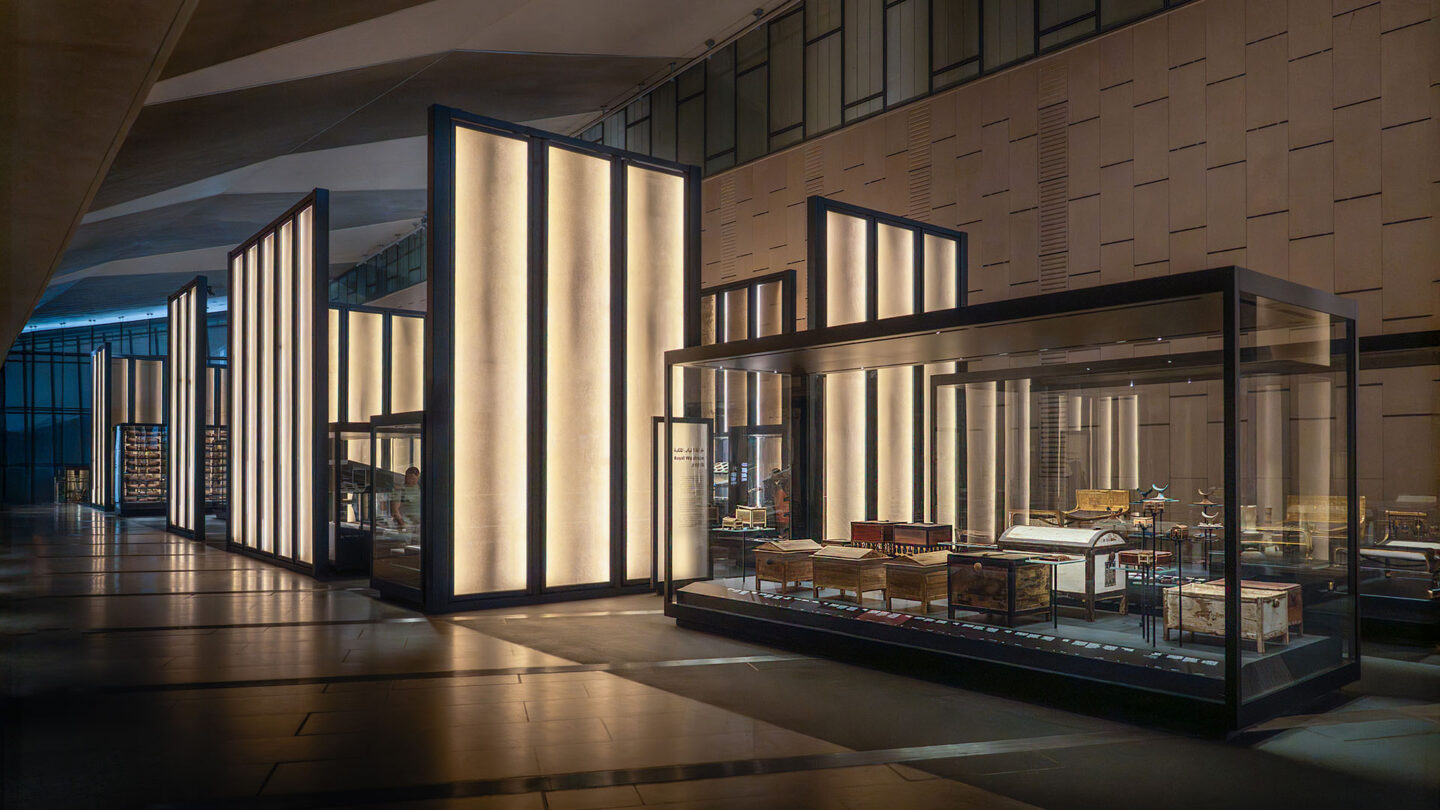
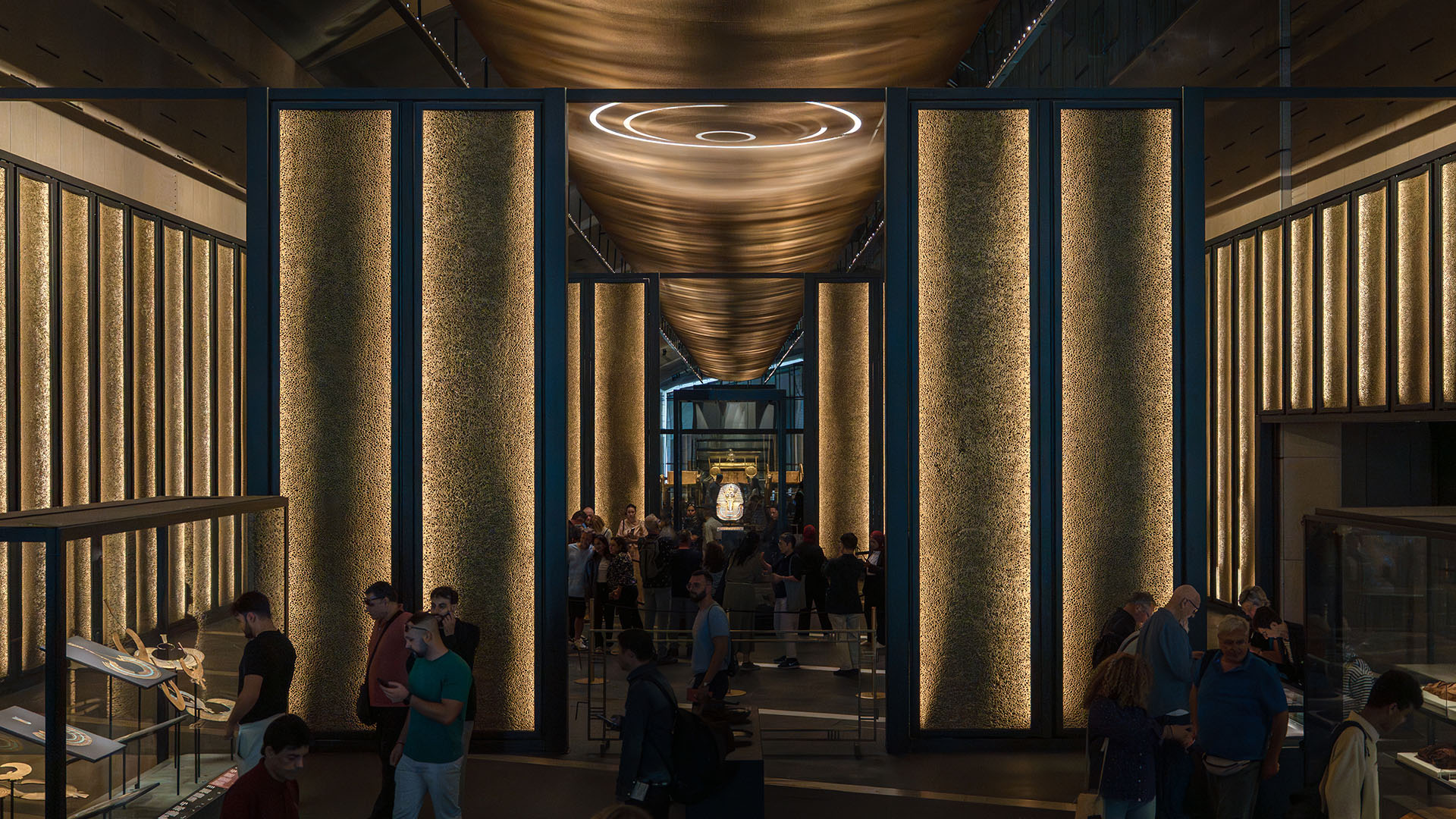
The exhibition introduces a clear spatial framework that structures the monumental gallery while guiding visitors intuitively through the story of Tutankhamun. Two central design elements organize the entire space: the Curatorial Path, a continuous black floor element on which the objects are presented, and the Path of the Sun, a dynamic linear light band integrated into the ceiling. Together, these elements guide orientation while symbolically connecting the exhibition’s overarching themes of life, death, and rebirth.
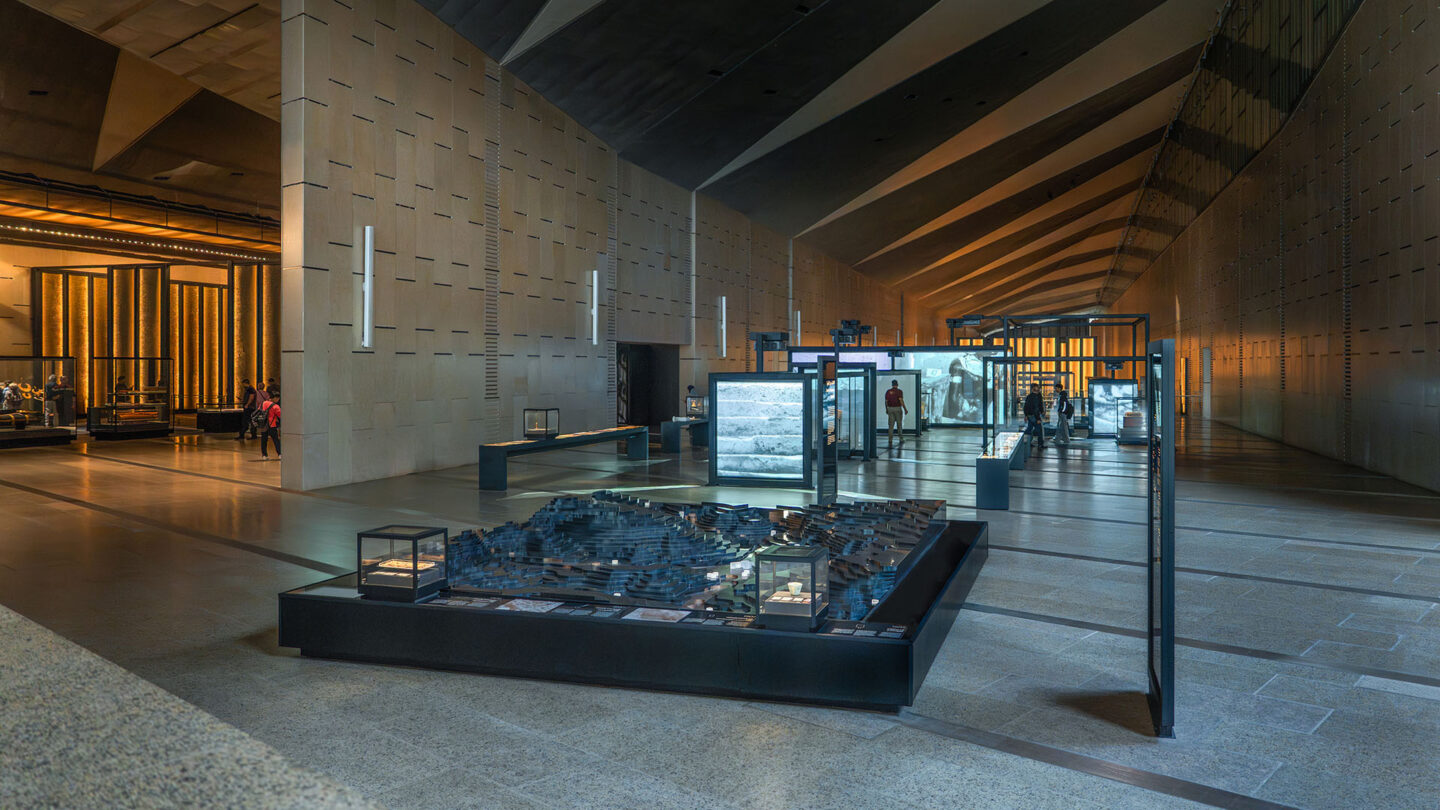
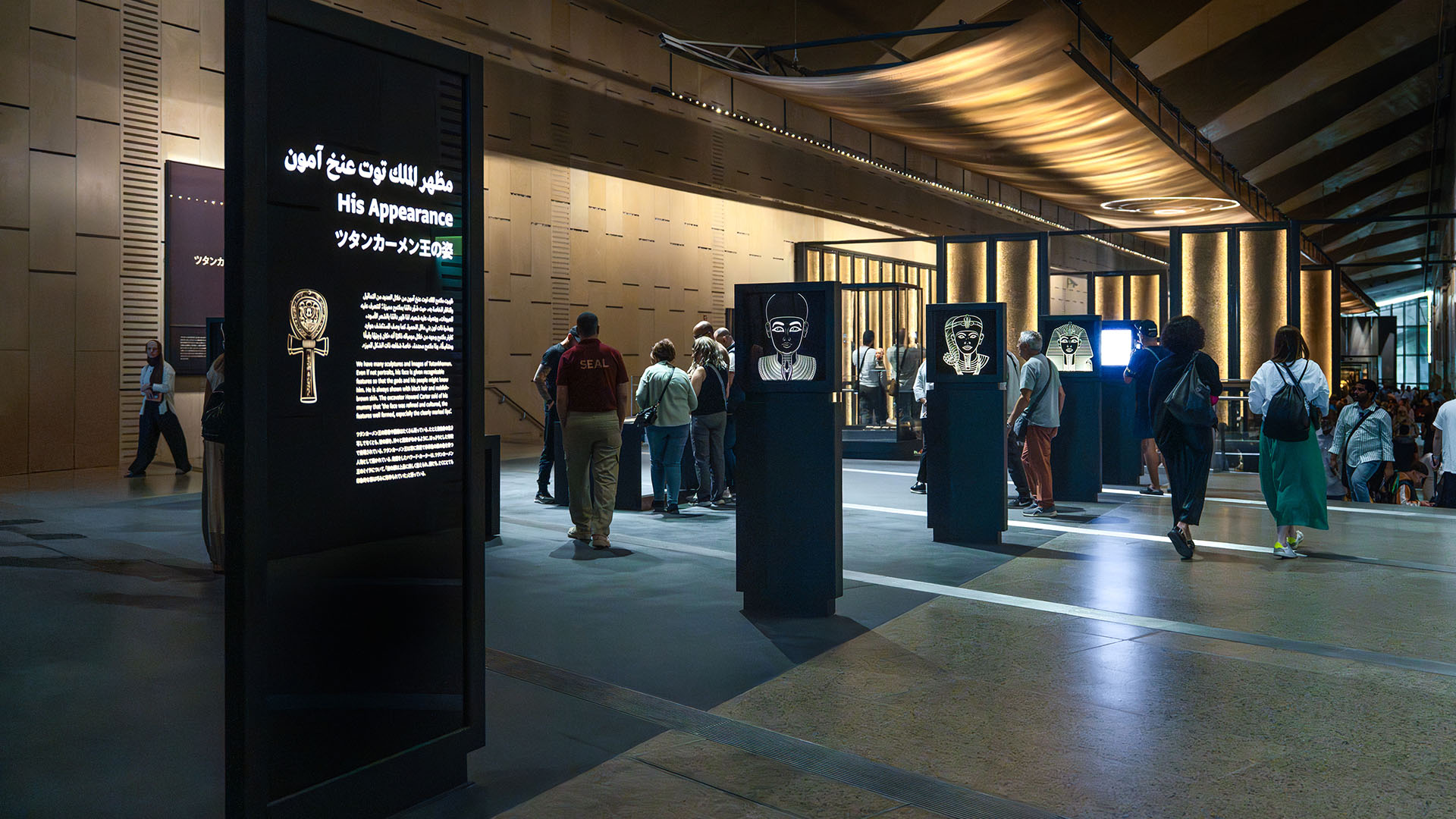
Architecture, scenography, lighting, graphics, and interactive media were developed as an integrated narrative environment. The exhibition carefully balances monumental spatial experiences with moments of intimacy and reflection. Media installations, immersive lighting, and object staging create a layered visitor experience that combines emotional engagement with scientific interpretation.
The exhibition design also responds directly to visitor behavior and museum operations. The spatial organization supports both high visitor capacity and intuitive navigation while allowing visitors to engage with the content at different depths. Interactive media stations, immersive environments, and varied pacing throughout the exhibition create an adaptable experience for diverse audiences.
The result is a museum environment that transforms one of the world’s most important archaeological collections into a coherent, emotionally resonant, and globally accessible cultural experience.
Josef Sindelka
Josef Sindelka
Josef Sindelka
Josef Sindelka
Josef Sindelka
Project Details
This museum is probably one of the most beautiful museums ever built. But beyond beauty, the design of the exhibit is ingenious in the way that the visitor can experience the two narratives, with very different perspectives–either following the life of the king chronologically, or the reverse route, following the path of the archeologist who discovered the tomb. Brilliant.
The designers easily could have lapsed into making a bold design statement equal to the epic story being told. Instead, they brought an understated, quiet elegance to the design of the spaces that allows the artifacts to be the stars of the show, not the architecture.
Design Team
Shirin Frangoul-Brückner (project director)
Yijing Lu (project manager)
Britta Nagel (creative director)
Zöllner Tanja (head of design, Tutankhamun gallery)
Bernd Möller (head of showcase design)
Sami Karam (project manager graphics)
Collaborators
Heneghan Peng Architects (architecture, landscape architecture)
Art Engineering (physical fabrication)
Acciona Producciones y Diseno (physical fabrication)
2AV (digital fabrication)
iart (digital fabrication)
Quality Egypt (digital fabrication)
Besix Orascom (general contractor)
HILL Ehaf (project controller)
Bartenbach (lighting design)
Goppion (showcases)
Glasbau Hahn (showcases)
Photo Credits
Josef Sindelka (photography, videography)
Open Date
November 2025
More in Exhibition
All Projects-
Read more Sculpting History at the Valentine Studio: Art, Power, and the “Lost Cause” American Myth
Sculpting History at the Valentine Studio: Art, Power, and the “Lost Cause” American Myth
-
Read more Folger Shakespeare Library Museum

Folger Shakespeare Library Museum
-
Read more Hunterian Museum
Hunterian Museum
Casson Mann -
Read more Fallout: Atoms for War + Peace
Fallout: Atoms for War + Peace
Kudos Design Collaboratory, KASA Collective -
Read more FAMily Discovery Center
FAMily Discovery Center
Storyline Studio, LLC. -
Read more Lost Shtetl Museum
Lost Shtetl Museum
-
Read more The Great Void. The Holocaust in Liepāja.
The Great Void. The Holocaust in Liepāja.
Design Studio H2E -
Read more Worcester Art Museum Arms and Armor Galleries
Worcester Art Museum Arms and Armor Galleries
TSKP x IKD -
Read more 12th SITE SANTA FE International: Once Within a Time
12th SITE SANTA FE International: Once Within a Time
A Practice for Everyday Life