Sculpting History at the Valentine Studio: Art, Power, and the “Lost Cause” American Myth
Edward Valentine (1838-1930) was a renowned Beaux-Arts sculptor and a key figure in the Lost Cause mythology that permeated the nation after the Civil War through his portraiture of the Confederacy leadership. He was prolific with stone sculptures, plaster casts for home settings, and monumental bronzes of Confederate leadership in public venues, including Stonewall Jackson on Richmond’s Monument Avenue and Robert E. Lee in the state’s capital. Valentine also produced racist sculptures of local black people with exaggerated features. The museum relocated his studio to its campus in 1936 and has served as a display space for his work since then. In 2021, its director decided to repurpose the building as an honest examination of sculpture in the broader context of racist ideology and its implications in the public realm through civic monuments.
The Challenge
Due to the sensitivity of the subject matter and the complexities of the political environment, the museum hosted multiple public engagement sessions before the design study began and at each milestone of the process. Community input via online surveys, focus groups, group tours, and public programs shaped the final installation as the public voice was given decision-making agency. The design team tested both content and interpretation to confirm a meaningful historical narrative and ensure that the use of artifacts would be understood as intended.
Project Vision
An architectural restoration with technical upgrades to the 640sf interior supported the installation. Work included mechanical systems upgrades, life safety monitoring, and moisture-proofing the shell, but no changes to the historic fabric, wood floors, fireplace, and balcony.
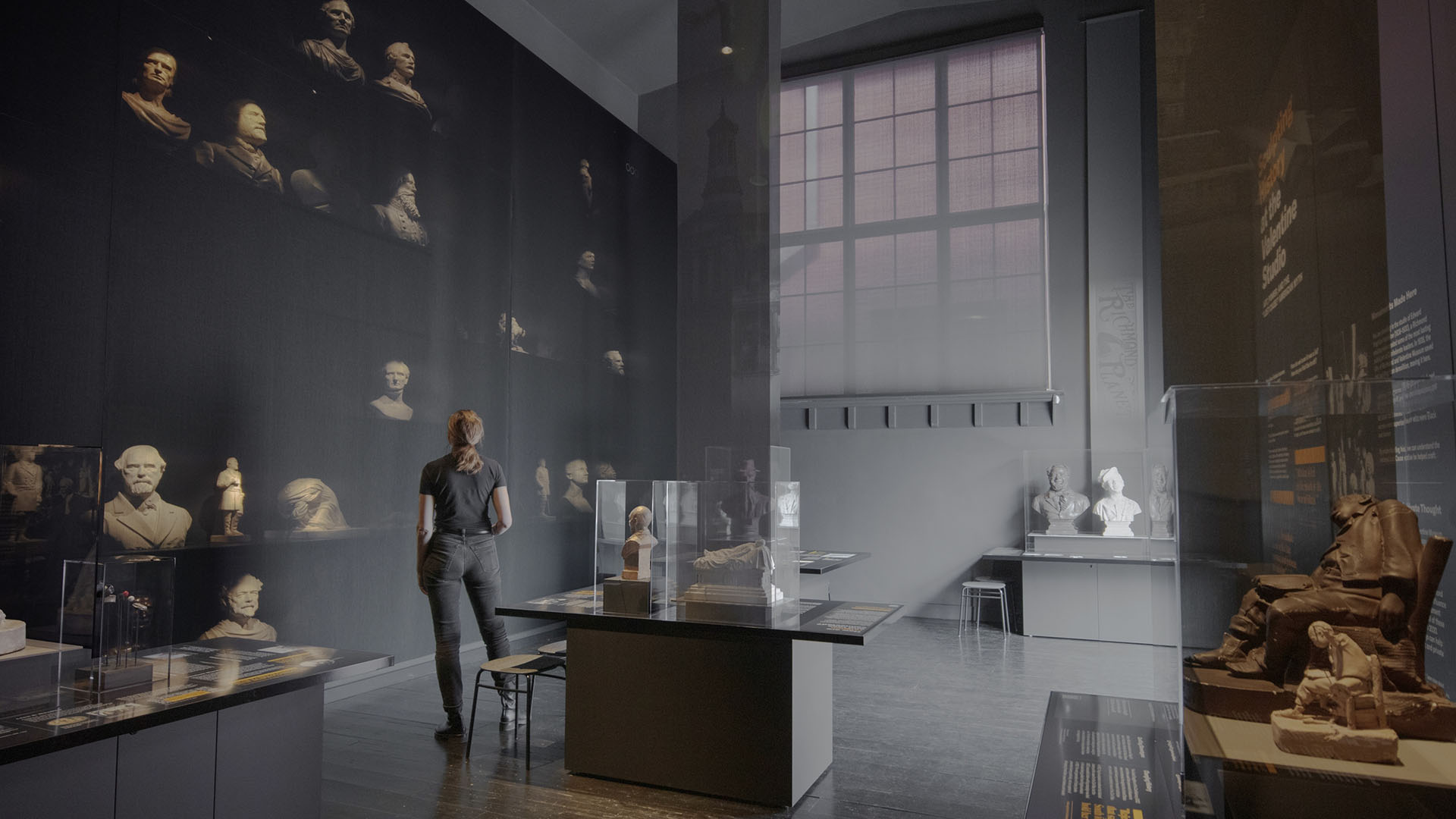
The installation includes three visitor experiences that combine physical design, media projection, collections, and analog community feedback. They work together to reinforce the content strategy of “Power Play,” which details the use of racist ideology in different facets of society. We present tactics of control and subjugation individually supported by evidence. These include violence, economic policy, educational segregation, political power, religion, and media. Though the studio is small, there is seating, and people learn, reflect, and engage in dialogue.
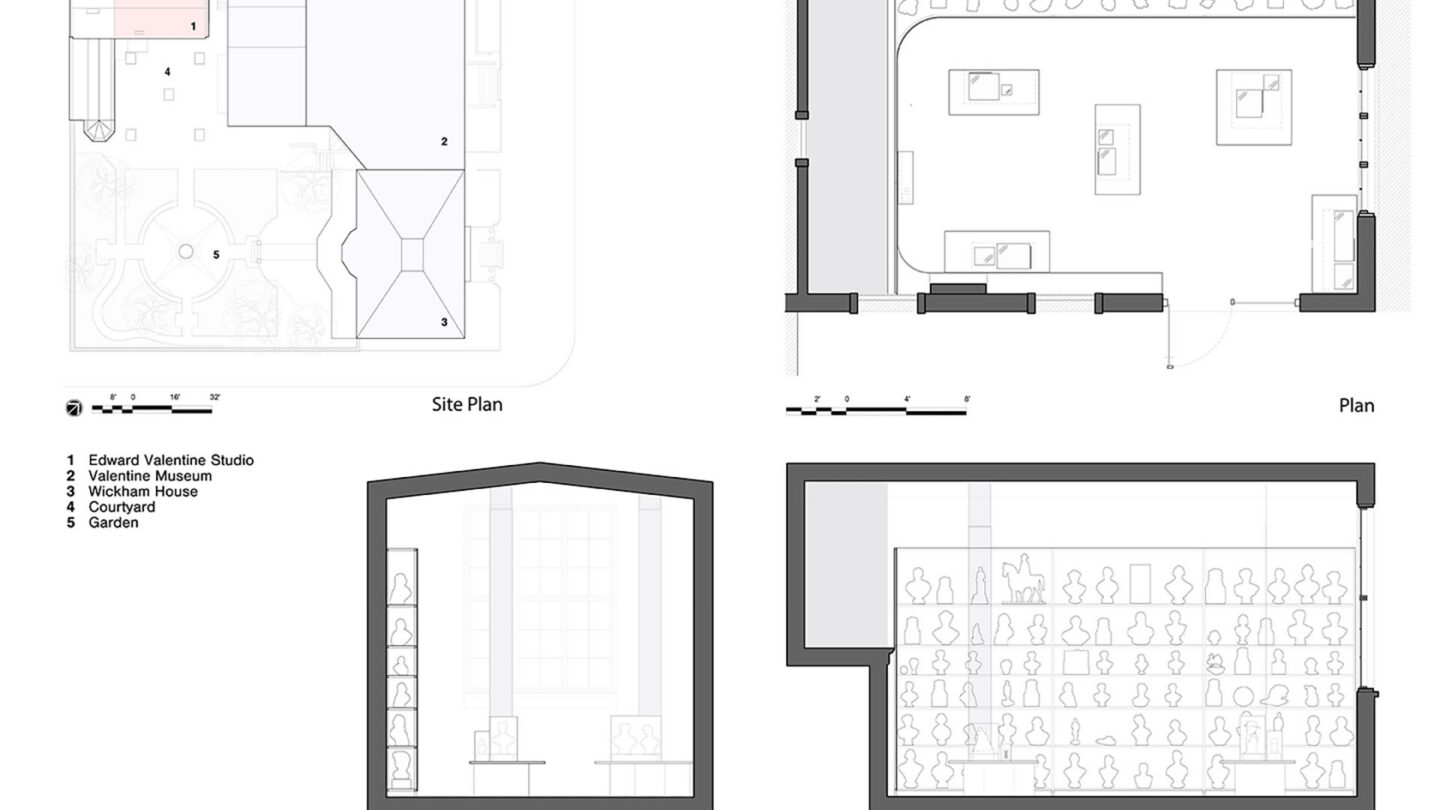
A 640sf interior renovation included repairs to the historic fabric. The installation consists of visitor experiences that aggregate physical design, media projection, collection artifacts, and community feedback.
Studio Joseph
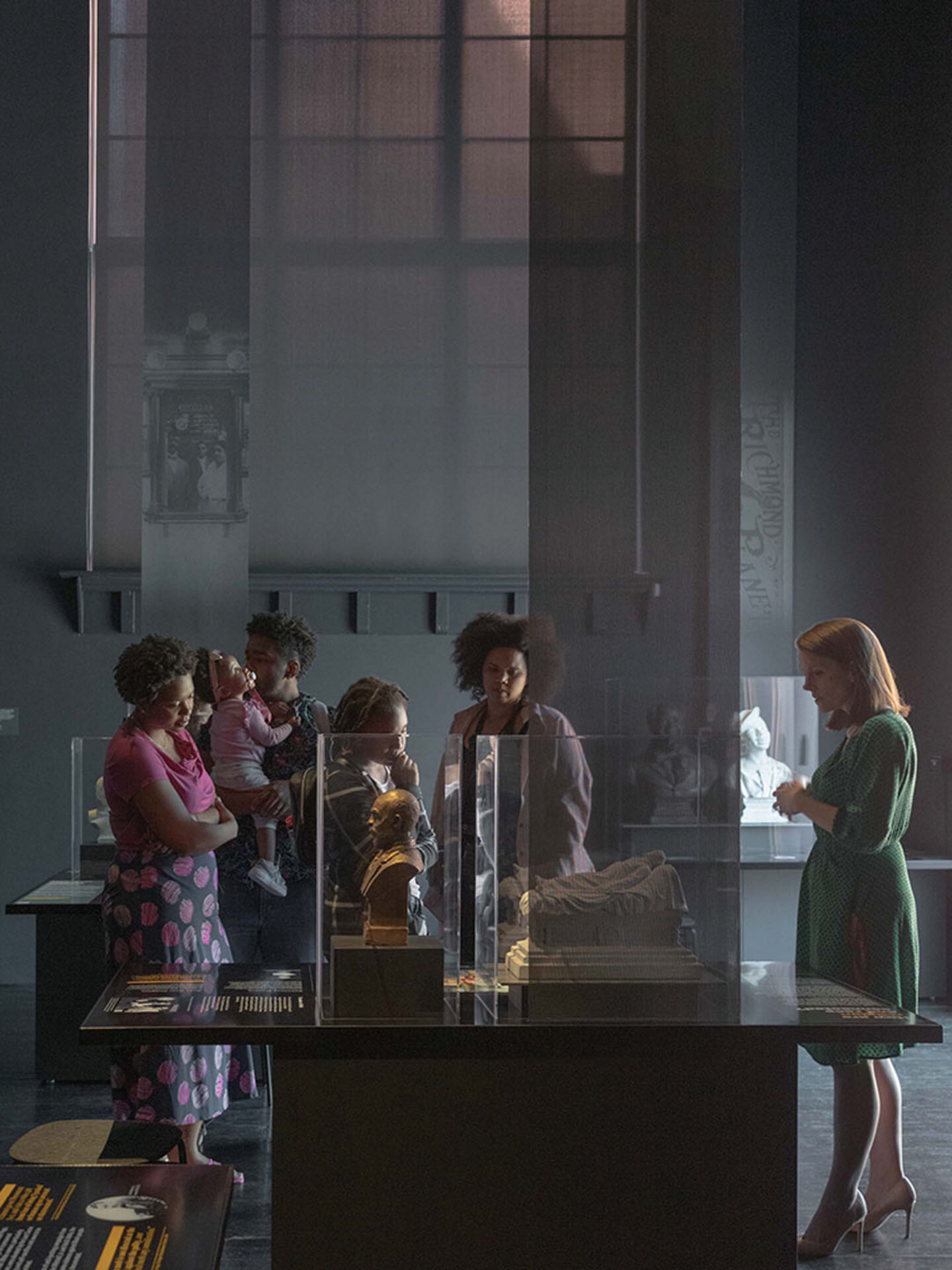
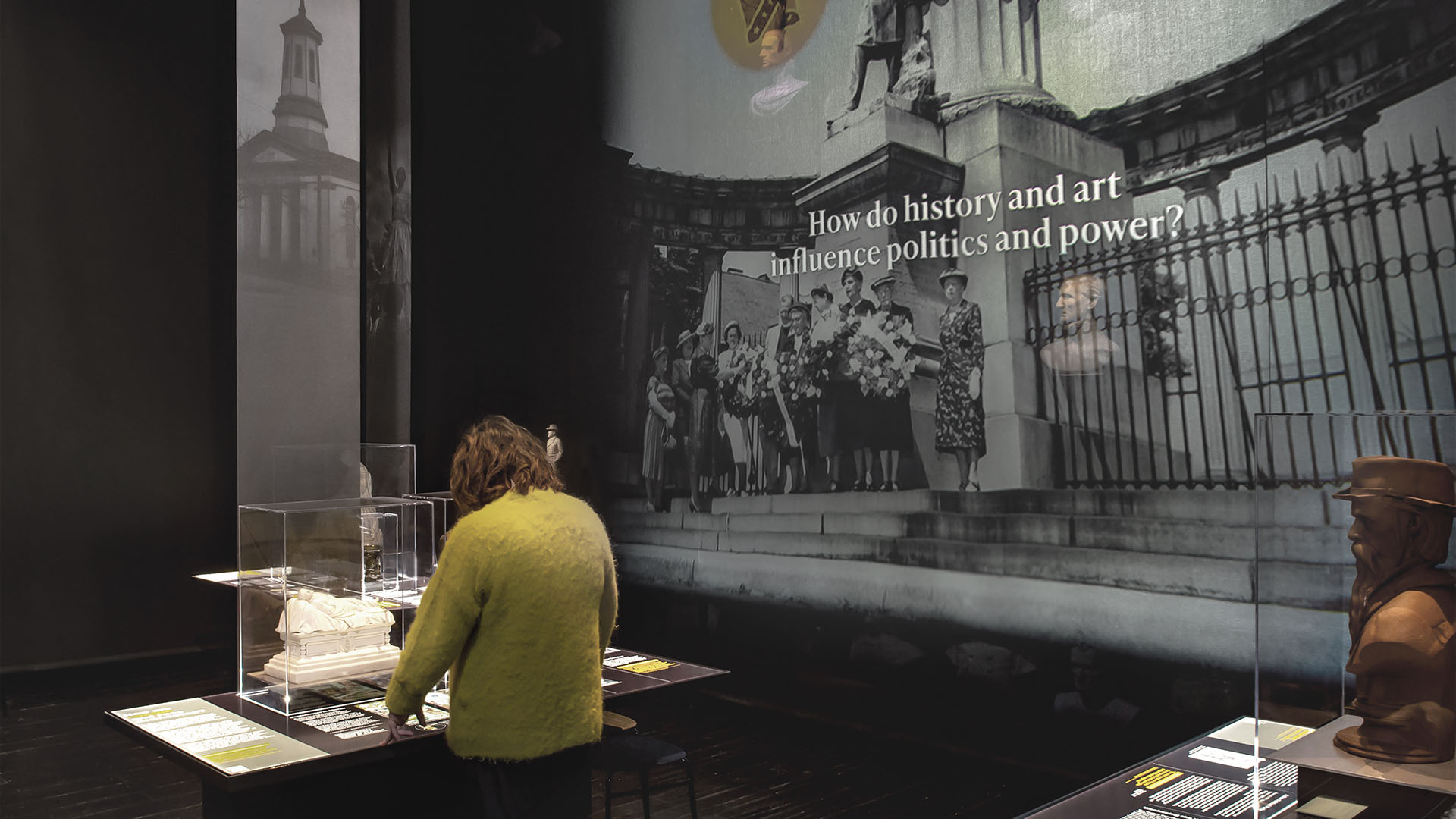
“Tactics” tables have backlit graphics, images, and vitrines that contain relevant ephemera and sculpture. There is no prescribed path or chronology. Each area presents a perspective on racist power.
Naho Kubota
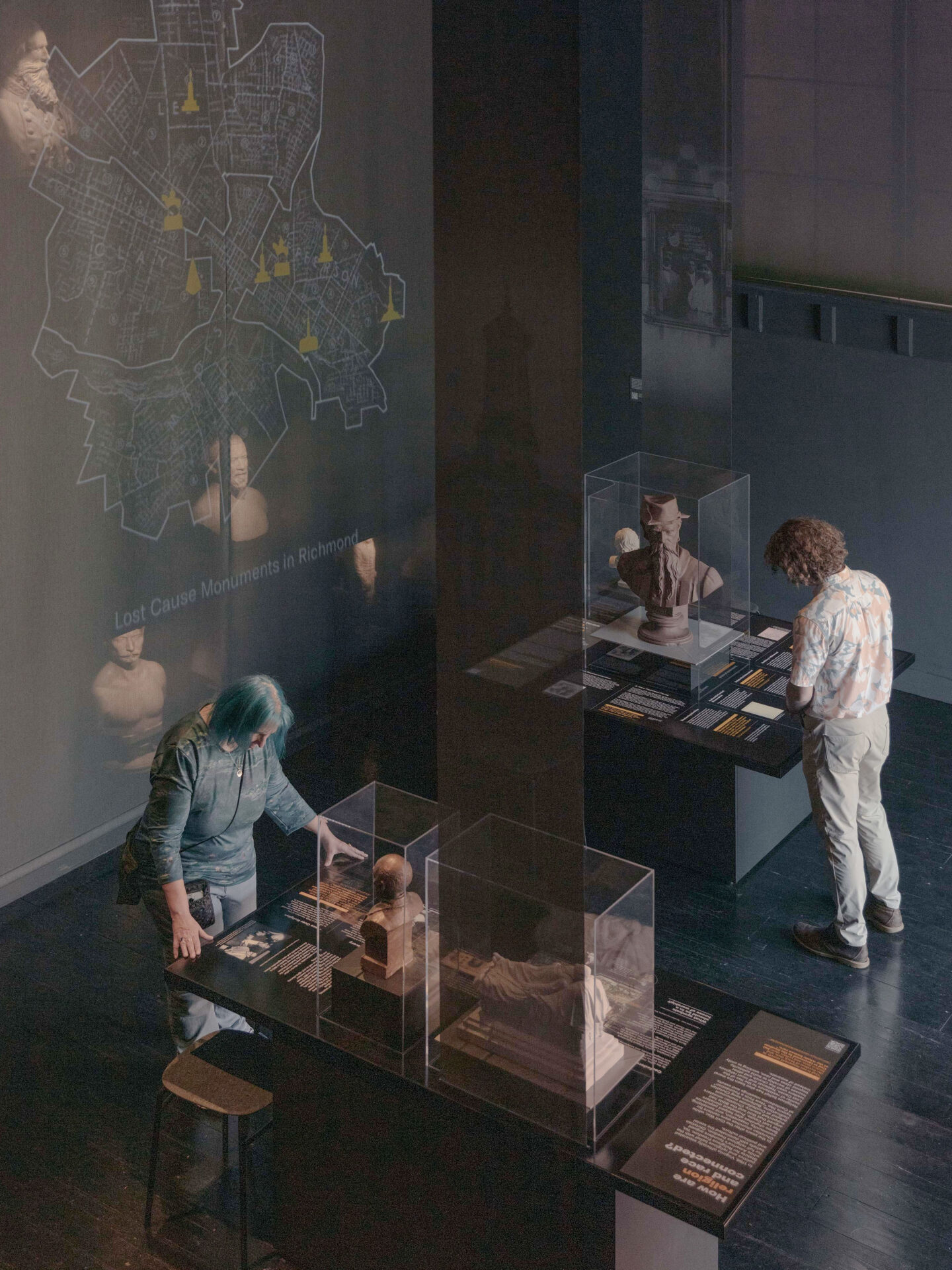
A series of vertical graphic scrims attach from three tables to the ceiling at the vitrines bringing the full 20-foot height of the room into view.
Naho Kubota
Design + Execution
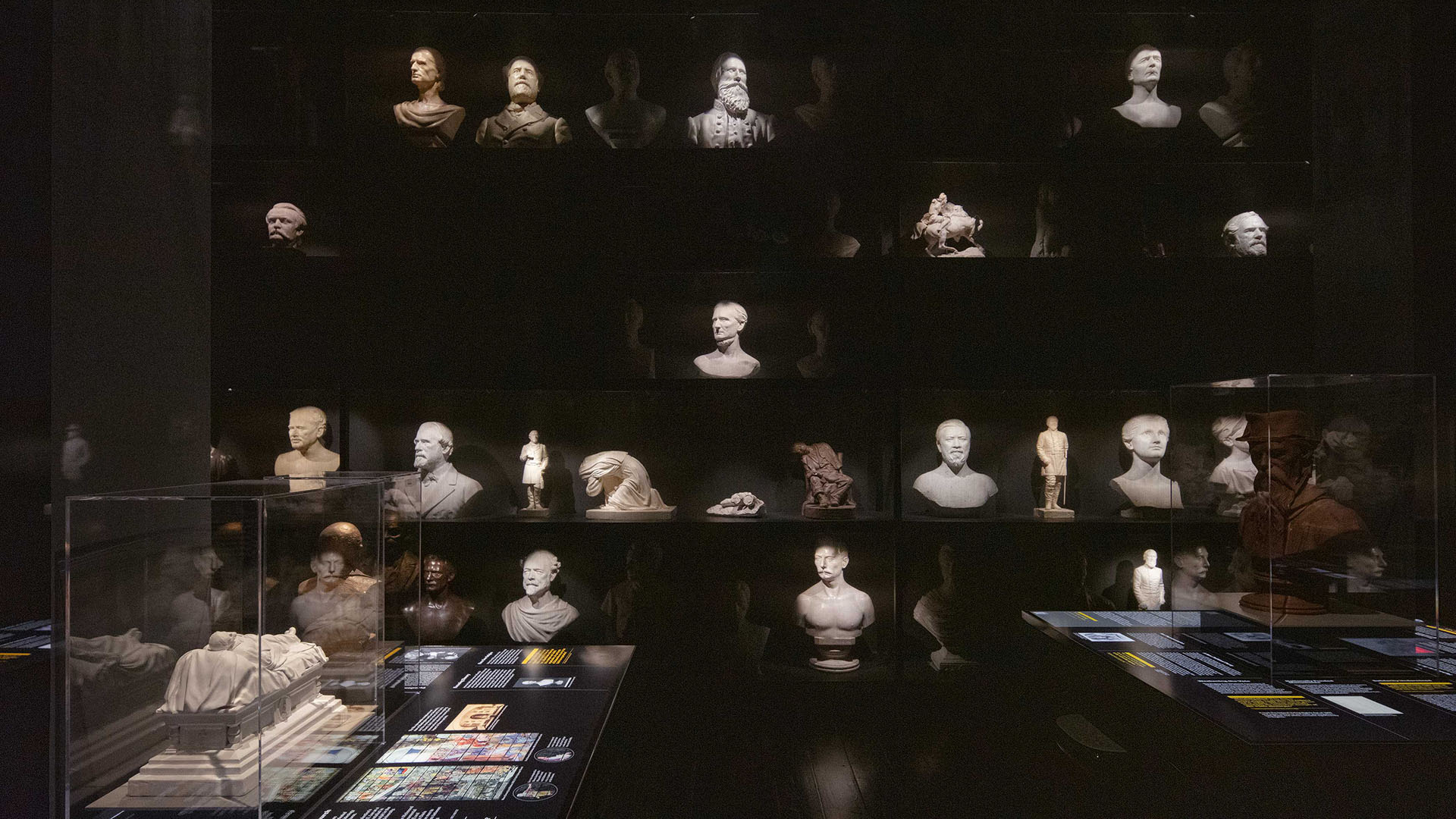
A collection of 84 Valentine works is set on a shelving system 30′ long and seven high behind a 3% black scrim. LED strips at each shelf and individual spotlights synchronize with a media projection onto the scrim to strategically reveal and obscure the images during a 15-minute presentation. Organized into three equal segments, each begins with Valentine’s work followed by specific Lost Cause tactics. There is no audio, and visitors may join at any point to follow the story. The sculptures illuminate in coordination with diagrams, animations, maps, and photography, giving dramatic effects that simultaneously disempower their presence.
Five “tactics” tables (approximately 3 feet by 6 feet) have backlit graphics. The top surface floats on recessed bases, allowing visitors to stand or sit. In addition to carefully crafted texts and images, vitrines contain relevant ephemera and sculpture. A series of scrims attach from the central tables to the ceiling at the vitrines, bringing the full 20-foot height of the room into view and partially cloaking more racist artifacts from view.
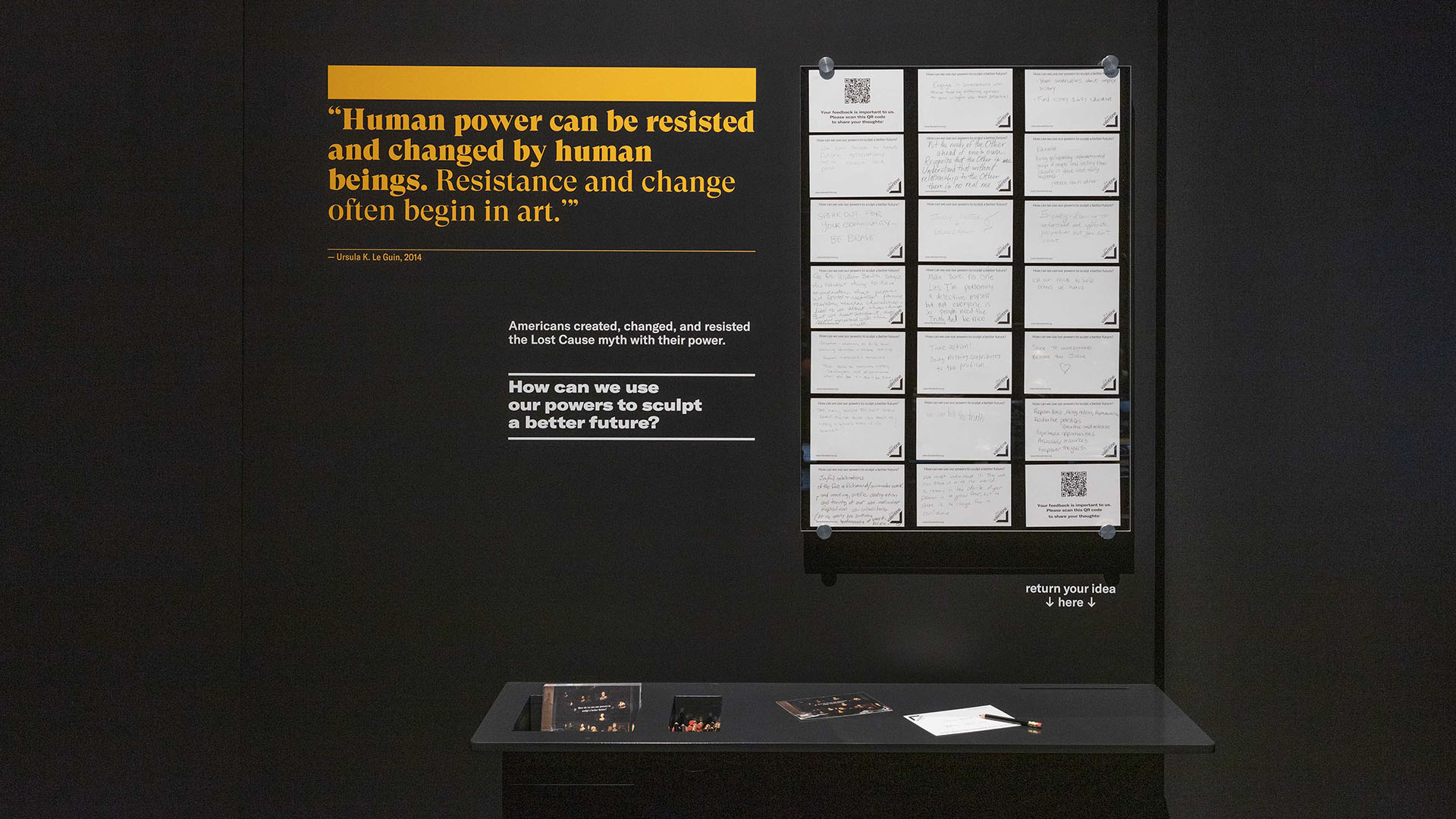
There is a separate area for analog feedback for visitors. Community responses are displayed online and, in the studio, to reflect current sentiments.
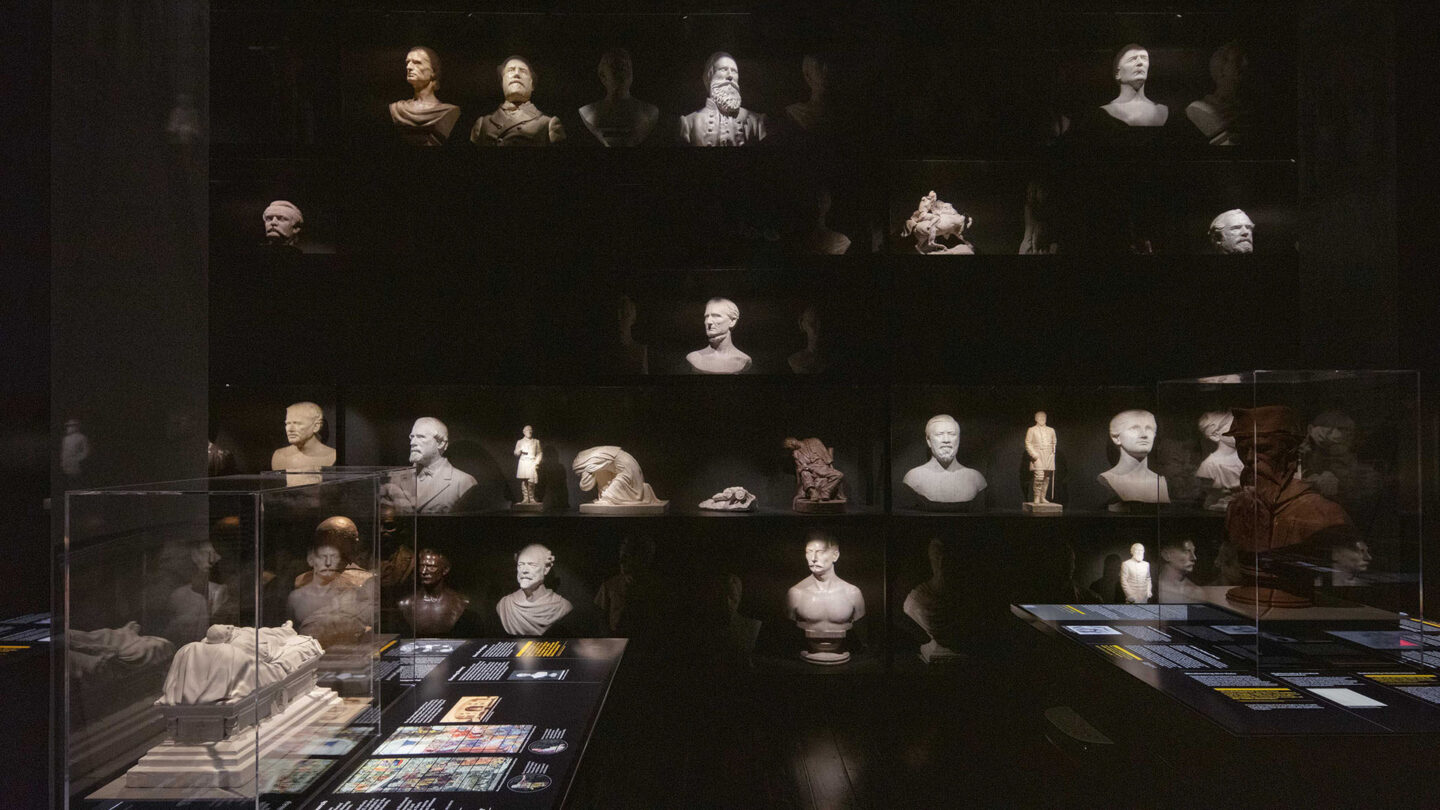
Sculptures are set on a shelving behind a black scrim. LED strips at each shelf and individual spotlights synchronize with a media projection to strategically reveal and obscure the images.
Naho Kubota
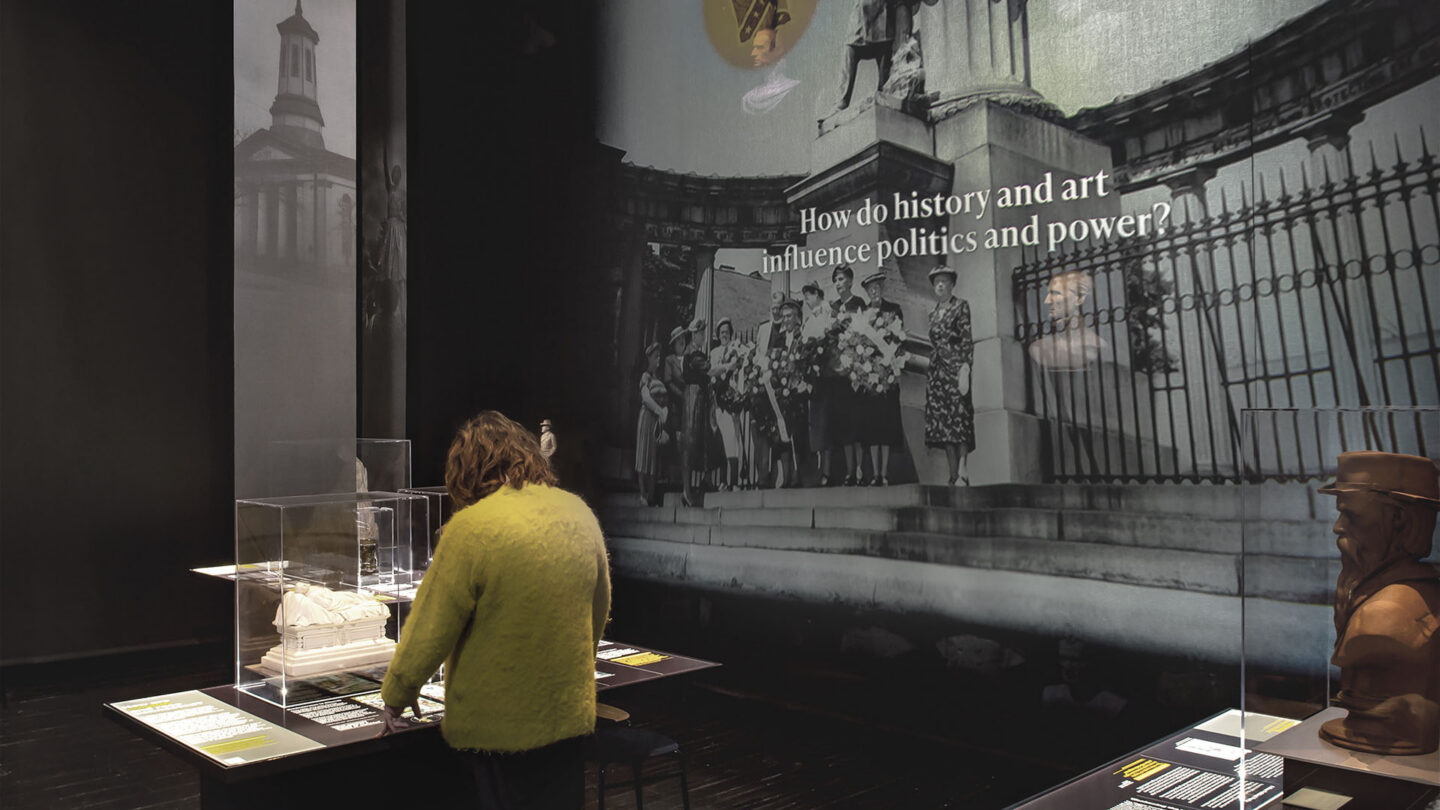
The media runs continuously. It brings context to Valentine’s work and Lost Cause tactics. The busts illuminate in coordination with diagrams, animations, maps, and photography.
Naho Kubota
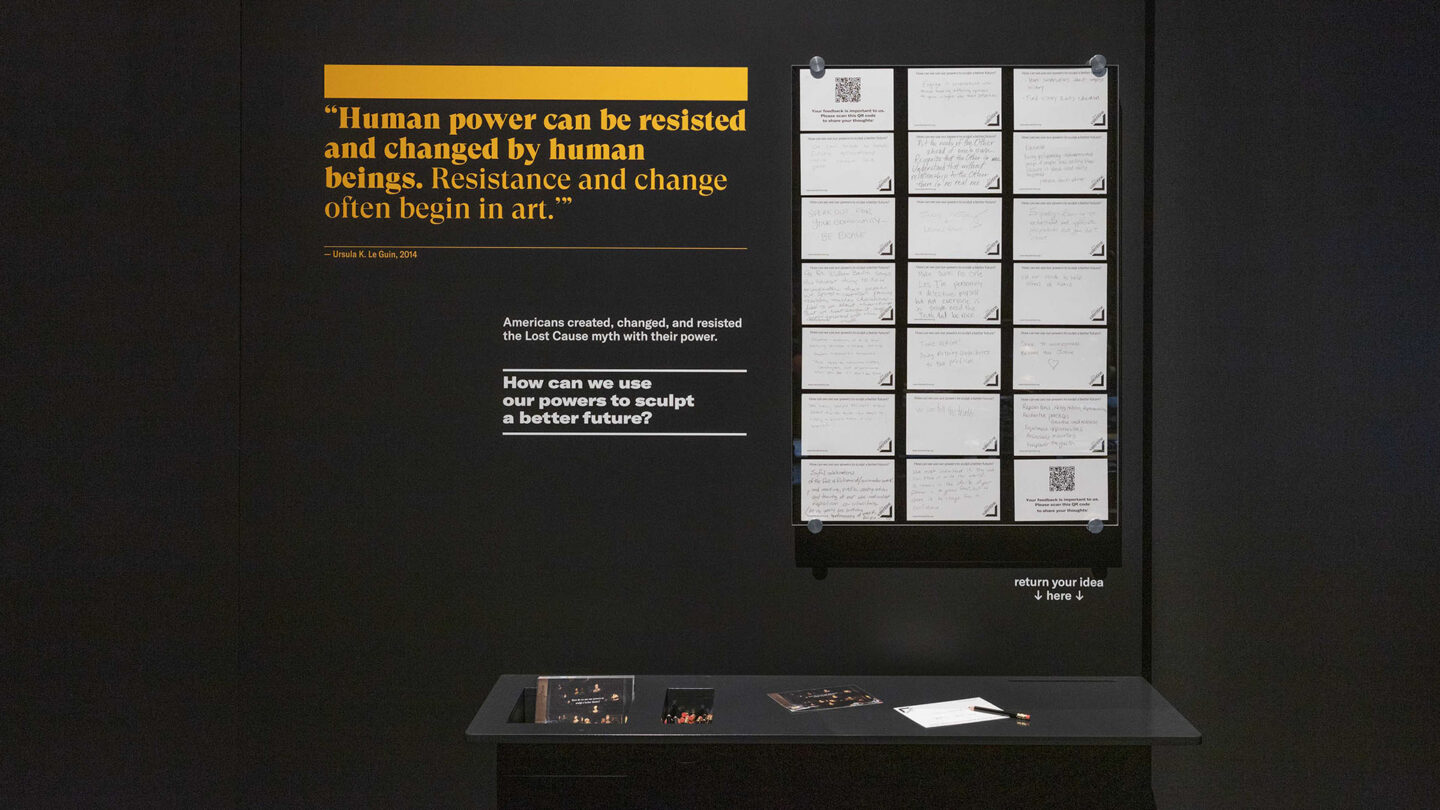
At the feedback station, visitors share reactions openly by writing on postcards with images of content/studio views. These are posted on the museum’s website often with the Valentine’s responses.
Naho Kubota
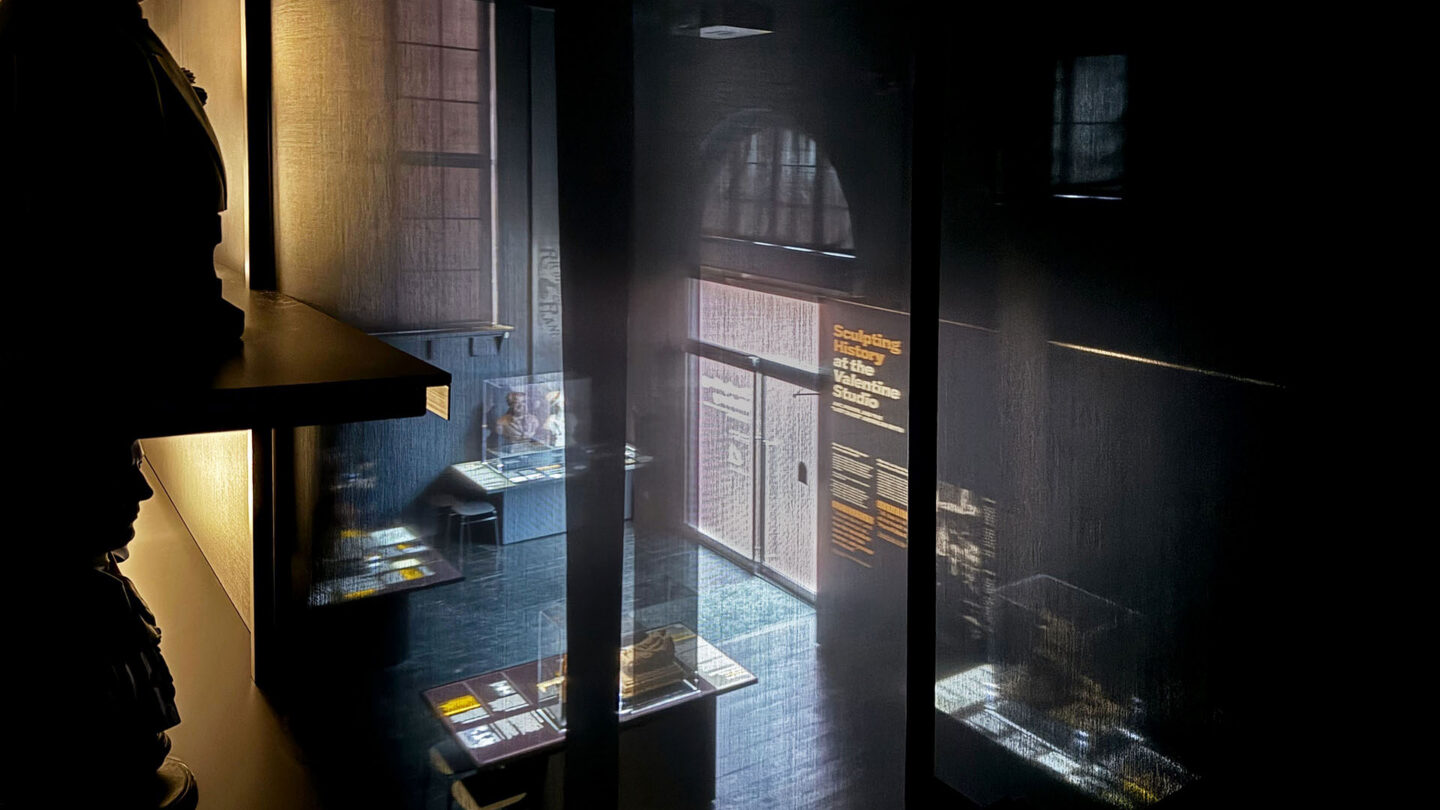
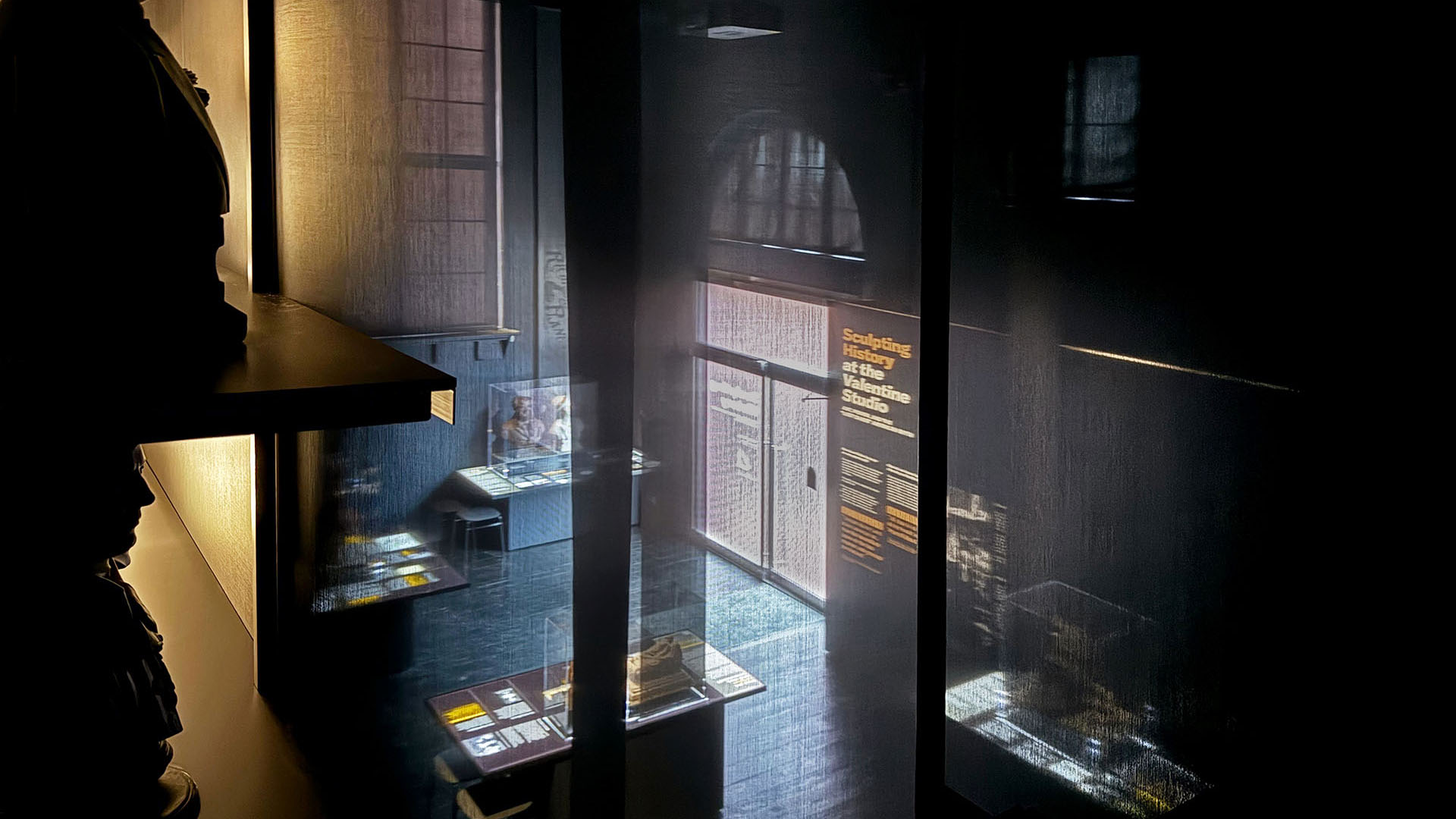
This view is from the sculpture’s perspective. The installation ignited political discussion related to Richmond’s racist past and is a place for open discussion and debate.
Naho Kubota
Project Details
This is a brave and tremendously effective installation. In recent years many have said, ‘ok to tear the statues down, but they should be in music so we won’t forget the history and can learn from it.’ You did that and deserve kudos for taking the step and doing it with excellence.
The project perfectly demonstrated the importance of design meeting the cultural landscape of today, while bringing an incredibly thoughtful experience to life.
Design Team
Wendy Evans Joseph (principal)
Monica Coghlan (project designer)
Alexandra Adamski (architectural designer)
Ksenia Dynkin (content strategy, media strategy)
Ruben Gomez Diaz (designer)
Wonwoo Park (designer)
Anthony Roy (graphic designer)
Brandon Studer (graphic designer)
Fiorella Basso (graphic designer)
Collaborators
Glave and Holmes Architecture (architecture)
Capitol Exhibit Services Inc (fabrication)
Kjellstrom and Lee Inc (contractor)
Photo Credits
Naho Kubota Photography (photography)
Open Date
January 2024
More in Exhibition
All Projects-
Read more Folger Shakespeare Library Museum

Folger Shakespeare Library Museum
-
Read more Hunterian Museum
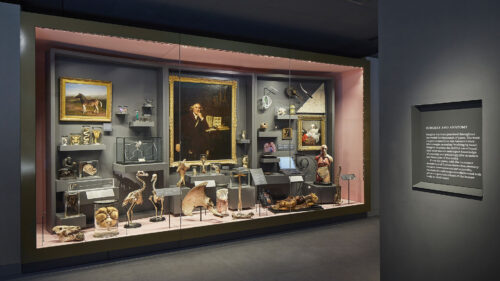
Hunterian Museum
Casson Mann -
Read more Fallout: Atoms for War + Peace
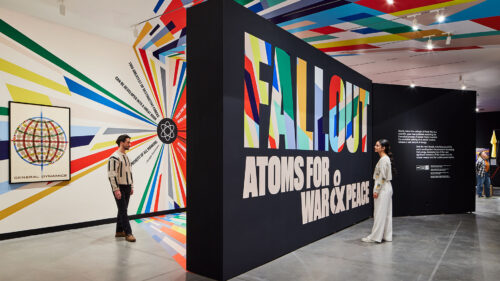
Fallout: Atoms for War + Peace
Kudos Design Collaboratory, KASA Collective -
Read more FAMily Discovery Center
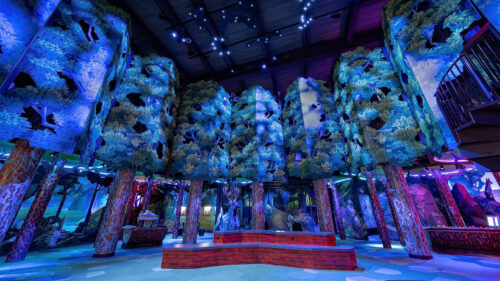
FAMily Discovery Center
Storyline Studio, LLC. -
Read more Grand Egyptian Museum: Tutankhamun Gallery
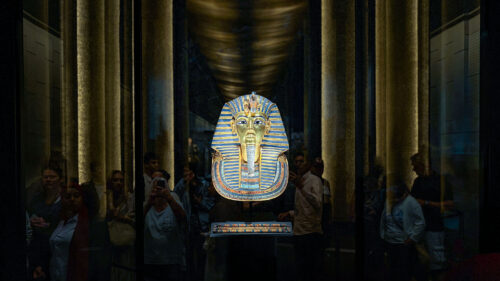
Grand Egyptian Museum: Tutankhamun Gallery
ATELIER BRÜCKNER -
Read more Lost Shtetl Museum
Lost Shtetl Museum
-
Read more The Great Void. The Holocaust in Liepāja.
The Great Void. The Holocaust in Liepāja.
Design Studio H2E -
Read more Worcester Art Museum Arms and Armor Galleries
Worcester Art Museum Arms and Armor Galleries
TSKP x IKD -
Read more 12th SITE SANTA FE International: Once Within a Time
12th SITE SANTA FE International: Once Within a Time
A Practice for Everyday Life