Gentle Density: What Happens When We Make Time to Talk?
Five takeaways from the D7 Summit on what’s changing in design, what’s keeping leaders up at night, and why we may be better off figuring out what comes next together.

Recently, I had the rare opportunity to spend a few days in Kansas City with the leaders of six other national design associations. What I appreciated most was simply having the time to be together.
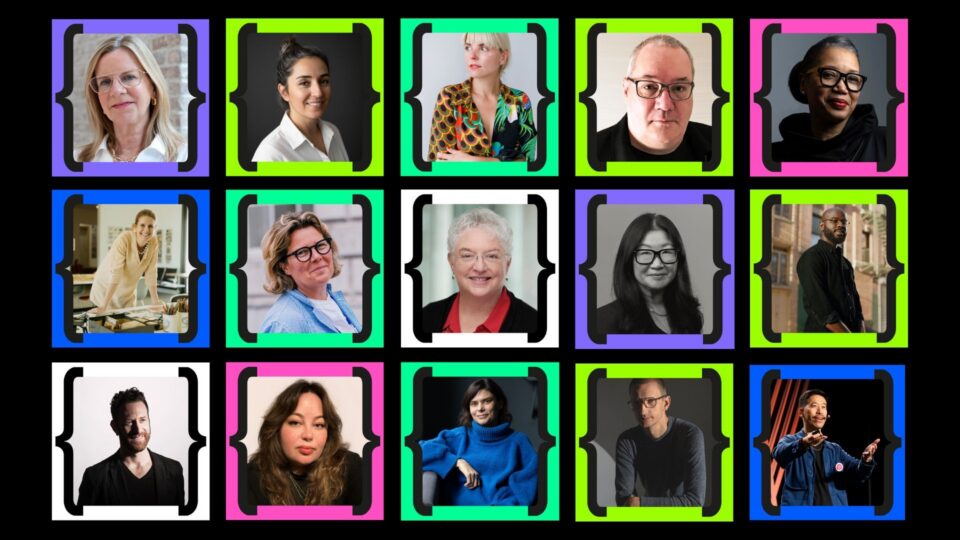
We talked over meals, around tables, while touring Kansas City, and in all those conversations that happen between the things you’re actually scheduled to do. We ate incredibly well, shared some real belly laughs, and at one point decided our group portrait looked like the album cover for a fictitious band we named Gentle Density.
There was so much kindness and caring in the room and, remarkably (loved this), no egos. We shared honestly about what we’re seeing in our organizations, what our members are telling us, what worries us about the future of design, and where we see opportunity. I left realizing just how aligned we are, even though we represent very different areas of the design field. It was refreshing and, frankly, rejuvenating.
Here are five topics that I felt were the most relevant to our community.
1. We Need a Better Model for the Next Generation of Designers
One topic that was especially important to me was the next generation of designers. After our recent SEGD employment survey and the conversations I’ve been having with young designers in our community, this is already a hot topic for me.
We have incredibly talented people coming out of school who are struggling to get that first opportunity. At the same time, firms tell us they want designers with experience. That leaves us with a real question: if everyone wants experience, who will give young designers the chance to gain it?
I understand the pressures on firms. Hiring and training someone right out of school takes time and mentorship, and when teams are lean and everyone already feels like they are doing five jobs, that can be difficult. Remote and hybrid work have made it even more complicated. So much of how many of us learned happened almost by osmosis: sitting next to someone, overhearing a client conversation, watching a critique, or having a senior designer look over your shoulder and say, “Have you thought about it this way?”
There is also a generational shift that we shouldn’t ignore. Most of us around the table were roughly the same age, and we laughed a little about what we were willing to put up with early in our careers: long hours, weekends, low pay, and the expectation that you would sacrifice a lot because that was how you proved yourself.
I shared that the young designers I meet through SEGD, and even what we hear from our own kids, are questioning that bargain, and I understand why. I don’t want the answer to be that they simply need to work the way we did. But I also don’t want us to lose the mentorship, rigor, curiosity, and hands-on learning that helped us become designers.
Somewhere between those two realities is a better model, and I think we have to work together to find it.
2. AI Creates Opportunity, but It Also Changes How Designers Learn
AI brought us into an equally nuanced conversation. There are things about these tools that are genuinely useful. AI can take some of the monotonous work off people’s plates and give designers more time to think, explore, and actually design. For firms trying to do more with fewer resources, that flexibility can be meaningful.
But we’re also seeing the other side. Clients are arriving with concepts they have generated themselves and sometimes expecting that to mean professional design should take less time or cost less. And if AI takes on some of the junior-level work, what happens to the work through which generations of designers learned their craft?
There wasn’t a neat answer around the table, and I appreciated that. We could acknowledge the opportunities without pretending there aren’t real consequences we need to think through.

3. We Can’t Let Political Headwinds Stop the Work
Sustainability carries a different sense of urgency. We know our professions need to move faster toward real solutions, not simply talk about them. At the same time, many of the things our organizations and members have spent years advocating for, from global climate goals to DEAI, are now facing significant political pushback. It can be disheartening to see progress we believed was making a difference suddenly being questioned or reversed.
Sitting with leaders who are equally committed to this work was also reassuring. These issues aren’t going away because the political environment has changed. If anything, it makes the role of our design communities, and our willingness to keep advocating for what we believe matters, even more important.

4. When Everyone Is Stretched, Sharing Matters More
Underneath almost every conversation was another reality we all understood immediately: everyone is stretched. Our members are feeling financial pressure. Firms are feeling it. Associations are feeling it. Expenses continue to rise, money is tight, time is scarce, and most of us feel like we’re doing ten jobs. That reality led us to one of the simplest and perhaps most useful commitments we made to one another: share more.
If one organization has already spent months researching an issue or developing a thoughtful policy, why should six others replicate that work? If someone has created a resource or model that works, how can the rest of us learn from it? Why not attend and support one another’s events, connect our communities where it makes sense, and share research, policies, ideas, and lessons learned? We also committed to something incredibly simple: getting together informally twice a year to keep talking.
Our fields overlap. Our challenges overlap. And the future of design certainly doesn’t fit neatly inside the boundaries of any one discipline or association. It makes sense that we shouldn’t try to solve all of these things separately.

5. Sometimes the Most Valuable Thing We Can Give One Another Is Time
What I keep coming back to is the generosity of those few days. People shared truly, authentically, and honestly. We challenged one another, admitted what we didn’t know, were vulnerable, traded ideas and resources, laughed a lot, got rained on, explored Kansas City, and also just enjoyed being together.
In a world where so much of our time is scheduled around producing an outcome, there was something really valuable about having enough time to let a conversation go where it needed to go, thanks to the generosity of our hosts for that. I came home feeling lighter and more energized about the work ahead.
Maybe one of the most important things we can do right now is resist the instinct to figure everything out on our own. Sometimes the most valuable thing we can give one another isn’t another presentation, program, or perfectly packaged answer. It’s the time and trust to share what we know, ask each other for help, listen, laugh, and figure out what comes next together.
And apparently, occasionally form a fictitious design band called Gentle Density.


With Gratitude
A special thank you to Dawn Taylor, Executive Director of the Center for Architecture & Design and AIA Kansas City, for being such a generous host and giving us the opportunity to experience Kansas City together. I’m especially happy that Dawn will be helping us kick off the 2026 SEGD Conference Experience in Kansas City, October 22–24. It feels like a wonderful continuation of the conversations and connections that began around this table.
Thank you as well to our Kansas City host committee, Jake Brannon, AIA, Dake Wells Architecture; Laura Burkhalter, IIDA, SFS Architecture; Erin Flaherty, AIA, INVISION; Hillary L’Ecuyer, IIDA, Hollis + Miller Architects; and Dawn, and to HDR and INVISION for their enthusiastic and generous sponsorship of our time together.
And, of course, to my fellow members of Gentle Density: Carole Wedge, FAIA, AIA; Lee-Sean Huang, AIGA; Joel Albizo, APA; Donté P. Shannon, IDSA; Cheryl S. Durst, IIDA; and Torey Carter-Conneen, ASLA.
Thank you for the candor, generosity, ideas, laughter, and complete lack of ego. I’m grateful to have peers I can learn from, call on, and share with, and I’m already looking forward to getting this band back together.

People also viewed
-
D7 Summit Panel: SEGD’s CEO Joins A Historic Gathering in Kansas City for KC Design Week

D7 Summit Panel: SEGD’s CEO Joins A Historic Gathering in Kansas City for KC Design Week
-
Design’s True North: Reflections on International Design Day 2026
Design’s True North: Reflections on International Design Day 2026
-
The Risk to Lead, the Risk to Grow: 5 Lessons on Stepping Into the Unknown
The Risk to Lead, the Risk to Grow: 5 Lessons on Stepping Into the Unknown