The Courage to Be Curious: Finding the Women Who Shape Design
For Women’s History Month, SEGD CEO Cybelle Jones reflects on the women she has discovered—and who discovered her—through a lifelong practice of curiosity, connection, and what she calls “foraging for people.”
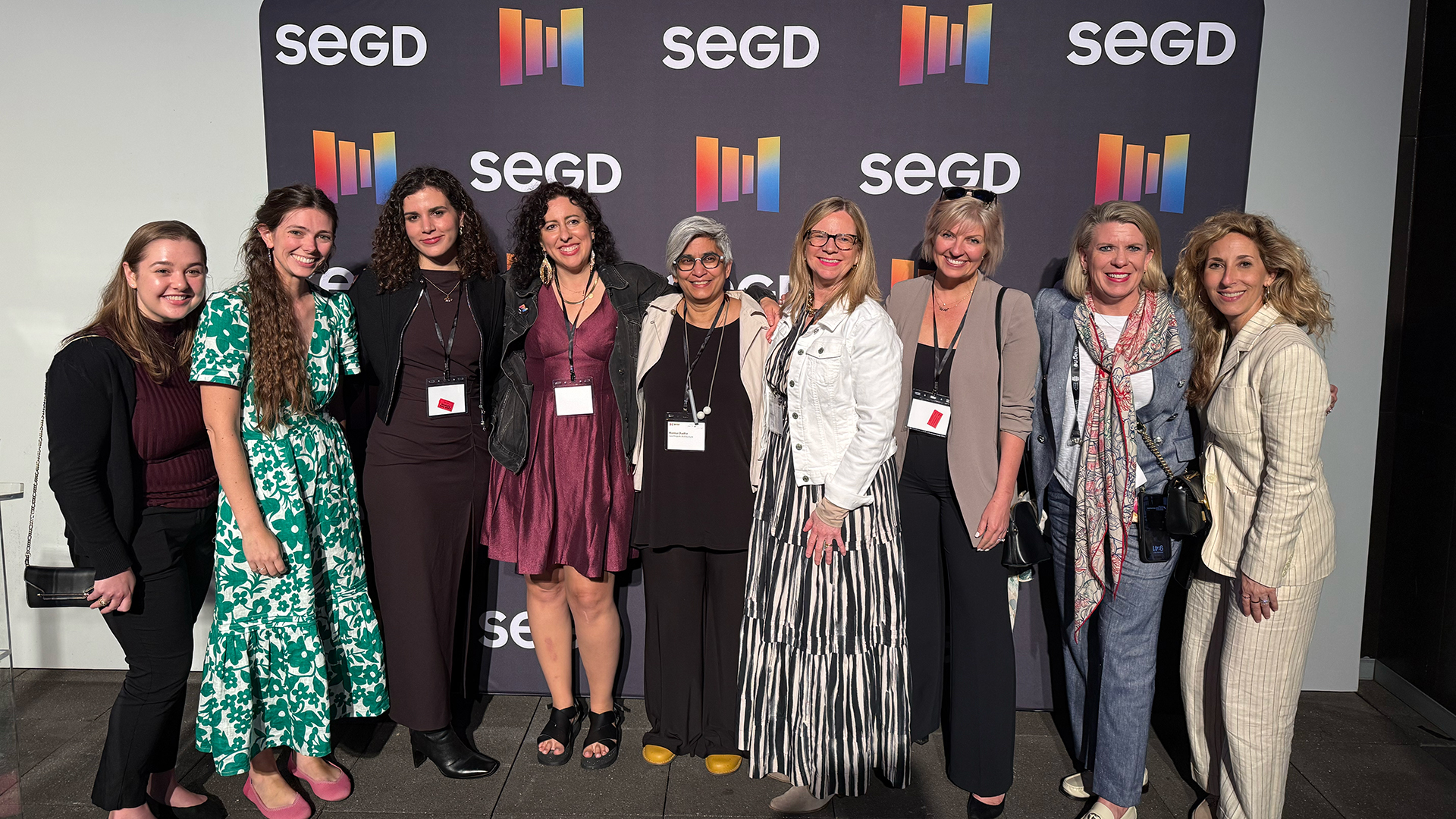
Somewhere along the way, I realized that my greatest design project has never been a museum, an exhibition, or a conference. It has been the people. Specifically, incredible women. I have spent my career—and if I’m honest, most of my odd hours on LinkedIn and Instagram—hunting down the ones doing work that makes me stop and think: I wish I had designed that. The ones with the instinct to seek the bespoke—the singular, unexpected solution that could only have come from them.
I am, at my core, a forager of people. And this Women’s History Month, I want to introduce you to a few of the women I’ve found.
It starts, as so many good things do, with a late-night scroll. I landed on the announcement of the new Eames Institute website—beautiful work, a mission I recognized immediately—preserving and extending the legacy of Charles and Ray Eames through curiosity and creativity. I thought, “I wonder if I know anyone connected to this.”
One degree led to another. My then VP of the board, Bosco Hernandez, had a connection to the Institute through his husband’s work. An introduction was made. I got on a call with the director, and midway through the conversation, it dawned on me that I would be in San Francisco soon. My eldest daughter was graduating with her PhD from Stanford. Petaluma was not too far.
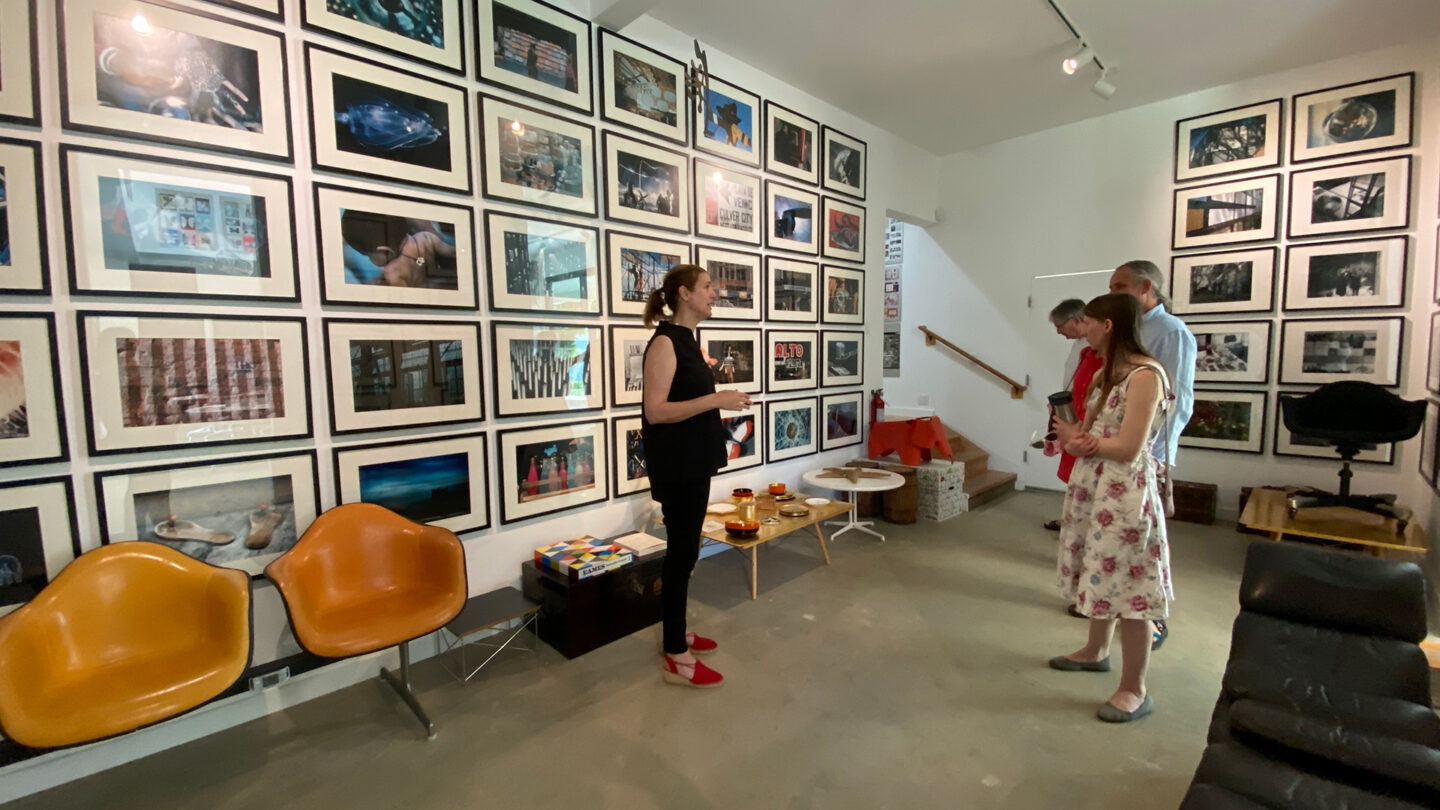
My family attending a private tour of the Eames Ranch led by Llisa Demetrios (left)
I coerced my entire family into a detour after graduation. We made the trek to the Eames Ranch. And Llisa Demetrios, the granddaughter of Ray and Charles Eames, and curator of the Institute, gave us a personal tour.
That is what being a forager of people looks like on a Tuesday.
A year later, I invited Llisa to speak at SEGD’s 50th Anniversary Conference in DC, and again at our 2025 conference in San Francisco. She has become someone I am genuinely in awe of: a woman carrying forward one of the most important creative legacies of the 20th century, making sure the full story gets told—both of their stories… Which brings me to Ray.
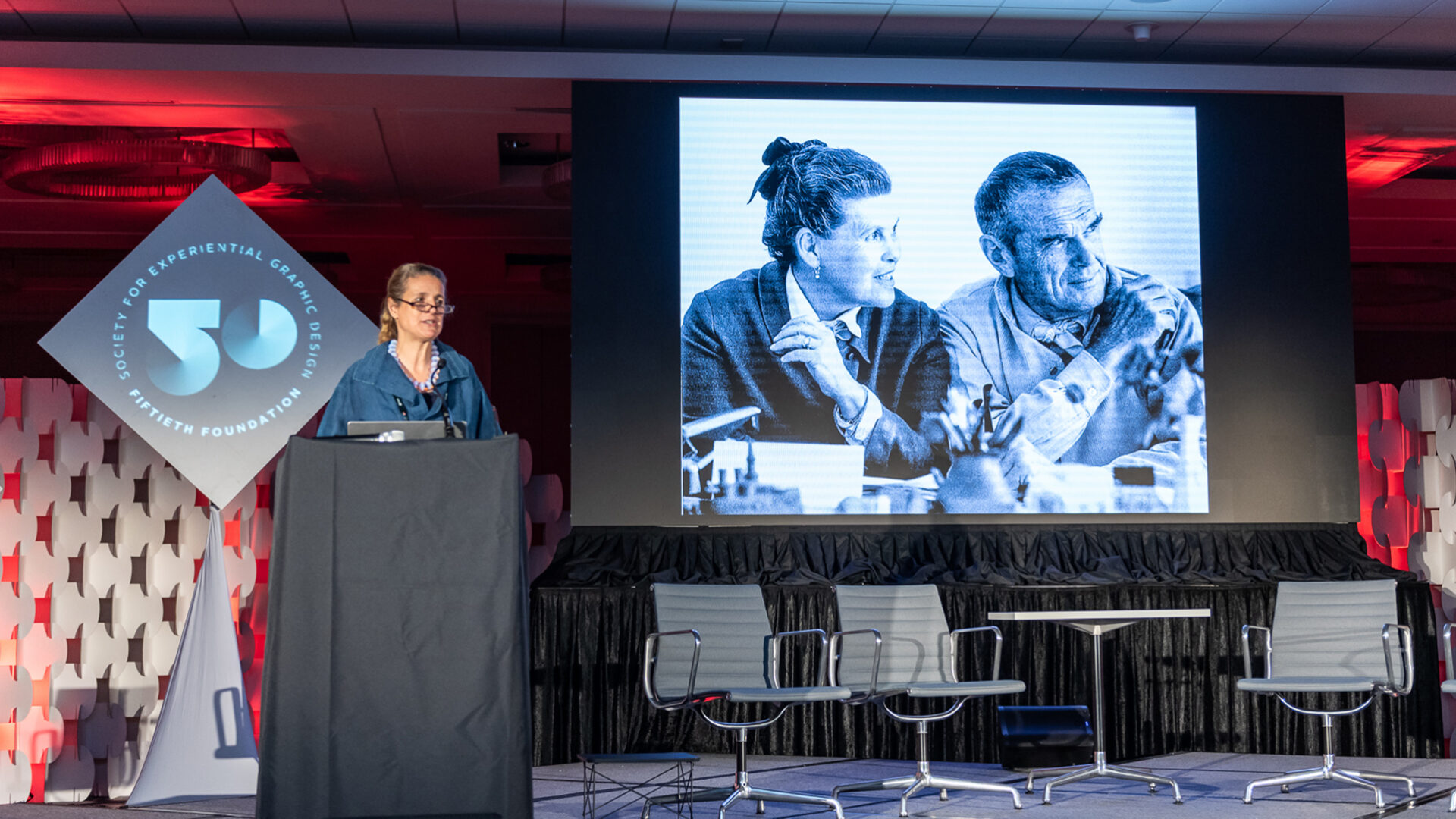

Ray Eames and the Lineage of Women in Design
Ray Eames was a painter, a textile designer, a filmmaker, an architect, a graphic designer—a woman of staggering breadth whose instinct for the bespoke was present in everything she touched. She was a founding member of the American Abstract Artists group in the 1930s, studied under Hans Hofmann in New York, and went on to help shape what many consider the most influential body of design work of the 20th century. During her lifetime, she received far less credit than she deserved. History, as it so often does with women, caught up slowly.
Here is what I find extraordinary, and what I don’t think gets said enough: the Eames Office wasn’t just a studio. It was a school. It trained a generation of designers who went on to shape the field—among them were many women now woven into SEGD’s own origin story.
Deborah Sussman, SEGD Fellow, learned her craft at the Eames Office before going on to define the visual language of the 1984 Los Angeles Olympics and leave an indelible mark on environmental and experiential graphic design. Julie Beeler, another SEGD Fellow, worked at the Burdick Group — itself an Eames lineage studio — before co-founding Second Story and helping establish interactive experience design as a discipline. These are not distant connections. They are direct lines (see “ MOMA Inventing Abstraction” by Second Story).
The six degrees of separation between Ray Eames and the women of SEGD is not a footnote. It is a lineage. And lineages are worth knowing.
This month, the Eames Institute named me to the 2026 Curious 100, where I was recognized as an Explorer in the Traveling Beyond Boundaries category. When I read the words—curiosity, experimentation, willingness to take risks—I thought about every email I wasn’t sure I should send. Every late-night rabbit hole that became a relationship. Every Zoom call turned into something neither of us could have predicted.
I thought about the women I’ve found, and who have found me, because I stayed curious enough to keep looking.
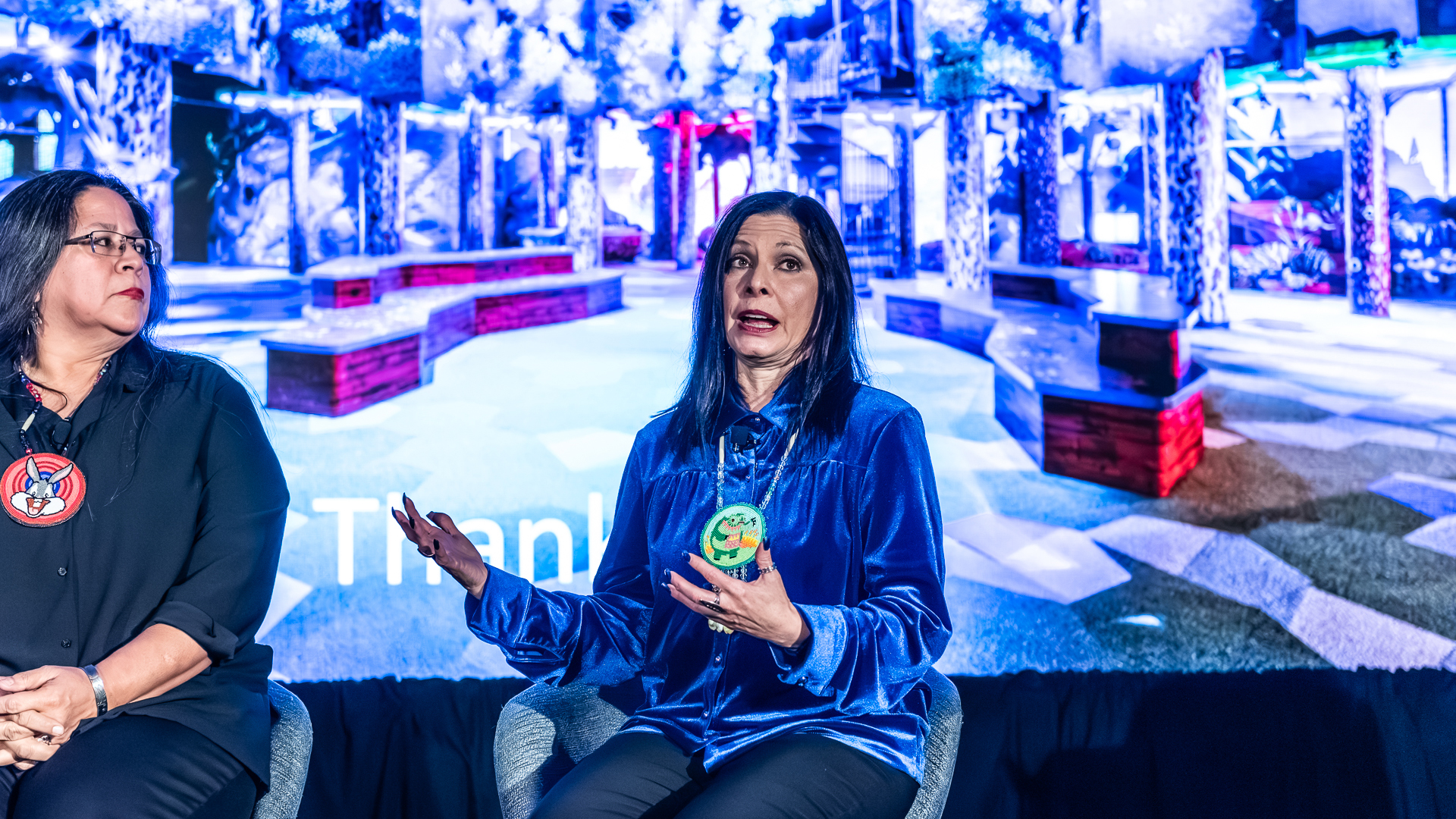
The Introduction You Didn’t Know You Needed
Last year, I got an email from Jim Volkert, an old client and friend I’ve known for years. He wanted to connect me with Shoshana Wasserman, Deputy Director of the First Americans Museum in Oklahoma City.
Jim described what she was building: a family discovery center inspired by a pop-up book, where every wall, every tree, every leaf, every animal was hand-illustrated, immersive, alive. A space anchored in Indigenous worldviews, designed to be joyful, layered, and meaningful for all ages. He attached an image of some of the animals from the fabricator’s shop.
When I got on a Zoom call with Shoshana, a Muscogee Creek/Thlopthlocco Tribal Town citizen who had spent over 20 years helping bring this museum to life, I was unprepared for how moved I would be. She talked about design not as a product but as a ceremony of connection. She talked about collaboration with tribal communities as a real foundation for authentic storytelling. She talked about joy and humor as design values, not afterthoughts. Everything she described had that quality I am always chasing—completely her own, completely irreplaceable, bespoke in the truest sense.
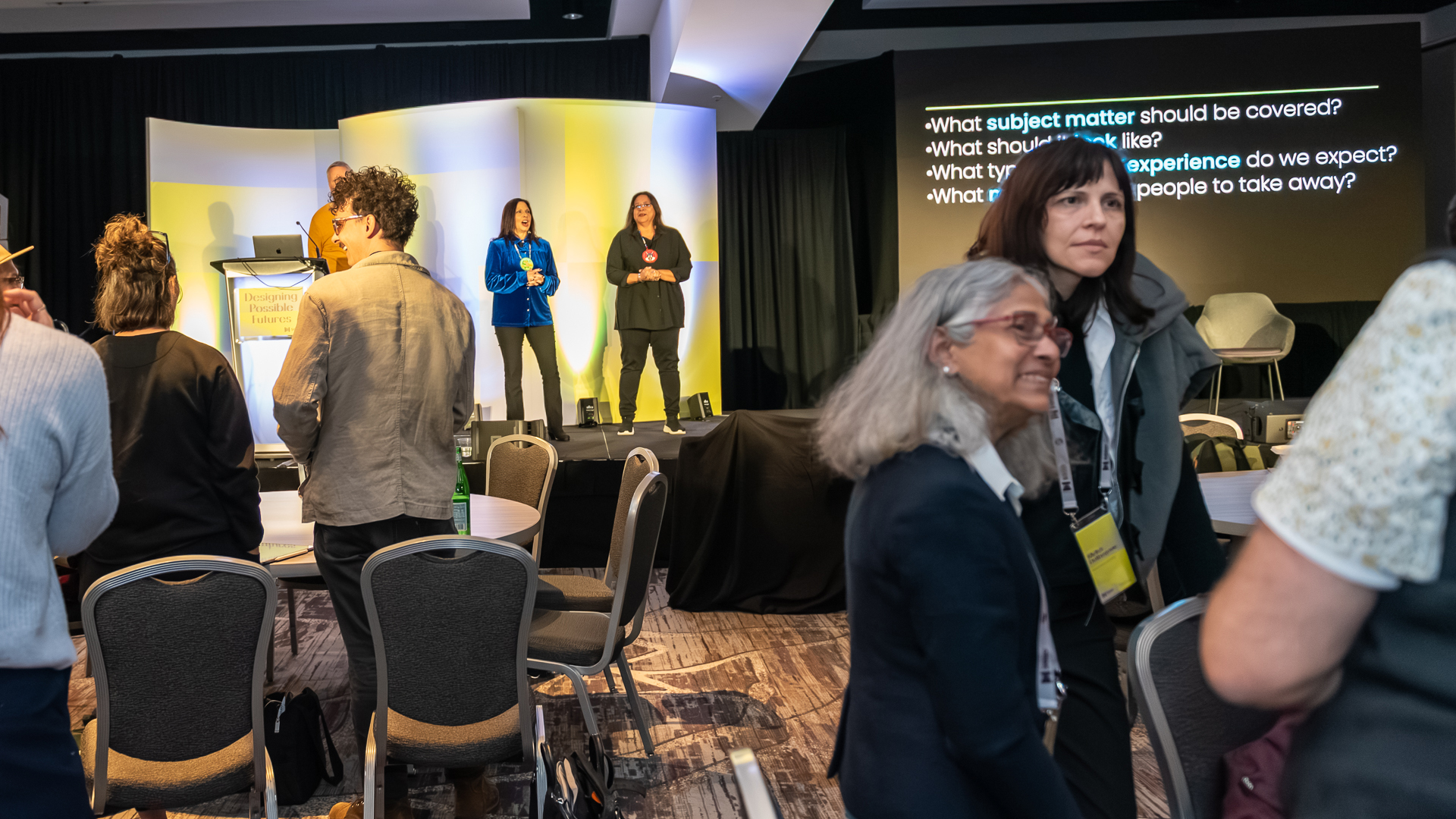
Then she brought her team to our annual conference in San Francisco, and their session on the FAMily Discovery Center was one of the most talked-about presentations of the event. An enchanted world where every surface held meaning. Where the design said, “We are all connected.”
None of it happens without Jim’s email. None of it happens if I don’t answer the call. The lesson I keep relearning: the introduction you weren’t expecting is often the one that changes everything. Stay open. Respond to the email.
What Happens When You Say Yes to the Detour
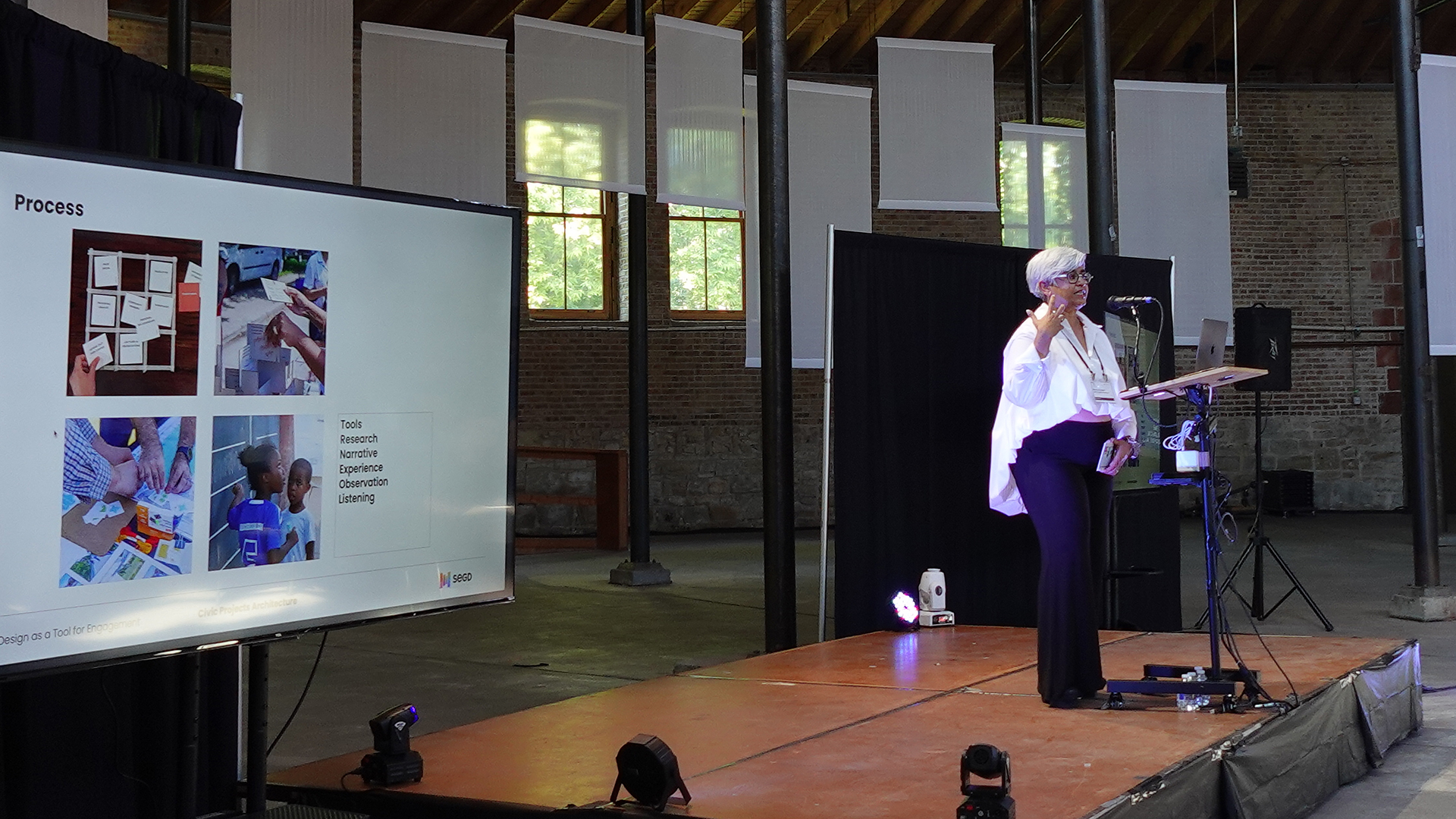
Monica Chadha came into my orbit through Aki Carpenter, VP of Ralph Appelbaum Associates and one of the driving forces behind the Obama Presidential Library. Aki and Monica were deep in collaboration on that project when we began planning our 2025 SEGD Xlab—an experimental offsite event in Chicago. Aki connected us, and what happened next was the result of three extraordinary women thinking together.
Monica, Aki, and our board president, Traci Sym, co-curated the entire experience—and what they built was something none of them could have made alone. Monica, Principal at Civic Projects, brought us to the South Side of Chicago. She connected our team with the historic Roundhouse at the DuSable Museum and opened her studio at Experimental Station for our pre-event gathering. Together, the three of them completely reframed the question of how a design community should gather—not as an audience watching presentations, but as collaborators experimenting in real time. More biennale than conference. More alive.
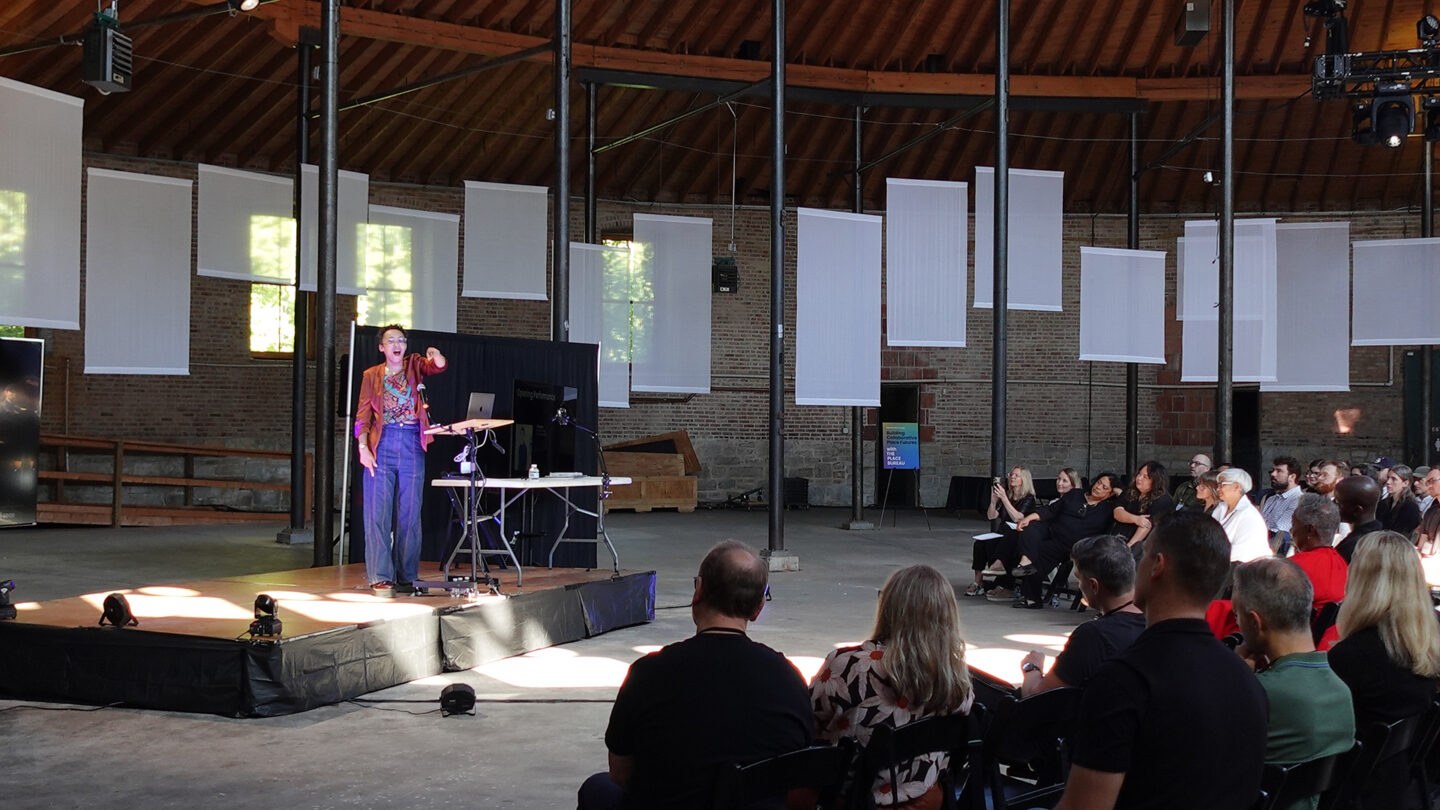
Tiff Beatty leading a powerful invocation to kick-off Xlab
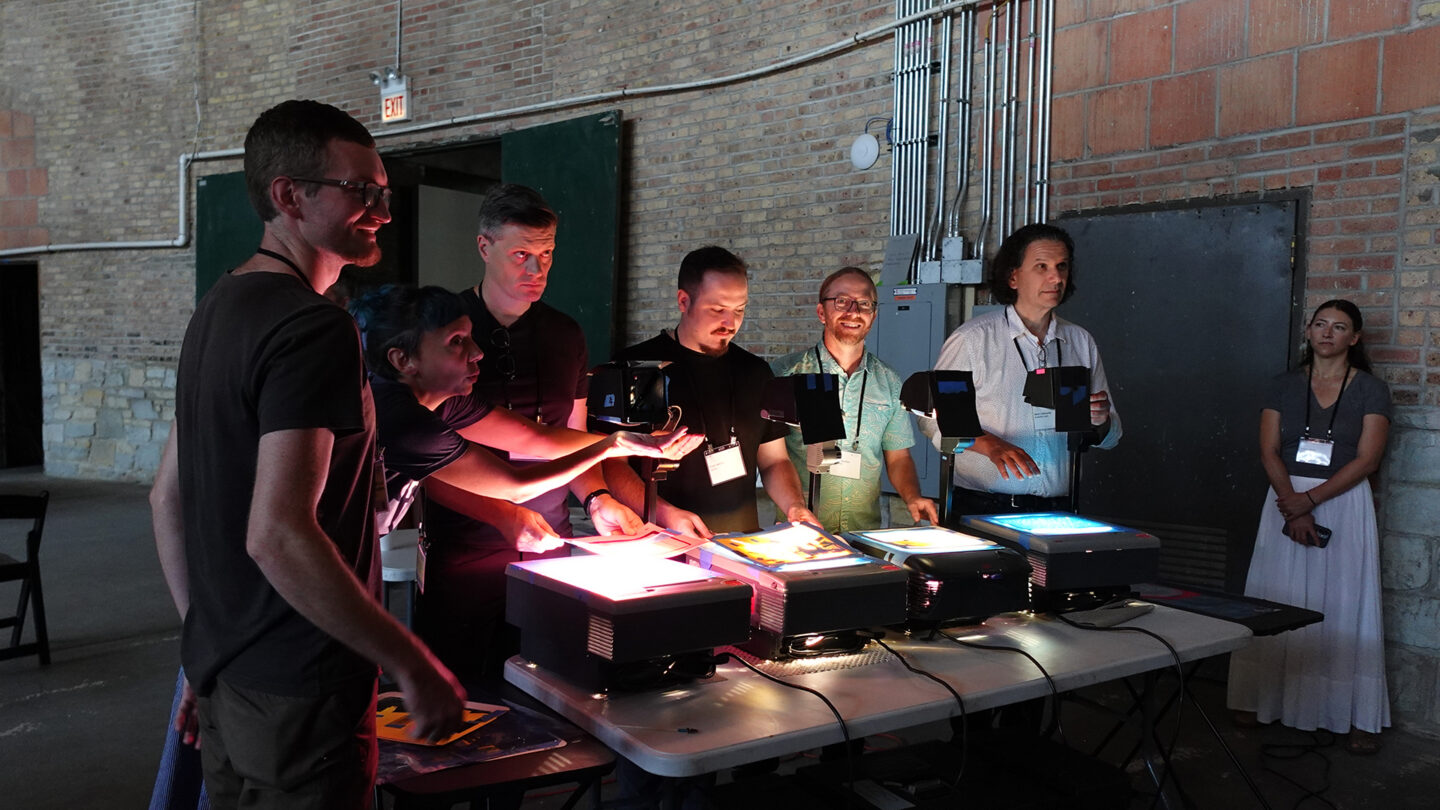
Sarah Fornace guides participants through an exercise in projection-based cinema
And from that shared vision, a whole constellation of voices opened up. Not all from Chicago, not all from any single network, but brought together deliberately by three women who knew what they were looking for: Sarah Fornace of Manual Cinema, whose work sits at the intersection of puppetry, cinema, and live performance. Rebecca Gates, musician, artist, audio editor, and activist. Rosanna Vitiello of The Place Bureau, a global leader in placemaking. Tiff Beatty, performance poet and cultural organizer. Every single one of them is doing work that made me stop and think, “I wish I had been part of this.”
This is what brave outreach looks like at scale. One yes—multiplied by three—creates the conditions for ten introductions you couldn’t have engineered alone. You don’t always know what you’re saying yes to. Say yes anyway. Then bring your people with you.

The Women Already in the Room
Not every discovery requires a detour or a late-night scroll. Some of the most remarkable women I’ve encountered were already inside my community. I just hadn’t fully connected with them yet.
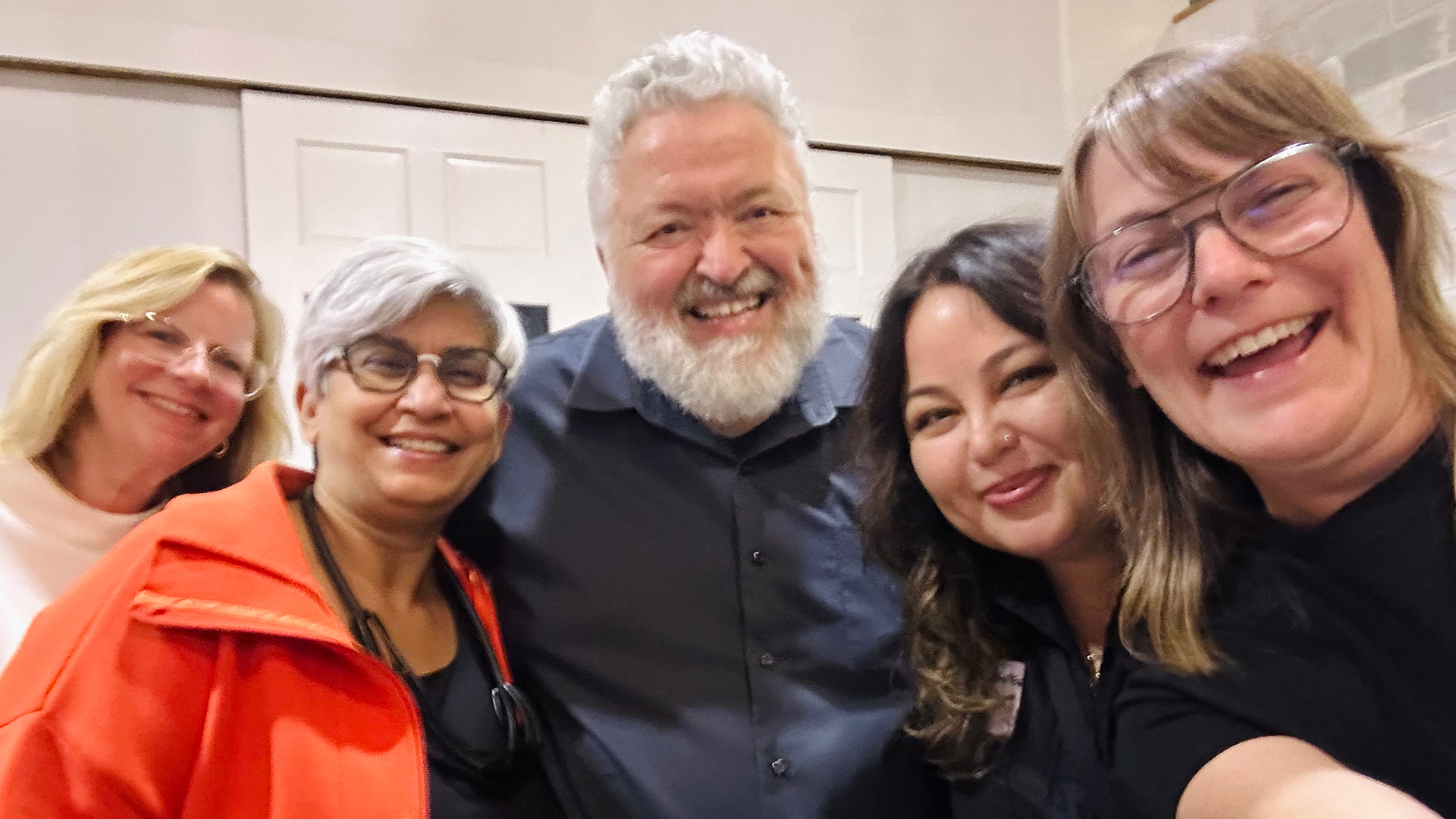
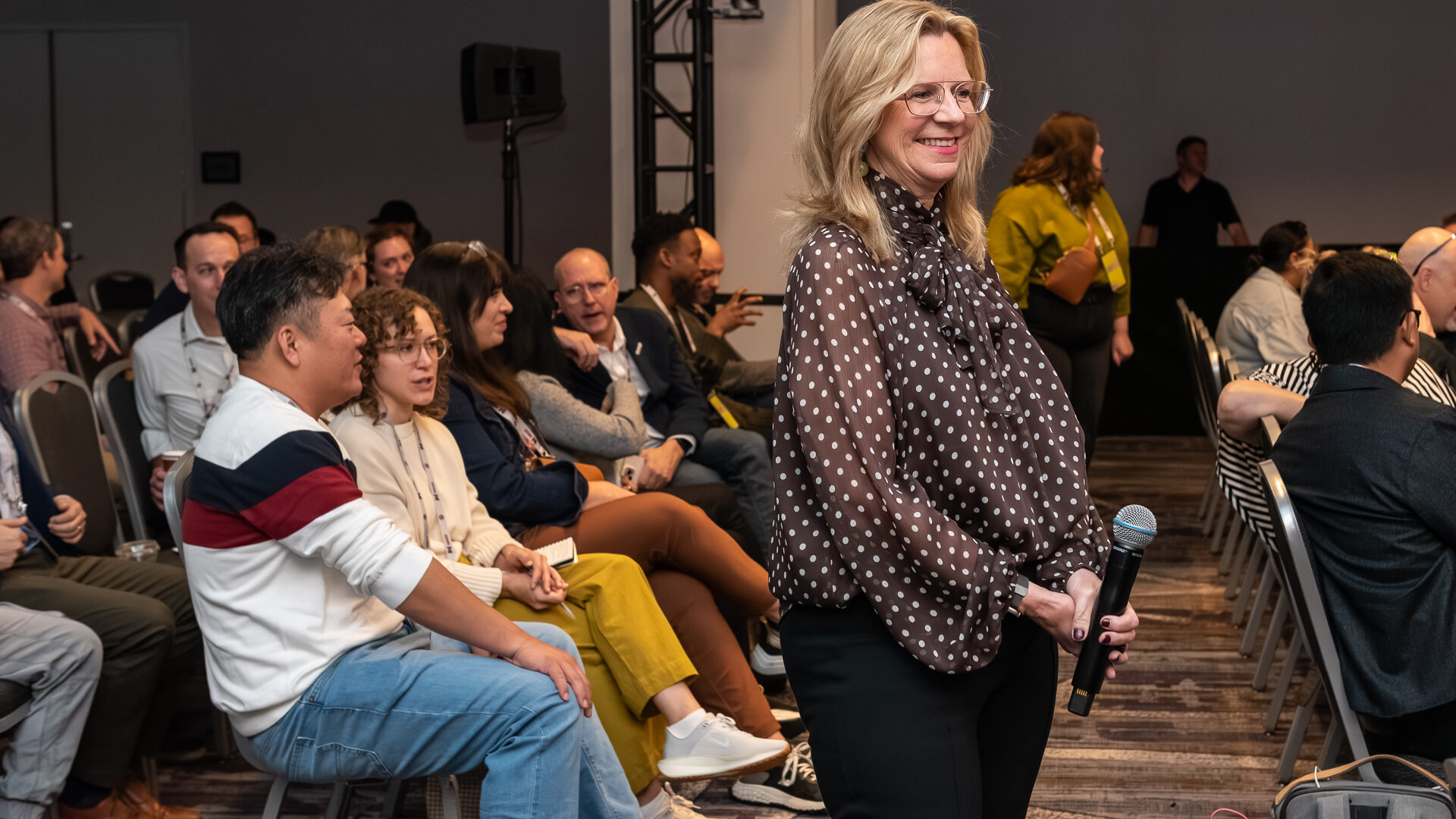
When our Museum Exhibition Professional Practice Group put out a call for volunteers, Kate Klipp of Electrosonic, Shireen Khimani of Eos Lightmedia, and Erica Washburn of Available Light raised their hands. And then they took it by the horns. What could have been a committee became a creative force—building out this corner of SEGD at remarkable speed, creating infrastructure, energy, and real community around museum exhibition practice that simply didn’t exist at that scale before.
I knew these women. But it was watching them work—the way they showed up fully, the way they amplified each other and the practitioners around them, the sheer generosity they brought to something they chose to do on top of everything else they were already carrying—that made me truly see them. Each one has that quality I am always looking for: a completely distinct point of view, hard-won expertise, and the kind of enthusiasm that makes everyone around them better.
Kate, Shireen, and Erica are each formidable in their own right; deep in strategy, business development, cultural communication, and experiential marketing. Combined, they are a kind of creative accelerant. What they built for the museum exhibition community at SEGD reminds me that the most bespoke solutions are sometimes right in front of you, waiting for the room to flourish.
Look around the room. Then look again. The people who raise their hand and then exceed every expectation—those are your people.
The Thing About Being a Forager
Being named to Eames’ Curious 100 made me sit with something I don’t often say out loud: this practice of seeking, reaching, connecting—it takes courage every single time.
It costs the moment before you send the email, when you think, “Will this seem strange?” Do I have a good enough reason? What if they say no? It costs the willingness to follow a thread without knowing where it goes. It costs the humility to show up somewhere—a ranch in Petaluma, a roundhouse on the South Side—and let yourself be genuinely surprised.
Ray Eames leaned into that her whole life. She didn’t wait until the field was ready for her. She painted, designed, filmed, built—across every medium that fascinated her—without a guarantee that any of it would be seen clearly or credited fully. History took a while to catch up. But her work, and her instinct for the bespoke, was always there.
What I’ve learned from the women I’ve collected through SEGD—Llisa, Shoshana, Monica, Traci, Aki, Kate, Shireen, Erica, and so many others—is that curiosity is not a personality trait you either have or don’t. It is a practice. A choice you make over and over again to reach toward what interests you maybe before you’ve earned the right to, to send the message before you’re sure it’s welcome, to say yes to the detour even when your family is tired and the graduation party is waiting.
The most magnificent women I know didn’t wait to be discovered. They went looking. They followed the thread. They showed up.
So this Women’s History Month, I want to ask you one thing:
Who is the person you’ve been meaning to reach out to? The designer, the thinker, the maker whose work makes you stop and think, “I wish I had done that.” The one whose email has been sitting in your drafts. Maybe even a competitor.
Send it. The worst that happens is silence. The best that happens is a personal tour of the Eames Ranch. A window into a pop-up book world where every leaf holds a story. A gathering on the South Side of Chicago that changes how you think about what’s possible.
Go find your people.
Cybelle Jones is CEO of SEGD (Society for Experiential Graphic Design) and a 2026 Eames Institute Curious 100 honoree. She muses on what makes our experiential design community tick and often will reach out to you randomly on LinkedIn or, more recently, show you a picture of her new granddaughter.
People also viewed
-
SEGD CEO Cybelle Jones Named to the 2026 Eames Curious 100

SEGD CEO Cybelle Jones Named to the 2026 Eames Curious 100
-
Women in Design: 5 Lessons on Breaking Barriers and Building Community
Women in Design: 5 Lessons on Breaking Barriers and Building Community
-
Passing the Torch: Women Leading the Future of Experience Design
Passing the Torch: Women Leading the Future of Experience Design