In-Depth Analysis: Inside the Nordic Pavilion at Expo 2025
Designing for a World Expo is a rare and uniquely demanding challenge. With massive global audiences, short dwell times, multilingual visitors, and tightly constrained footprints, pavilions must communicate complex themes—national identity, values, policies, and future initiatives—often in a matter of seconds.
SEGD’s Expo 2025 Case Study Series takes a closer look at how selected pavilions in Osaka translated these expansive ideas into clear, engaging visitor experiences. Led by Christina Lyons, Associate Professor & Chair of the FIT Graduate Exhibition & Experience Design program, these studies combine on-site observation with interviews, process analysis, and conceptual documentation.
By examining how design teams navigated narrative complexity, cultural communication, architecture, and high-volume visitor flow, this series offers insights and strategies useful for experiential designers across sectors.
This first case study focuses on the Nordic Pavilion, a powerful example of multinational collaboration, conceptual clarity, and experiential restraint. Christina’s report has been published in its entirety below. For the full, formatted report, click the link to download.
Overview
Project Overview
At the World’s Exposition, EXPO 2025 in Osaka, Japan, five Nordic nations—Finland, Denmark, Norway, Iceland, and Sweden came together for a collective cultural project entitled, The Circle of Trust: A Nordic Journey. Offering a multi-sensory experience built around shared values of trust, innovation, camaraderie and sustainability.
Visitors to the pavilion were invited to participate in a symbolic “Nordic Circle”, or “Circle of Trust”, where hierarchy was dissolved, and the visitor occupied the center, in an elegantly restrained designed experience embodying collaboration, that presented five nations to a global audience with one unified vision.
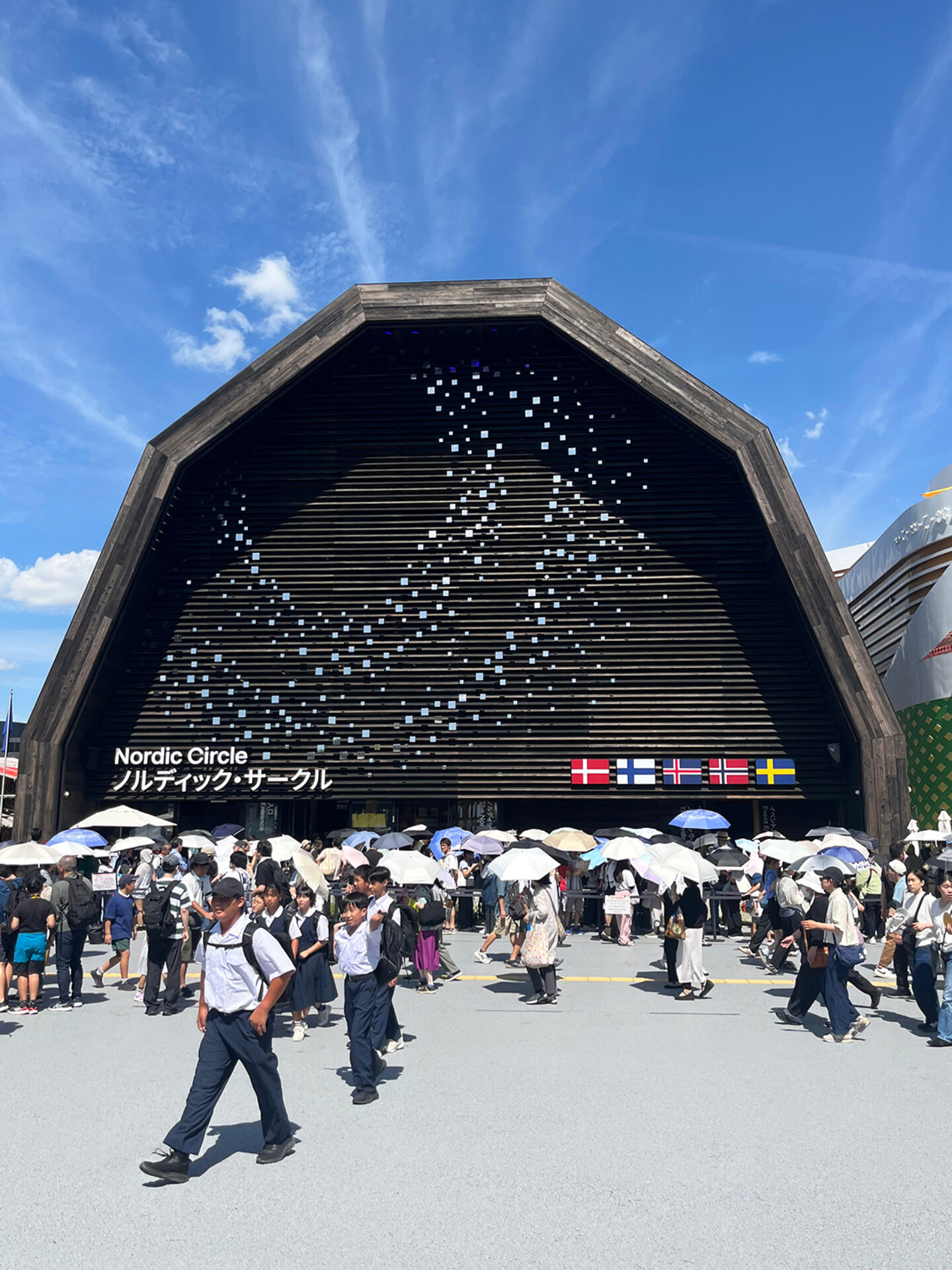
Nordic Pavilion EXPO 25 — Exterior View
This report outlines the story behind the Circle of Trust pavilion by tracing its path from early concepts and prototypes to the finished installation and final visitor experience in Osaka. The project brought together architects, engineers, designers and cultural experts in a collaborative effort to express the region’s tradition of camaraderie and trust that stems from its natural environment.
The visitor journey of the pavilion unfolds in stages. Outside the pavilion, there is an interactive mobile platform that showcases the diverse landscapes and cultures of the Nordic region while docents entertain visitors waiting in long queues with facts, language lessons and insights into the meaning behind the design that they would soon be experiencing. Entering the space, guests move through a quiet threshold to its core which contains a suspended paper sculpture bearing portraits of everyday life in the Nordic region that are interwoven with cinematic imagery of seasonal change, reflecting the deep connection between Nordic life and the natural environment. The surrounding space features digital stations showing whimsical animations highlighting how the region contributes to immediate global issues like renewable energy and accessible healthcare.
The Nordic pavilion stood out within the incredibly busy and high-energy EXPO by offering visitors a calm and contemplative space where visitors were able to pause and engage with Nordic perspectives and initiatives in a soft and effortless form that didn’t necessitate lengthy label copy, instructions or audio guides. The pavilion was able to transform abstract principles into accessible experiences by blending personal everyday stories, public values and environmental narratives into a simple grand gesture representing a cohesive model of cultural collaboration—“The Circle of Trust” and was able to capture and individualize a large audience with one glance.
The following sections will examine the pavilion in detail, addressing: The Nordic region’s model of collaboration and team organization, the conceptual framework and strategies that shaped its narrative and spatial experience, the materials, iterations, and technological choices explored. This report aims to contribute to conversations about the role of design in shaping narratives, cross-cultural collaboration and express techniques to make complex values, civic policy and initiatives tangible to large audiences. Much of the content in the following sections is based on interviews conducted with Lemke Meijer, Partner, Gagarín in Reykjavik, Iceland, who provided detailed insights on the process, conceptual approach and installation, as well as from site visits and interviews with visitors and staff at the pavilion in Osaka.
Collaboration and Multi-National Team
A unique achievement of the Nordic pavilion was its ability to balance the individuality of five nations with one cohesive identity; each country’s culture is represented, yet all integrated into a broader narrative.
The team itself was built on this spirit of collaboration between representatives from the Nordic countries to develop and realize the pavilion. Lemke Meijer, Partner, Gagarín in Reykjavik, Iceland, described the overarching approach:
When the team was built, it was very important that it had the Nordic DNA. All the Nordic countries were essentially represented through the design companies involved.
In order to create an authentic representation of the region for this global stage, designers and cultural professionals from the Nordic nations contributed their diverse perspectives, enabling the exhibition to weave together multiple traditions, values and visual languages into a seamless whole. Presentations to a multinational client committee also provided a platform for a dialogue across countries. Throughout the very brief tendering, concept and design development phases, the team selected was continually able to ensure that varied perspectives were included in shaping the content and design.
The Client was The Nordic Council of Ministers, in partnership with the governments of Denmark, Finland, Iceland, Norway and Sweden. The Nordic Council of Ministers describes its presence at EXPO 2025 as important because the Nordic Prime Ministers have committed to Vision 2030. This vision’s goal is to make the Nordic region the most sustainable, integrated and competitive in the world by 2030. They see the joint participation in Osaka as a milestone towards realizing that vision.
The pavilion architecture was by AMDL CIRCLE. Engineering and the build execution was by Rimond, both of Italy. The exhibition, interiors, and visitor experience were developed in collaboration by the following firms under the leadership of Exponex from the Czech Republic, who developed and curated the Nordic DNA design team and was itself responsible for the construction and technical design. Team Exponex included: Wintenex of Switzerland, who provided management of the project, Habegger of Switzerland, which was responsible for AV and logistics, and the Nordic DNA design team for all design, consisting of Kvorning, Rintala Eggertson and Gagarin. The team was responsible for the concept, visitor experience, exhibition design and content production.
Lemke Meijer, Partner, Gagarín reflects on the opportunity to represent societal values and cultural identity within all five countries with the exhibition, emphasizing that these are not merely abstract concepts but lived realities embedded in their everyday life. Meijer notes the nuanced intra-Nordic differences, illustrated through culturally specific concepts such as the Danish notion of hygge, the Swedish fika, and the Icelandic Notalegt, all closely representing coziness or belonging. These distinctions underscore the importance of achieving a balanced representation that respects each country’s unique identity while presenting a cohesive Nordic narrative.
Although the notion of working with multiple stakeholders tasked with balancing the national representation of five countries would seem an enormous task, because of the diversity of the team and strong collaborative spirit, the challenge was found not in inclusion but in editing. The team needed to convey complex initiatives and values and communicate them within the bounds of a compact footprint to an extremely large number of visitors. Time and logistics also presented opportunities for efficiency and focus. A compressed schedule prompted streamlined decision-making and fostered close coordination across the team. Shipping requirements and deadlines encouraged early planning and challenged material and fabrication choices in ways that were sustainable, light and practical. These parameters ultimately contributed to the pavilion’s clarity and actually ensured that each element served a very clear purpose within the visitor experience. The project’s conceptual underpinnings, as outlined in the following section, served as a clearly articulated design road map and as a critical reference point throughout development, facilitating decision-making and stakeholder alignment across the team.
As a result, this collaboration and streamlined approach contributed to the Nordic Pavilion completing construction of the building 40 days ahead of the opening of EXPO 2025, allowing the interiors the remainder of the time to be installed, including all final testing before opening day.
Conceptual Framework
The underlying conceptual framework was created through an iterative process, incorporating client feedback alongside in-depth research into Nordic culture and environment that guided the pavilion’s narrative and spatial organization with weather emerging as a central organizing principle shaping everyday life in the Nordic region.
Lemke Meijer, notes, “The client had already identified trust and collaboration as their core themes. For us, those values immediately resonated with the influence of weather on our cultures. When your fire goes out in the middle of winter, you must go to your neighbor for help. That kind of mutual dependence is deeply ingrained in the way our society functions.
In the conceptualization phase preceding the award of the design contract, the initial inspiration was deeply rooted in the climatic realities of the Nordic region. The region’s unique weather is characterized not merely by cold, but also by wind and intense storms at times. This was recognized by the design team as a formative influence on local cultures and everyday life. Historically, communities in these areas have been geographically distant which has required a form of interdependence on one another that transcended physical distance.
As we developed the concept further, we realized it wasn’t only about weather—it was about the broader relationship we have with nature.
“In places like Iceland, nature isn’t just a scenic backdrop; it’s a powerful presence. It can be breathtakingly beautiful, but also harsh and unforgiving. That relationship shapes our mindset. We live with nature, not apart from it,” she notes.
The spatial and sensory design of the exhibition represented a dynamic interplay of seasonal extremes with shifting light and sounds. Luminosity, shadow, and the overall form were used to evoke the region’s distinctive relationship with its climate that has fostered resilience, interdependence and ecological sensitivity for all in the Nordic region. As the project progressed and feedback was received from the client the theme expanded beyond weather. The team began to think about broader cultural signifiers that define Nordic identity.
As the concept evolved, the design team incorporated reflections on the harmonious relationship with nature, leading to the investigations into organic patterns found in the natural world. One particularly resonant concept was flocking behavior, such as the coordinated movement of starlings flying in a murmuration, migrating reindeer herds or schooling fish.
The way these animals operate, in these patterns, as a collective unit while maintaining individual autonomy can be seen to reflect the socio-political arrangement of the Nordic region as a unified area of independent nations without a singular dominant leader.
This thinking led us to explore natural patterns. That felt like a strong metaphor for the Nordic countries: five distinct identities, moving together as one, without a single dominant leader. It’s a quiet but profound expression of trust, collaboration, and balance.
This metaphor of decentralized and collective motion became a cornerstone of the design strategy. The design team describes this as the “basic principle behind self-organizing systems is the lack of centralized decision making.”
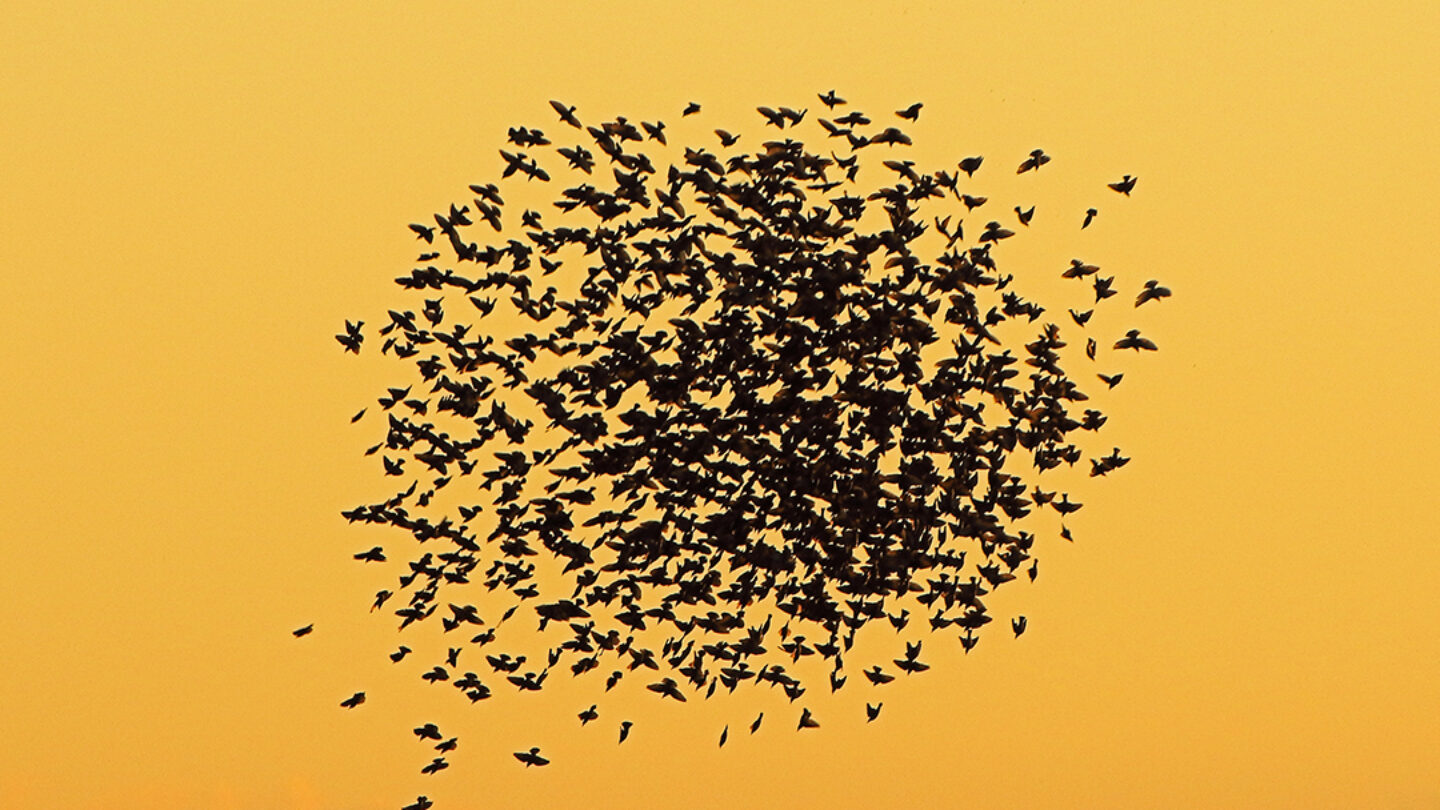
Starling Murmuration RSPB Minsmere by Airwolfhound CC BY-SA 2.0

Schooling fish” by lifefish CC BY 3.0
Equally important, when contemplating the site and engaging with the host country of EXPO 25, Japan, the team sought to establish a cultural dialogue grounded in mutual respect and recognition of the host country. Recognizing that the audience would be predominantly Japanese, the design team deliberately sought to find intersections, rather than replicate Japanese motifs or forms, the team focused on identifying shared design philosophies and sensibilities.
A notable point of cultural synergy was the ensō symbol, which is a hand-drawn circle representing completeness, imperfection and unity. This elegantly echoed the conceptual foundation of interconnected individuality and cyclical movement. The design team referred to a quote from the Hsin Hsin Ming, “A circle like vast space, lacking nothing, nothing in excess” and clarifies “…things neither exist (since they vanish) nor don’t exist (since they occur); rather, they are simply empty,” representing a central concept in Buddhist philosophy.
This symbol informed not only the conceptual framing but also the spatial organization of the installation. A conscious decision to pursue a more subdued and contemplative aesthetic is seen in the attempt to move away from the use of prominent LED screens. This decision aligned with the initial principles of equality and modesty that underpin both Nordic and Japanese traditions.

Ensō Symbol
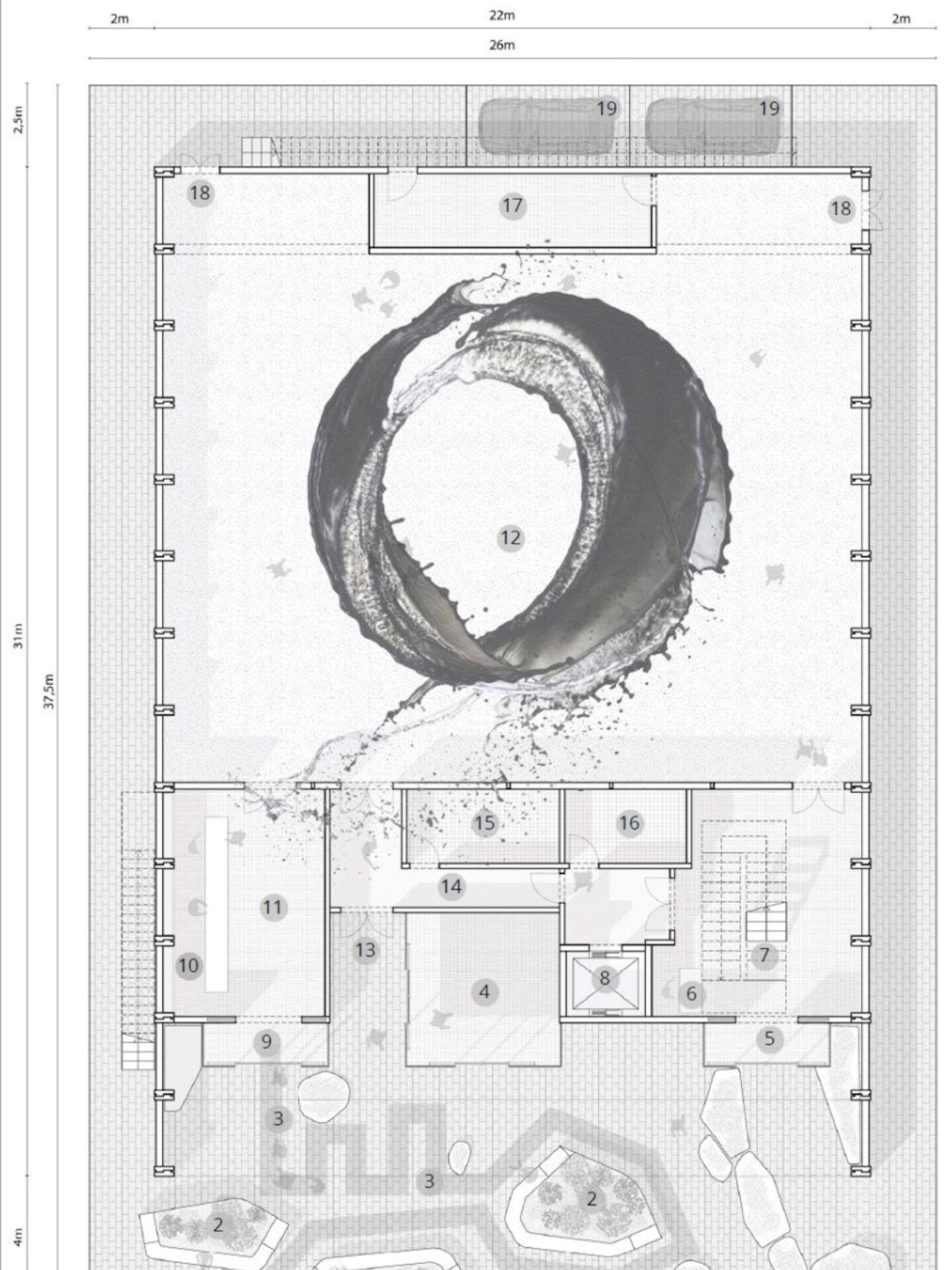
Concept Floorplan
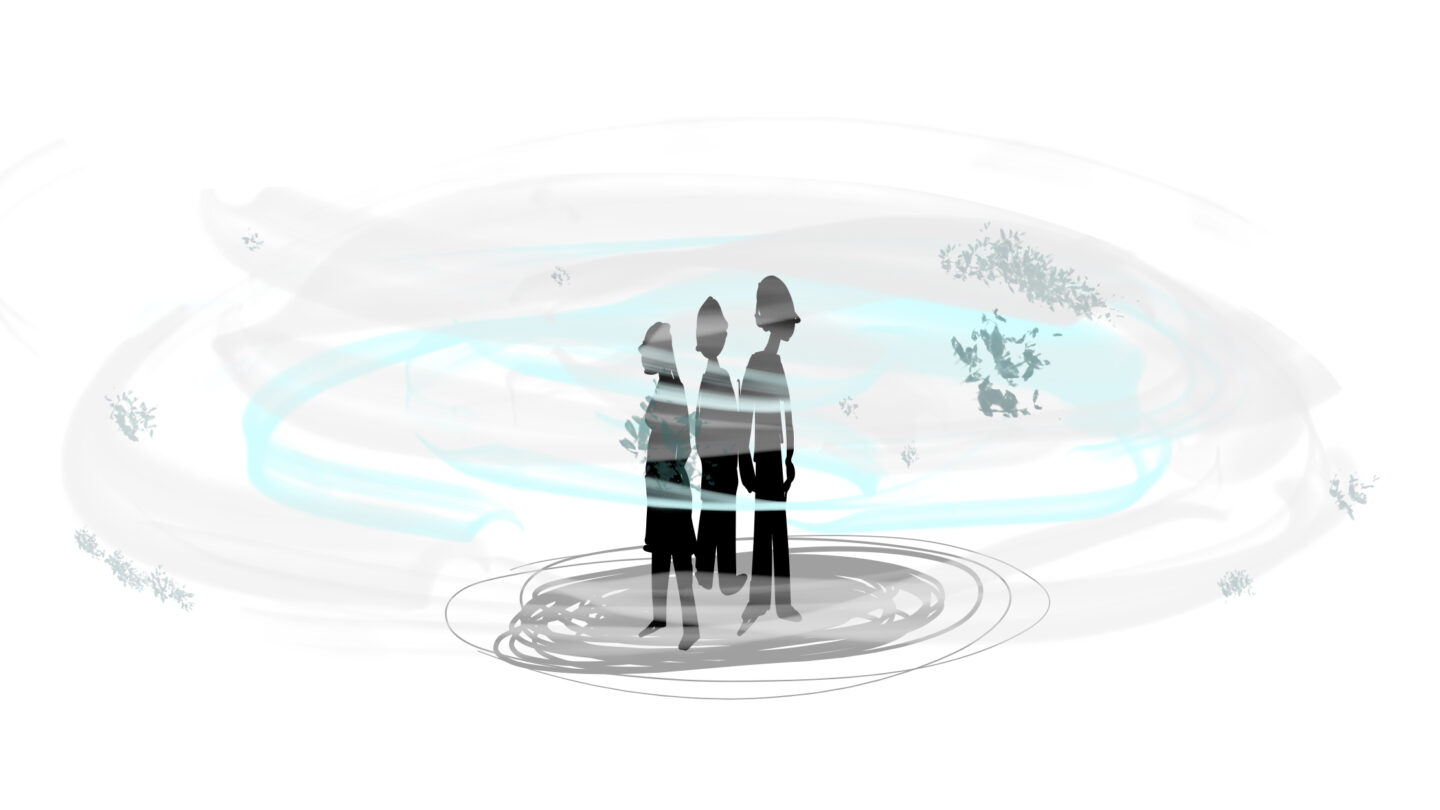
Early Concept Sketch
Technical and logistical limitations, including budget and high visitor volume required scaling back some of the interactive components that were originally envisioned as movable or touch-sensitive installations. The team skillfully recognized the impracticality of complex mechanical interactions in such a high-traffic environment with audiences from all over the world. The team opted for a more passive yet evocative use of image, light and shadow to convey the content within one grand gesture. Also, in order to connect the interior experience with the exterior architectural shell the team proposed a circular abstracted “whirl” lighting element on the exterior facade.
The final design displayed a very delicate balance between light and airy elements represented by the floating paper forms that contrasted the rugged textures evocative of Nordic landscapes. The lighting and projected film with the custom musical score were choreographed to evoke natural transitions and moods which added to the immersive quality and directed the visitor circulation of the space. “Circle of Trust: A Nordic Journey” exemplifies the potential of cultural collaboration and shared vision and was able to translate abstract concepts and values into a single concrete and accessible visitor experience.
Visitor Experience
The visitors’ Nordic experience begins in the queue outside before entering the pavilion through a mobile activity.
Before stepping inside, visitors can scan a QR code to access a digital “tasting menu,” as described by the designers, a 360° mobile experience previewing Nordic nature, daily life and culture across the five countries. This prelude offered views into Nordic landscapes and culture priming the audience with contextual awareness. In constructing this preview experience, the team paid careful attention to representing all five Nordic countries equitably. Beyond geographic balance there was a deliberate effort to present a diversity of environments which included remote villages to vibrant city centers, each location accompanied by engaging facts. This activity offered preliminary engagement that facilitated visitor acclimatization and transformed a passive waiting experience into an active moment of discovery. Visitors of the Expo who had grown accustomed to waiting in extremely long queues for entry into each pavilion throughout the Expo were delighted by the app, and many in line were sharing glimpses of each other’s phones or teaching each other how to access the app.
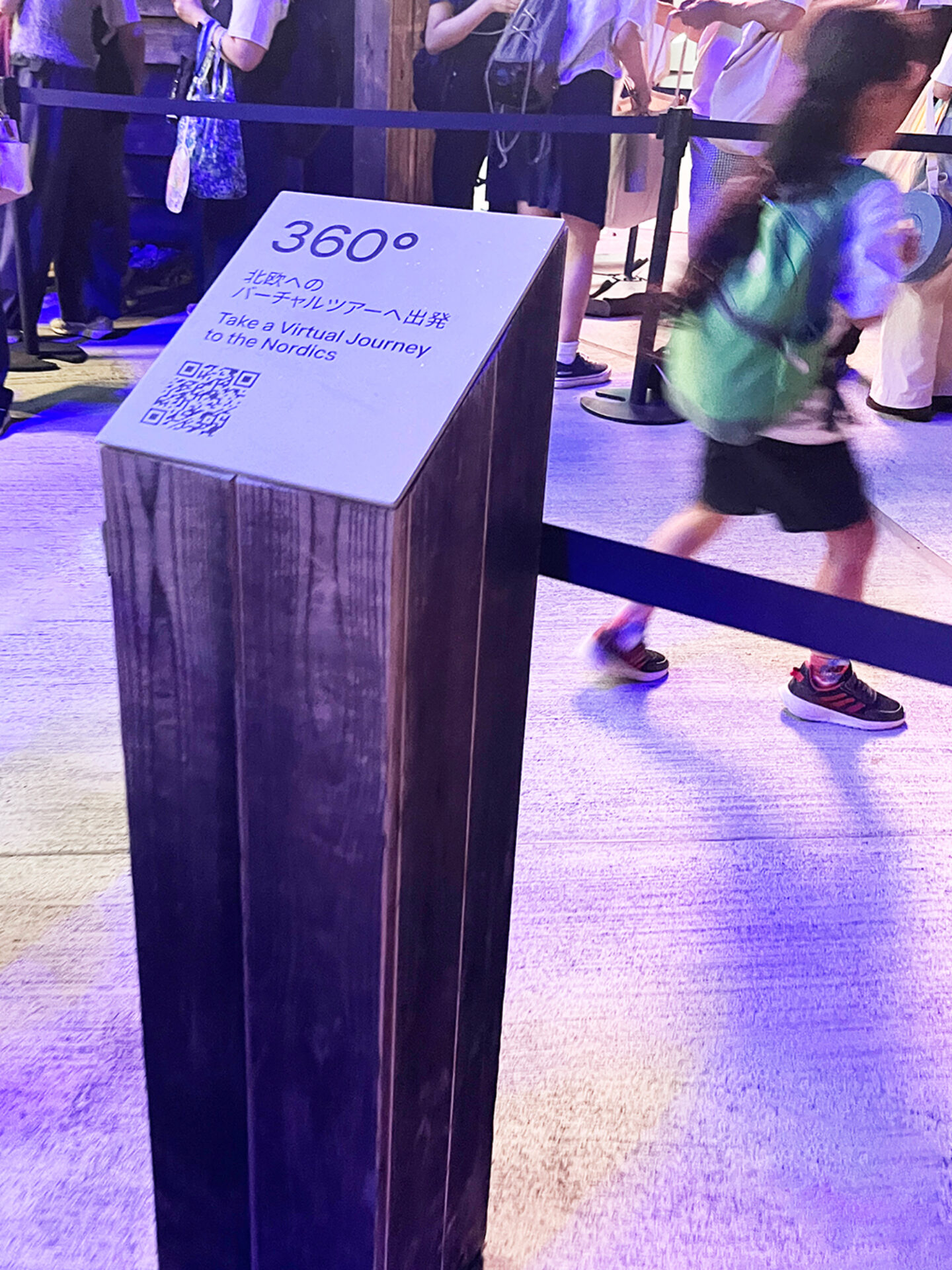
Mobile Activity
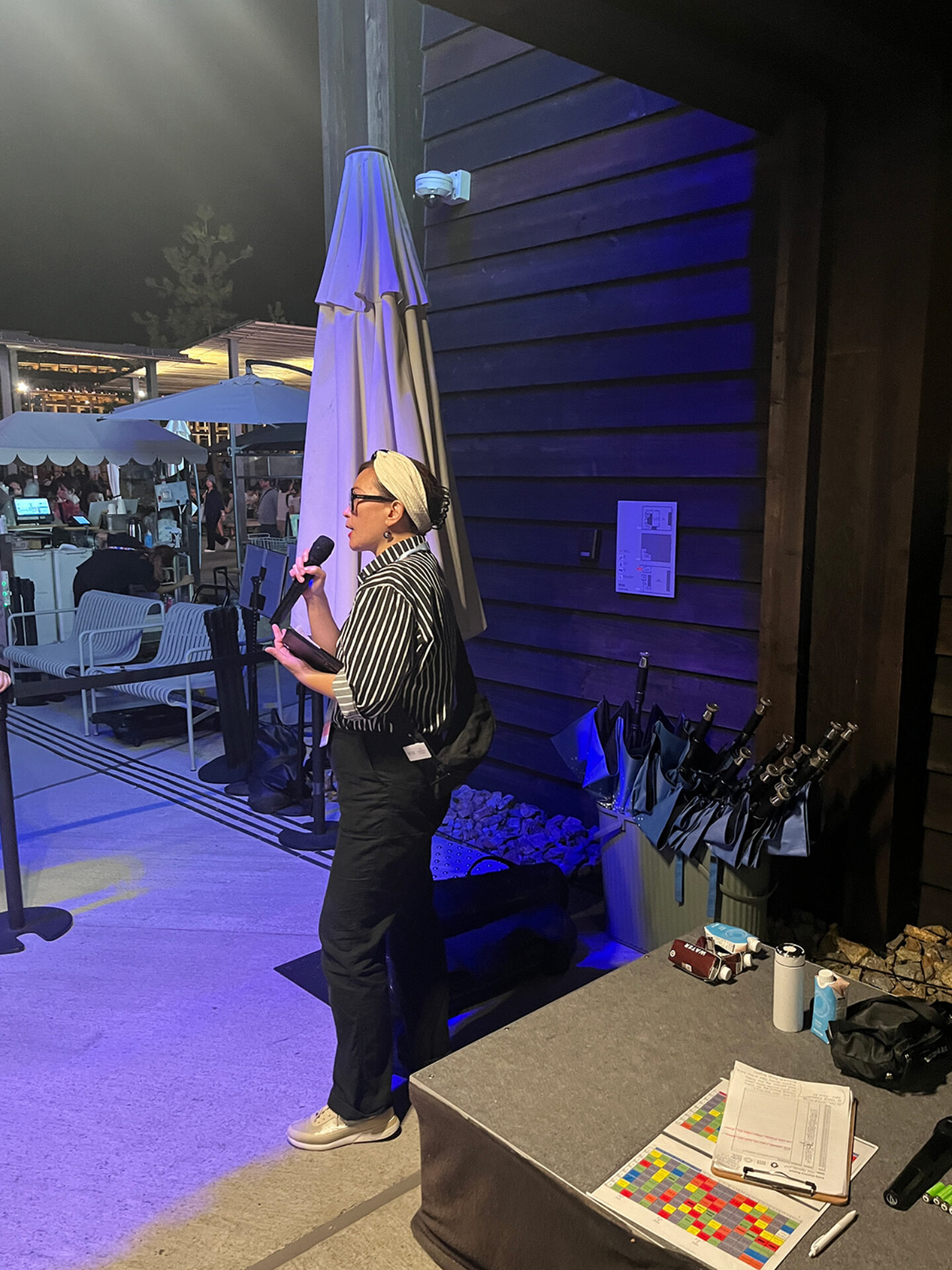
Docent speaking to visitors waiting in queues to enter
Another unique and very successful queuing experience was a bilingual docent with a microphone welcoming visitors with fun and quirky language lessons from the Nordic regions. Unique to the Nordic pavilion was that the docent also began to speak about the design narrative before the visitors entered, and introduced the concept of climate, trust and camaraderie. This seemed to help immediately place the visitor in the correct narrative upon entry. Because of the Expo’s massive crowds time was limited in each pavilion with very little time to read and digest large amounts of content. The preparatory words of the docent were a smart and engaging way to place the visitor without relying on text panels or intro videos.
The pavilion’s interior pre-area was intentionally designed as a transitional space and a counterpoint to the frenetic external environment. Functioning as a “palette cleanser” as described by Lemke, this space employed minimalist design elements and subdued audiovisual components. Such as a single projection of a natural phenomenon like the northern lights or schooling fish without didactic explanation evoking a sense of calm and reflection that placed the visitor in the intended tone. The visuals quietly established ideas of interdependence and a rhythm that resonated with visitors before entering the main exhibition space.
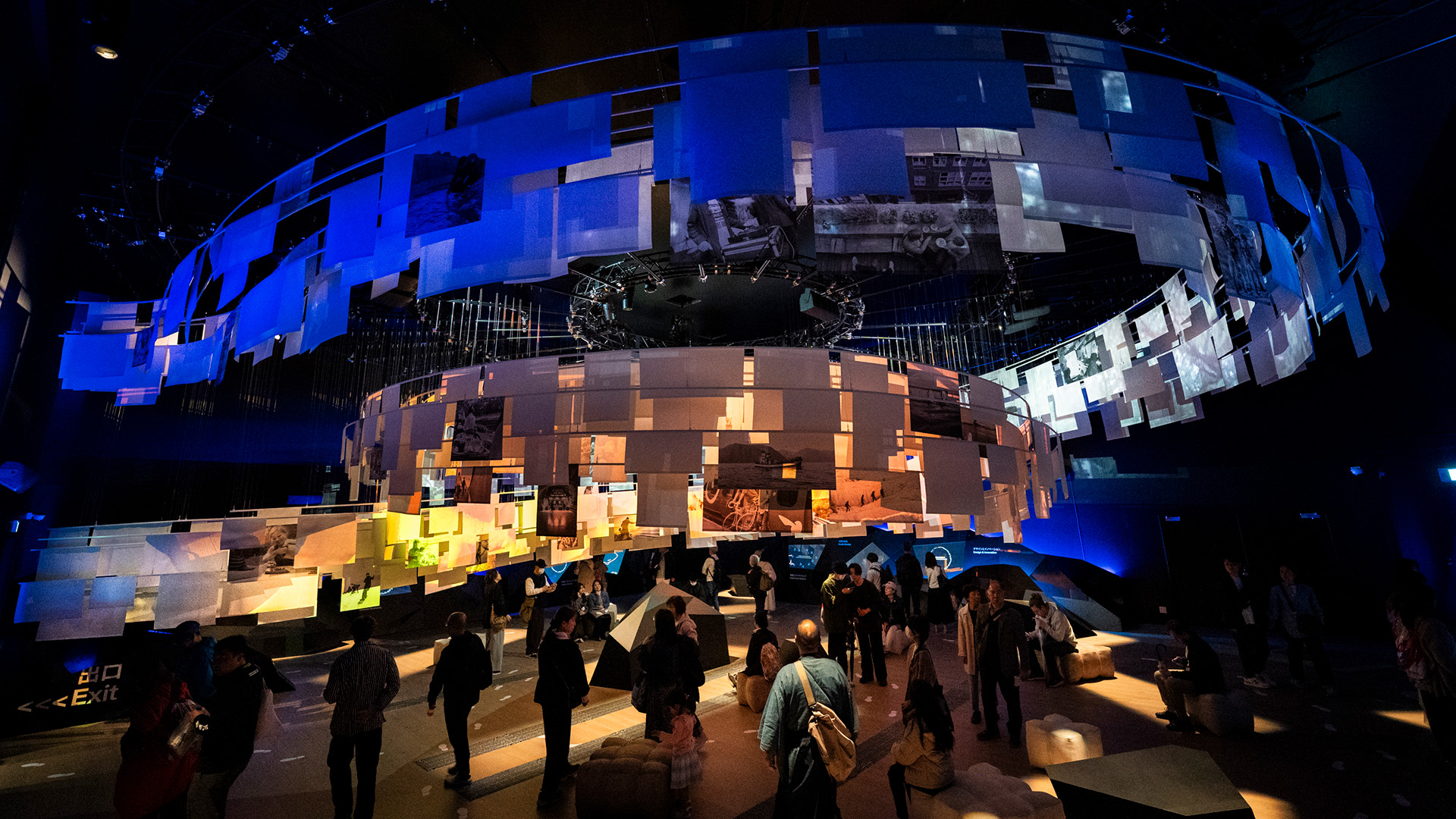
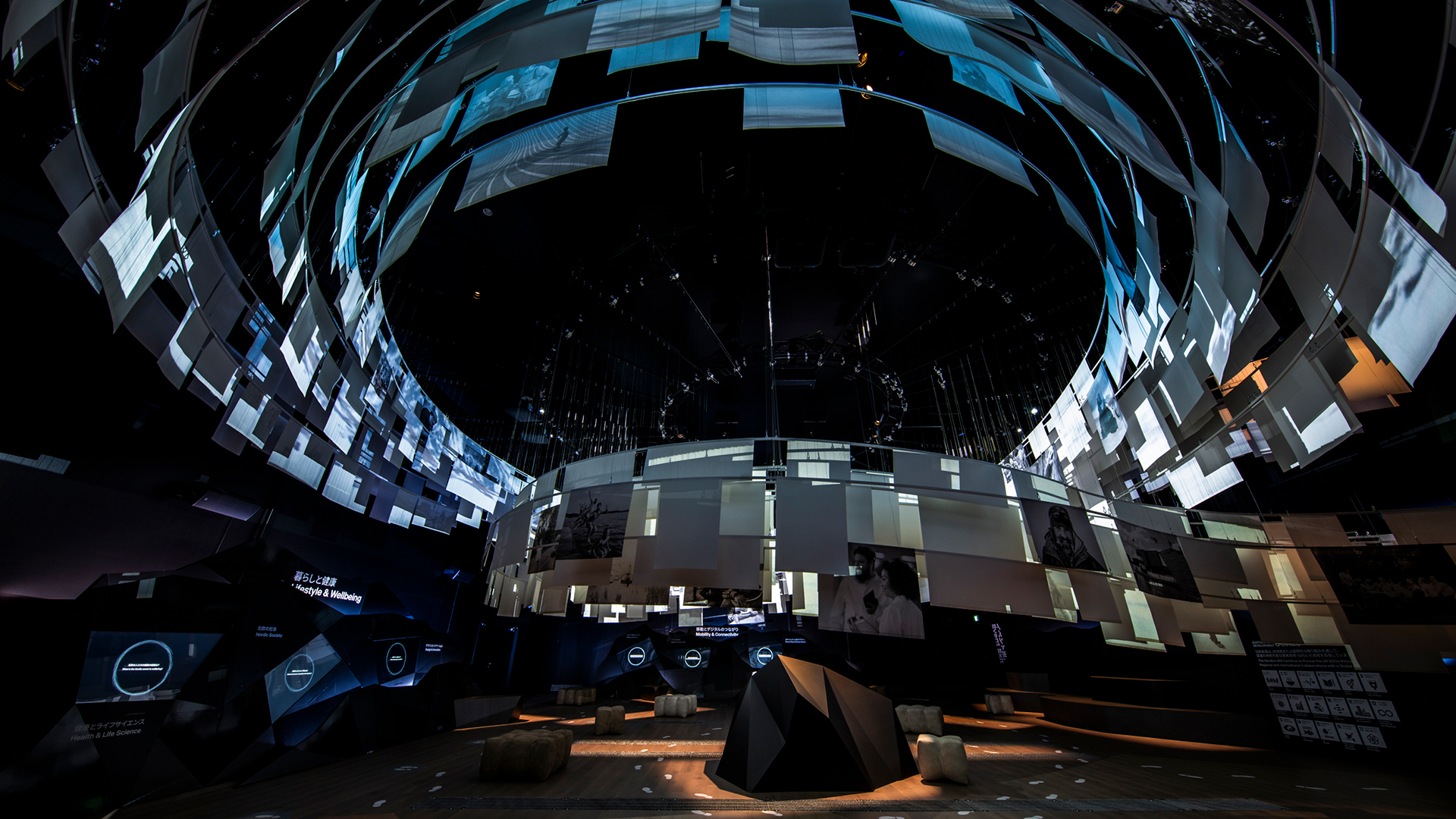
Inside, guests entered a tranquil space where they were greeted by a circular sculpture, conceptualized and developed by the design team in close collaboration with the technical production team. The sculpture is made of 700 sheets of paper that are suspended from 980 cables, which served as both centerpiece and projection screen. Often referred to as “the whirl.” The paper hung in a layered circle choreographed with blank sheets acting as a canvas and printed images of everyday life in the Nordic region.
Projected on the whirl was a custom 20-minute film by Gagarín, consisting of scenes of daily Nordic life across four seasons, including daily activities, celebrating and caring for one another, as well as visuals that evoke natural patterns and movements in nature that originally served as conceptual inspiration for the project, such as migration patterns of birds and schooling fish.
All elements were a carefully orchestrated interplay of the layers of suspended paper and projected visuals. The multi-sensory experience included an original score from Icelandic artists Sindri Már Sigfússon (Sin Fang) and Kjartan Holm beautifully synced with the film to convey the tranquil and reflective experience that delivered a suggested pace to the visitors.
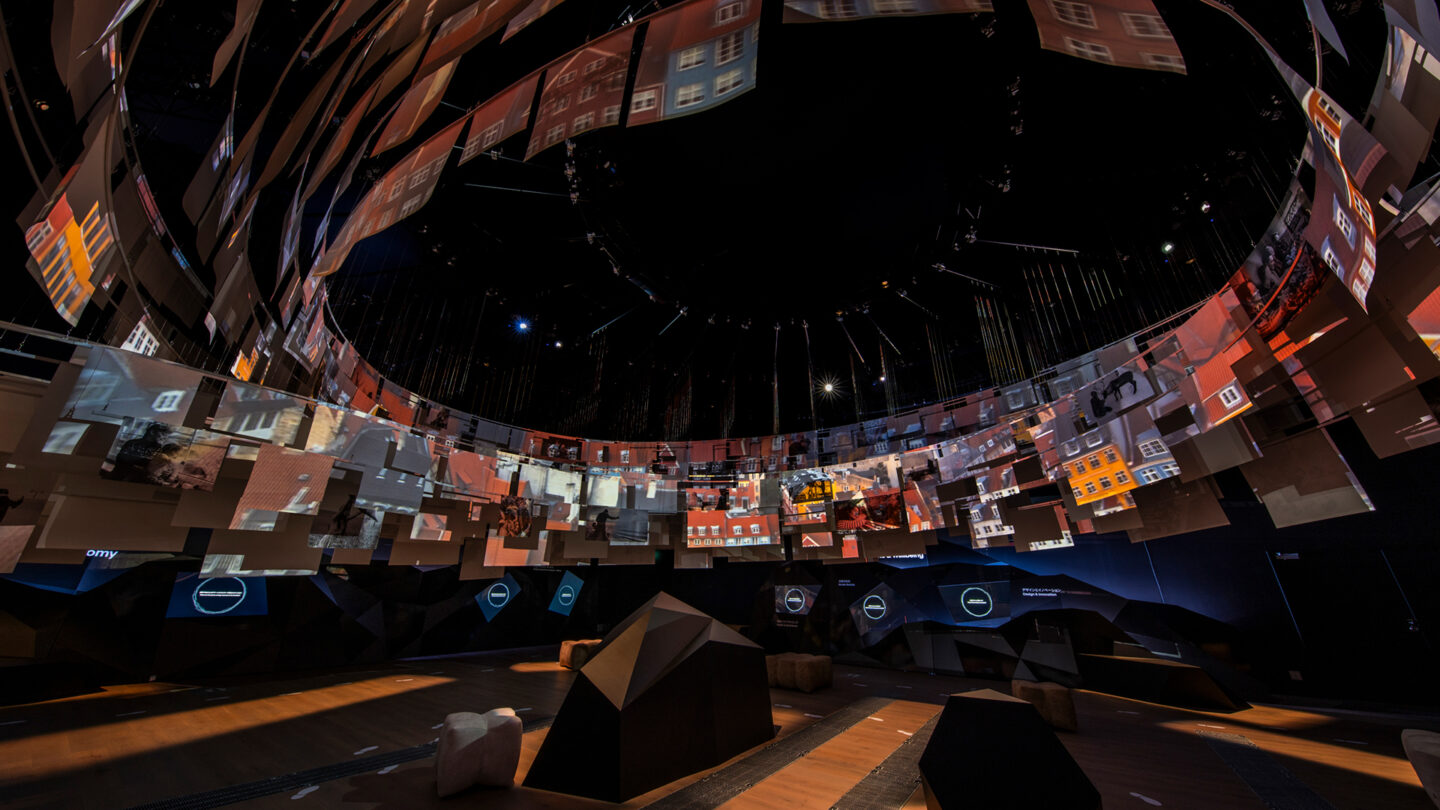
Nordic Pavilion EXPO 25 — Interior View Photo by František Bílek
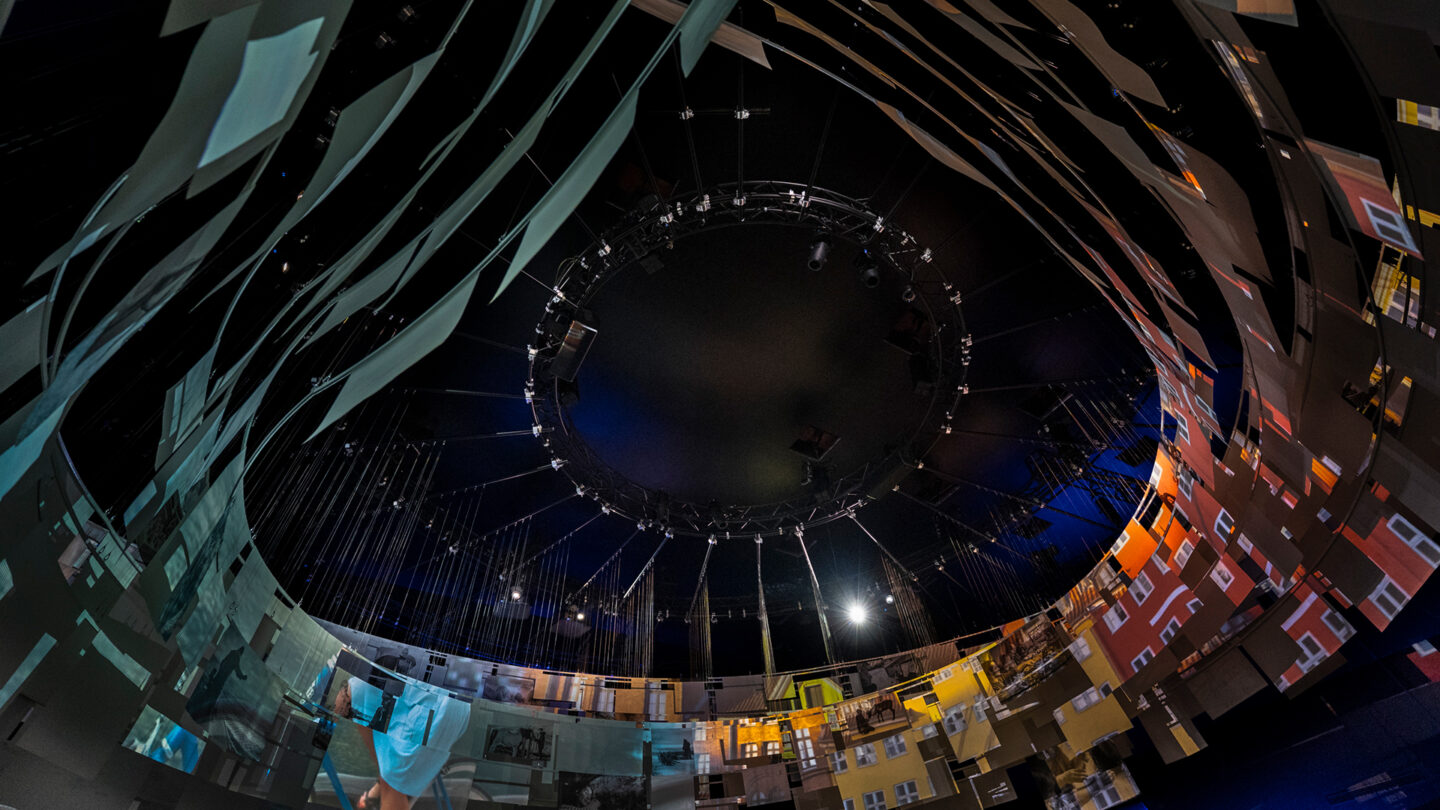
Nordic Pavilion EXPO 25 — Interior View Photo by František Bílek
Visitors moved slowly around the whirl while they contemplated the experience following footprints mounted to the floor that gave visitors a suggested path culminating in the middle of the whirl. The intention is that a single visitor could stand at the center of the whirl to absorb all the content cues at once, an impactful way to individualize an experience that must cater to large crowds of people. Many circled the whirl while looking up in awe, while others sat and enjoyed the film. A docent who had been working at the pavilion since the opening noted that they observed that most people did not follow the footprints to stand in the center of the whirl, instead most circulated around the outside of the whirl. They suggested that many visitors felt on display when standing in the center, were too shy and preferred to view from the outside. In effect, this seemed to be the heart of the design intent, which was a desire to meet the audience not from a position of superiority or instruction but from one of equality and mutual curiosity. The footprints were interesting in that most followed them and used them as a guide until just before the center of the space, and some, especially children, jumped on them, assuming they were interactive. The sculpture created a powerful spatial presence through its physical scale and tactile materiality. Unlike installations reliant on digital spectacle, analog elements or long text panels. The ambient film, accompanied by a carefully composed soundtrack, represented openness, inclusion, and reciprocity, reinforcing a sense of place and temporal rhythm for the audience that was easily digestible in a single glance. The team’s initial goal to avoid any hierarchical narrative and instead extend an invitation for visitors to step into a shared cultural space is certainly evident through “the whirl.”
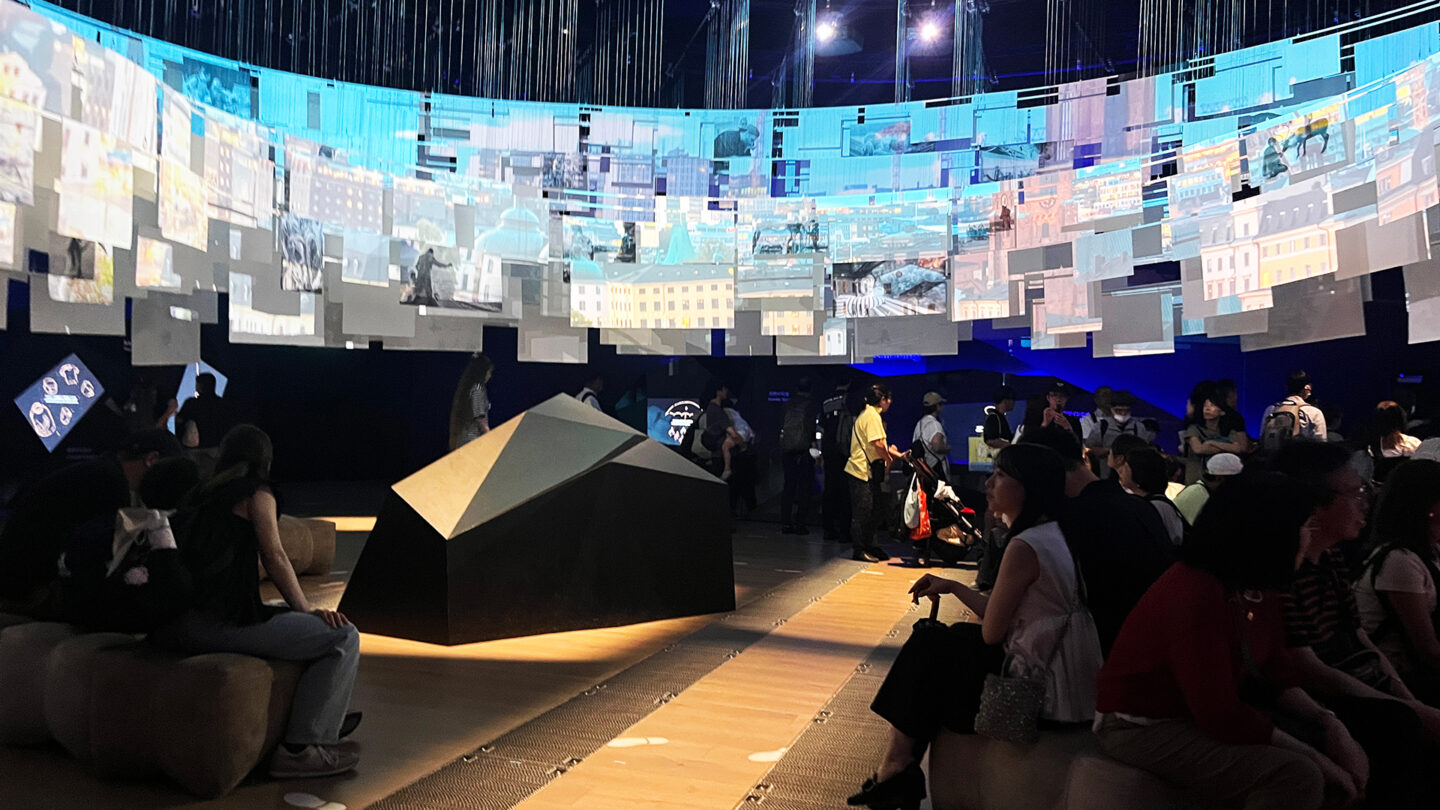
Nordic Pavilion EXPO 25 — Interior View
Surrounding the central whirl sculpture were nine digital installations with displays embedded within stylized terrain forms. The stations were divided over three main themes: Green Transition & Circular Economy, Lifestyle & Wellbeing and Mobility & Connectivity including topics like food, sustainability, liveable cities, equality, education and leisure time. On each station, the following questions were posed: What does it mean to live in a society built on trust?, What is the basis of equality in the Nordics?, What are the green energy sources in the Nordics?, How do Nordics deal with waste?, Why is Nordic food so excellent?, Why is Nordic Design so excellent?, How advanced is digital connectivity in the Nordics?, How do the Nordics bring urban spaces alive?, and What will Nordic mobility look like in the future?
The angular forms surrounding the screens were a stark contrast to the floating paper centerpiece. This dual framework articulated the narrative and the client goals well as one side displayed cultural identity with personal stories and natural environments while the other conveyed industrial and technological innovation, highlighting green futures and sustainable development. This duality was harmonized by the central film and music, which seemed to unify all and underscore the interconnectedness of people and their environments and could be felt throughout the entire space.
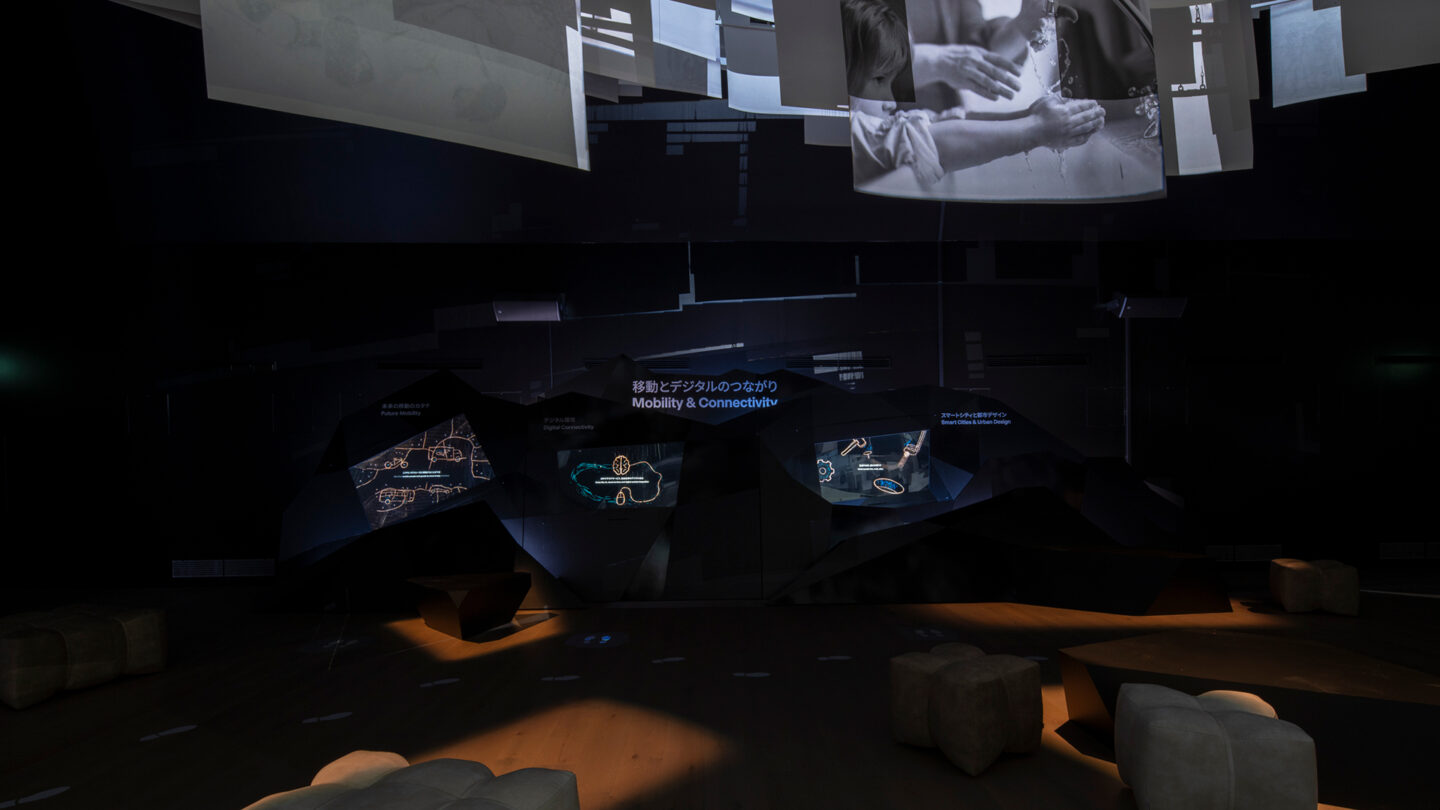
Nordic Pavilion EXPO 25 — Interior View
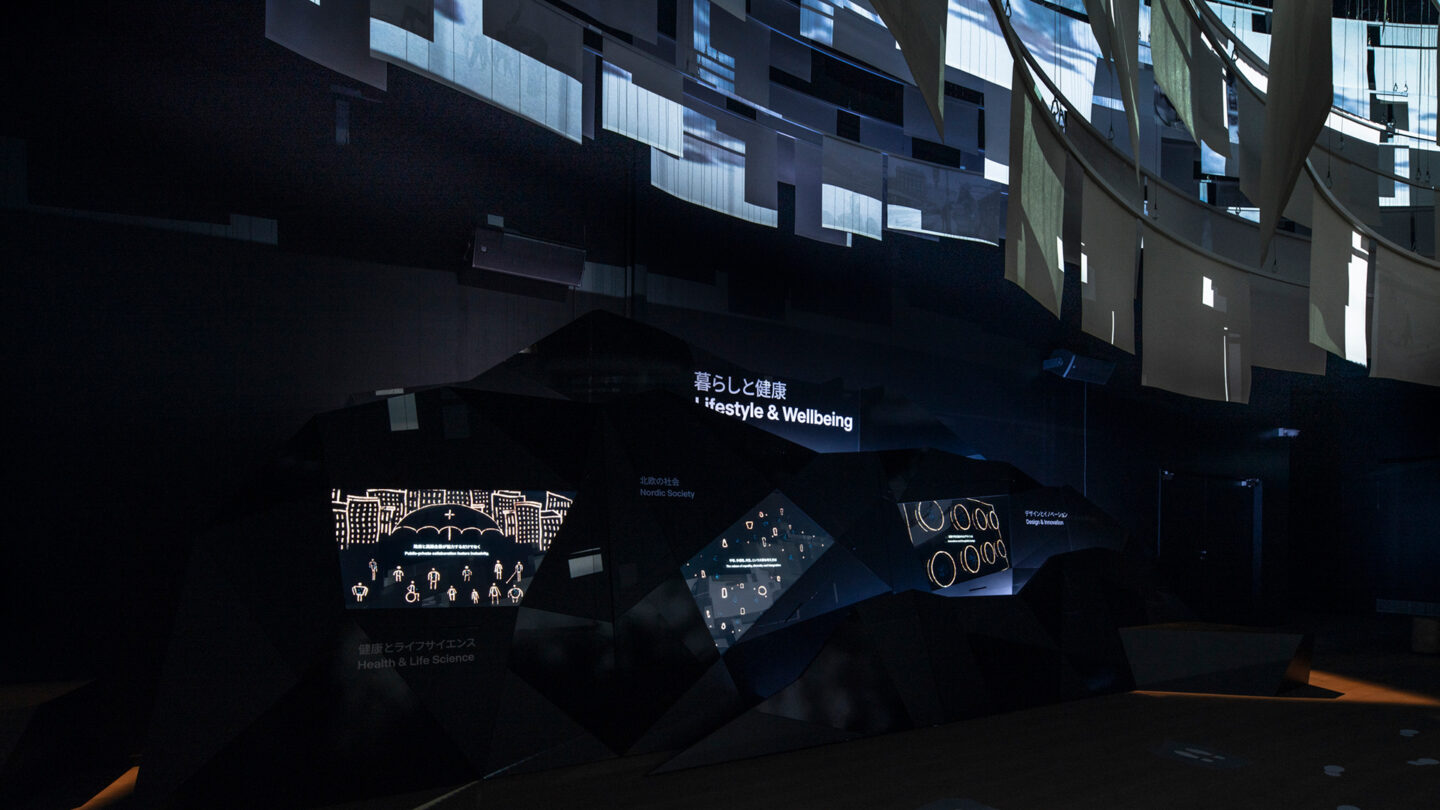
Nordic Pavilion EXPO 25 — Interior View Photos by Daici Ano
Each screen presented succinct videos, approximately 30 seconds in duration, that were designed to communicate distinct narratives on topics such as green energy production, public space design and the healthcare systems within the Nordic context. Crafting these concise but meaningful scripts with complex industrial and societal themes into brief accessible stories without overwhelming visitors with loads of content or long labels of text was a challenge. The design team created strict word limits for themselves in order to maintain visitor engagement and avoid excessive reliance on text panels. Each animation was limited to approximately 35 words, necessitating rigorous editorial discipline. Lemke notes, that these narratives were among the most difficult to craft, as they required distilling key elements of national innovation and policy into extremely brief, non-verbal forms. The decision not to use excessive text or static panels reinforced the exhibition’s experiential nature and ensured that content remained accessible to an international, multilingual audience that needed to be able to move through the space quickly due to the large numbers of visitors expected.
The animations used playful, hand-drawn illustrations that held a delightful and imperfect style that was a humorous counterbalance to the seriousness of the content being conveyed. This stylistic choice made the industrial and technological messages more approachable and engaging. The art direction of these animations and graphics was meant to merge Scandinavian and Japanese illustration styles and motifs, reflecting the team’s collaborative nature. Decisions regarding style and content were reviewed through ongoing consultation with stakeholders which also included a panel that was affiliated with the Japanese embassy in Iceland ensuring cultural resonance and appropriateness.
Visitor engagement with the pavilion was notably positive. Usage data indicated thousands of daily interactions with the mobile application during queuing and observations revealed visitors immersing themselves fully in the digital exploration of Nordic culture. Visitors frequently engaged with multiple interactive stories, often spending longer than the intended 30-second duration to absorb content a second time. The pavilion successfully provided a contemplative, calm environment where guests could pause and reflect and learn about Nordic culture and initiatives effortlessly.
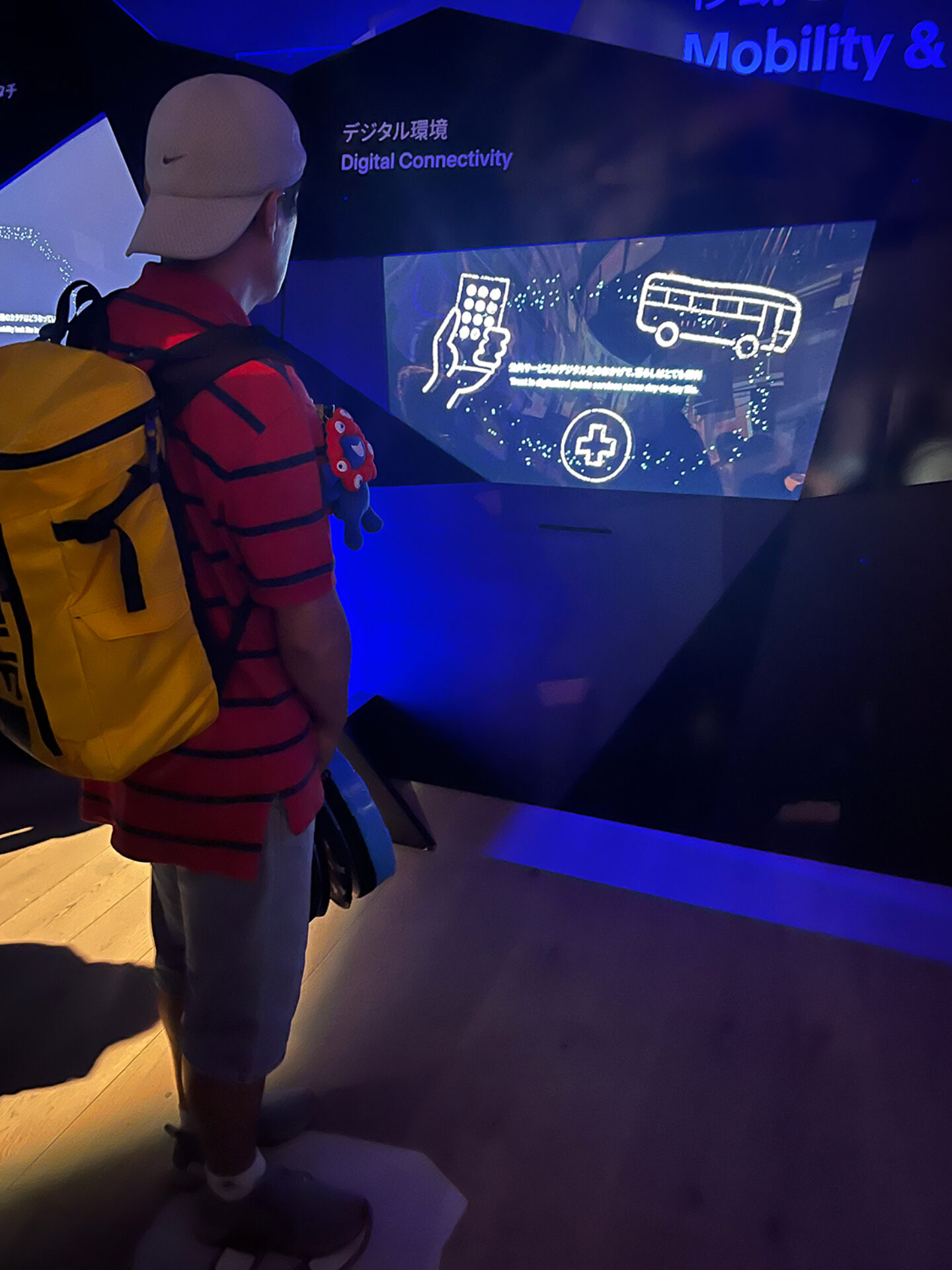
Nordic Pavilion EXPO 25 — Interior View — Story Station
Material Studies and Testing
The physical exterior structure, a minimalist “barn-like” form designed by studio AMDL CIRCLE and engineered by Rimond was constructed from Japanese Sugi wood, three stories and 17 meters tall.
According to organizers, the materials used for the pavilion will be re-purposed for use in hotels, stations or educational facilities once the event ends.
Paper is a recyclable material abundant in the Nordic region due to forestry and the paper industries. The team experimented with many different types of papers and methods of layering suspending paper to create forms and settled on a paper mixed of regular paper and unused rice. Projection mapping using the paper as a canvas was used in place of LED screens in hopes of providing a softer and more integrated form of digital expression that harmonized with the material.
As the exhibition and visitor experience design process evolved, the team undertook a focused exploration of paper as a surface capable of interaction with light, image and movement. This phase emphasized experimentation. The team asked, What could paper do, beyond occupying physical space? Could it become a medium of transparency, shadow and sensory engagement? In order to achieve the whirl, extensive physical prototyping was required to determine the appropriate paper type and to consider factors such as translucency, fire resistance, humidity tolerance and print behavior.
Traditional digital modeling proved insufficient to fully capture the spatial and visual complexity of light interactions, necessitating in-studio and on-site testing. The team ultimately adopted a posterized, halftone aesthetic to enhance color vibrancy. Results were evaluated through full-scale mock-ups conducted in Zurich. There was also on-site testing and adjustments during a small window of time before opening.
Lemke described a series of material studies that explored the optical qualities of paper, including its response to varying light conditions. Consideration was given to incorporating technologies such as e-ink and other responsive surfaces. The team investigated how light could be projected not only onto, but also through paper by creating shifting shadows that would animate the pavilion’s space without any actual mechanical movement.
One of the early concepts involved embedding lines of light that would cast shadows through the suspended paper layers onto the pavilion’s inner shell. This would transform the installation into a dynamic environment, where static elements appeared to move through carefully choreographed illumination. Other design iterations were tested as well, including the use of fans or airflow to generate slow and soft movement in the paper elements. These physical gestures were complemented by interactive projections that could respond to visitor presence or gestures. However, these more complex systems were ultimately set aside due to feasibility and practical considerations.
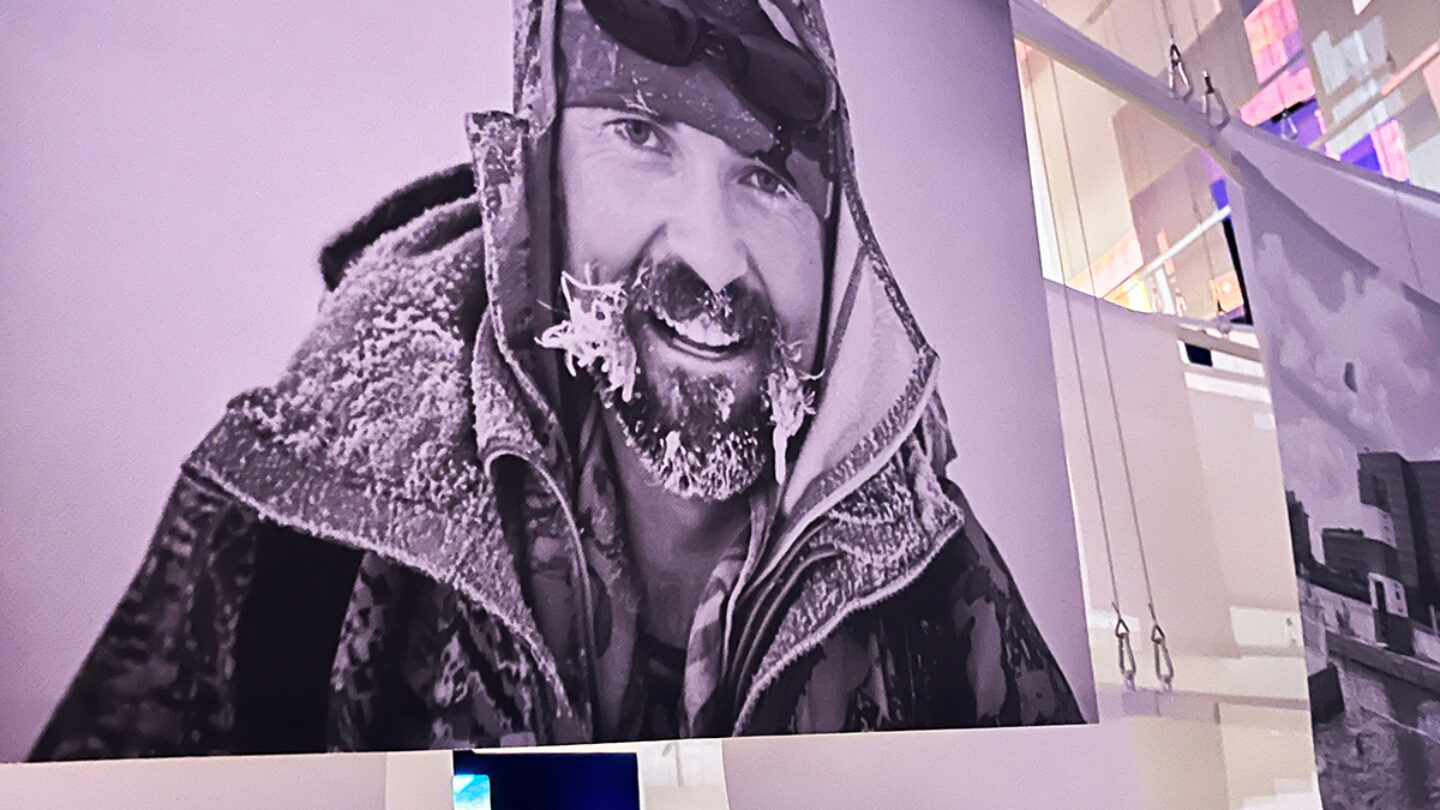
Nordic Pavilion EXPO 25 — Interior View
Understanding and planning for the visitor volume was a critical factor in determining the success of the final form of the experience. The pavilion had 1.6 million total visitors and about 12,000 visitors per day. The EXPO ended with an overwhelming number of visitors during its last two weeks with 200,000 visitors per day.
Unlike a museum setting where guests may spend extended periods with a single piece, the pavilions need to accommodate over ten thousand visitors daily. The initial ideas included tactile or some responsive installations, where individuals might physically manipulate components or trigger specific effects however, this proved incompatible with the actual logistical demands of the EXPO. The time needed for each visitor to engage in personalized interactions was not possible here, leading the design team to move towards a more collective and ambient experience over individual interactives. This reflects the question confronting all designers of EXPOs, making it a unique design challenge, while also providing lessons to be used by designers of all experiences: how do you capture a large audience at one time with one glance? How do you teach about complex civic programs and initiatives in a few seconds? How do you inspire and engage a massive, multinational audience in a small space at once? Answers to these questions can be found in experiencing the design synergy inside the Nordic pavilion.
The Nordic Pavilion is an example of a collaborative approach to experiential design. The Nordic DNA design team consisting of Kvorning, Rintala Eggertsson, and Gagarin was able to was able to balance cultural storytelling and technological innovations of the five nations into one designed moment appropriate for the crowds and expectations of a world’s fair. The process underscored the necessity of iterative prototyping, collaboration across cultures and open lines of communication across various design teams to create a meaningful visitor experience. The key takeaways and impressive highlights were that despite space limitations and an overwhelming number of visitors moving quickly through the pavilion daily, the conceptual themes of the Nordic Pavilion remained beautifully intact. The complex civic initiatives and highlights of five separate nations were able to be included in the experience seamlessly, and as one. Visitors were thoughtfully engaged and prepared for the content even in the entry queues before the experience and ultimately, the designers presented an authentic, lived experience of the full Nordic region in a single grand gesture, the Circle of Trust.
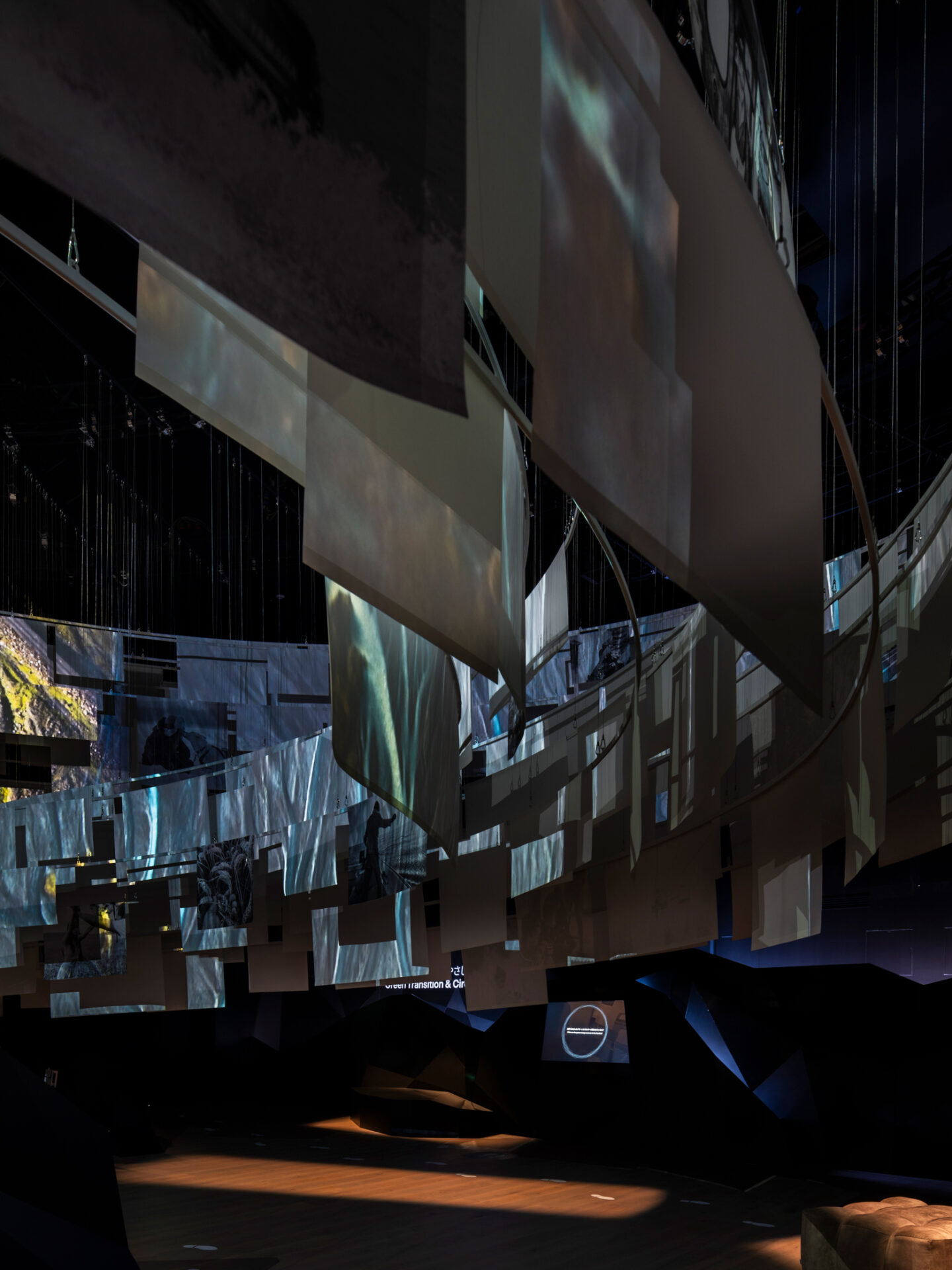
Nordic Pavilion EXPO 25 — Interior View Photo by Daici Ano
A very special thanks to:
- Bureau International des Expositions (BIE)
- SEGD, The Society of Experiential Graphic Design
- Lemke Meijer, Partner, Gagarín in Reykjavik, Iceland
- All the staff and docents at the Nordic Pavilion, EXPO 25
- Nordic Pavilion Exhibition Design and Production:
- Exponex, Czech Republic
- Wintenex, Switzerland
- Habegger, Switzerland
- Nordic DNA Design Team:
- Kvorning, Denmark
- Rintala Eggertson, Norway
- Gagarin, Iceland
People also viewed
-
Inside Uzbekistan’s Pavilion at Expo 2025: A Garden of Knowledge
Inside Uzbekistan’s Pavilion at Expo 2025: A Garden of Knowledge
-
Inside the Saudi Arabia Pavilion at Expo 2025: Stories Rooted in Connection
Inside the Saudi Arabia Pavilion at Expo 2025: Stories Rooted in Connection
-
Inside the USA Pavilion at Expo 2025: Imagine What We Can Create Together

Inside the USA Pavilion at Expo 2025: Imagine What We Can Create Together