Designing Belief: How Branded Environments Shape Sports, Identity, and Community
Two award-winning Populous projects show how branded sports environments act as cultural infrastructure—translating values into space, ritual, and daily practice to build belief, identity, and community across collegiate and youth athletics.
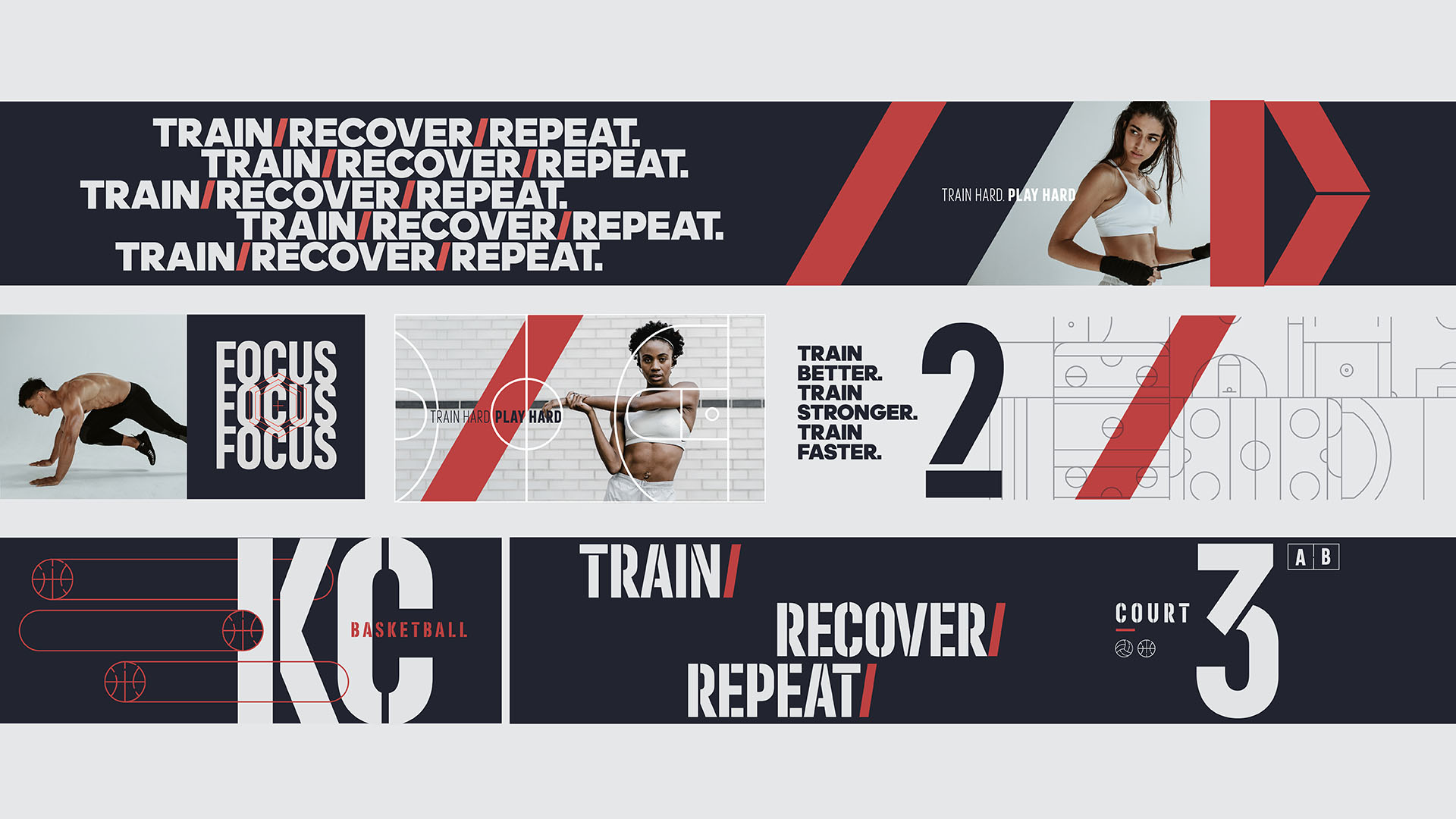
In sports and recreation, branding no longer lives on a wall—it lives in the body. It’s felt in the tunnel before a game, the rhythm of daily training, the rituals that turn effort into legacy. At their most effective, branded environments don’t simply represent identity—they make values tangible through space.
Two 2025 SEGD Global Design Award–winning projects by Populous illustrate how this shift is unfolding across audiences and scales, revealing branded environments as systems of belief rather than static expressions.
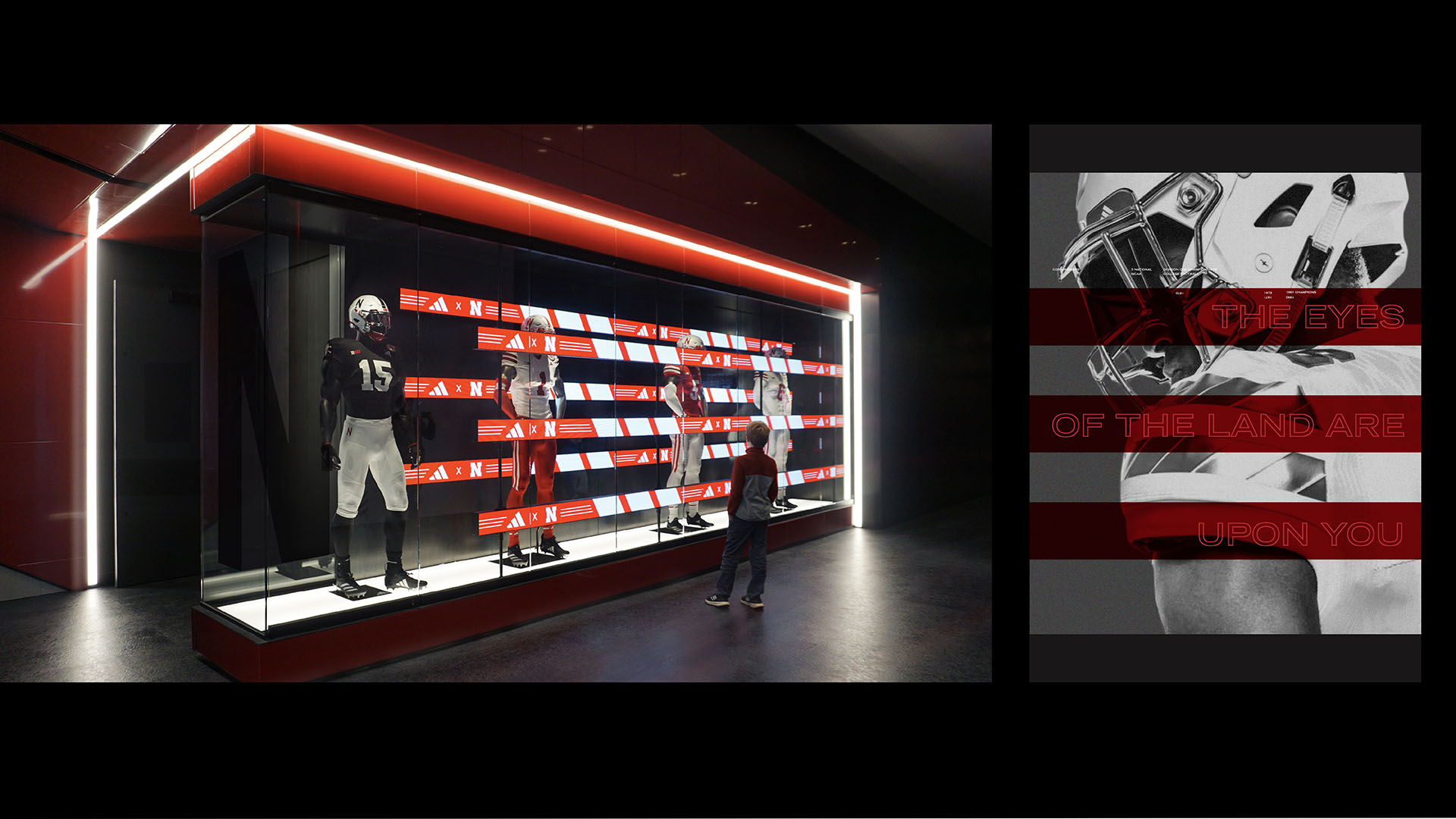
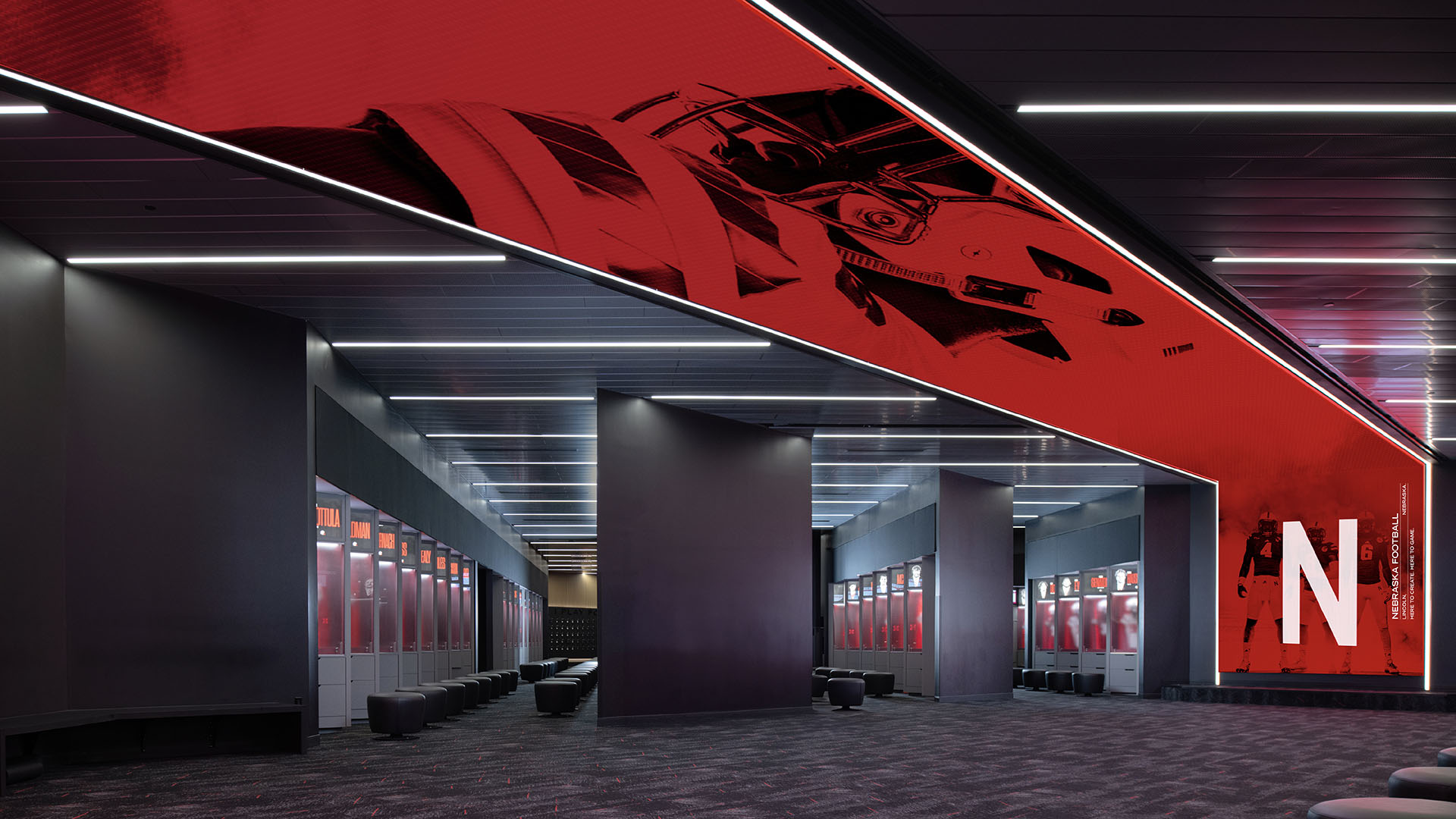
University of Nebraska–Lincoln Osborne Legacy Complex, Merit Award, Lincoln, Nebraska
The Osborne Legacy Complex is designed around a clear premise: legacy is not something remembered—it is something practiced.
Grounded in extensive interviews and research, the project distills the Nebraska Cornhuskers’ ethos into three defining values: resilience, hard work, and community. These principles guide the environment from arrival to daily use, shaping how athletes, staff, and visitors experience the facility.
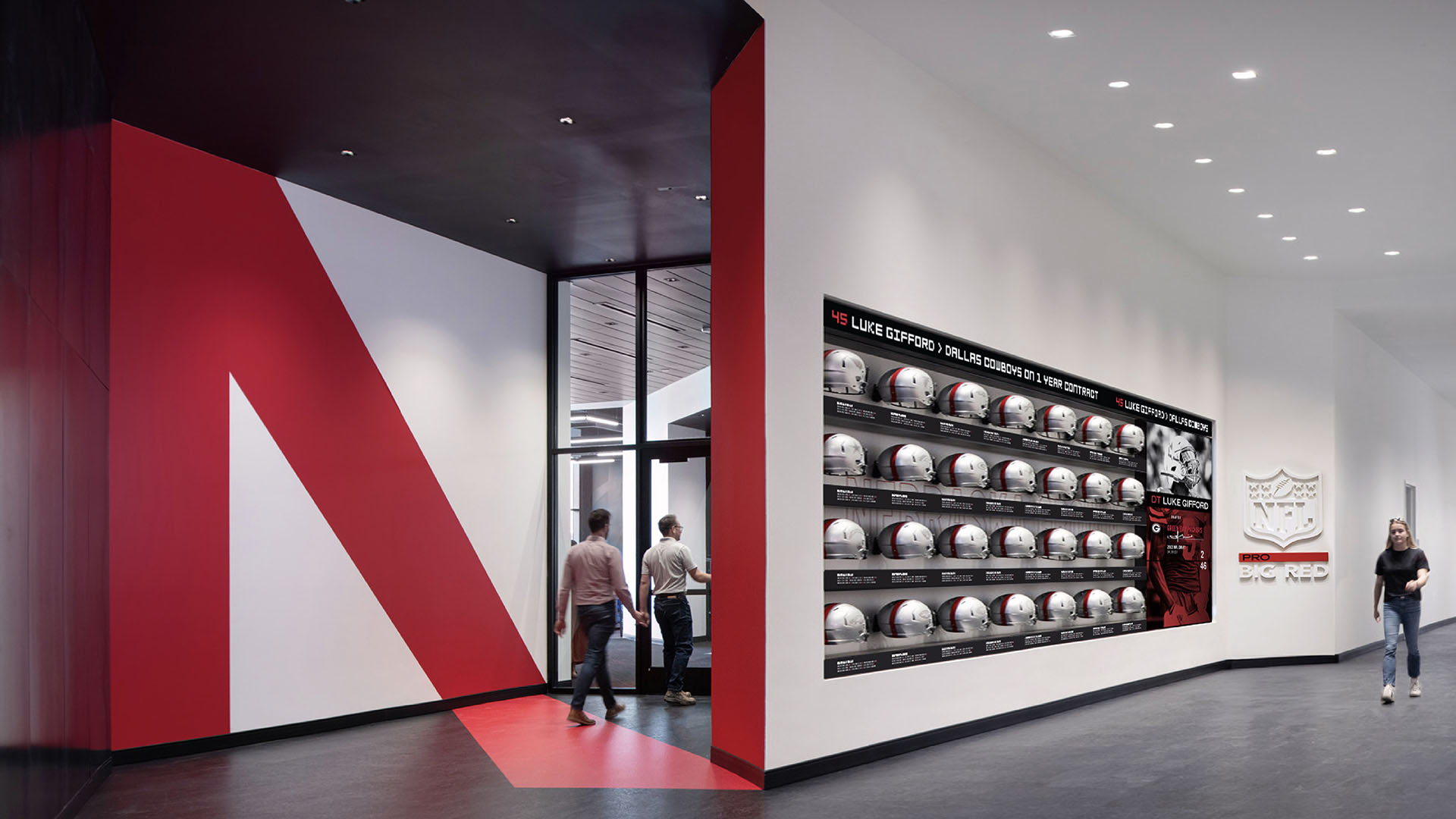
Environmental graphics and spatial storytelling create a cohesive narrative throughout the complex. A prominent video board anchors the lobby as a dynamic storytelling platform, while activations honoring the Blackshirts and tailored meeting spaces immerse players in the program’s heritage. The graphic language—black-and-white imagery with metallic finishes—signals excellence earned over time, punctuated by illuminated red accents that reference the cantilevered roof and extend an invitation into the Husker legacy.
One of the most defining elements is a continuous red line, inspired by the stripe on Nebraska’s helmets. Integrated architecturally and graphically throughout the building, it becomes a constant visual reminder that excellence is built through sustained daily effort. Rather than focusing solely on past achievements, the environment redirects attention to the behaviors that enabled those achievements.
The result is a facility that reinforces belief not through nostalgia, but through discipline—an environment that frames every day as part of a longer arc of commitment.
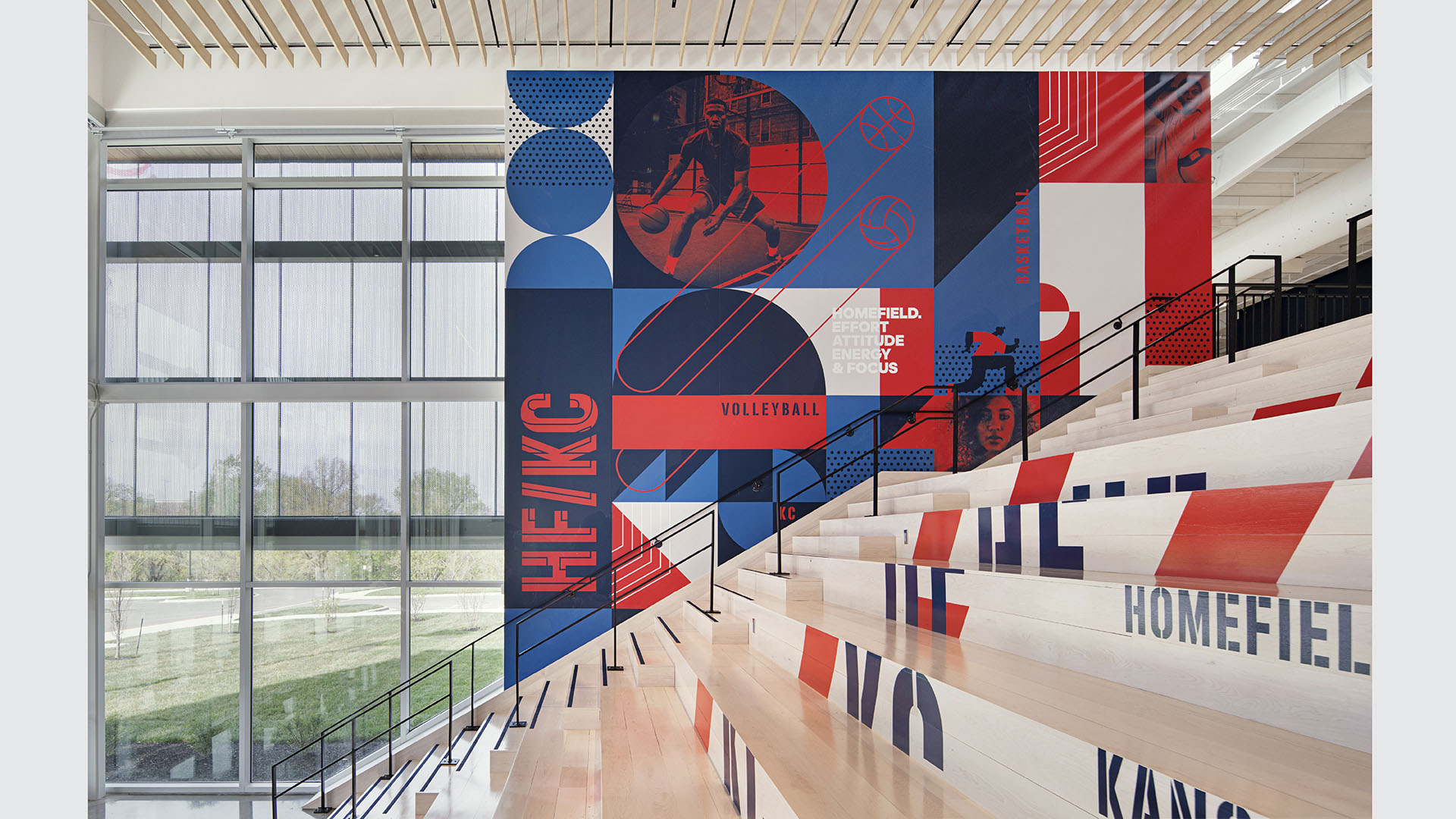
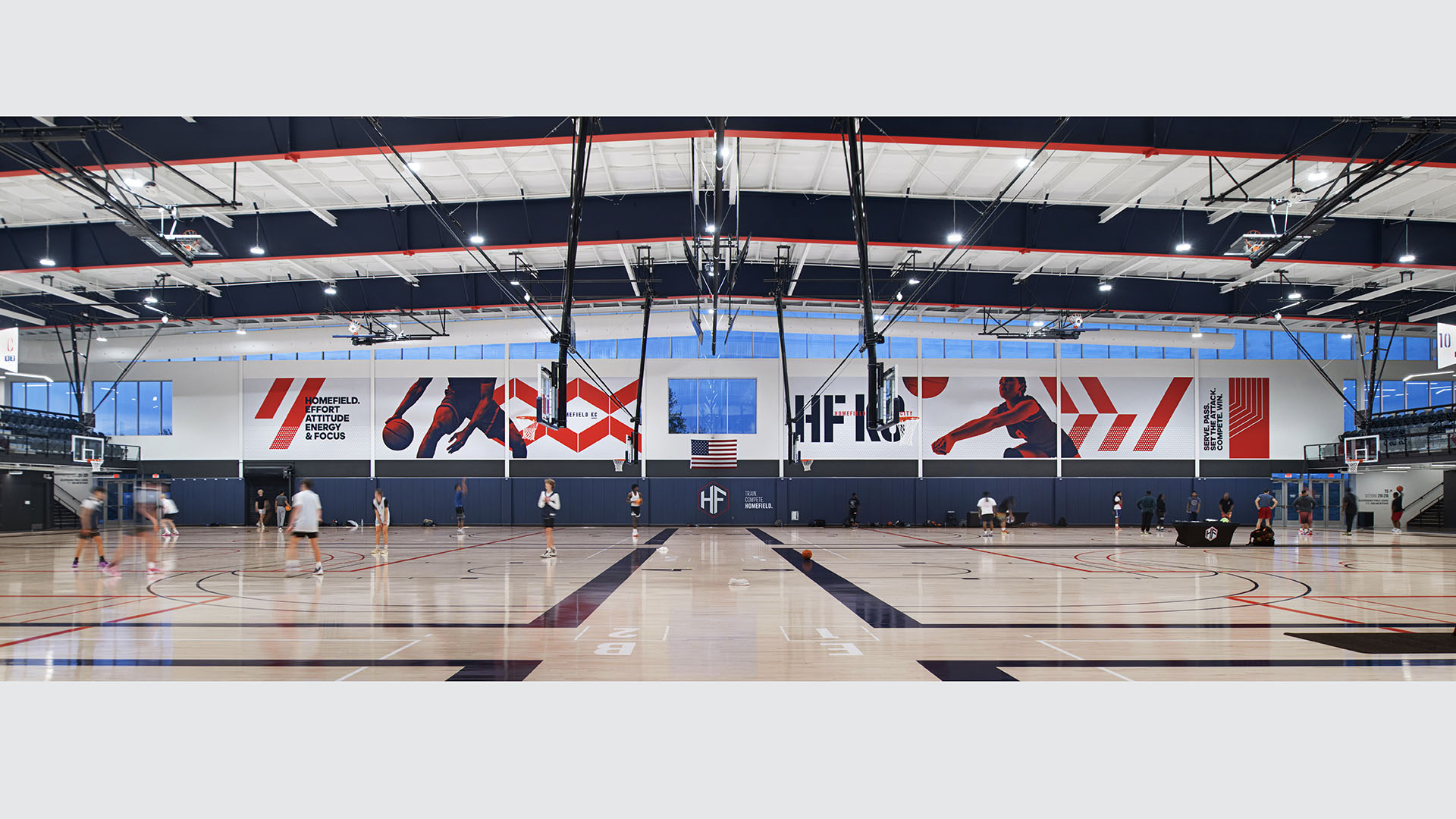
Homefield Kansas City Showcase Center, Merit Award, Kansas City, Kansas
Where Nebraska’s story centers on legacy, Homefield Kansas City focuses on possibility.
Designed to bridge the gap between community recreation centers and professional athletic facilities, Homefield reimagines what a youth sports environment can be. The aim was not only to elevate performance but to create a place where athletes, families, and the broader community could feel connected and invested.
The visitor experience begins at the building’s exterior, where a backlit perforated metal curtain wall signals energy and momentum. Inside, the lobby balances intensity with warmth—natural light, wood-slat ceilings, and vibrant graphics create an atmosphere that is both welcoming and aspirational.
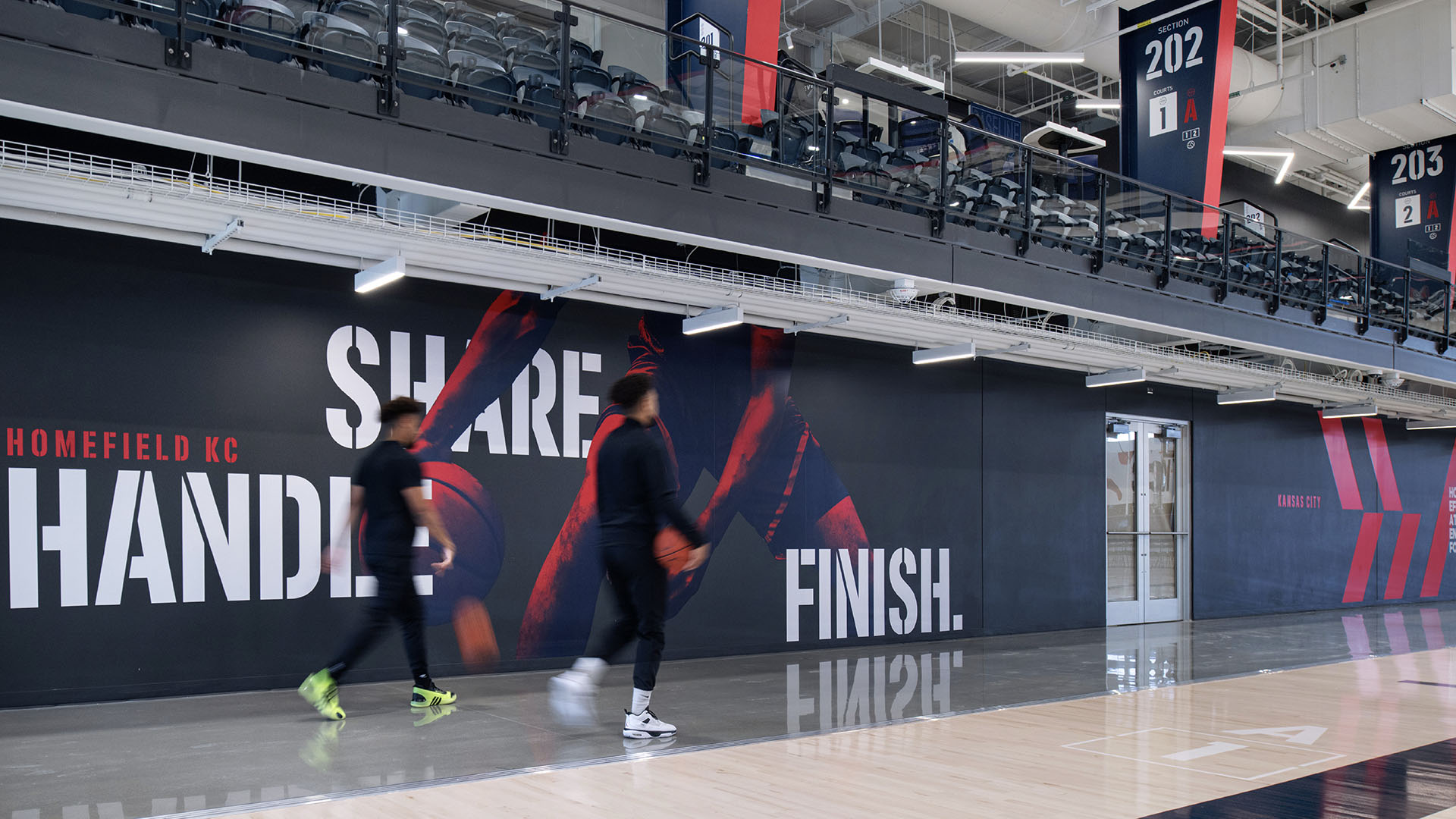
Branded moments are embedded throughout the spatial journey. A bold “Athletes Only” entry tunnel marks the transition into focused performance, while the Learning Stair serves as both architectural centerpiece and communal gathering space, supporting coaching, collaboration, and shared experience. Environmental graphics combine Olympic-inspired imagery with photography drawn from local street sports, grounding ambition firmly in place.
Messaging such as “Pathway to the Pros” appears throughout the facility, reinforcing aspiration without exclusivity. Wayfinding, court markings, color, and lighting are carefully coordinated to ensure clarity while reinforcing identity. Branding here is not an overlay—it is integrated into how the building functions, gathers, and inspires.
The result is a space that supports competition while fostering belonging, elevating the role of youth athletics as both personal development and community infrastructure.
Branded Environments as Cultural Infrastructure
Taken together, these projects point to a broader truth about branded environments today: they function less as expressions of identity and more as cultural infrastructure.
They shape how people enter a space, how they understand their role within it, and how values are reinforced through repetition and ritual. Whether serving elite collegiate athletes or youth just beginning their journey, these environments make belief tangible—through material, movement, light, and story.
In this way, branded environments operate at the intersection of architecture, experience design, and behavioral psychology. They don’t ask audiences to believe—they invite them to practice belief, daily and collectively.
Join the Conversation in LA
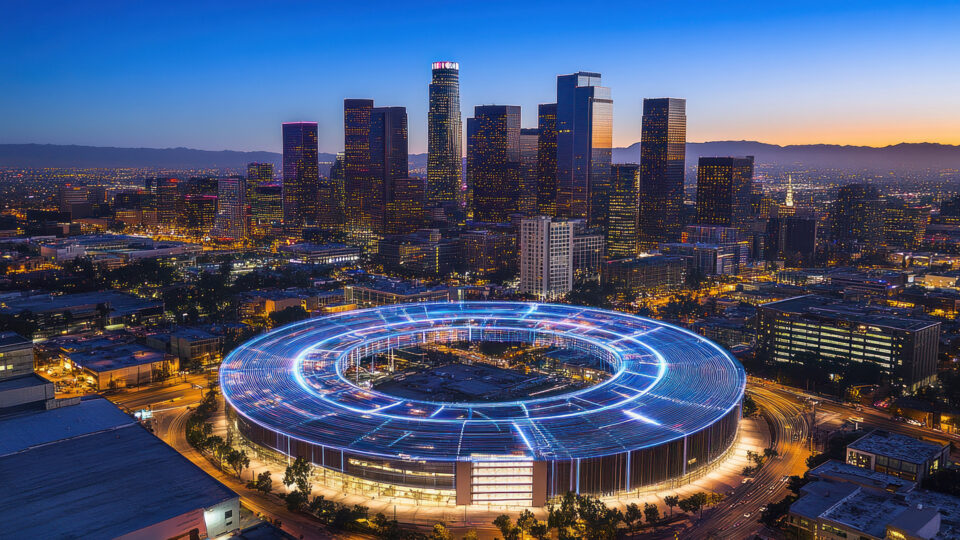
We’re excited to host Francisco Besa, Principal at Populous and lead designer for both projects, as a speaker at SEGD Branded Environments in Los Angeles on March 18–19. Don’t miss the opportunity to be part of the conversation.
People also viewed
-
2026 SEGD Branded Environments: Sports, Entertainment + the Power of Fandom—Designed IRL
2026 SEGD Branded Environments: Sports, Entertainment + the Power of Fandom—Designed IRL
-
2026 SEGD Branded Environments
2026 SEGD Branded Environments