The Practice of the Middle: The Design Philosophy of Jonathan Jackson
2026 SEGD Fellow Jonathan Jackson, founder of WeShouldDoItAll (WSDIA), has built a multidisciplinary practice that moves between graphic design, architecture, exhibitions, and cultural storytelling. Drawing from his Fellows presentation and a conversation with SEGD CEO Cybelle Jones, Jackson reflects on the value of working between disciplines, the importance of shared authorship, and why the most meaningful work often begins where traditional design boundaries end.

What happens when designers stop defining themselves by the disciplines they practice and begin thinking instead about the relationships they create?
For Jonathan Jackson, FSEGD, that question has shaped more than two decades of creative work. As founder and creative director of WeShouldDoItAll (WSDIA), Jackson has built a practice that resists specialization, moving between typography, identity, products, exhibitions, and spatial design. Yet the philosophy connecting these pursuits is less about doing everything than understanding what becomes possible when different ways of thinking come together.
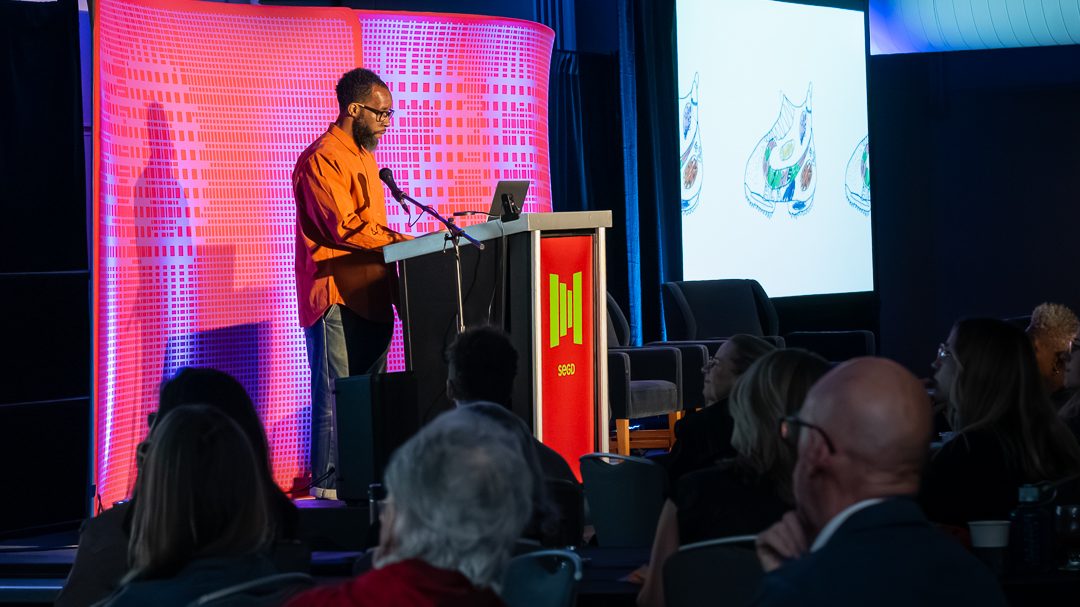
Named a 2026 SEGD Fellow, Jackson shared that perspective during his Fellows presentation at the SEGD Conference Experience Kansas City, where the conference theme, Meet Me in the Middle, offered a fitting framework for examining his work. “The middle child isn’t the architect, the exhibition designer or the graphic designer,” Jackson told the audience. “The middle child is the translator, the one who finds the story the family can tell itself.”
It’s a metaphor that captures the essence of WSDIA’s approach. Rather than treating design disciplines as separate specialties, Jackson sees the boundaries between them as opportunities for discovery. Increasingly, his work has extended that thinking beyond creative disciplines to the relationships between designers, institutions, and the communities whose stories they help tell. Across projects for Nike, the Smithsonian’s National Museum of African American History and Culture, and the Wabanaki Nations at Katahdin Woods and Waters National Monument, a philosophy emerges that is rooted in curiosity, collaboration, humility, and a willingness to reconsider the designer’s role.
Beyond Specialization: The Origins of WeShouldDoItAll
Jackson’s multidisciplinary instincts can be traced to childhood, when he spent hours drawing Nike shoes and imagining a future designing footwear. At ten years old, he wanted his mother to send his sketches directly to Nike. Instead, she introduced him to architecture, sharing books about Frank Lloyd Wright, Mies van der Rohe, and Le Corbusier. By thirteen, Jackson had decided to pursue architecture, a path he credits his mother with helping him discover.
Years later, while studying architecture at Kent State University, an eight-month internship at Studio Archea in Florence, Italy, would expand his understanding of what a design practice could be. There, Jackson encountered an architecture studio where writers, graphic designers, and architects worked together under one roof, even producing their own magazines. “It blew my mind,” he recalled during his Fellows presentation. The experience revealed that architecture didn’t have to exist independently of other creative disciplines. It could be part of a much broader practice.
That thinking eventually became the foundation of WSDIA, which he established with Sarah Nelson Jackson. The studio’s name comes from a passage in Robert Heinlein’s Time Enough for Love, describing the many skills a capable person should possess and concluding with the assertion that specialization is for insects. Jackson embraced the sentiment, though he is quick to distinguish aspiration from literal ambition. “We are not doing it all,” he explained. “But it’s a constant goal.”
For WSDIA, the name is less a claim of unlimited expertise than a commitment to curiosity and versatility. It encourages the studio to approach each project without assuming that a particular discipline, medium, or methodology must determine the outcome.
During his Fellows presentation, Jackson organized the studio’s work around three interconnected thresholds rather than conventional design disciplines: between brand and space, where identity and environment shape one another; between community and institution, where cultural storytelling raises questions of representation and authorship; and between object and system, where individual commissions can evolve into broader creative relationships. Together, these thresholds reveal a practice defined not by its individual disciplines, but by what happens when their boundaries begin to dissolve.

Where Disciplines Meet
For Jackson, graphic design and spatial design are not sequential activities. One doesn’t begin where the other ends. They develop together, each informing and transforming the other.
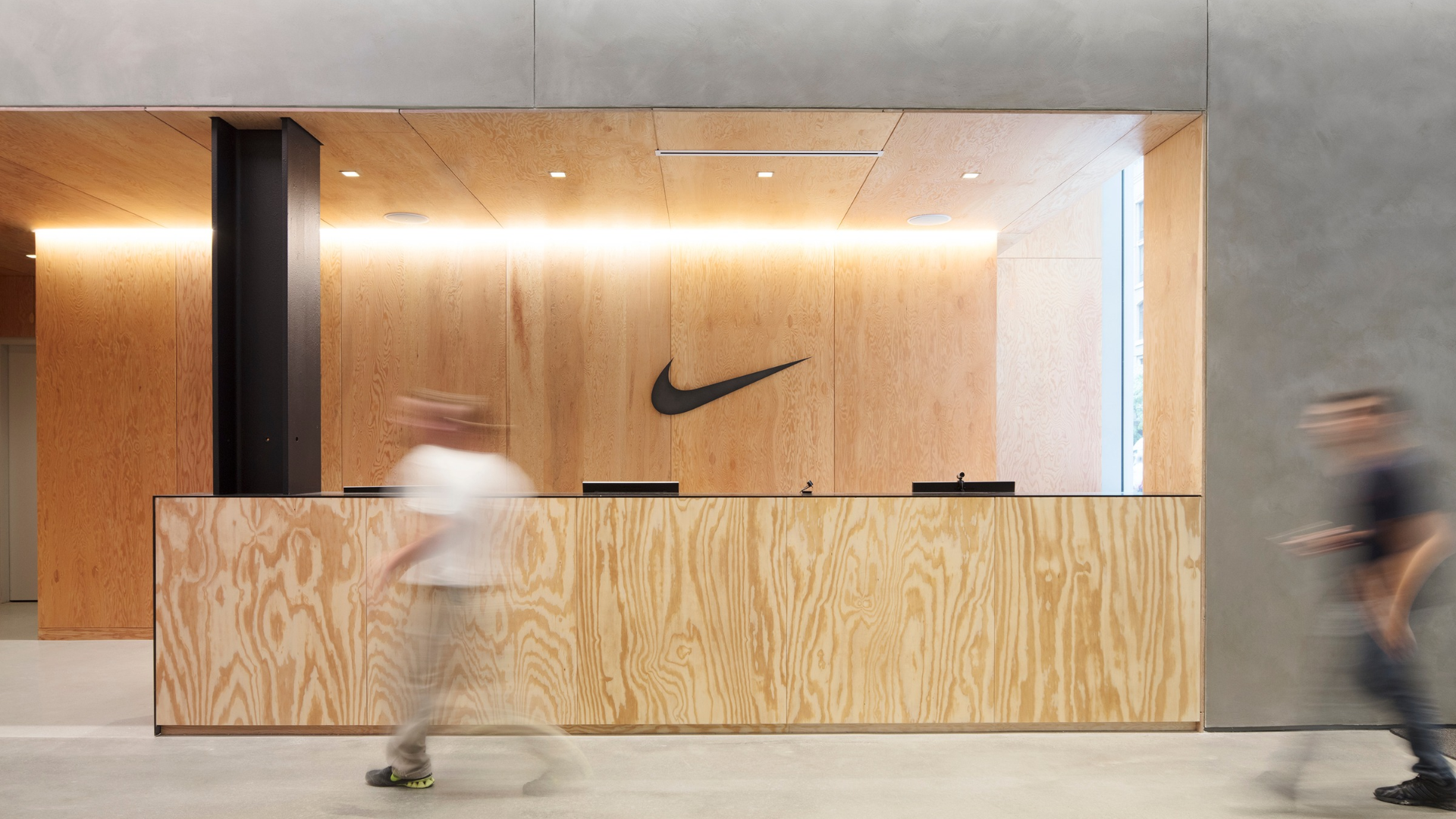
That relationship is particularly visible in WSDIA’s work for Nike’s New York headquarters, a 150,000-square-foot workplace spanning six floors in Manhattan. The project’s central idea was Nike’s relationship with New York City, with each floor taking inspiration from a different sport. Architecture, typography, graphics, and materials worked together to express the brand’s identity through the experience of the space. WSDIA developed a custom typeface, Garden, alongside signage, iconography, and environmental graphics. On the basketball floor, subway-inspired graphics translated the visual language of both the sport and the city into the built environment.
The distinction between architecture and graphic design became deliberately difficult to locate. “Brand doesn’t get applied to space,” Jackson explained. “The space is the brand.”
A similar approach informed a conceptual flagship retail study for Rihanna’s Fenty Beauty brands, where the challenge was creating distinct identities for Fenty Beauty, Fenty Skin, and Fenty Fragrance within a cohesive environment. Horizontal slatted walls became shelving systems and spatial dividers, defining different brand experiences without completely separating them. The transitions between spaces became as important as the spaces themselves.
At Lincoln Center in New York, WSDIA has applied this thinking to a different kind of environment, working with Social Limited on digital information, wayfinding, and interpretive storytelling across the cultural campus. The project brings together the identities and programming of Lincoln Center’s thirteen constituent organizations while helping visitors navigate a complex public environment.
Although these projects differ in purpose and scale, they share a fundamental approach: graphic identity, information, and physical space are developed as interconnected parts of an experience. For Jackson, the tension between disciplines isn’t a problem to resolve. It is where the practice becomes most productive.
From Designing Stories to Sharing Authorship
If WSDIA’s commercial work demonstrates the creative possibilities of working across disciplines, its cultural projects reveal a deeper responsibility: understanding the difference between designing a story and having the authority to tell it.
That distinction became especially significant through two of the studio’s most consequential projects: the Smithsonian’s National Museum of African American History and Culture in Washington, D.C., and the Tekαkαpimək Contact Station at Katahdin Woods and Waters National Monument in Maine.
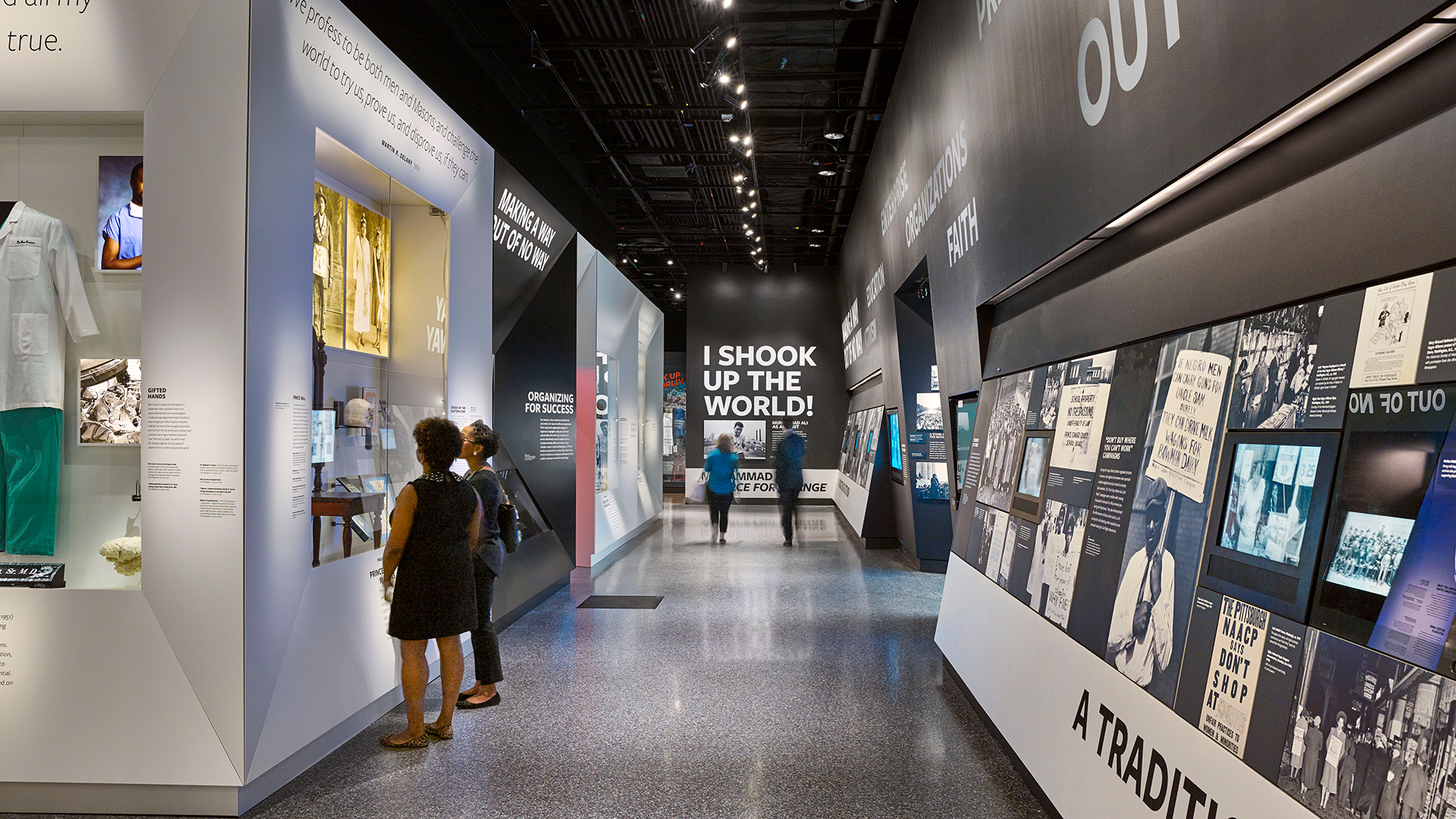
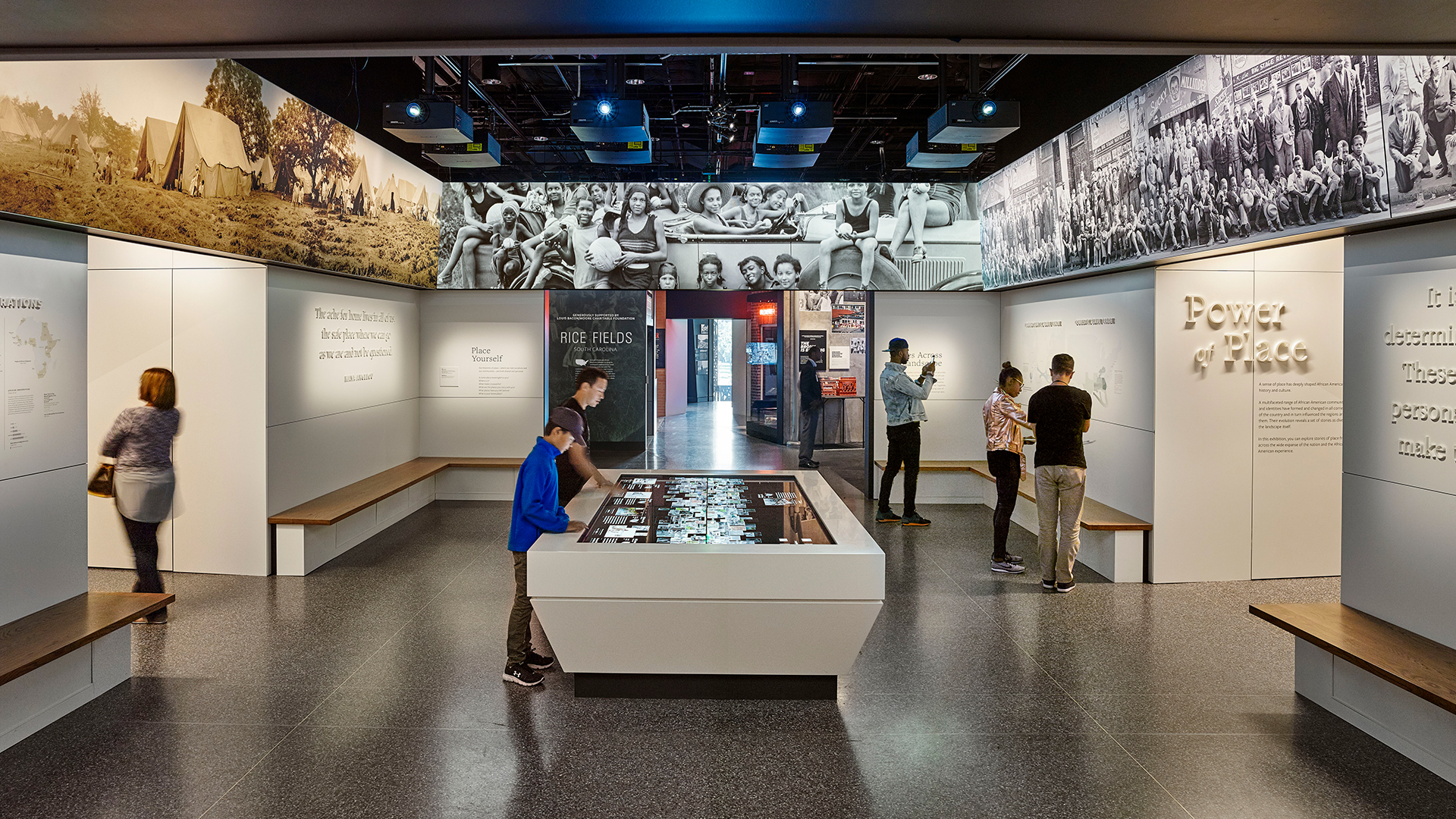
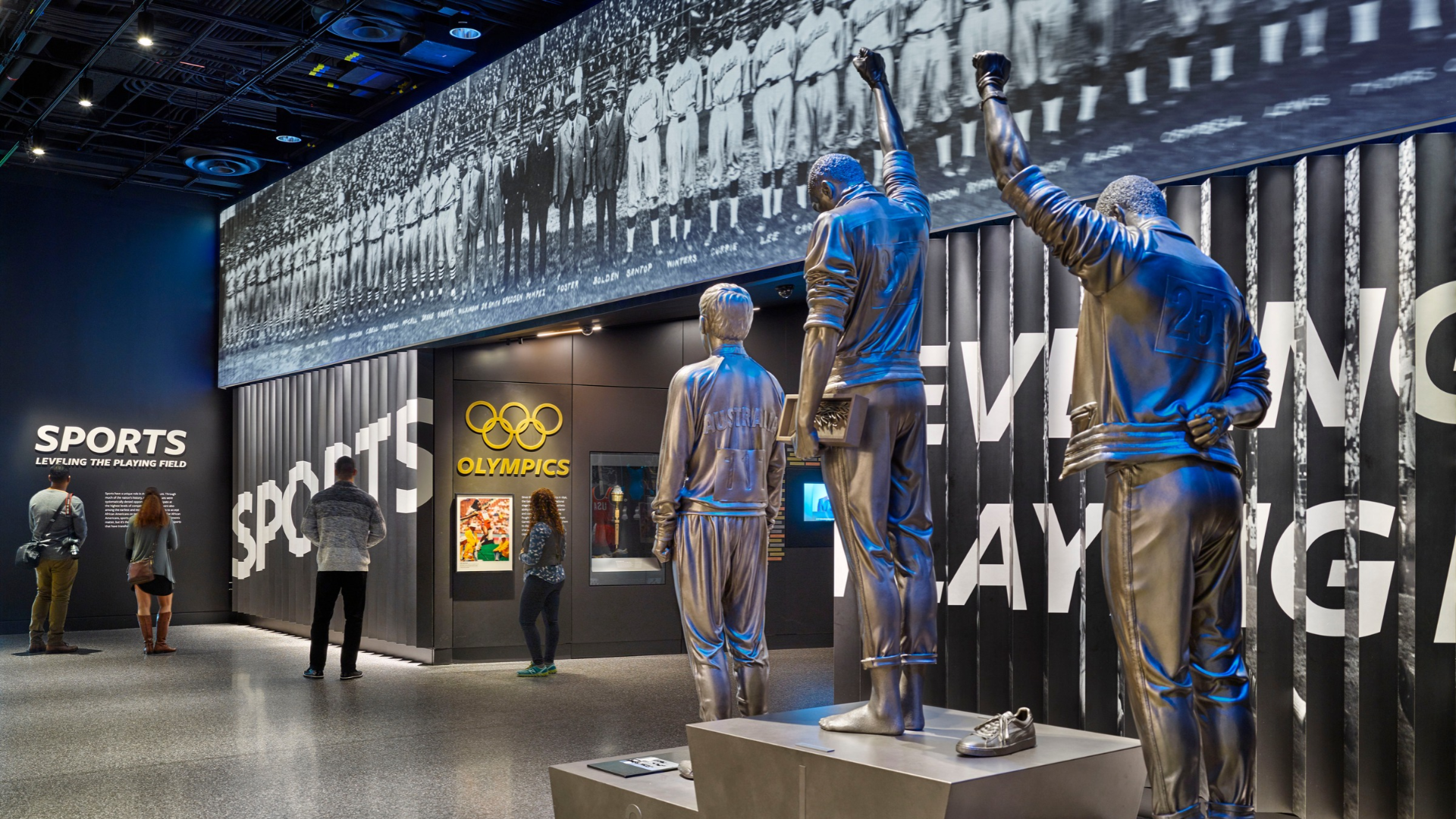
WSDIA’s involvement with the Smithsonian began after its early work for Nike attracted the attention of Ralph Appelbaum Associates. The resulting commission became the studio’s first museum project and a defining experience in its development. Working as part of the exhibition design team, WSDIA helped create 25,000 square feet of community galleries exploring African American culture, history, and achievement, including Making a Way Out of No Way, which explores the ingenuity and resilience of African Americans who created opportunities despite systemic barriers.
For Jackson, the five-year project demanded an entirely different relationship with time, collaboration, and the design process. Working closely with six curators required patience, extensive iteration, and a willingness to listen. It also transformed WSDIA from a small creative partnership into a studio capable of managing complex, long-term cultural projects.
Years later, the Tekαkαpimək Contact Station would challenge Jackson’s assumptions even further. Developed with the Wabanaki Nations—the Maliseet, Mi’kmaq, Passamaquoddy, and Penobscot—the visitor center introduces people to the landscape, history, and cultural significance of Katahdin Woods and Waters National Monument. WSDIA worked on exhibition design, signage, and wayfinding as part of a larger project team that included Todd Saunders Architects and Reed Hilderbrand.
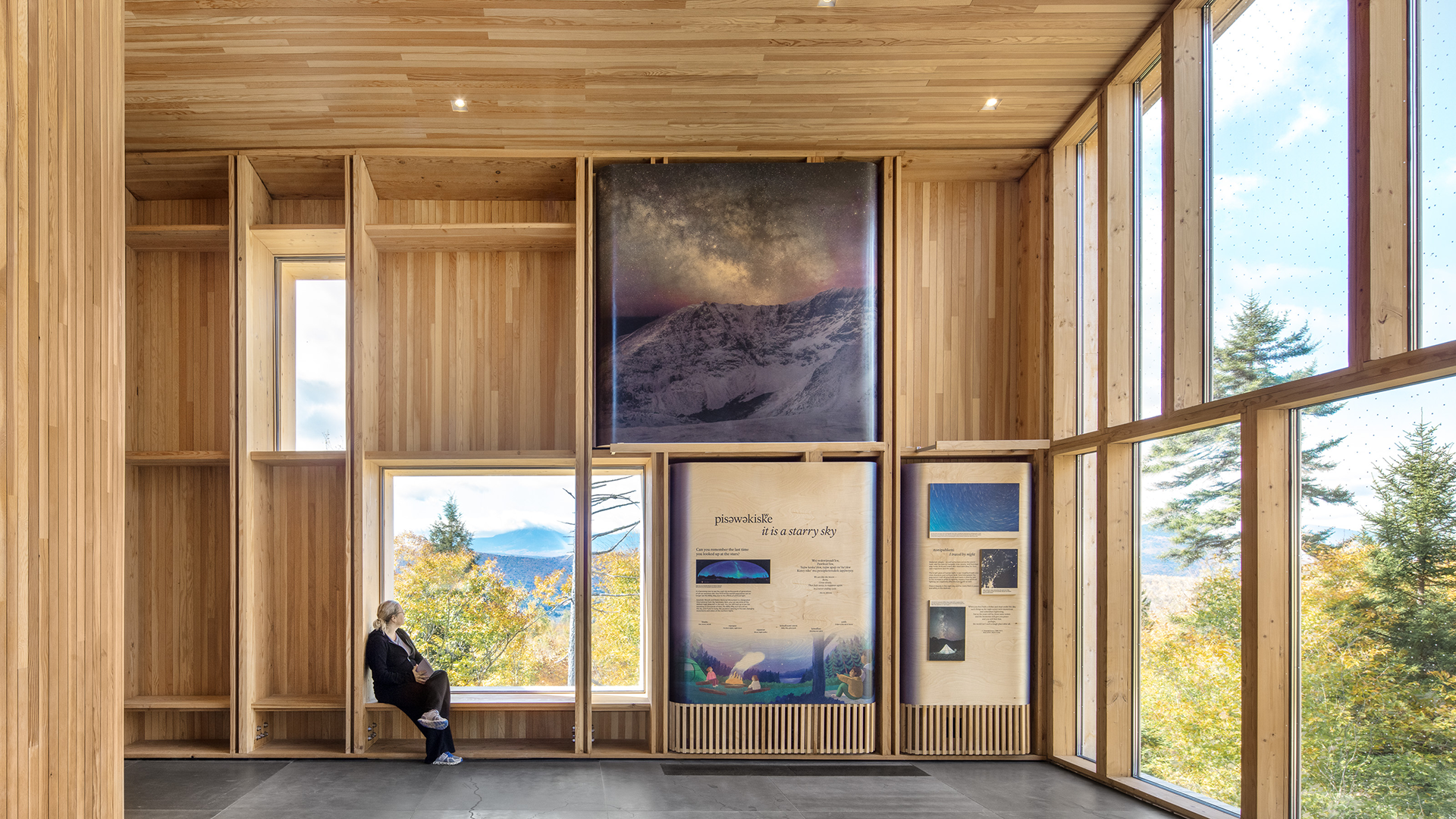
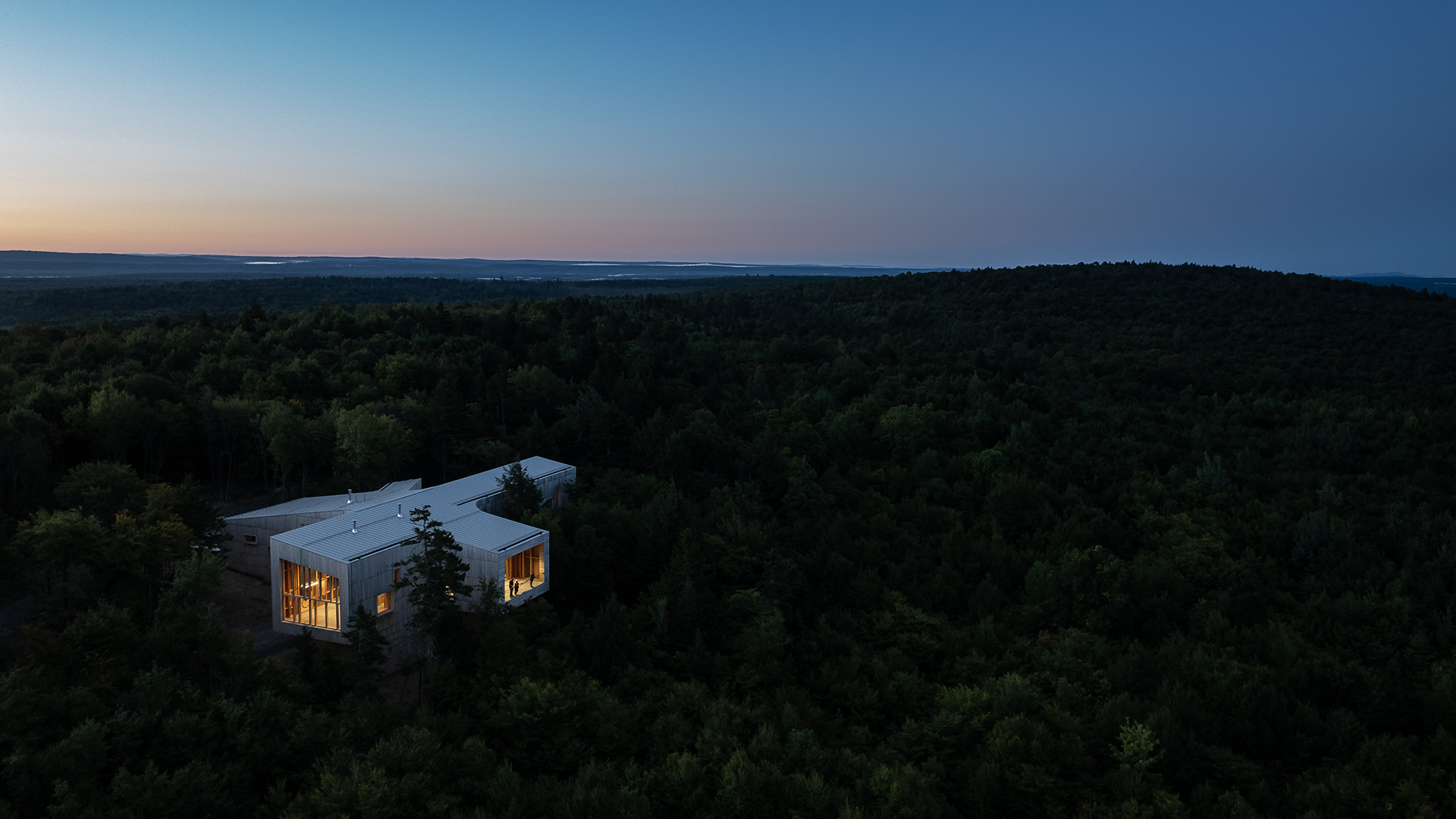
But Jackson is emphatic about the studio’s role. “We weren’t the author of this work. We’re simply the translator.”
The project required three years of weekly collaboration with Wabanaki representatives, along with Indigenous sensitivity training for the project team. More importantly, it required reconsidering the assumptions embedded in conventional design processes. Jackson began recognizing how easily design research can reproduce extractive relationships, gathering knowledge from communities without adequately respecting their ownership of that knowledge or giving something meaningful in return.
Rather than expecting community members to conform to established design schedules, the studio needed to create a framework flexible enough to accommodate their priorities, knowledge, and relationship with time. The process challenged the studio’s familiar ways of working, requiring patience, humility, and a willingness to relinquish control.
“These projects required a kind of disciplinary humility,” Jackson reflected, “knowing when design thinking helps and when to shut up.”
It is a striking departure from the familiar image of the designer as visionary or author. Instead, Jackson describes a practice in which expertise includes recognizing its own limitations. The designer’s responsibility is not always to lead the narrative. Sometimes it is to create the conditions in which others can tell it themselves.
That principle also informed a public art installation WSDIA developed for a fabric arts festival in Fall River, Massachusetts. Composed of 75 frames forming a bench-like structure, the installation invited visitors to reflect on immigration, heritage, identity, and belonging. Through prompts accessed by QR code, participants could share their own experiences and engage in conversations with others. The designers created the structure, but the meaning emerged through participation.
“We design the frames,” Jackson explained, “but the story belongs to the community.”

Versatility, Trust, and the Value of Relationships
The third threshold Jackson identifies is between object and system, where individual design assignments become opportunities to develop broader relationships and explore different creative disciplines.
WSDIA’s work with Design Within Reach offers an example. The relationship began in 2020, amid the national racial reckoning following the murder of George Floyd, when the studio received a commission to design a series of rugs. Jackson acknowledged the significance of the timing, reflecting on how opportunities for Black designers were beginning to open in ways they hadn’t before.
The resulting designs explored visual perception, geometry, and hidden meaning. One rug, Faces, uses shapes and cuts to reveal faces within an abstract composition. Another, Point Line Plane, incorporates a coded message through a custom Morse-code pattern: “If I told you, you didn’t listen. Could you hear us?” It was a subtle but intentional gesture, using an everyday object to encourage reflection on whose voices are heard and whose experiences are overlooked.
The relationship subsequently expanded into furniture design, including a dining table that explored the contrast between weight and lightness, followed by retail signage and communications for the brand. Across these assignments, WSDIA moved between textile design, industrial design, typography, and environmental graphics.
For Jackson, the significance lies not simply in the range of work, but in the relationship that made it possible. “The versatility that deepened the trust and the trust that revealed versatility,” he told the audience.
What began with a single opportunity became a broader creative partnership, demonstrating how the freedom to move between disciplines can reveal capabilities that might otherwise remain unseen.
A Practice Built on Shared Authorship
The collaborative principles that shape WSDIA’s projects also extend to the way Jackson has built the studio itself. If his design philosophy challenges the boundaries between disciplines, his approach to leadership challenges the idea that creative direction must flow from a single individual.
Although the studio began as a partnership between Jonathan and Sarah Nelson Jackson, its leadership structure has evolved toward a more democratic model. Today, the six-person team participates collectively in decisions about projects, priorities, and the direction of the practice.
Potential commissions are evaluated against three considerations: cultural impact, financial viability, and portfolio value. Projects that satisfy two of the three are often worth pursuing. Those that satisfy only one typically warrant more scrutiny. The process creates a shared understanding of why the studio takes on particular work and how creative ambition intersects with the realities of running a business.
Transparency is equally important. Team members have access to contracts, invoices, and the financial workings of the studio, giving them insight into aspects of professional practice rarely taught in design school. Jackson wants designers who work at WSDIA to understand not only how to produce strong creative work, but how to build and sustain a practice of their own.
During the Fellows discussion following the presentations in Kansas City, Jackson described how the studio approaches emerging talent by asking a simple question: What support did we wish we’d had when we were starting out?
For him, one answer was the opportunity to lead. Rather than reserving client presentations and project leadership for senior staff, WSDIA encourages designers to present their own work and develop relationships with clients. When their concepts move forward, the rest of the studio supports them in taking responsibility for the project.
“We give them the platform to lead and support them in every way possible to make that successful,” Jackson explained.
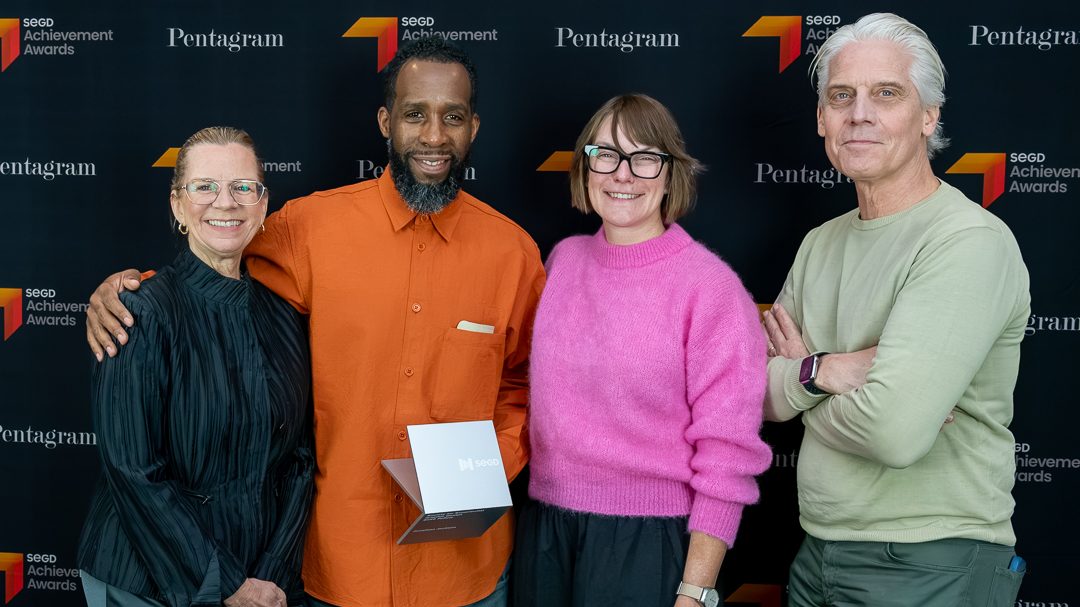
The approach requires guidance, patience, and a willingness to let people learn through experience. During his presentation, Jackson made a point of introducing the team behind the work, emphasizing that the projects represented multiple authors and voices. For a studio whose name suggests doing everything, perhaps its most important achievement is creating an environment where no one person is expected to.
Opening Doors for the Next Generation
Jackson’s commitment to mentorship is rooted in his own experience of discovering design through someone who recognized possibilities he couldn’t yet see. His mother may not have known that designing Nike shoes was a profession, but she understood that her son’s curiosity deserved encouragement. By introducing him to architecture, she gave him a way into a world that might otherwise have remained inaccessible.
Decades later, a moment during the installation of Men of Change, an exhibition celebrating Black changemakers, brought that experience full circle. A curator introduced Jackson to a thirteen-year-old visitor who had become inspired to pursue design after experiencing the exhibition.
For Jackson, the encounter was a reminder of why the work matters. “That’s the whole point,” he reflected in his Fellows interview, “giving kids who don’t know this world exists a way in, the way my mother once did for me.”
The connection between those two moments reveals another dimension of his design philosophy. Creating meaningful experiences isn’t simply about what people encounter in a space. It’s also about what they carry away from it, how their understanding changes, and what possibilities become visible.
For a designer whose own path began with someone opening a door, the opportunity to do the same for others carries particular meaning. The most valuable thing a studio can pass on may not be a particular aesthetic or methodology, but the confidence and capacity to create something of their own.
During the Fellows discussion, when the conversation turned to legacy, Jackson offered a characteristically understated response: “I think the thing I can add on is, if people can walk away saying that’s a good studio that produces good work, but they’re even better people.”
It is a measure of success that reaches beyond the finished project, encompassing the people who contribute to it and the opportunities they create for others.
The Middle Is a Practice
At the conclusion of his Fellows presentation, Jackson returned to the idea of the middle, reflecting on what two decades of working between disciplines had taught him. He identified three things: questions, fluency, and trust.
The questions that matter most, he suggested, are often those that fall between everyone’s defined responsibilities—the ones that no single discipline considers its own. Fluency isn’t about mastering every creative language, but understanding enough of them to recognize what each can contribute and what might otherwise go unheard. And trust, perhaps the most important of the three, emerges when designers approach their work in service of something larger than their own expertise.
“Trust is the whole job,” Jackson told the audience.
Taken together, these principles offer a different way of understanding multidisciplinary design. Rather than celebrating versatility as an end in itself, Jackson’s philosophy places value on the relationships, perspectives, and possibilities that emerge when disciplinary boundaries become more permeable.
Across commercial environments, cultural institutions, public installations, and everyday objects, WSDIA’s work demonstrates that the most meaningful design decisions are not always made within the familiar territory of a particular discipline. Sometimes they happen when a graphic designer begins thinking like an architect, when an institution learns to follow the leadership of a community, or when a young designer is given the opportunity to lead before they have a senior title.
Jackson’s career has been shaped by the belief that designers should remain curious enough to move beyond what they already know and humble enough to recognize what others bring to the process.
“The middle isn’t a gap to be closed,” he concluded. “It’s a practice.”
And for Jonathan Jackson and WeShouldDoItAll, it’s home.
People also viewed
-
2026 SEGD Fellow: Jonathan Jackson

2026 SEGD Fellow: Jonathan Jackson
-
Outsized Impact: The Design Philosophy of Ingūna Elere and Holgers Elers
Outsized Impact: The Design Philosophy of Ingūna Elere and Holgers Elers
-
What Is Enough? The Design Philosophy of Marquise Stillwell
What Is Enough? The Design Philosophy of Marquise Stillwell