What Is Enough? The Design Philosophy of Marquise Stillwell
Marquise Stillwell, FSEGD has spent more than two decades working at the intersection of design, community, storytelling, and civic life. Through ventures including Openbox, Deem Journal, Urban Ocean Lab, Opendox, and Stae, he has built a practice centered on people, participation, and the systems that shape our everyday experiences. In this newly released 2024 SEGD Fellows presentation, Stillwell reflects on process, stewardship, and a question that increasingly guides his work: What is enough?
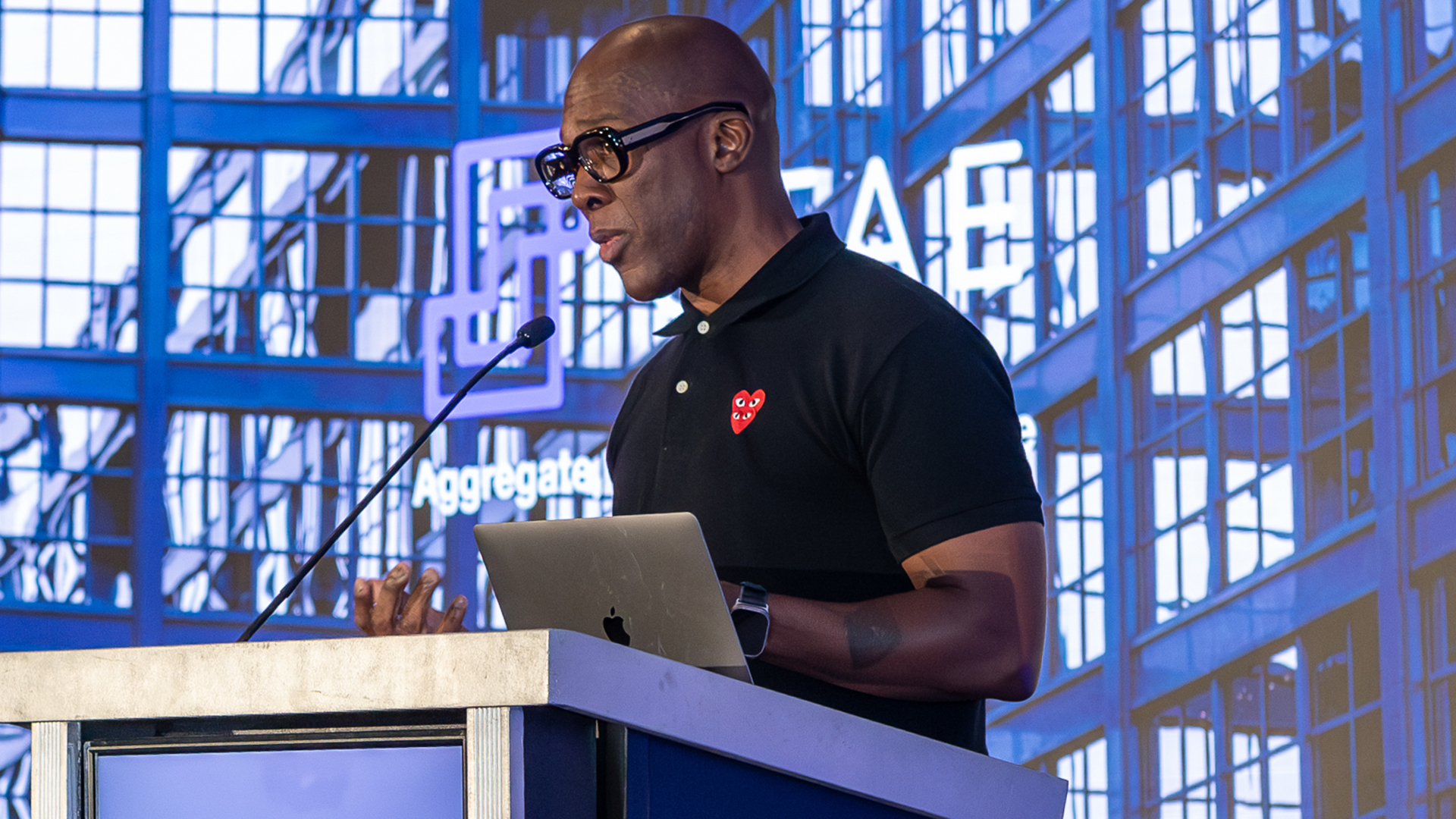
Marquise Stillwell, FSEGD, has spent much of his career asking questions that extend beyond the boundaries of traditional design practice.
How do people connect with one another? How do communities participate in shaping their environments? What stories remain untold? And increasingly, as designers confront the realities of climate change, resource scarcity, and social inequity, what do we actually need to build?
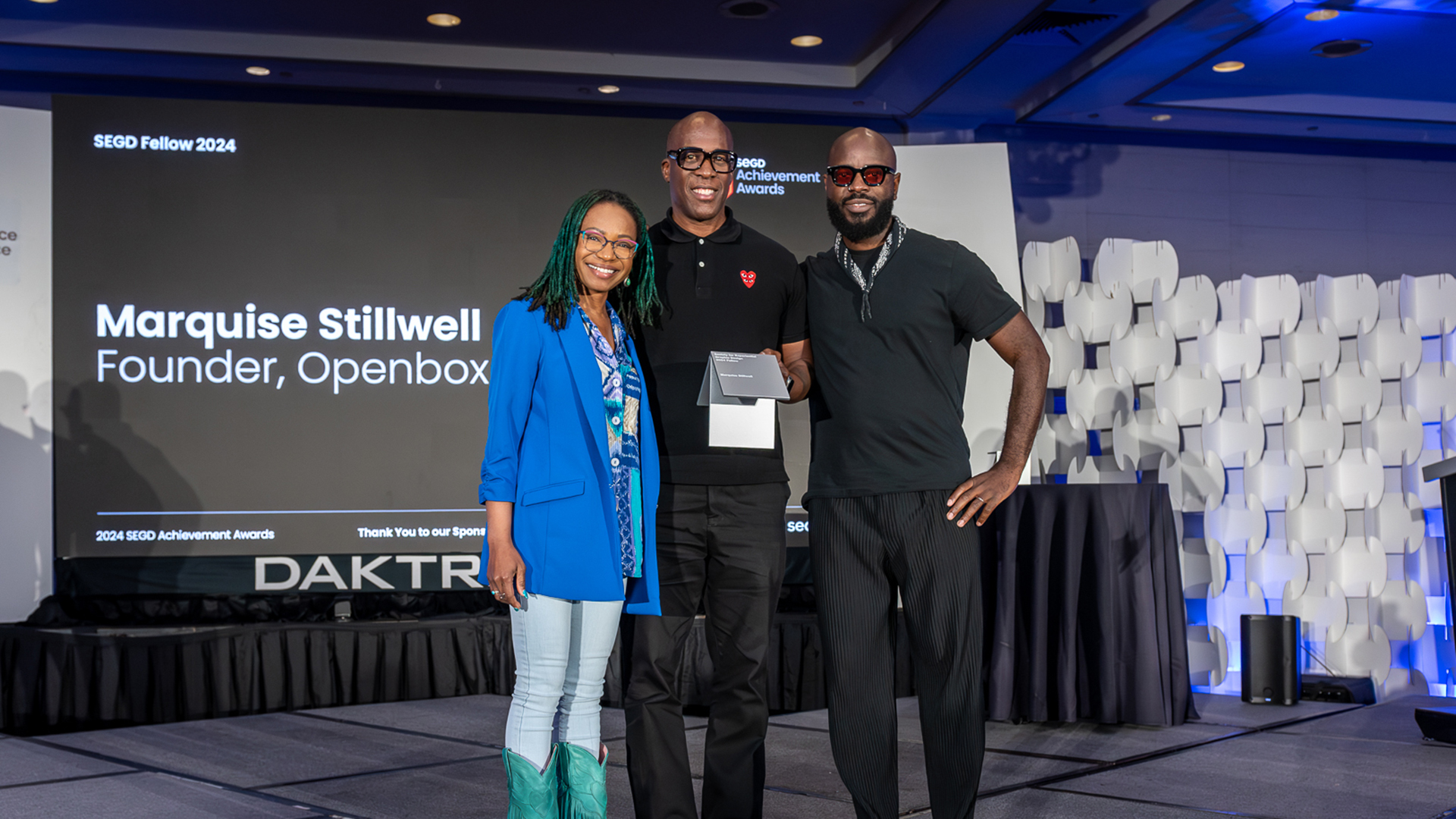
Named a 2024 SEGD Fellow, Marquise Stillwell has built a body of work that spans design research, publishing, filmmaking, civic technology, public policy, and community engagement. Through ventures including Openbox, Deem Journal, Opendox, Urban Ocean Lab, Artmatr, and Stae, he has explored how design can serve as a catalyst for understanding, participation, and positive change.
In his 2024 SEGD Fellows presentation at the SEGD Conference Experience Dallas, Marquise offered a glimpse into the philosophy that connects these seemingly diverse pursuits.
Watching his talk, what emerges is not a methodology or an aesthetic, but a worldview rooted in curiosity, stewardship, and the belief that design’s greatest value lies not in the artifacts it produces but in the conditions it creates.
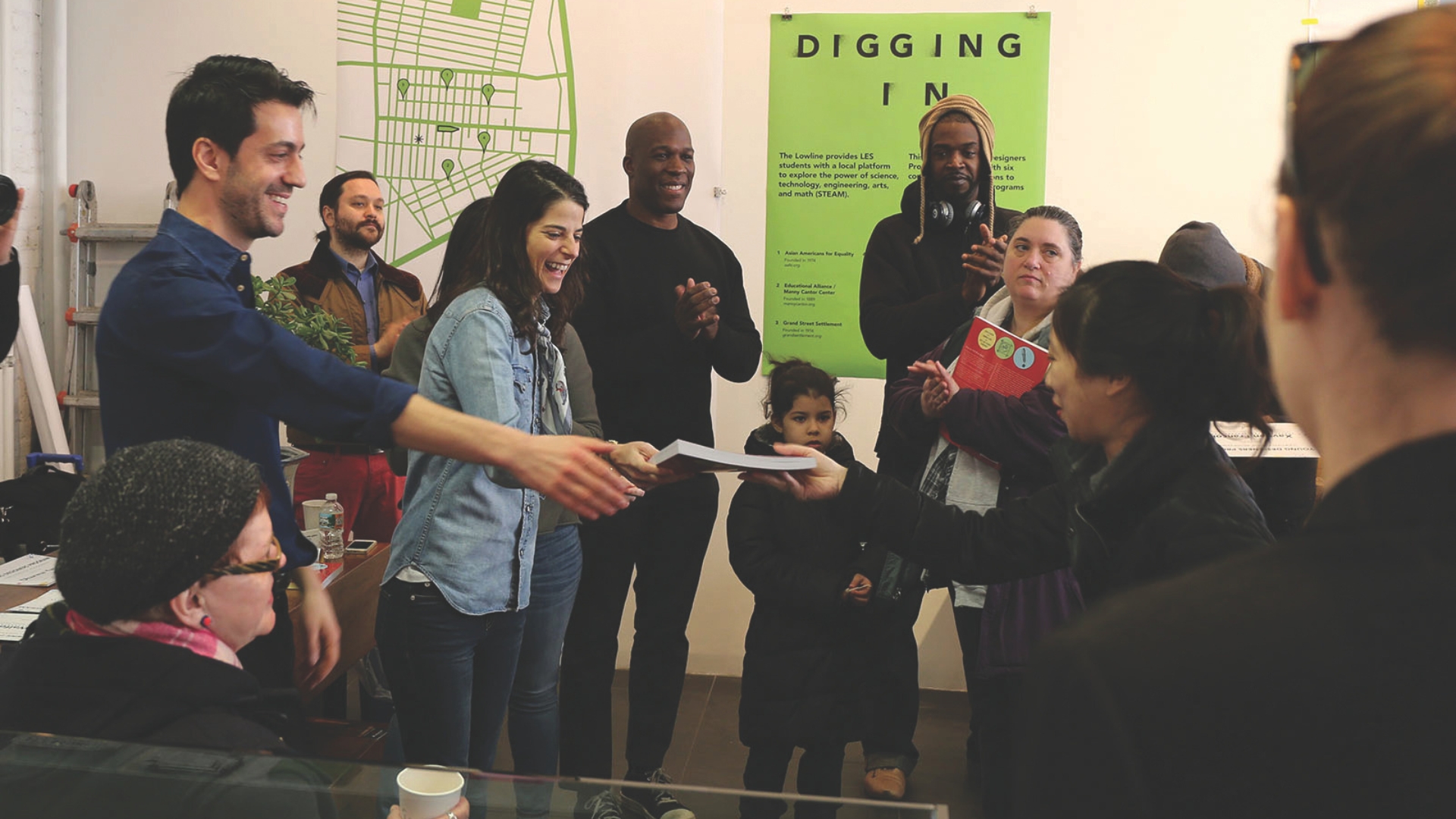
Design Begins With People
For Marquise, design has never started with objects, graphics, buildings, or technology. It begins with people.
That perspective can be traced back to his upbringing in the industrial Midwest, where making, repairing, and experimenting were part of everyday life.
“When I was a youngster, playing and making things was just a way of life,” Marquise reflected in his SEGD Fellows interview. “I’ve never stopped making, playing, and building.”
He recalls growing up surrounded by steel mills, auto plants, and communities of people who may not have called themselves designers, but who embodied a maker’s mindset nonetheless.
“You were allowed to take things apart and build things,” he said. “I see myself as part of a ‘we,’ a long legacy and history of individuals who came before me and who also had that permission to play.”
That sense of collective responsibility continues to shape his work today. Openbox, the design research and planning studio he founded in 2009, was built around the belief that meaningful design begins with understanding how people experience the systems, spaces, and institutions that shape their lives.
Community engagement is not a phase in the process. It is the process.
“I come from a background where community was part of my life,” Marquise explained. “My dad was a minister and involved in community action.”
Whether working with cities, cultural institutions, or public spaces, his projects consistently prioritize lived experience. During his Fellows presentation, he described Openbox’s work as operating at the intersection of “people, cities, and planet,” a phrase that captures both the scale and humanity of his practice.
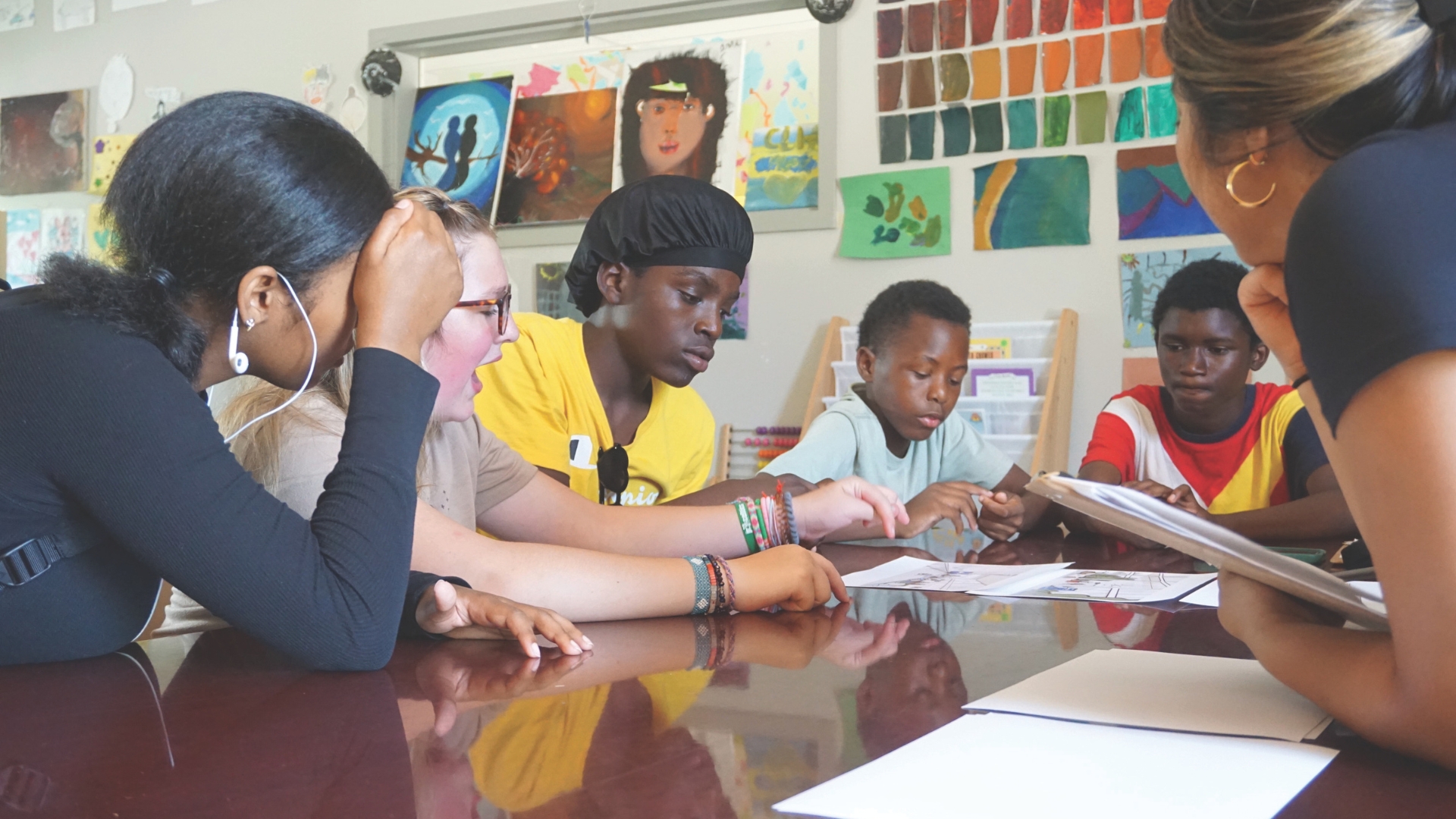
Design as a Process, Not a Product
If there is a recurring critique throughout Marquise’s work, it is that the design profession has become too focused on deliverables and not focused enough on the processes that produce them.
“The design model and client relationship need to change,” he argues. “We’ve become vendors, not partners.”
For Marquise, design’s value is not found solely in the final outcome. It is found in the conversations, relationships, discoveries, and shared understanding that emerge along the way.
We fell in love with the output and let go of the process.
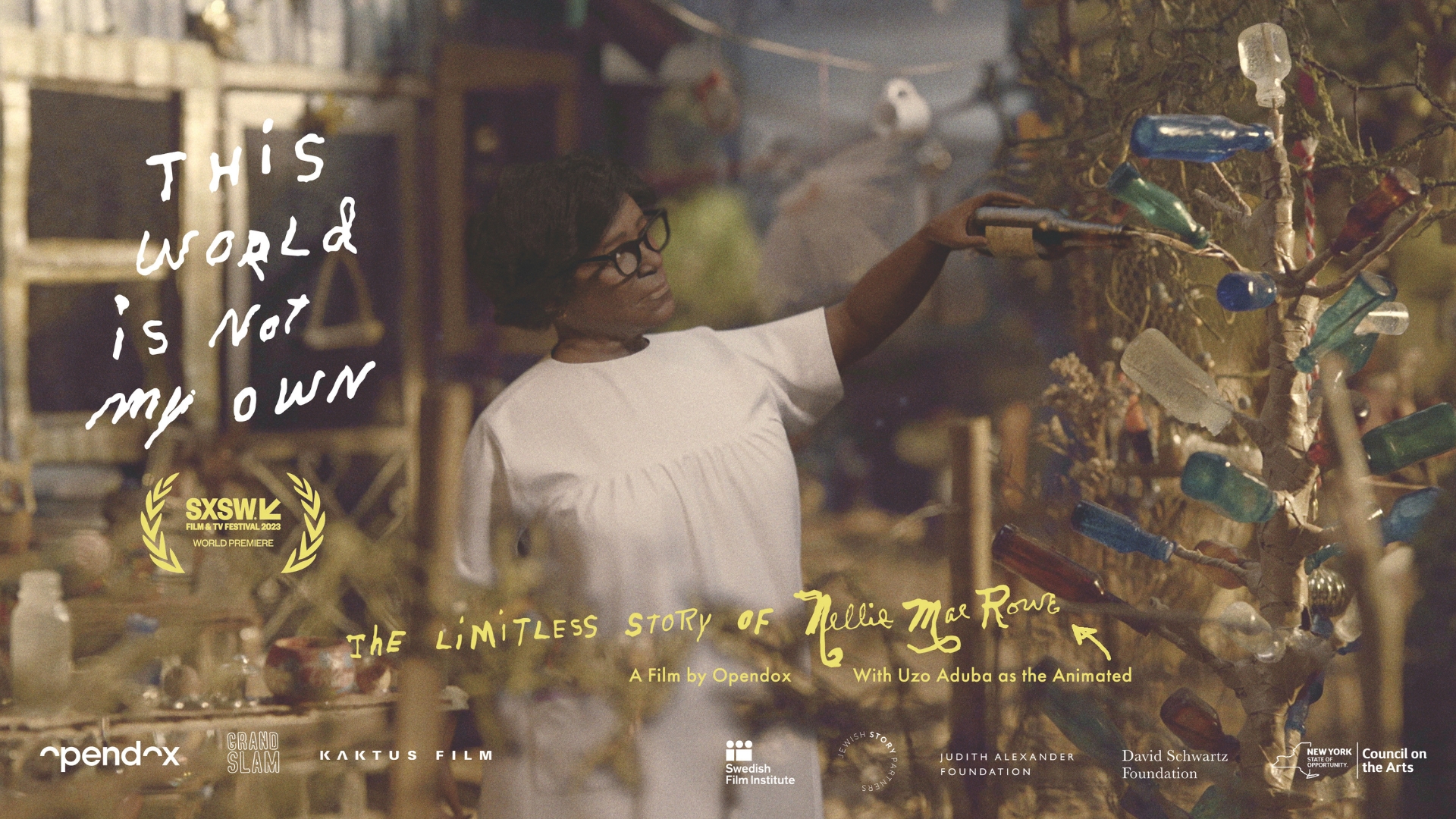
This belief appears throughout his work, whether facilitating community conversations, conducting design research, producing documentary films, or publishing long-form cultural criticism through Deem Journal, which he co-founded with SEGD board member Nu Goteh. The work itself becomes a vehicle for learning and collective inquiry.
That emphasis on process also helps explain his commitment to collaboration. During his Fellows presentation, Marquise described the network of organizations he has built as a “circular economy of knowledge and sharing.”
Rather than concentrating expertise within a single studio or discipline, he has created multiple platforms that allow ideas to move across communities, sectors, and fields of practice.
The result is less a collection of businesses than an interconnected ecosystem.
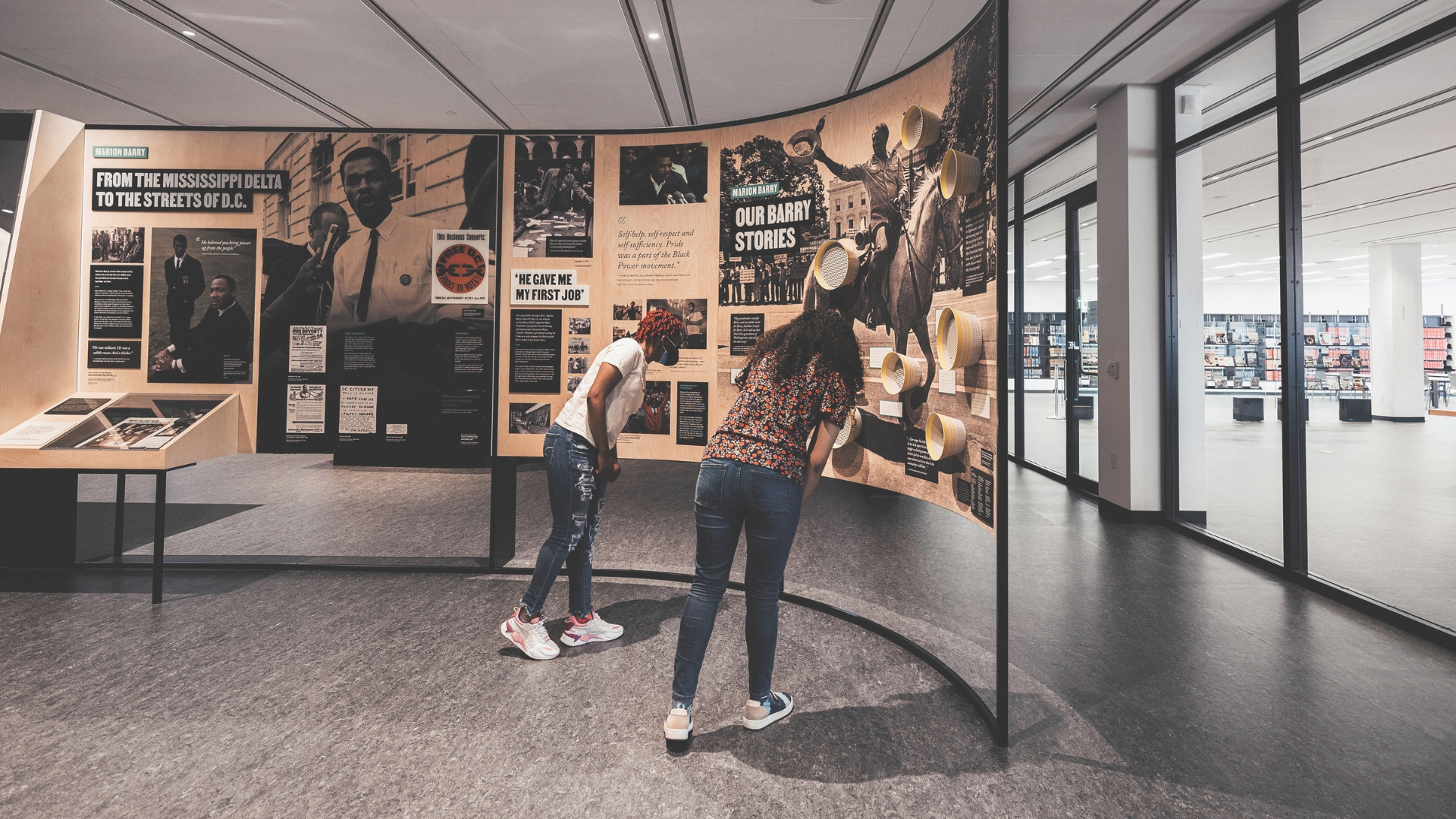
A Circular Economy of Knowledge
At first glance, Marquise’s ventures appear remarkably different from one another.
Openbox focuses on design research and planning. Deem Journal examines design as a social practice. Urban Ocean Lab explores policy solutions for coastal resilience. Opendox produces films about overlooked cultural figures and histories. Stae helps cities leverage data to make better decisions.
Yet Marquise sees them as parts of a larger whole.
“I see the work I do and the collaborators I work with as a micro-circular economy,” he explained.
Research generated through Openbox can inform policy conversations through Urban Ocean Lab. Stories surfaced through Deem Journal can deepen public understanding. Quantitative data from Stae can complement qualitative community research. Documentary films can preserve histories and perspectives that might otherwise be forgotten.
What connects these ventures is not a particular discipline, but a shared commitment to inquiry. Each becomes another lens through which to understand people, systems, culture, and place.
That perspective feels particularly relevant in a moment when many of the challenges facing designers refuse to fit neatly within disciplinary boundaries. Climate resilience, social equity, public trust, and community wellbeing demand multiple ways of knowing.
Marquise’s work reflects a belief that meaningful solutions emerge not from specialization alone, but from connection.
Asking the Question of Enough
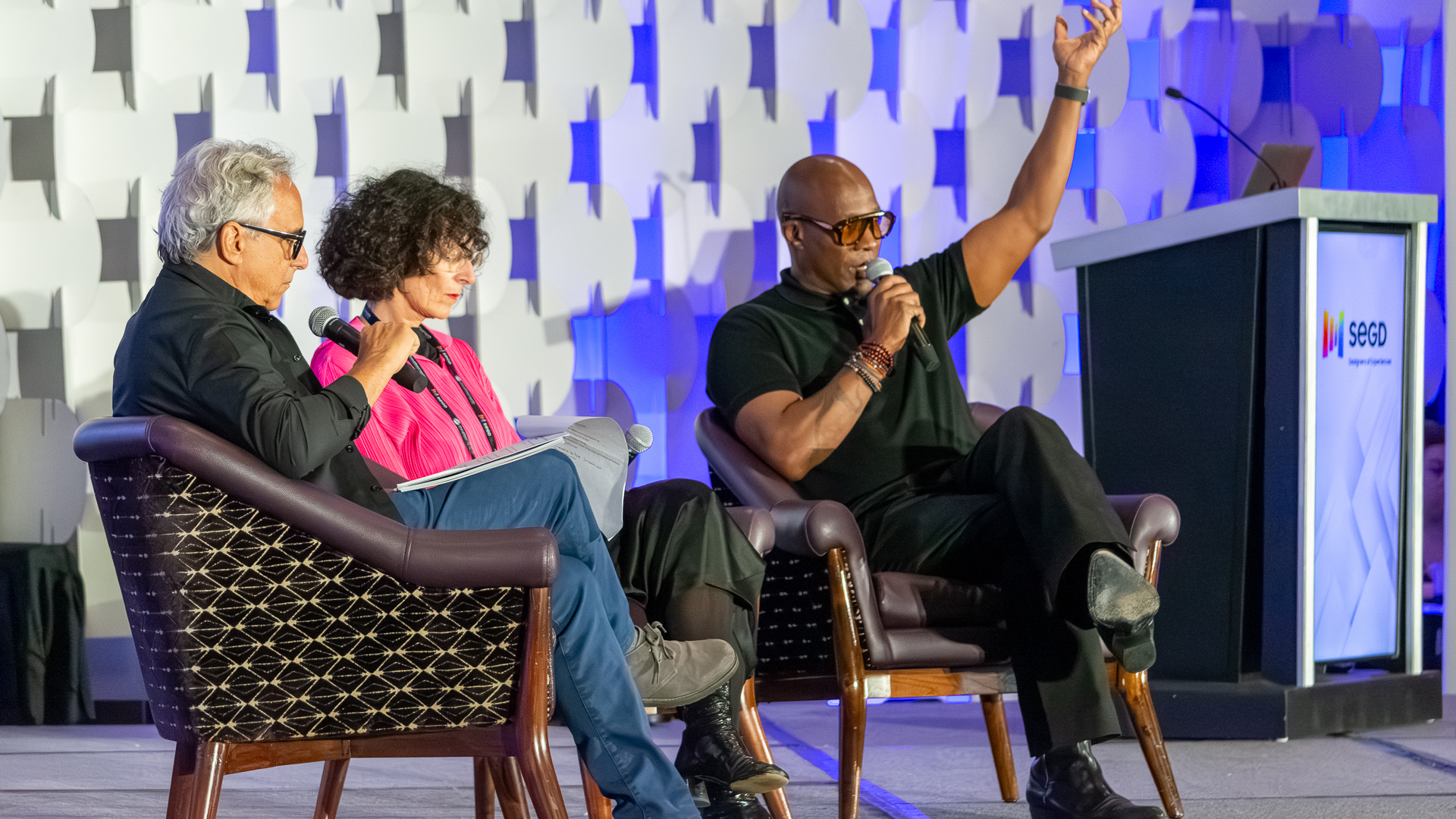
Perhaps the most powerful moment in Marquise’s Fellows presentation came not through a project, but through a question.
“What is enough?”
It is a deceptively simple idea, but one that carries profound implications for the future of design.
“I do believe that there is a really important responsibility as designers, as artists, as architects,” Marquise told the audience. “Particularly with the things we’re facing right now, especially climate, to really ask the questions: Do we have enough? Do we need more buildings? Do we need more stuff?”
The question challenges an assumption deeply embedded within contemporary practice: that success is measured through growth, expansion, and production.
Instead, Marquise encourages designers to think about stewardship.
What are we building? Why are we building it? Who benefits? What responsibilities come with shaping the future?
These questions have become increasingly urgent as designers grapple with climate change, resource constraints, and the social impacts of development. Marquise’s perspective suggests that design’s responsibility is not always to create more. Sometimes it is to preserve, adapt, repair, or simply create space.
His challenge is not anti-growth. It is pro-intention.
By asking what is enough, he invites designers to think more critically about the long-term consequences of what they create and the futures they make possible.
Creating Conditions for the Next Generation
That long view extends to how Marquise thinks about education and mentorship.
While conversations about design education often focus on technology, software, or credentials, he returns to something more fundamental: learning through making.
“Design is head, heart, and hand.”
Students need opportunities to experiment, observe, mimic, and build. Knowledge cannot exist solely in theory.
“Your hands are part of your memory,” Marquise says. “If you’re not using your hands and only using your head, it’s hard for your heart to lean in.”
His concern, however, extends beyond pedagogy. He believes current practitioners have a responsibility to create better conditions for those who follow.
“As designers, we need to create better conditions for this next generation.”
That responsibility includes rethinking not only how we teach design but how we practice it. It means examining the systems, policies, and assumptions that shape the built environment. It means considering whether every empty lot needs to be filled, whether every problem requires a new object, and whether progress can sometimes be measured through restraint rather than expansion.
For Marquise, design is ultimately about shaping the conditions future generations will inherit.
More Than Design
Taken together, Marquise Stillwell’s work offers a compelling vision for what design can be when it expands beyond the production of objects and experiences alone.
Across planning, publishing, filmmaking, policy, technology, and community engagement, he continually returns to the same fundamental concerns: people, participation, stewardship, and connection. His projects ask how communities can better understand themselves, how institutions can listen more deeply, and how design can contribute to a more equitable and sustainable future.
At a moment when the profession is being asked to respond to increasingly complex social and environmental challenges, Marquise’s work offers a timely reminder. Design is not defined solely by what it produces. Its greatest impact may lie in the conditions it creates for people, communities, and future generations to flourish.
Perhaps that is why his question continues to resonate.
What is enough?
For Marquise Stillwell, it may be the most important design question of all.
People also viewed
-
Marquise Stillwell
Marquise Stillwell
-
Outsized Impact: The Design Philosophy of Ingūna Elere and Holgers Elers
Outsized Impact: The Design Philosophy of Ingūna Elere and Holgers Elers
-
Everything Is Experience Design: Bruce Mau Opens SEGD’s Voices of Experience Series
Everything Is Experience Design: Bruce Mau Opens SEGD’s Voices of Experience Series