Pathways to Sustainable Practice at the SEGD Global Design Awards
By SEGD Sustainability Committee Members Joel Krieger and Genell Zuciya
In 2025, SEGD introduced new sustainability recognitions into the Global Design Awards. We did this for a simple reason. Design shapes the future, and the future now requires ecological thinking, not just aesthetic excellence. These recognitions make that work visible and elevate projects that advance a more resilient future.
Two Types of Recognition
There are two sustainability honors within the GDA program, and they serve different purposes.
Sustainability Impact Recognition recognizes projects that advance sustainability through process, narrative, or place. Many projects can receive this recognition. It is meant to celebrate meaningful steps forward, even if the work focuses on just one dimension.
Life Centered Design Award is the highest sustainability honor. Only one project receives it. This award recognizes work that moves beyond human centered design to benefit both people and the living environments we depend on. Here, design is evaluated by its contribution to the vitality of whole living systems.
Inclusive by Design
These recognitions were created with the full diversity of SEGD practice in mind. Sustainability does not live in one discipline alone. It can be expressed through materials, storytelling, spatial design, or systems thinking. Experiential designers, strategists, digital teams, exhibition studios, and placemakers of all stripes can each engage the criteria through their own methods and mediums.
The Three Criteria
All sustainability submissions are viewed through three lenses: Process, Narrative, and Place. Together, they expand what sustainability can mean in experiential design.
Process looks at how things are made. It considers materials, energy use, waste, sourcing, and afterlife. Projects demonstrate this through reclaimed materials, low energy systems, or modular fabrication. Some projects even design decomposition or reuse pathways after installation. Less about perfection. More about intention.
Narrative looks at the story a project tells. Does the work deepen ecological understanding? Does it connect people to the natural world? Some recognized projects had minimal control over physical materials or site conditions, but their media environments or interpretive layer helped audiences understand ecological interdependence in powerful ways. Story becomes infrastructure.
Place looks at physical relationship. Does the project reconnect people to their ecosystem? Does it enhance biodiversity or restore habitat? Many awarded projects work at this intersection, transforming overlooked spaces into ecological touchpoints that help people see themselves inside living systems.
Why This Matters
Not every project can influence all three criteria. That is intentional. A wayfinding system may focus on material circularity. A digital studio may focus on narrative impact. A placemaking project may focus on ecological integration. All are valid entry points, and all contribute to advancing the field.
Looking at Real Examples
One of the most helpful ways to understand these criteria is to look at how recent award recipients embody them.
Process:
Desa Potato Head
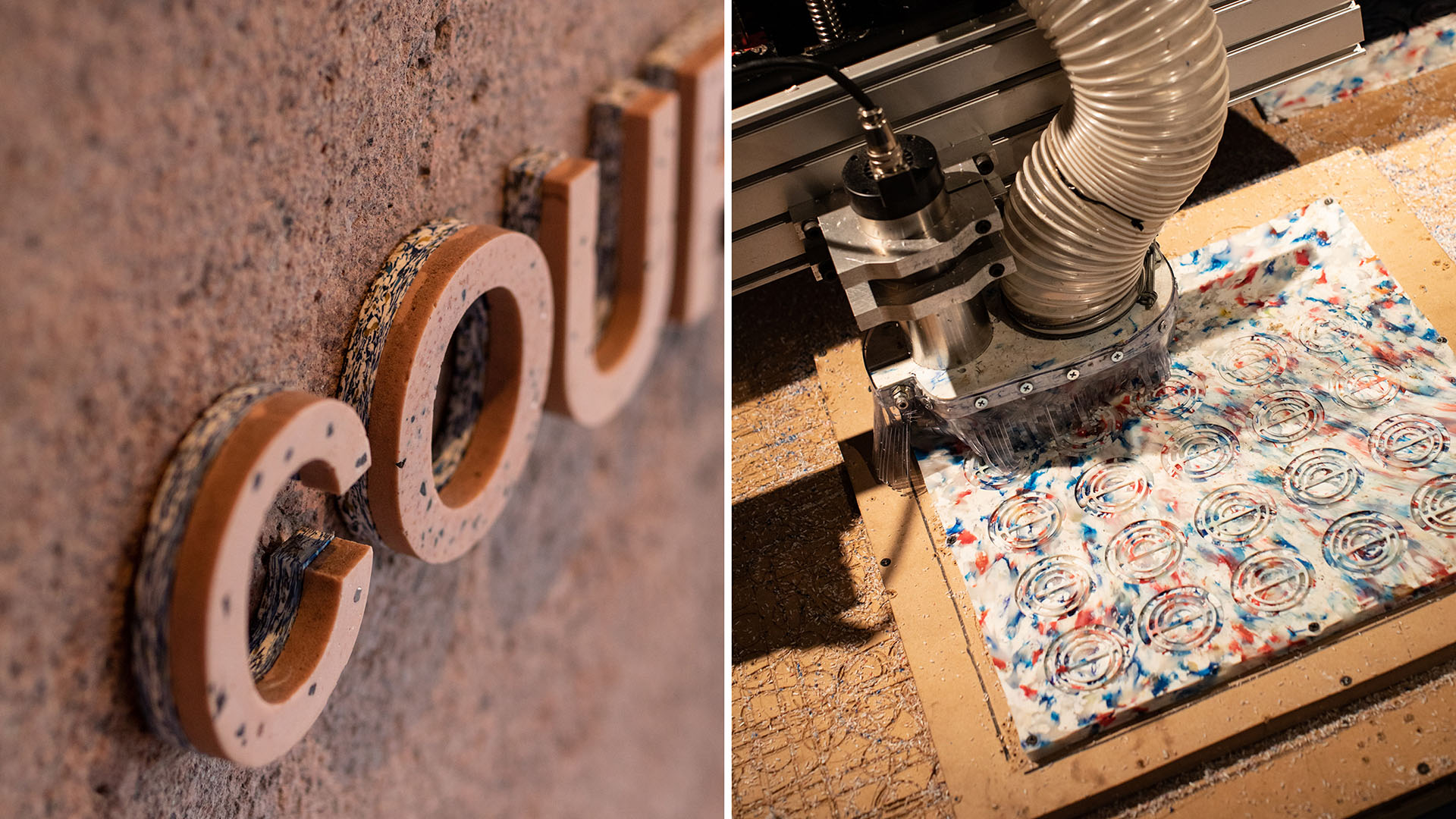
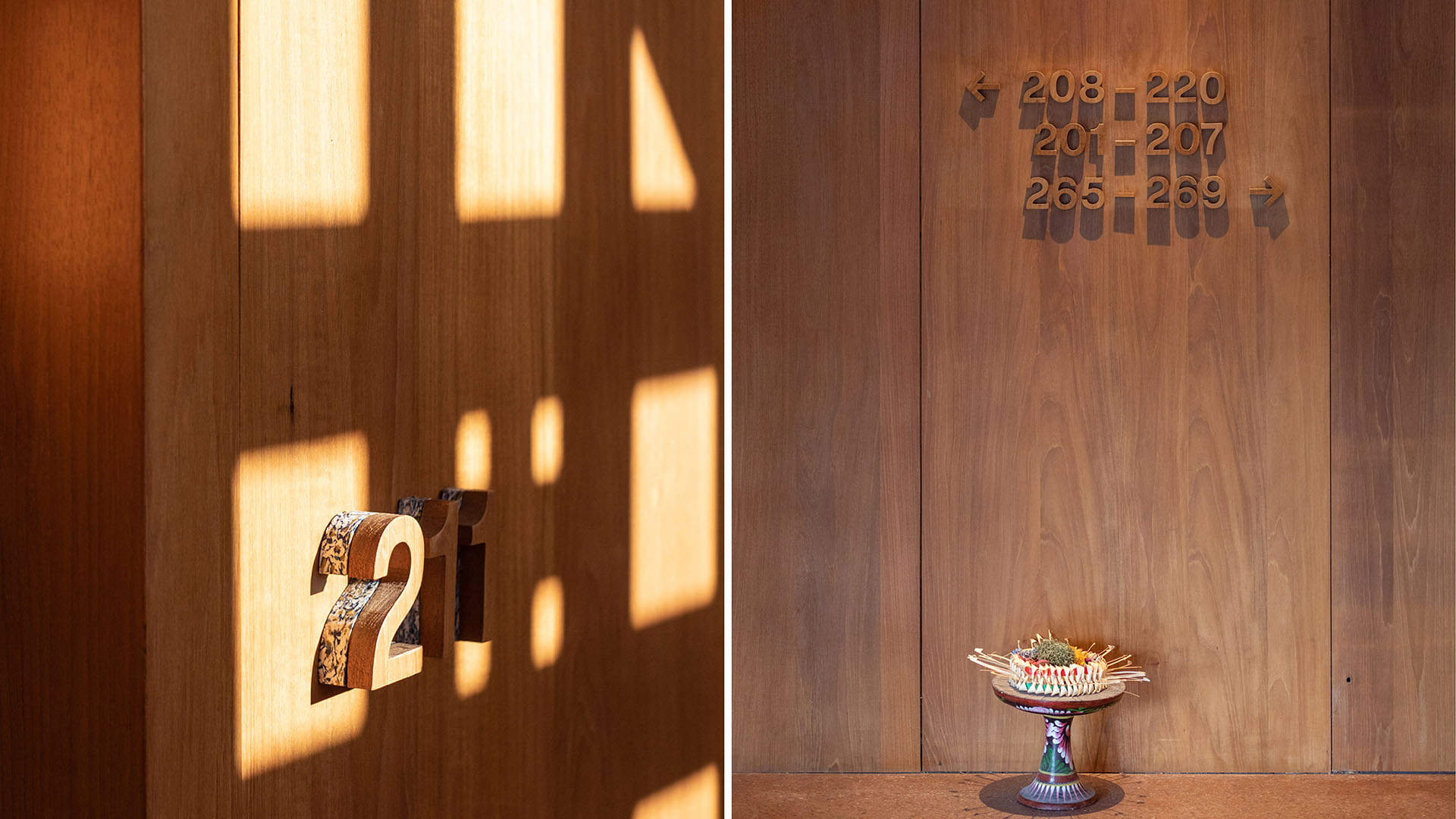
At Desa Potato Head in Bali, sustainability is embedded directly into material systems. Wayfinding elements incorporate recycled plastic produced in the site’s own sustainability lab, while sculptural signage integrates aggregate made from construction by-products. The project demonstrates how circular thinking can shape both fabrication and visitor experience.
Narrative:
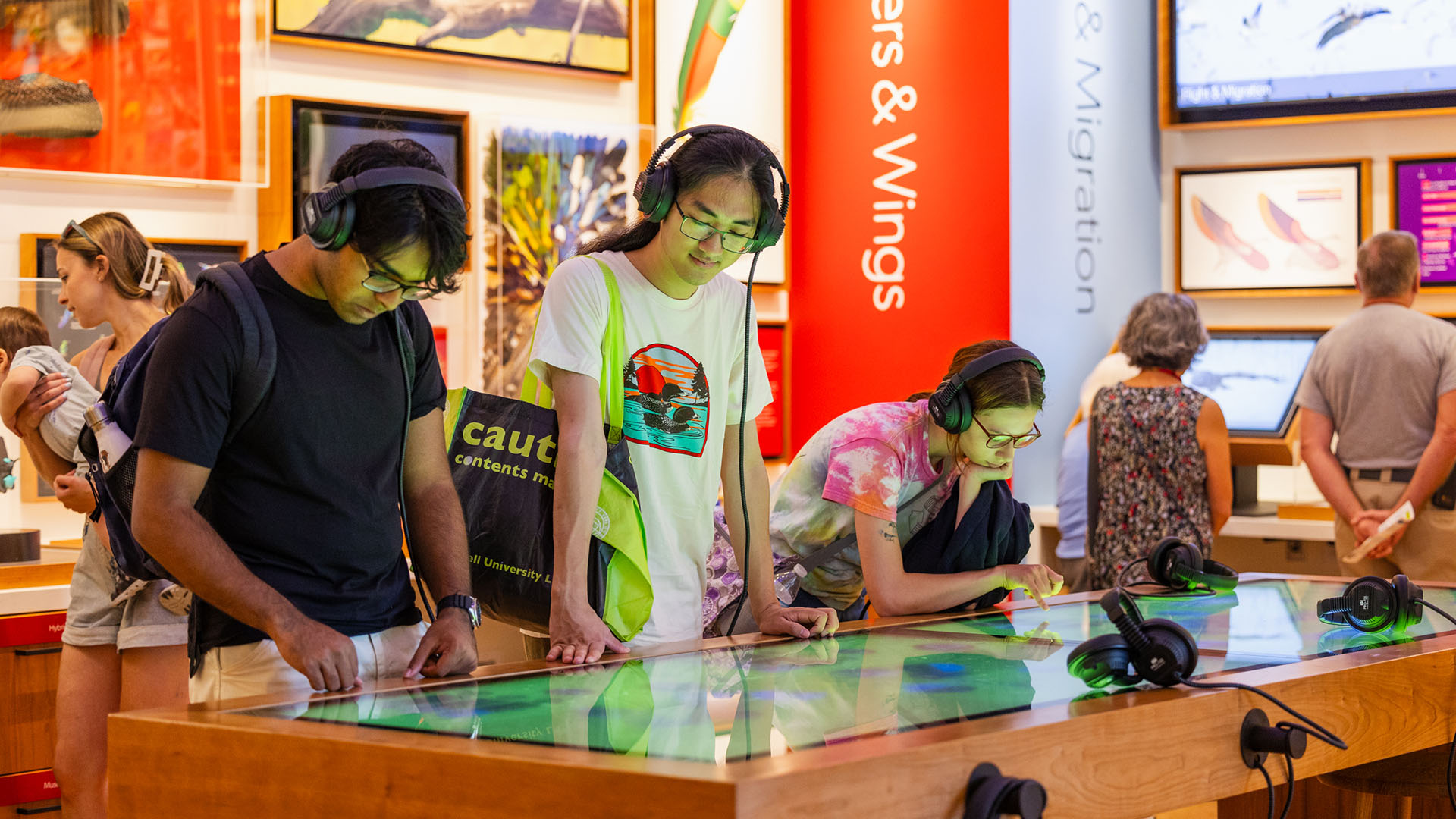
Cornell Lab of Ornithology
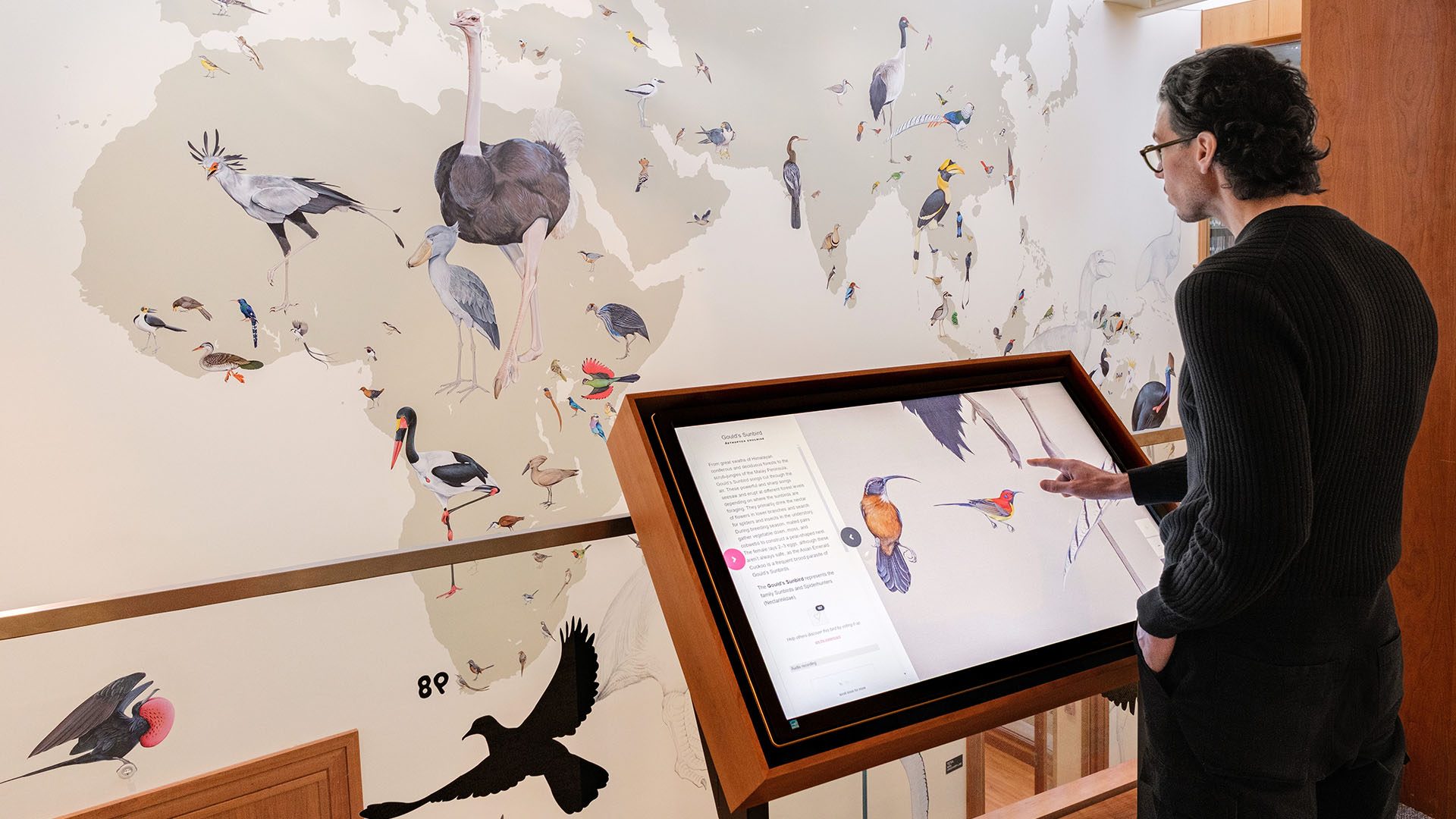
The Cornell Lab of Ornithology Visitor Center communicates sustainability through education and immersion. Interactive exhibits explore migration, habitat, and biodiversity through sound, media, and tactile displays. Scientific research is translated into an accessible public story that deepens awareness of ecological interdependence.
Place:
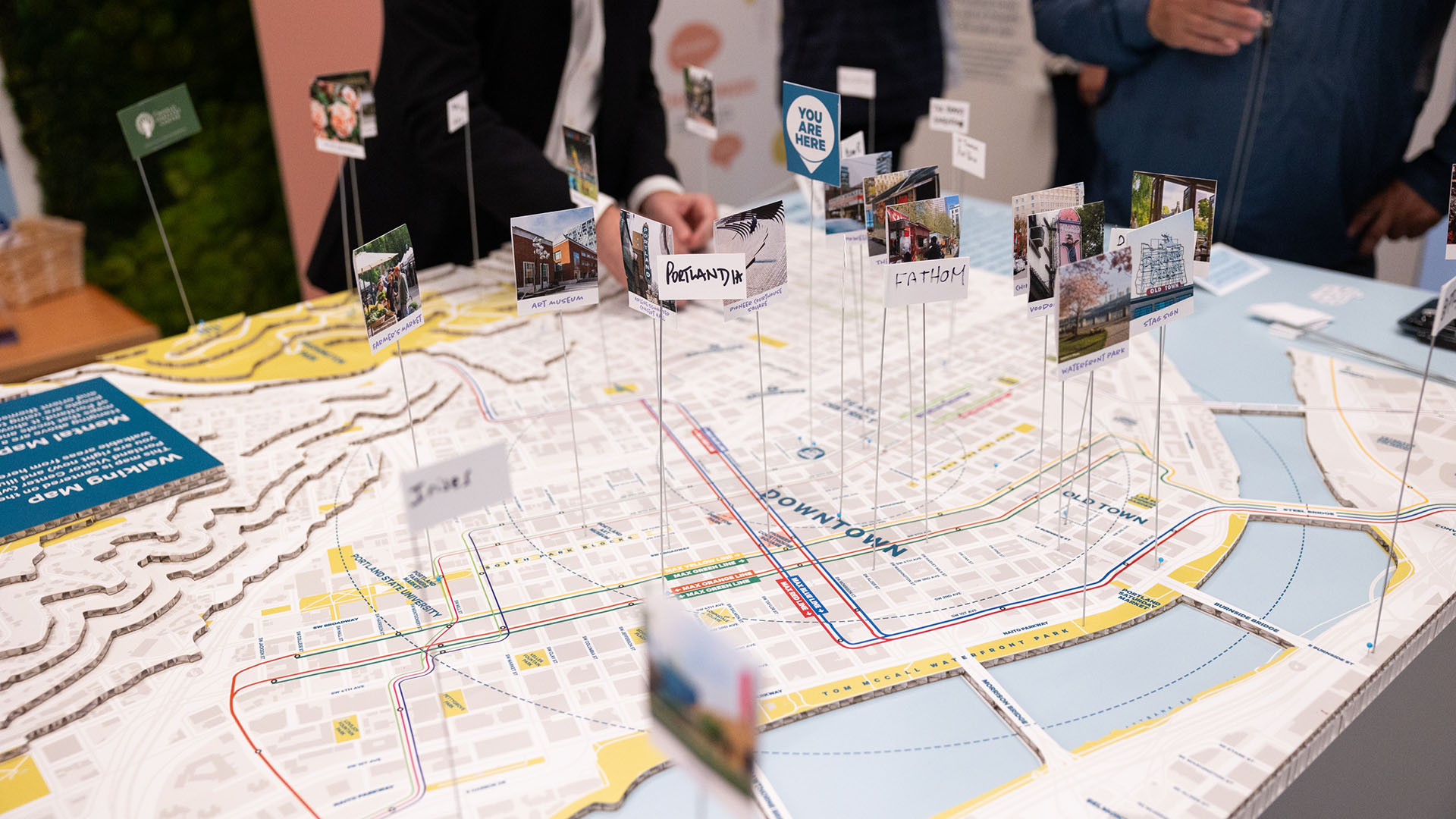
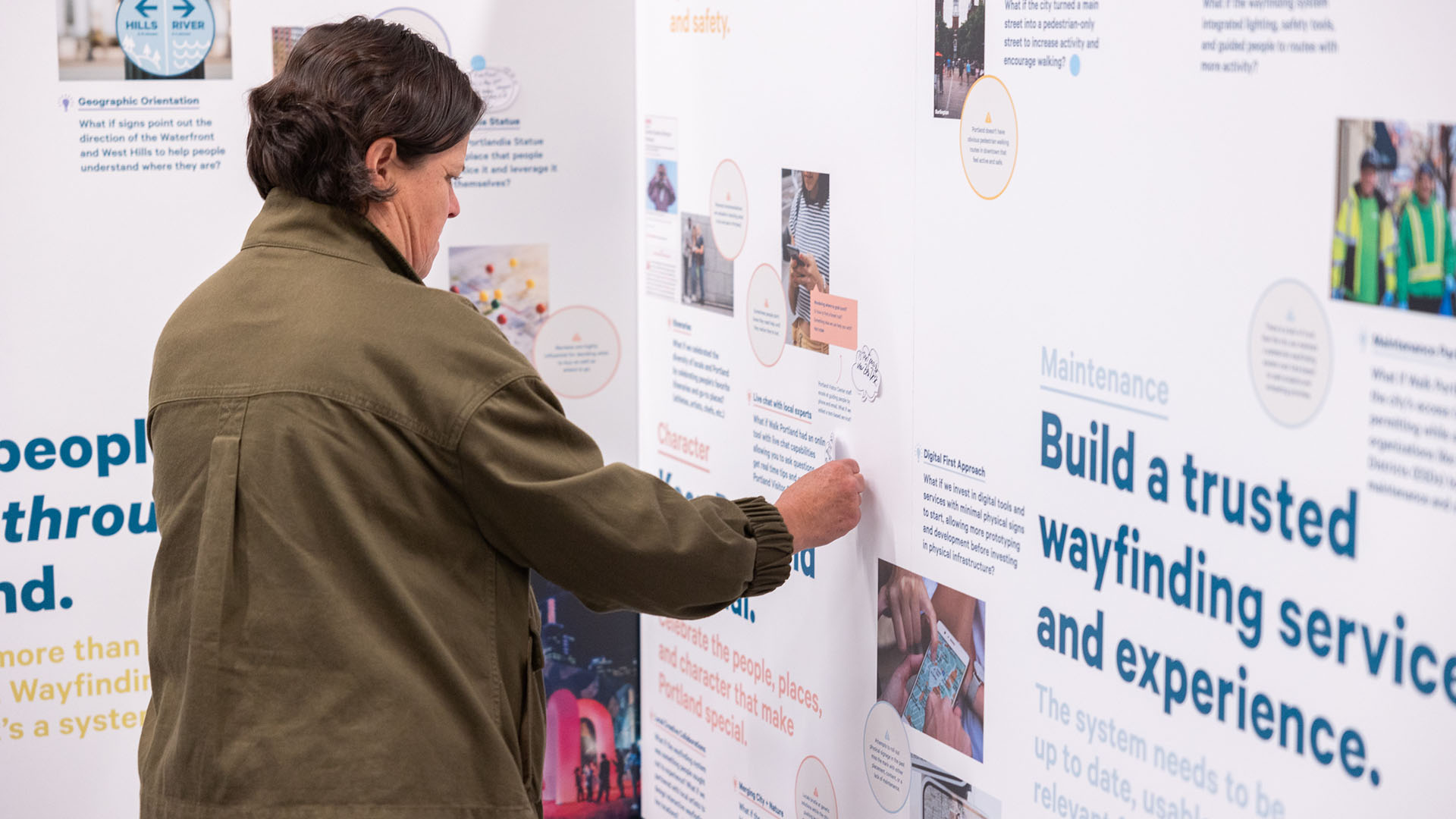
Walk Portland
Walk Portland expresses sustainability through urban relationship. The citywide wayfinding system encourages pedestrian exploration and reduces reliance on vehicles. Research and community engagement shaped how people move through and connect with Portland, positioning walking as both an environmental strategy that relies on our own energy (rather than extracted energy) and a cultural experience.

All Criteria Integrated:
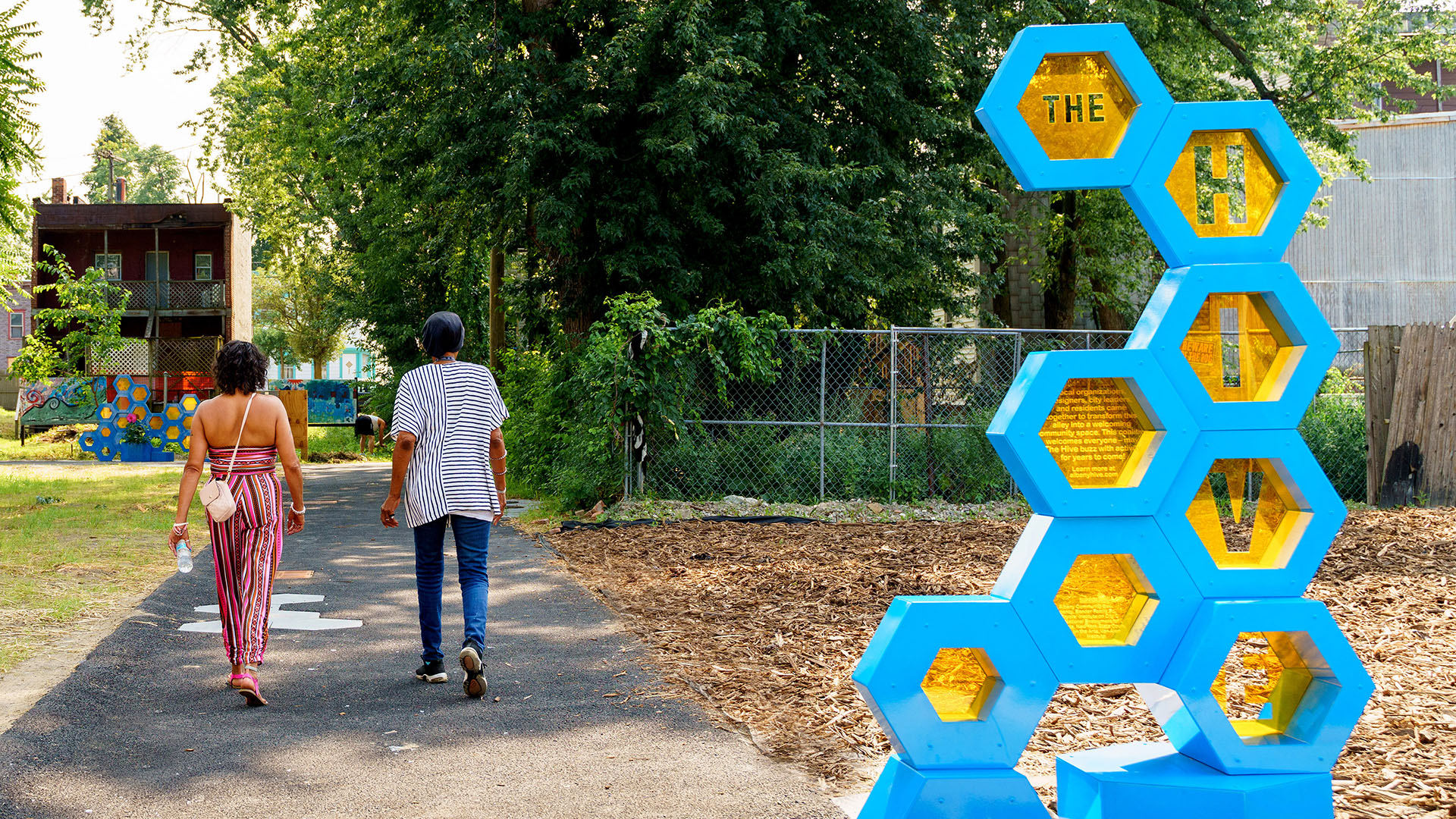
The Hive — Life Centered Design Award
Last year’s Life Centered Design Award recipient, The Hive, brings all three dimensions together. A neglected alley was transformed into a community greenway that supports social gathering, local food systems, permeable paving for natural water infiltration and reduced stormwater runoff, and ecological restoration. Process, narrative, and place operate as one integrated system in this project. .
Look Back
You may already have eligible work. Many projects contain meaningful sustainability contributions that were not originally framed that way. We encourage teams to revisit the past year’s work and reflect on how sustainability showed up in process, narrative, or place. To assist in your retrospective, it may help to explore last year’s Sustainability Impact projects here.
Look Forward
These recognitions also serve as a design prompt. They invite teams to think differently about current projects. Materials can be sourced more responsibly. Stories can provoke ecological thinking. Experiences can reconnect people to living environments. These awards aim to inspire, uplift, and recognize the work advancing more resilient futures. They also remind us that even small beginnings can compound into lasting impact.
Submission Call
Submissions for the SEGD Global Design Awards are now open. We encourage all practitioners working at the intersection of experiential design and sustainability to apply here.
Key deadlines:
• Early: January 31, 2026
• Late: February 28, 2026
• Final: March 15, 2026
If you created work that advances sustainability in any dimension, submit it. If you are working on projects now, consider these criteria as design guidance for future eligibility.
These recognitions exist to expand what experiential design can do in service of a thriving future.
People also viewed
-
Designing With Purpose: Celebrating Sustainability Through SEGD Award-Winning Projects
Designing With Purpose: Celebrating Sustainability Through SEGD Award-Winning Projects
-
SEGD Announces 2025 Global Design Awards Winners; Debuts New Sustainability Recognitions
SEGD Announces 2025 Global Design Awards Winners; Debuts New Sustainability Recognitions
-
Sustainability Takes Center Stage at the SEGD Global Design Awards!

Sustainability Takes Center Stage at the SEGD Global Design Awards!