Cincinnati Metro Signage and Wayfinding System: From Pole to Place
The University of Cincinnati’s College of Design, Architecture, Art, and Planning (DAAP) has established an innovative and unique intergovernmental agreement with the Southwest Ohio Regional Transit Authority (SORTA) to provide a range of design, research, and urban planning services over a six-year period (2024–2030). This long-term collaboration brings together transit engineers, urban designers, planners, historians, city officials, fabricators, and other interdisciplinary contributors to support evidence-based improvements to the region’s transit system.
Agency
eXperiential Design Lab (XDL), College of Design, Architecture, Art and Planning (DAAP), University of Cincinnati, OH
Practice Area
Client
The Southwest Ohio Regional Transit Authority (SORTA), Cincinnati Metro
Industry
The Challenge
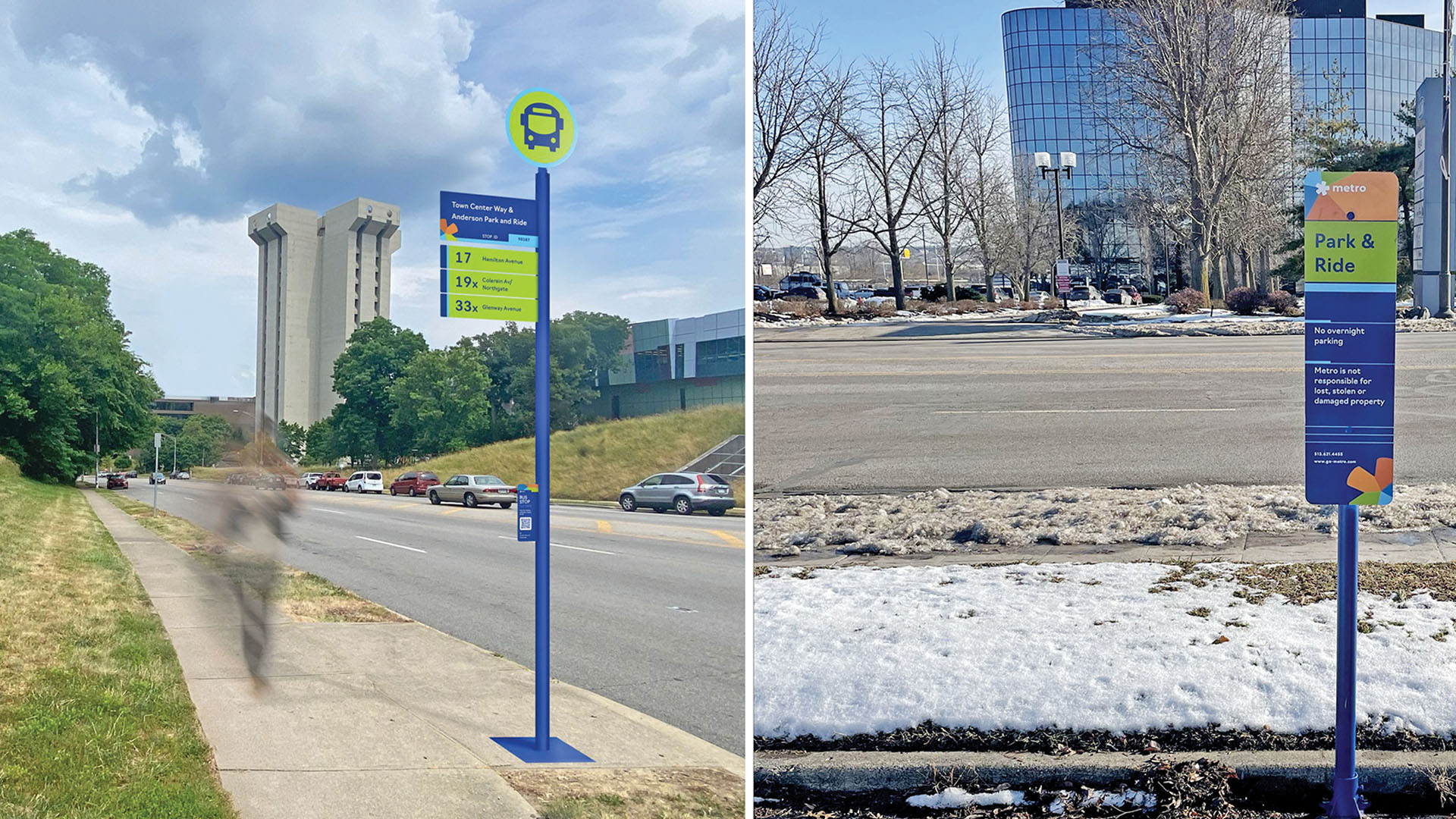
Cincinnati Metro needed to transform an inconsistent and difficult-to-read bus-stop system into a unified, accessible, and highly legible wayfinding system—one that could scale across 3,700 stops while improving information hierarchy, rider recognition, and access to real-time transit information.
Project Vision
Transform Cincinnati Metro’s bus stops from simple transit markers into clear, accessible, and recognizable places within the public realm. The project combines evidence-based typography, intuitive information hierarchy, real-time information, and a flexible modular system to help riders identify stops, understand routes, and navigate with greater confidence. Designed to scale across neighborhoods and transit contexts, the system also reimagines each stop as a small civic place—supporting safety, dignity, accessibility, neighborhood identity, and a more connected transit experience.
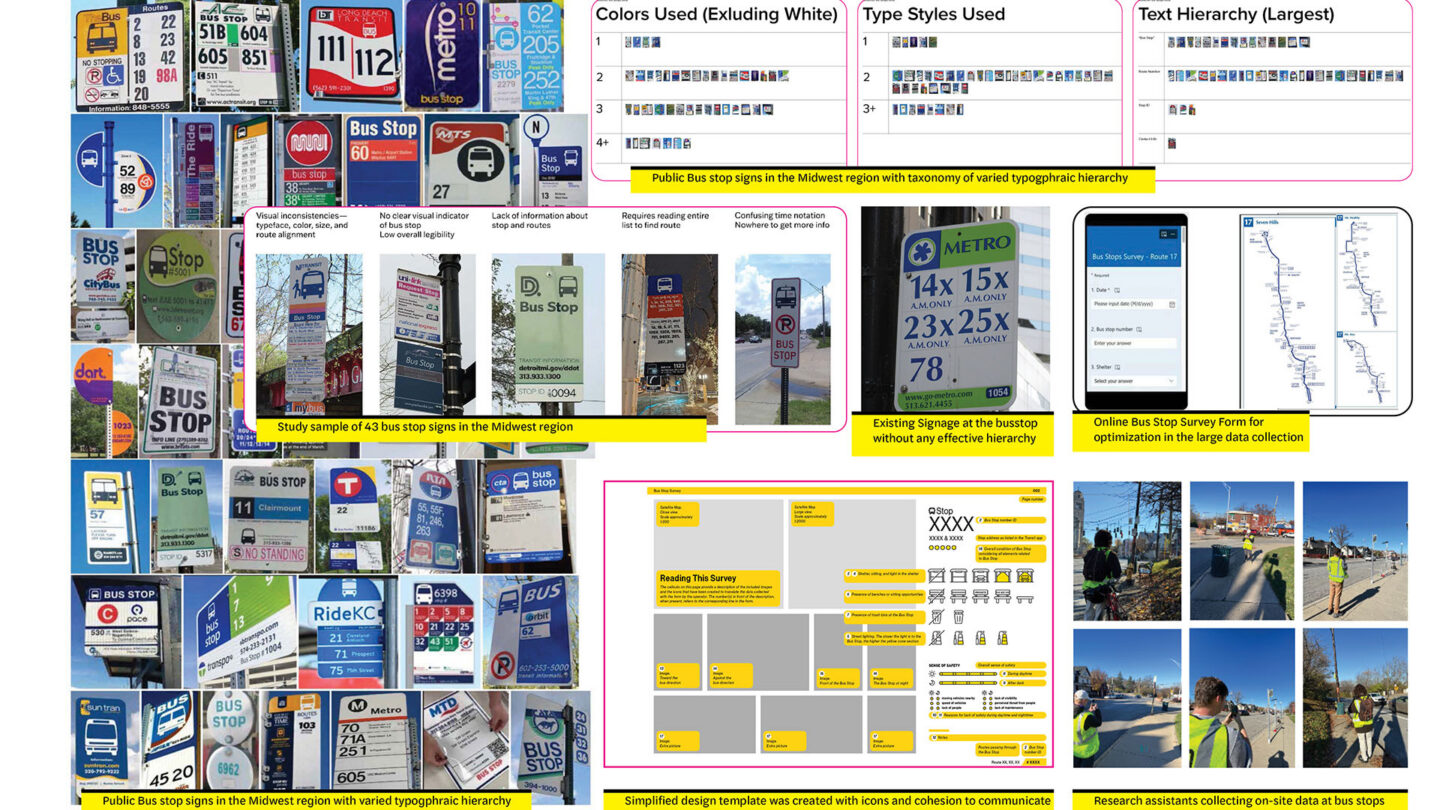
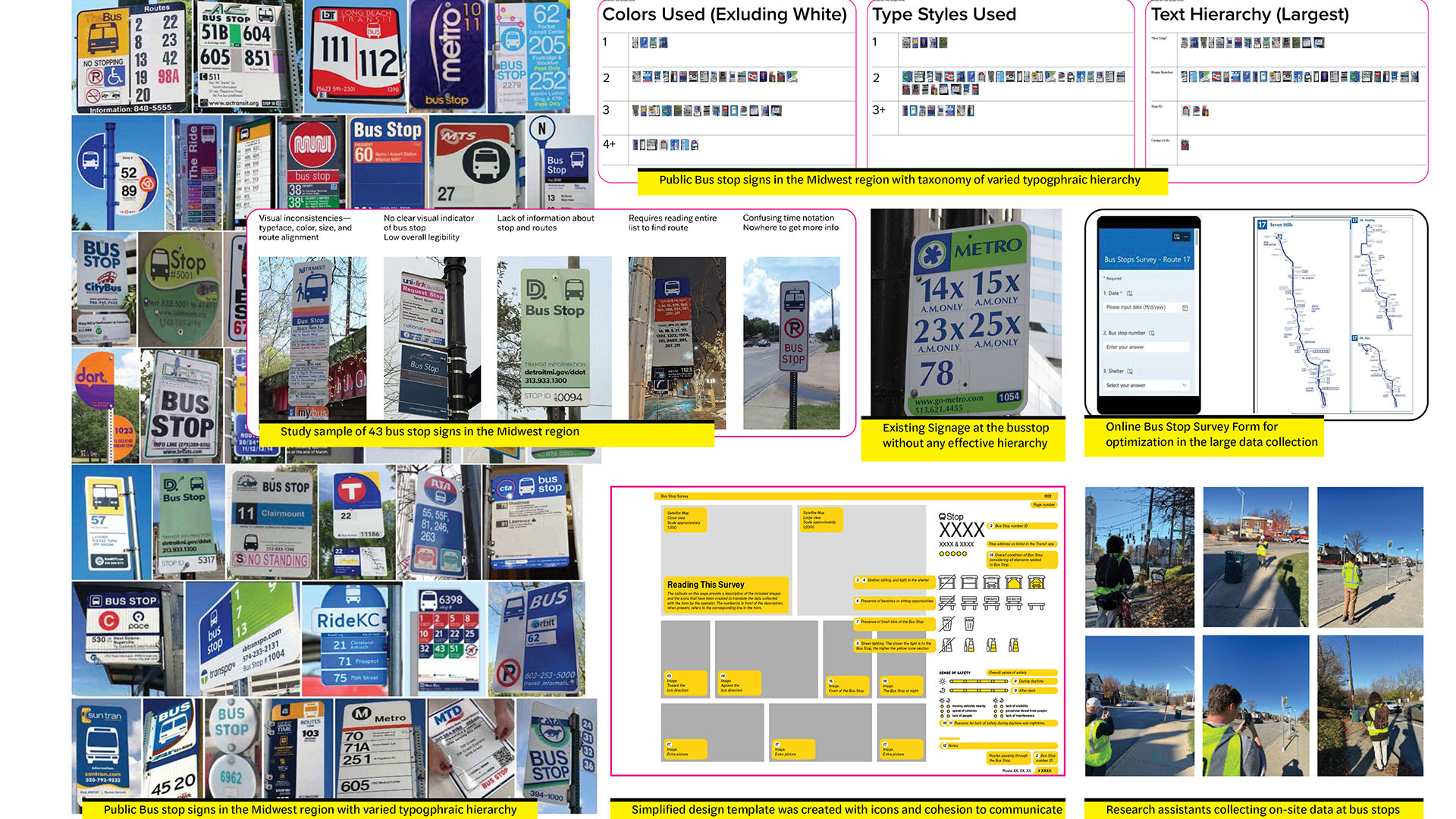
Transit depend on clear visual hierarchy—through global benchmarking and a 43-system empirical survey, our agency–academic team identified redundancies and legibility gaps, developing a modular signage system that enhances equitable navigation
SORTA
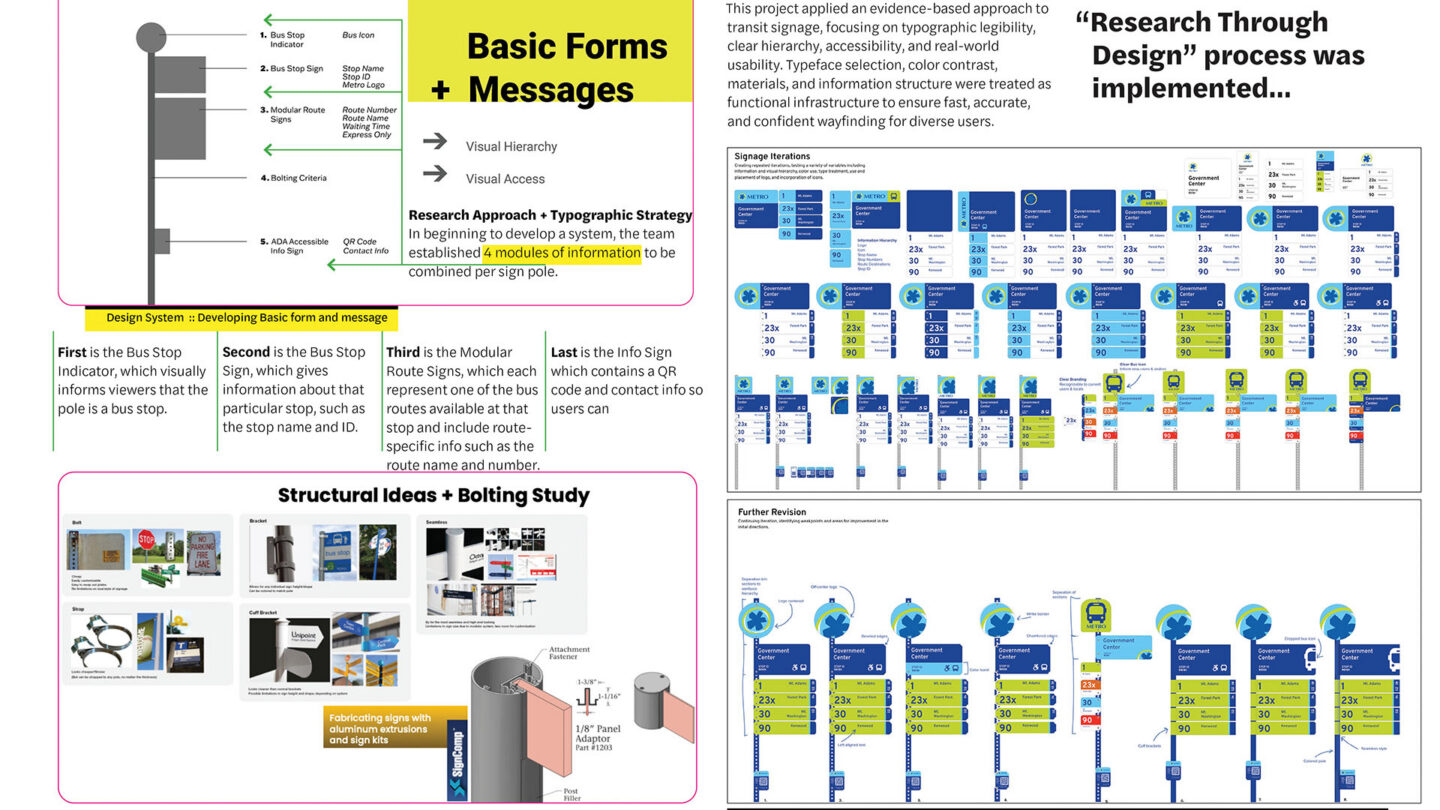
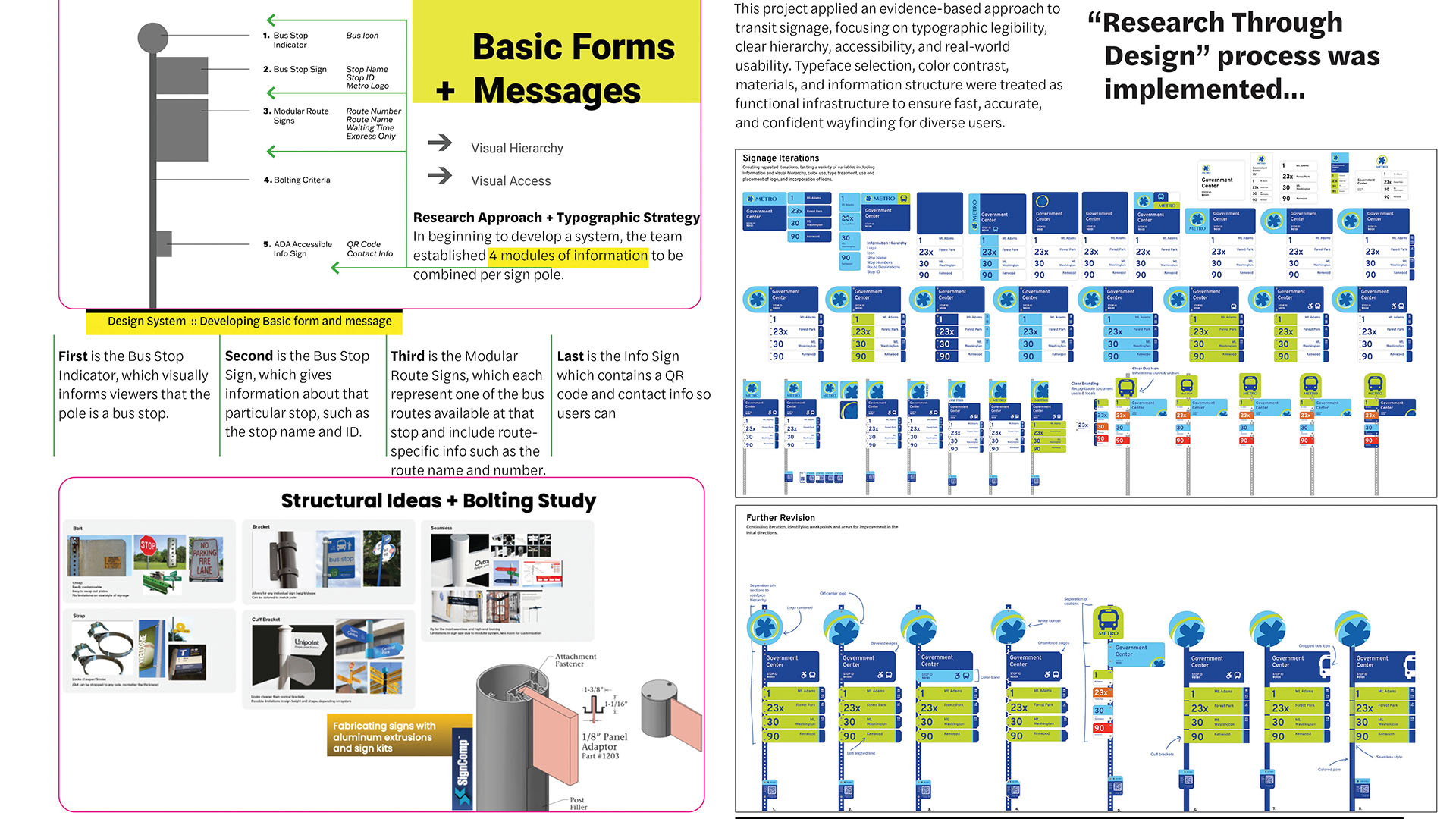
Four-part modular system: BusStop Indicator (identity), Stop Sign (name/ID), Route Panels (route-specific info), and Info Sign (QR/contact), delivering clarity, hierarchy, and scalable transit communication on a single pole.
SORTA
Design + Execution
The project was developed through a multi-year Research-through-Design process that moved systematically from observation and benchmarking to prototyping, testing, fabrication, and implementation. The team began with extensive field documentation—including audits of 220 stops along Metro’s Route 17—and analyzed 43 Midwestern transit signage systems, alongside international precedents, to identify recurring problems in visibility, information hierarchy, typography, redundancy, and accessibility. These findings established the design criteria for a system that needed to remain immediately recognizable, highly legible at distance, adaptable to different route conditions, and economical enough to scale across thousands of stops.
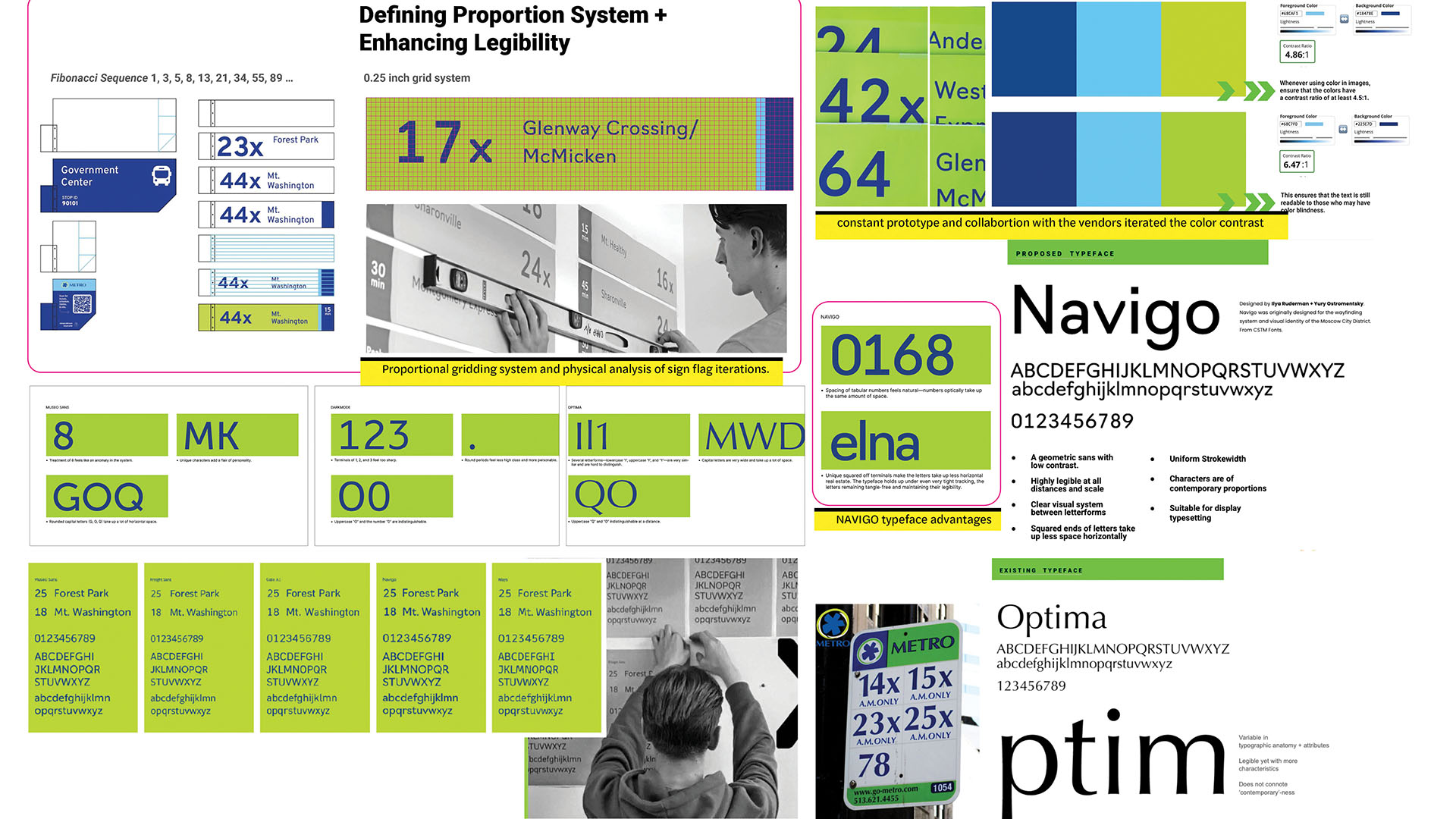
The resulting design organizes information through four coordinated modules: a highly visible bus-stop indicator; a stop-identification panel with location and stop ID; modular route panels containing route numbers and destinations; and an accessible information module incorporating QR-enabled digital information and contact details. A 0.25-inch modular grid and proportional system informed by the Fibonacci sequence established consistent dimensions, spacing, and relationships across sign variations. Structural studies explored bolting, brackets, aluminum extrusions, attachment systems, materials, durability, installation requirements, and cost in collaboration with fabricators and Metro’s technical team.
Typography became a central performance component rather than simply a graphic choice. The team evaluated the limitations of Metro’s existing Optima typeface, particularly character differentiation and readability at distance, reviewed several hundred alternatives, and narrowed the study to 17 typeface candidates based on x-height, open counters, glyph differentiation, spacing, efficiency, and visual personality. Candidates were tested at full scale and with 30 diverse users, leading to the selection of Navigo, whose open forms, consistent proportions, and distinctive numerals improved both readability and user preference. Color was similarly tested for accessibility; refinements to Metro’s established green-and-blue palette achieved a higher measured contrast ratio while retaining public familiarity with the brand.
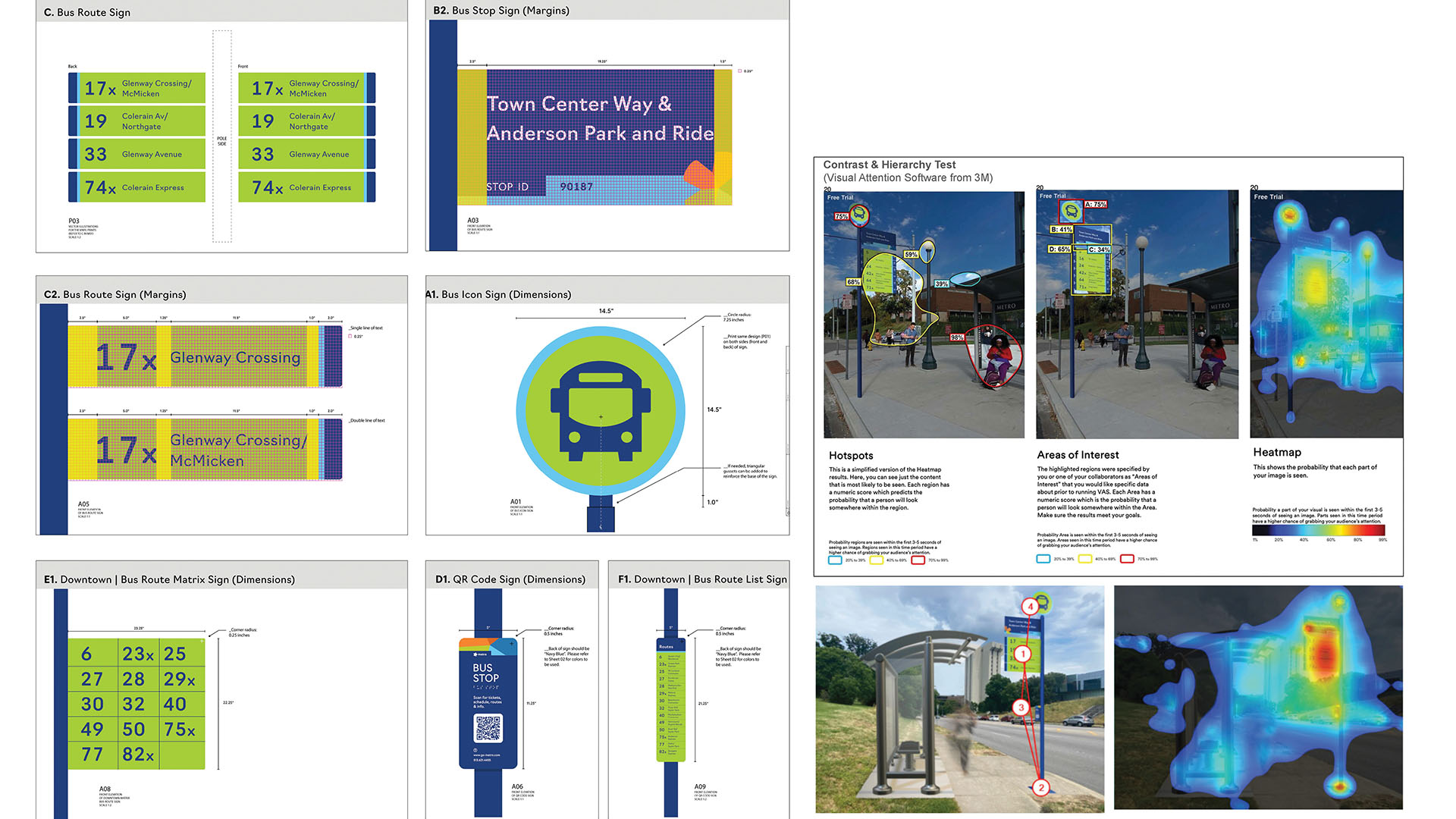
The system was repeatedly evaluated through full-scale mock-ups, physical prototypes, construction drawings, field testing, and visual-attention analysis. Eye tracking software was used to study areas of interest, gaze sequence, and hierarchy across iterations, while feedback from Metro leadership, engineers, fabricators, bus drivers, facility managers, and the STEER community advisory group informed refinements to visibility, scale, content, and usability.
The final system accommodates different route volumes—from individual modular route panels to larger matrices displaying up to 15 routes—and integrates street-location information, QR access to real-time transit information, tactile/Braille elements, and reflective identification elements for improved nighttime and long-distance visibility. The execution therefore translated evidence-based typography and user research into a build-ready, modular public infrastructure system designed for accessibility, durability, consistency, and large-scale implementation across Cincinnati Metro’s network.
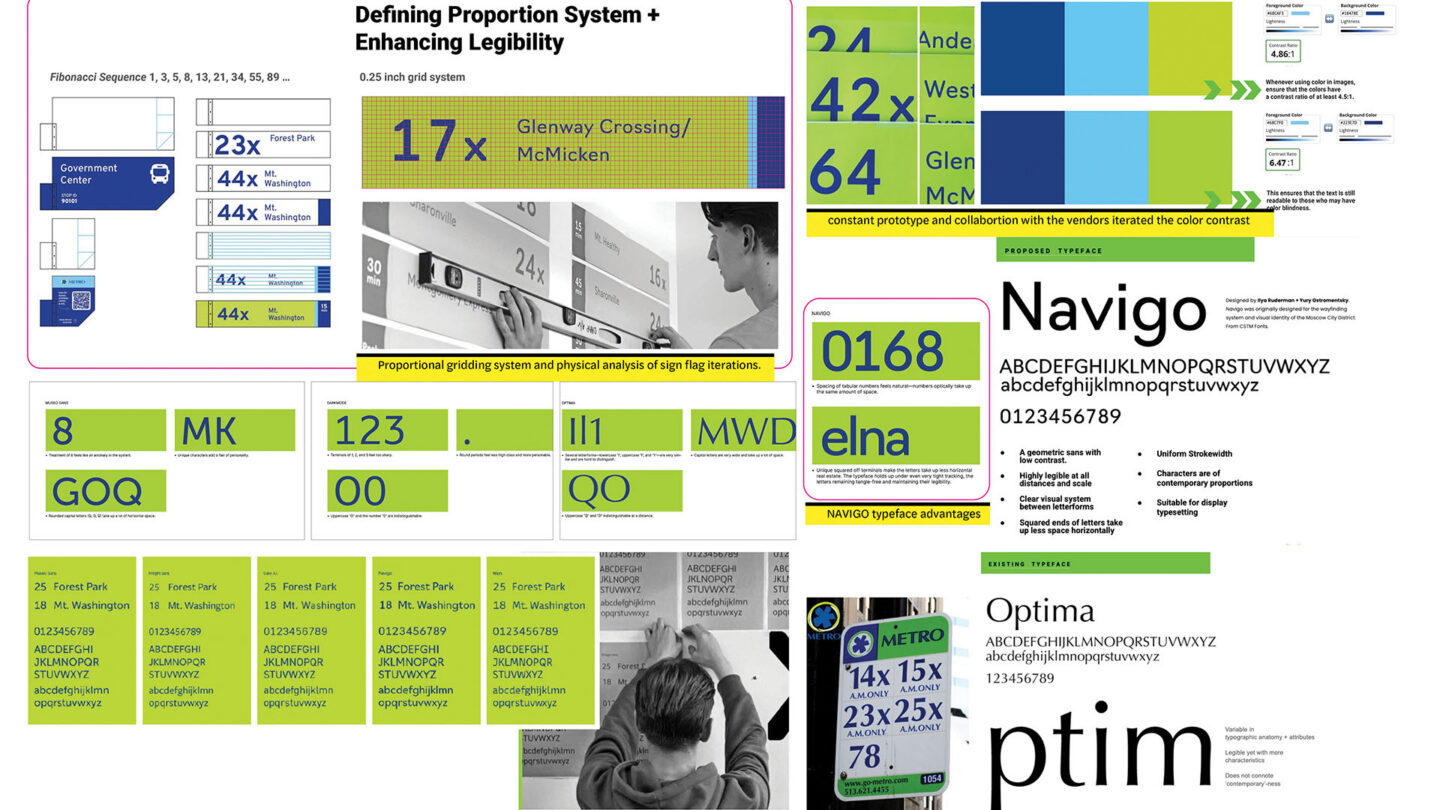
Typographic study replaced Optima with Navigo, selected from 17 candidates for its tall x-height and clarity. A Fibonacci-based modular grid structured layout, while a contrast ratio enhanced accessibility and legibility.
SORTA
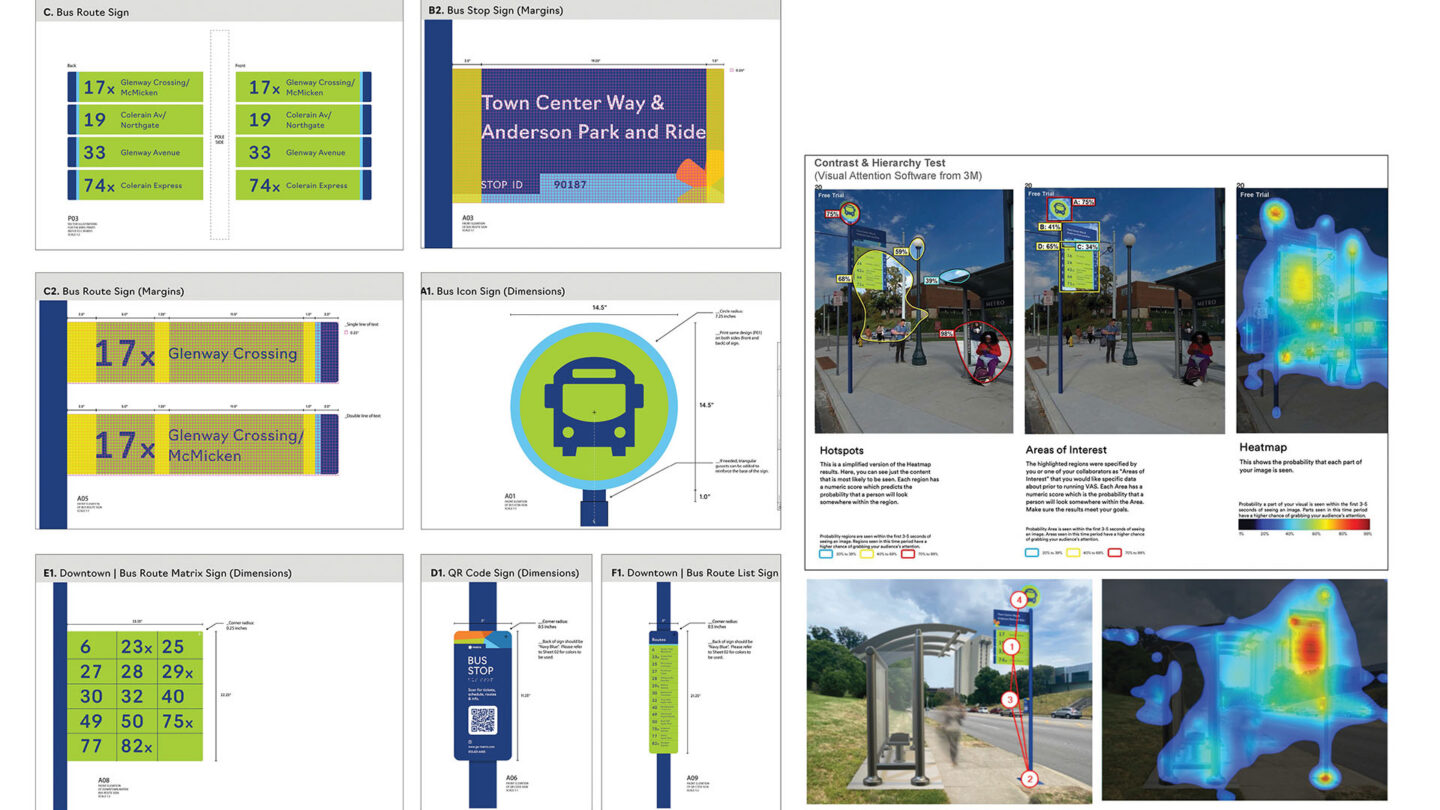
Using 3M Visual Attention Software (VAS), heatmap analysis refined hierarchy and gaze sequence, while a seamless modular sign system reduced redundancy—enhancing clarity, equity, and everyday urban experience.
SORTA
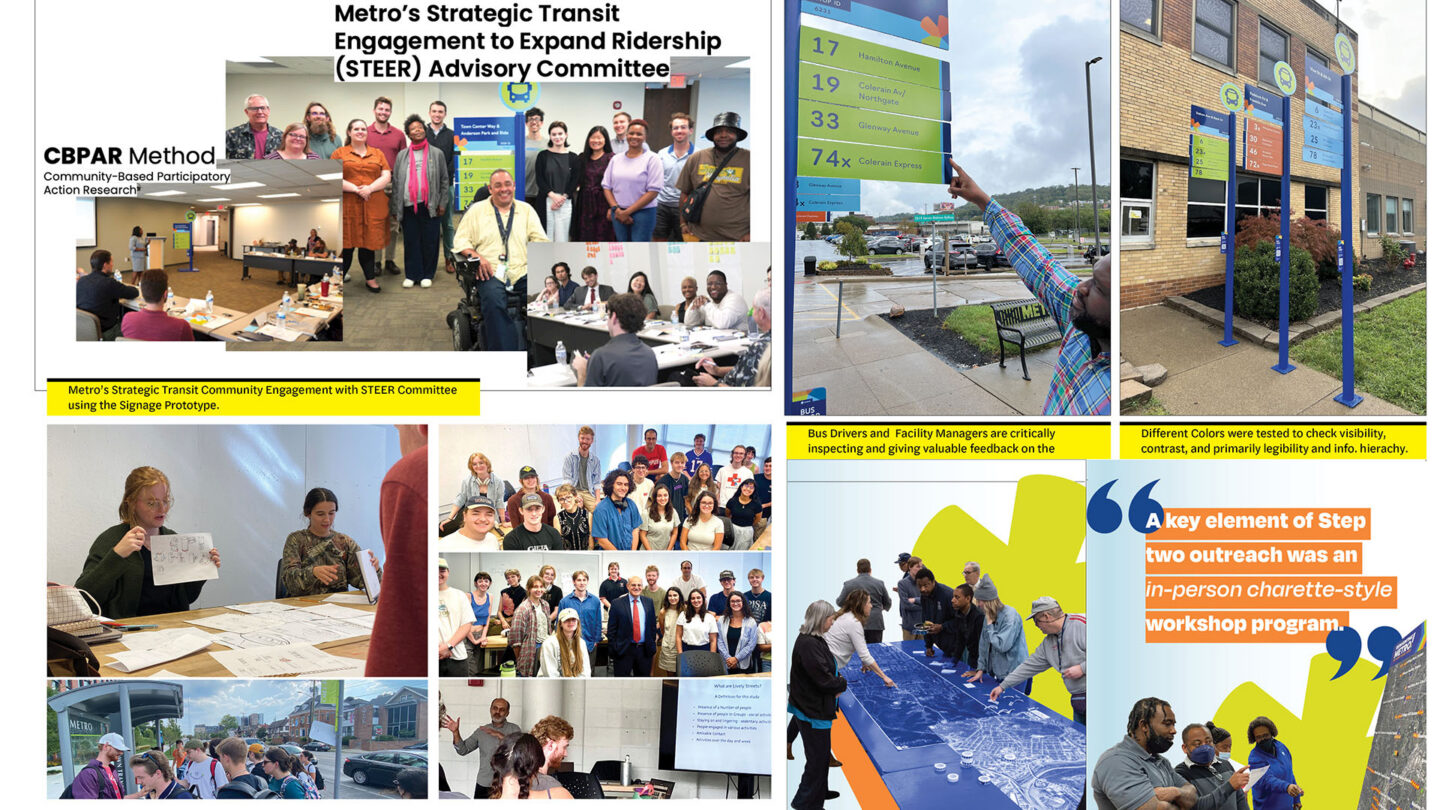
From inception, STEER Advisory Committee and CBPAR-guided workshops embedded community voices in the process, shaping policy, design, and service decisions through sustained dialogue, public meetings, and neighborhood outreach.
SORTA
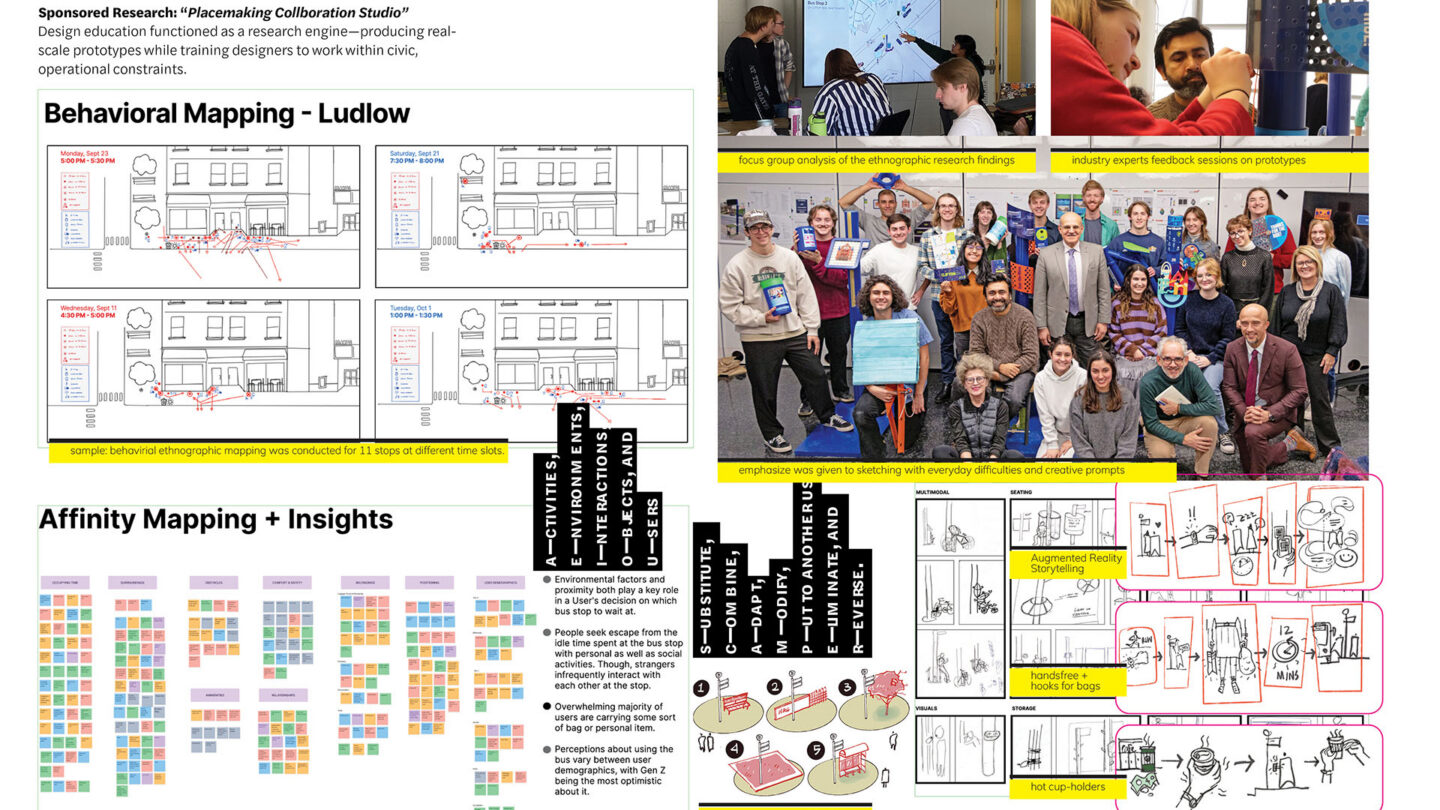
Interdisciplinary Studio unite designers and transit professional, using ethnographic research on site and iterative prototyping to translate behavioral insights into scale, ADA-compliant signage system, bridging education, research and civic implementation.
SORTA
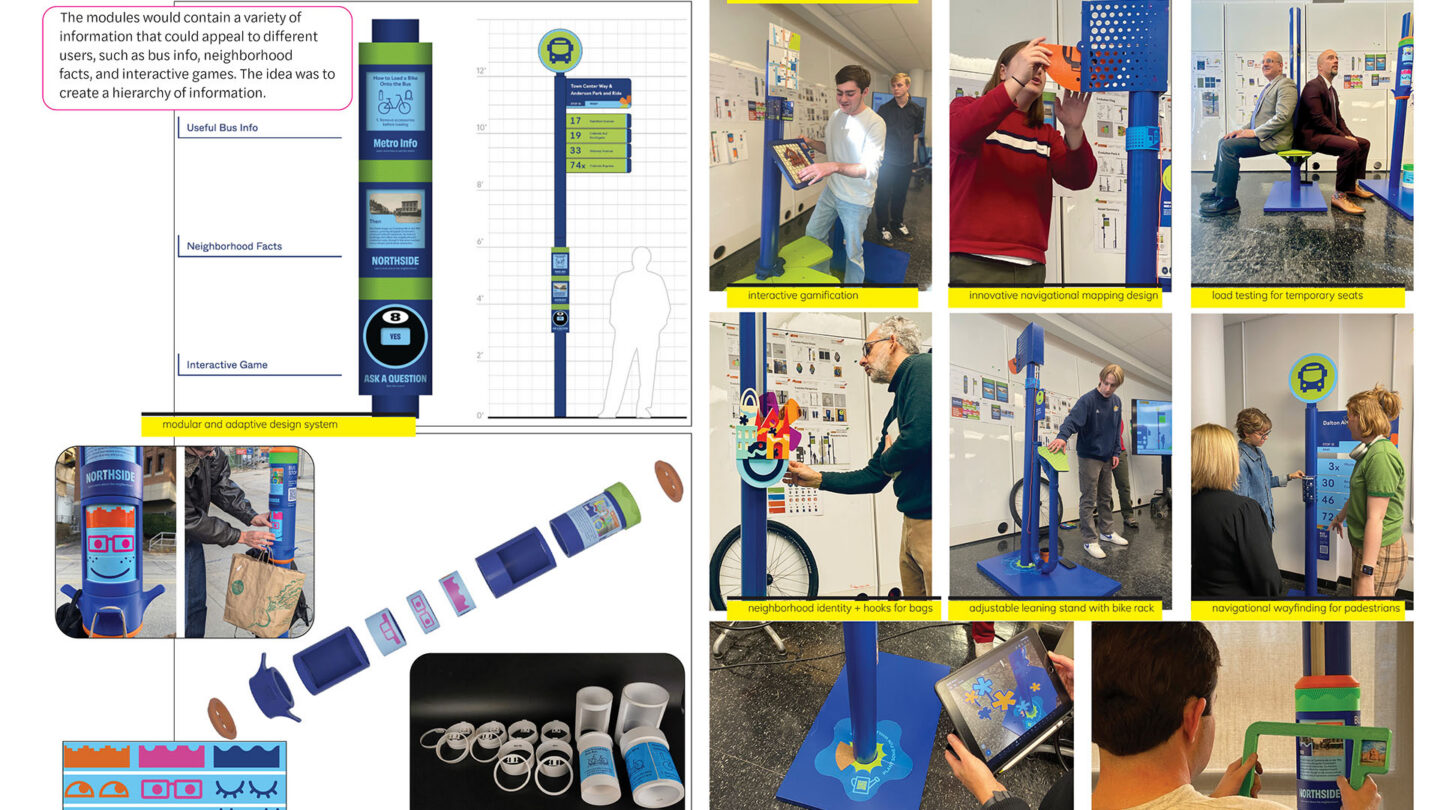
A repeatable modular pole adapts to diverse contexts, generating 37 design options evaluating across functional, personal, emotional and social levels—balancing system coherence with local insights + identity with lived transit experience.
SORTA
Project Details
Such a thorough and thoughtful approach to signage that puts the needs of the community and users first in an innovative way. The modular, systems-thinking model with multiple layers of feedback puts this strategy framework into a uniquely effective solution.
We felt that this was research-led and community-accountable, aesthetically rigorous and technically specified, conceptually ambitious and demonstrably implemented. The typography research is incredibly thorough and impressive. The student and intergovernmental collaboration partnership is fantastic – congratulations.
Design Team
Muhammad Nafisur Rahman, UC DAAP School of Design (project design lead and wayfinding research direction)
Micah Shannon (designer and research assistant)
Anh Hoang (designer and research assistant)
Khaled Shammout, SORTA (client strategy and transit planning)
Steve Anderson, SORTA (transit development and implementation)
Danilo Palazzo, UC DAAP School of Planning (project management)
Vikas Mehta, UC DAAP School of Planning (project management)
Collaborators
A&AGraphics
Photo Credits
Muhammad Rahman, DAAP, SORTA (photography)
Open Date
April 2026
More in Strategy/Research/Planning
All Projects-
Read more Masar Destination: Shaping Makkah’s Future through Connectivity and Culture
Masar Destination: Shaping Makkah’s Future through Connectivity and Culture
-
Read more Air Play

Air Play
Georgia Tech School of Industrial Design (Student Project)