Masar Destination: Shaping Makkah’s Future through Connectivity and Culture
In a visionary effort to enhance the quality of life for Makkah’s residents and visitors, Umm Al-Qura introduced Masar Destination — a groundbreaking urban development that integrates diverse transportation options with vibrant mixed-use spaces, fostering community and connection. This transformative project aims to enrich the visitor experience whilst safeguarding the cultural heritage and spiritual sanctity of Makkah.
Agency
Practice Area
Client
Umm Al-Qura
Industry
The Challenge
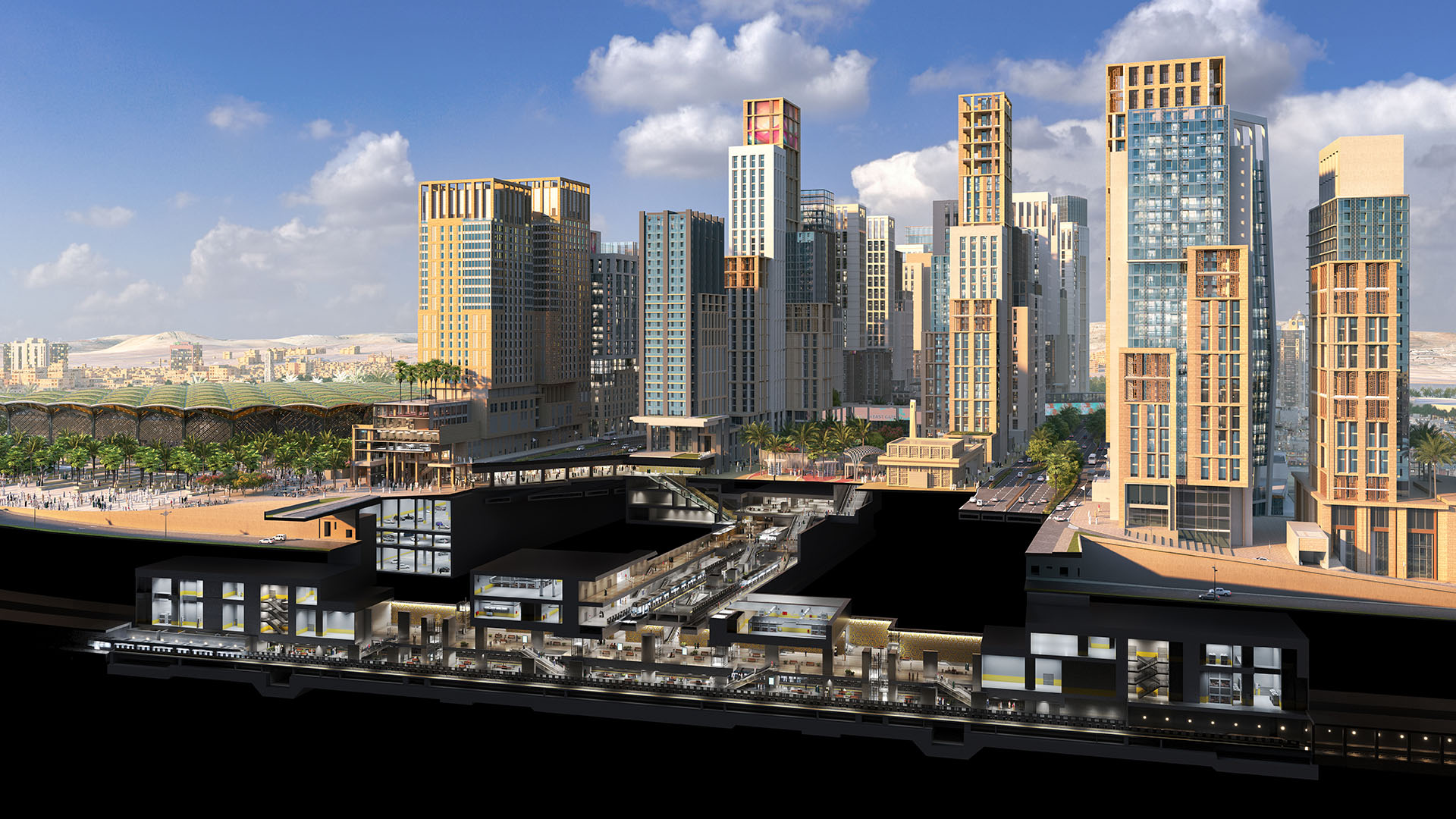
The site includes two major transportation hubs, designed to accommodate city buses, taxis, private vehicle drop-off zones, the Makkah Metro, and a direct link to the Saudi High-Speed Railway. It also features 158,000 square metres of pedestrian walkways and open spaces, complemented by numerous pedestrian underpasses for safe separation from vehicular traffic.
The project began with a comprehensive feasibility study focused on both existing and future infrastructure needs. This included on-site assessments and extensive discussions with construction teams, contractors, and key stakeholders, ensuring a clear understanding of the project’s complexity.
The study’s findings were benchmarked against global masterplans facing similar traffic challenges. Recognising the vast scale of Masar Destination was essential in creating a functional, user-friendly strategy capable of supporting 160,000 residents and 10 million visitors annually.
Project Vision
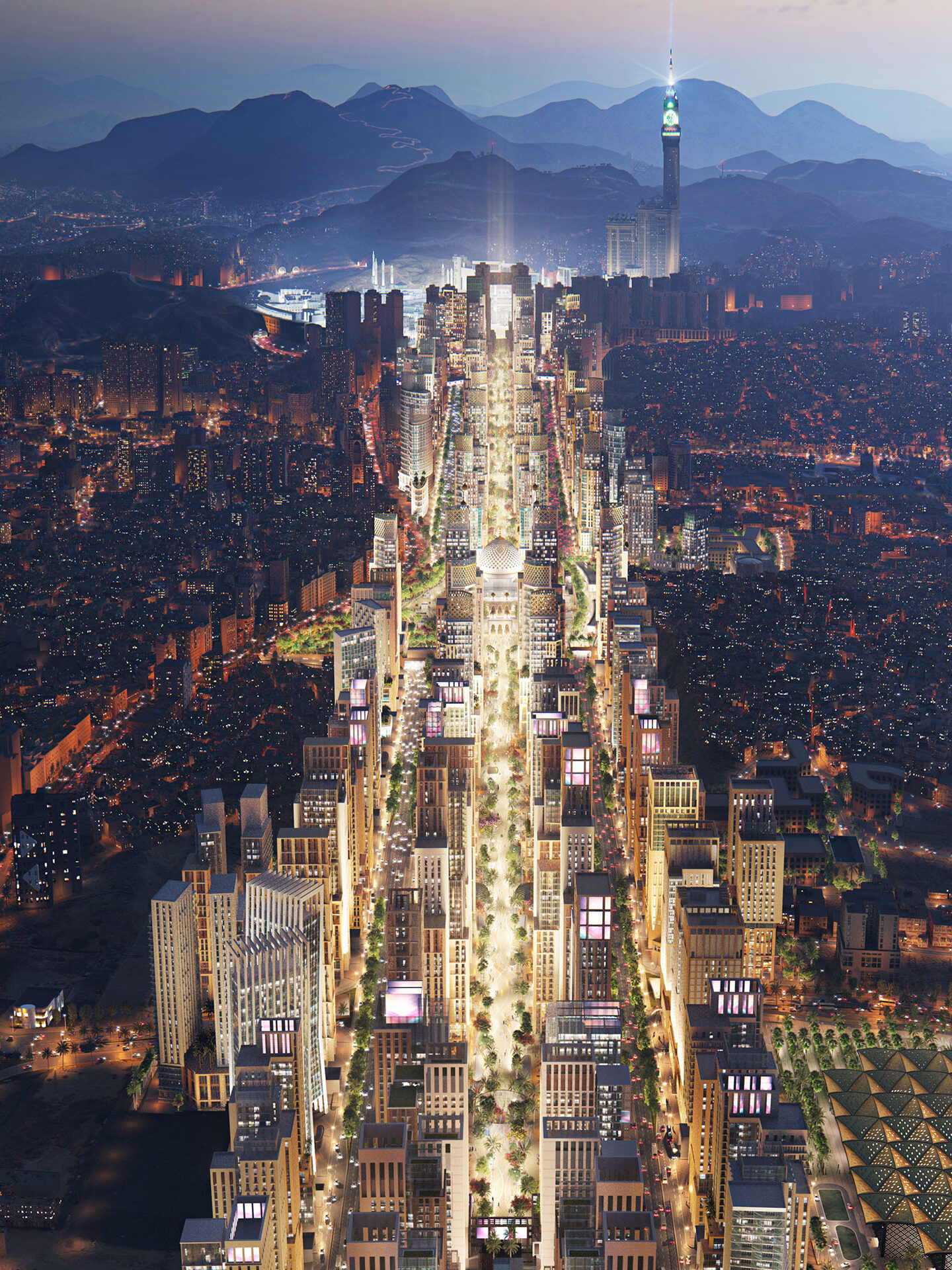
Masar Destination, located in Makkah, Kingdom of Saudi Arabia, is being developed as a 1,200,000 square metre destination, spread across a 3.5-kilometre linear stretch, that is poised to become a global landmark. Due to its size, the vast number of visitors, varying topography, multi-modal transportation systems, and the impact of weather on pedestrian movement, simplifying navigation within the development became a critical priority.
The project seeks to preserve Makkah’s rich spiritual heritage whilst providing modern solutions to accommodate the city’s growing population and the millions of visitors it welcomes annually. The challenge was to design a system that caters to the everyday needs of residents and the unique requirements of pilgrims.
Masar Destination
Umm Al-Qura
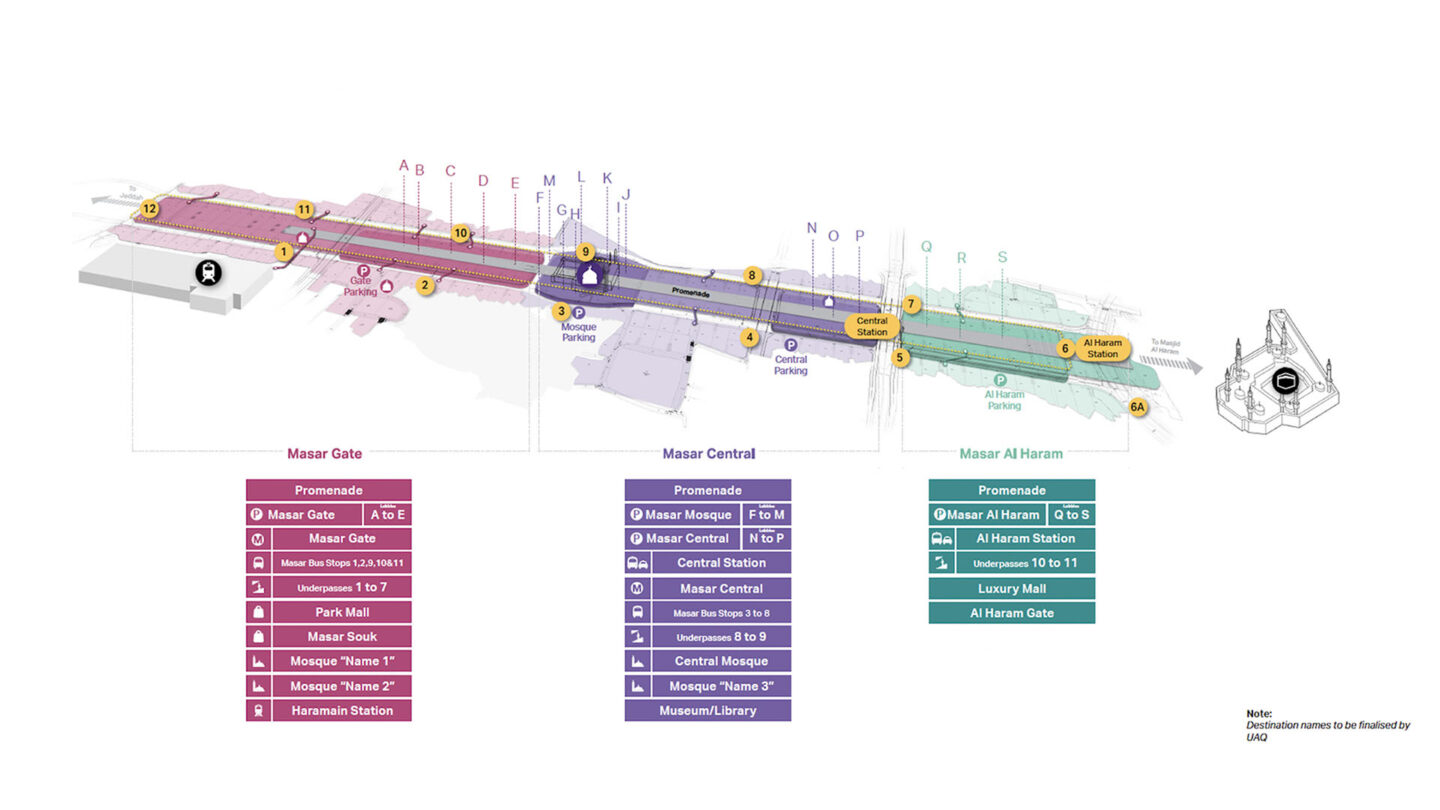
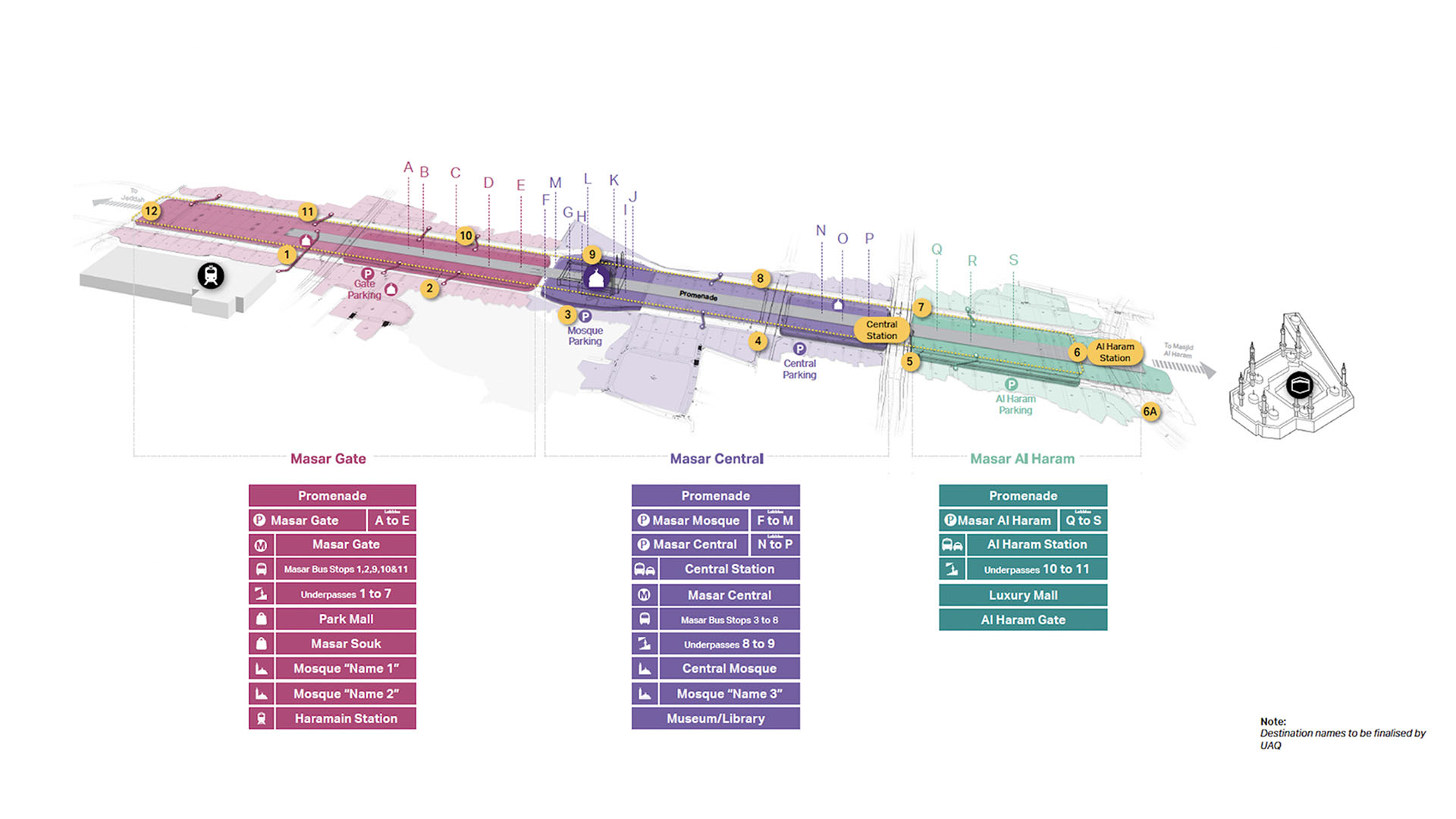
Developed wayfinding strategy that categorises different zones, key locations, and modes of transport within the development.
Endpoint
Design + Execution
The wayfinding strategy for Masar Destination was developed with two primary objectives: simplifying navigation across the site and ensuring alignment with Makkah’s cultural and spiritual significance. The strategy focused on creating a seamless experience for a diverse, international audience whilst addressing the unique needs of those visiting for religious purposes.
A key element of the strategy involved dividing the site into three distinct zones based on the offerings within each area. Each zone includes dedicated parking areas and multiple parking lobbies, allowing visitors to easily locate their vehicle by remembering the lobby and level number, ensuring an intuitive, stress-free experience.
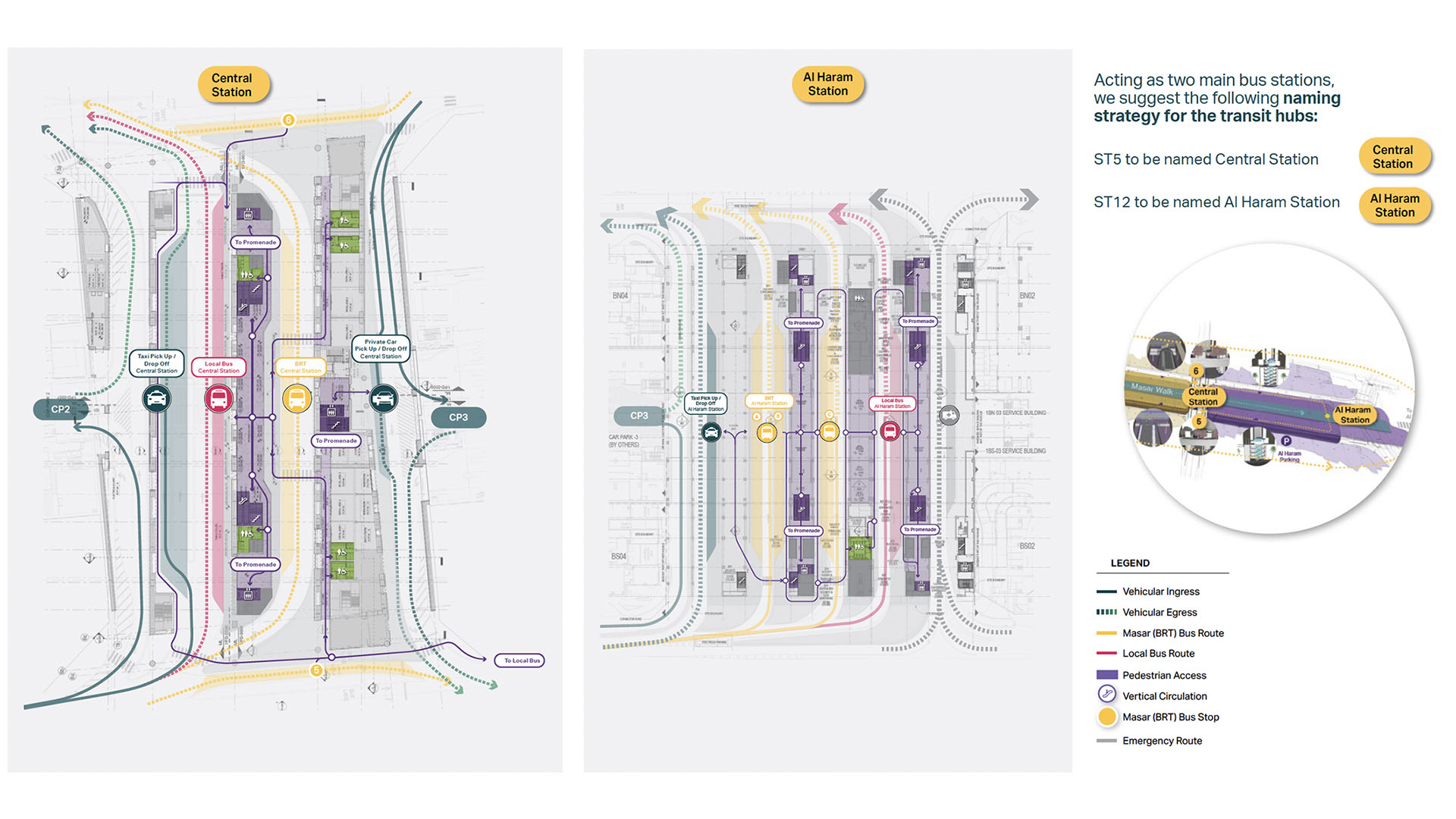
The wayfinding strategy integrates the various transportation options, considering user demographics, peak visitation times, and key destinations that are likely to experience high traffic. Clear, intuitive connections between transport modes were prioritised, with real-time updates to be provided through digital displays. This holistic approach is designed to alleviate congestion during peak hours and pilgrimage periods by offering clear directions and ensuring smooth movement within the site.
In collaboration with the Client, the design was refined with a strategic naming and zoning plan. Bold colours highlight key destinations, especially ones like the route to the Holy Mosque, making them easily identifiable for visitors from diverse linguistic and cultural backgrounds. Universally recognised icons, intuitive signage, typography and alternate routes were incorporated to provide safe and efficient navigation for all visitors.
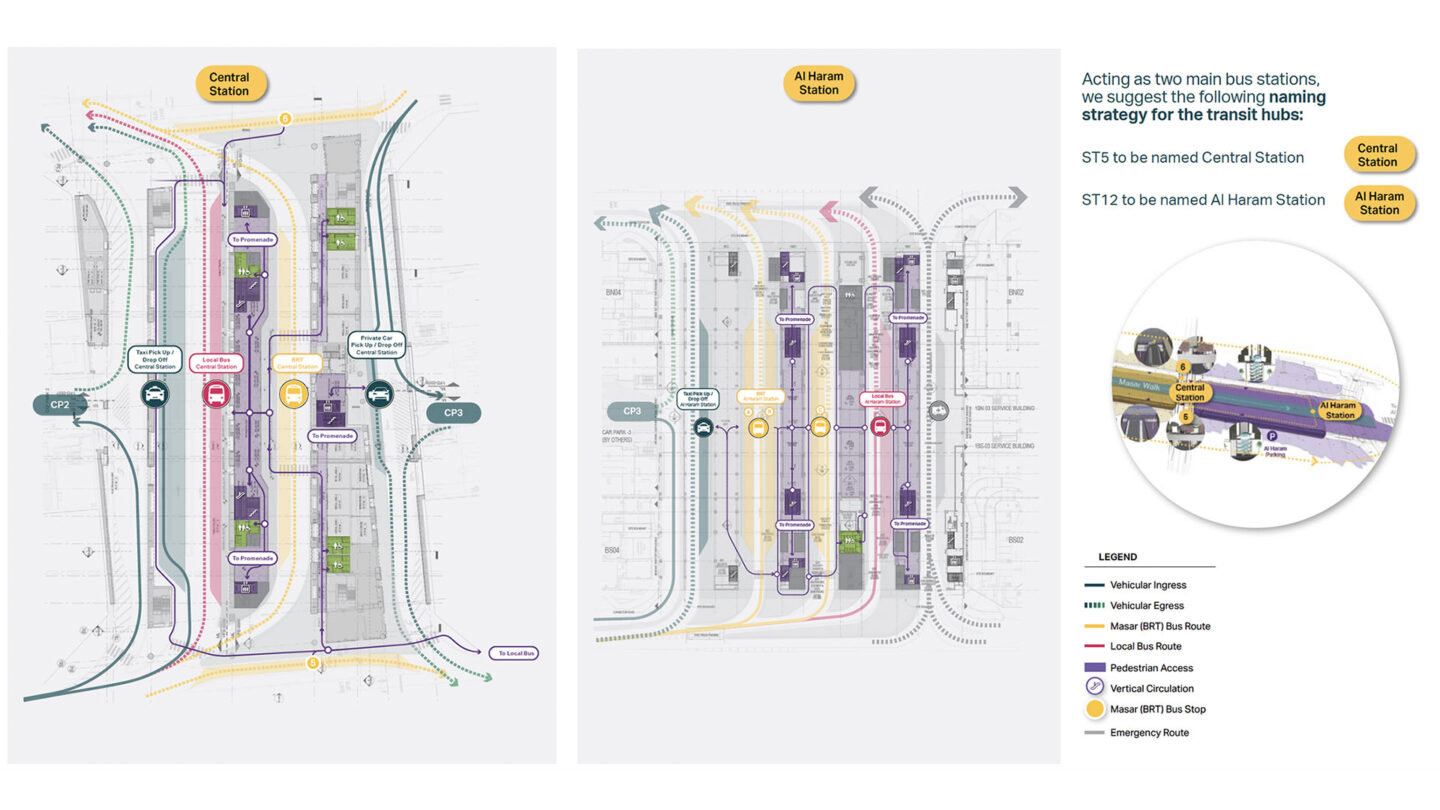
A detailed view of the developed wayfinding strategy accounting for the numerous transit circulations.
Endpoint
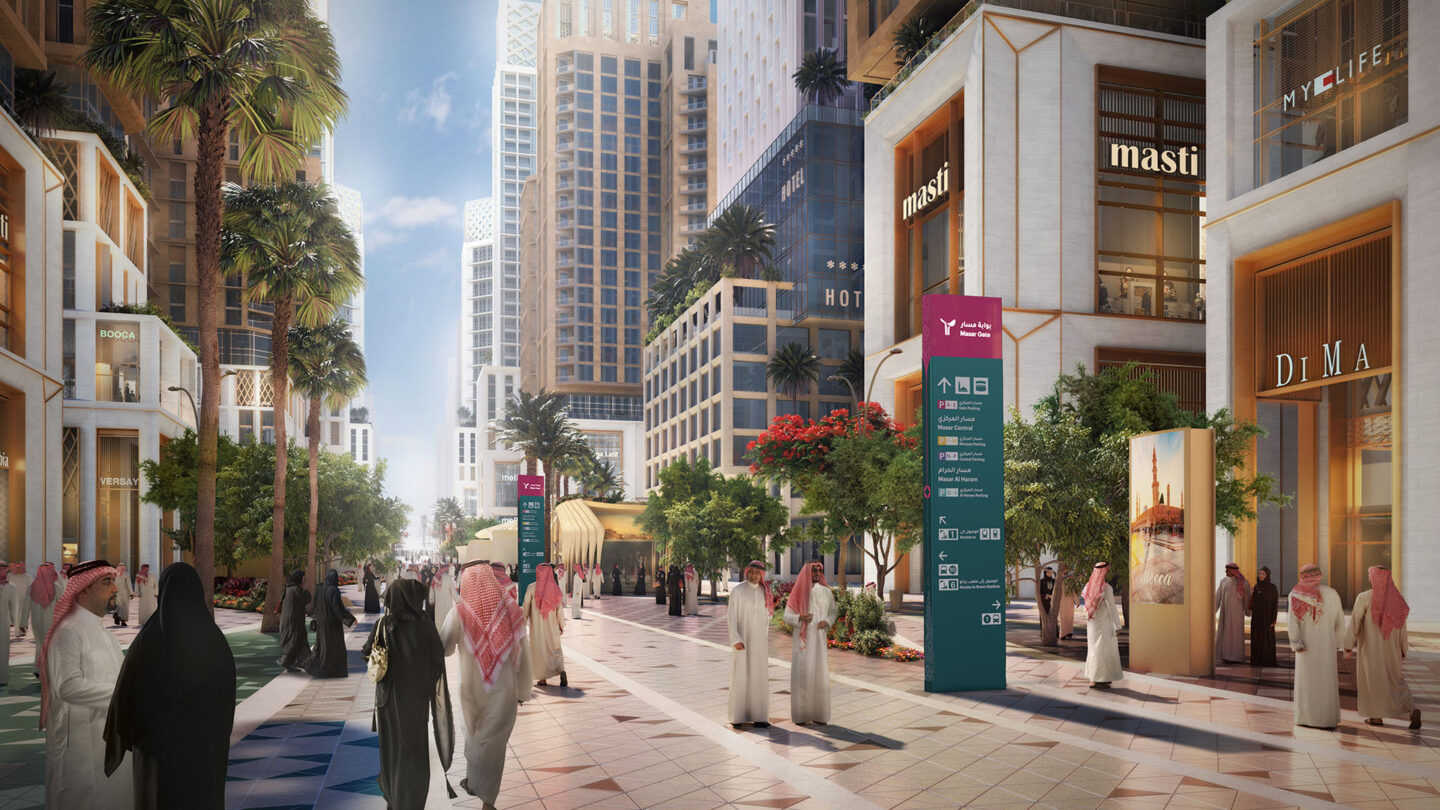
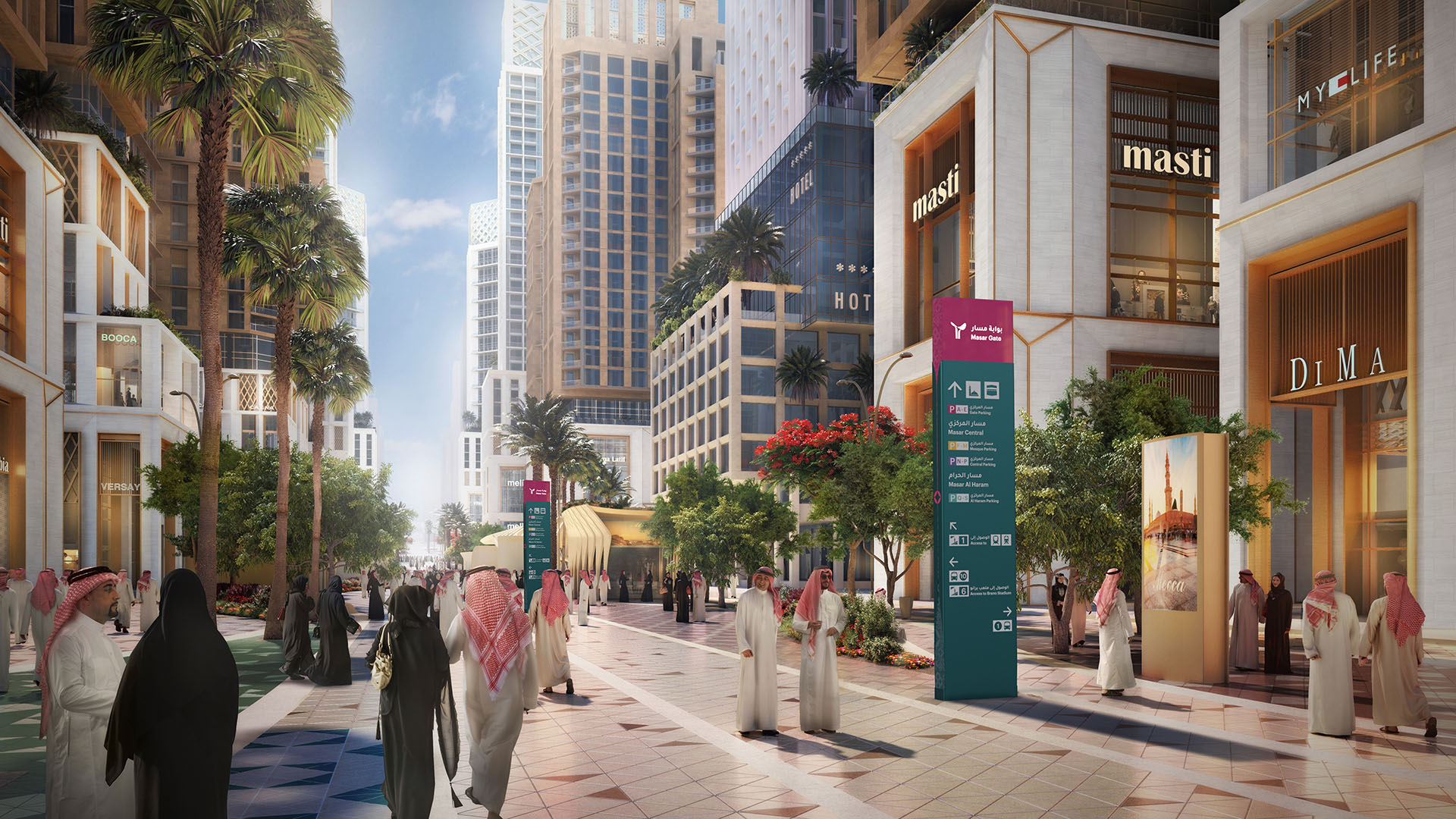
Large-scale pedestrian totem sign featured throughout promenade.
Umm Al-Qura / Endpoint
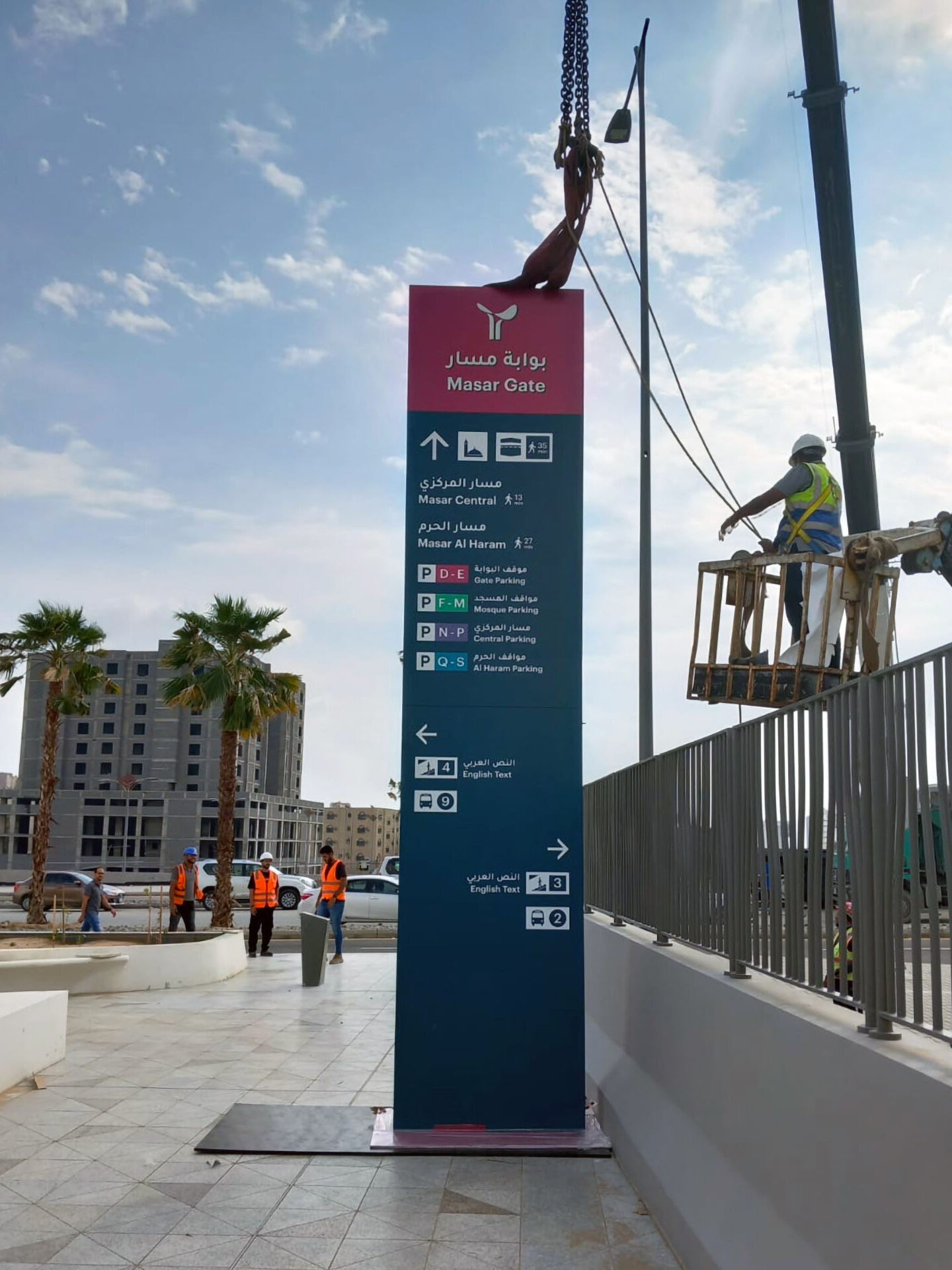
5-metre mock-up pedestrian totem sign being tested on-site.
Umm Al-Qura
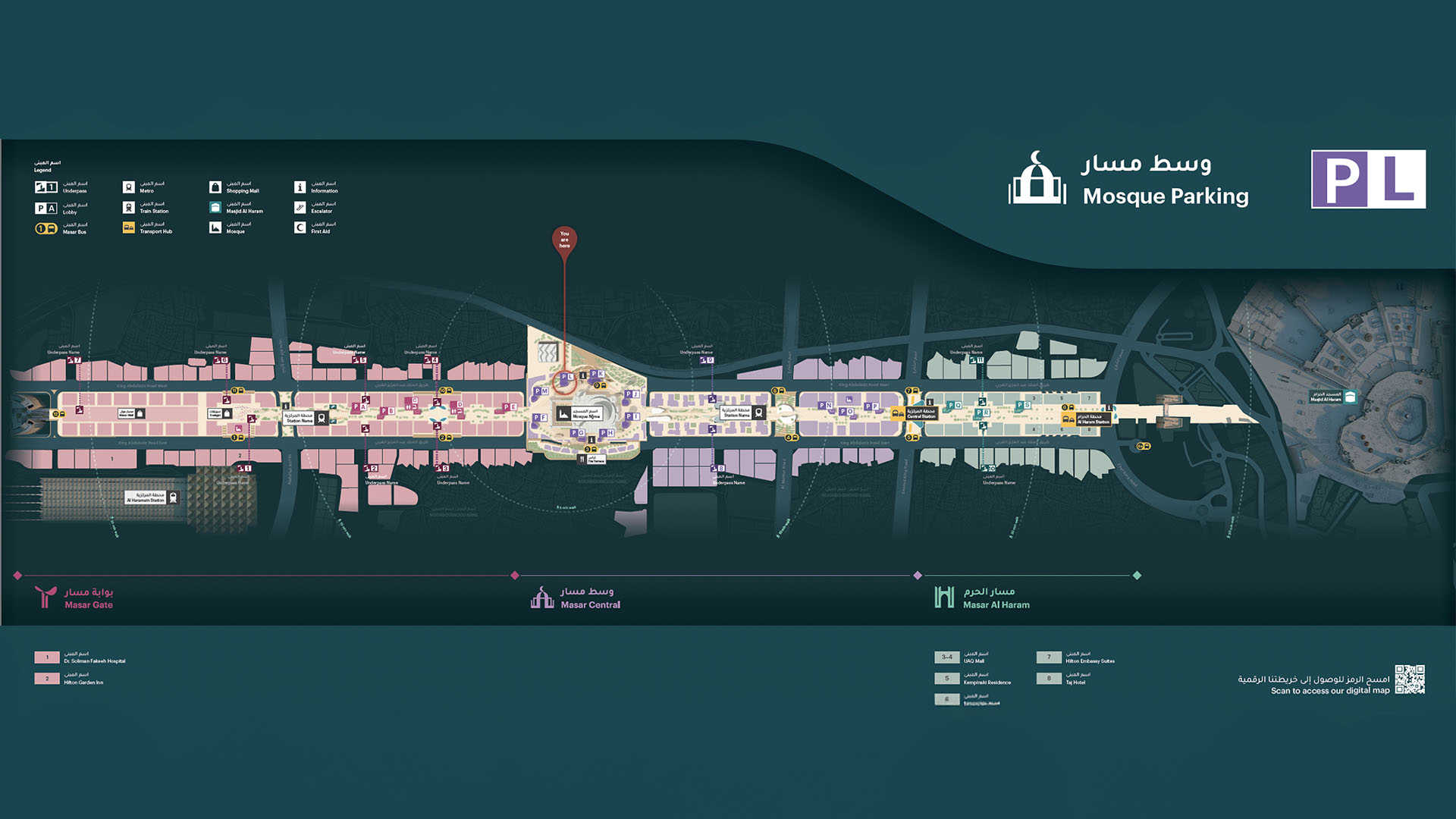
A prominent feature of the design is a 5-metre pedestrian totem sign, which will be placed throughout the promenade. A mock-up of this sign is currently being tested on-site to ensure it meets the project’s requirements. In addition, a 2.5-metre mock-up model of the pedestrian wayfinding map was created, with every detail carefully considered to meet visitors’ needs.
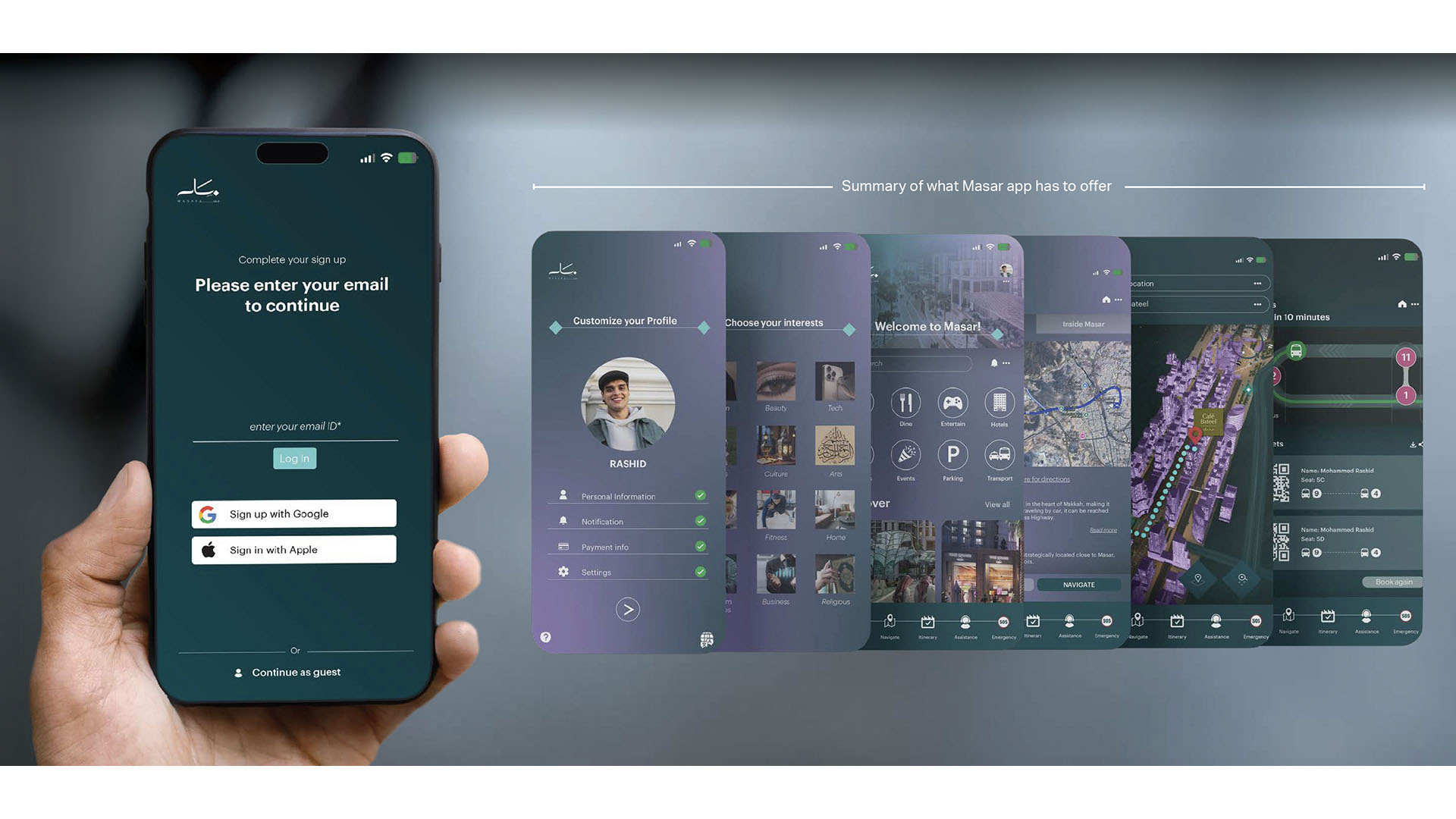
To further elevate the visitor experience, a smart digital wayfinding solution was introduced. This dynamic platform integrates with the physical wayfinding system, allowing visitors an interactive way to explore the development’s offerings. The digital system provides real-time updates, ensuring users stay informed throughout their journey.
The team is also developing a unified digital experience that will integrate with mobile applications, interactive directories, and the website. This holistic framework will provide an engaging, tailored digital experience that enhance the physical wayfinding system.
With phased construction set to complete by 2038 and an initial opening in 2025, the team developed solutions that address every stage of the project, offering tailored strategies at each phase to accommodate existing infrastructure and evolving user needs.
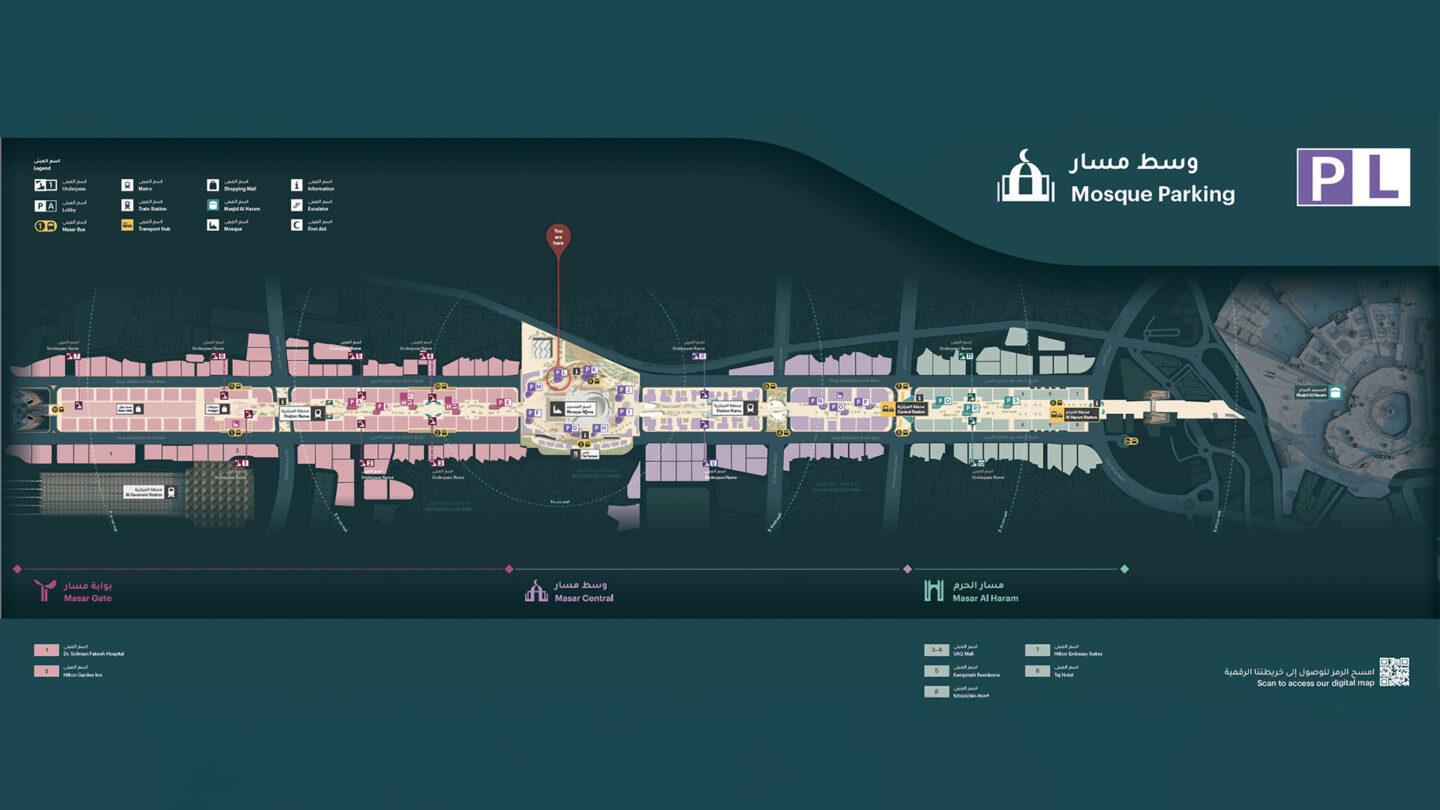
2.5-metre mock-up model of the pedestrian wayfinding map.
Endpoint
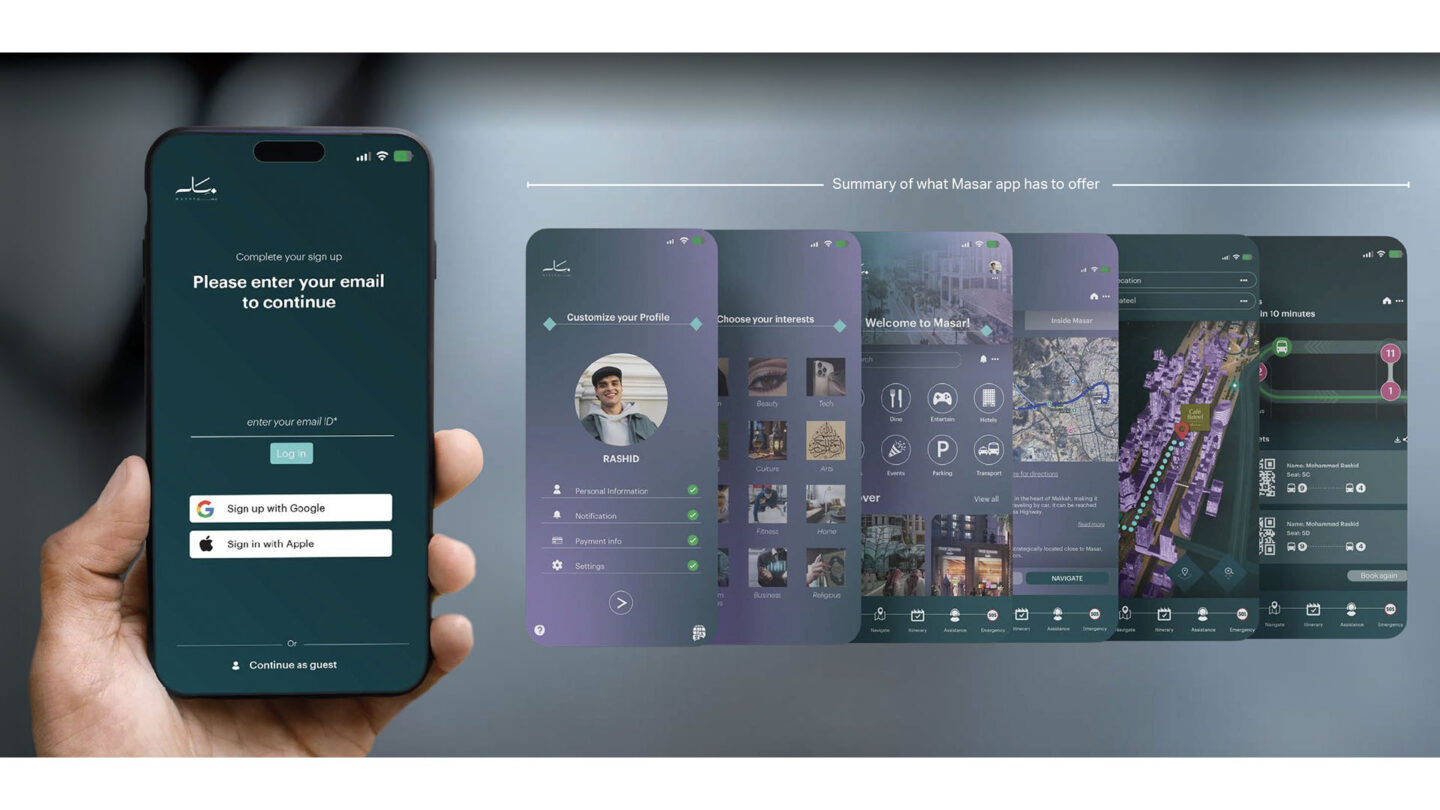
Smart digital experience being developed for Masar Destination.
Endpoint
Project Details
Design Team
Fariz Ahmad (project director)
Simon Wilks (project manager)
Elisa Grossetete (wayfinding strategy and creative design associate director)
Sarah Arafat (wayfinding strategist and creative designer)
Haifa Rafeeq (wayfinding strategist and creative designer)
Collaborators
OneWorks (landscape architecture)
Saudi Signs (physical fabrication)
Photo Credits
Endpoint
Open Date
September 2025