Outsized Impact: The Design Philosophy of Ingūna Elere and Holgers Elers
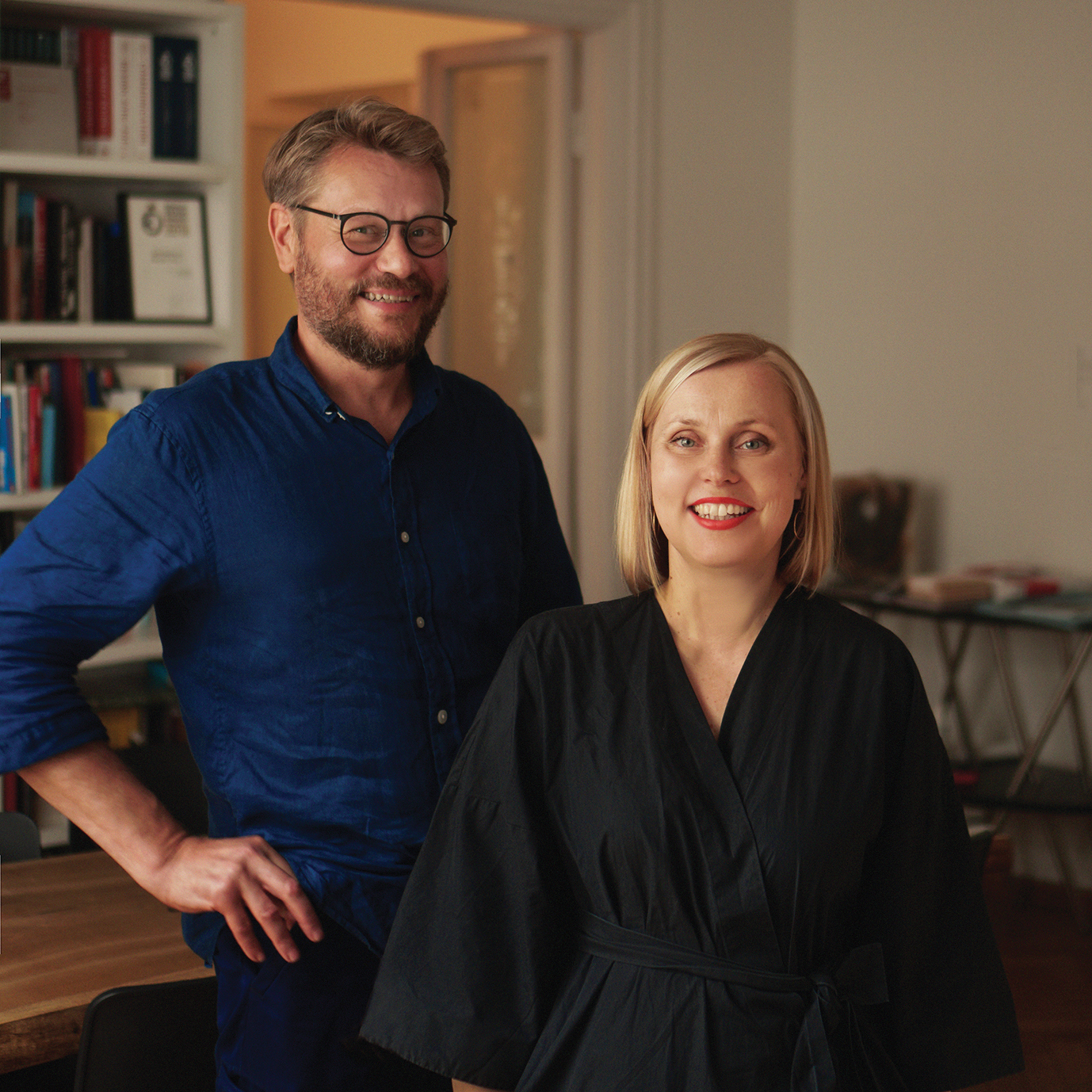
Ingūna Elere, FSEGD and Holgers Elers, FSEGD of Design Studio H2E have built one of experiential design’s most awarded and emotionally resonant practices from Latvia, a country rarely recognized as a global design capital. In this newly released 2025 SEGD Fellows presentation, the duo reflects on collaboration, memory, and the philosophy behind their deeply human-centered work.
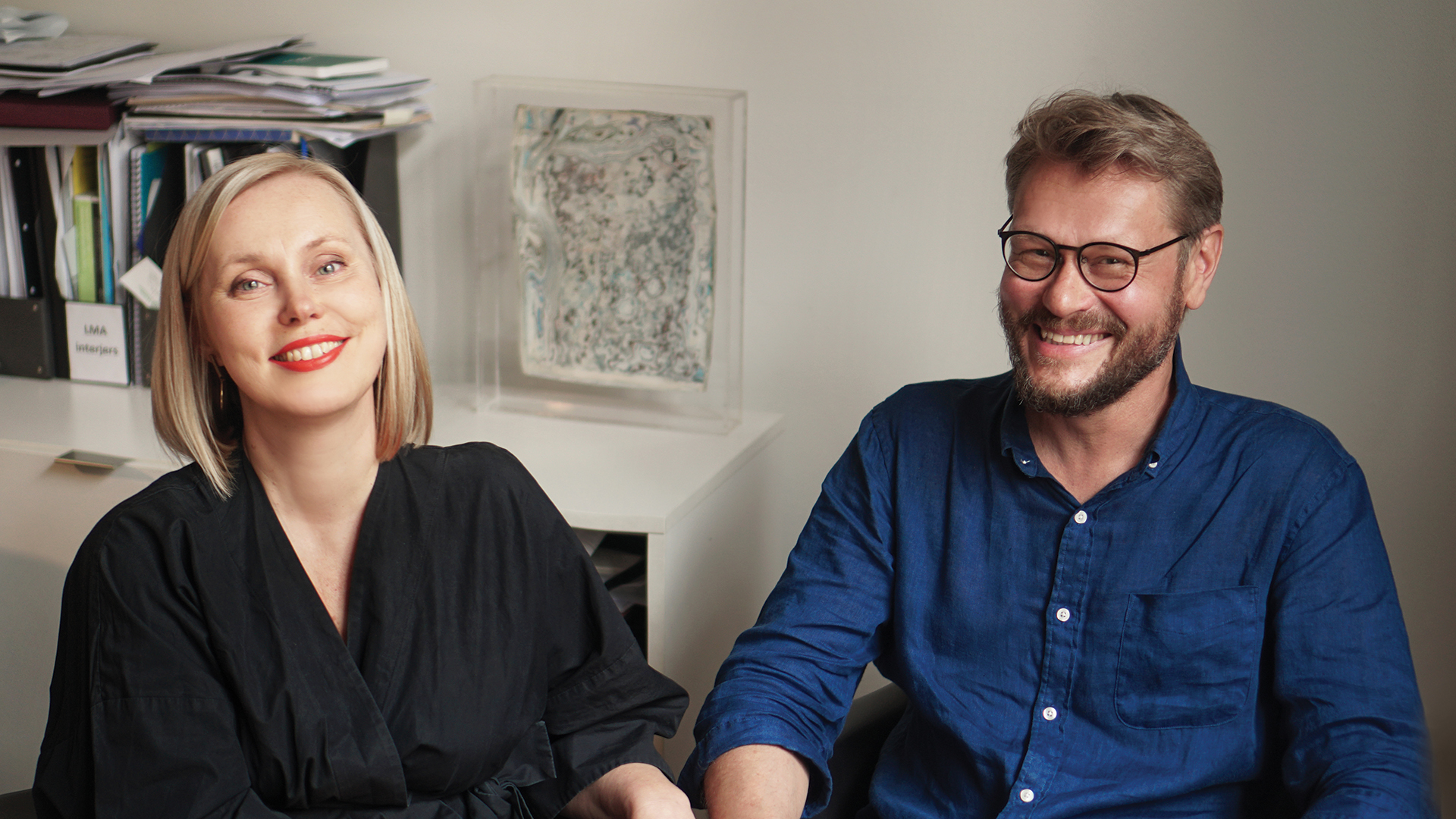
Ingūna Elere, FSEGD, and Holgers Elers, FSEGD, come from a country smaller than many American states. A country of 1.8 million people, dense forests, long winters, layered histories, and a design culture not often recognized as a global design capital. And yet, from that small Baltic nation, the co-founders of Design Studio H2E have quietly built one of the most awarded and emotionally resonant bodies of work in SEGD’s history.
Named 2025 SEGD Fellows, Ingūna and Holgers have spent more than two decades shaping Latvia’s contemporary design identity through museums, memorials, exhibitions, hospitals, public spaces, and acts of collective remembrance. Along the way, their projects have earned three SEGD Best of Show Awards—an extraordinary distinction—and established H2E as one of experiential design’s most influential studios.
What makes H2E’s work remarkable, however, is not simply its visual sophistication. It is the philosophy underneath it.
Their projects resist spectacle for spectacle’s sake. Instead, they work in atmosphere, silence, tension, memory, materiality, and feeling. They create experiences that ask audiences not only to understand something intellectually, but to physically and emotionally inhabit it.
Now, their 2025 SEGD Fellows presentation is available for all to watch—and listening to Ingūna and Holgers speak about their work reveals a design practice rooted not in trend or style, but in emotional honesty, cultural specificity, and a deep belief in design’s ability to shape how people feel, remember, and relate to one another.
Embracing Tension
One of the strongest themes running through their work is the idea that meaningful collaboration is rarely frictionless.
Ingūna and Holgers speak openly about their differences as creative partners. She approaches projects strategically and conceptually; he balances creative thinking with technical precision and construction realities. Together, they describe a process built not on constant agreement, but on dialogue and challenge.
“Usually, the person with the stronger argument wins,” Holgers jokes at one point.
But underneath the humor is an important truth about experiential design itself. The best ideas are often sharpened through tension. Through testing assumptions. Through allowing different perspectives to coexist long enough for something stronger to emerge.
That collaborative philosophy extends beyond their own partnership. In project after project, H2E involves communities, historians, craftspeople, children, architects, and local residents in the storytelling process. Their work is not imposed on audiences; it is built with them.
Constraints Shape Meaningful Design
That sensitivity to collaboration is mirrored in the way they speak about constraints. Rather than treating limitations as obstacles, Ingūna and Holgers see them as essential to the creative process.
“We all have limitations,” Ingūna explains. “Language limitation, time limitation, budget limitation, material limitation.” But in H2E’s work, constraints become tools for clarity. They strip projects down to their emotional core.
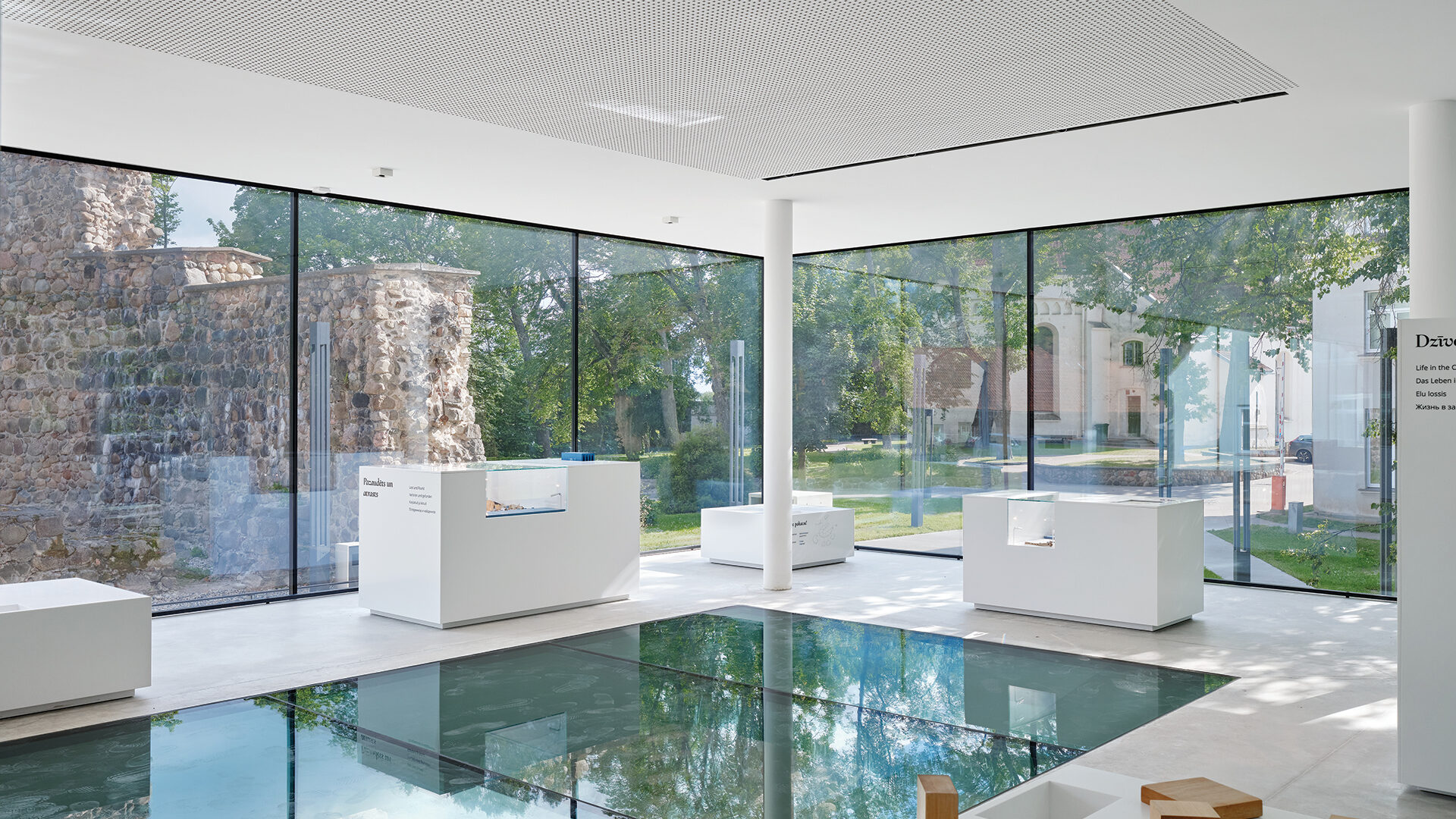
This is especially visible in their memorials and exhibitions, where restraint often carries more weight than excess. Their spaces rarely overwhelm visitors with technology or information. Instead, they rely on pacing, silence, light, discomfort, sound, and atmosphere to shape experience. Every design decision feels distilled to its essence.
Ingūna compares each project to “a James Bond suit, especially tailor-made, not from a department store.”
The metaphor feels fitting for H2E’s body of work: highly specific, deeply contextual, and inseparable from the stories they are trying to tell.
Designing for Feeling, Not Just Understanding
For H2E, storytelling is never just informational. Again and again, they return to the idea that experiential design must move beyond explanation toward emotional experience.
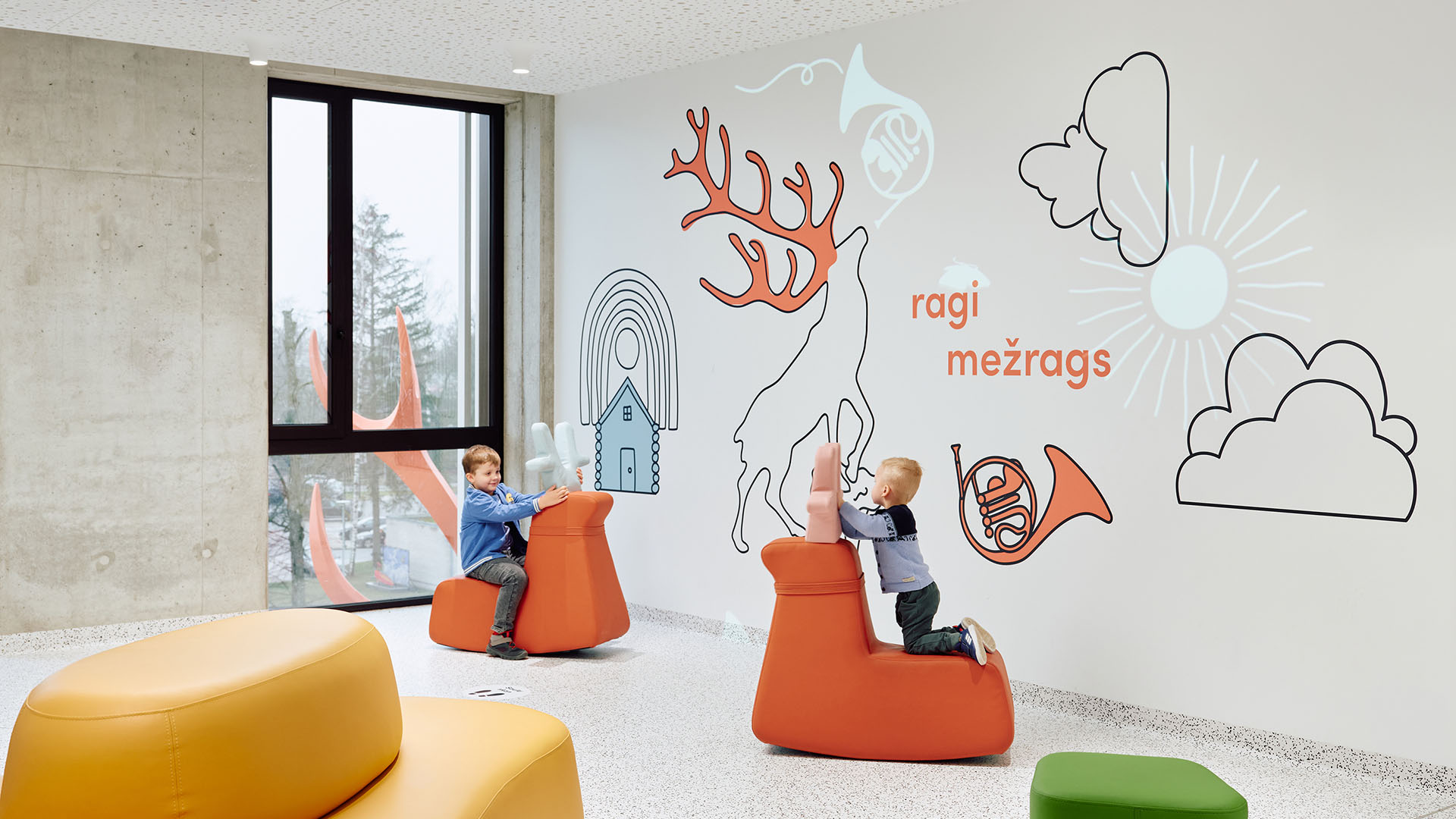
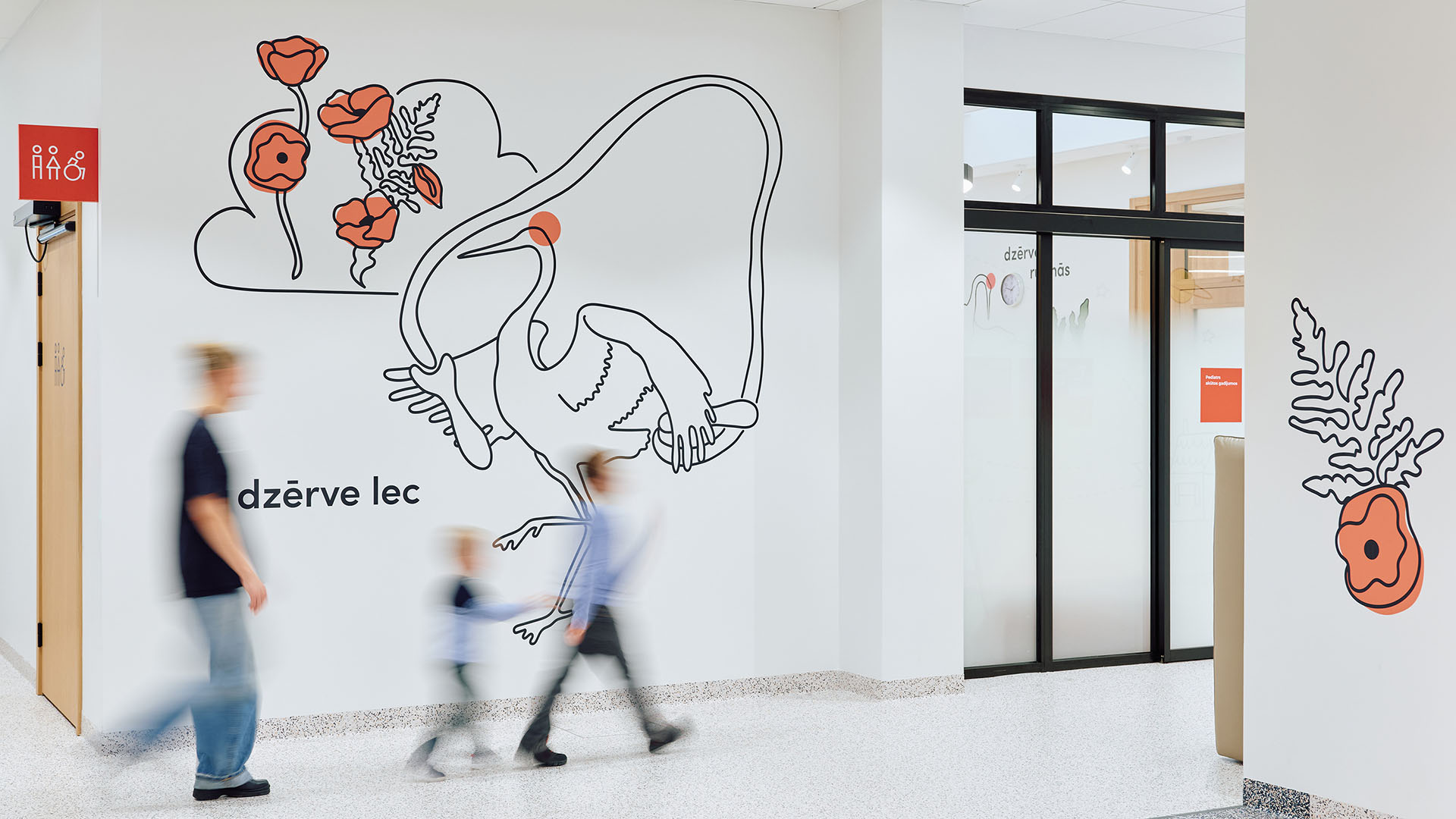
In the Emergency and Outpatient Health Center project, the team designed far beyond operational wayfinding needs. Signage became emotional reassurance. Interactive storytelling distracted children from fear and pain. Regulatory graphics shifted away from punitive language toward positive encouragement.
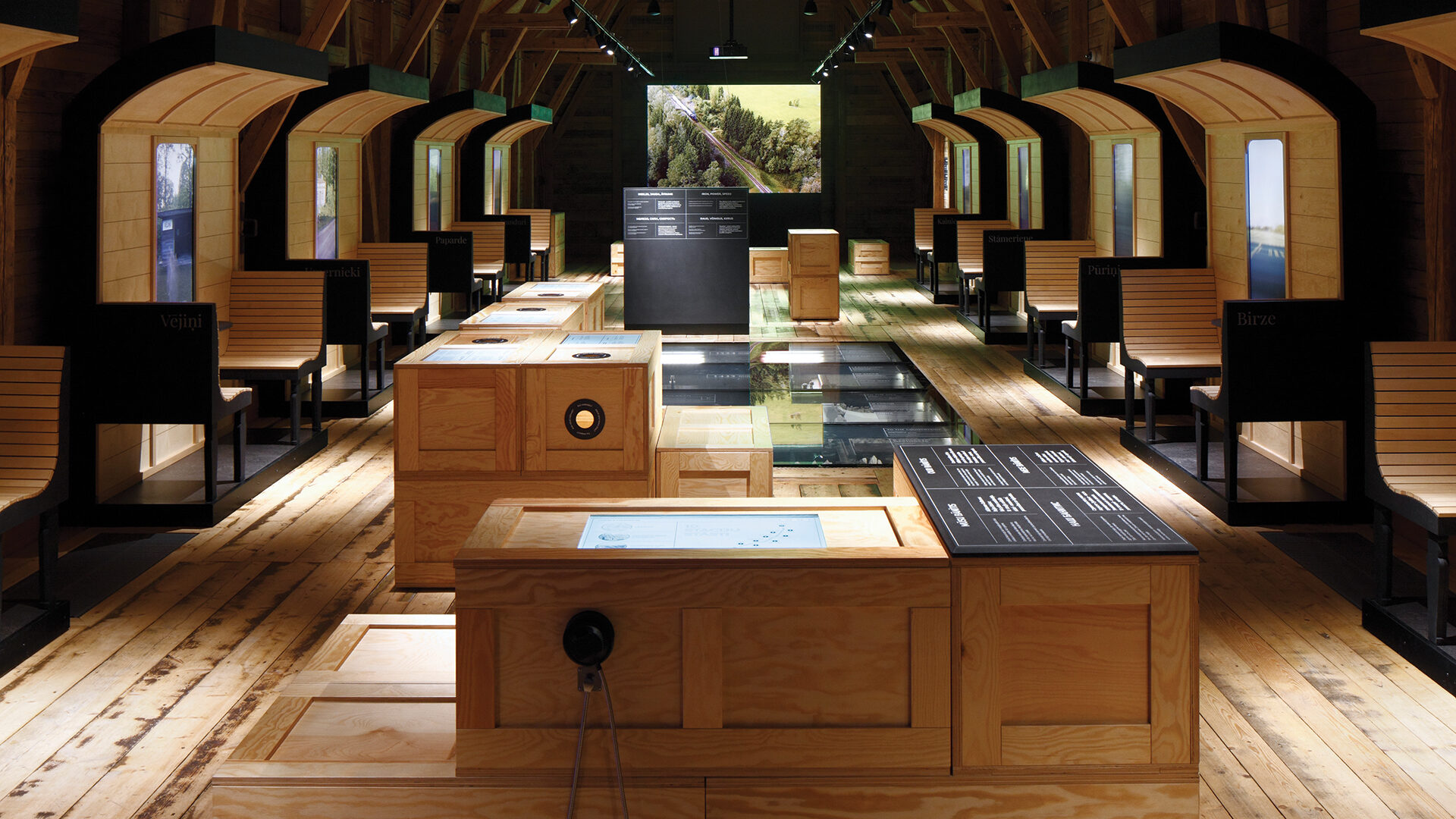
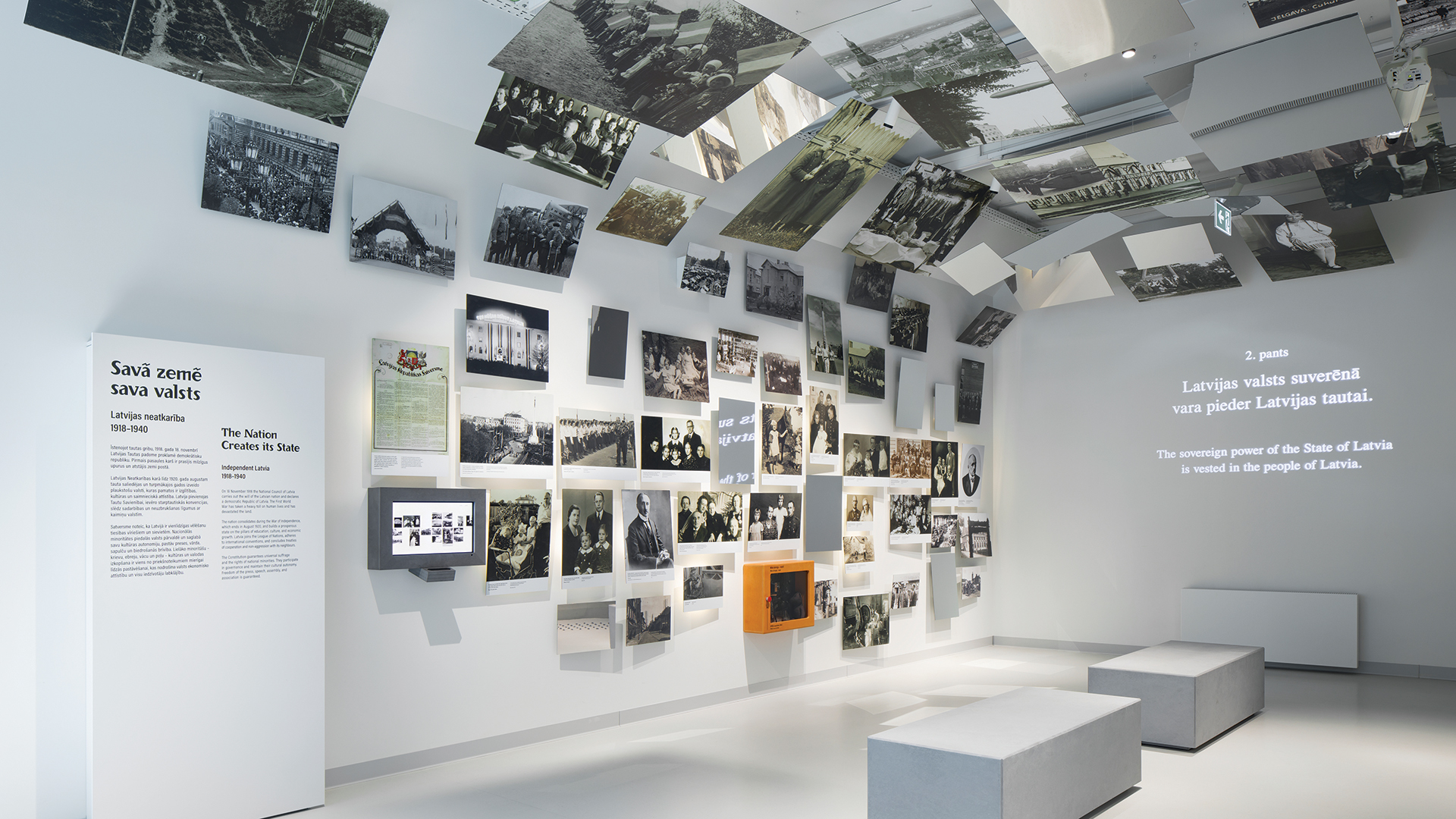
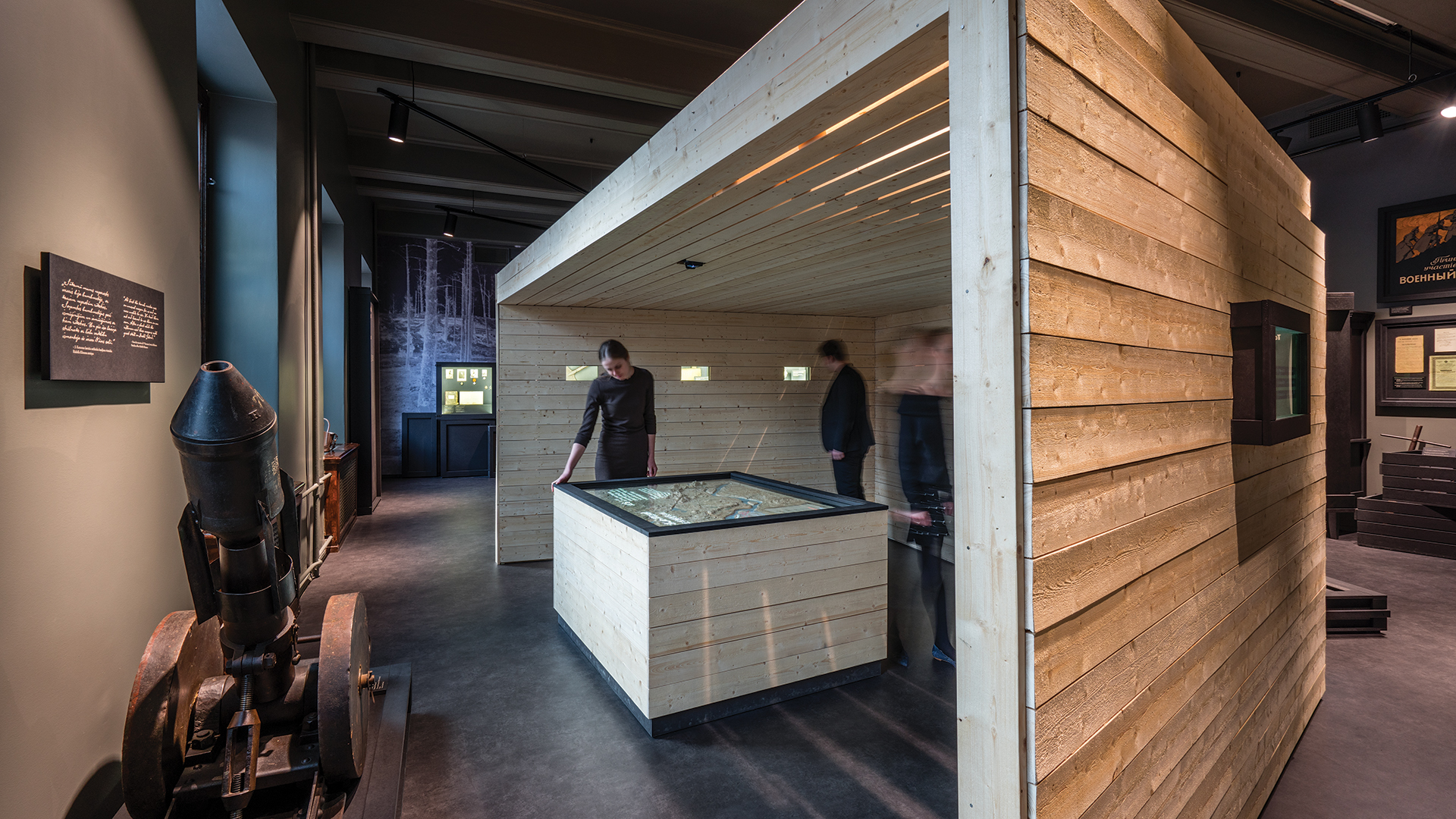
In the Museum of the Occupation of Latvia, they used spatial compression, monochromatic lighting, and a sensory atmosphere to create physical experiences evoking fear, uncertainty, and oppression under Soviet occupation.
The goal is not simply to communicate facts.
“Our responsibility is not to present facts, but to create experiences,” Holgers shared in their Fellow interview. “People may not remember every detail, but they will remember how they felt.”
That belief sits at the heart of H2E’s work—and perhaps at the heart of experiential design itself.
Design Is Political
There is also a deeply political dimension running throughout their practice. Not political in a partisan sense, but political in the understanding that design shapes public memory, dialogue, identity, and collective understanding.
“For us, design is political,” Ingūna reflected. “It can be an instrument of silence or of dialogue.”
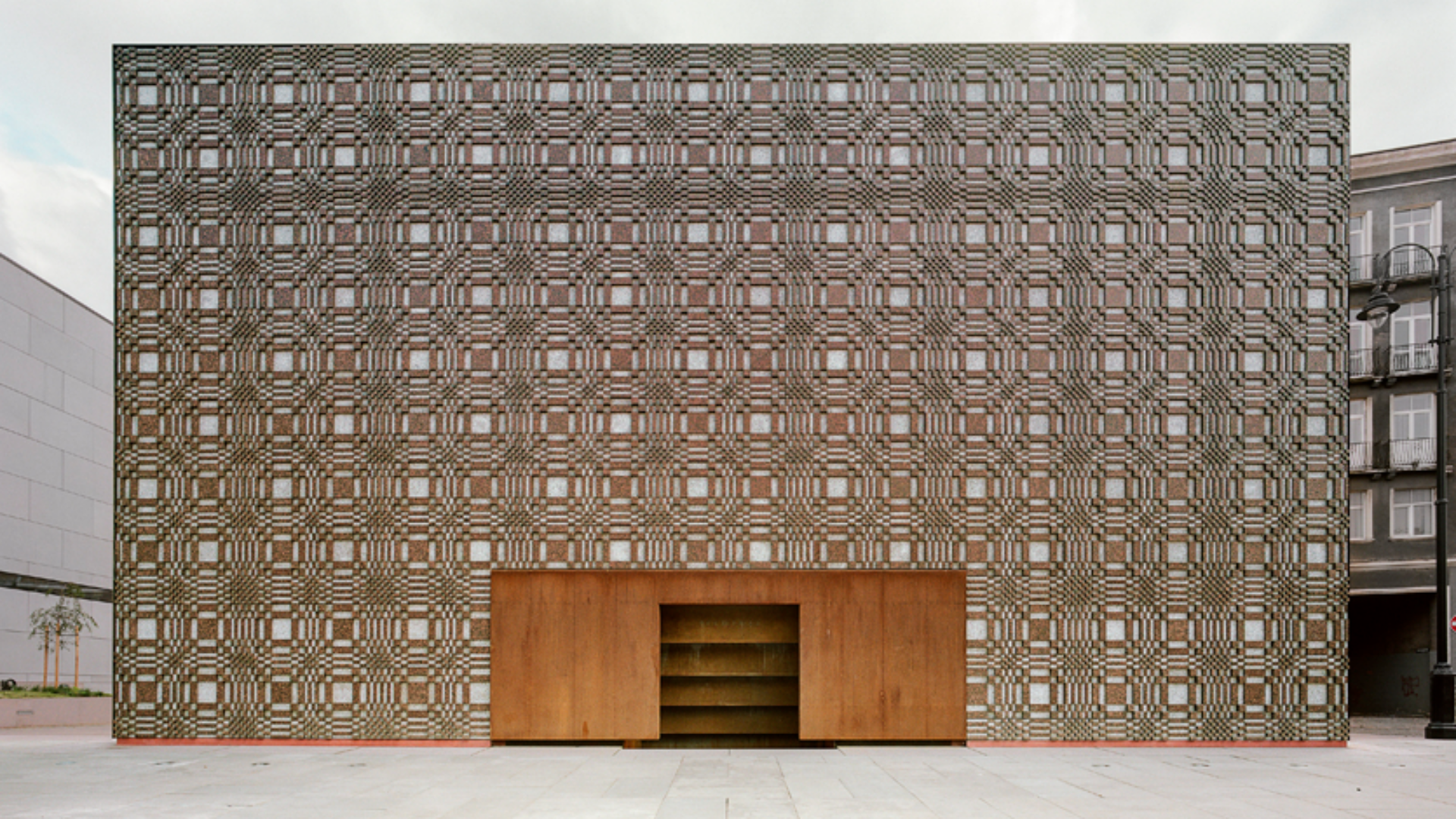
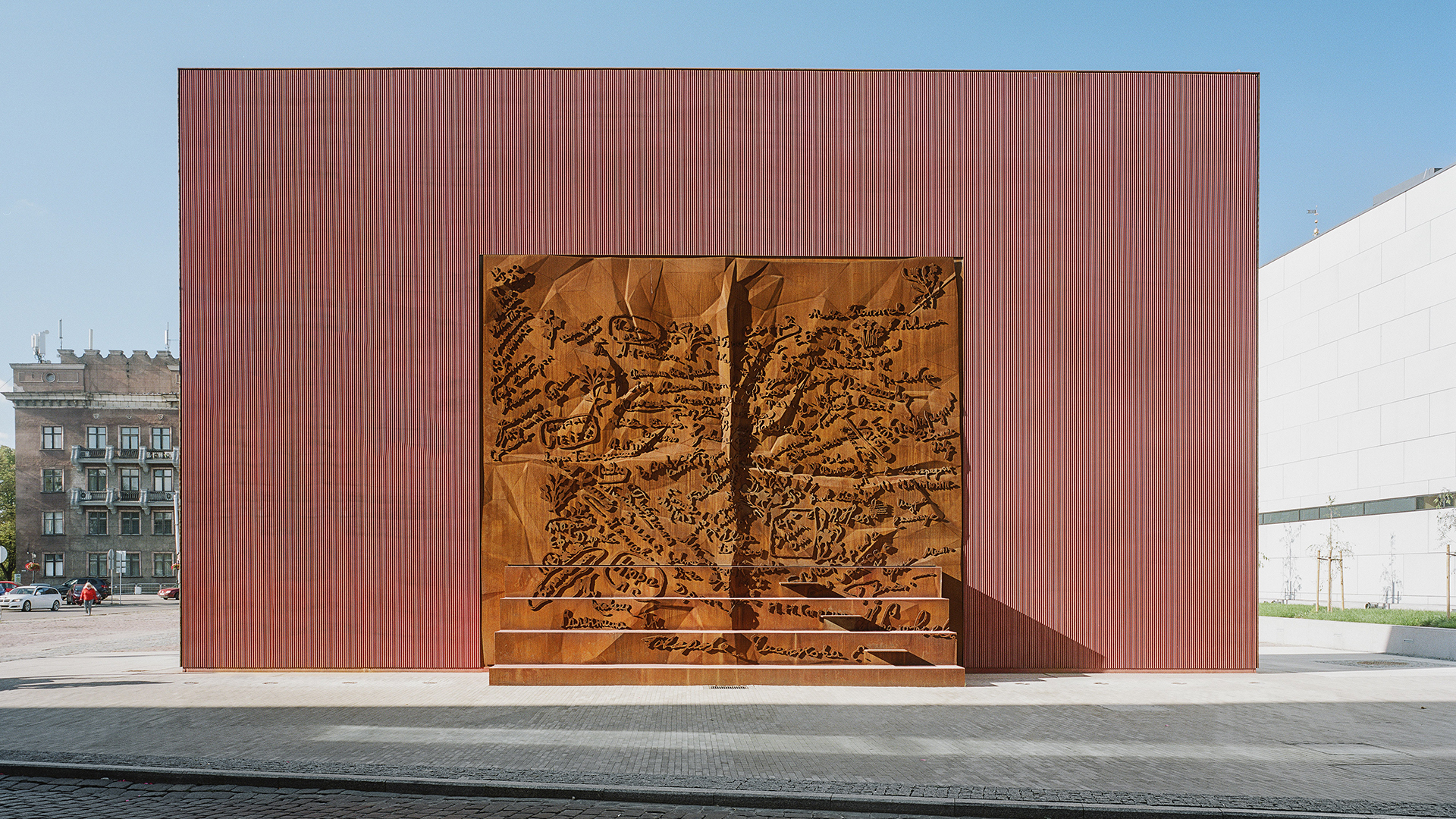
Many of H2E’s most powerful projects grapple with Latvia’s history of occupation and intergenerational trauma. But rather than prescribing conclusions, their spaces create conditions for reflection and empathy. They invite visitors to physically encounter discomfort, tension, and memory.
Even conceptual projects like the “Democracy Bench” become metaphors for civic life itself—requiring participants to balance opposing viewpoints in order to remain stable together.
For H2E, design is not neutral. It shapes how societies remember, communicate, and imagine futures.
Deeply Latvian, Universally Resonant
Perhaps most inspiring of all is that Ingūna and Holgers never set out to become internationally recognized designers. Instead, they remained deeply committed to designing from within Latvia’s cultural and emotional landscape.
Their stories are filled with forests, folklore, seasons, silence, melancholy, and closeness to nature. Early in the presentation, Ingūna remarks, almost casually, “We still believe that all trees have souls.”
That worldview permeates the work.
Their projects feel unmistakably Latvian—not diluted for international audiences, but strengthened by cultural specificity and emotional honesty. And paradoxically, that authenticity is precisely what has allowed their work to resonate so globally.
As Ingūna reflected in their original Fellows interview:
“We simply tried to be honest about our culture, our heritage, our color systems, our ways of composing space. That authenticity, I think, is what resonates beyond Latvia.”
An Outsized Legacy
Taken together, the work and philosophy of Ingūna Elere, FSEGD and Holgers Elers, FSEGD offer a powerful reflection on what experiential design can be at its best. Their projects embrace tension rather than avoid it. They treat constraints as creative catalysts. They design for emotional resonance, not just information delivery. They understand design as a cultural and political act capable of shaping memory, dialogue, and human connection. And throughout it all, they remain deeply committed to authenticity—to creating work grounded in place, history, and lived experience.
In an increasingly homogenized design culture, H2E’s work reminds us that the most universal experiences often emerge from the most deeply rooted ones. Their projects do not chase trends or flatten themselves into a neutral global aesthetic. Instead, they draw strength from Latvia’s histories, landscapes, silences, and cultural memory—and in doing so, connect with audiences far beyond their borders.
From a small country not often recognized as a major design capital, Ingūna and Holgers have built an outsized global legacy—not by thinking bigger, but by thinking deeper.
People also viewed
-
2025 SEGD Fellows: Ingūna Elere and Holgers Elers
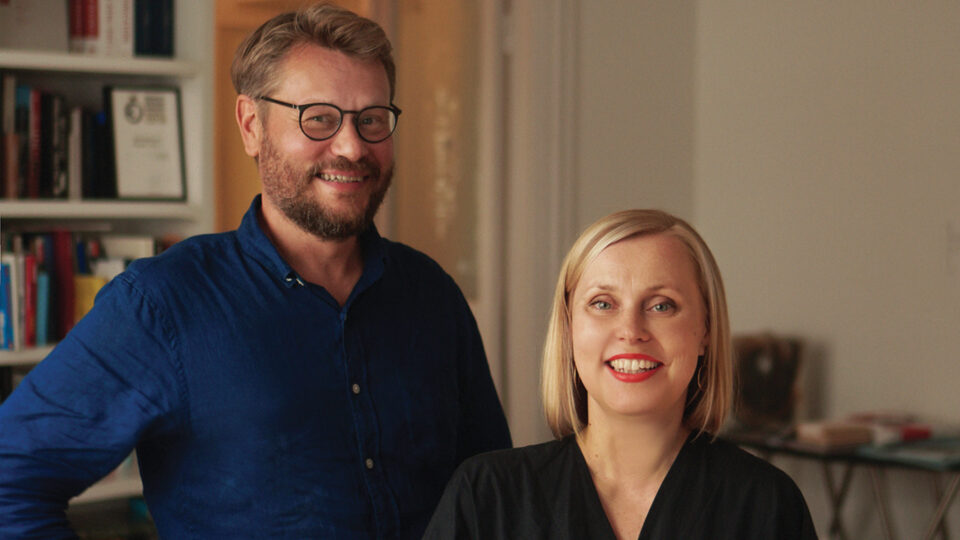
2025 SEGD Fellows: Ingūna Elere and Holgers Elers
-
SEGD Announces the 2025 Achievement Award + Fellow Honorees
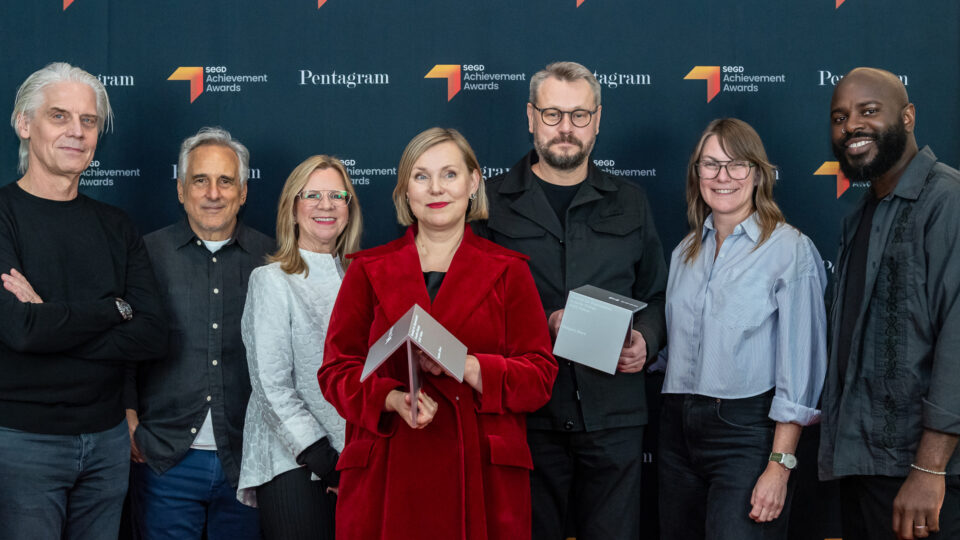
SEGD Announces the 2025 Achievement Award + Fellow Honorees
-
The Tactile of History. Memorial to the Victims of the Soviet Occupation
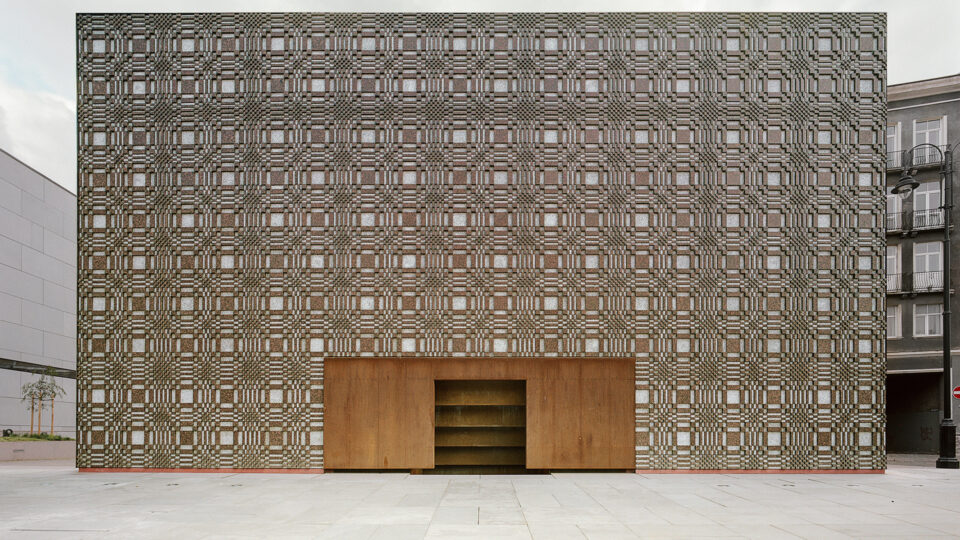
The Tactile of History. Memorial to the Victims of the Soviet Occupation