Transforming Spaces Into Stories Through Public Art & Murals
Contributed by RSM Design Founder and Principal Martin Schwartz, this article explores how public art, murals, and environmental graphics can shape the human experience of place. Through reflections on narrative-driven design and a case study of San Diego’s RaDD Artwalk, Schwartz examines how art can create orientation, connection, and collective memory within the built environment.
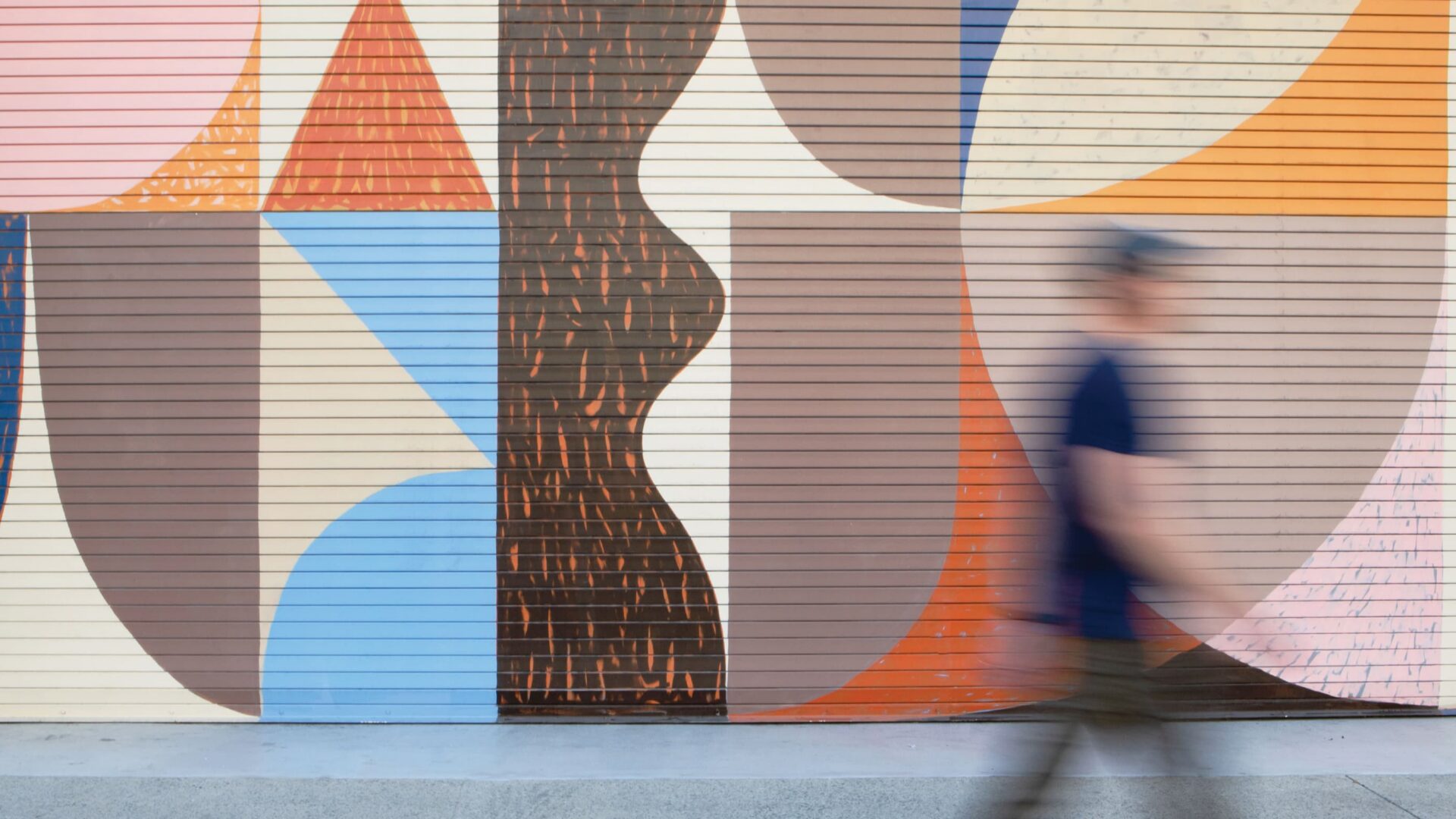
Consider the spaces people navigate daily: streets, plazas, and corridors that form the textural backdrop of everyday life. These places are the heartbeat of public art and design, two disciplines rooted in a shared understanding that the environments people move through shape how they experience the world around them. The places people visit become part of their stories, just as people shape the identity of those places over time.
When a blank wall becomes a beacon for community gathering, or a forgotten alleyway transforms into a corridor of color and meaning, the power of public art begins to emerge across workplaces, civic spaces, and cultural institutions. Murals, sculptures, and environmental graphics do more than beautify the surface; they create dialogue between architecture and the people who bring the built environment to life.
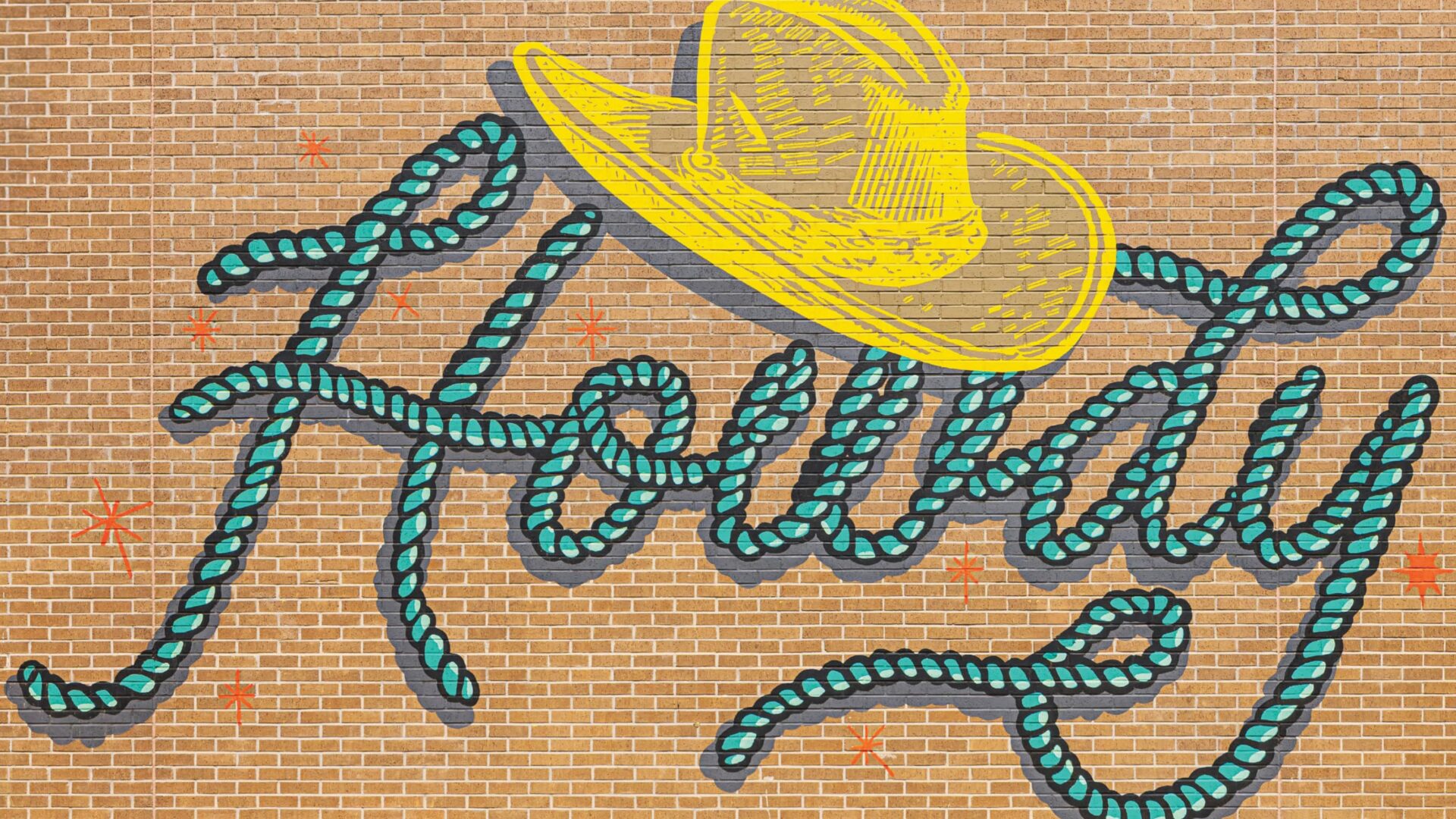
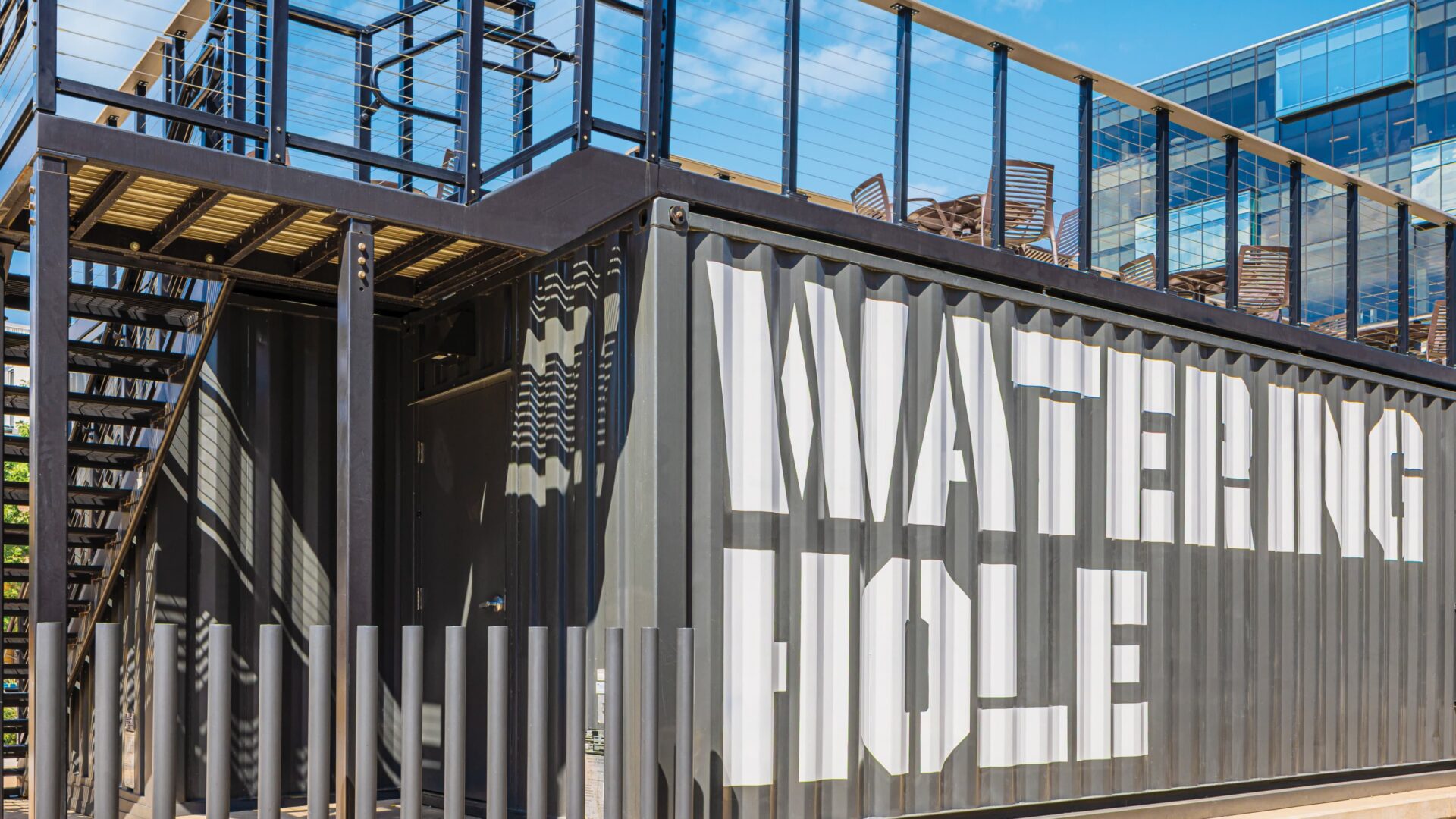
Uncovering the Unseen: How Art & Design Give Voice to Place
Each place holds a story waiting to be told—an intrinsic meaning waiting to be brought to life. The challenge for designers and artists lies in uncovering these narratives and translating them into thoughtful interventions that feel authentic to the communities they serve.
Across experiential design, this often begins with studying how people naturally move through and interact with their surroundings, alongside understanding the cultural, historical, and environmental context shaping a place. Rather than treating art as a decorative overlay, the work becomes integrated into the broader experience of the environment itself.
The most successful public art programs tend to create experiences that do more than activate surfaces. They shape movement, encourage discovery, and add moments of education, reflection, and delight throughout the built environment.
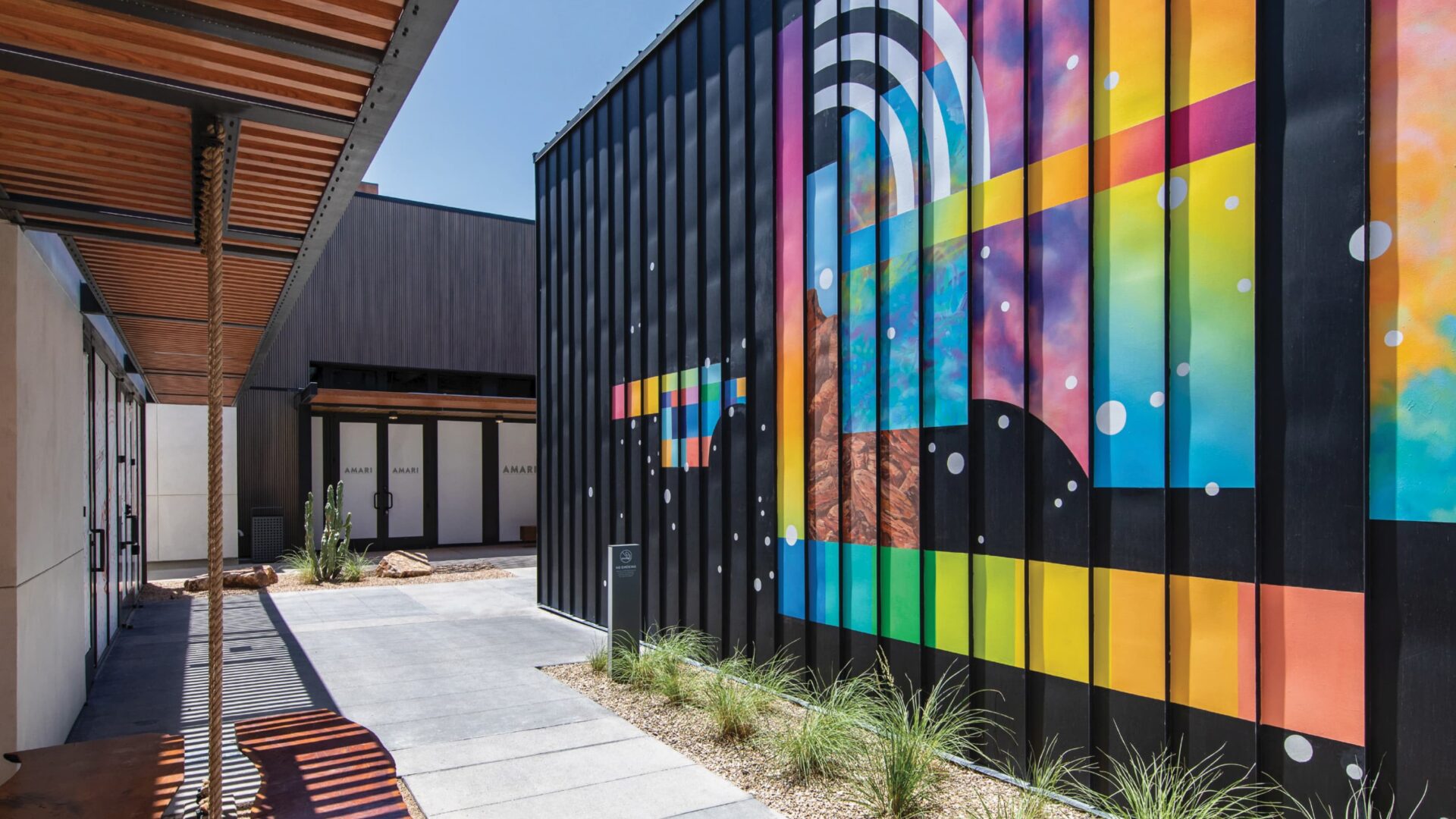
Meeting Human Needs Through Design
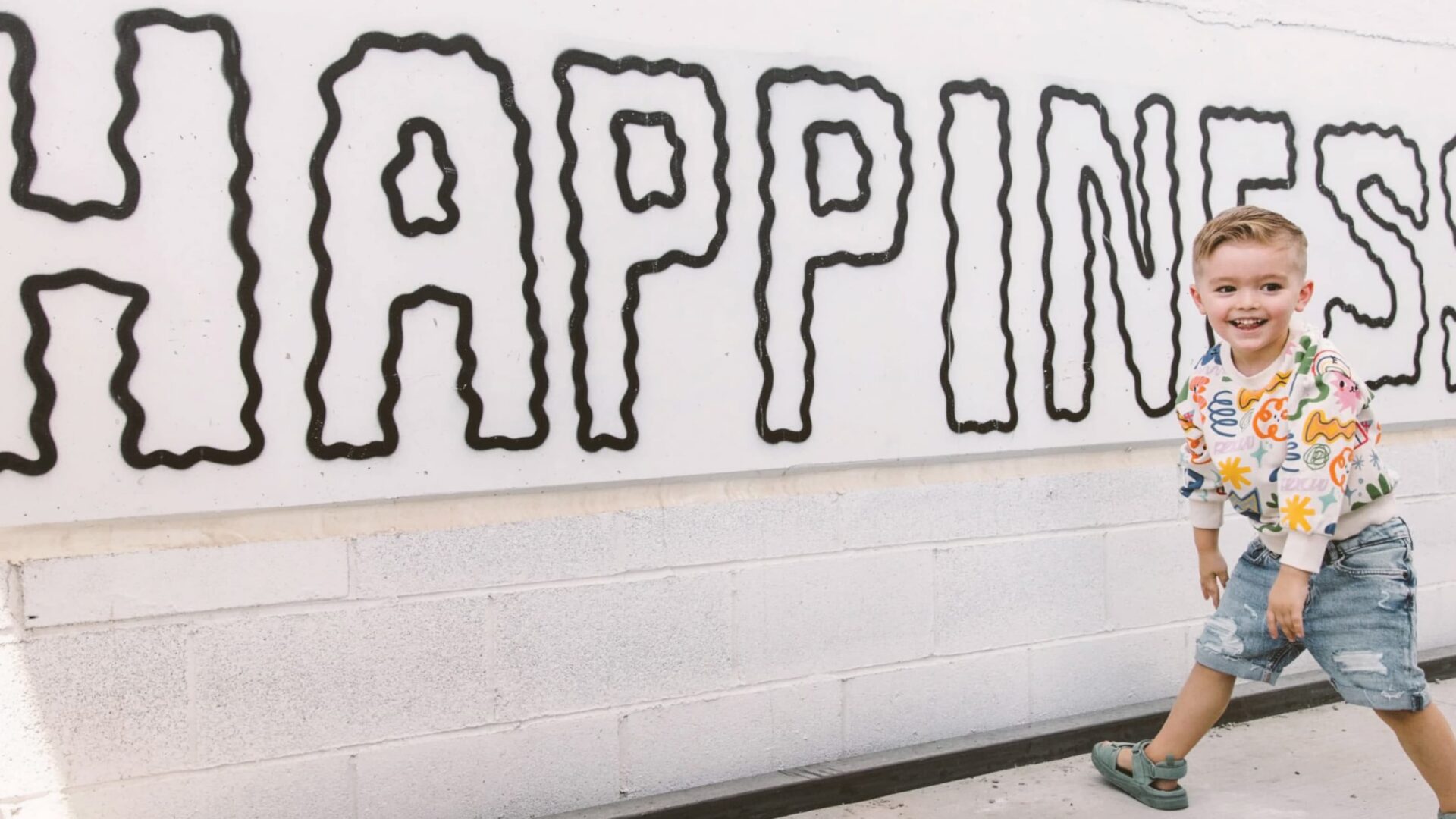
Many experiential design strategies are grounded in people-first thinking, placing human needs and stories at the center of the process. In the original piece, these ideas are framed around three fundamental needs: Certainty, Variety, and Delight.
Certainty comes from clear orientation and wayfinding—understanding where you are and how to navigate a place with confidence. Variety emerges through visual richness and sensory engagement that activate the mind and body as people move through an environment. Delight arrives through unexpected encounters with beauty, imagination, whimsy, and the communal togetherness these spaces can foster.
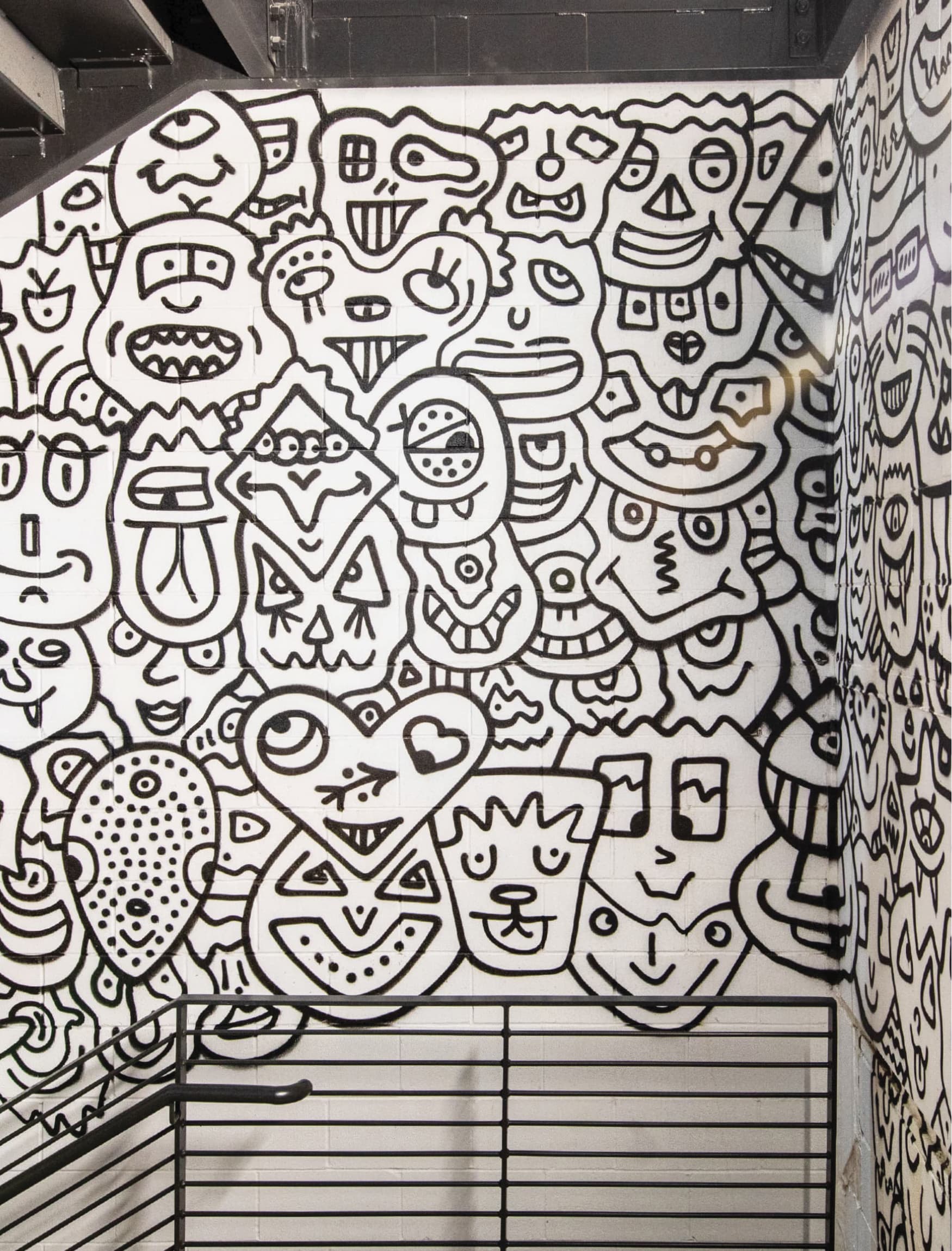
Effective public art programs often address all three simultaneously. A sculptural installation may function as both a landmark for navigation and a source of communal joy. A mural series can reinforce neighborhood identity while breaking down an overwhelming streetscape into approachable moments. When these elements work together, they create environments where people feel both grounded and inspired.
Storytelling Through Collaboration in Public Art & Design
The most enduring public spaces are often shaped through collaboration between designers, communities, donors, artists, and stakeholders. This collaborative process helps ensure that the finished work reflects authentic values and lived experiences rather than imposed narratives.
When residents see their own stories reflected in the art around them, they develop a stronger connection to place. Within this framework, design becomes a vehicle for enhancing the broader human experience rather than pursuing isolated aesthetic goals.
The result is work that serves multiple purposes simultaneously: functional, emotional, cultural, and economic. Over time, these layered experiences contribute to how communities evolve and how places are remembered.
San Diego’s Research and Development District: A Case Study
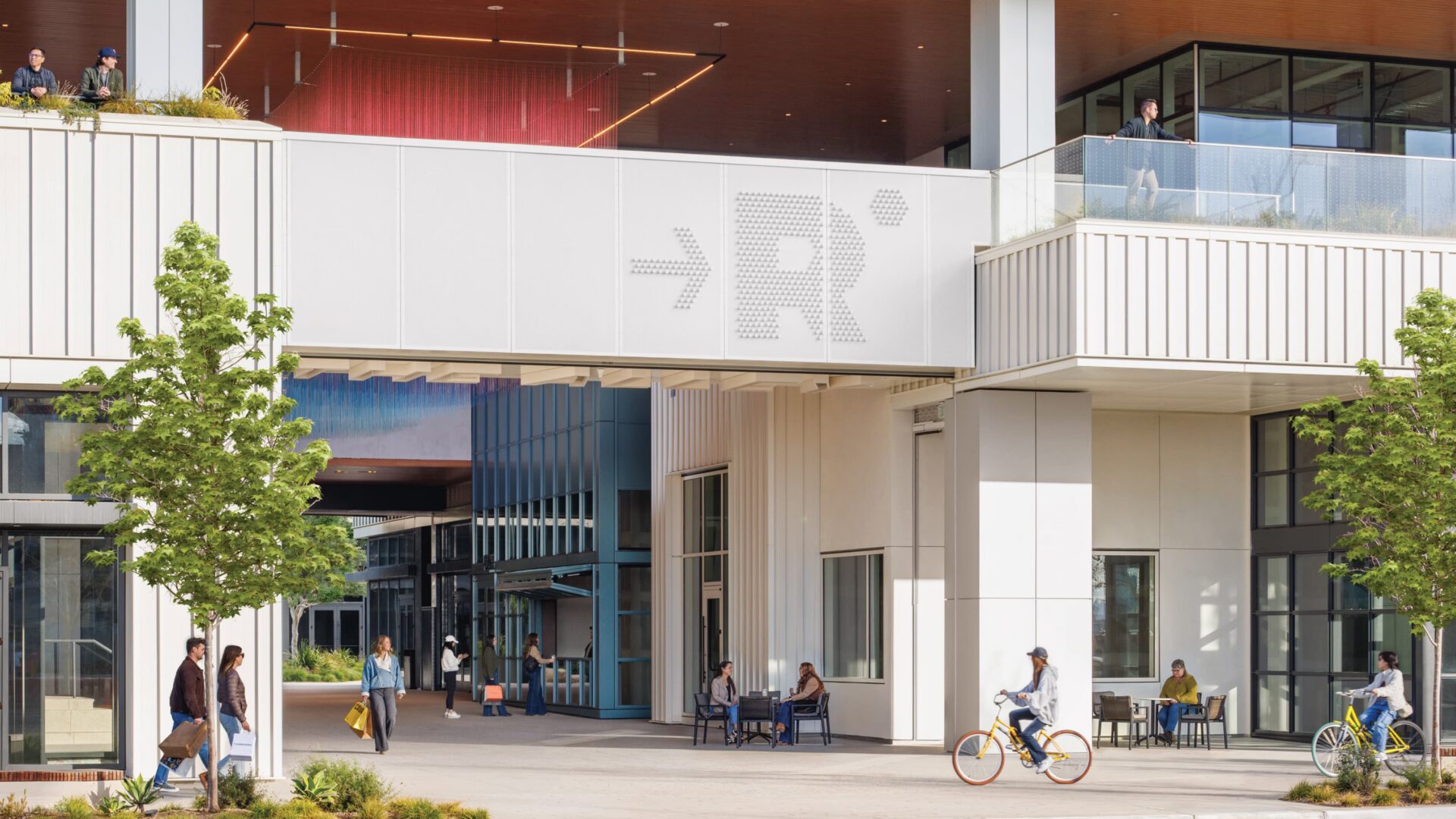
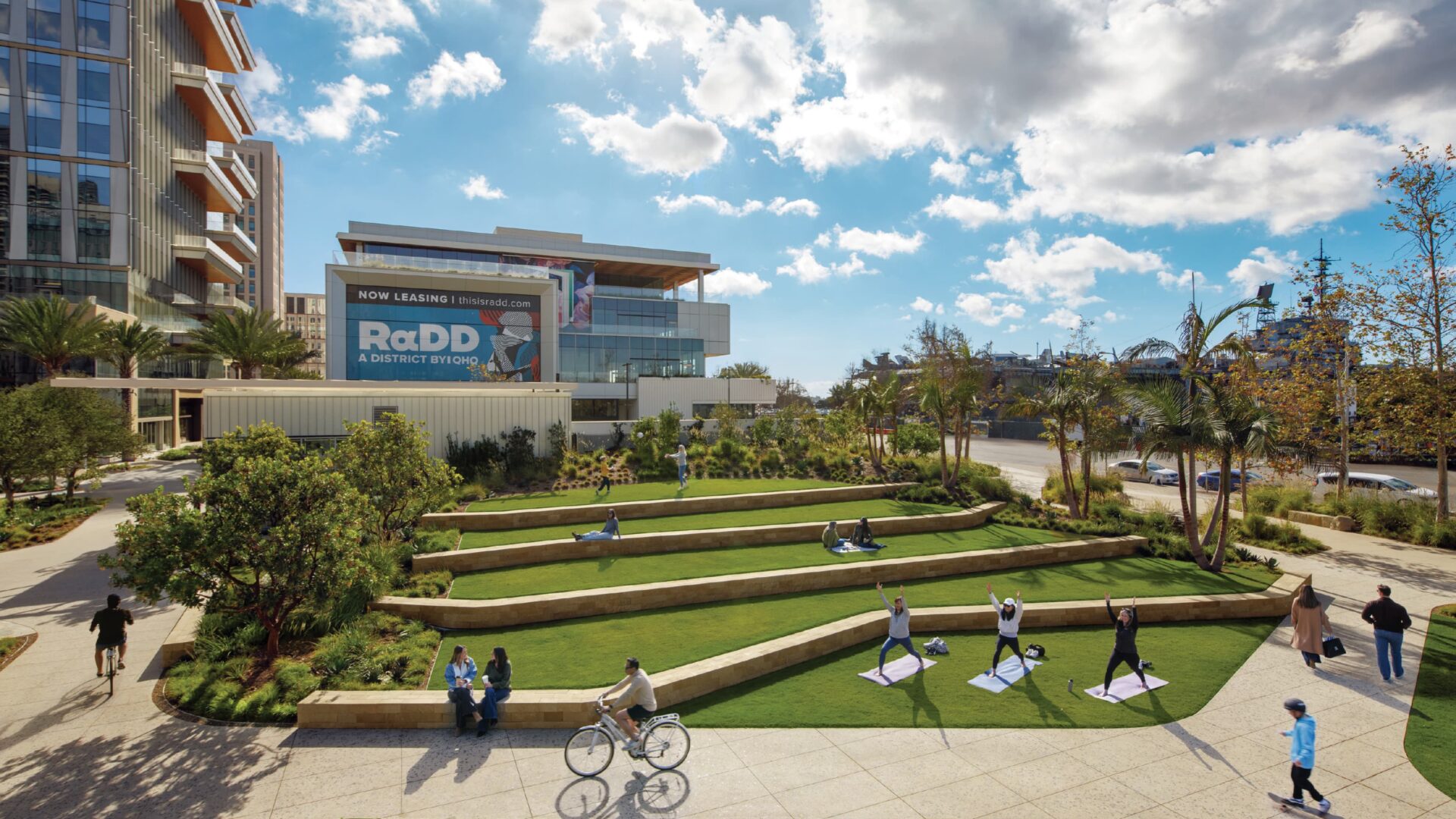
The RaDD Artwalk along San Diego’s waterfront demonstrates how these principles can manifest in practice, creating an intersection of art, architecture, and the human experience. Spanning six blocks, the mixed-use district brings together life science facilities, office space, cultural venues, retail, and public gathering areas into a cohesive environment.
Throughout the development, commissioned artworks from regional and nationally recognized artists punctuate the pedestrian experience, creating visual anchors that help visitors orient themselves while also rewarding exploration.
The creative program—developed through a collaboration between IQHQ, Gensler, OJB Landscape Architecture, artists, and RSM Design—draws heavily from the district’s broader context. Visual motifs reference scientific discovery, with molecular structures, elemental patterns, and laboratory imagery appearing throughout the site in recognition of the research institutions shaping the district’s identity.
The color strategy also draws from the surrounding coastline, with palettes inspired by nearby waters, kelp forests, native vegetation, and local sandstone. These layered references help ground the district in both its purpose and its geographic setting.
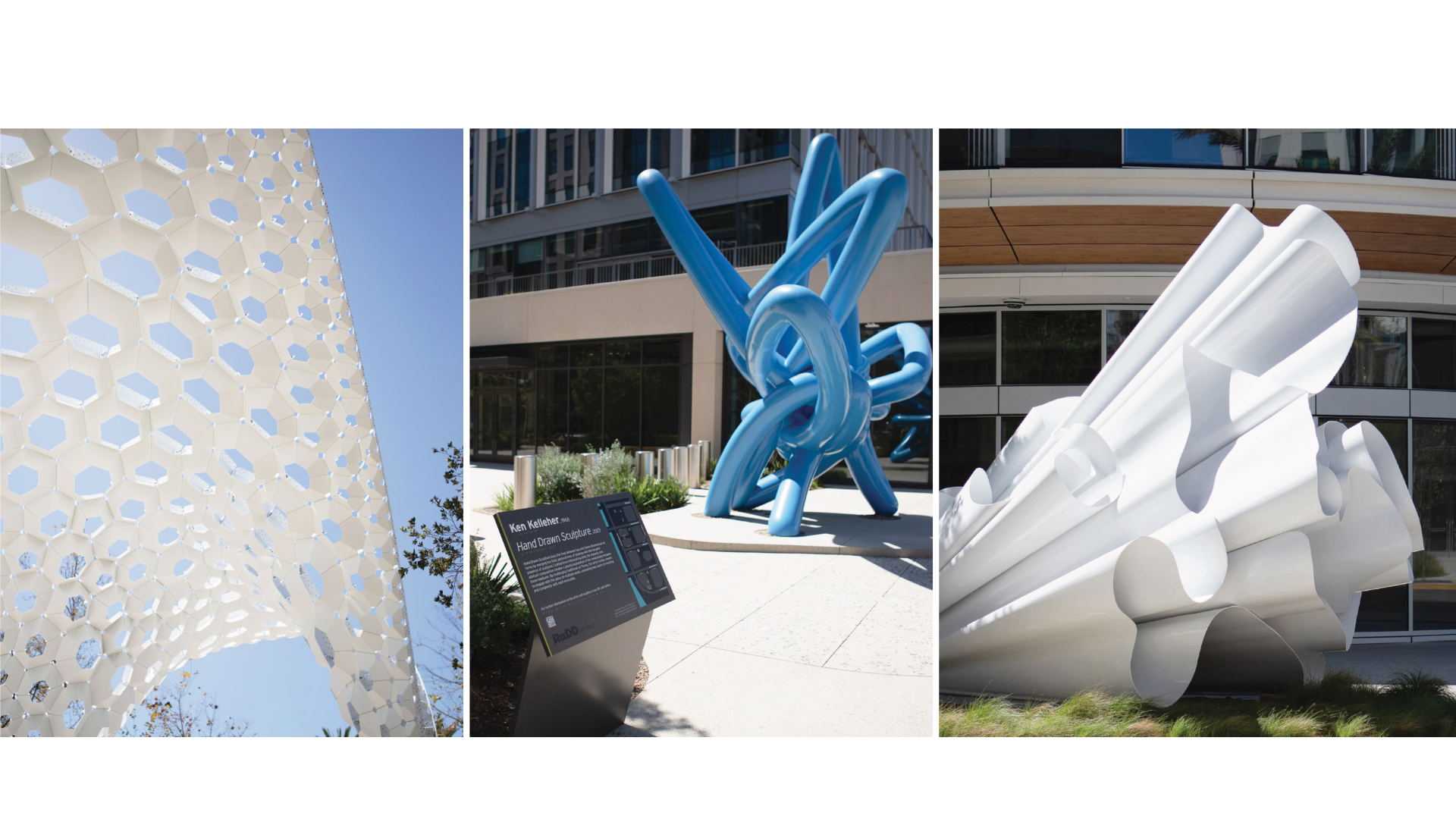
Particular attention was given to the “in-between” spaces throughout the site. Pathways, building entrances, and open plazas were treated as opportunities for interaction and discovery rather than transitional afterthoughts. The cumulative effect encourages visitors to slow down, look up, and engage more meaningfully with their surroundings.
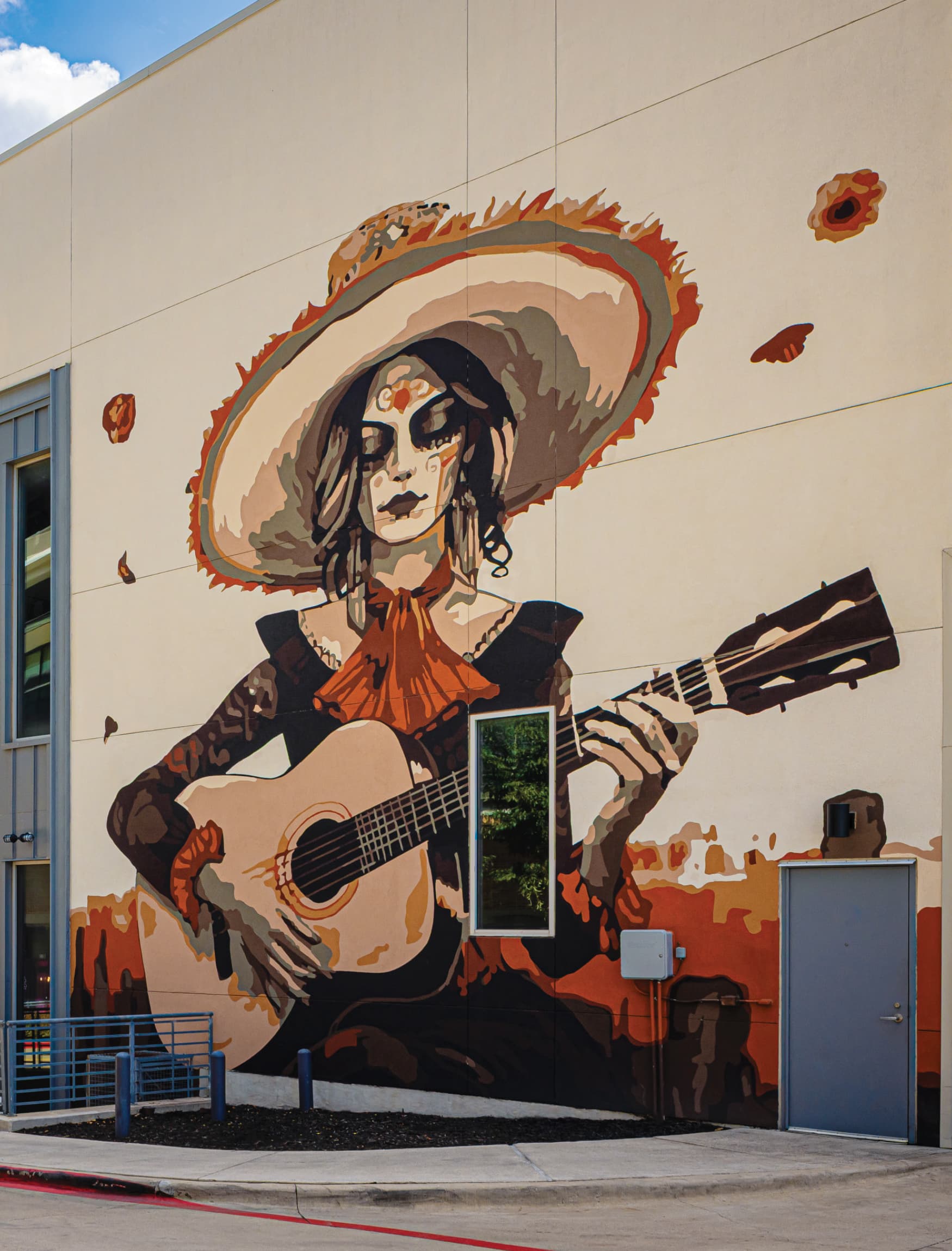
Art, Design, Narrative, & Legacy
Timeless public spaces often share common qualities: they honor local traditions while remaining open to evolution, prioritize human comfort and scale, and demonstrate craftsmanship that rewards close inspection. Most importantly, they invite participation rather than passive observation.
When communities invest in meaningful public art, they create opportunities for long-term connection. A commuter passing the same mosaic each morning may gradually weave it into their sense of home. A sculpture that becomes a neighborhood meeting point accumulates personal significance over time. These associations transform objects into vessels of collective memory.
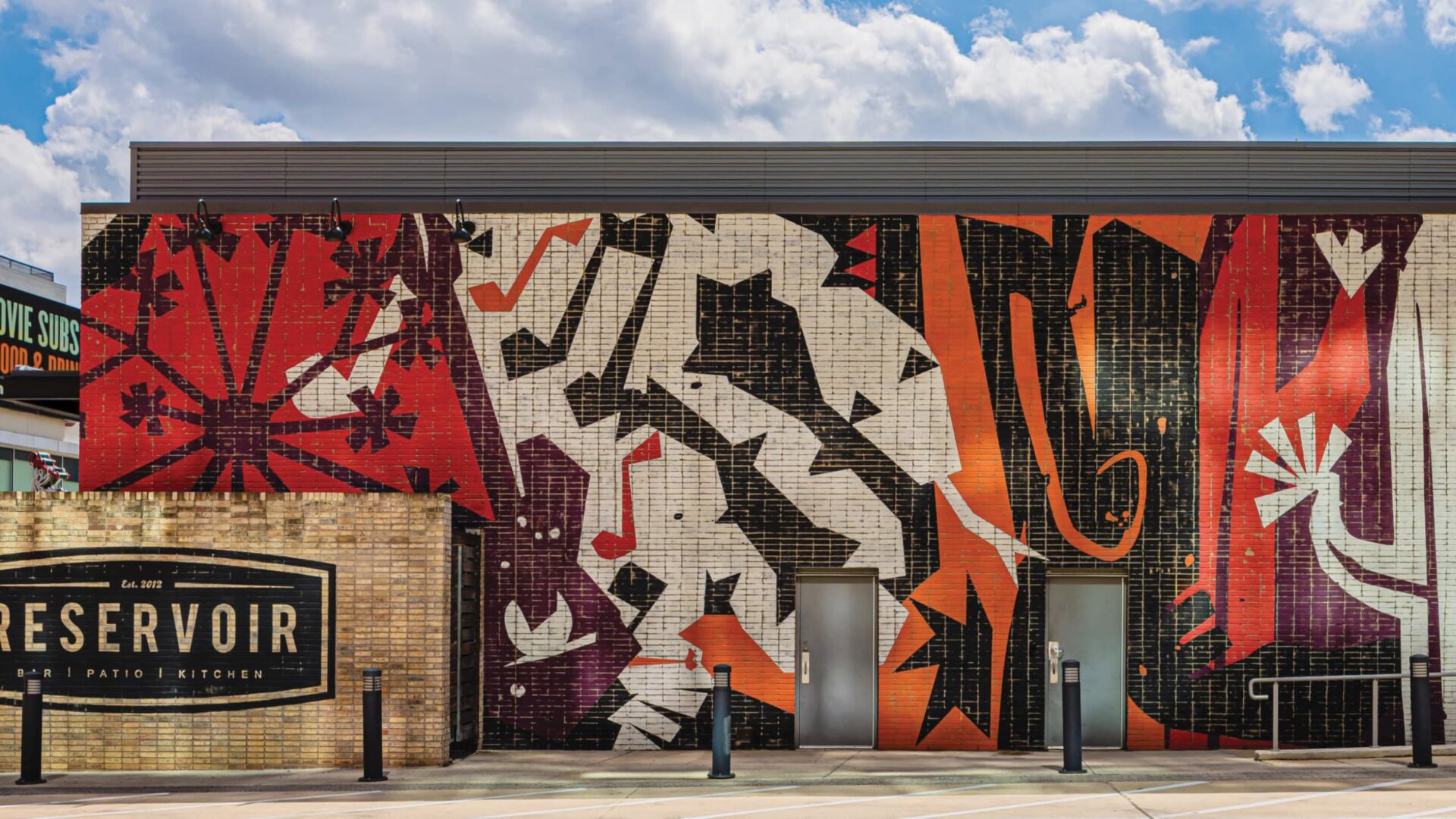
The Deeper Purpose of Narrative Design
At its core, transforming spaces into stories acknowledges the reciprocal relationship between people and the environments they inhabit. Public art and murals are one way to participate in that exchange, lending voice and character to the places where people live, work, and gather.
Creative placemaking extends beyond visual impact alone, considering the social, cultural, and economic dimensions of an environment. Well-designed public spaces can draw people together, support local businesses, celebrate shared heritage, and strengthen civic identity. A mural, sculpture, or unexpected installation can leave a lasting emotional impression, shaping how people move through and remember a place.
Viewed through an experiential design lens, public art becomes part of the broader settings where human life unfolds: spaces for chance encounters, reflection, gathering, and connection.
People also viewed
-
“Navigating Cowtown” Historic Fort Worth Stockyards Wayfinding
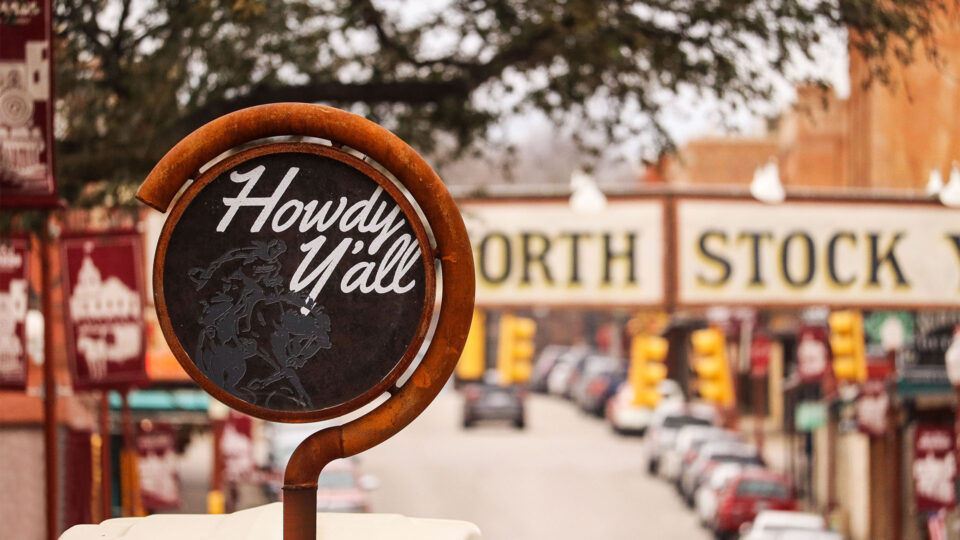
“Navigating Cowtown” Historic Fort Worth Stockyards Wayfinding
-
The Buddy Holly Hall of Performing Arts and Sciences
The Buddy Holly Hall of Performing Arts and Sciences
-
Base Camp Charlie

Base Camp Charlie