In Depth Analysis: Inside The Uzbekistan Pavilion Expo 2025
Garden of Knowledge: Intergenerational Knowledge, Cultural Heritage and Sustainability
SEGD’s Expo 2025 Case Study Series takes a closer look at how selected pavilions in Osaka translated these expansive ideas into clear, engaging visitor experiences. Led by Christina Lyons, Associate Professor & Chair of the FIT Graduate Exhibition & Experience Design program, these studies combine on-site observation with interviews, process analysis, and conceptual documentation.
By examining how design teams navigated narrative complexity, cultural communication, architecture, and high-volume visitor flow, this series offers insights and strategies useful for experiential designers across sectors.
This second case study focuses on the Uzbekistan Pavilion, a compelling synthesis of cultural storytelling, sustainable construction, and deeply integrated architecture and exhibition design. Christina’s report has been published in its entirety below. For the full, formatted report, click the link to download.
Overview
Project Overview
The Garden of Knowledge was Uzbekistan’s contribution to EXPO 2025 in Osaka, Japan. The project was commissioned by the Art and Culture Development Foundation of Uzbekistan to celebrate their cultural heritage and environmental care, as well as present a compelling vision for the sustainable future of Uzbekistan in the form of a designed experience at EXPO 2025.
The Garden of Knowledge Pavilion skillfully integrates Uzbekistan’s history and traditions with progressive commitments to sustainability and innovation, in a compelling narrative that embodies the intergenerational exchange of ideas through the metaphor of natural growth.
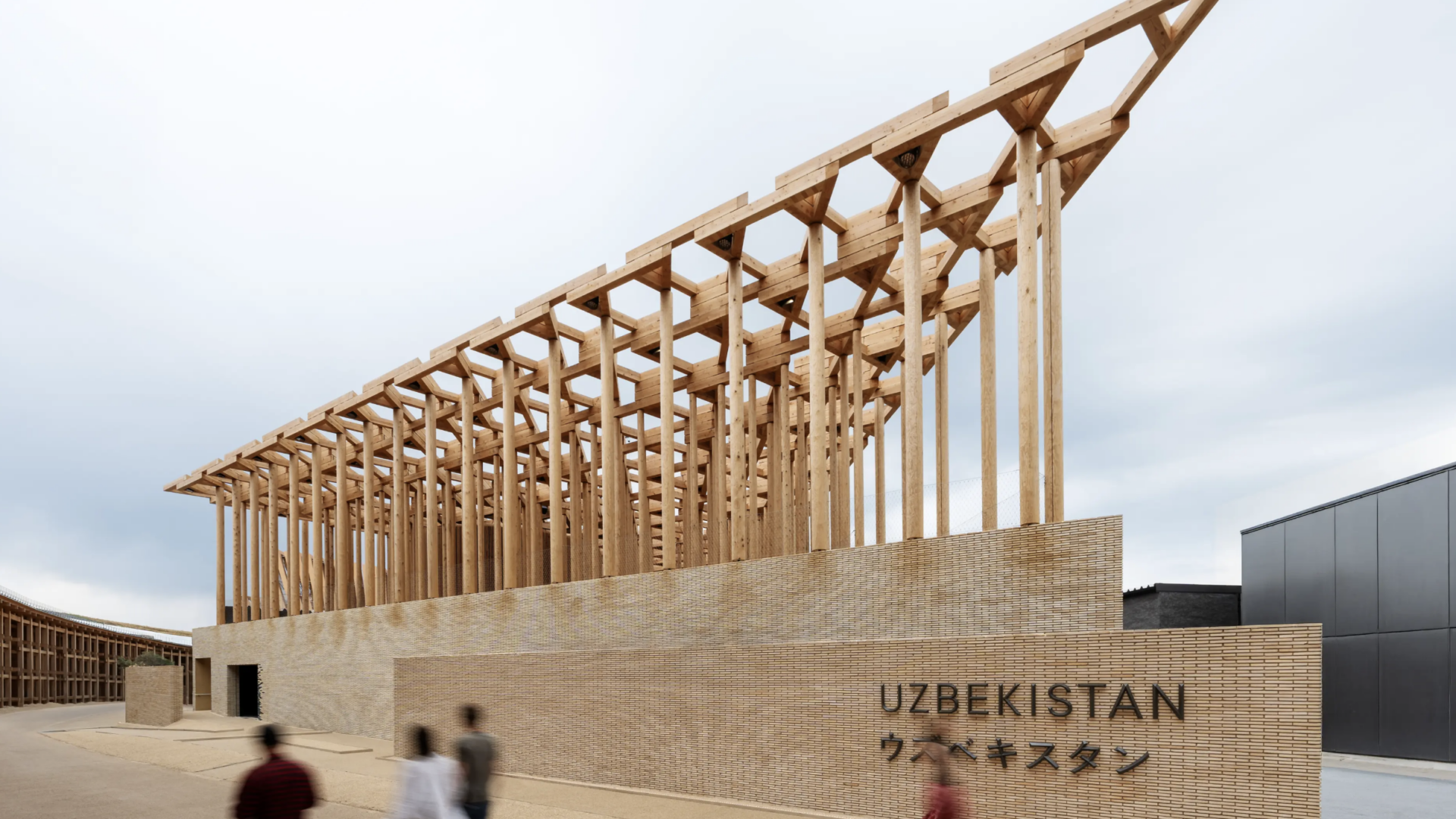
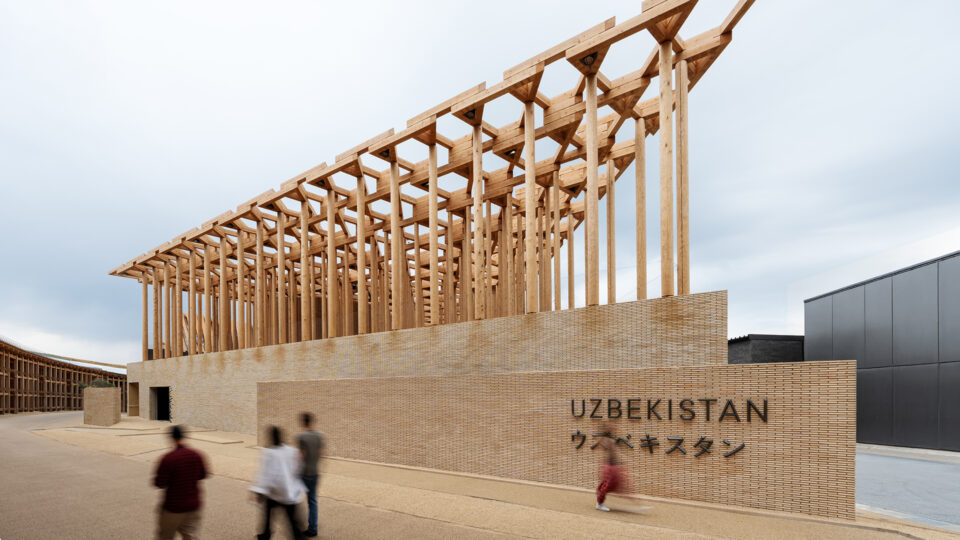
Uzbekistan Pavilion EXPO 25 — Exterior View, Photography by Josef Sindelka. Courtesy of Atelier Brückner
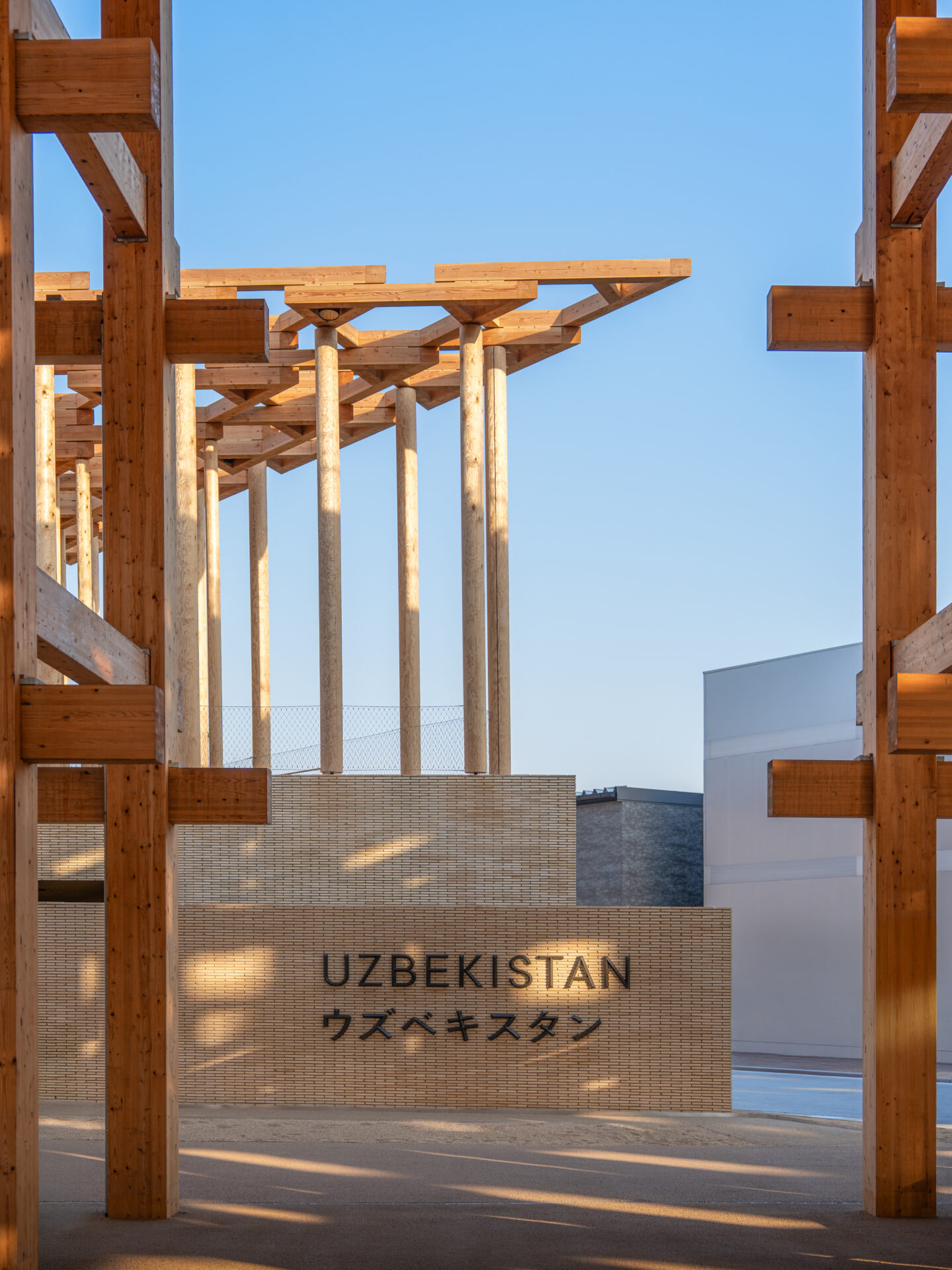
The experience of the architecture and exhibits, working seamlessly together, begins and grows from the Earth; the pavilion’s brick and clay base representing soil, seeds and roots, leading to the roof level where visitors arrive into a forest of wood columns with views to the sky through traditional Uzbek patterns manifested in a wood lattice open-air roof.
One is led through three main thematic zones: the first, in the base of the pavilion, showcases Uzbekistan’s advancements grouped by Education, Innovation and Sustainability, the second, a 360-degree immersive film representing a growing pomegranate tree within the lift to the top floor, and culminating in a third zone, an open-air “Forest of Columns” on the roof terrace.
The Germany-based design firm, Atelier Brückner was responsible for the conceptual development, architectural and exhibition design. The unified authorship allowed for a cohesive dialogue between the interior and exterior spaces, creating an impactful and coherent visitor experience at each stage.
The pavilion was located on a unique triangular site with a total floor area of 1,272 square meters and 860 square meters of exhibition space. Both the design team and client prioritized sustainability at the start and even during the tendering process. Material sourcing, construction strategy and lifecycle planning were thoughtfully applied through each step of the design process.
Designing for EXPOs is a very unique design challenge. This report aims to explore the role of design in shaping complex themes, including a nation’s values, policies and initiatives, and how to make these complex subjects understandable and memorable to large audiences, across cultures in a very short amount of time through design, architecture and narrative strategies.
The following outlines the design process behind the Garden of Knowledge from the early conceptual phase to the finished installation and final visitor experience in Osaka. The following sections will examine the pavilion in detail; addressing the project’s model of a single design firm responsible for the interior, exterior and visitor experience. As well as the conceptual framework and strategies that shaped the narrative and spatial experience, the sustainable planning methods and materials explored, based on interviews conducted with EXPO organizers and Atelier Brückner, who provided detailed insights on the process, conceptual approach and installation, as well as from site visits and interviews with visitors and staff at the pavilion in Osaka.
Conceptual Framework
The Uzbekistan Pavilion’s presentation for EXPO 2025 in Osaka set out to reflect the country’s commitment to environmental restoration, agricultural innovation, scientific advancement and cultural continuity through the notion of intergenerational exchange.
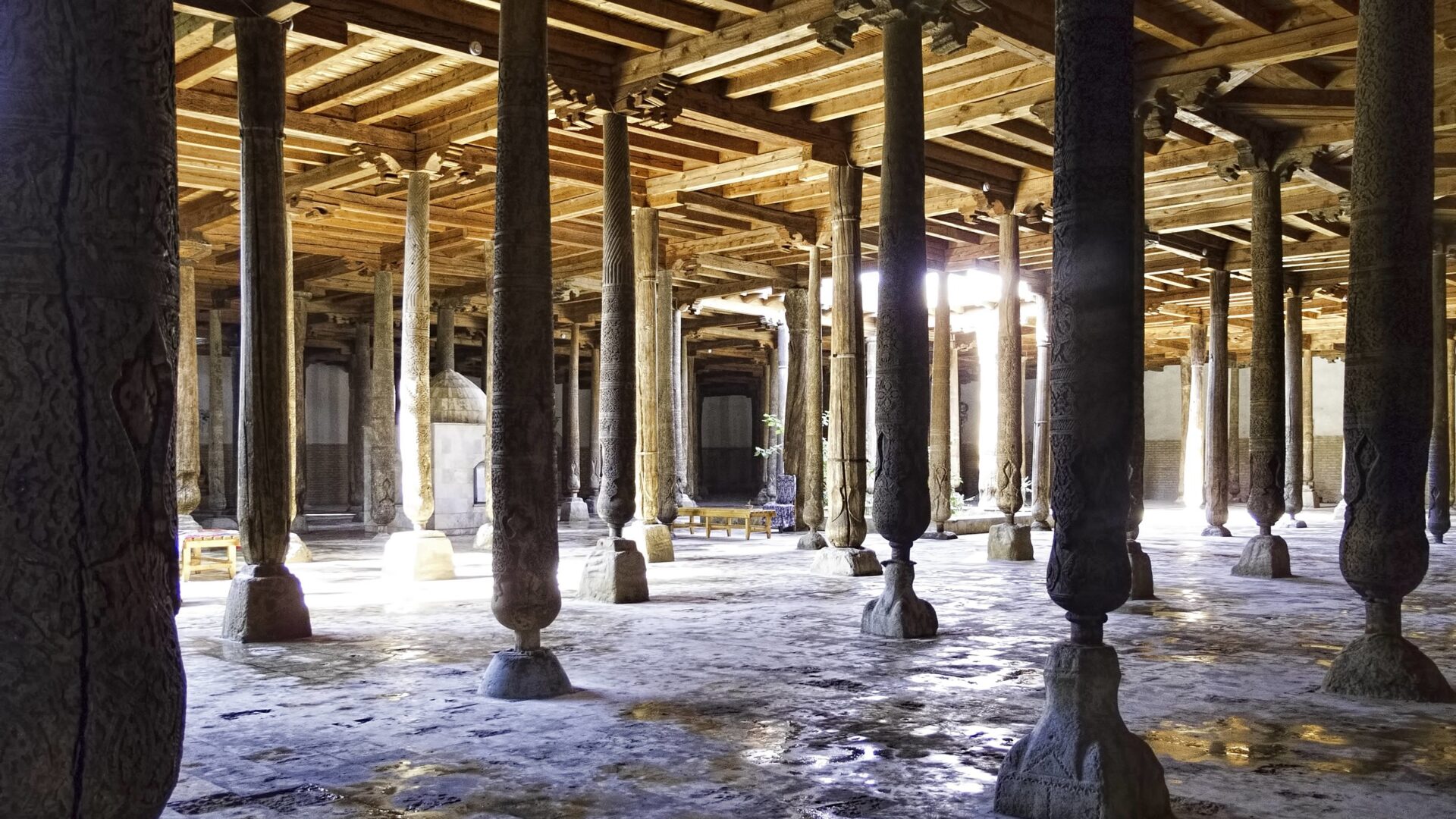
A key inspiration to the design team were the mosques of Khiva, specifically the Juma Mosque, where a dense collection of 213 carved wooden columns evokes the image of a forest.
Historically central to Uzbekistan’s urban and cultural life, the garden has been a place not only for environmental appreciation but also as a community center and space for intellectual and cultural exchange. The design team began thinking of knowledge as something that is organic, grows and can connect people across generations—The Garden of Knowledge.
The design team referred to this quote by Louis Kahn, capturing the relationship between nature, knowledge and design.
The first school probably began with a man under a tree…
The design team’s deep research into Uzbek history and culture unearthed symbolic and cultural inspirations that would drive the delivery of content with authenticity and inform the predominant shapes, textures, materials and detailing of the pavilion.
The importance of intergenerational exchange, knowledge as growth and the transmission of knowledge became a resonant theme that created the foundation for the project. The design team sought to represent the past and the future, culture and people of Uzbekistan in a single spatial experience.
The concept directed visitors to move through a sequence of spaces that unfolds like chapters in a story in a vertical progressive journey, a signature of Atelier Brückner’s concept development process to define a clear beginning or “prologue,” through moments of discovery, to a powerful closing or “epilogue.” The Garden of Knowledge pavilion was structured around three interdependent spaces sequenced in a way to represent this story arc, used to tell the story of the past, present, culture and people of Uzbekistan.
The concept unfolds through a metaphorical journey of growth starting with the prologue from the soil at the seed level through the entry experience on the ground floor containing the exhibition spaces and growing through a vertical connector in the form of an moving stage experience for 30 people at a time, containing a 360-degree immersive film, carrying visitors to the top level to an open air terrace representing a forest, also known as the forest of columns, as the epilogue of the story.
The strength of the conceptual framework encompassed respect for ancestors and the transmission of wisdom across generations, reflecting an Uzbek belief in learning from one another and that learning is a living and growing process. This perspective emphasizes the importance of heritage and storytelling as sources of knowledge that connect our past experiences with future innovations and values.
The conceptual framework drove a cohesive narrative thread through the architecture, digital media and visitor experience through every step.
Together, cultural, environmental and philosophical elements shape the pavilion’s conceptual and spatial design approach. Each element supporting the overall theme contributes to a poetic synthesis of spiritualism, craftsmanship and dialogue where tradition and modernity coexist seamlessly.
VISITOR EXPERIENCE
The visitor experience begins with striking views of the geometric wood structure from across the EXPO site. The angular form, unified materiality and unique muted color palette stood out from its surroundings.
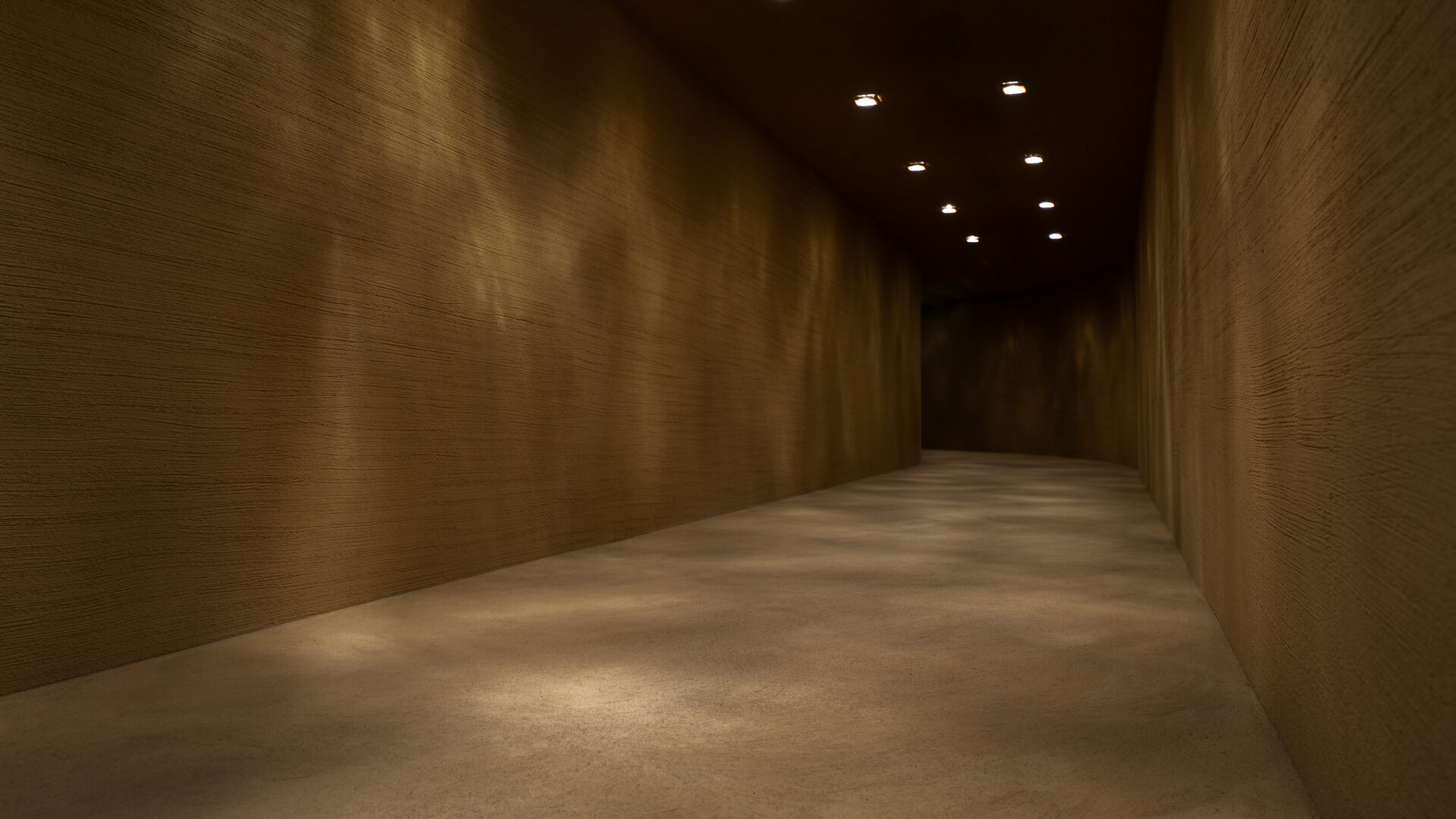
Upon approach, visitors enter through a fold in the brick base of the pavilion in groups of 30 people at a time. The concept is felt immediately as visitors transition to a cool ground-floor hallway from the exterior heat, crowds and EXPO frenzy. Visitors are requested to pause in a hallway encased with textured clay walls and ceiling representing soil or the beginnings of growth.
The hallway is remarkably cool with sounds of water dripping and moving dappled light resembling rippling water across the clay walls and ceiling. Visitors feel as though they are entering an underground world. The restraint of the designers is remarkable here; the clay walls are bare, devoid of content or imagery, the hallway is truly experiential, visitors are seen touching the earthen walls and slowly moving through the hall with a quiet anticipation. The hallway leads to the main exhibition space, serving as the prologue of Uzbekistan’s stories of cultural projects and innovations.

Glowing headline
The first glowing title seen is “The Soil”, reinforcing the narrative and ensuring the visitor is placed accordingly. Followed by the key topics being conveyed: Sustainability, innovation and education. The dramatic lighting of the space allows visitors to focus on these key themes that are accompanied by tables describing projects and values in Uzbekistan. The design team interpreted each project into glowing, dimensional visual icons depicting a key element of the project, followed by key facts surrounding the model. For example, urban innovations were represented as illuminated trains or houses, while ecological initiatives were transformed into symbolic seeds or landscapes. The recognizable icons were a focal point, serving as a powerful technique to draw visitors of all languages and cultures into the content. They each held a luminous presence in the darkened, underground-like environment. Atelier Brückner describes the dimensional models, “It is an image that lasts. It creates a stronger image in your head…like a continuous storyteller.”
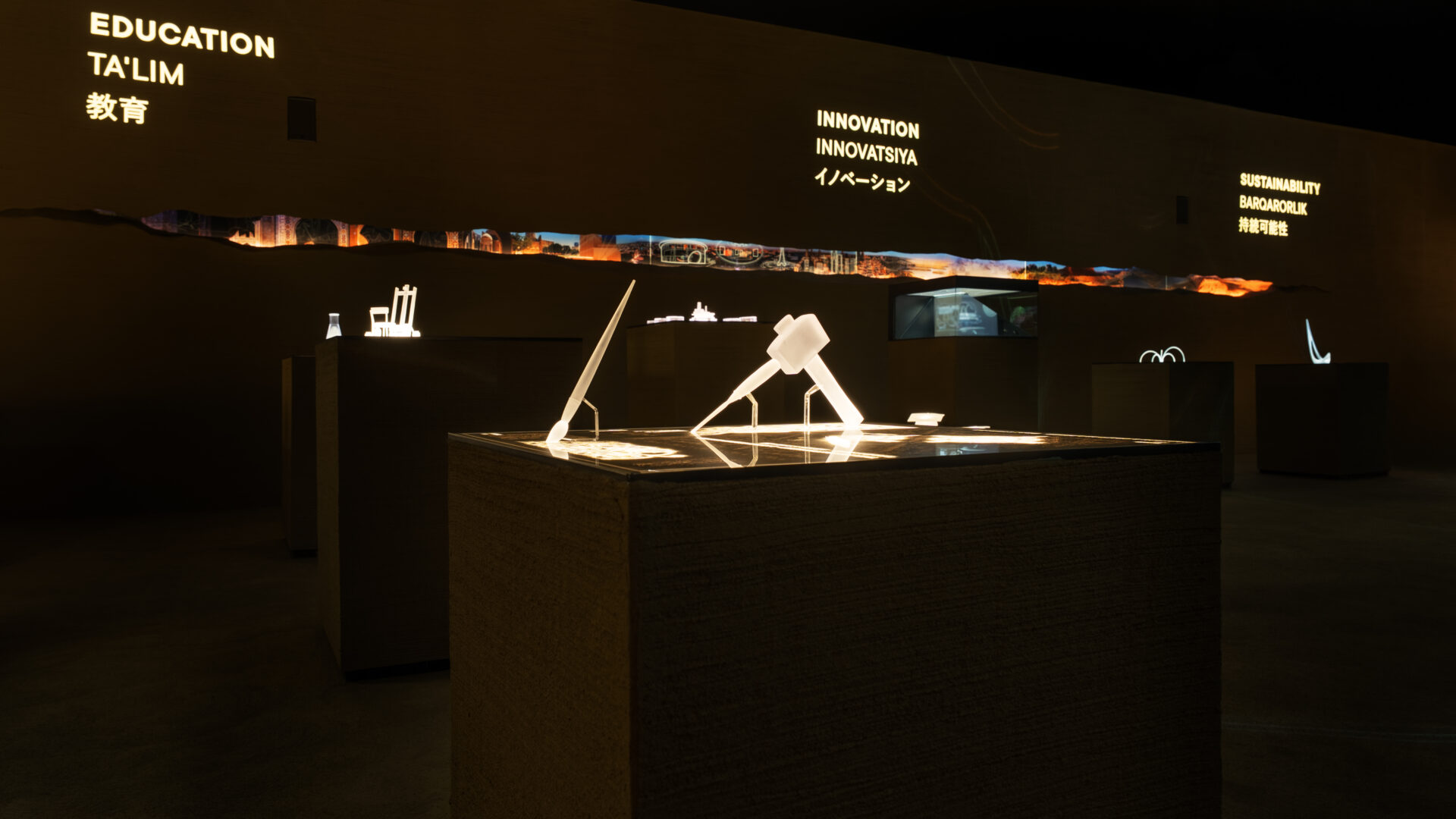
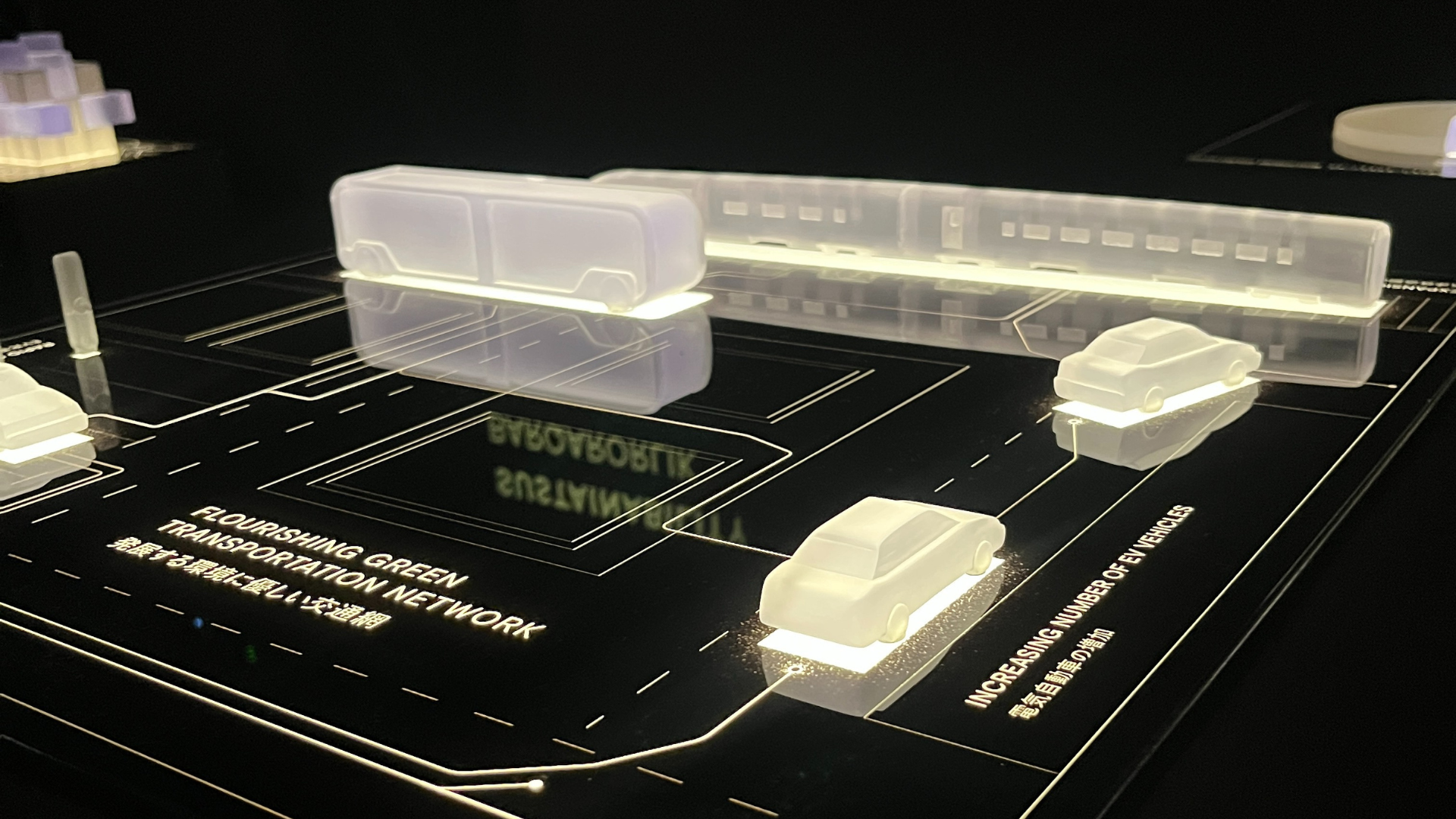
This strategy acknowledged the constraints of time within the EXPO. Due to an extraordinary number of visitors, the lines to enter pavilions were often 60–120 minutes long for a single pavilion. In response to this need, the Uzbekistan pavilion moved groups of 30 people at a time through the exhibition space rather quickly to accommodate the visitors waiting in lines outside. This technique of compressing complex stories into symbolic forms ensured that key takeaways from each table’s highlighted initiative were delivered effectively and were memorable. The narrative was communicated primarily through a layered technique of grand gestures over dense textual explanation. This method of the gradation of hierarchy of glowing titles, to dimensional models then down to key facts on renewable energy, sustainable agriculture and water management, complemented by a docent briefly explaining the content, was an effective way to draw visitors into the content immediately. The soil-like textured wall in the entry hall continued within the space, and in a powerful moment, split to reveal a film that gave glimpses of landscapes and what is to come. Atelier Brückner explains, “We wanted something to contextualize the whole space together. So, we brought in this idea that peeks through the wall.”
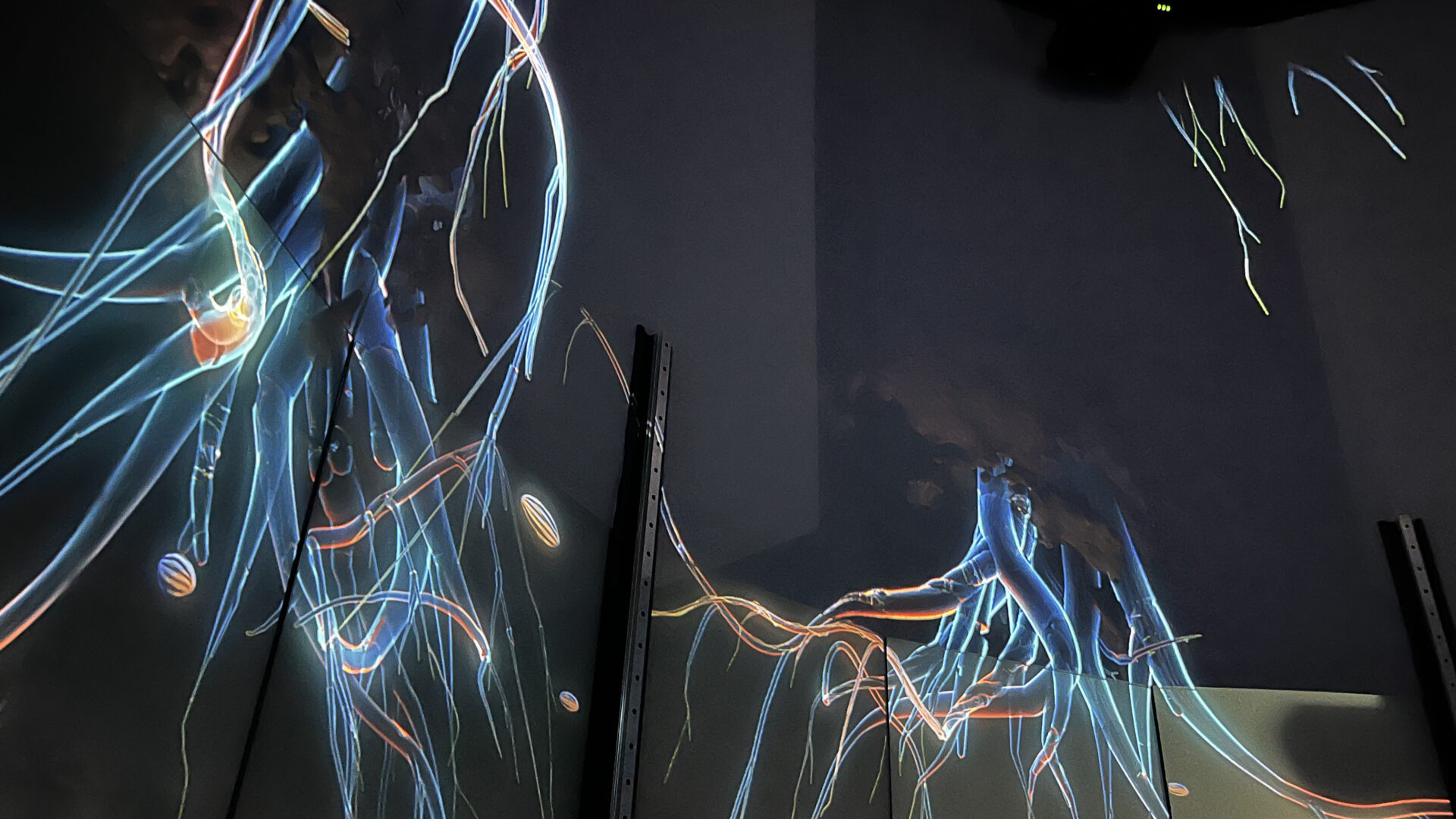
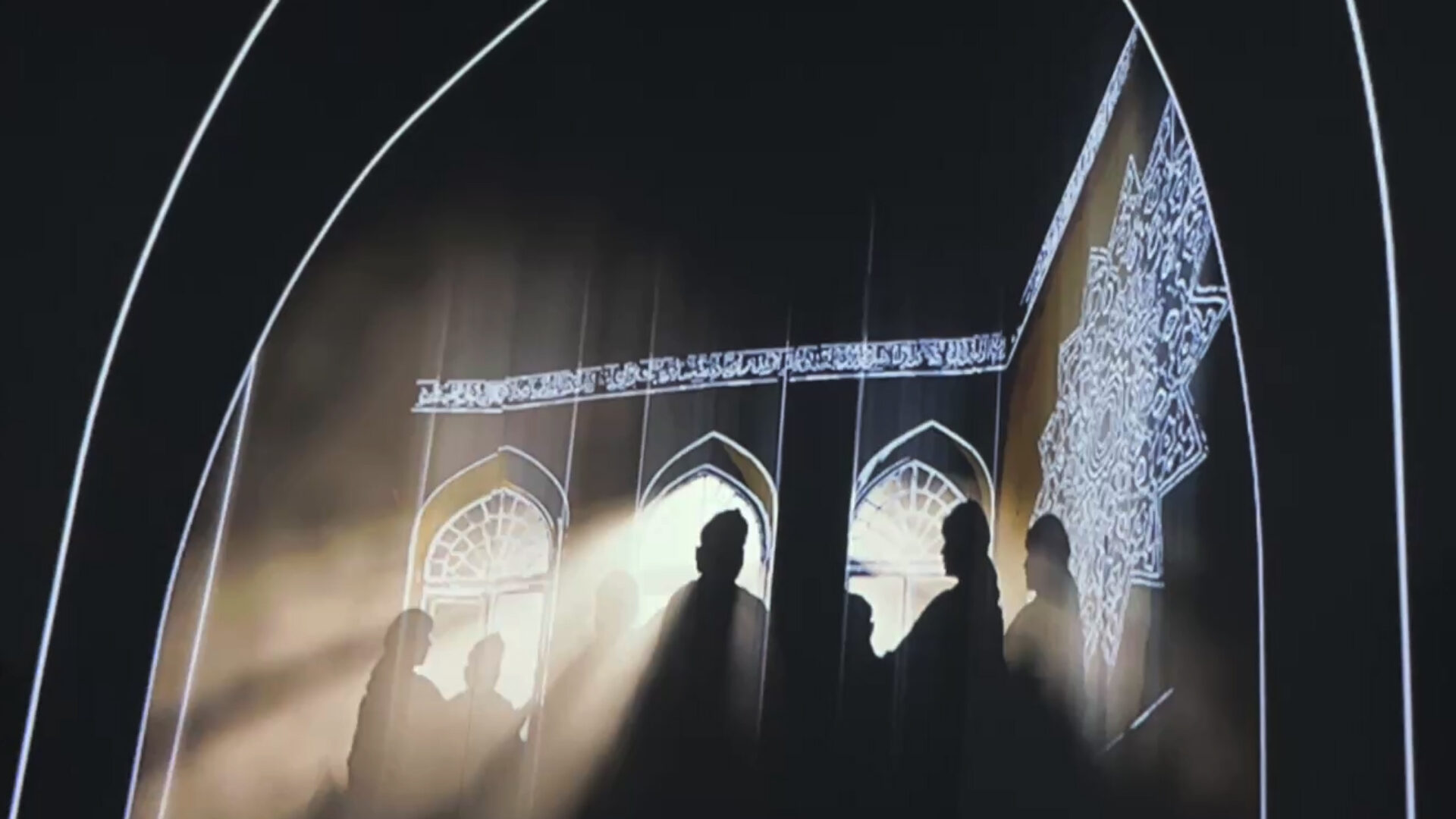
The experience then transitions to a moving platform, holding 30 visitors at a time, which ascends through the central core of the pavilion to the roof, a symbolic transition representing the growth of the garden. Within the moving platform, a 360-degree film depicts this through images of symbolic seeds of knowledge, roots growing and morphing into a pomegranate tree, a national symbol of life and unity. While the moving platform was logistically necessary, this transitional moment allowed for a powerful medium of compressed storytelling, and while, due to time constraints, visitors were required to move through the ground floor exhibits fast, the film was able to reinforce essential concepts. The film moved from images of growth to overlaying Uzbek architecture, people conversing, and everyday life, to images that reflected the projects and innovations highlighted on the ground floor. The designers skillfully incorporated graphics representing these key initiatives that are closely linked to the forms and visuals of the dimensional icons on the first floor. The film ends with the completed growth of the pomegranate tree, and the doors open to the rooftop terrace, the forest of columns.
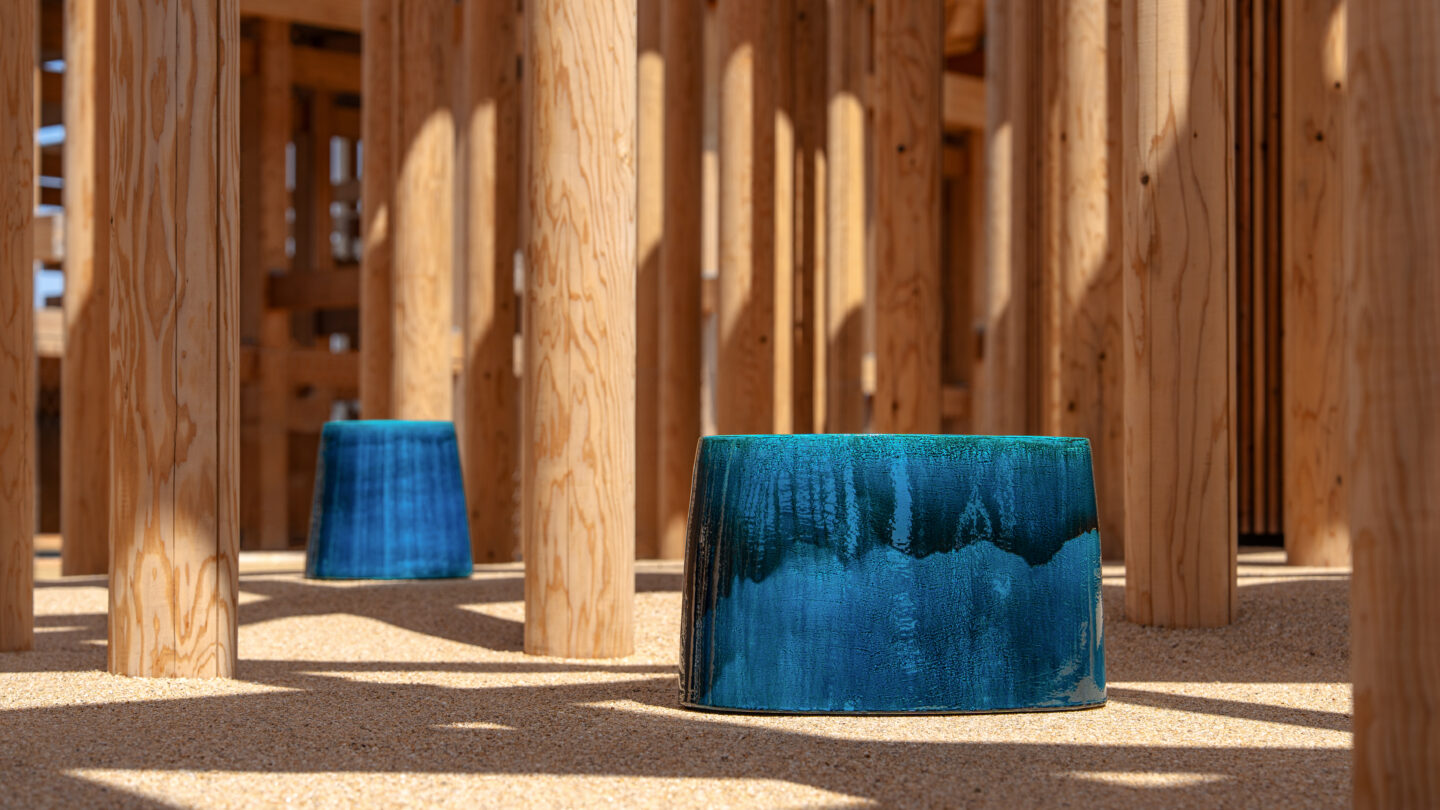
Forest of Columns, Photography by Josef Sindelka. Courtesy of Atelier Brückner
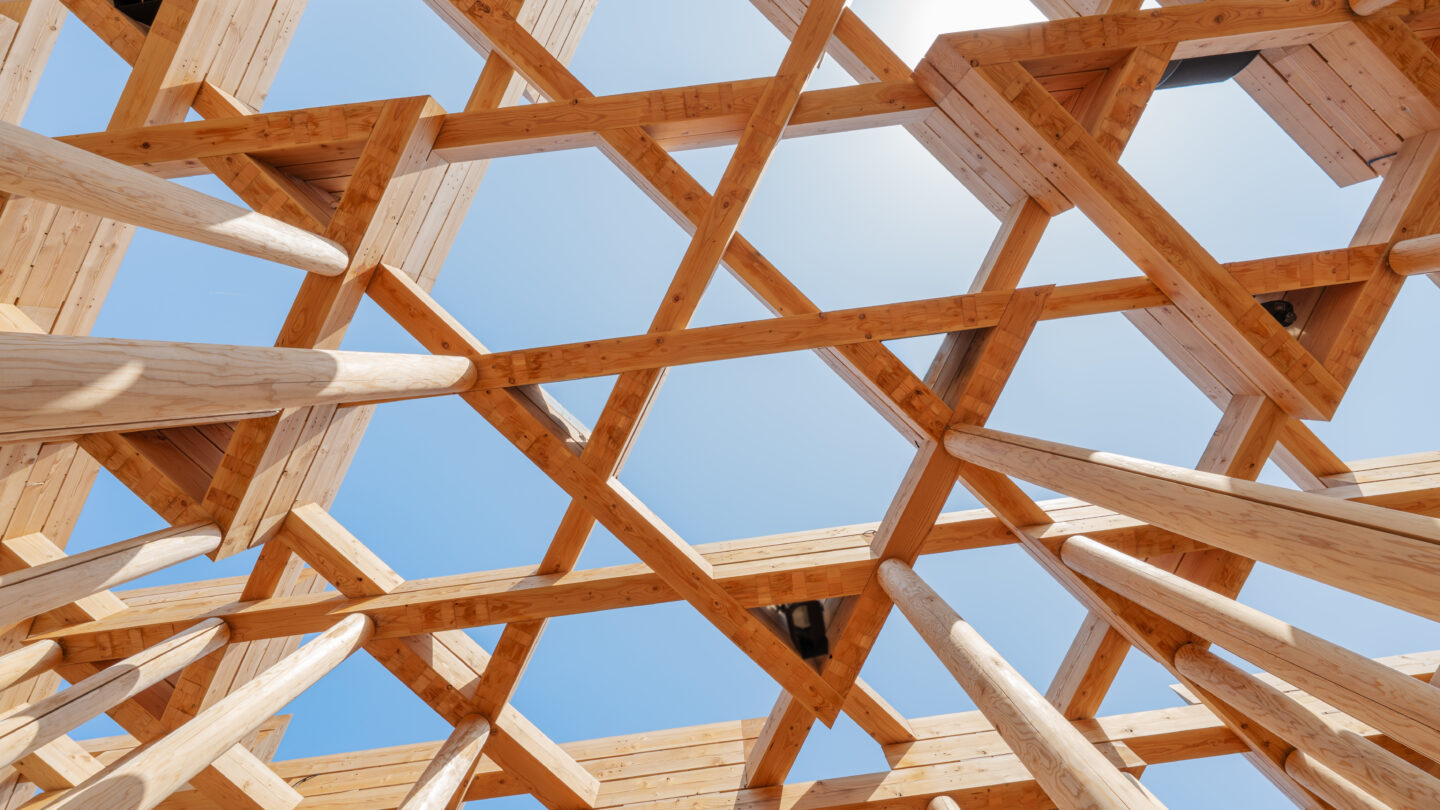
Forest of Columns, Photography by Josef Sindelka. Courtesy of Atelier Brückner
The forest of columns creates the pavilion’s epilogue. Here too, the restraint of the designers is remarkable; the experience relies solely on the interplay of the wood columns, light, and shadow, creating a dynamic experience of contemplation and gathering.
The space is punctuated by ceramic seating that is in the nationally distinctive deep blue, not only offering moments of rest and reflection, but also the pops of color seem to enhance the impact of the abundance of wood and the overall materiality of the experience.
The wooden latticework roof, open to the sky, is derived from traditional Uzbek patterns. The open roof filters sunlight to produce shifting patterns throughout the day. Reminiscent of the Juma Mosque, sunlight creates a dynamic dance of light and shadow that evokes a sense of spiritual contemplation and appreciation. At night, these shadows are replicated through lighting treatments.
The timber columns recall the wooden supports of Khiva’s Juma Mosque and are made of Japanese cedar sourced from forests nearby in Nara, Japan.
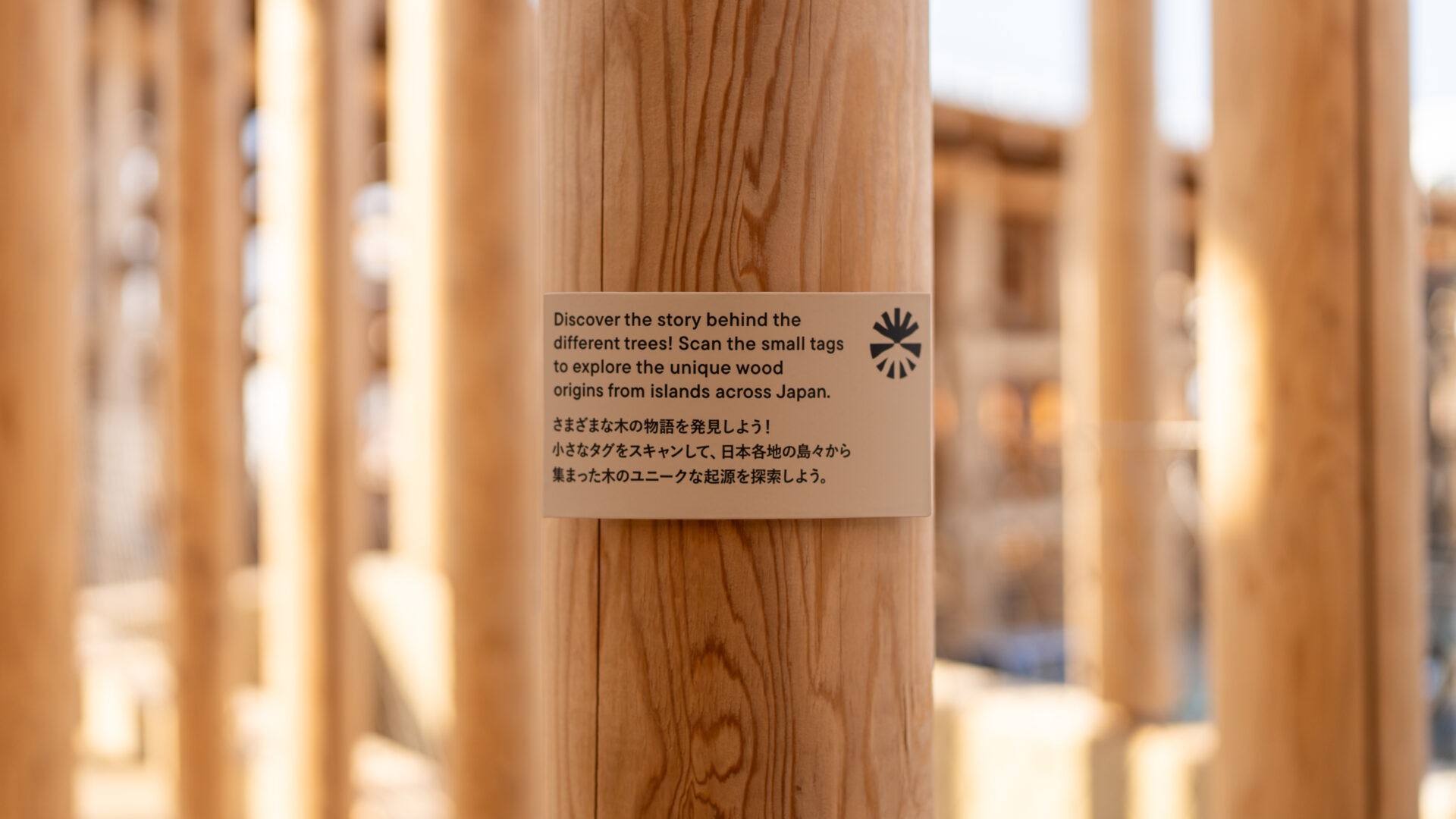
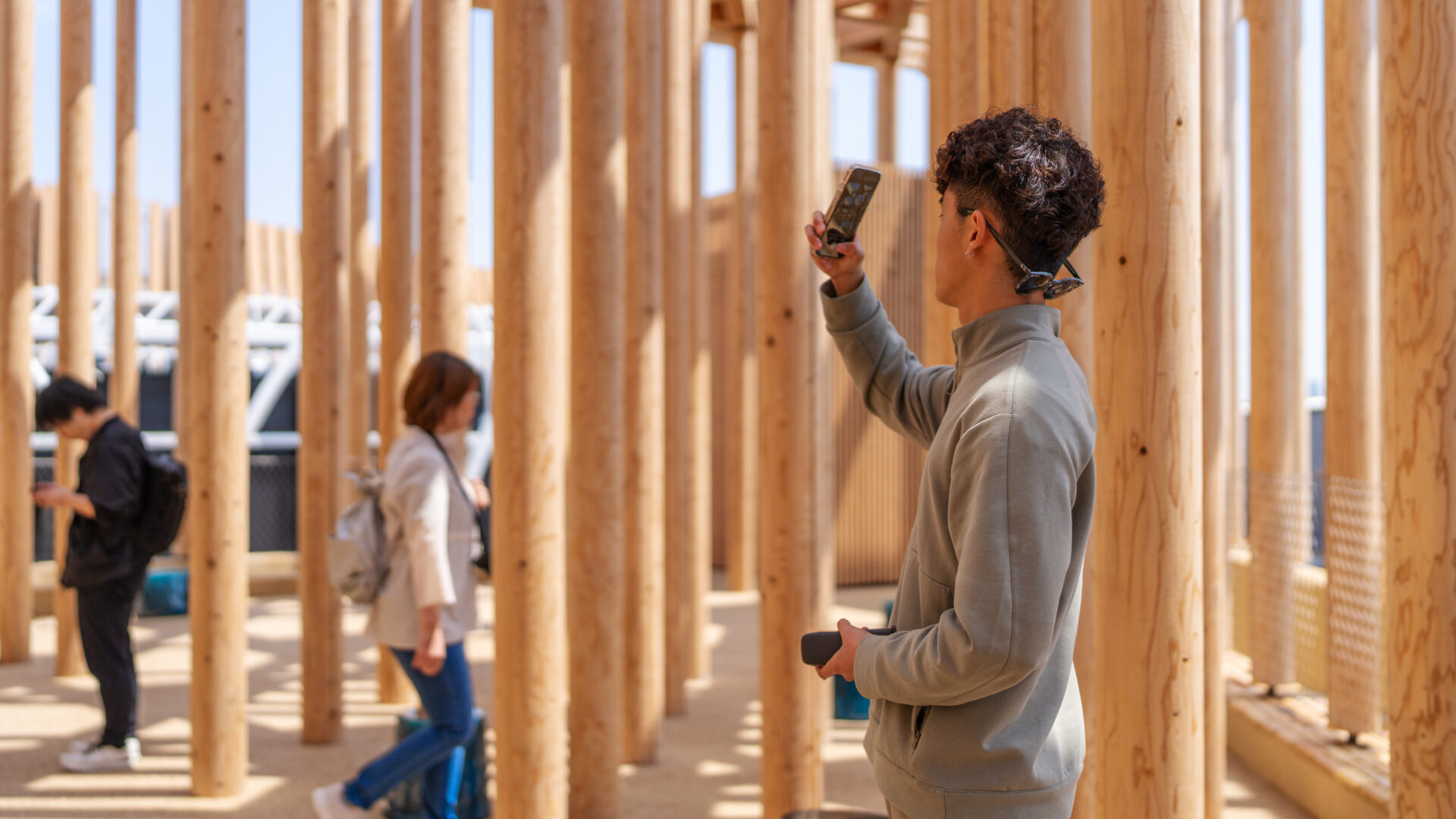
On several columns, a small circular tag was mounted, enabling visitors to access information about each column’s origin, including location, harvesting and finishing techniques, as well as information on current programs for sustainable methods of forest management and roadway development that support natural ridge lines and dispersing water flow to prevent erosion, and how the harvesting of these particular columns supported these programs. This offered transparency into the sourcing of the wood columns but also gave visitors a connection and a deeper relationship to the particular column before them. Visitors were often seen gently running their hands along the smooth columns. The tags were elegant and subtly placed; visitors seemed unfamiliar with these tags as they held a different visual language than QR codes. Luckily, docents were on hand to hold visitors’ phones in the correct orientation to access the websites.
Visitors wandered the forest of columns at a slow and reflective pace, often taking pictures of the sky through the lattice roof and admiring the views of the EXPO and the Grand Ring from the rooftop. One visitor interviewed noted that it was impressive to feel the history and culture of Uzbekistan, yet be in such a modern building. Another visitor with children commented that their three children had the most fun of the day playing hide and seek in the forest of columns. While walking down a long ramp to the exit, visitors were greeted with a surprising sound installation. Upon passing by metal grates mounted to the wall, a voice was triggered in multiple languages, with messages about peace and prosperity. At the exit, the neutral palette of wood, clay, and brick was interrupted with bright blue ceramic tiles. Over 11,000 handmade ceramic tiles by artisan Abdulvahid Bukhari Karimov are incorporated into the base of the pavilion and gift shop.
The Uzbekistan Pavilion is a superb example of how the integration of architecture and exhibition design under a single design firm is crucial for achieving conceptual and spatial coherence. The conceptual framework is thoughtfully applied to every single design decision and, in effect, delivers a visitor experience that is transformative even in a small space and even with a massive number of visitors moving quickly, there is no question that visitors felt the intended themes throughout each step. When asking visitors at the exit, their thoughts on the experience:
I learned a lot about Uzbekistan and about all the projects they are doing to help climate change, I had no idea before coming.
It was fun, I felt like I was underground at first and then realized in the elevator I was meant to be a growing tree and bloomed when I reached the roof for my sun.
We got to know all about Uzbekistan, I liked that they are using traditional patterns but making them modern.
This pavilion was very different than the rest I’ve visited today, it felt more natural and peaceful, especially on the top level, it was all really beautiful.
Sustainability
Envisioned to be a legacy from its inception, Atelier Brückner’s commitment to sustainability in this project was inseparable from their design concept. This was a guiding principle from the earliest stages of conceptual development.
By prioritizing this early within the conceptual process, clarity was achieved, and the pavilion was able to integrate sustainable strategies seamlessly rather than adding elements on as technical fixes later. Just as the soul of the project narrative was growth and exchange of knowledge, so was cyclical material life and sustainable practices that were embedded in the process from its conception. As Atelier Brückner emphasized, “this commitment was from the beginning, it was never an afterthought.”
Designed to be modular and able to be deconstructed, the rooftop has been dismanteled and will be reused for a children’s library in Nukus, Karalpakstan, in southwestern Uzbekistan, extending the life of the pavilion beyond EXPO 25. Locally sourced materials were also specified throughout to minimize transportation emissions. The clay-like walls of the ground level previously mentioned were made from clay from Awajishima Island, Japan. The wood that forms the open roof on the rooftop terrace is Sugi Cedar, which was harvested from nine different forests surrounding Osaka. The wooded columns on the roof in the forest of columns are from Japanese Cypress sourced from a nearby forest in Nara, Japan and the bricks that form the base of the pavilion are reclaimed from demolished buildings in Japan. Material transparency is expressed to the visitors by scanning the code on the rooftop columns. The design team also specified energy-efficient lighting and projection technologies. These strategies positioned early in the design process allowed the pavilion to be more than a one-time object but as a continuing resource, embodying the goals of sustainability and intergenerational exchange at once.
An undertaking such as this required not only a strong design logic at the start and throughout, but also a strong client commitment. While many national pavilions face difficulties in the end allocating funds for sustainable afterlives, Uzbekistan’s client team also acknowledged the importance at the start and chose to invest additional resources to ensure follow-through.
The Garden of Knowledge’s sustainable aspirations aligned with EXPO organizers’ stated goals of circular design as a foundational principle when planning the EXPO and soliciting bids, emphasizing reuse over disposal. There were many promising examples of this throughout the EXPO, but the largest potential for reuse may be the Grand Ring, which was designed by Sou Fujimoto, a circular platform that surrounds the entire EXPO site. It was named the largest wood structure in the world, covering over 600,000 sq feet, made of Japanese Cedar and Cypress. According to show organizers, a part of the grand ring’s timber structure will be reused in public housing projects in Ishikawa. The Grand Ring became a critical source of shade during the summer months. Since any fabric or architectural shading devices are counted against each pavilion’s overall footprint, this constraint meant that very few pavilions had shade for queuing, and visitors often queued in the sun, which was challenging in Osaka’s summer climate. Pavilion staff resorted to handing out umbrellas or temporary tents to protect visitors in line. Pavilions such as Uzbekistan were sited next to the Grand Ring, therefore accommodated by the structure for shaded queuing.
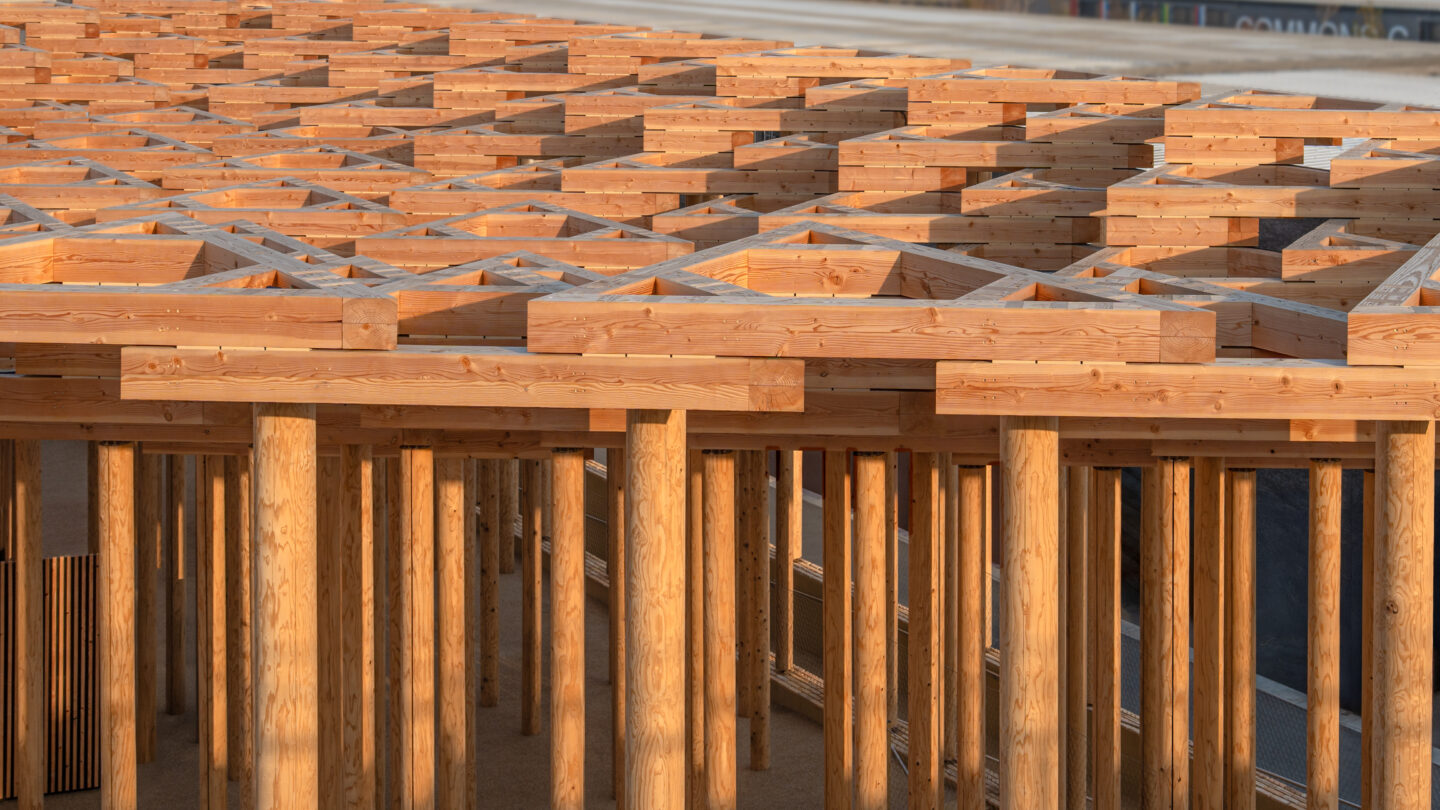
Uzbekistan Pavilion view from the Grand Ring, Photographed by Josef Sindelka. Courtesy of Atelier-Bruckner
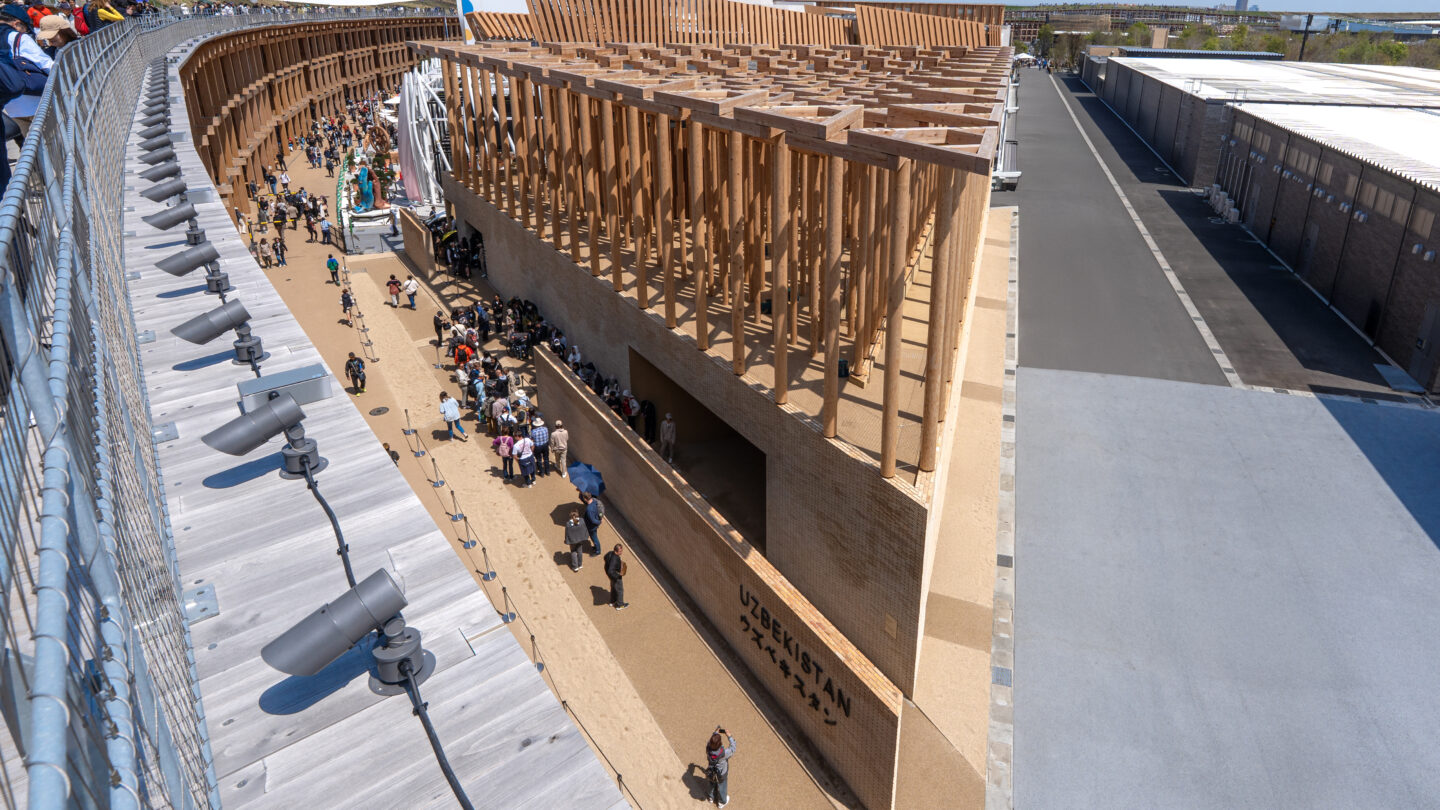
Uzbekistan Pavilion View from the Grand Ring, Photographed by Josef Sindelka. Courtesy of Atelier-Bruckner
Remaining EXPO materials were offered through the EXPO’s reuse marketplace called “MYAKU-ICH”. This is a program that facilitated the distribution of EXPO materials and equipment, such as HVAC systems, furniture, and lighting, to be reused. Also, landscaping followed a similar model, and pavilions such as the Women’s Pavilion, in collaboration with Cartier, replanted its trees and greenery in local communities.
In some cases, entire pavilions are being relocated. The Luxembourg Pavilion was constructed on detachable steel-frame mega blocks and is set to be relocated to Katano City, Osaka for public use. The pavilion’s membrane roof is being upcycled into accessories. Also, the Japan Pavilion’s use of cross-laminated timber and detachable assembly methods was intended to easily disassemble and be reused post EXPO. Others incorporated these principles as part of the pavilion construction process, for example, the Panasonic pavilion upcycled construction scraps into pavilion furniture and fixtures during the EXPO that will later be repurposed or relocated.
The organizers of EXPO 2025 considered sustainability as a core objective from the start and created a governance and oversight team called the Japan Association for the 2025 World Exposition that implemented an Event Sustainability Management System, which was certified to meet the international standard ISO 20121. The EXPO Association then created a committee for the sustainable EXPO, which meets to review progress and ensure accountability, verifying that the initial sustainable plans proposed were not just aspirational but are subject to monitoring and follow-up.
The sustainability strategies implemented in the Uzbekistan Pavilion were distinctive in their seamless integration of authenticity and practicality. It was not just limited to the post-EXPO reuse of wood but also extended into many design decisions throughout the process, beginning with and most importantly within the core design concept at the start. The team ensured that sustainability was embedded in the soul of the project in both the exhibits and architecture.
The Uzbekistan pavilion is a stellar example of architecture and exhibits together, facilitating a holistic storytelling strategy where both the space and the story are inseparable.
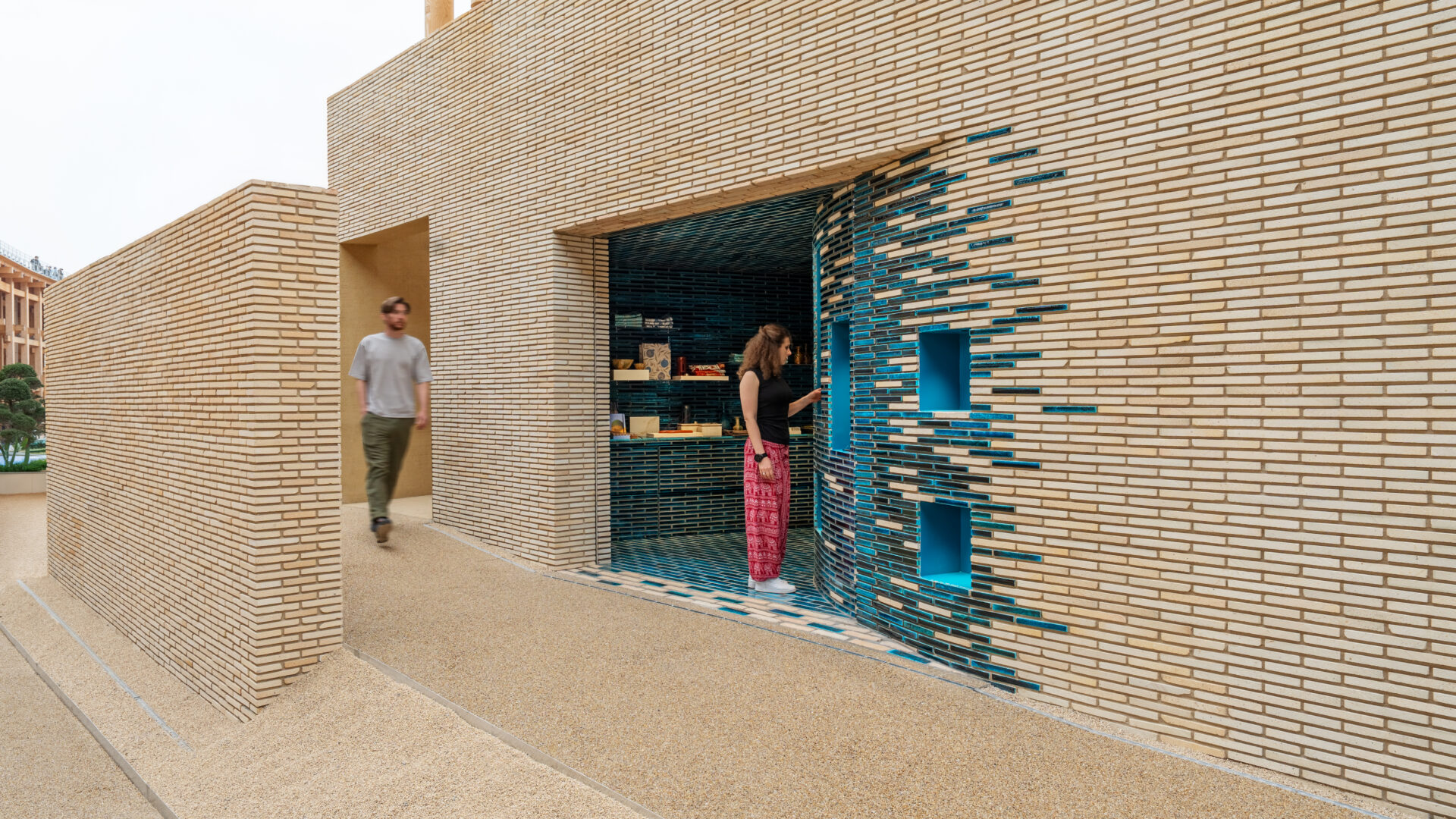
A very special thank you to:
- Bureau International des Expositions (BIE)
- SEGD, The Society of Experiential Graphic Design
- Atelier Brückner
- All the staff and docents at the Uzbekistan Pavilion, EXPO 25
Uzbekistan Pavilion Team:
- Commissioned by the Art and Culture Development
- Foundation of Uzbekistan (ACDF)
- Atelier Brückner: General Contractor, Architecture,
- Exhibition Design, Scenography, Graphics
- Medienprojekt: Media Planning
- Tamschick Media+Space GmbH: Digital Media
- Concept & Media Production
- NÜSSLI Group: Construction
- Structural Engineering: Werner Sobek
- Lighting Design: Klee
- Abdulvahid Bukhari Karimov: Tile ceramicist
- Nada Debs: Ceramic stools
Sources
Art and Culture Development Foundation of Uzbekistan. (2024). Uzbekistan Pavilion overview.
Atelier Brückner. (2024). Garden of knowledge – Uzbekistan Pavilion at Expo 2025 Osaka.
Expo 2025 Official Website. (2024). Uzbekistan – Official participants.
Expo 2025 Uzbekistan. (n.d.). Official website.
German Design Award. (2025). Gold Award for Uzbekistan Pavilion in excellence in architecture.
Japan Times. (2025, October 2). Expo Ring timber to be reused in Ishikawa Prefecture.
Katano Times. (2024, April 1). Post-Expo reuse of the Luxembourg Pavilion in Katano City.
Luxembourg Pavilion. (n.d.). Expo 2025 Luxembourg Pavilion official site.
Panasonic Newsroom Global. (n.d.). Upcycling initiatives at the Expo pavilion.
Prime Minister’s Office of Japan. (2025, September 16). Meeting related to the Osaka–Kansai Expo.
PR TIMES. (n.d.). 100% domestic reuse of concrete foundation blocks.
Red Dot Award. (2024). Uzbekistan Pavilion wins Best of the Best in exhibition design.
SEGD. (2024). Inside Uzbekistan’s Pavilion at Expo 2025: A garden of knowledge.
UzDaily. (2024). Uzbekistan Pavilion at Expo 2025: Tradition and innovation.
People also viewed
-
In-Depth Analysis: Inside the Nordic Pavilion at Expo 2025
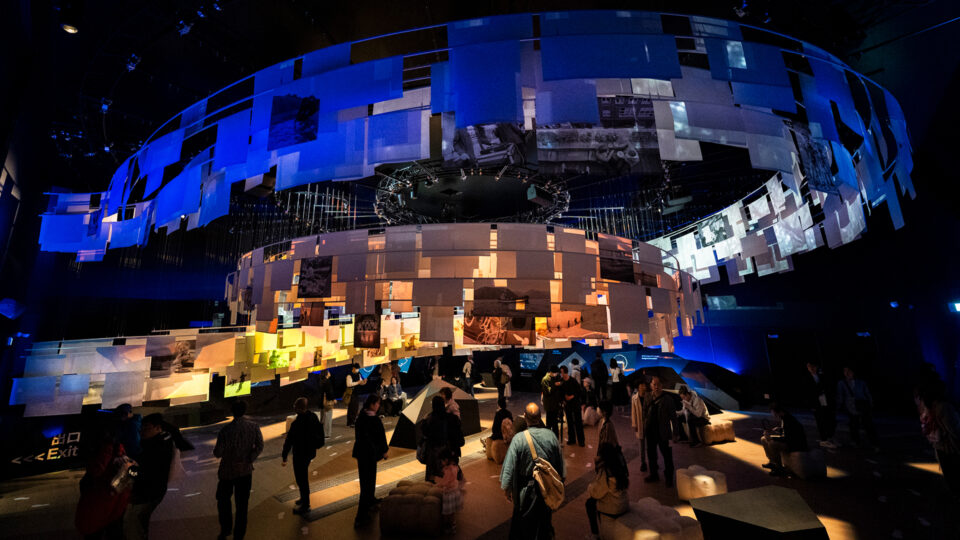
In-Depth Analysis: Inside the Nordic Pavilion at Expo 2025
-
Inside Uzbekistan’s Pavilion at Expo 2025: A Garden of Knowledge
Inside Uzbekistan’s Pavilion at Expo 2025: A Garden of Knowledge
-
Inside the Saudi Arabia Pavilion at Expo 2025: Stories Rooted in Connection
Inside the Saudi Arabia Pavilion at Expo 2025: Stories Rooted in Connection