In-Depth Analysis: Inside The Singapore Pavilion Expo 2025
The Dream Sphere: Where Dreams Take Shape ゆめ • つなぐ • みらい Dreams, Connect, Future
SEGD’s Expo 2025 Case Study Series takes a closer look at how selected pavilions in Osaka translated these expansive ideas into clear, engaging visitor experiences. Led by Christina Lyons, Associate Professor & Chair of the FIT Graduate Exhibition & Experience Design program, these studies combine on-site observation with interviews, process analysis, and conceptual documentation.
By examining how design teams navigated narrative complexity, cultural communication, architecture, and high-volume visitor flow, this series offers insights and strategies useful for experiential designers across sectors.
This case study focuses on the Singapore Pavilion at EXPO 2025 in Osaka, Japan—a striking expression of collective dreaming, participatory design, and sustainable innovation. The report traces the pavilion’s journey from its conceptual roots in the “Little Red Dot” to its immersive visitor experience and post-Expo legacy. Christina’s report has been published in its entirety below. For the full, formatted report, click the link to download.
Overview
Project Overview
The Dream Sphere: Where Dreams Take Shape, was the theme of the Singapore Pavilion at EXPO 2025 in Osaka, Japan, commissioned by the Singapore Tourism Board.
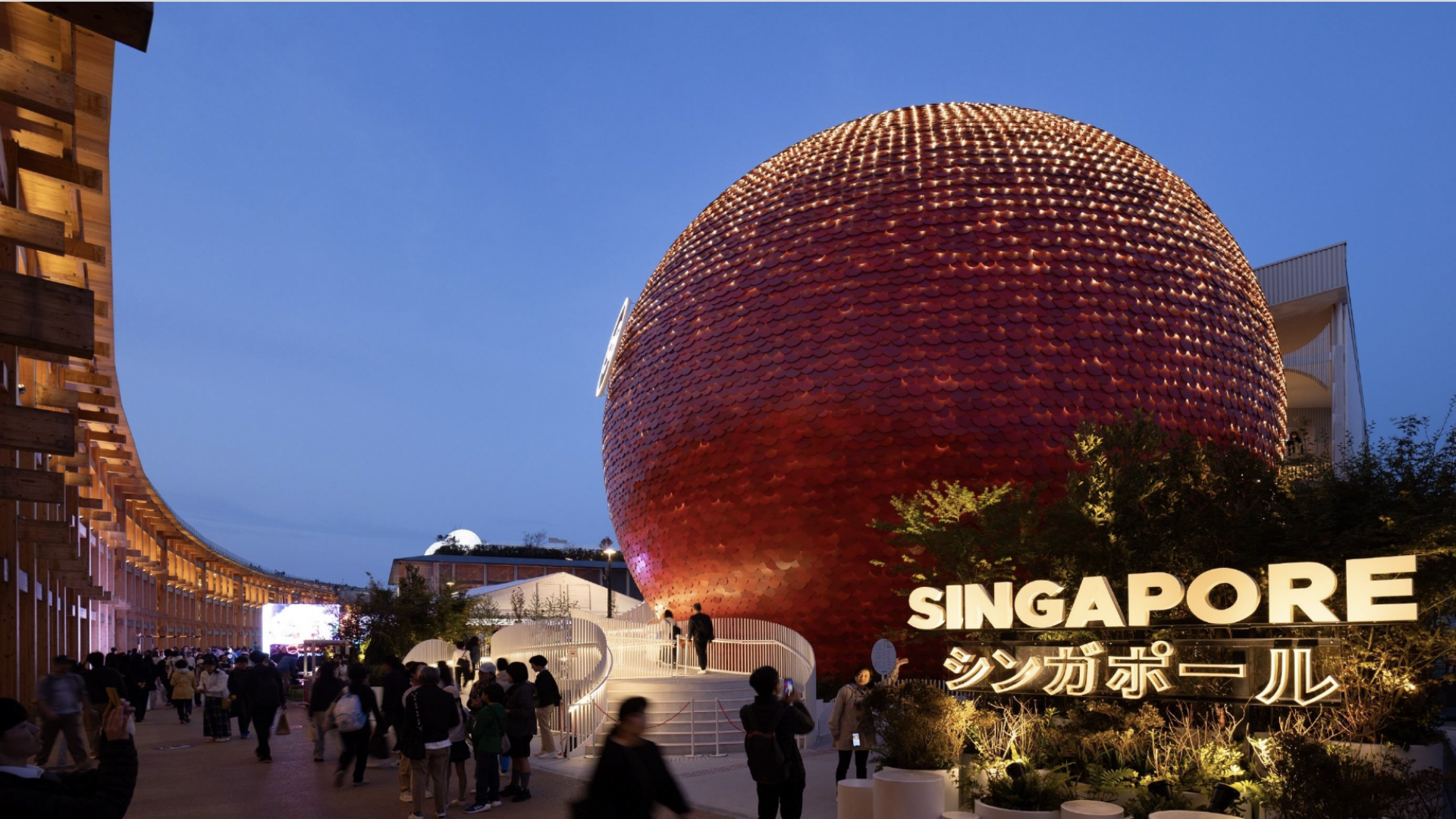
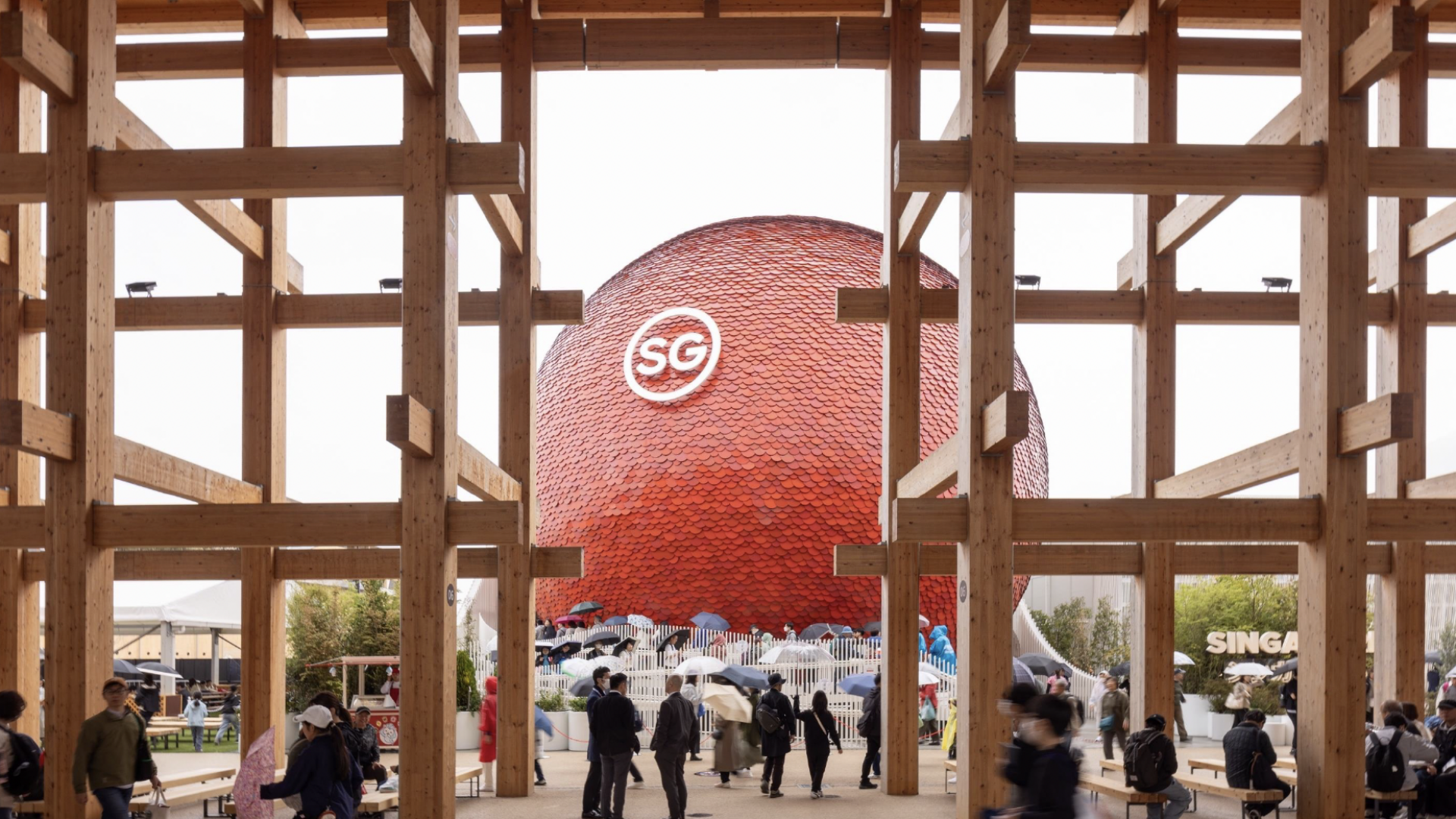
The striking, bright red reflective sphere could be seen from almost all views of the EXPO site. It was conceived and designed by Kingsmen Exhibits and DP Architects, in collaboration with Presplay, Milla & Partner, Finding Pictures and many other Singaporean partners, including artists and members of the community.
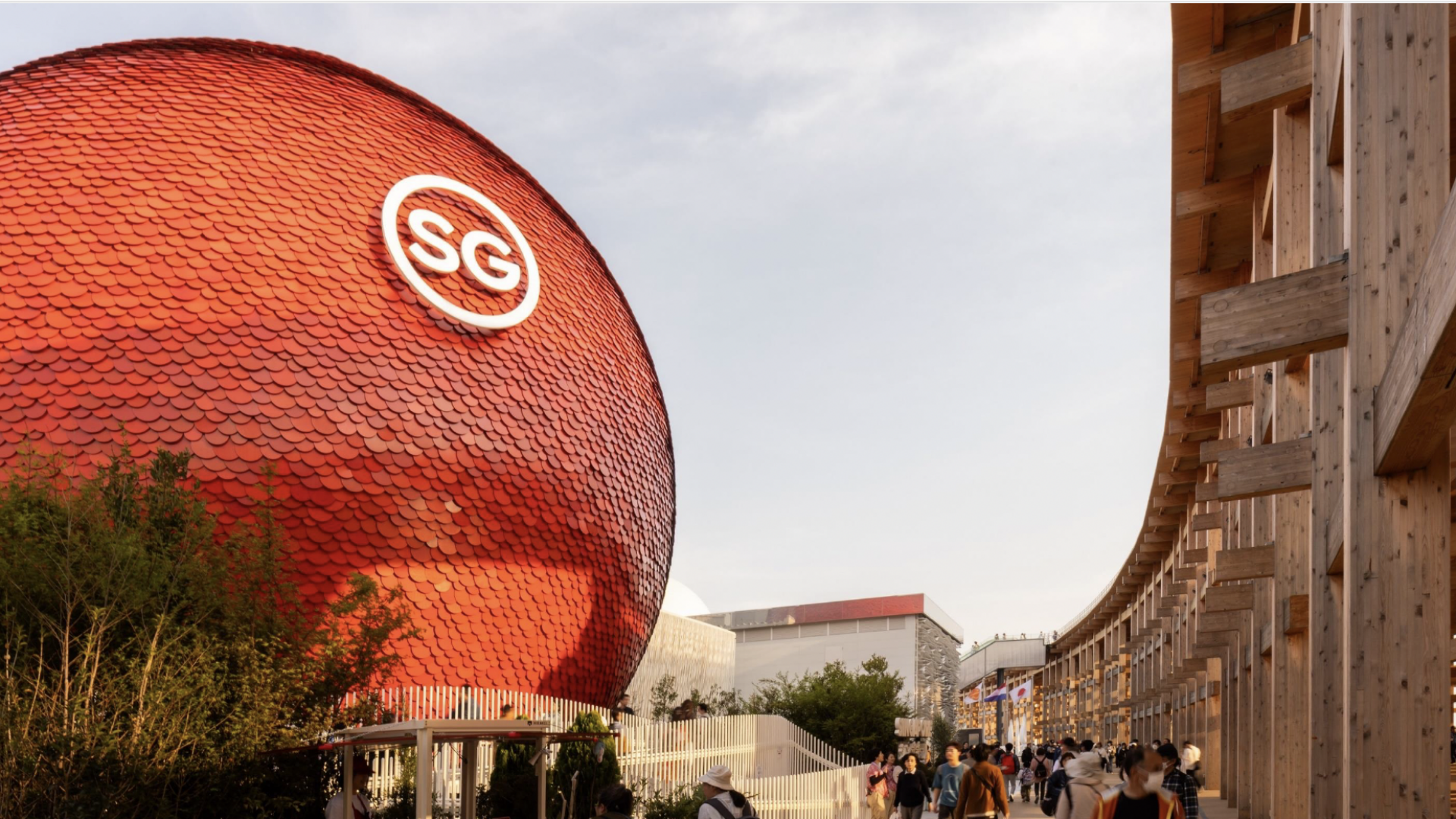
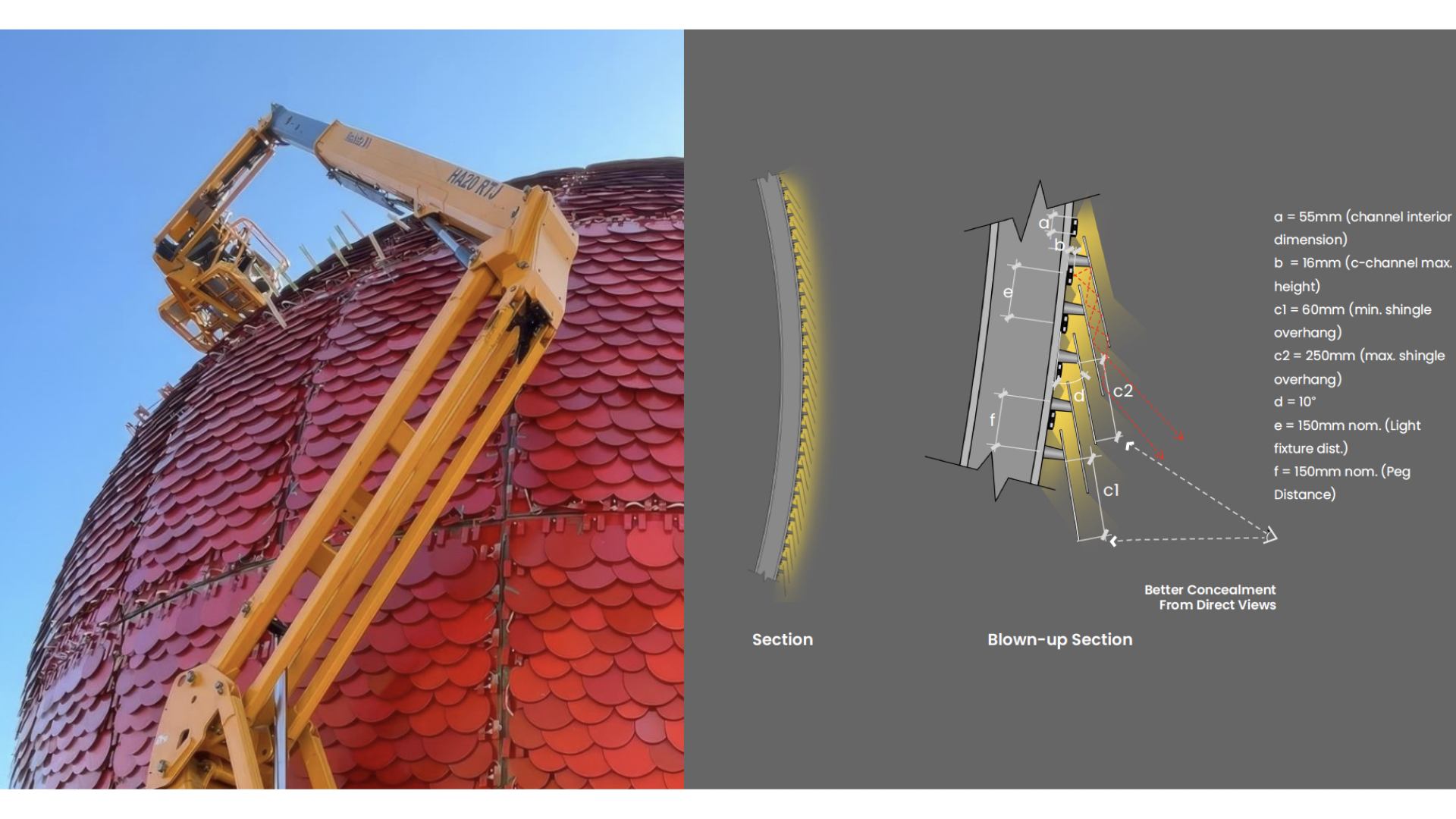
The Dream Sphere was a three-story structure comprised of a sphere and an annex building. This dynamic, shimmering red sphere was clad in approximately 17,000 recycled aluminum discs called Dream Discs. Each is symbolically representative of an individual dream, and collectively, the Dream Discs form a powerful image of Singapore’s aspirations and hopes for a brighter future. An easily recognizable landmark throughout the Expo grounds, the Dream Sphere extended an open invitation to the wider, global community to share in these aspirations and contribute their own dreams.
The Dream Sphere was conceptualized and developed with a multidisciplinary team and a diverse group of talented Singaporean artists to communicate a powerful narrative that resonates with and brings together people from around the world.
This report outlines the story behind the design of the Dream Sphere pavilion by tracing its path from early initial themes the finished installation and final visitor experience in Osaka. The project brought the people of Singapore and on-site visitors of the EXPO together in a collaborative effort to express the power of collective dreaming. The following sections will examine the pavilion in detail, addressing the conceptual approach and strategies that shaped its narrative and spatial experience, as well as plans for reuse. The content in the following sections is based on interviews conducted with Crystal Chu, Managing Director, KR+D Pte Ltd, a creative arm of Kingsmen Group in Singapore, who provided detailed insights and reflections on the process, conceptual approach and final installation, as well as from site visits and interviews with visitors and staff at the pavilion in Osaka.
The Little Red Dot
Singaporeans have developed a sense of pride for the phrase “Little Red Dot,” referring to how Singapore is represented on the world map. It is a term of endearment that, as Crystal Chu, the Managing Director at Kingsmen, KR+D Pte Ltd of Singapore explains, “Though we are small in size, we are big in dreams. Our efforts to realize our dreams go beyond the physical limits of our island.” This endeavoring spirit became the inspiration and foundation for the overall concept and visitor experience of the pavilion.
During the creative pitch stage in 2022, the objective was to design something “very uniquely Singapore, yet unexpected.” The design team proposed an incredibly clear, concise, bold form with the decision to create a three-dimensional red dot within the Expo site. As the red dot is seen on the world map, the pavilion is similarly seen on the EXPO site. Chu explained that the pavilion’s placement and form mirror Singapore’s global position, “we are really, really small compared to the whole globe…but we are distinctive.” The EXPO site is an island known as Yumeshima, or “Dream Island” which also inspired the name Dream Sphere rather than directly labeling the structure as the little red dot.
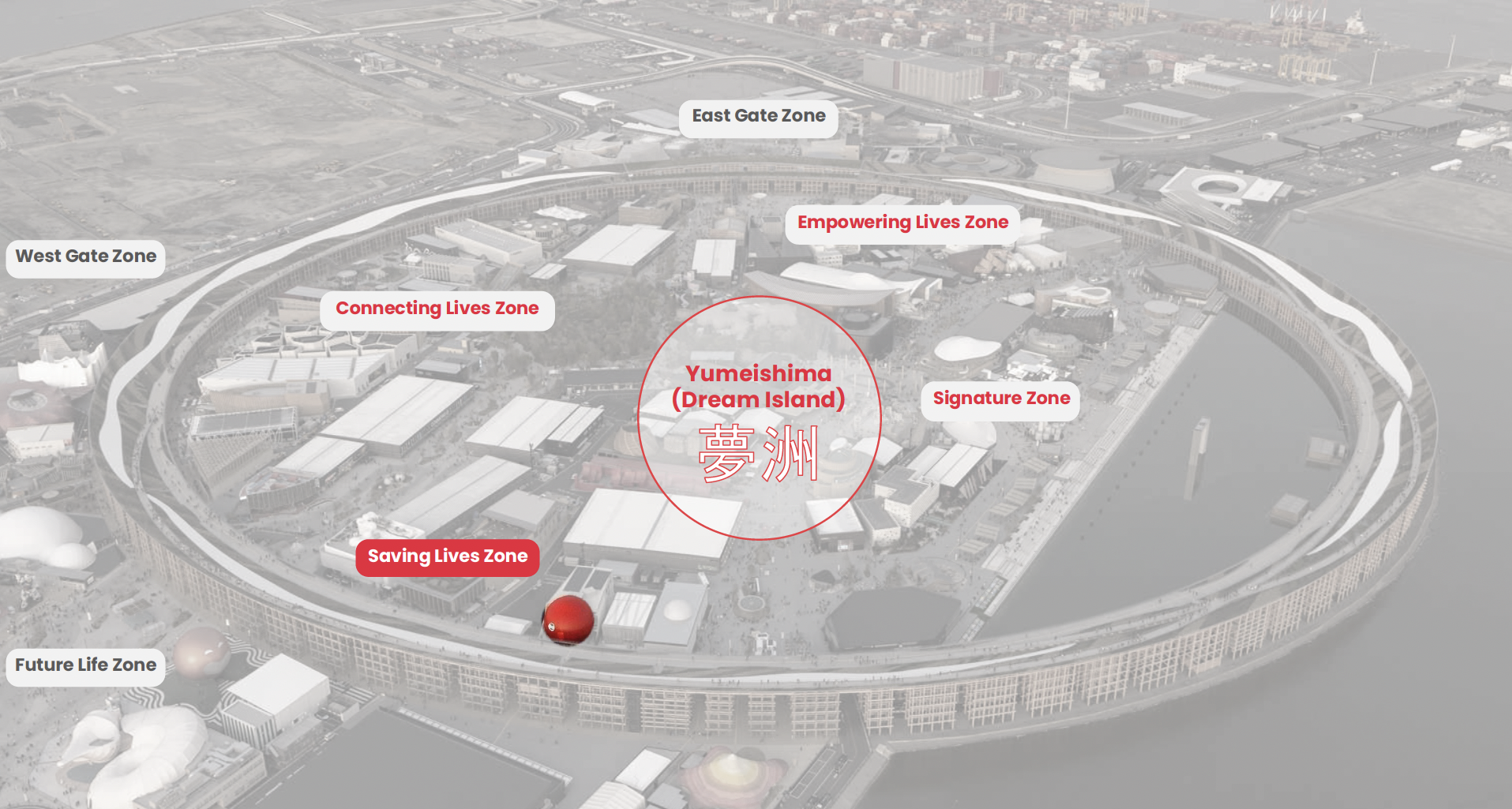
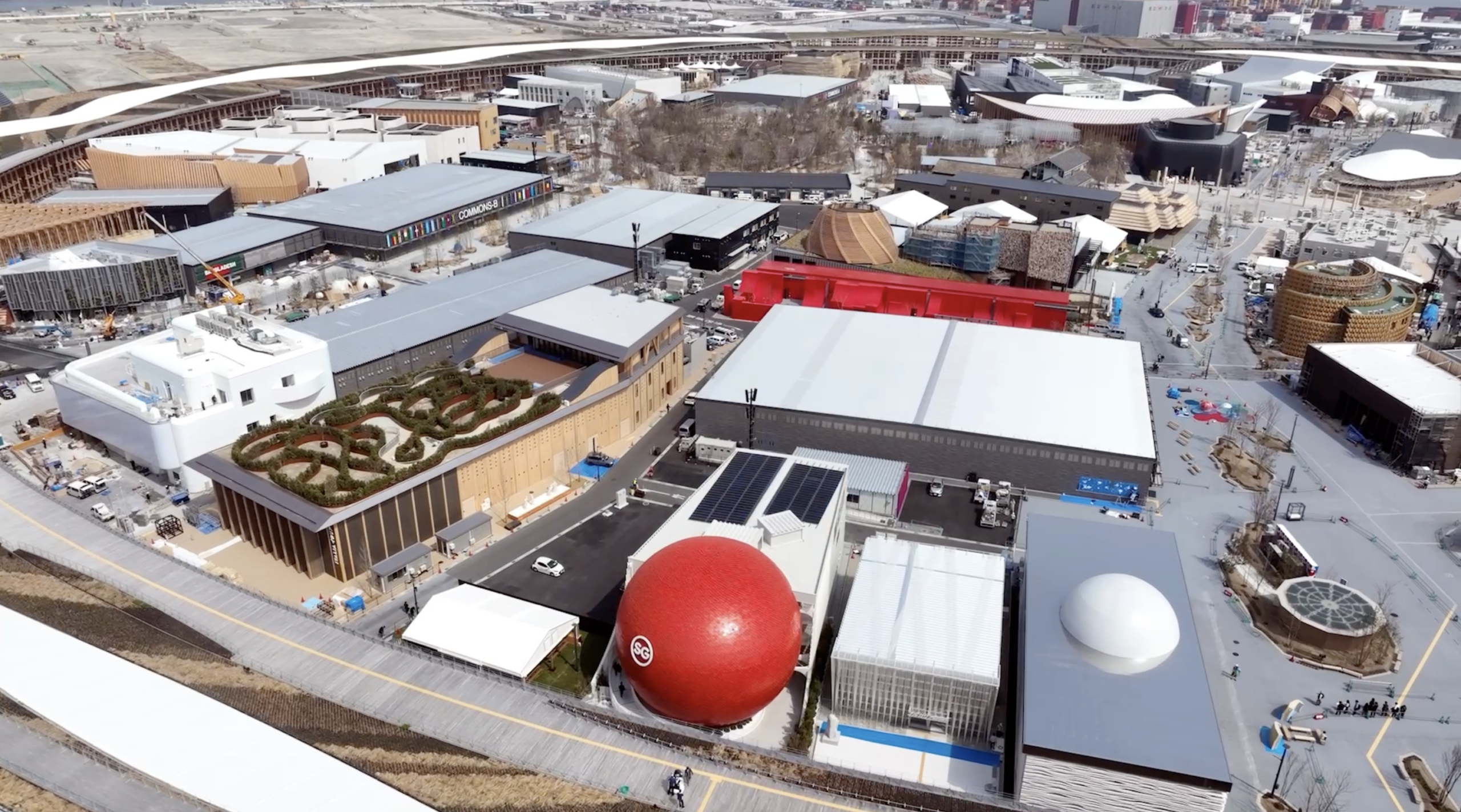
Though occupying only 1,003 square meters, when viewing the Singapore Pavilion from the Grand Ring, the striking red sphere immediately draws attention from almost all views of the EXPO. Standing as a 17-meter-tall, 18.5-meter-wide bright red sphere is positioned beside the Grand Ring. This bold and grand gesture expresses an image of resilience and national pride. “The little red dot has entered the psyche of every Singaporean, and has become a permanent part of our vocabulary, for which we are grateful,” said Lee Hsien Loong, current Senior Minister of Singapore during the Network Conference in 2003.
The little red dot has entered the psyche of every Singaporean, and has become a permanent part of our vocabulary, for which we are grateful.
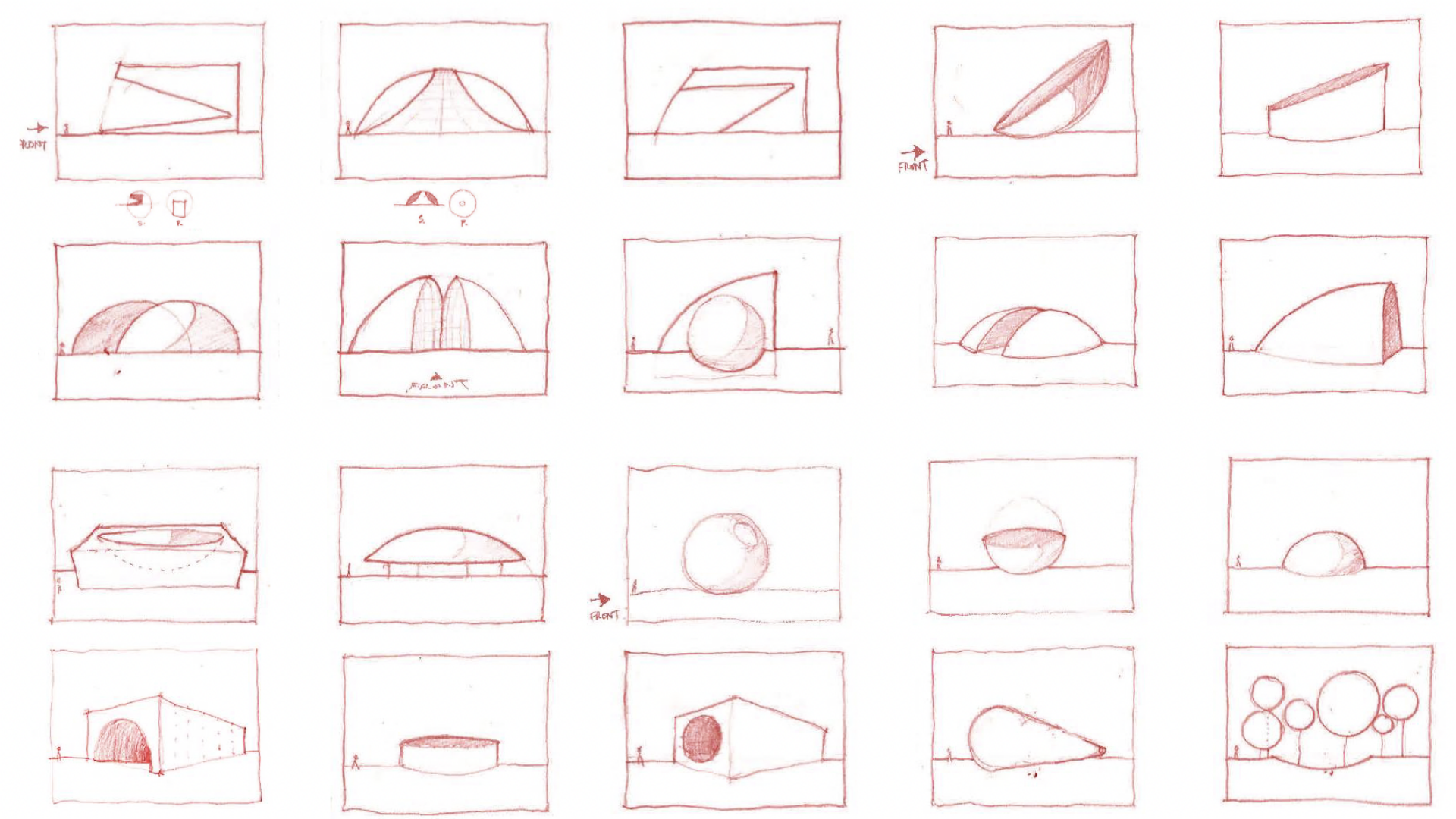
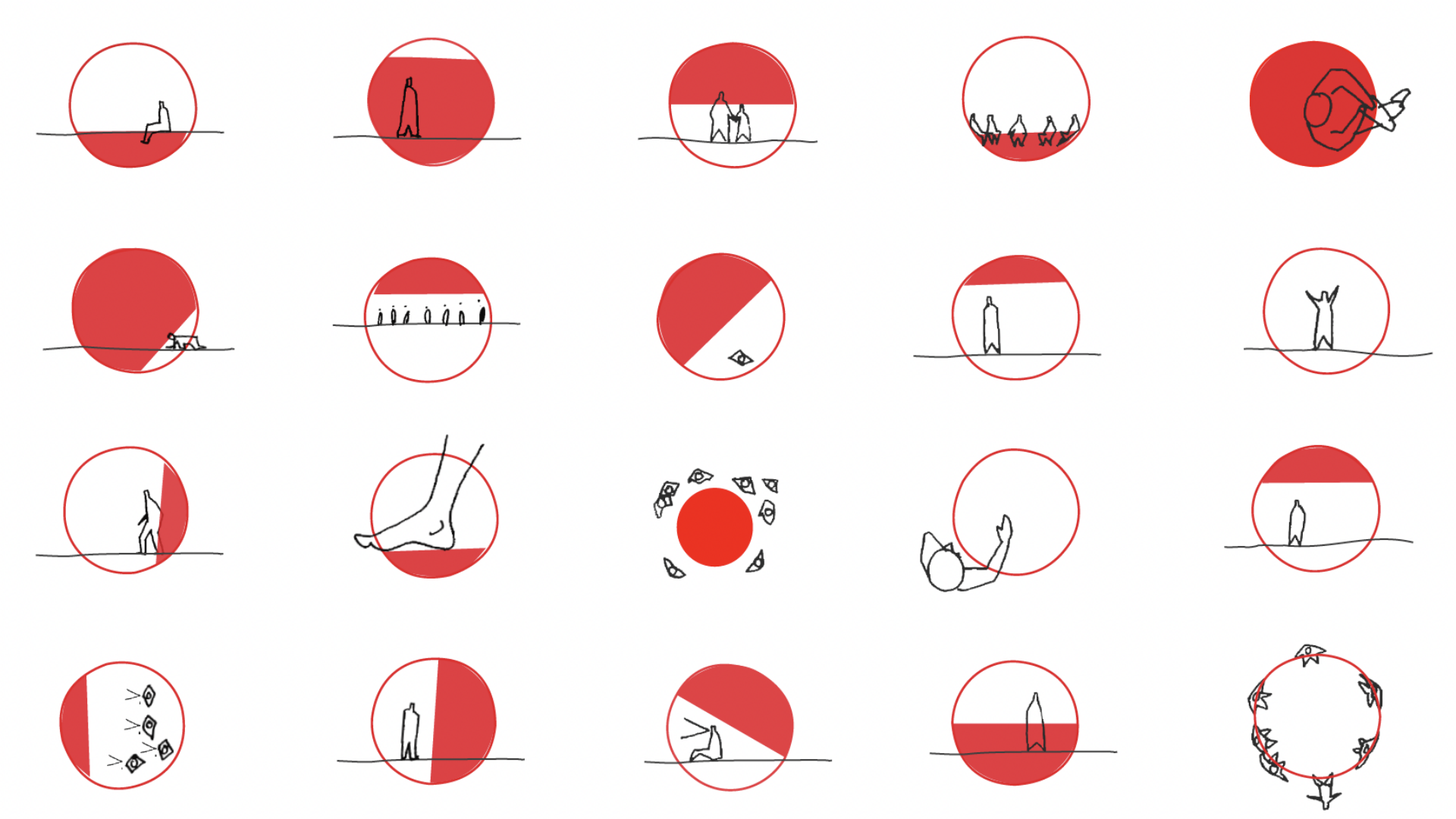
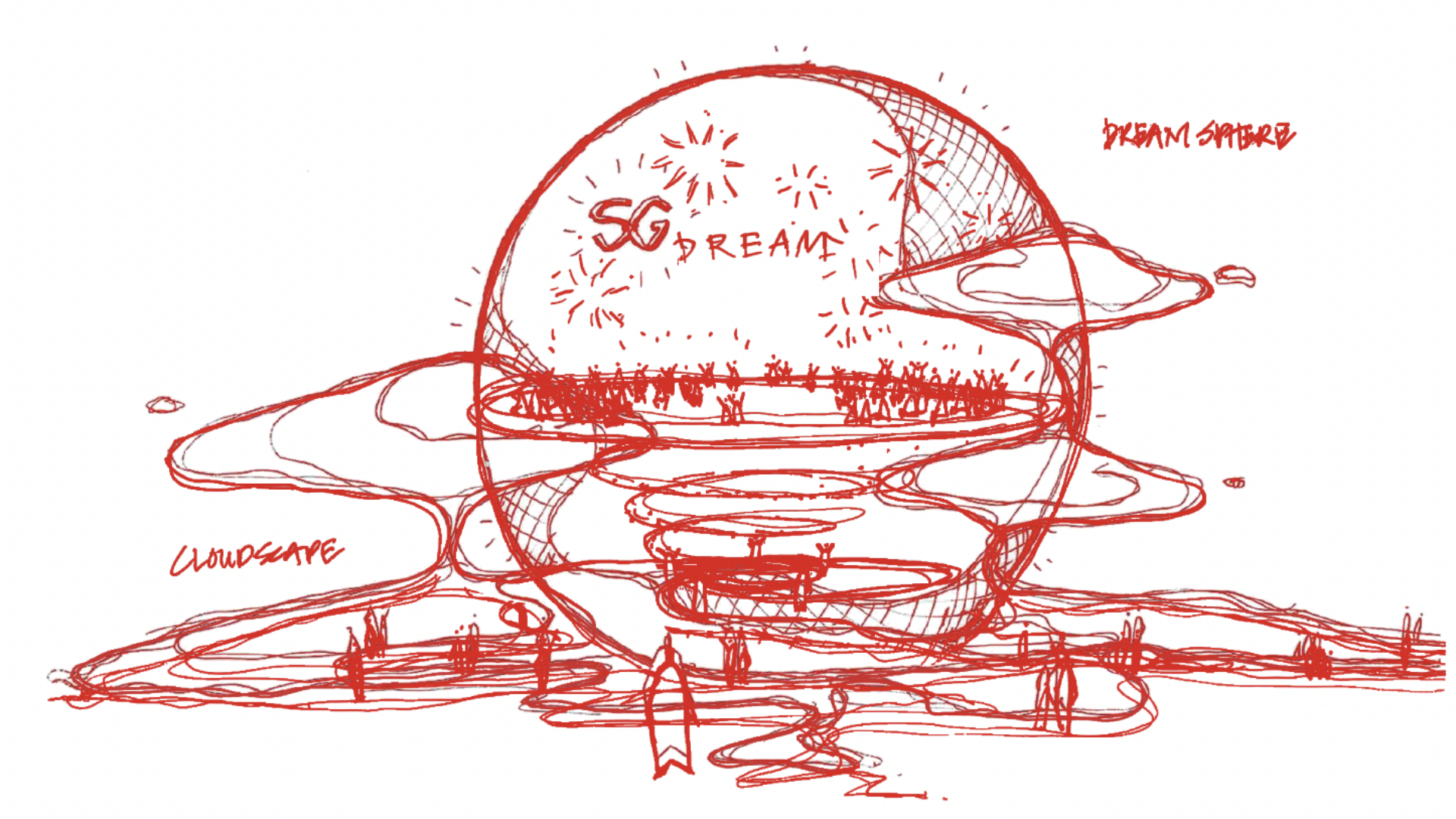
Conceptual Approach
Dreaming as a collective endeavor was the guiding principle for the design team, seeking to create an interpretive and immersive space where the current initiatives of Singapore could be used as a springboard for inspiration and collective dreaming.
Although it may have been simpler (and faster) for the design team to interpret the key themes and stories of the people of Singapore, the designers opted to create a
space for visual artists, multimedia artists, audio artists, performance artists, furniture designers, community contributors, organizations, students, etc. to create the space and experience. Each collaborator was guided by defined parameters, yet the process remained deeply cooperative and each was encouraged to creatively interpret the theme. Chu describes the contributors as “so excited” and “very collaborative,” noting their openness to adjustments during on-site changes. Despite the logistical challenges of coordination across these organizations, disciplines and contributors, she characterizes the process as “a great memorable experience working with so many people,” suggesting that cohesion was achieved through shared goals to represent their beloved country. Chu acknowledges that “it would have probably been easier for us to interpret the themes ourselves,” she underscored that such an approach “would not be as meaningful.”
In addition to artists, the design team placed particular emphasis on the inclusion of everyday Singaporeans, positioning community engagement as the central thread running through the pavilion. Early plans aimed to integrate community-created artworks directly into the architecture, but time constraints and construction sequencing made this unfeasible. Instead of abandoning the initiative, the team relocated the works, ultimately allowing the community contributions to function as a dedicated exhibition which delighted participants. This shift was also important for engaging participants with disabilities and special needs, whose timelines required greater flexibility. This commitment shaped the ethical framework of the project. The emotional impact of this inclusive approach was evident through the responses of participants once the pavilion opened. Chu recounts receiving many emails from Singaporean contributors who expressed joy upon seeing their artworks displayed at the EXPO. She emphasizes that many of these contributors were children, whose drawings revealed their hopes for their future. This layered inclusion of Singaporean artists and Singaporeans of all ages ultimately defines the pavilion as collective authorship at a national scale.
Singapore is often referred to as a “city in nature,” an urban city that co-exists in harmony with nature. The Singapore Green Plan 2030’s goal seeks even more green cover and sustainable infrastructure with legislation that requires new buildings to incorporate greenery. The national priority of the Green Plan was to be highlighted within the pavilion. Visitors arrive through lush landscapes surrounding the entry ramp and move through the interiors through abstracted landscapes to reach and exit by way of the Dream Forest, an immersive, multi-layered forest ecosystem with native flora and curated orchid varieties, inspired by Singapore’s rewilding efforts. The design team in partnership with DP Green, the landscape arm of DP Architects sought to honor the host country of Japan by highlighting native species shared between Singapore and Japan, symbolizing their ecological ties and cultural ties. The Dream Forest also accommodates programming with events, performances, light and sound installations and participatory elements.
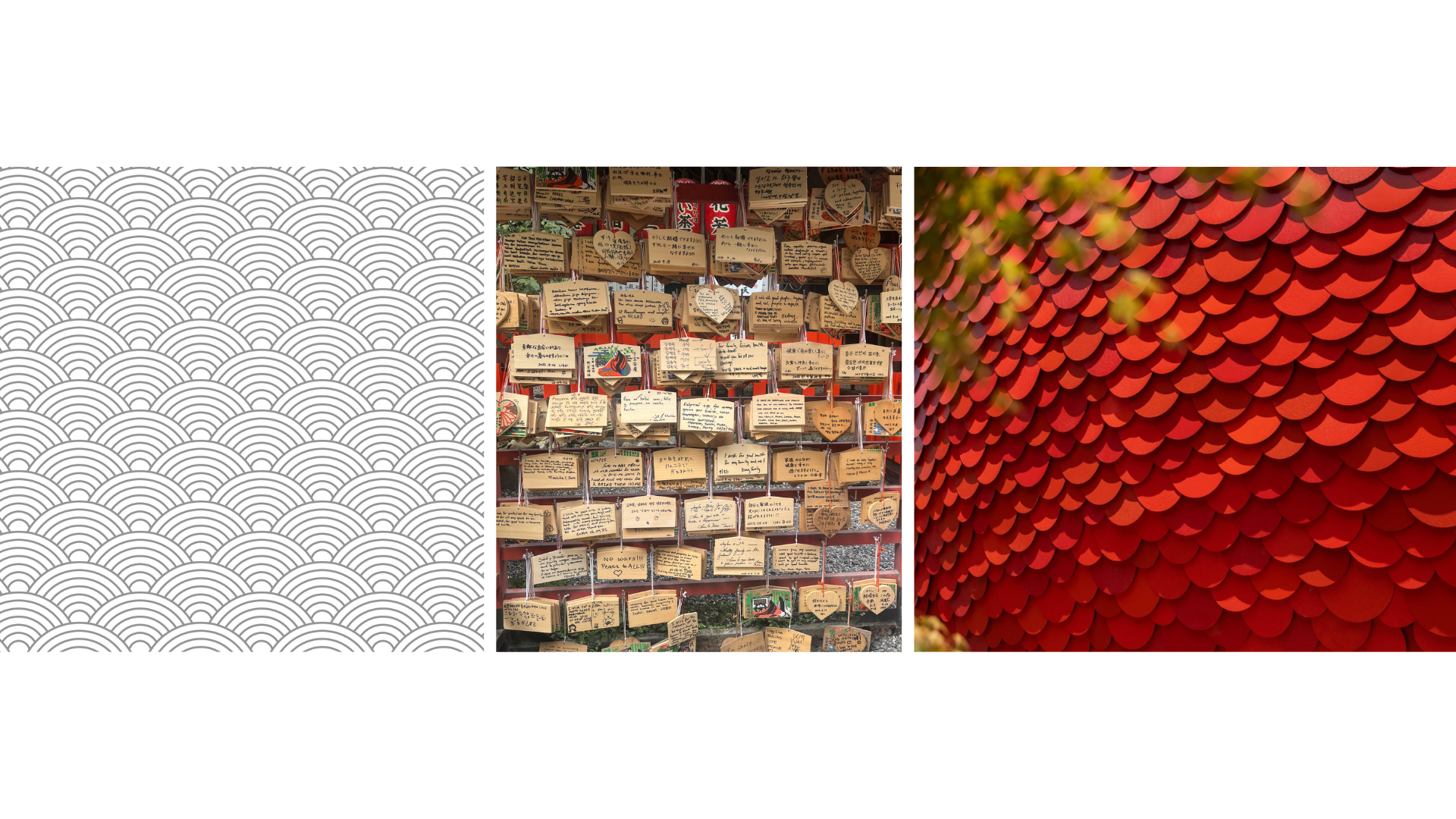
The designers were also inspired by Japanese patterns and traditions. The placement of the red aluminum “dream discs” covering the sphere represented the “Seigaigha” ortraditional wave motif in Japan. The “Ema” or well- wishing plaques in Japan also served as inspiration. These are plaques common across Japan for visitors to write prayers, dreams or wishes at Shinto or Buddhist shrines. The discs were distributed to local Singaporeans through organizations, such as SG Enable for people with disabilities and their caregivers, The Nature Society of Singapore, and others to enable locals and students to create artwork or messages on them, and were returned to the pavilion to be exhibited inside the pavilion in a dedicated exhibition.
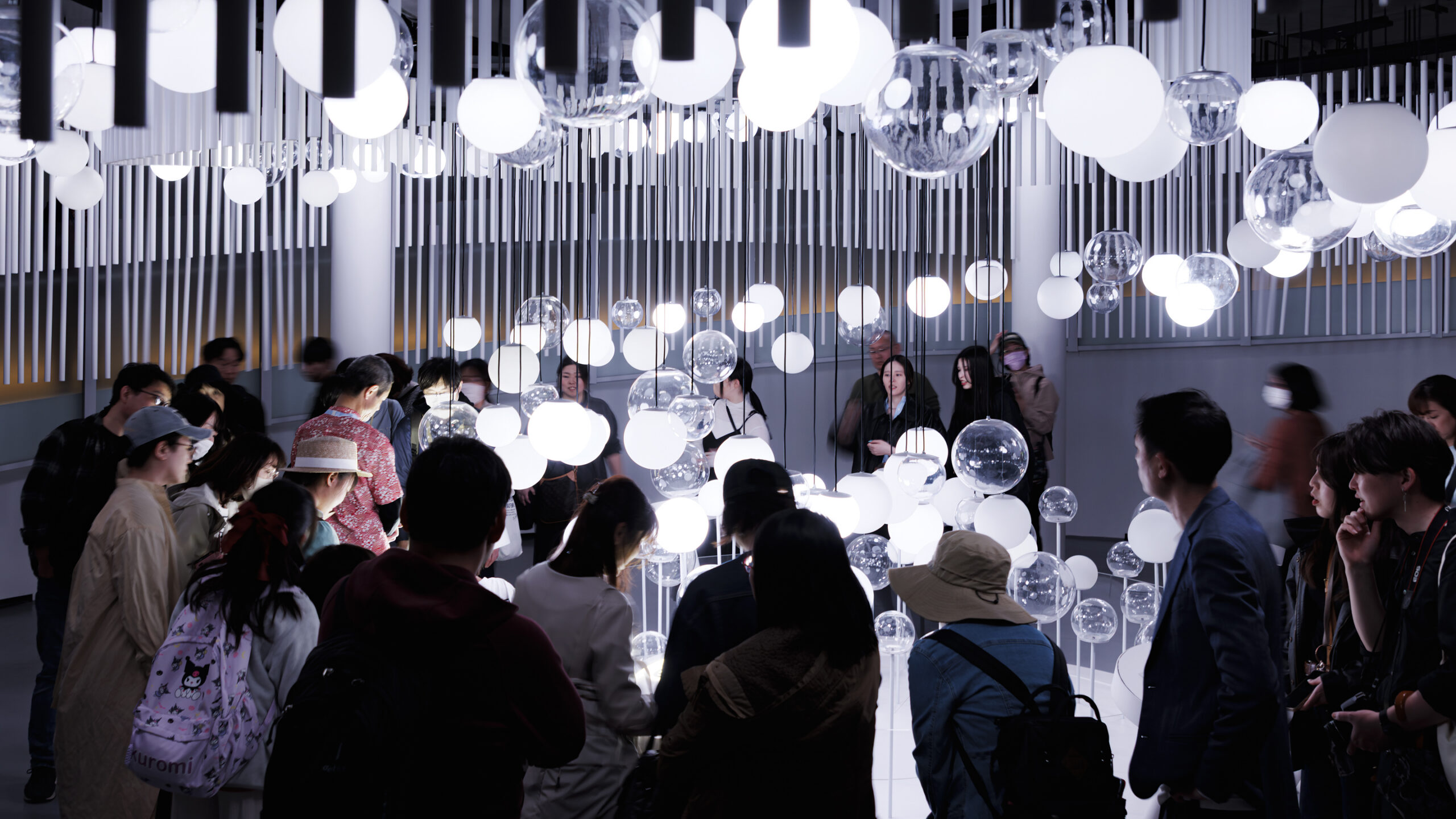
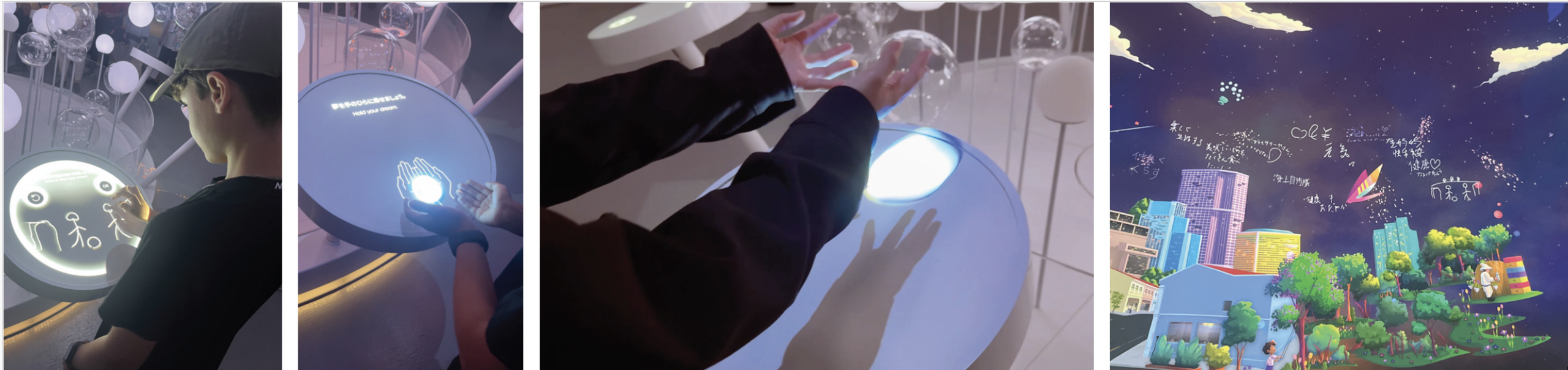
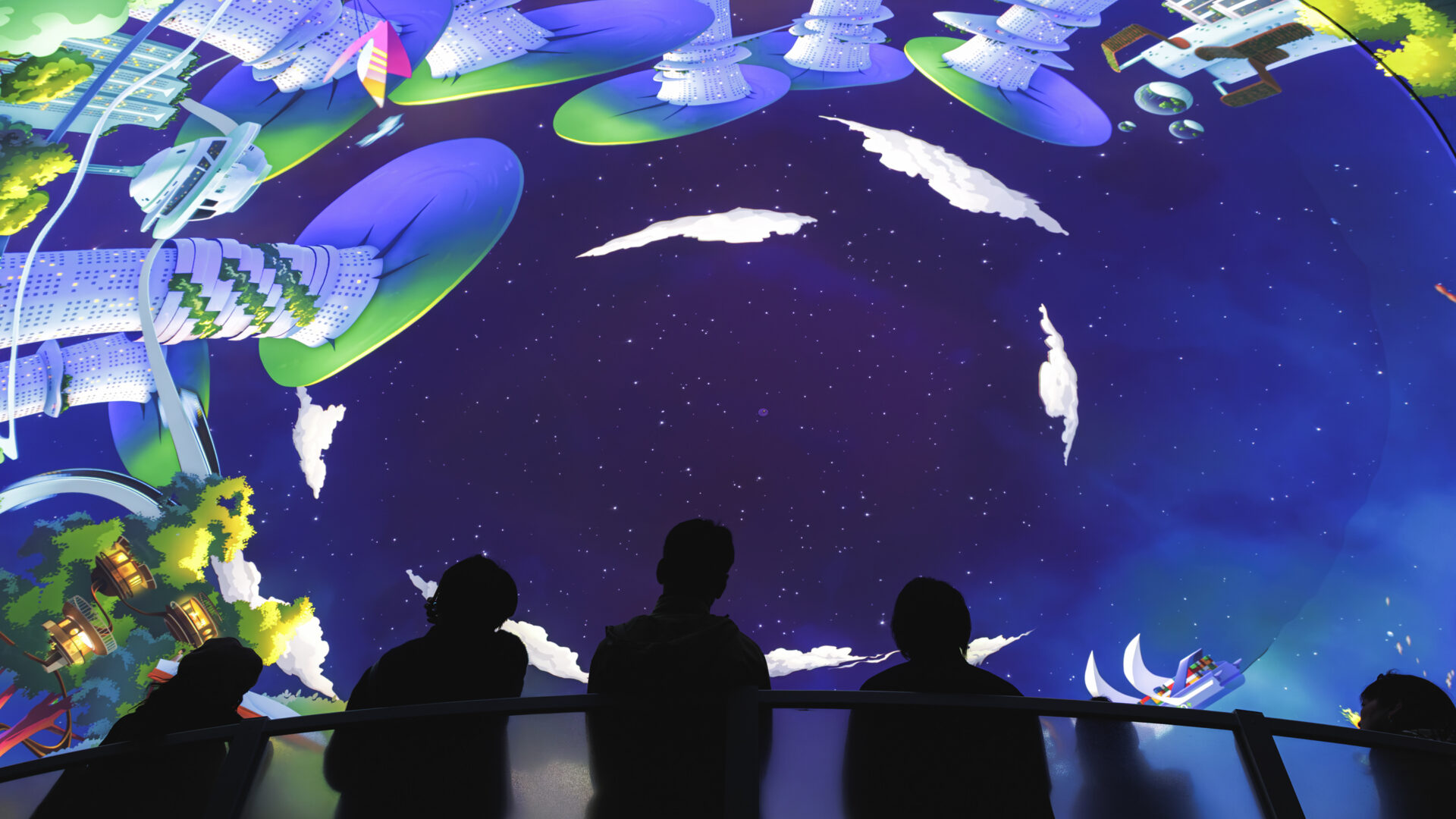
This collective process culminates in the “Dream Repository”, where visitors are invited to “draw,” “write,” or “scribble” their dreams on digital canvases that are then projected together on the ceiling of the sphere. In these acts, visitors are now also included in the authorship of the pavilion created by the people. Chu states, “Here, it’s not just about Singapore dreams but global dreams, a collective dream for everyone.”
There is a moment in this interactive where visitors are invited to hold the digital drawing of their dream in their hands and guide it into the collection of dreams projected on the ceiling of the sphere. This moment is profound, emotional and incredibly impactful to experience. To see your dream within the collection is empowering. Visitors applauded, pointed and took pictures when seeing their created dream within the collection above. The design team thought of this activity as “a seed of change,” emphasizing that individual dreams contribute to a collective future. The repository embodies the belief that dreams are not only personal but sometimes shared and stronger together, reinforcing that the pavilion represents “not just the Singapore dream but…a global dream, a collective dream for everyone,” explains Chu.
Here, it’s not just about Singapore dreams but global dreams, a collective dream for everyone.
The designers positioned collaboration as a critical resource for imagining the future. By situating visitors within an immersive, participatory experience, the pavilion emphasizes that the future is in the hands of the participants and that it can be dynamic and co-created. The concept as a whole was very direct and clear from the exterior to the interior.
Visitor Experience
The visitor experience begins with walking through lush greenery along the circular entry ramp, its curved balustrades evoking clouds, then encountering the sphere’s bright red façade up close. Visitors could be seen touching the aluminum discs, feeling the different textures.
While waiting in line, visitors could also scan QR codes placed along the ramp to play the game, “Merli’s Adventure.” Through the game, visitors travel along with Merli, the Singapore Tourism Board’s friendly mascot from Singapore to Osaka, learning more about both Singapore and Japan. Just like the Merlion, Singapore’s national icon, Merli has the head of a lion and the body of a fish.
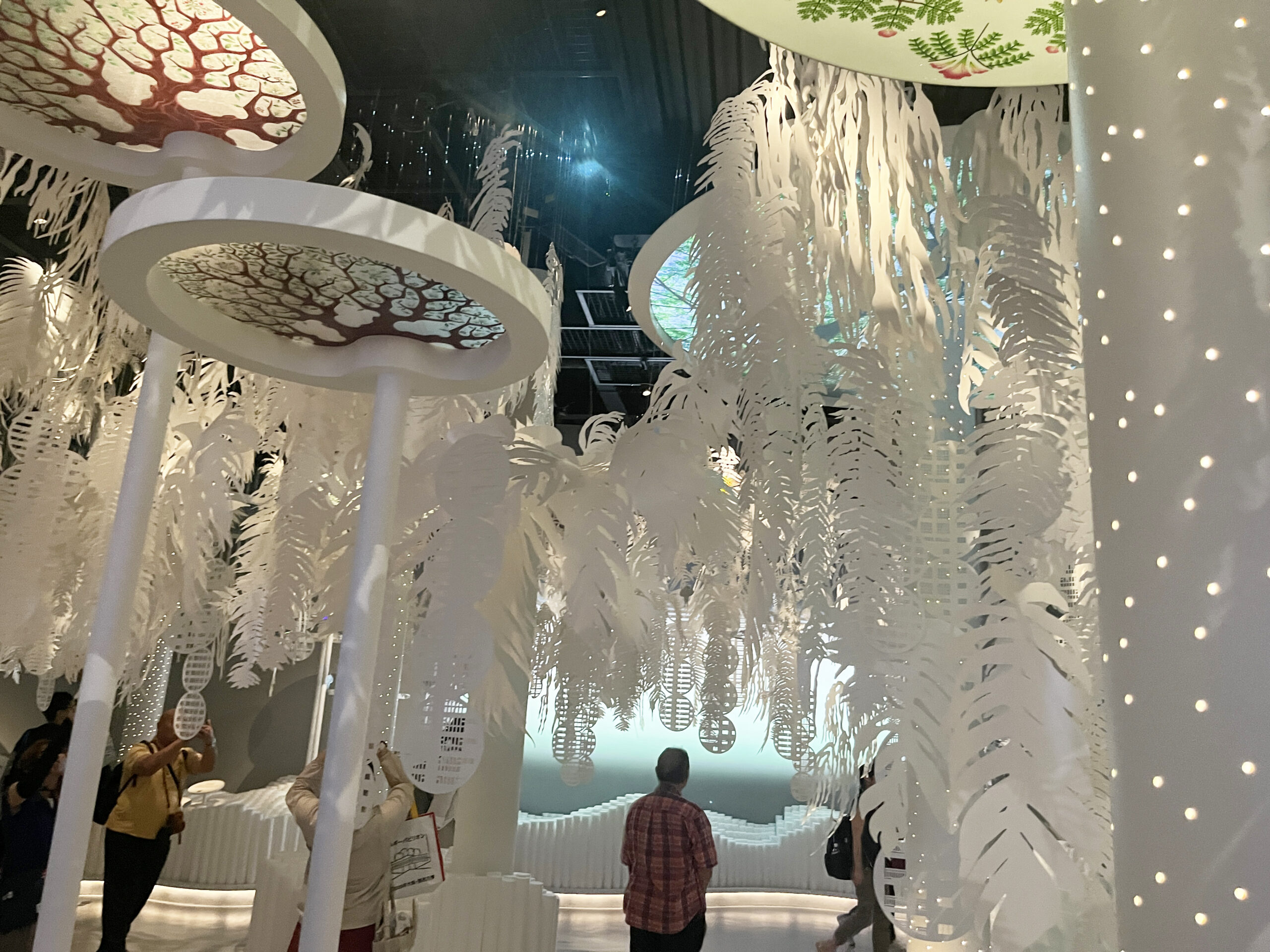
Entering the sphere, visitors were immersed in a lush, dream-like landscape with cut paper installations and topographical forms. The experience then unfolds in Chapters. The entire space is immersed in dramatic layers of cut white paper of plants and animals, interwoven with bridges and skylines, emphasizing Singapore’s ongoing dreams to transform into a city in nature by artist Melissa Tan. The installation is entitled, “Paving Paradise.” The artist spent three weeks pre-opening, carefully installing the cut paper installation piece by piece. The first area of Chapter One is brought to life by a ten meter animation by artists Jerrold Chong & Mark Wee, who were inspired by the Paul Klee quote, “A line is a dot that went for a walk,” expressing the imagination and artistic freedom represented in the experience ahead.
Animations throughout the space contain whimsical graphics depicting children playing and people in nature, interwoven with animated infrastructure, setting the tone for the experience. Chapter Two explores what it means to shape a future-ready Singapore. Through three animated films, “A Thriving Island,” “A Home Reimagined” and “City of Possibilities,” visitors view playful interpretations of Singapore’s dreams for the city of tomorrow. Complementing these are interactive tree installations and the art installation, “Living with Nature,” by Ashley Yeo, where Singapore’s towns and estates are transformed into vibrant and sustainable communities. Here, visitors learn about the biodiversity and conservation strategies in Singapore, including innovative and sustainable solutions to improve public housing.
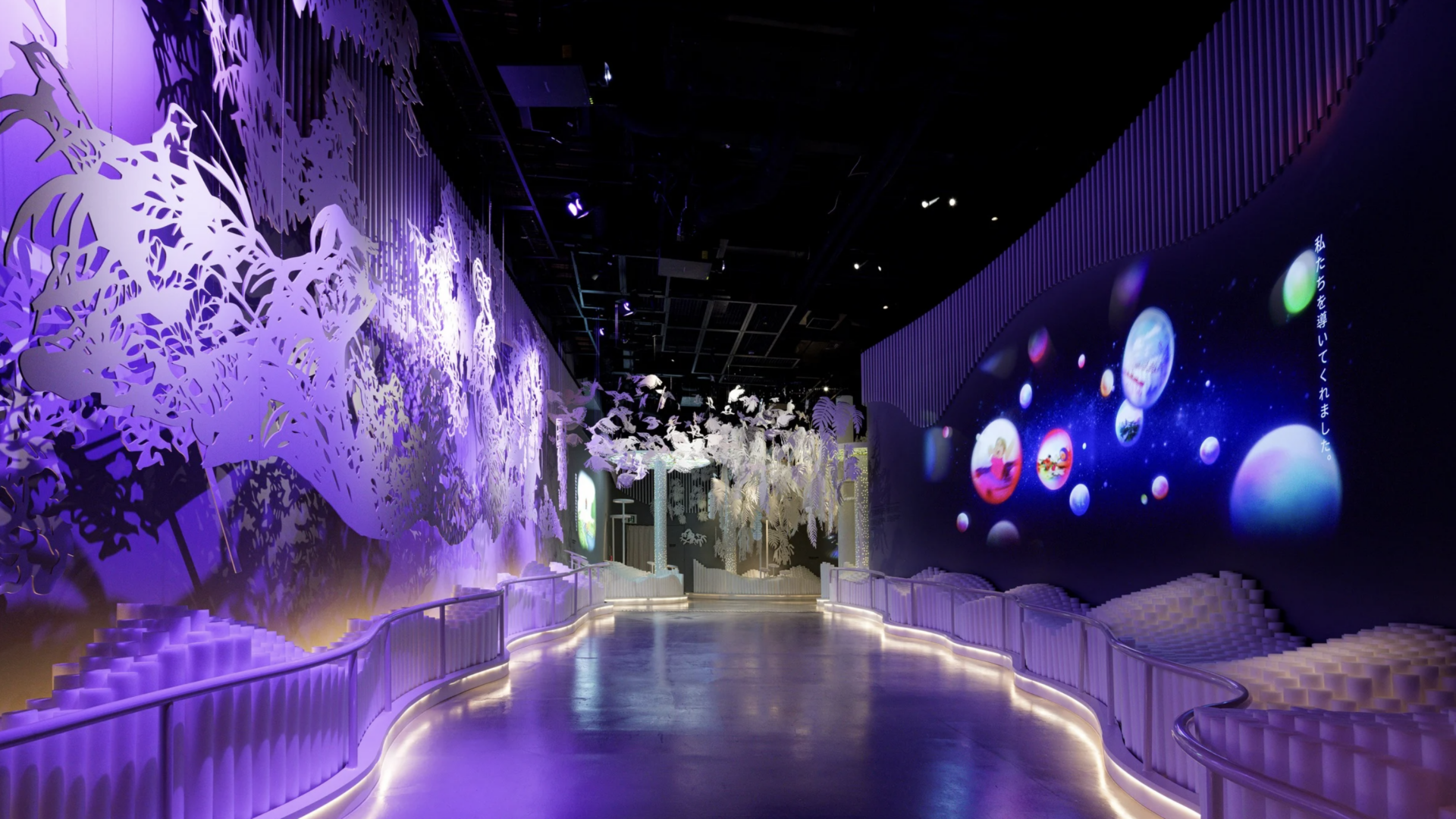
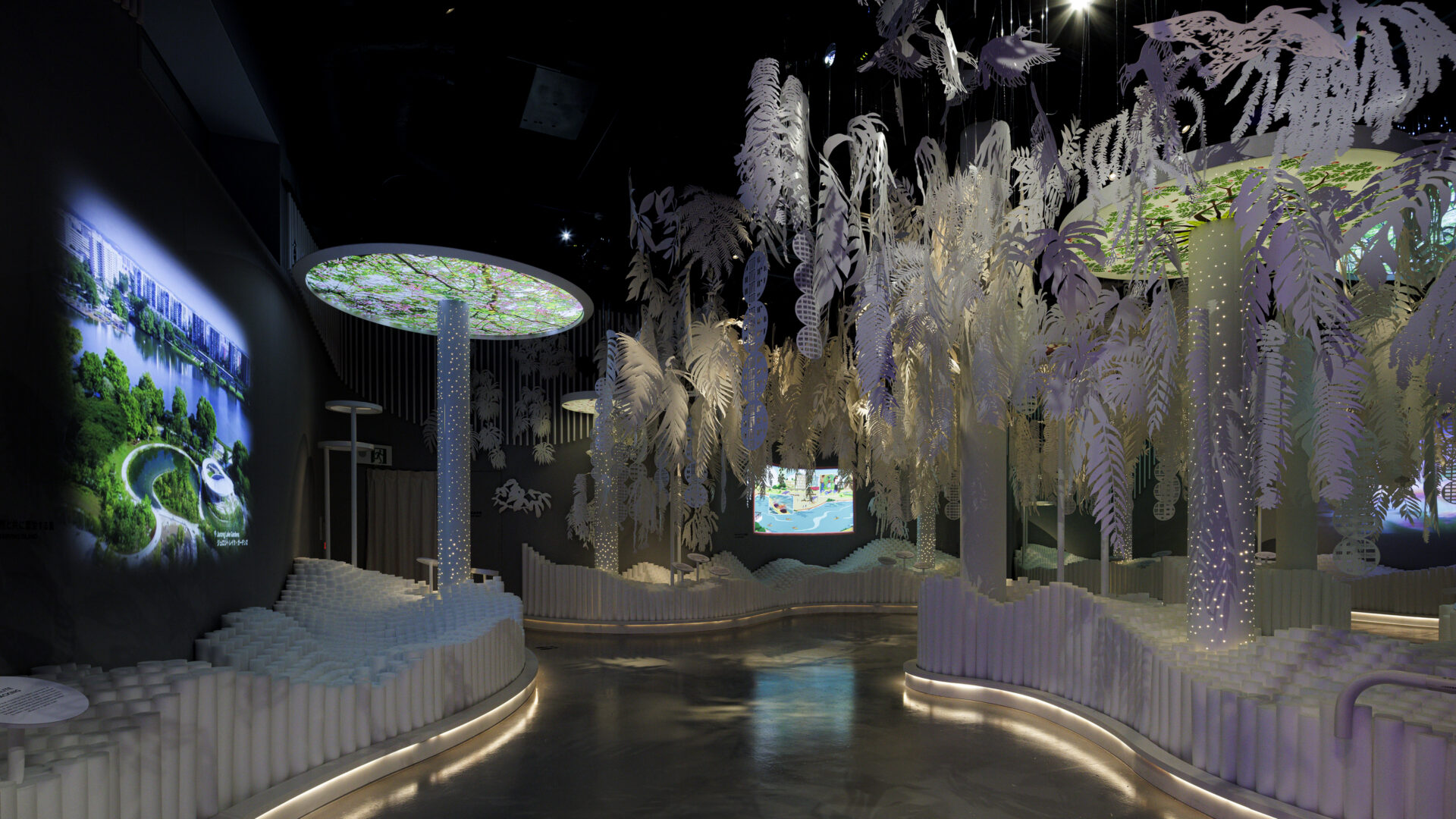
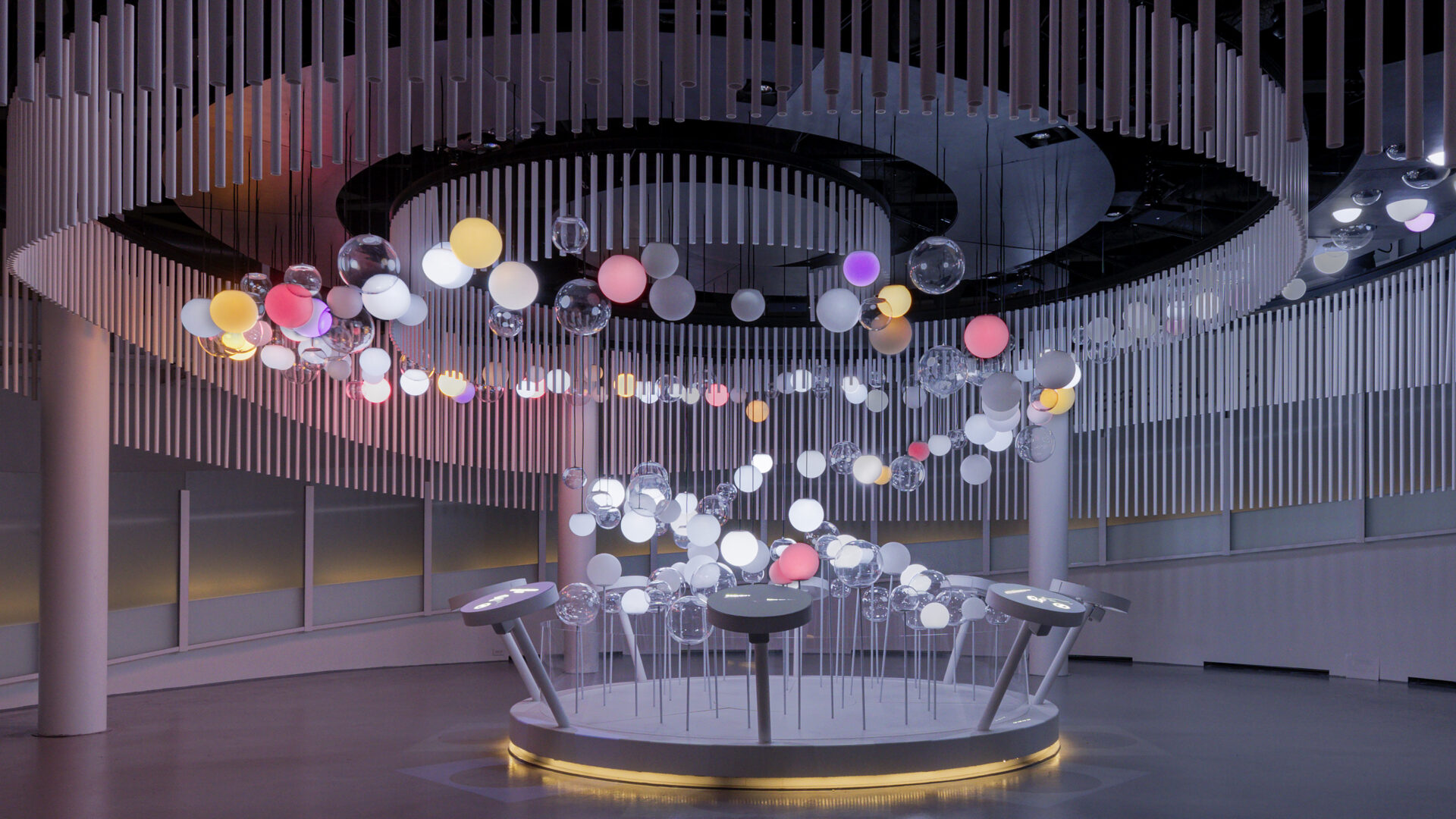
At the final section of Chapter Two, the last animated film “City of Possibilities,” invites visitors to imagine the future, drawing references to the masterplans and innovations underway to shape the future city. As the journey progresses, the pace slows and becomes more reflective. A sound and light installation called “Whispers in the Void” is housed in an interstitial hallway space and designed to be a “palette cleanser” before entering the next area. The installation by artist Zul Mahmod combines light, shadow and sound with ribbons hanging from the ceiling. Chapter Three, called the “Dream Repository,” consolidates the pavilion’s participatory ambitions inviting EXPO visitors to articulate their own personal dreams through an interactive that positions individual contributions within a collective framework. This interactive installation was developed by Milla & Partner.
Visitors have an individual station and are prompted to draw their dream, then hold their dream, and carry their dream to the center of the installation, in an upward motion akin to releasing a bird or butterfly, where it is picked up by glowing lights and carried to the collection of dreams on the domed ceiling in the next area. The combination of hand tracking, timing, projection and lighting was skillfully executed by the design team. The gesture of holding the projection with two hands clasped together is perhaps not a familiar gesture to most; however, a simple line drawing on the display and watching visitors at the adjacent stations making the clasped hand motion and releasing into the center of the activity became familiar to people. When asking multiple staff members if they often needed to step in to assist people with this unfamiliar gesture, they said rarely, indicating it was easy to learn, and the interfaces were intuitively designed to meet people across cultures, abilities and ages.
Let’s go follow my dream!
A child exclaimed as they ran up the circular ramp to the dome. “Let’s go follow my dream!” To view their drawings, visitors proceeded up the circular ramp to the dome to view their dreams projected on the ceiling of the sphere within animations of city life and daily activities, including kite flying and beekeeping. When asked what it was like to see their dream displayed within the collection, visitors respond:
“It felt like what I wrote actually had the possibility of
coming true because it seemed permanent.”
“It was fun to see, my mom got a picture of my dream,
my dream was to see my grandmother.”
“I saw someone else have the same dream as me.”
“I really like that something I drew was actually there for
everyone to see.”
“How did they get my drawing up there so fast?”
This immersive and collective visual composition, as the finale, emphasized the function of shared dreaming as a catalyst for the power of shared imagination, communal agency and potentially transformational individualized moments. “The shaping of the dream sphere is only made possible with everyone’s participation,” states Chu. Reaffirming that the Dream Sphere was truly shaped through participation by all.
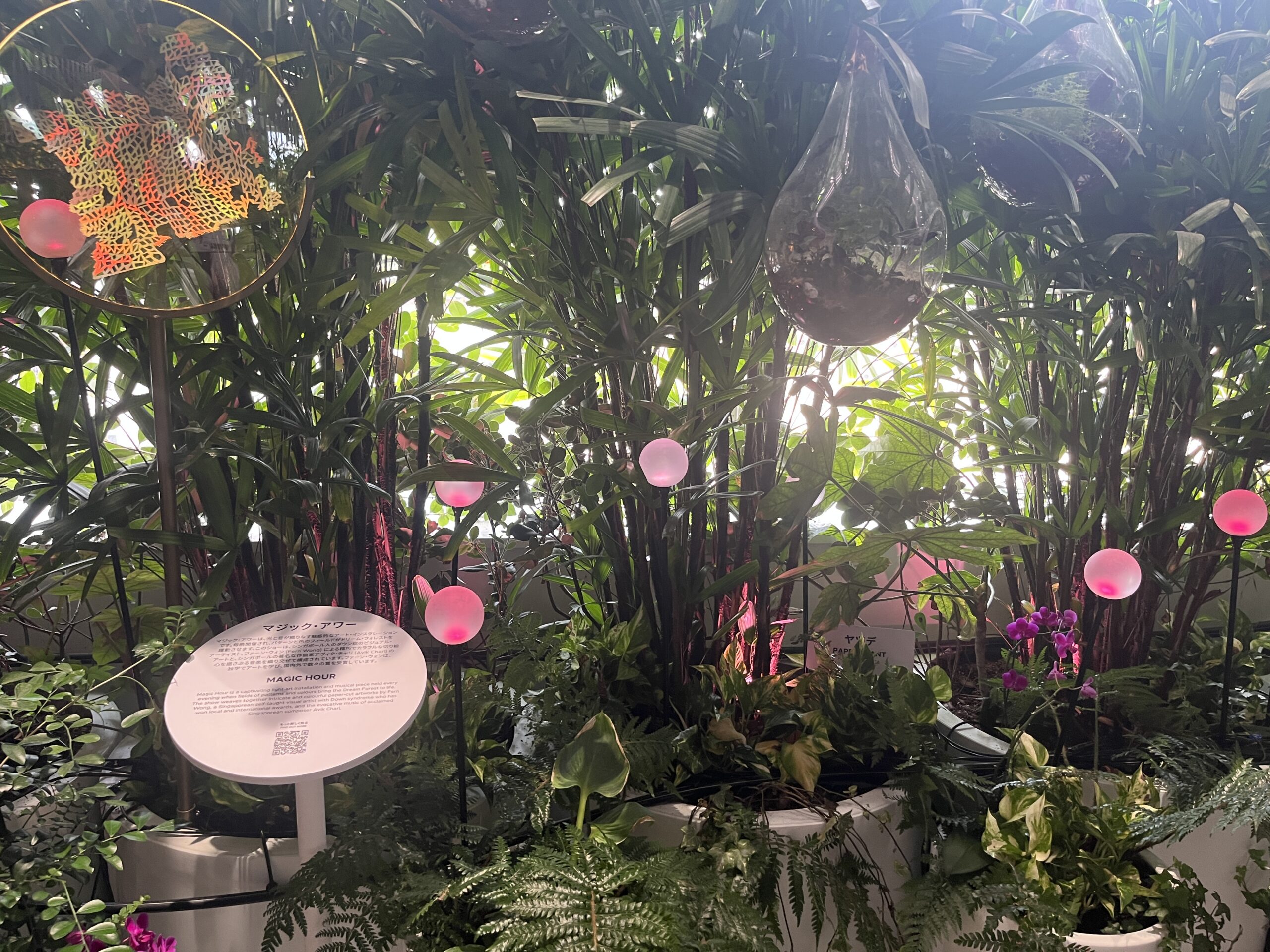
Following this moving culmination, visitors emerge into the Dream Forest, which was designed for rest and reflection. The atmosphere drastically shifts from a dark, digital high-intensity one to a light space filled with lush greenery and seating. This area includes a daily light and sound program called “Magic Hour.” There is a café, with local dishes and illustrated murals by Singaporean artist Yip Yew Chong, as well as an additional exhibition space housing Singaporean artists and community-generated art pieces on the façade’s red aluminum discs. The pavilion design team worked closely with Design Singapore Council (Dsg), which is a national agency that promotes design.
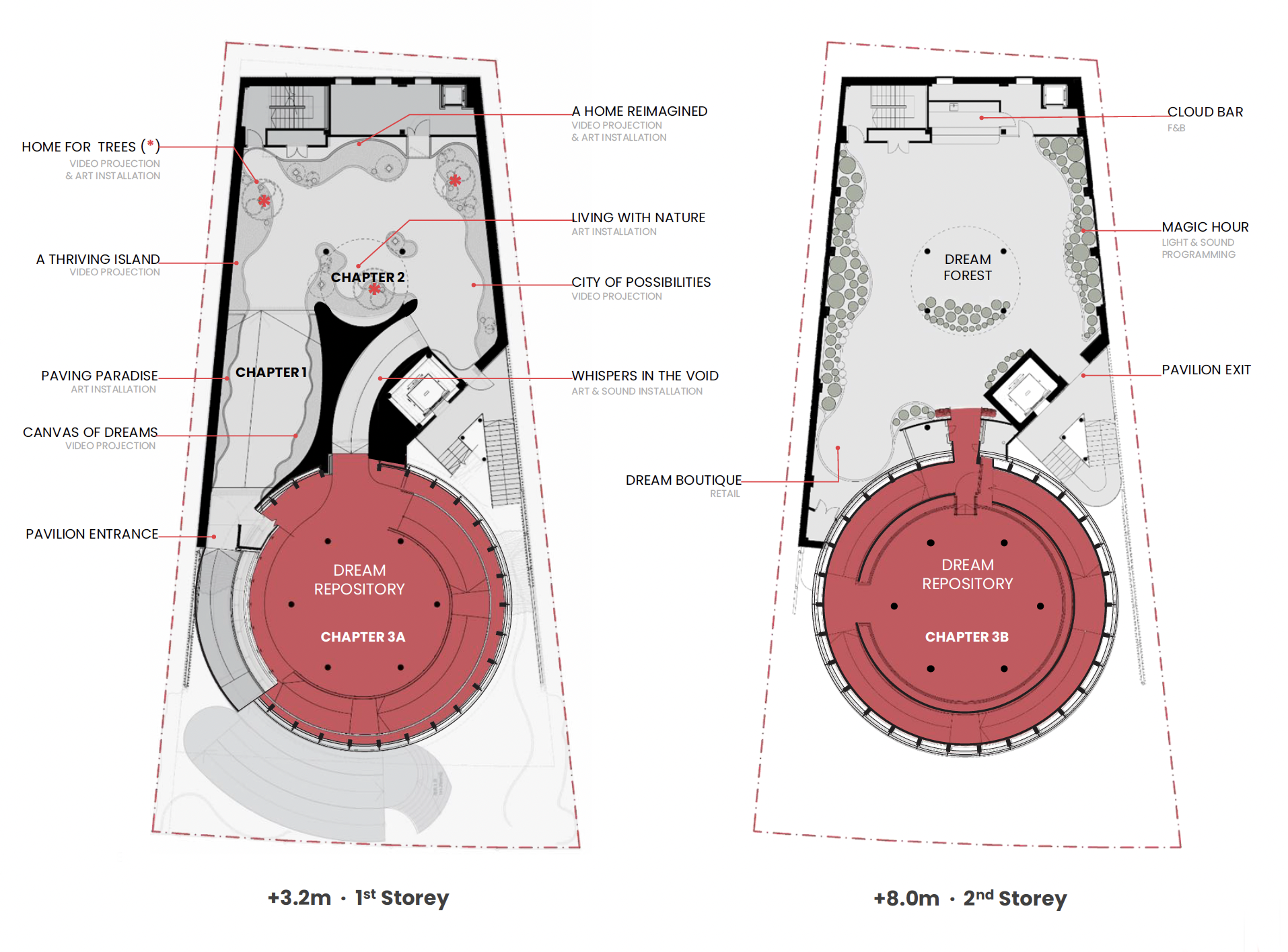
The full visitor experience was carefully choreographed in both pacing and comprehension. Each Chapter held dramatically different atmospheres, lightscapes and content, while retaining a cohesive vision. The designers employed subtle strategies to maintain coherence across the vastly different atmospheres. For example, the circle and sphere form was ever-present. Circular panels contained interpretive graphics, lighting was spherical in shape, and the circle was included throughout the animations and graphics. Continuity was reinforced by floor lighting strips that guided visitors throughout. The design team skillfully combined architecture, media, graphics, interactivity and participation to present Singapore as a place defined by sustainability, forward thinking and their belief that collective aspirations function as core and shaping values.
Sustainability
The design team considered sustainability as a core design driver from the start, aligning with Singapore’s national agenda of circularity, resource efficiency and climate resilience.
As shared by Seah Chee Huang, Chief Executive Office of DPA, and lead architect of the pavilion, “the Dream Sphere represents the collective aspiration… to co-create a better, more sustainable and lovable future for all.” The pavilion’s design and materiality reflected an integrated approach to sustainability and post-EXPO lifecycle. Materials were carefully chosen to minimize environmental impact. For example, most of the aluminum discs that clad the sphere are being recycled. Aluminum is not only lightweight and durable enough for the six-month EXPO but also infinitely recyclable, making it an ideal material for an EXPO structure. Some of the aluminum discs are being used for future projects.
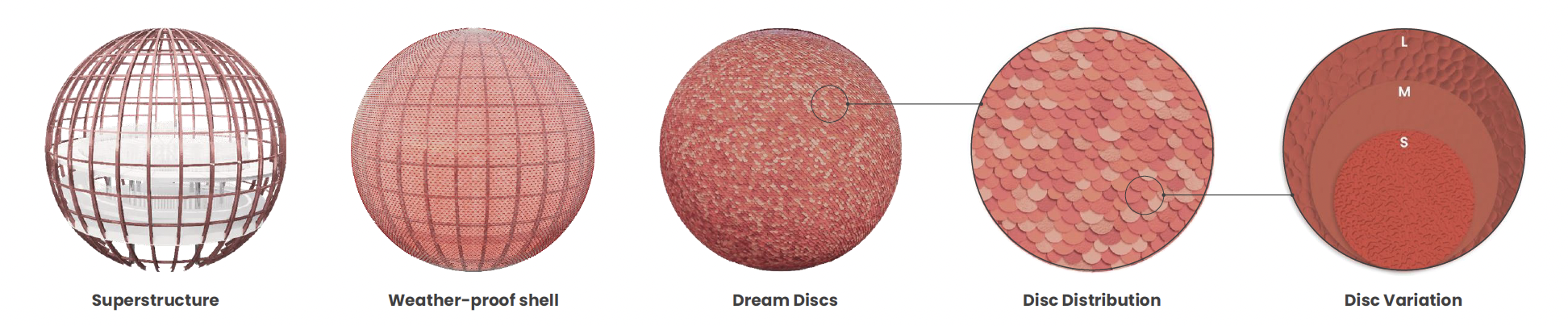
From the start the architects specified material palettes prioritizing low VOC finishes and incorporated lightweight and modular construction systems to limit waste. The use of prefabricated structural elements and locally sourced pieces further reduced construction emissions. Interior exhibition elements, including structural frames and media equipment, have been specified for relocation, reuse, or reintegration into cultural and educational spaces. By planning for dismantling and reuse from the start, the pavilion adopted an approach that reduces waste, extends material value and underscores Singapore’s long-term commitment to responsible construction practices. The internal structure of the sphere is referred to by the design team as the “Superstructure” as it was prefabricated for efficient assembly and disassembly that would allow for rapid relocation at the end of the EXPO while minimizing waste. The plants, furniture and other installations were partially repurposed. Chu referred to initiatives such as these as “Dream 2.0, the life after Expo,” extending the pavilion’s impressions into post-EXPO educational and cultural initiatives.
The spherical form not only optimized the compact footprint but as it was clad in aluminum, it minimized solar exposure by enabling the façade to deflect and diffuse sunlight depending on angle and time of day, reducing cooling loads. The patterning and reflective qualities of the aluminum discs acted as passive shading. The building’s rear roof included photovoltaics, which generated 15,400 kWh of energy throughout the six month duration of the EXPO. This was enough to power up to 77 electric vehicles for 1,000km each. The integrated lighting design included high-efficiency LEDs and strategic placement to minimize energy consumption.
Underscoring nature as central to urban life in Singapore, the pavilion integrated green design through its architecture and its cultural narrative of biodiversity awareness, habitat connectivity and future initiatives. As Chu notes, “we are an evolving city…we want to focus on our city in nature, when we build bridges, we are building not only for the people, but for animals too, to connect them across their habitat.” In this way, the Expo’s sustainability messaging was both symbolic and practical. Collectively, these strategies ensured that the pavilion’s ecological principles were visible, experiential and memorable, while its materials and ideas continue to inform post-Expo educational and cultural initiatives. This ecological emphasis, combined with the pavilion’s focus on collective dreaming, linked sustainability to social imagination, illustrating that the future must emerge from shared vision and public participation.
We are an evolving city…we want to focus on our city in nature, when we build bridges, we are building not only for the people, but for animals too.
In the end, the pavilion operated simultaneously as a model of sustainable innovation and as a powerful medium for social engagement and reflection. The visitor experience encompassed moments of celebration and contemplation and demonstrated the strength and authenticity of true collaborative and inclusive design. Ultimately, the pavilion created an immersive and meaningful experience in which visitors were not spectators but active participants in the construction of shared aspirations.
A very special thank you to:
- Bureau International des Expositions (BIE)
- SEGD, The Society of Experiential Graphic Design
- Crystal Chu, Managing Director, KR+D Pte Ltd.
- All the staff and docents at the Singapore Pavilion, EXPO 25
Singapore Pavilion Team:
- Singapore Tourism Board – Client
- Kingsmen Exhibits Pte Ltd – Turnkey Agency
- KR+D Pte Ltd – Lead Experiential Design
- DP Architects – Lead Architect
- DP Green – Landscape Design
- DP Lighting – Lighting Design
- DP Engineering – C&S and M&E Engineering Design
- Presplay – Creative Storytelling
- Milla & Partner GmbH – Multimedia Design
- Finding Pictures – Multimedia Design
- HUNE Architects – Architect of Record
- +U Architects – Design Development
- Tetsuki Nakakura – Architecture & Urban Design – design development
- Local Singapore artists – Ashley Yeo, Fern Wong, Jerrold Chong, Mark Wee, Melissa Tan, Thaddeus Chew, Yip Yew Chong, Zul Mahmod
- Performing Artists – 53A, Adele Wee, Azariah Tan, Claire Teo, Alemay Fernandez, Shye, The Island Voices, Shazza, Shruthi Nair, Redeafination, Orkestra Melayu Singapore, Yin Harmony
- Local Designers – Gabriel Tan, Ivan Ho, Karyn Lim, Nathan Yong, Tan Wei Xiang
Sources
Archello. (n.d.) The Dream Sphere — Singapore Pavilion for Expo 2025.
Esquire Singapore. (2024, April 22) Singapore presents “The Dream
Sphere” at World Expo Osaka 2025.
EXPO 2025 Osaka, Kansai, Japan: Official guidebook. (2025).
Milla & Partner. Singapore Pavilion Expo 2025.
The Smart Local. (2025, September 19). There’s a Singapore Pavilion at Osaka Expo 2025.
People also viewed
-
In Depth Analysis: Inside The Uzbekistan Pavilion Expo 2025
In Depth Analysis: Inside The Uzbekistan Pavilion Expo 2025
-
In-Depth Analysis: Inside the Nordic Pavilion at Expo 2025
In-Depth Analysis: Inside the Nordic Pavilion at Expo 2025
-
Inside the Saudi Arabia Pavilion at Expo 2025: Stories Rooted in Connection
Inside the Saudi Arabia Pavilion at Expo 2025: Stories Rooted in Connection