Holding Memory: Experiences Honoring Black History
This feature highlights award-winning experiential design projects that honor Black history through memorials and exhibitions. From the Monticello Burial Ground for Enslaved Persons / Contemplative Site to the Lewis Latimer House Museum, each project transforms collective memory into meaningful public space rooted in reflection, research, and community.
Experiential design is one way we hold memory in public space. It creates environments where history is not abstract, but embodied—where stories are shared, encountered, and carried forward across generations.
Black history—rich with creativity, resilience, struggle, and achievement—continues to be interpreted through spaces that invite reflection and deeper understanding. The SEGD Global Design Award–recognized projects highlighted here show how designers of experiences give form to these narratives through environments that foster learning, connection, and care.
Through exhibitions, public installations, and placemaking interventions, experience designers translate collective memory into physical space. These environments allow visitors to pause, process, and engage with layered histories—creating moments where reflection becomes a bridge between past and present.
Each project holds space for Black history not as a sidebar, but as central to our shared cultural memory. Together, they remind us that memory, when designed with intention, becomes both witness and catalyst.
Monticello Burial Ground for Enslaved Persons / Contemplative Site
Design: HGA
Client: Thomas Jefferson Foundation
Award: SEGD Global Design Award, Merit (2025) – Public Installation
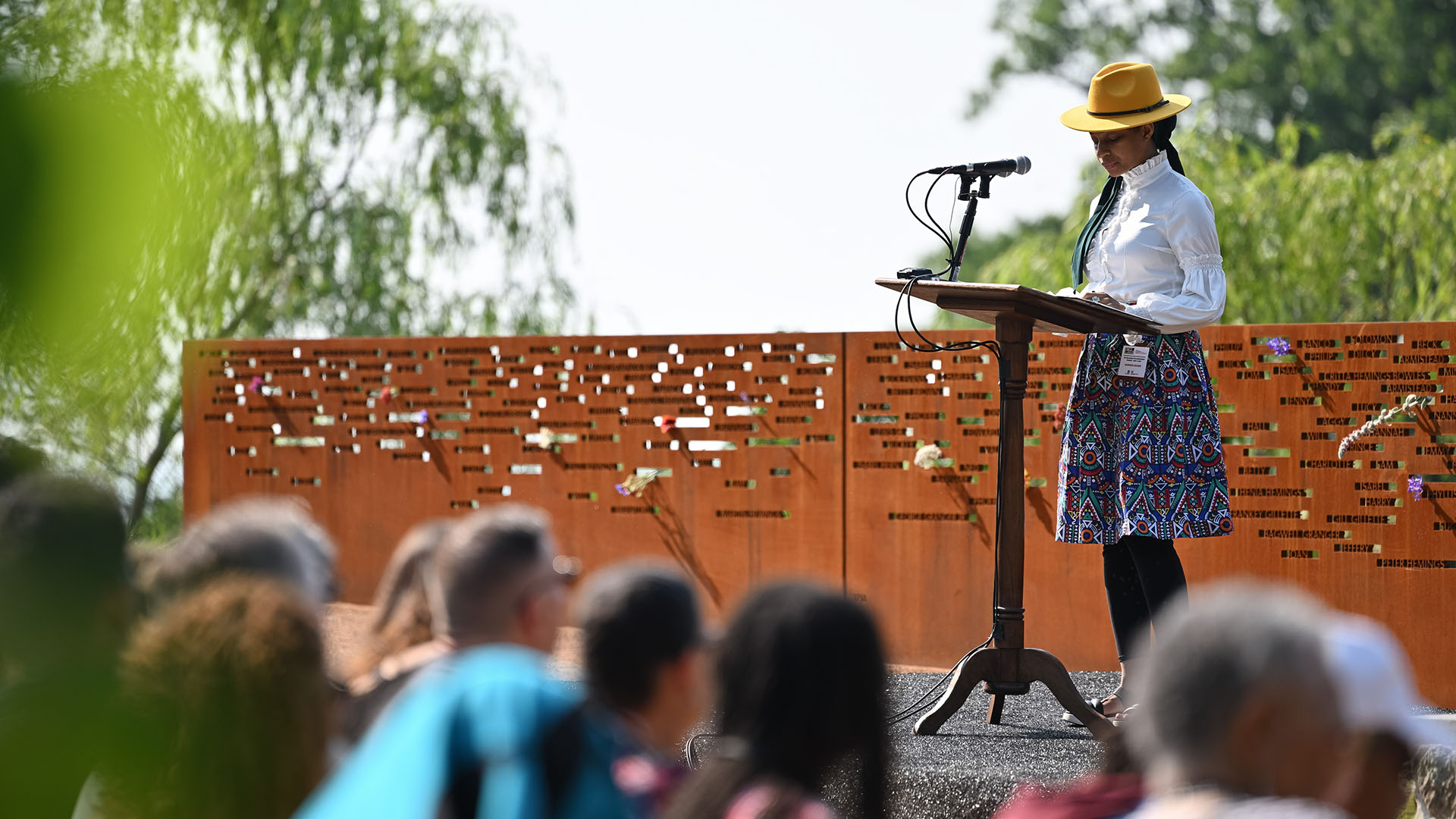
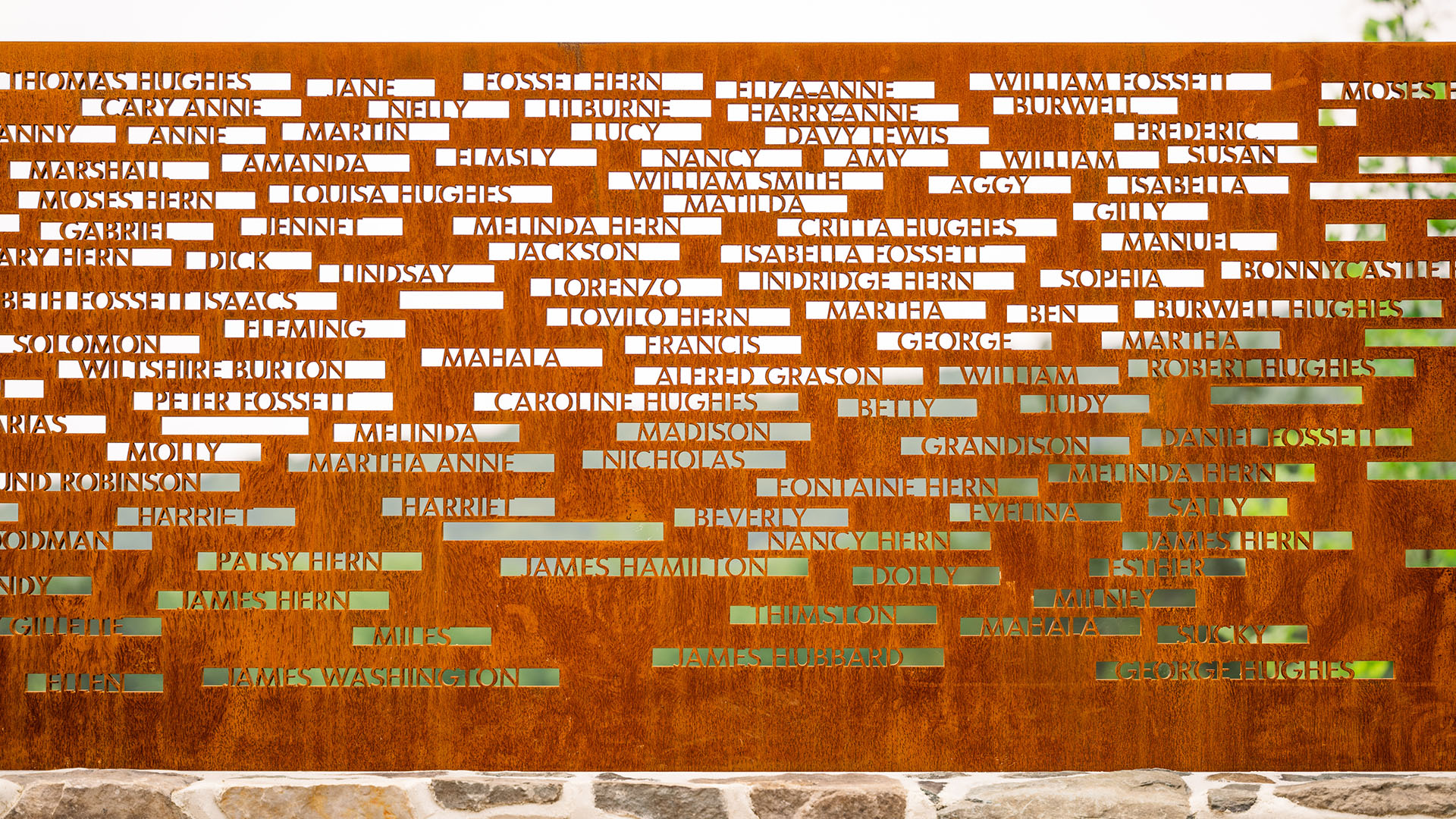
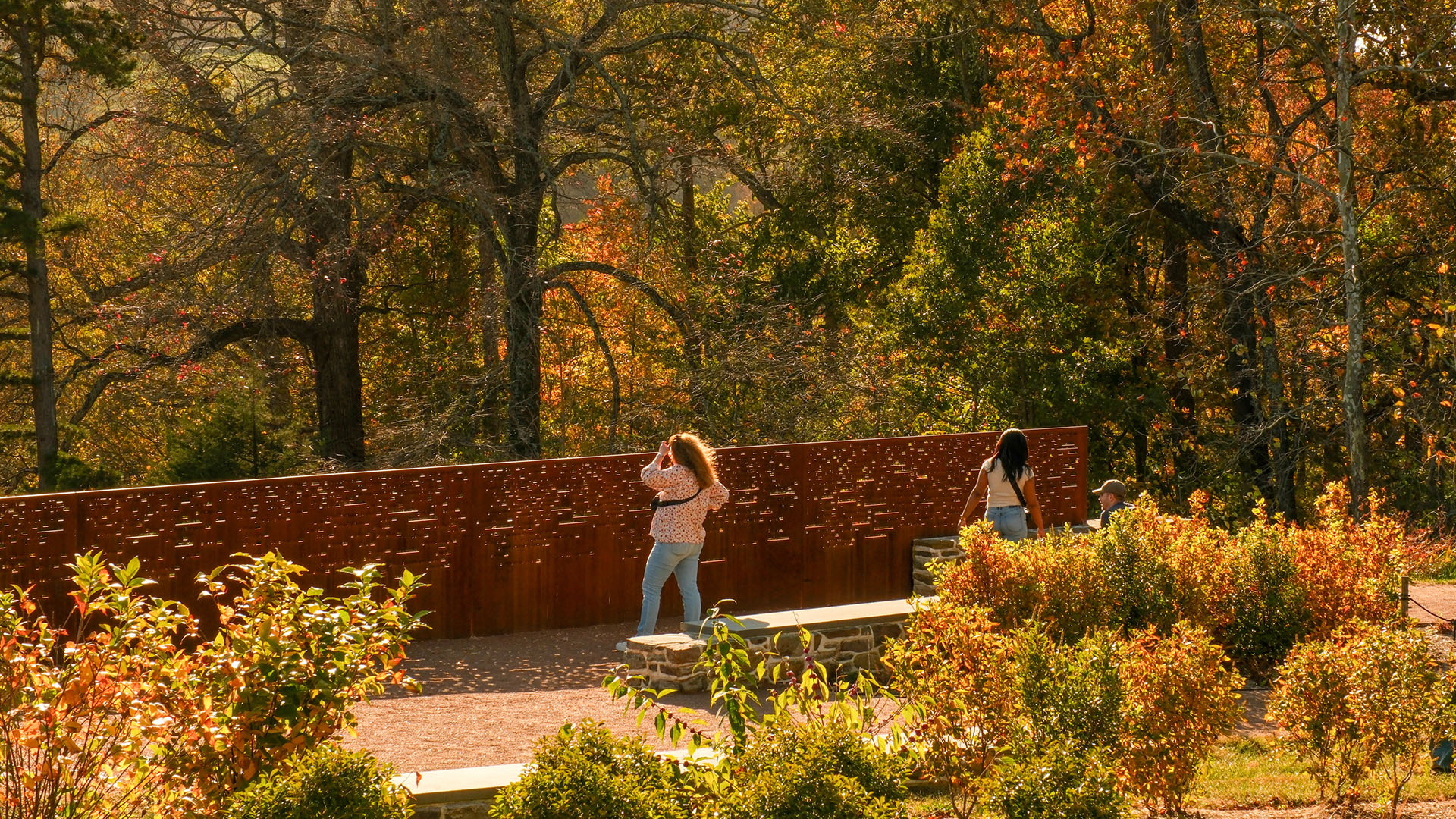
Located at the edge of what was once Monticello’s industrial hub, this restored Burial Ground and Contemplative Site re-centers the lives of the 607 enslaved women, men, and children who made Monticello possible. Once easily overlooked and surrounded by parking lots, the Burial Ground has been transformed into a space of presence, dignity, and reflection.
At its heart stands a 60-foot Cor-Ten steel wall etched with the names of those known to have been enslaved by Jefferson. The weathering steel—its earthy tone echoing Virginia’s red clay—acknowledges both the passage of time and the enduring stain of slavery in American history. Blank apertures leave space for names yet to be uncovered, reinforcing that historical truth remains an evolving act of scholarship and care.
Descendant engagement shaped every aspect of the design, from the curvature of the wall to the reforested buffer that now envelops the site. What was once peripheral is now essential—an intentional threshold that invites visitors to confront Monticello’s full story.
End of Massive Resistance Commemoration
Agency: RE:site
Client: City of Norfolk
Recognition: SEGD Global Design Award, Finalist (2025) – Public Installation
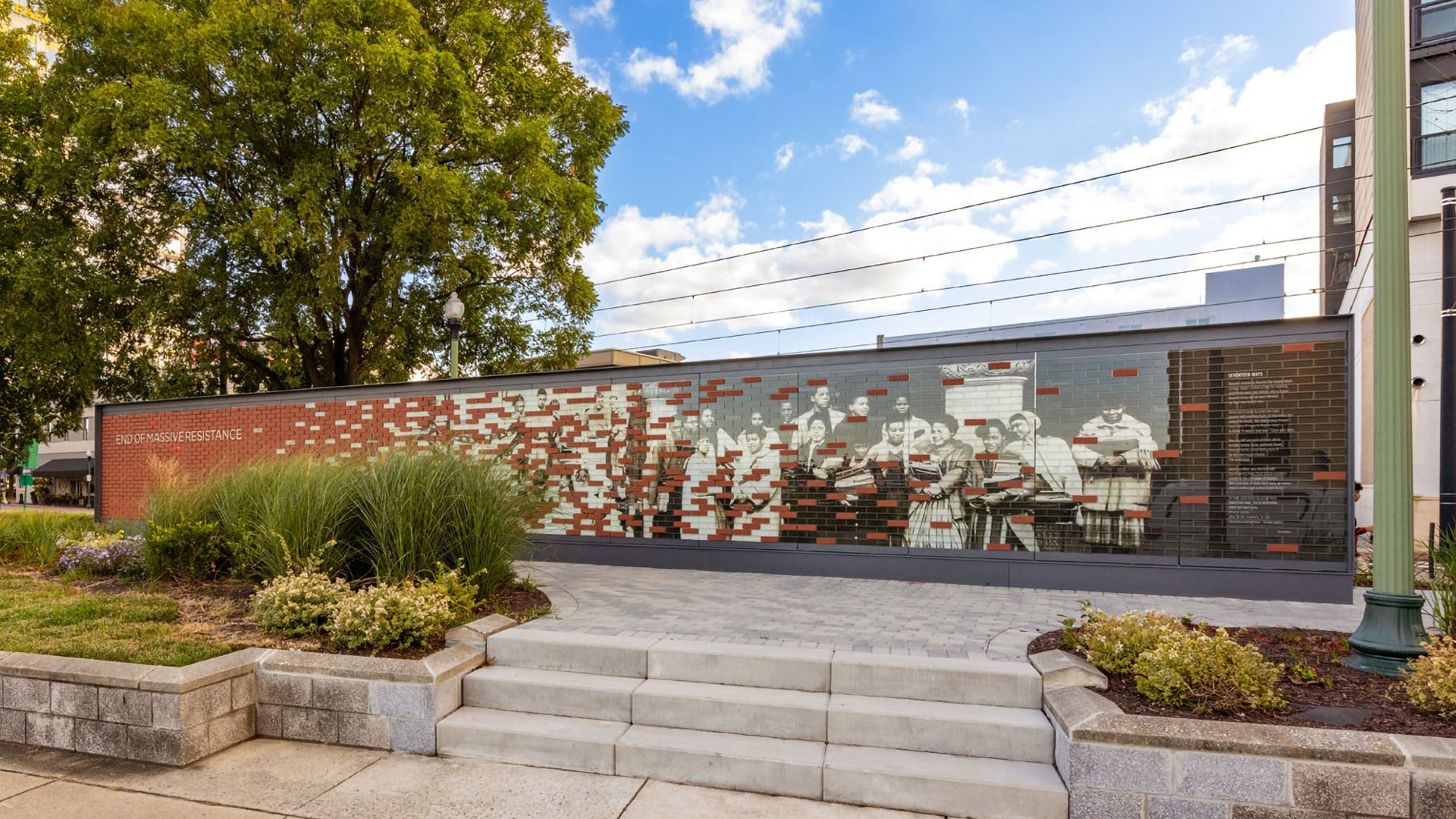
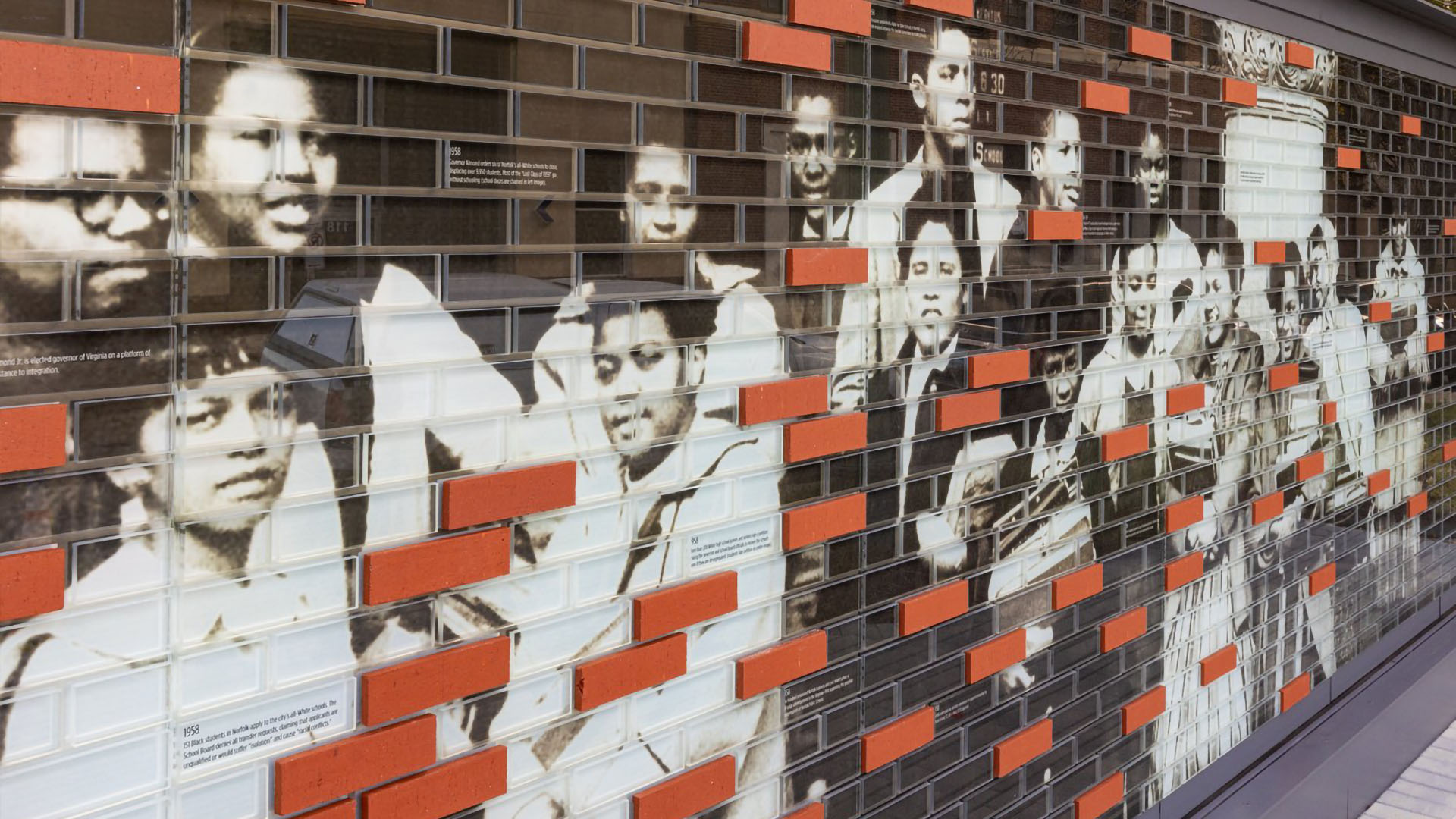
In Norfolk, Virginia, a sculptural wall breaks open, literally and metaphorically, to commemorate the seventeen Black students who ended Virginia’s policy of “Massive Resistance” to school desegregation following Brown v. Board of Education.
The monument’s brick façade gradually dematerializes into translucent glass blocks. As sunlight passes through, historical images of the Civil Rights Movement wash across the plaza, collapsing time and connecting present-day visitors to the bravery of the Norfolk 17. At night, illumination continues the gesture—light as a symbol of justice breaking through systemic obstruction.
Featuring the poem “Seventeen Ways” by former Virginia Poet Laureate Tim Seibles, the installation honors not only a legal victory but also the psychological and emotional endurance of students who faced extraordinary hostility simply for attending school. The work stands as both a memorial and a reminder: barriers can be dismantled, but equity remains an ongoing pursuit.
Juanita J. Craft Civil Rights House and Museum
Agency: Isometric Studio
Client: City of Dallas
Recognition: SEGD Global Design Award, Finalist (2025) – Exhibition
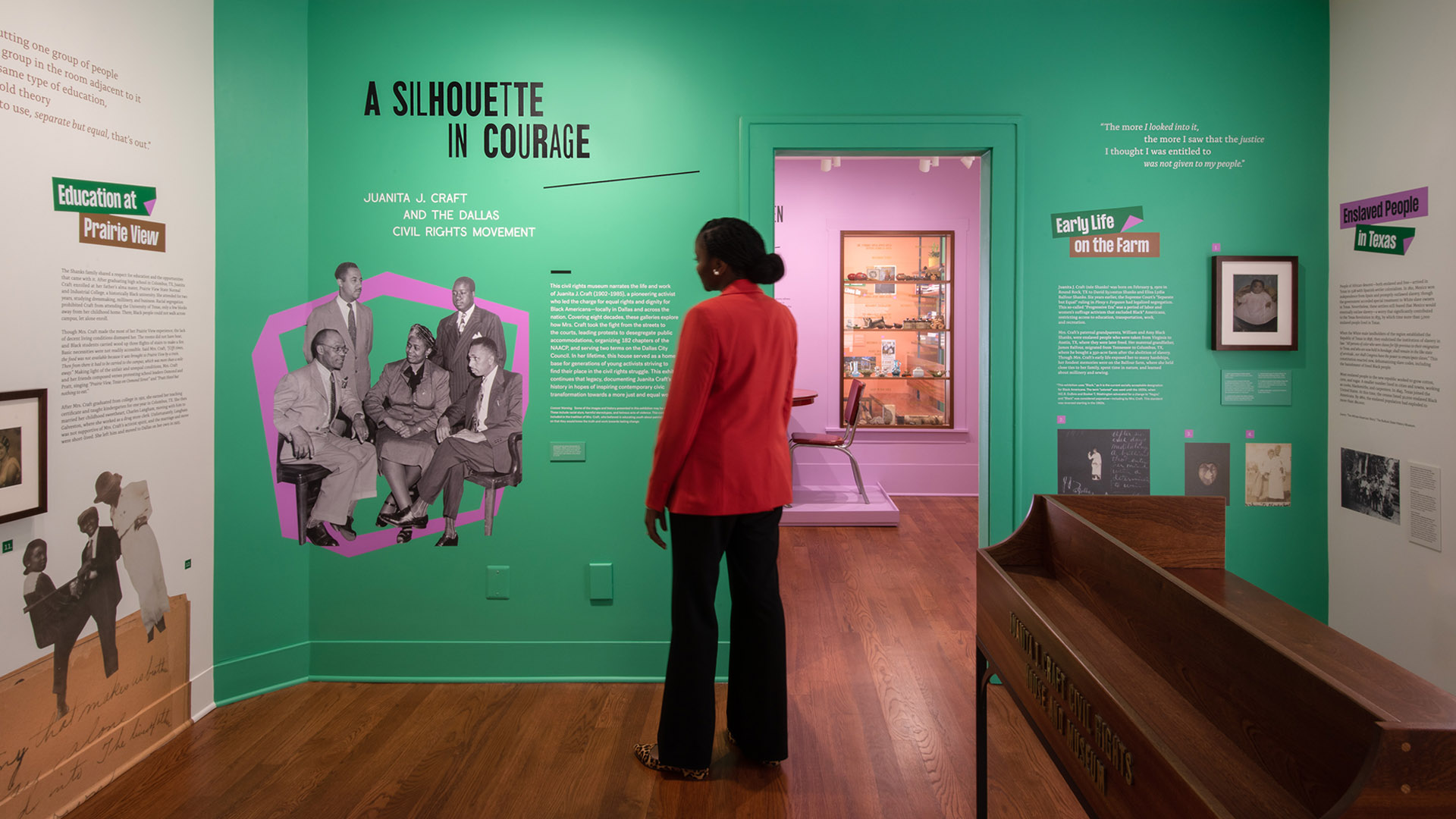
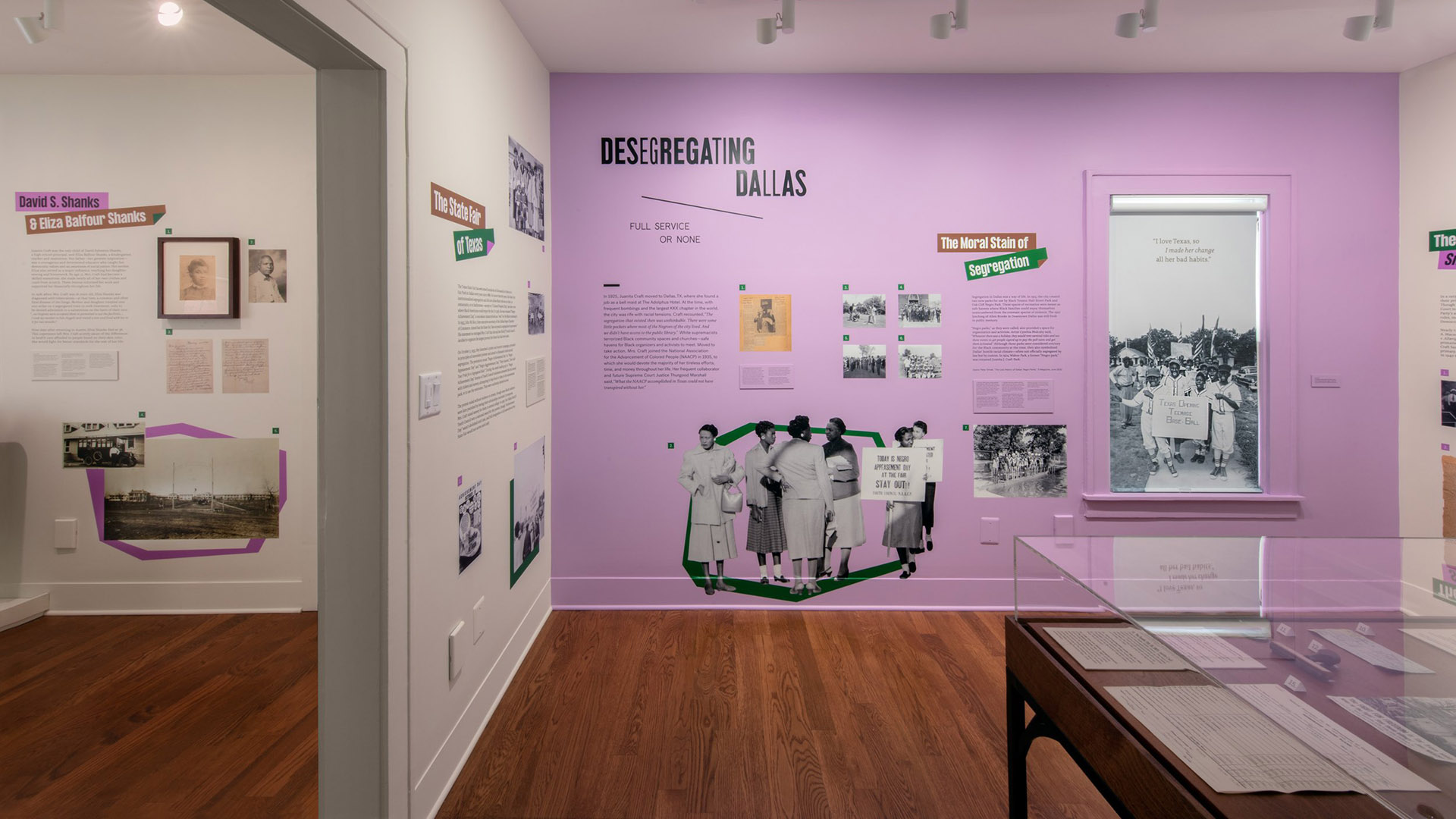
After a devastating flood damaged both the structure and cherished artifacts, the City of Dallas partnered with Isometric Studio to reimagine the Juanita J. Craft Civil Rights House as a world-class museum experience—one that honors the life and legacy of a leader who established 182 NAACP chapters and mentored generations of young activists.
The exhibition recreates Craft’s home as a “house of power,” narrating eight decades of civil rights history with clarity, accessibility, and bold graphic expression. Inspired by Craft’s scrapbooks and protest signage, the design features vibrant color, silhouette cutouts, and a custom typeface—Craft—based on the silkscreen lettering she and her “Craft Kids” used to produce protest signs.
From enslavement and racial violence to legal victories and community liberation, the exhibition frames history not as static, but as lived and continued. True to Craft’s words—“I had no children, so I adopted the world”—the museum remains a living site of civic transformation.
Lewis Latimer House Museum
Agency: Isometric Studio
Client: Lewis Latimer House Museum
Recognition: SEGD Global Design Award, Finalist (2025) – Exhibition
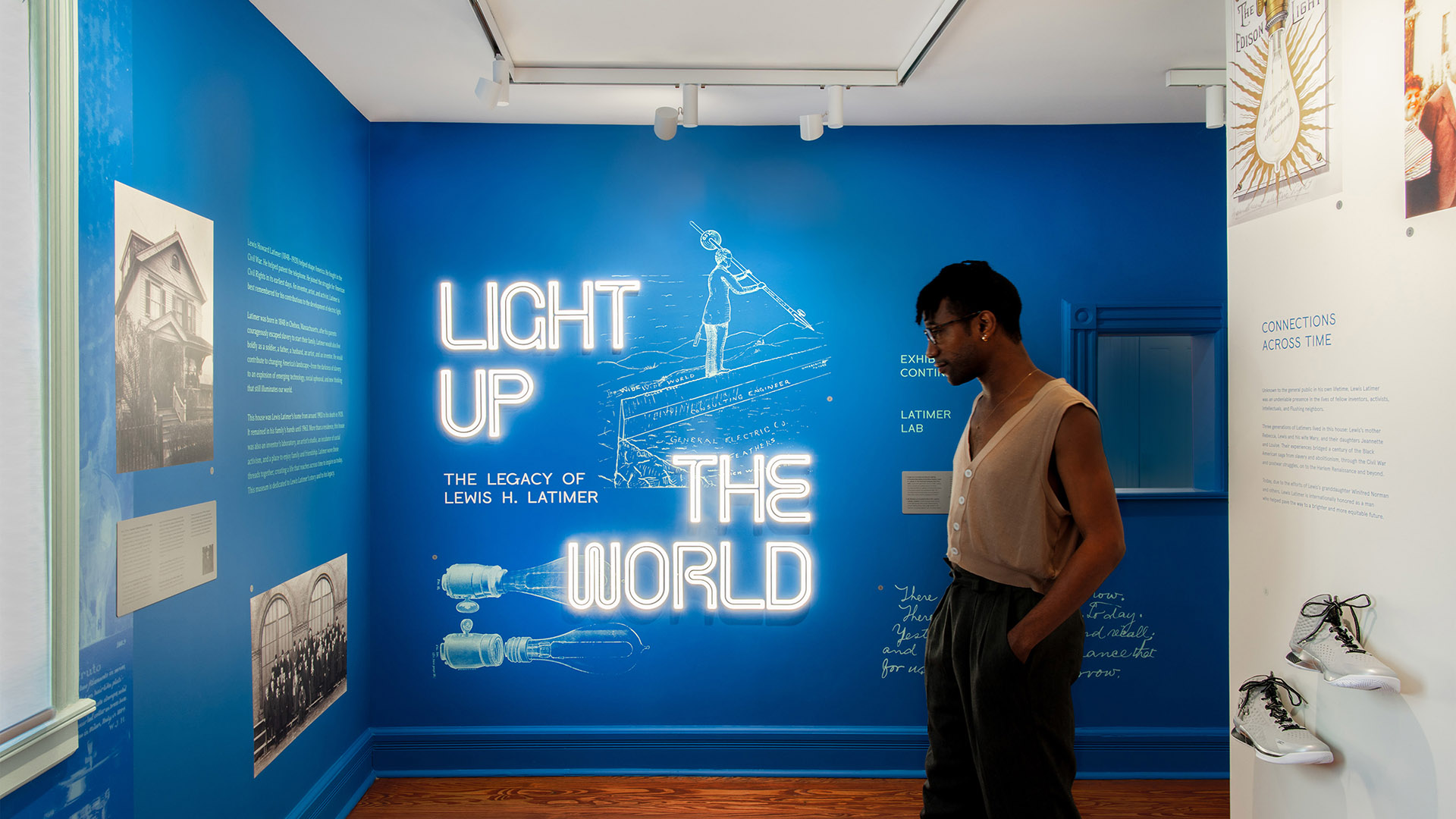
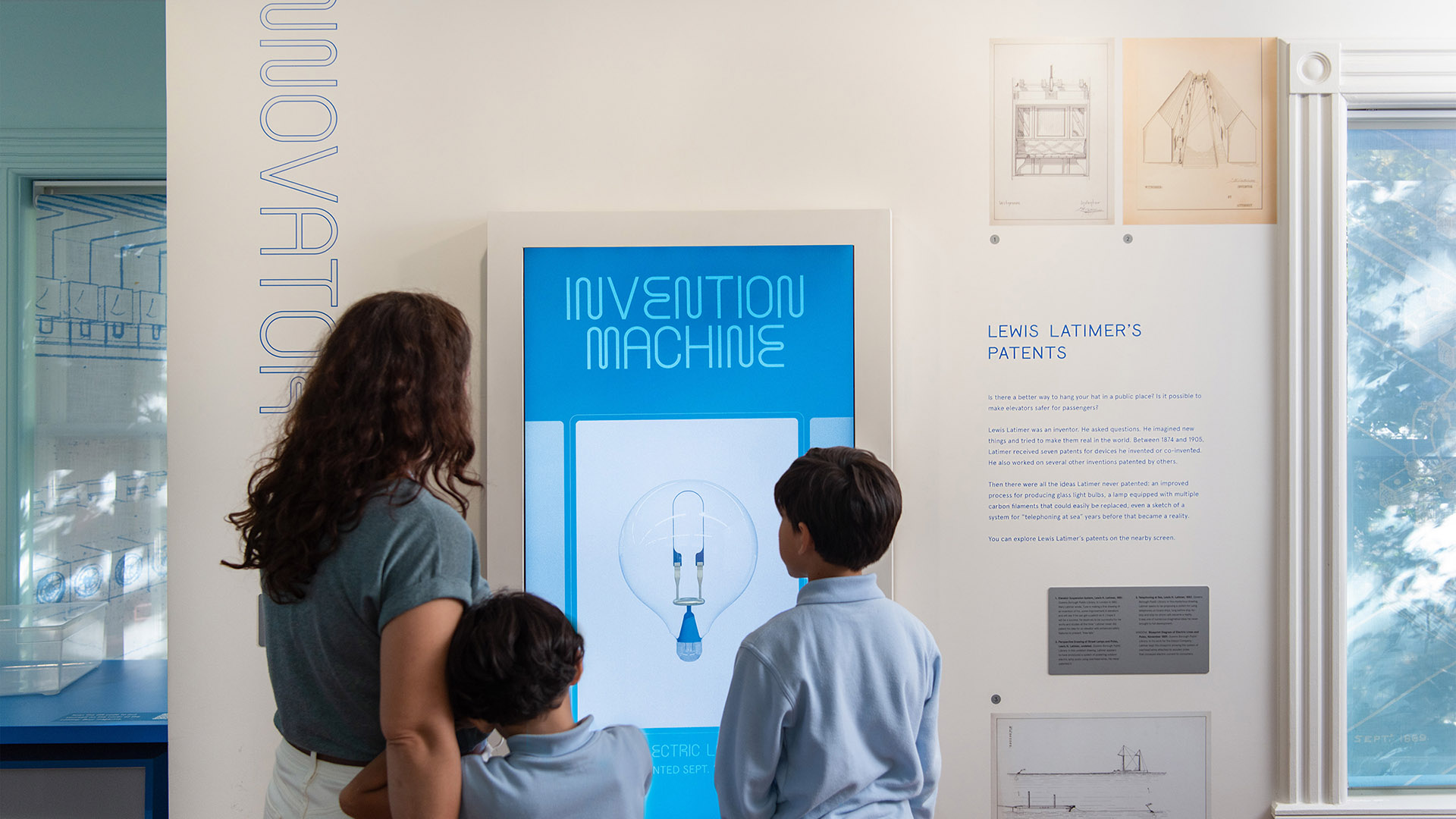
The son of formerly enslaved parents, Lewis Latimer was a self-taught inventor whose improvements to the carbon filament made electric light broadly accessible. Yet his name is often overshadowed in dominant narratives of industrial innovation.
In Queens, New York, a new permanent exhibition at the Lewis Latimer House Museum restores his rightful place in that story. Drawing from Latimer’s blueprints, journals, artwork, and patents, the design introduces a custom typeface—Filament—and a futuristic yet historically grounded architectural framework that balances intimacy with accessibility.
Interactive stations invite visitors to explore unrealized patents, listen to his poetry, and imagine themselves as inventors and artists. The exhibition positions Latimer not only as a technical innovator but as a cultural force whose home became a hub for advocacy, artistry, and community in a flourishing Black neighborhood.
Holding Memory
These projects reflect experiential design at its most accomplished—where research, storytelling, and spatial craft converge to bring complex histories to life. Through design excellence, they translate memory into environments that invite reflection, discovery, and connection.
As conversations about whose stories are told—and how—continue to unfold across the country, designers of experiences contribute as interpreters and collaborators in shaping shared memory. This work is rigorous and community-informed, developed alongside descendants, scholars, educators, and cultural partners.
Black history is American history. When we design spaces that hold its richness and complexity, we strengthen not only our institutions, but our collective capacity to understand who we are—and who we are still becoming.
People also viewed
-
Through a Musical Lens: Experiences Celebrating Black History and Culture

Through a Musical Lens: Experiences Celebrating Black History and Culture
-
SEGD Global Design Awards: A Resource for Black History Experiences

SEGD Global Design Awards: A Resource for Black History Experiences
-
Designing for Reflection: How Restraint Shapes Spaces for Truth-telling and Healing

Designing for Reflection: How Restraint Shapes Spaces for Truth-telling and Healing