WMATA Digital Wayfinding Manual
The Washington Metropolitan Area Transit Authority (WMATA) serves as the lifeline of public transportation for the Washington D.C., Maryland, and Virginia region, moving over 500,000 passengers daily. As the second-busiest heavy rail system in the United States, WMATA is a critical part of the area’s infrastructure and daily life.
Agency
Order, W&CO
Practice Area
Client
Washington Metropolitan Area Transit Authority
Industry
The Challenge
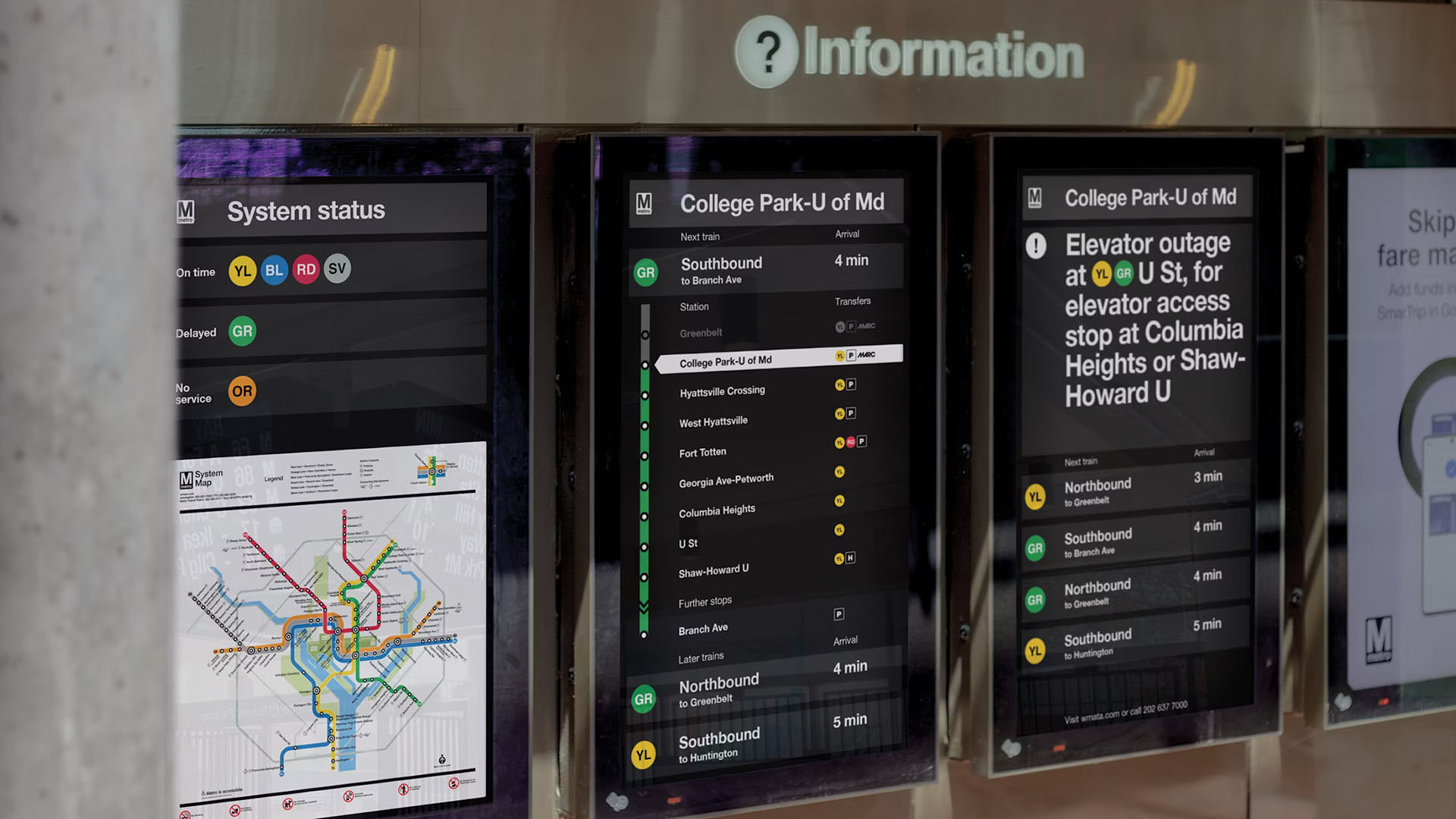
To modernize the wayfinding experience across its network, WMATA tasked the design team with developing a cutting-edge digital system that not only preserved the integrity of its iconic identity but also introduced innovative tools to deliver real-time information.
WMATA’s wayfinding system has faced criticism for inconsistent and outdated signage, poor visual hierarchy, and inadequate accessibility features, making navigation difficult—especially for new or disabled riders.
Project Vision
The project began with an in-depth exploration of the WMATA system. The team conducted thorough audits at the 15 most heavily-trafficked stations, observing passenger interactions, identifying moments of stress, and pinpointing areas of confusion, revealing that. Customer interviews and focus groups provided invaluable insights into rider pain points and expectations, revealing 39% of customers said they took the wrong rail station exit in the past year, 29% went to the wrong platform, 23% boarded a train in the wrong direction, and 17% took the wrong train line! These findings helped identify key opportunities for improvement in contextual wayfinding, hierarchy, and dynamic information delivery.
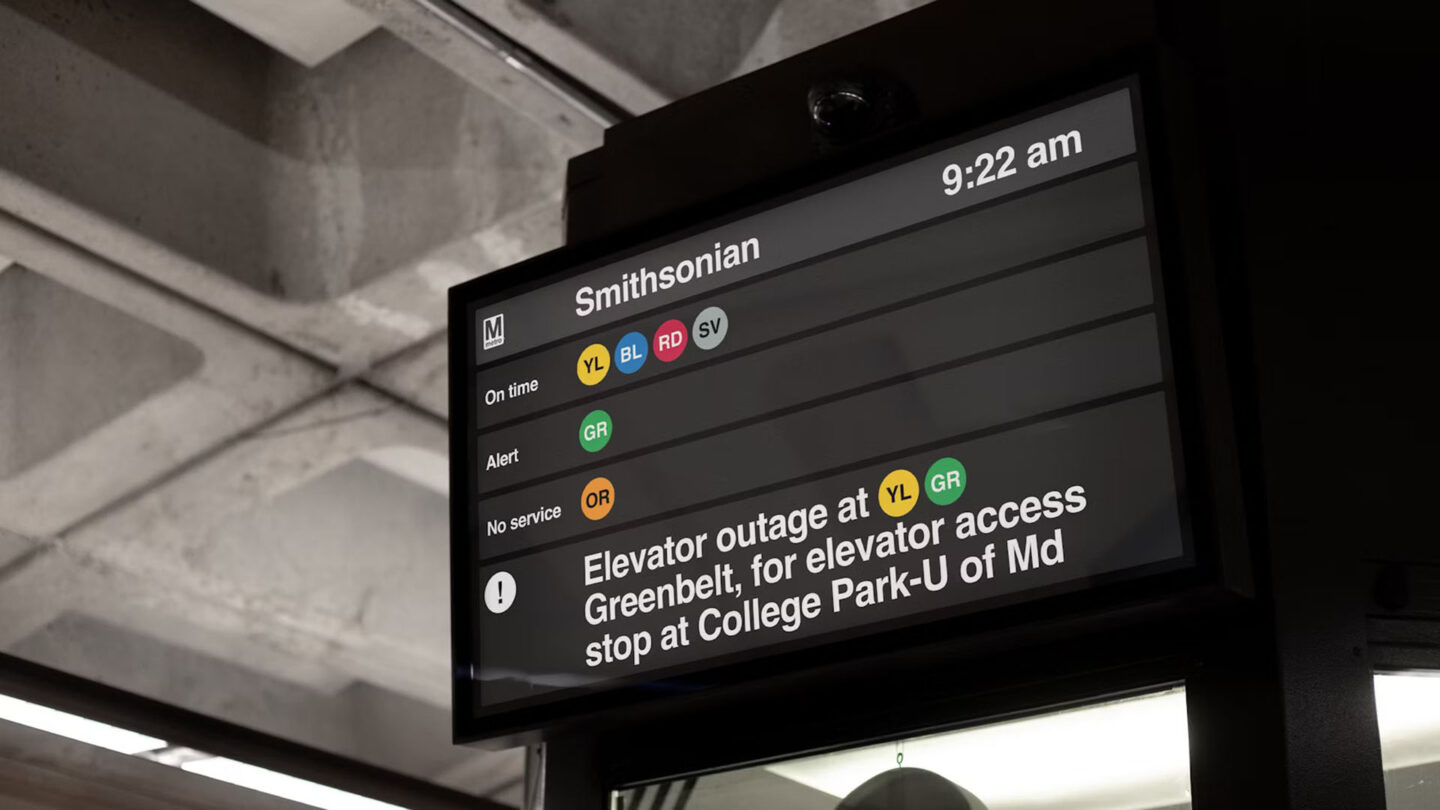
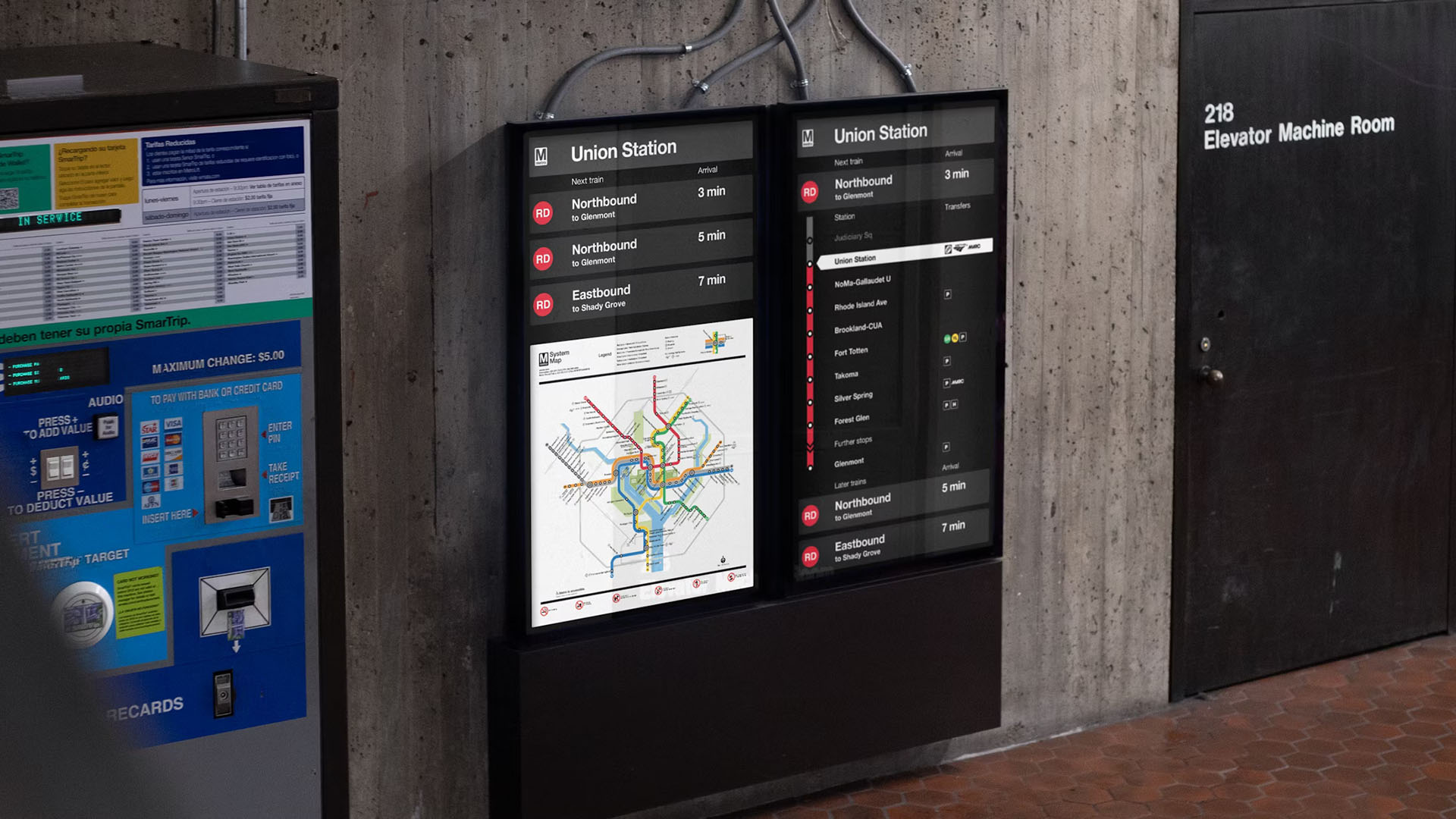
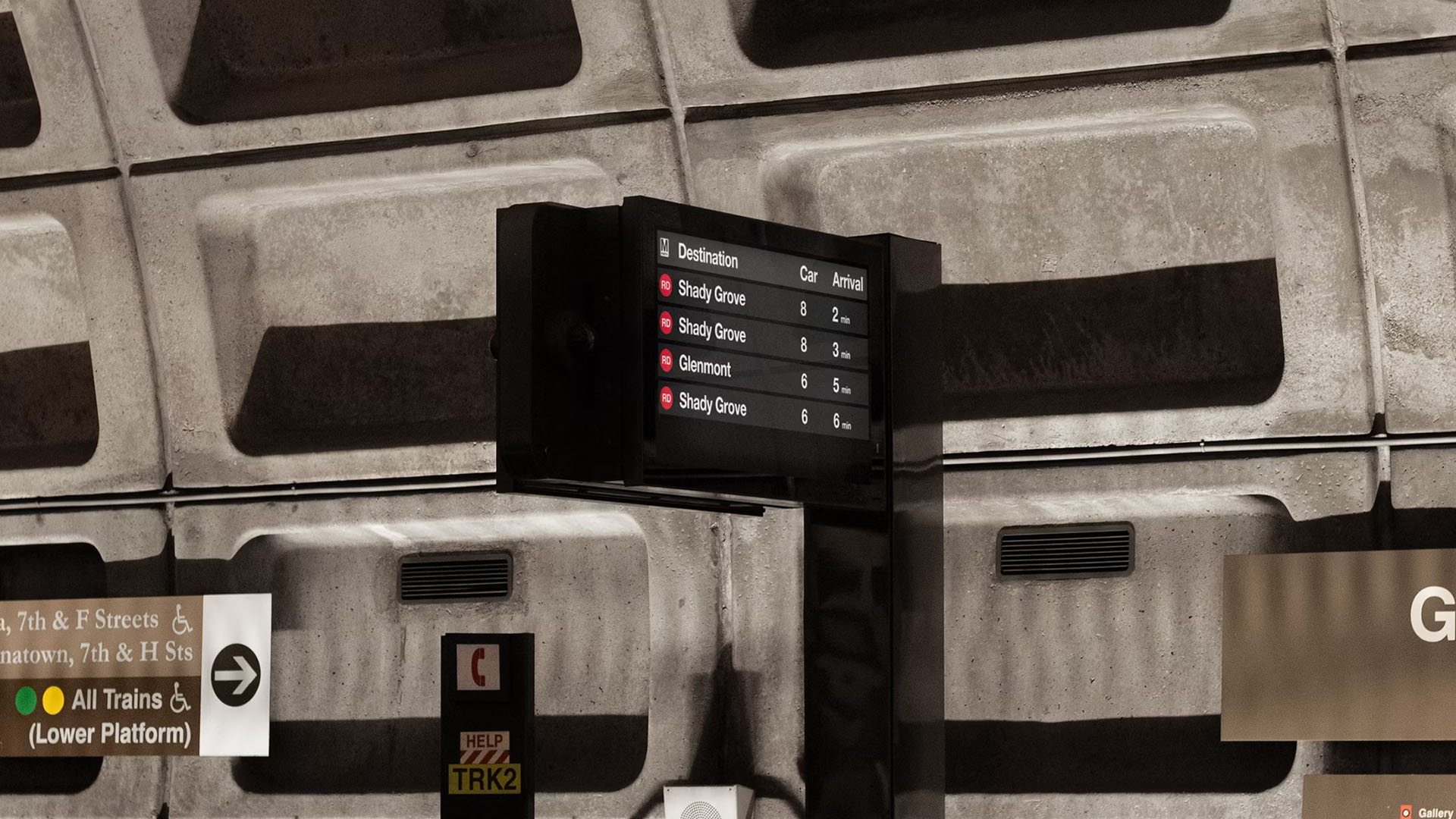
With the digital system, real-time service information can be shared instantly allowing riders to be informed of arrivals, service changes, or emergencies.
Order, W&CO
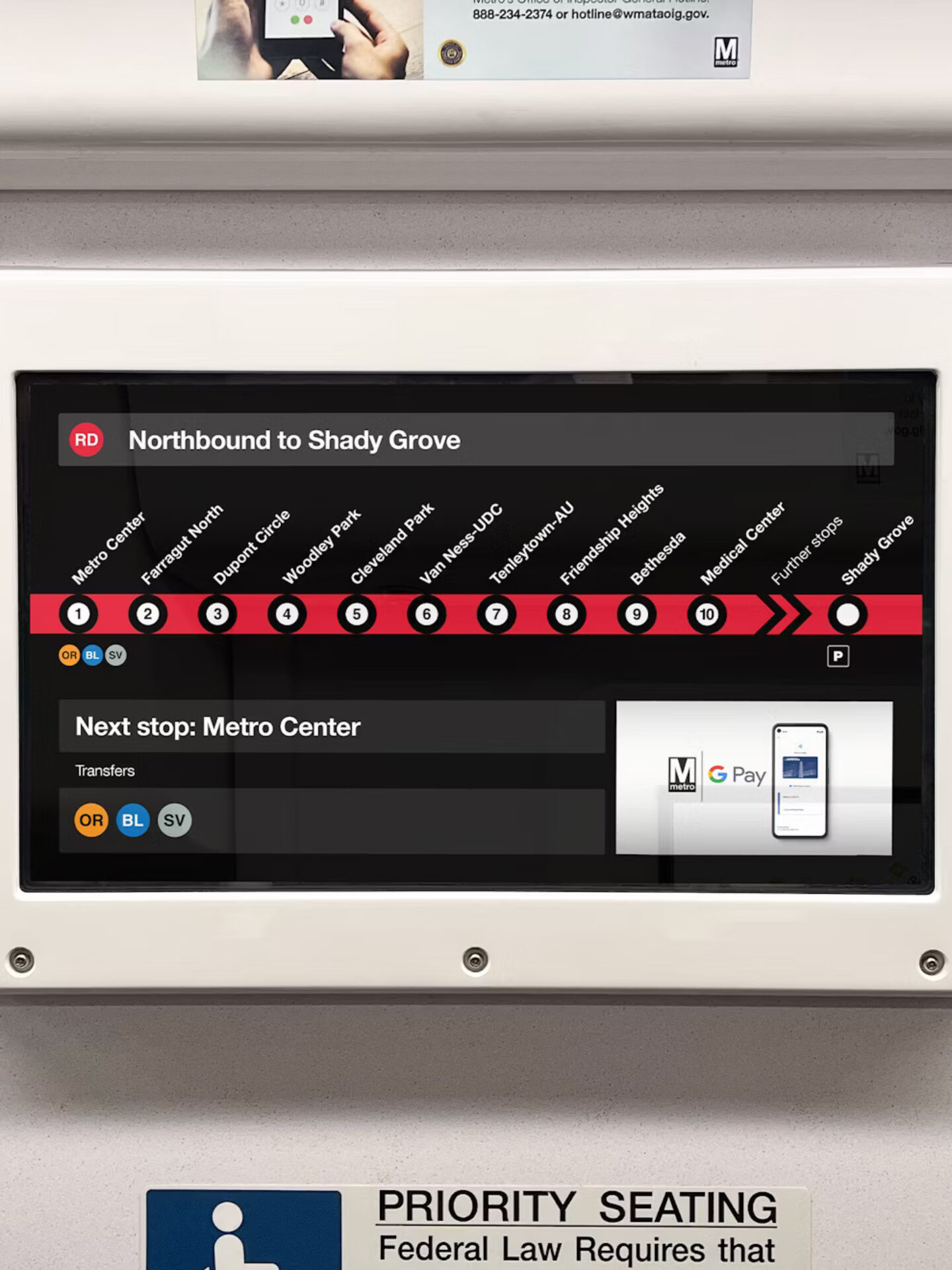
The design system extended to the on-board train experience, ensuring consistency throughout the passenger journey
Order, W&CO
Design + Execution
Inspired by the bold and straightforward design ethos originally crafted by Massimo Vignelli for WMATA in the 1970s, the team expanded on this legacy to create a cohesive digital signage system. This system seamlessly integrates with WMATA’s existing wayfinding design while offering tools to display real-time arrival times, service updates, transfer information, and more. Built on a modular framework, the design adapts to the unique needs of individual stations while maintaining consistency across the network.
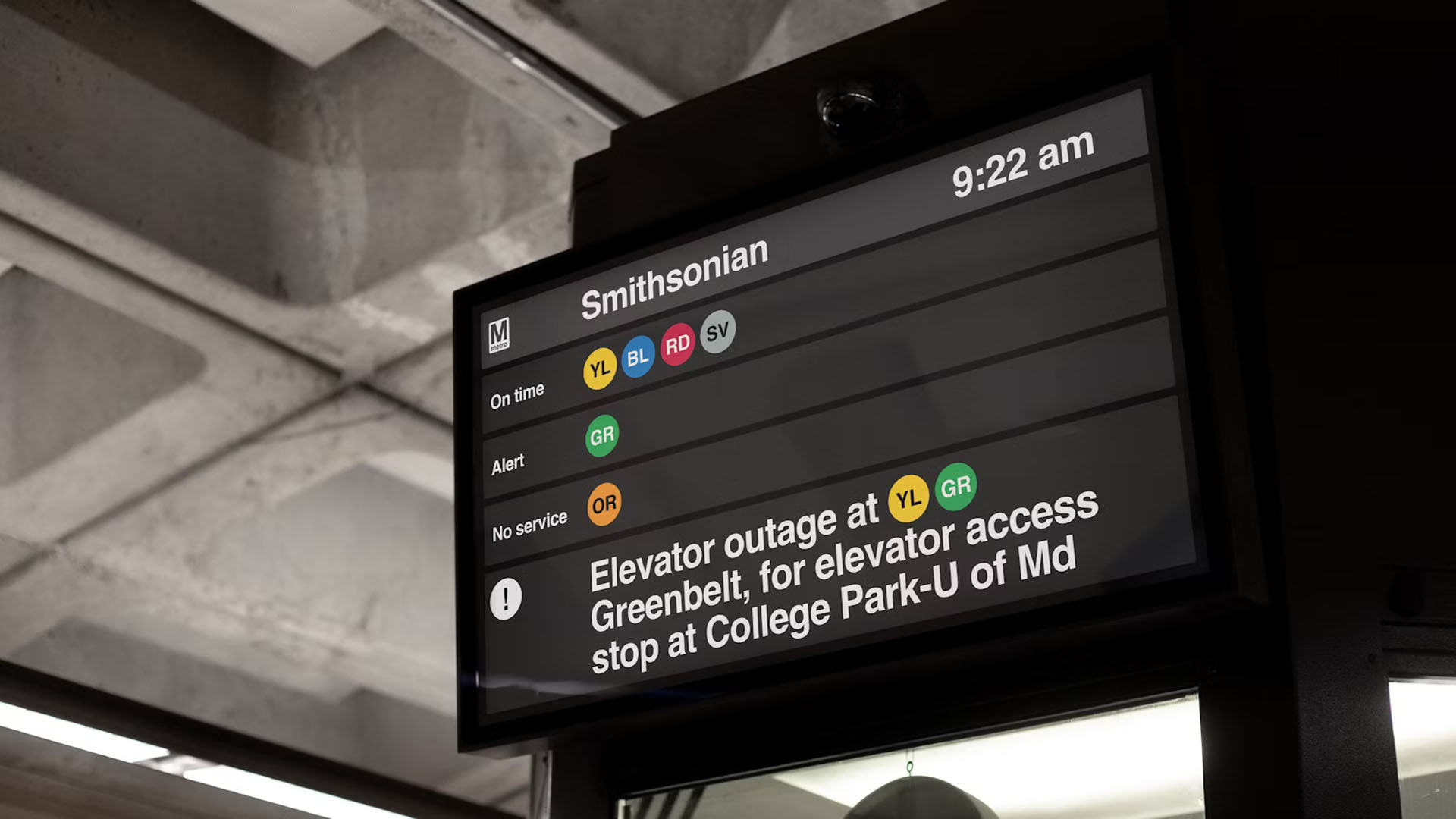
Key features of the digital system include color-coded modules to distinguish standard service, service changes, and emergencies, along with cardinal directional markers for improved navigation. These elements enable riders to access clear, immediate information, whether they’re tracking arrivals, navigating transfers, or responding to unexpected service disruptions.
Recognizing that the Metro experience extends beyond the station, the team applied the principles to WMATA’s broader digital footprint across its intermodal network, including subway cars, buses, and bus stations. The result is a seamless, holistic transit journey, designed to empower riders with confidence and clarity at every stage of their trip.
By combining timeless design principles with cutting-edge technology, this robust design system transforms the WMATA network into a modern, intuitive, and user-centered experience for millions of passengers.
The implementation of this system began in 2024 at L’Enfant Plaza and Chinatown as well as upper-level transfer information throughout; WMATA will continues to roll out these enhancements across the network.
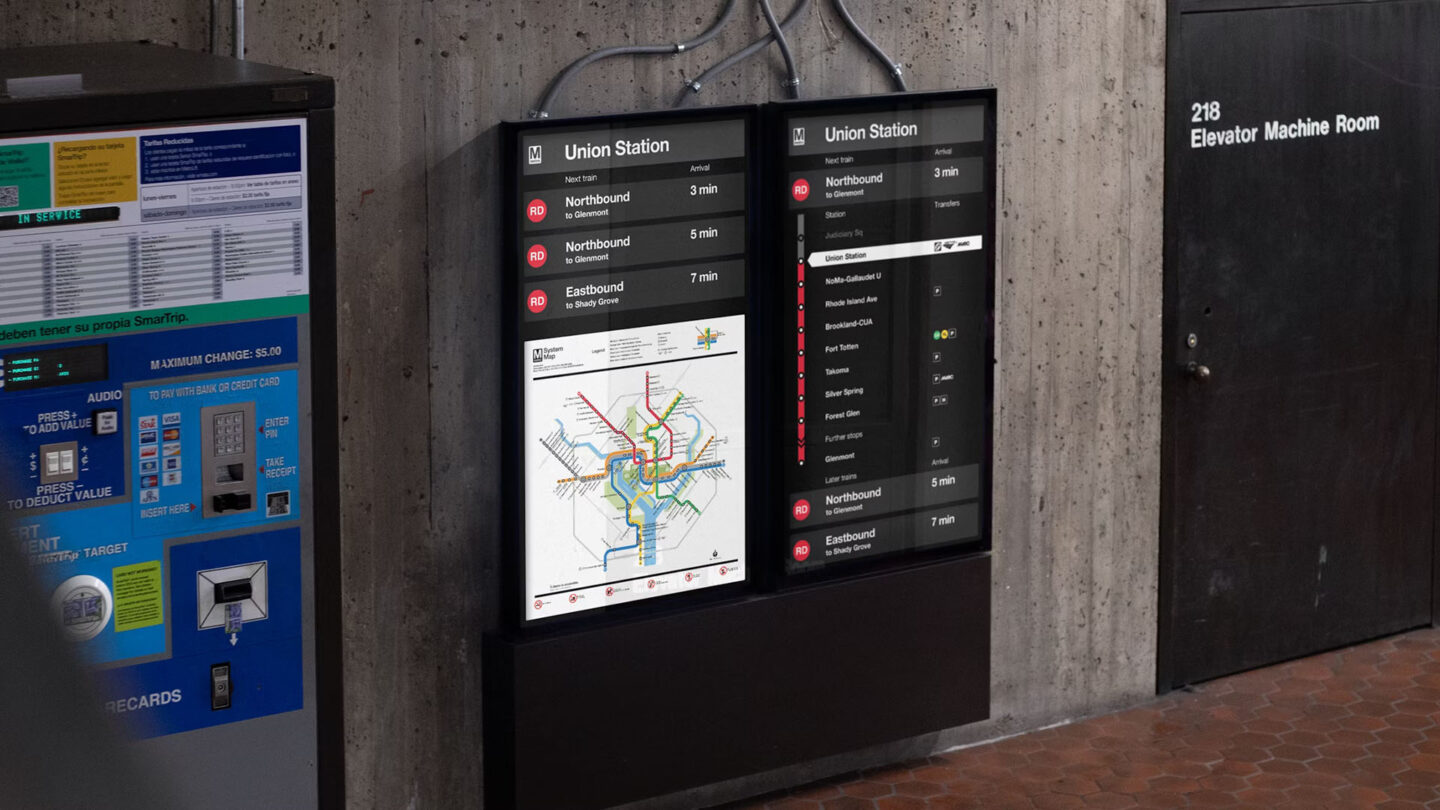
Cardinal direction language was added to provide new directional points of reference for riders.
Order, W&CO
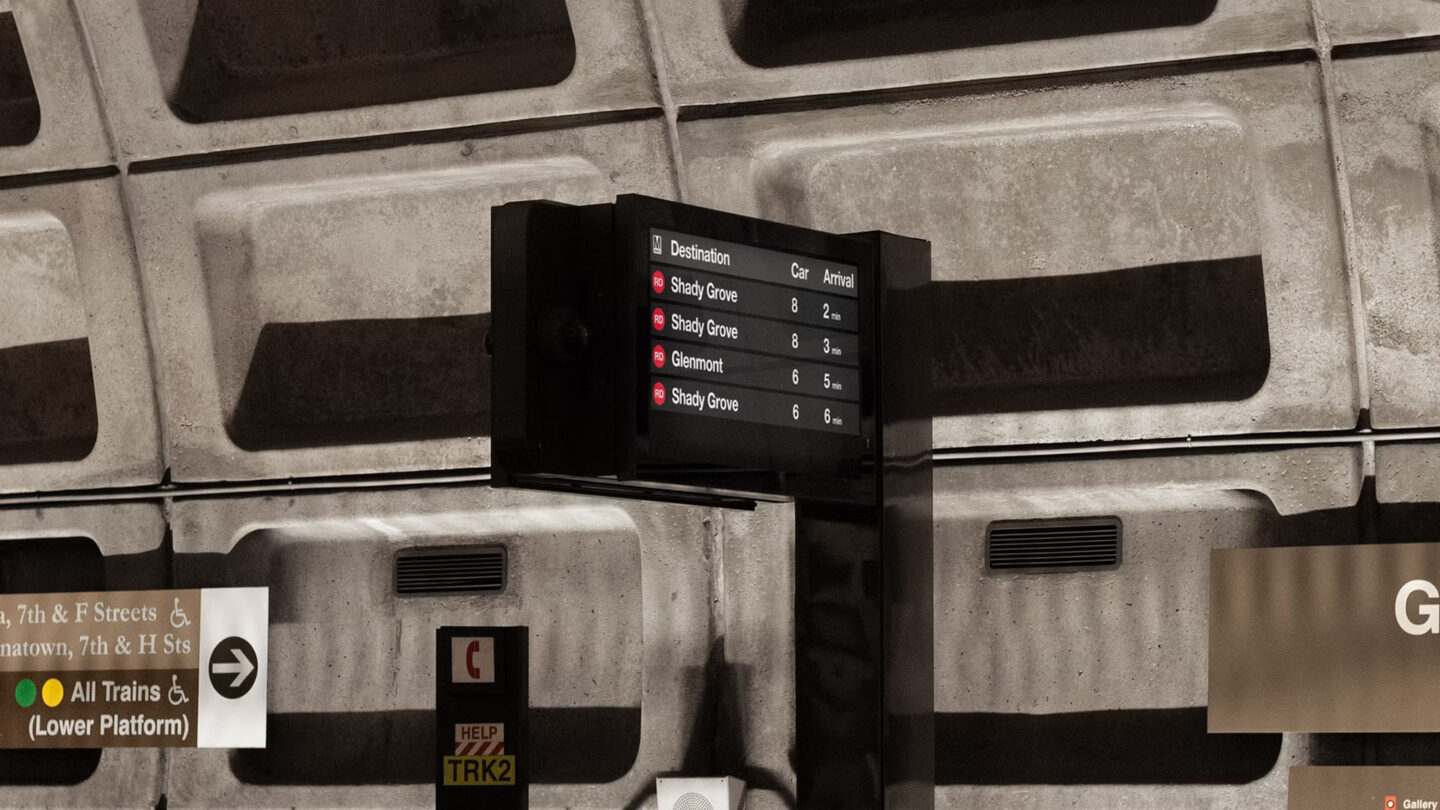
The modules are used throughout the digital ecosystem and update, expand, and adapt for each station or use case.
Order, W&CO
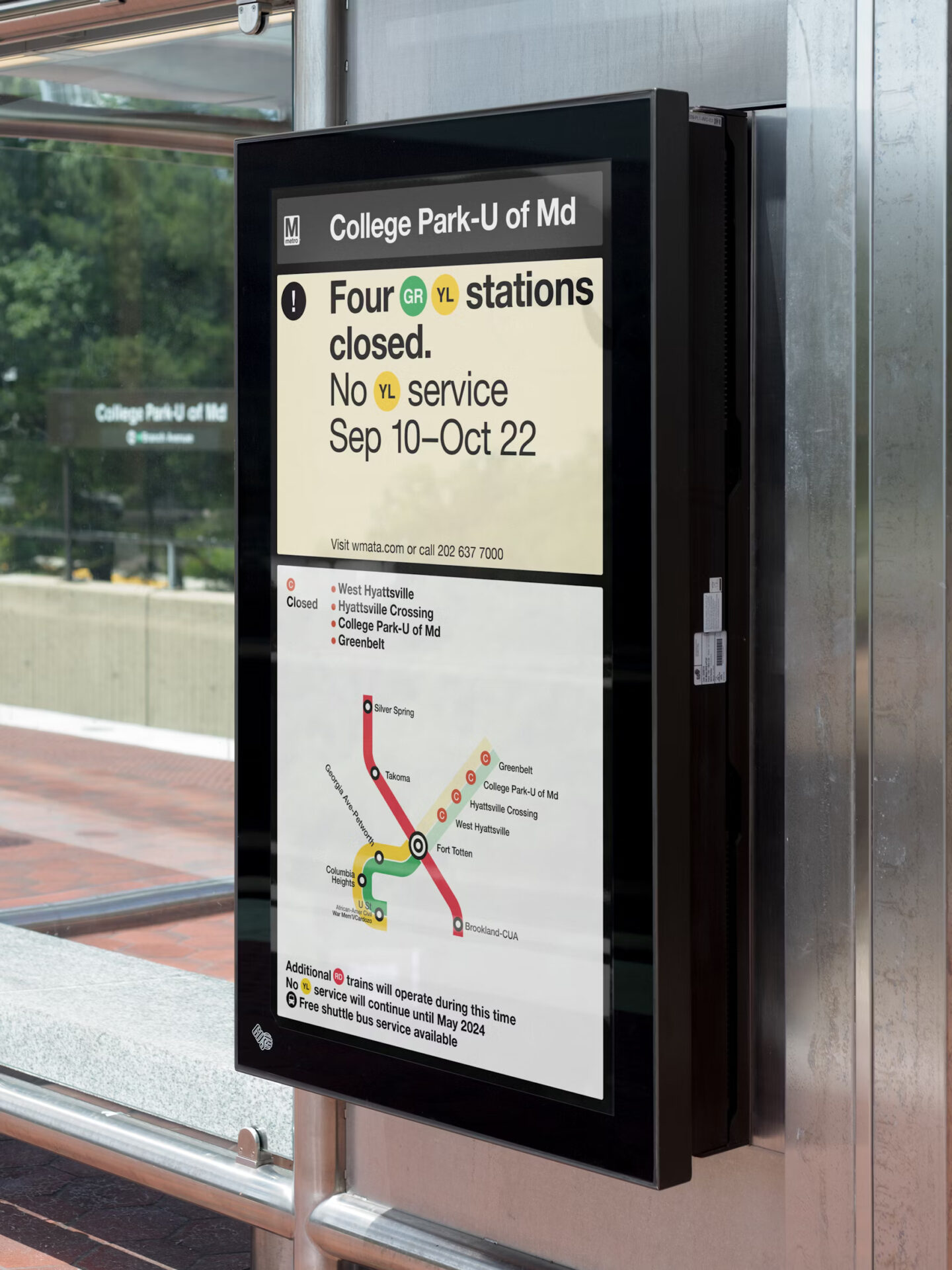
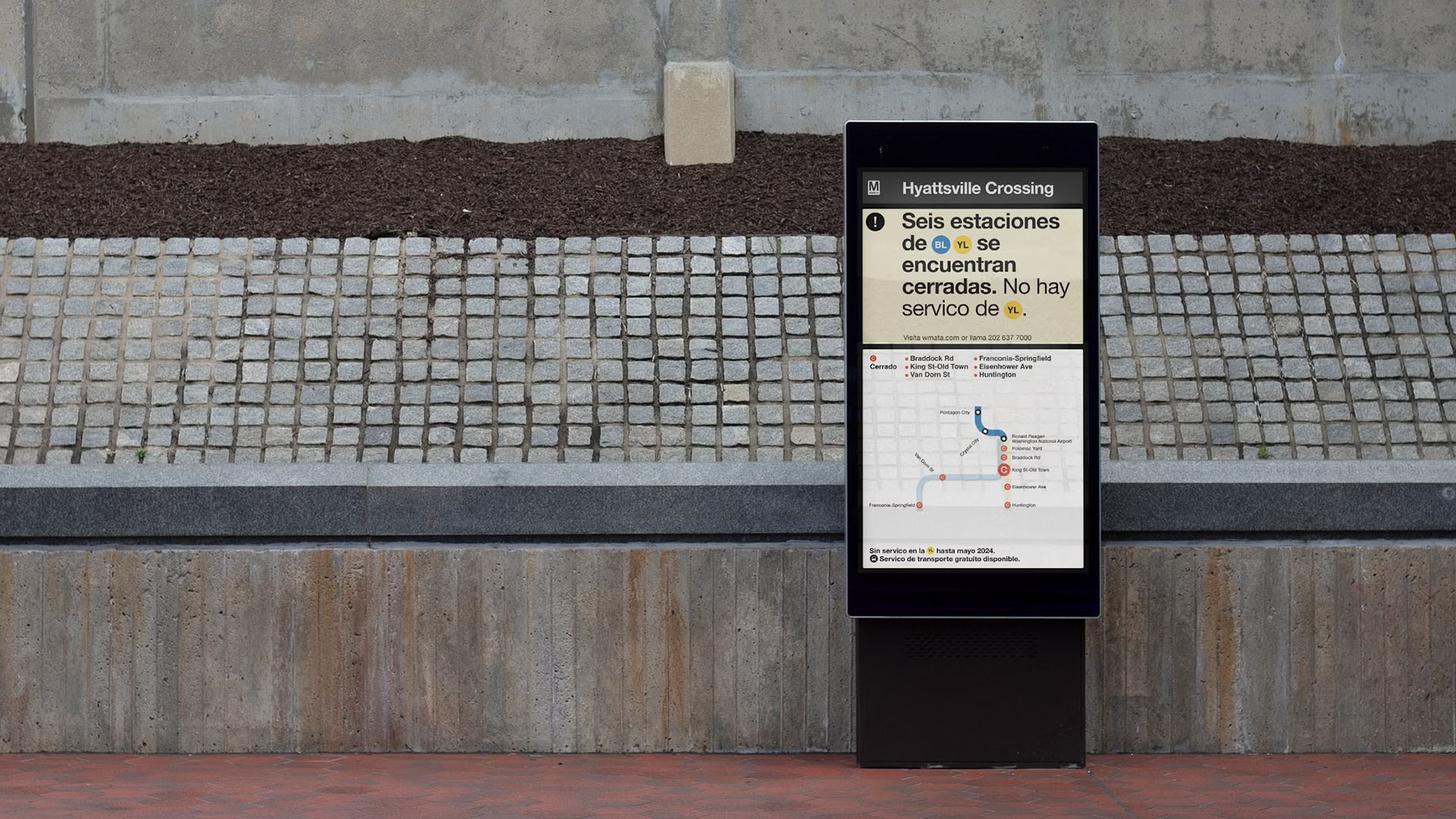
Adapted service map modules allow WMATA to highlight any closures, construction updates, or changes as the system expands.
Order, W&CO
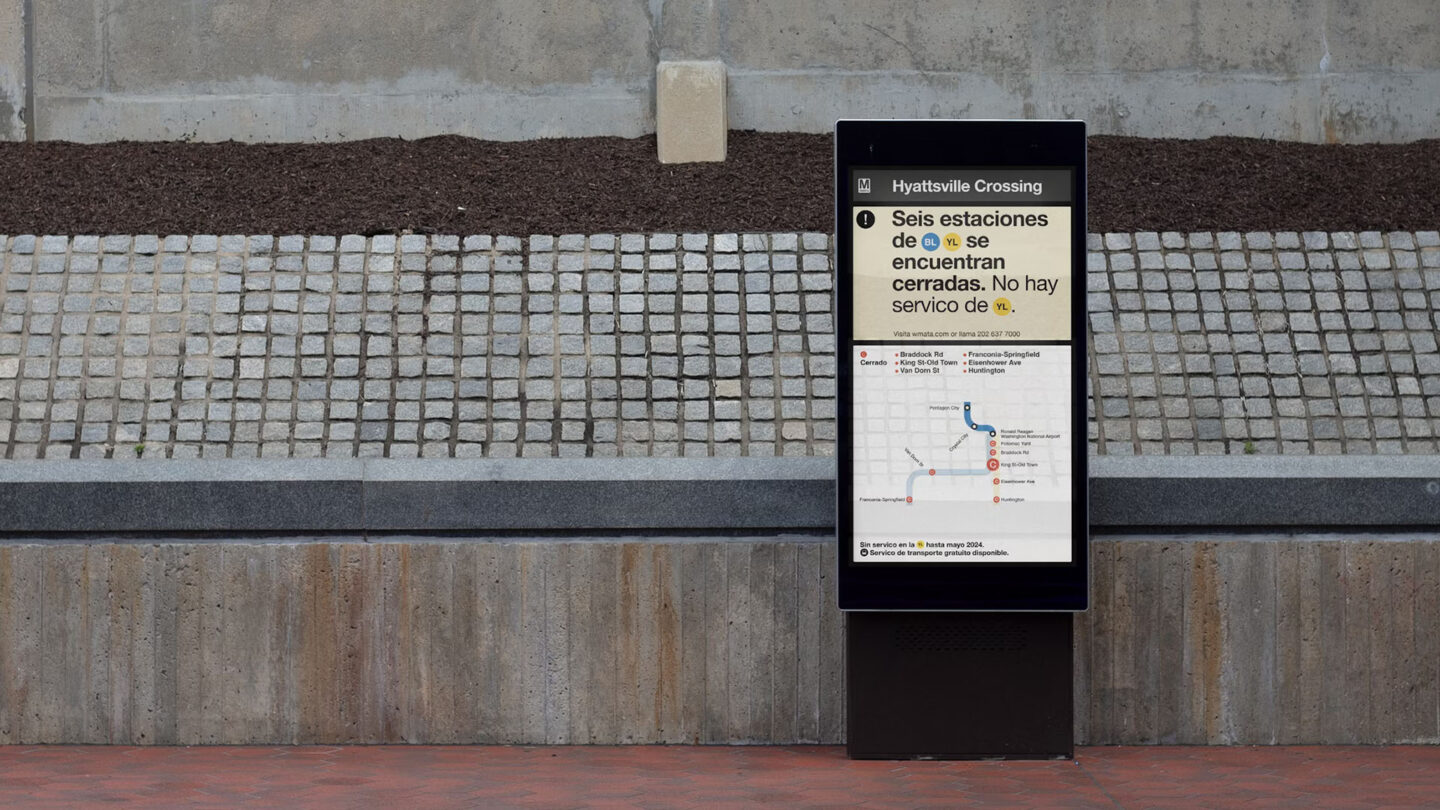
The digital system also supports additional languages to be used providing WMATA an expanded ability to communicate with as many passengers as possible.
Order, W&CO
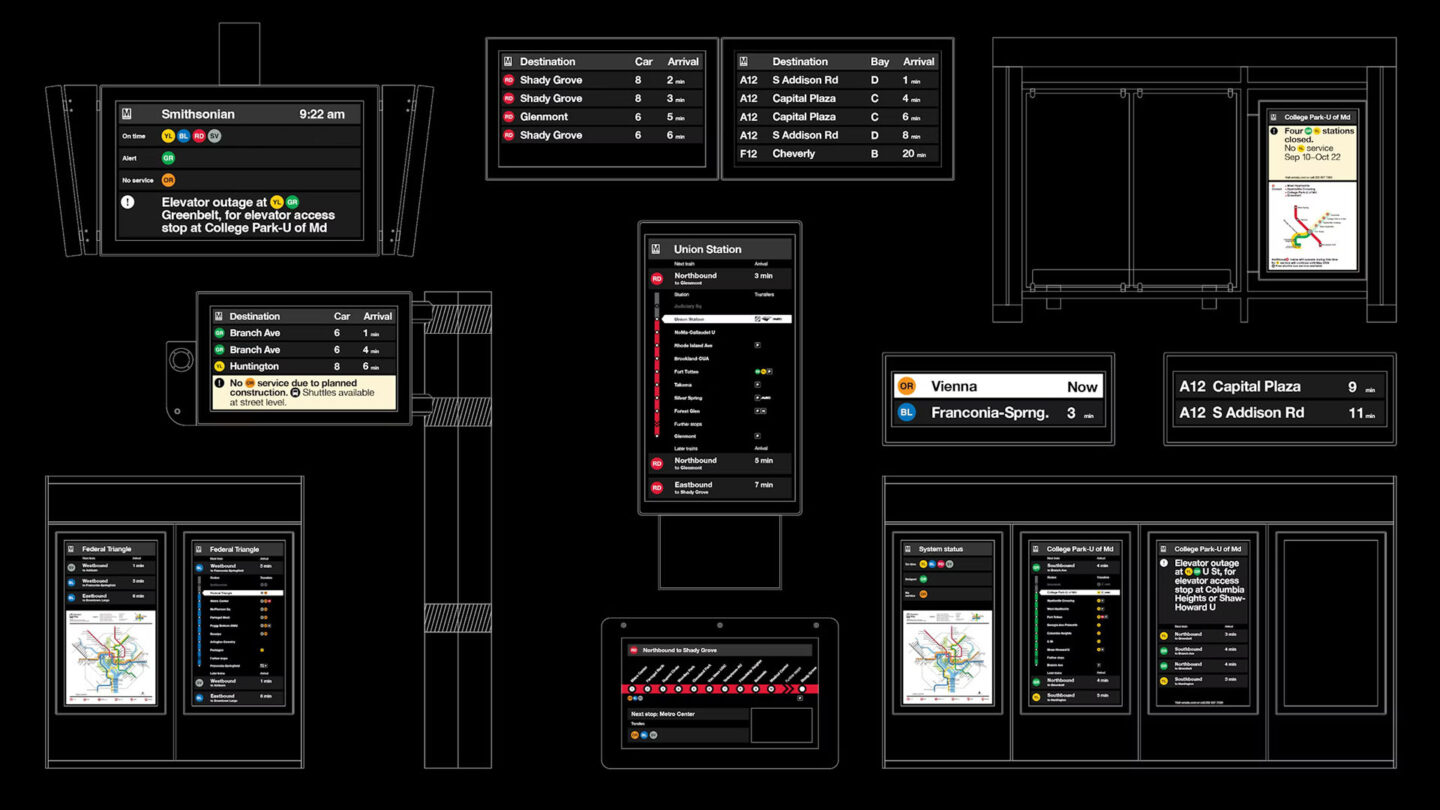
A digital guidelines document was created allowing the WMATA team to create, adapt, implement, and evolve the system as Metro continues to update and expand.
Order, W&CO
Project Details
Much-needed, and expertly done, improvements to a famously disorienting mass transit system. Too much digital signage seems to be digital-first, design-later. This project is admirably clear, leaving out the unnecessary and foregrounding what the commuter needs.
This revamp is an important upgrade for the city – providing clear and easy-to-use information stations that has helped workers get to work and visitors get to the city's cultural destinations quickly and efficiently. Leveraging years of research, this is a great responsive design.
Design Team
Order:
Garrett Corcoran (design director)
Megan Nardini (head of operations)
Jesse Reed (partner)
W&CO:
Vijay Mathews, (principal in charge)
Collaborators
Entro (planning firm):
Rosie Constantine (project manager)
Anna Crider (partner)
MJ DiDonna (senior designer)
Vedran Dzebic (head of research)
Kevin Spencer (creative director)
Jacobs (project management)
Photo Credits
Order, W&CO
Open Date
January 2024
More in Strategy/Research/Planning
All Projects-
Read more Walk Portland

Walk Portland
sparks+sullivan -
Read more Taiwan Public Pictogram System (TPPS)
Taiwan Public Pictogram System (TPPS)
Path & Landforms -
Read more Walker Art Center Visitor Experience Research
Walker Art Center Visitor Experience Research
HGA