Where You Stand: Chinatown 1880 to 1939 (你所處的位置: 唐人街 1880 年至 1939 年)
Where You Stand: Chinatown 1880 to 1939 demonstrates how design and technology can recover and reinterpret urban history. By recreating Chinatown’s lost streetscape, the exhibition ensured its legacy is preserved and experienced. Through a blend of physical design and digital engagement, the project brings Chinatown’s history to life, inviting visitors to connect with the past while imagining the future of historical representation in public spaces.
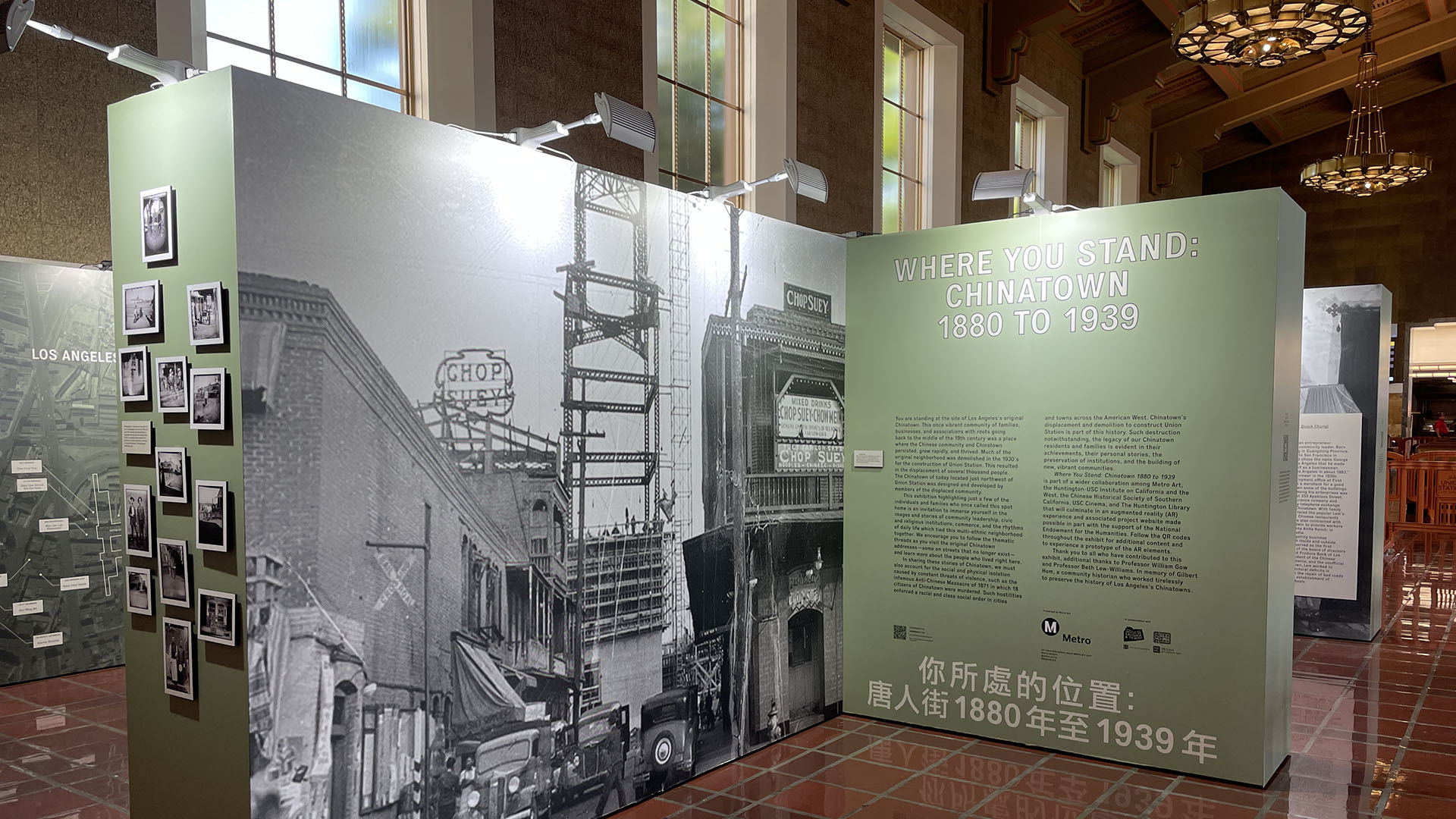
The exhibition was produced by Metro Art in collaboration with the Huntington-USC Institute on California and the West, the Chinese Historical Society of Southern California, University of Southern California (USC) Cinema, and the Huntington Library.
The Challenge
Metro Art curated the presentation of archival materials in close collaboration with exhibition partners to engage broad audiences. The exhibition curation addressed several challenges:
Reclaiming narratives and addressing historic injustices: Research and collaboration with historians and descendants ensured an authentic portrayal. Centering oral histories and personal stories helped reclaim narratives to focus on resilience.
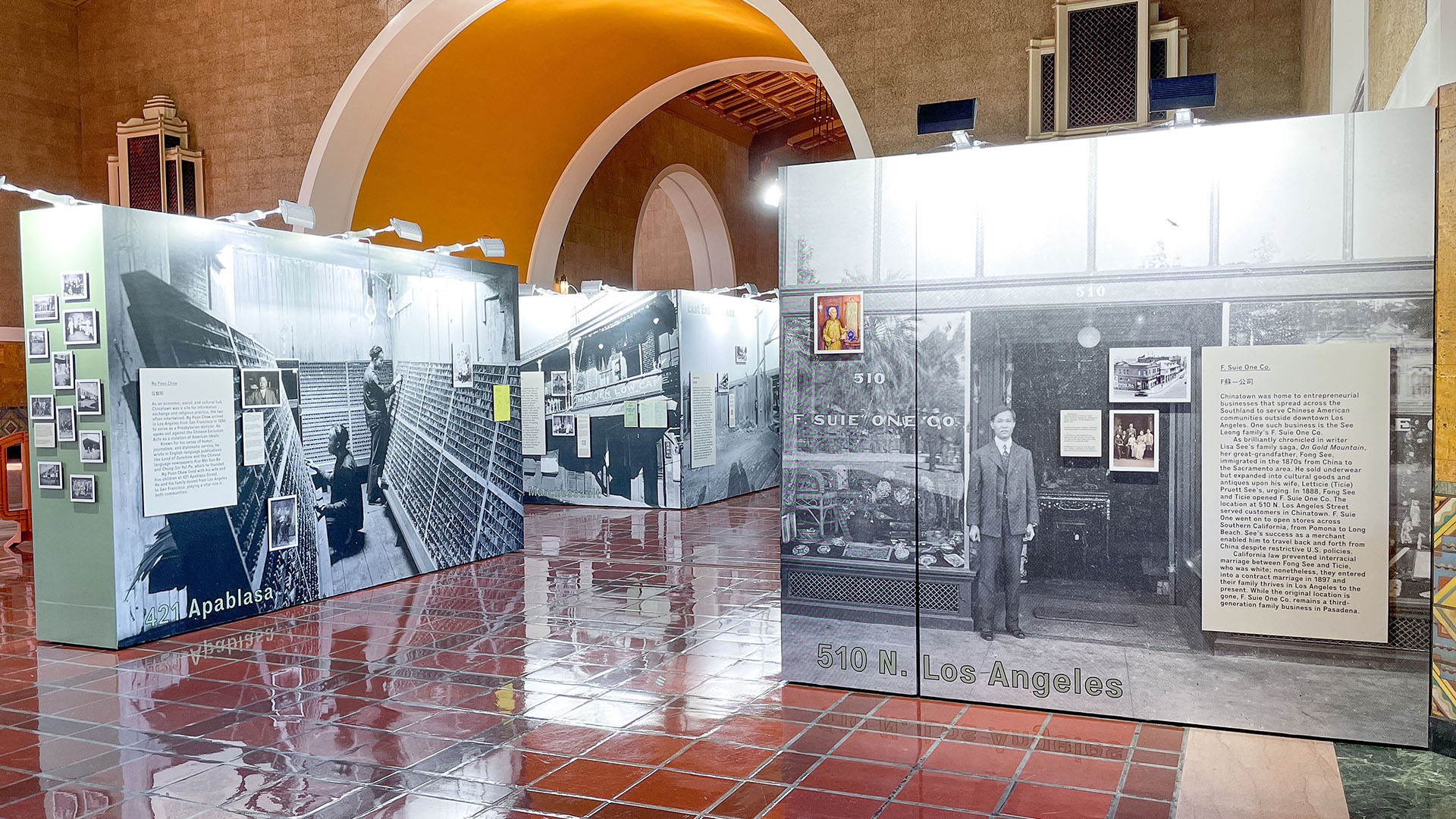
Making historic materials interesting to a broad audience: Most of the materials were black and white photos and archived papers, by enlarging the images to life size audiences were brought into the images on a physical level.
Temporary site-specific installation in a high traffic area: Materials used in the exhibition needed to be durable and easily replaceable. This prohibited the direct exhibition of historic artifacts and limited display options. Creative use of image reproductions, QR codes and AR technology allowed for diverse audience engagement.
Project Vision
Where You Stand aims to:
Center the Voices of Chinatown: Focus on the individual stories of the people connected with specific addresses in LA’s original Chinatown.
Celebrate History Preserved by the Community: Reconnect the public with Chinatown’s rich history through images, oral histories, and AR visualizations.
Immerse visitors in the Life of Chinatown: Reflect Chinatown’s narrow alleys and storefronts, highlighting its businesses and cultural hubs and use AR overlays to visualize lost buildings and interact with historical figures.
Uplift the Customer Experience: Engage travelers at Union Station.
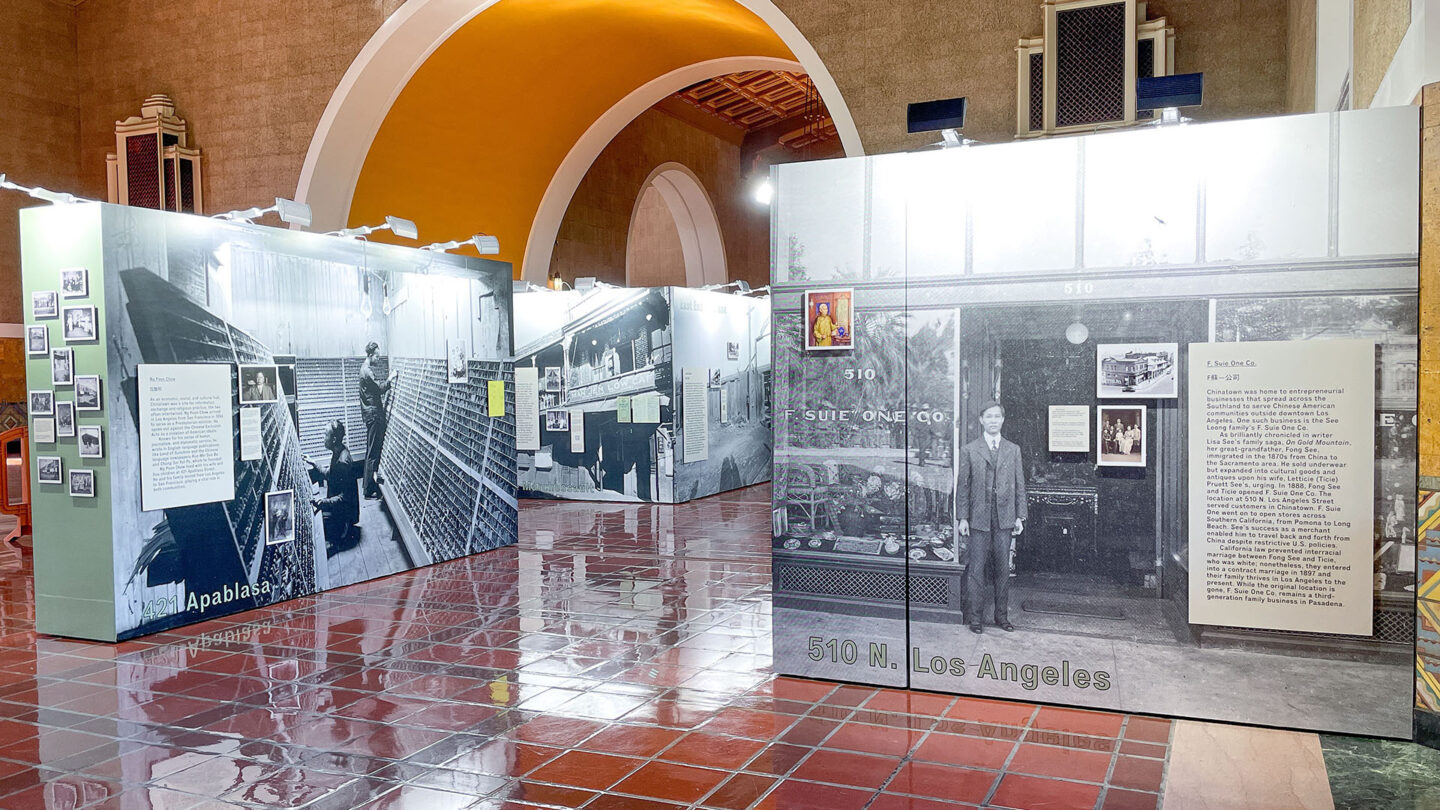
A reimagined footprint within Union Station’s floor plan features historic Chinatown addresses, blending past and present, inviting travelers to imagine the historic community which once stood in the same location.
Metro Art, (Clockwise): Lisa See Collection, The Huntington; Lee Family/Chinese Historical Society of Southern California; Leong Collection, The Huntington
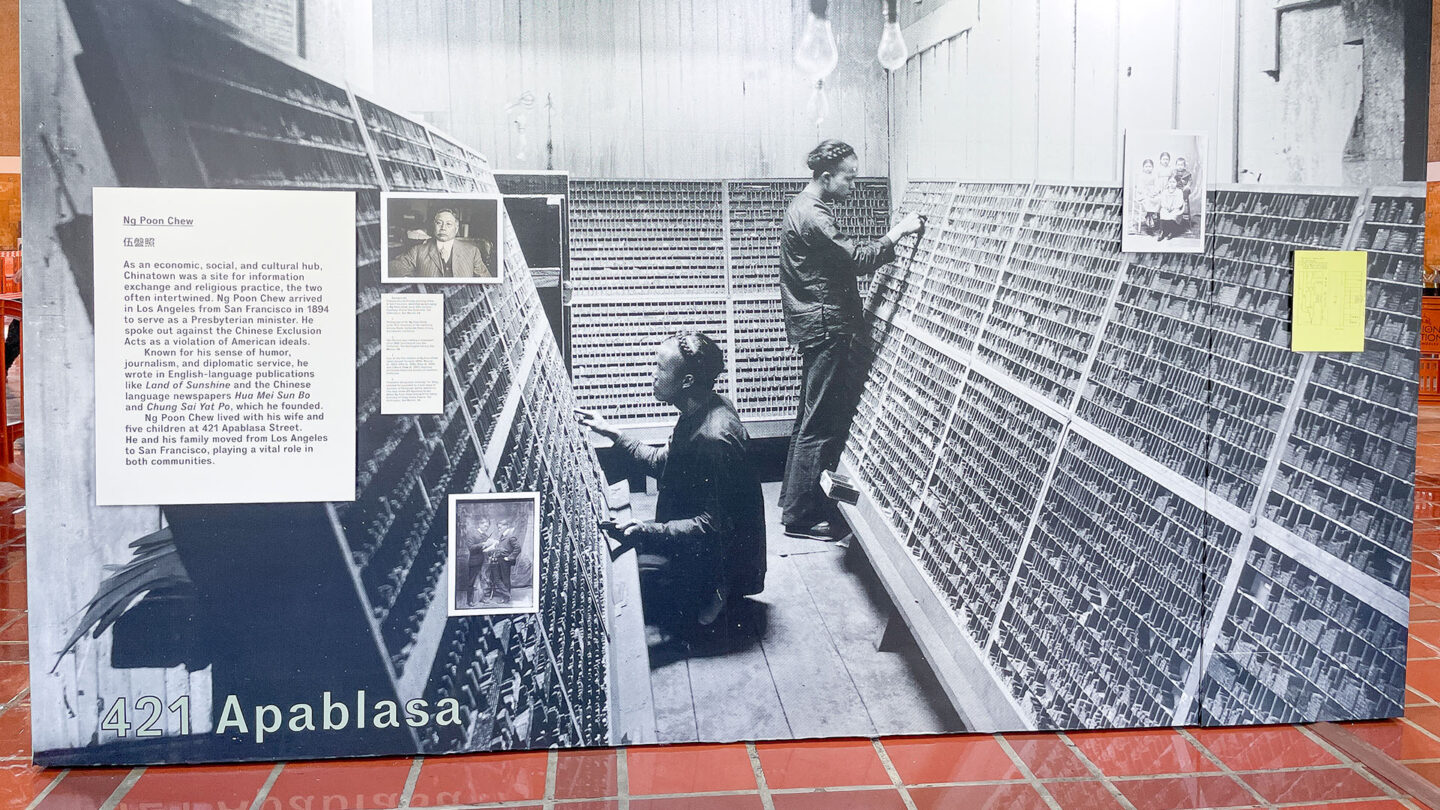
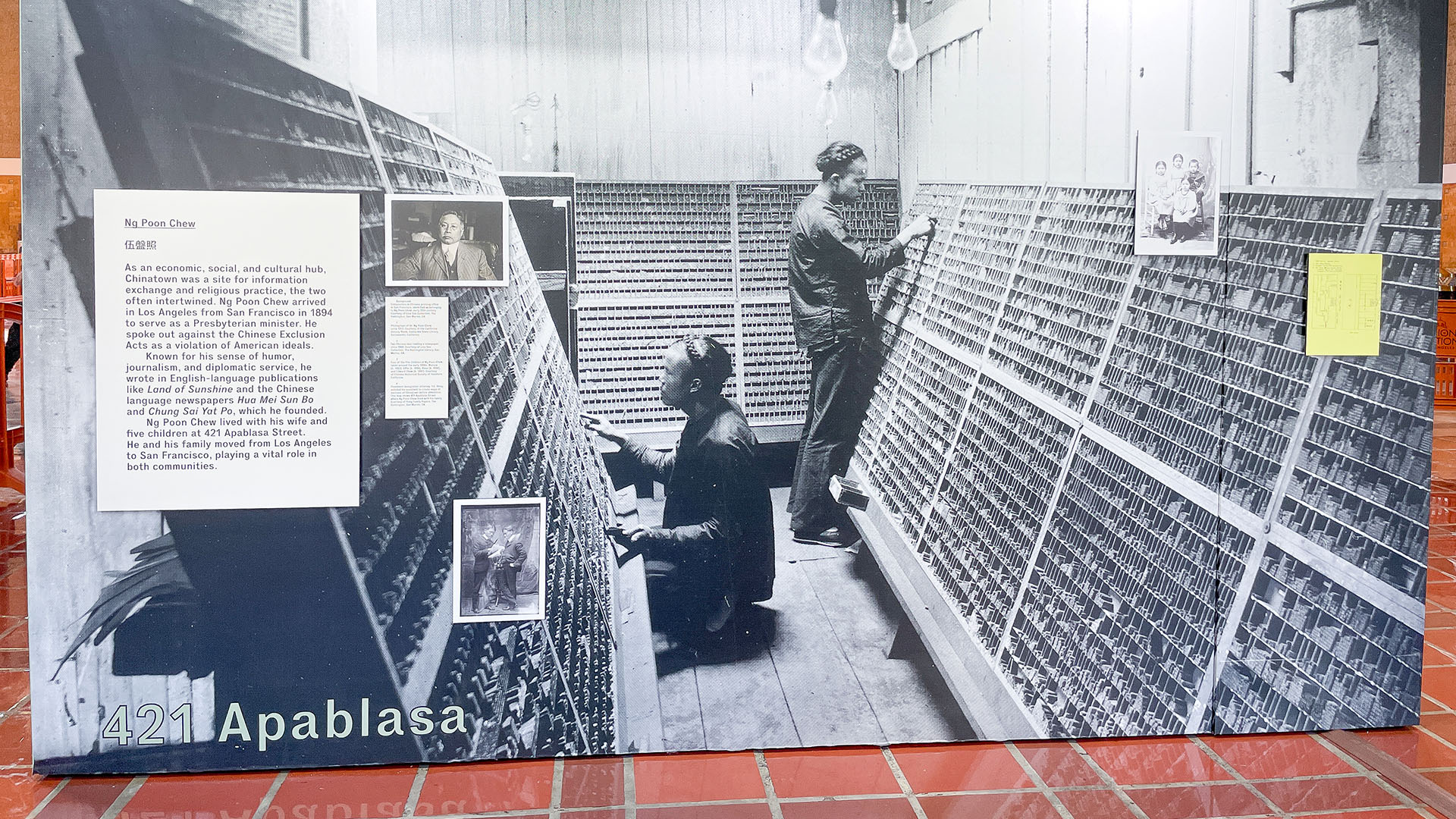
Background photo of the Chinese-language newspaper run by Ng Poon Chew, a prominent Chinatown resident who once lived at 421 Apablasa Street.
Metro Art, Background wall panel image: Courtesy Lisa See Collection, The Huntington, San Marino, CA
Design + Execution
Language Inclusivity: All text was translated into Chinese (Traditional and Simplified), Vietnamese, and Spanish, and made accessible on the exhibition website.
Design Solutions and Implementation
The exhibition immerses visitors in Chinatown’s lost geography through engaging design elements:
Streetscape-Inspired Design: Photographs of key locations such as Man Jen Low Restaurant, The Apablasa Playground, Kong Chow Temple, and Ng Poon Chew’s Family Home were reproduced as wall size banners to engage visitors in Chinatown’s community fabric.
You Chung Hong’s Floor Plans: Original yellow floor plans of Old Chinatown, created by You Chung Hong, a key lawyer and planner for New Chinatown, were displayed to help visitors orient themselves within the lost landscapes. Reproduced in their original yellow color, the maps provided a visual cue on a black and white background to connect present-day Union Station with the past.
Oral History Components: Personal stories, such as Walter Chung recalling his father’s work as a vegetable peddler and Jennie Lee Wong reflecting on her family’s restaurant, Man Jen Low, added a human touch to the exhibition.
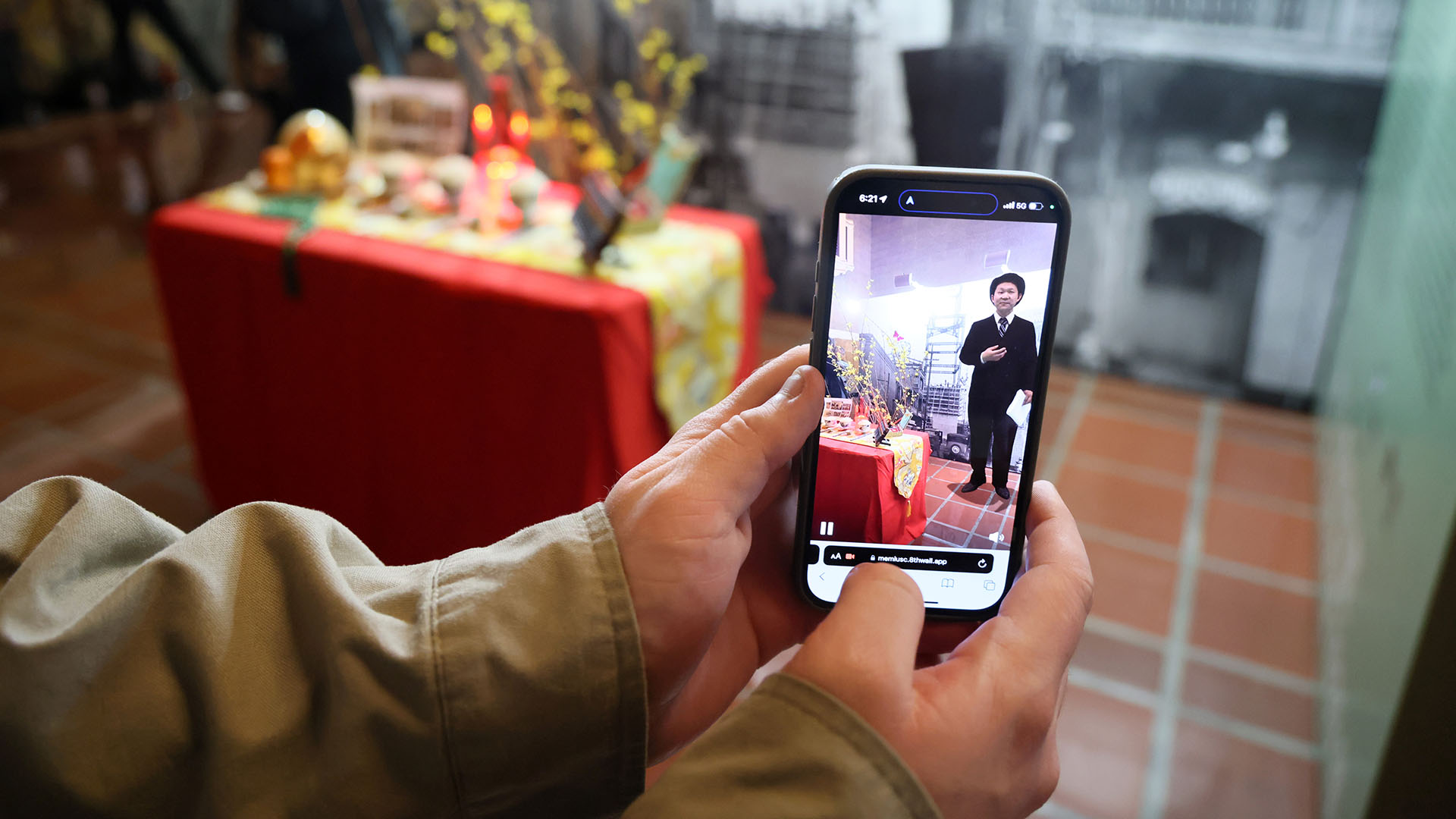
Augmented Reality: AR allowed visitors to visualize historic buildings and businesses overlaid onto Union Station. The experience extended beyond the gallery, enabling remote engagement via mobile devices.
Interactive Website: The exhibition’s website (whereyoustand.site) offered digitized archives, interactive maps, and additional content for remote engagement, making the history accessible even after the exhibit closed.
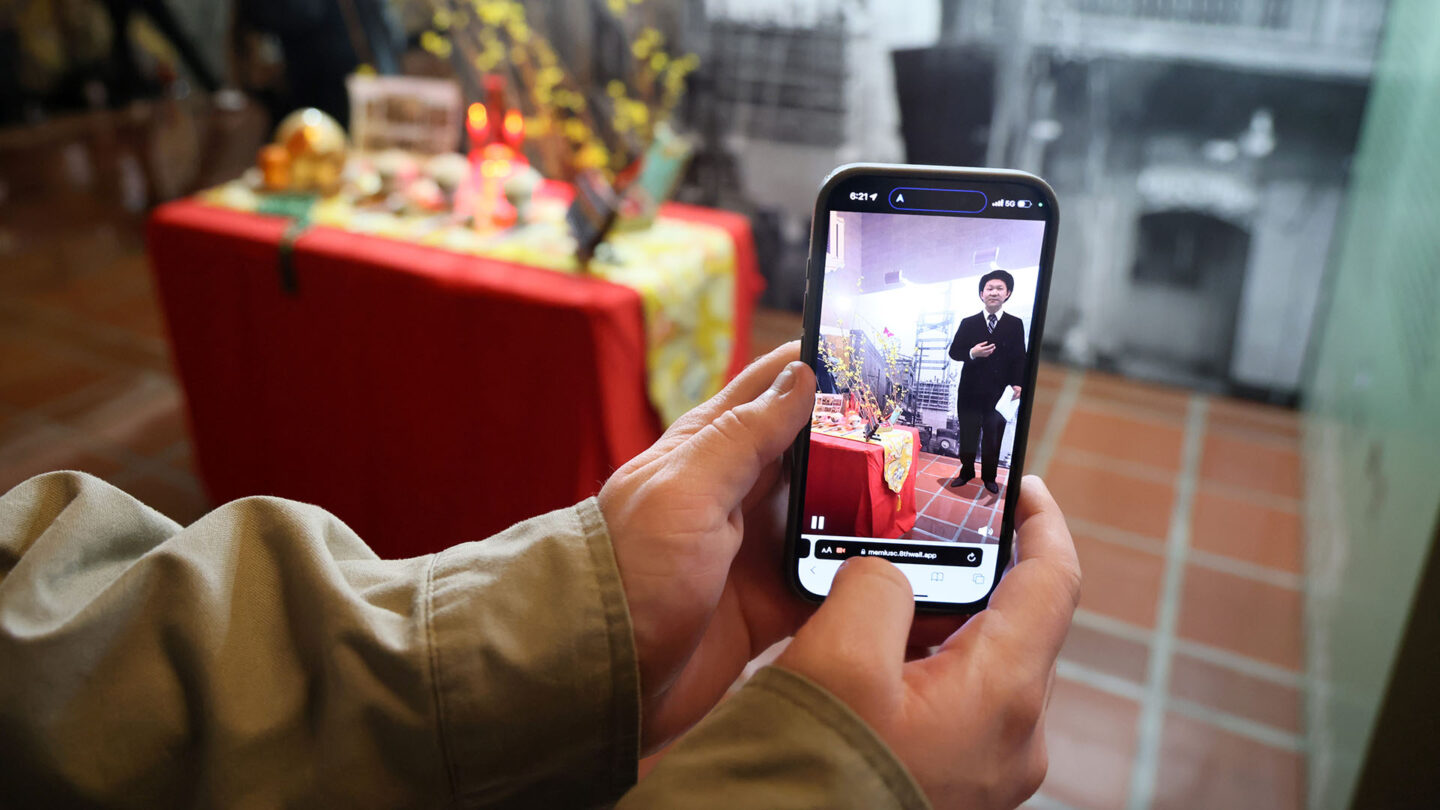
Via a QR code, visitors can meet Chinatown resident Peter Soo Hoo Jr. and experience an AR tour of featured historic sites inside Union Station. Designed by USC Cinema students.
Metro Art, AR designed by USC Cinema
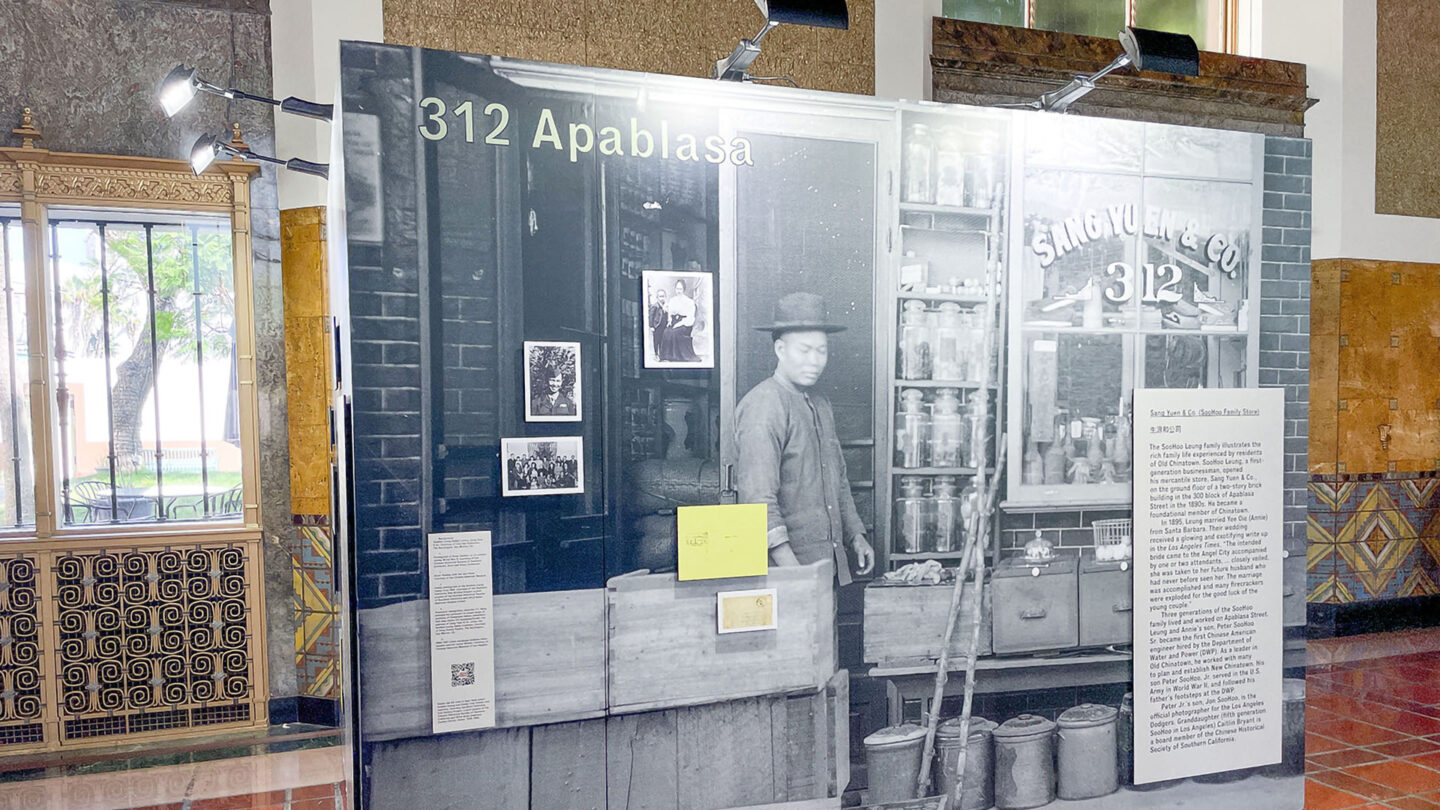
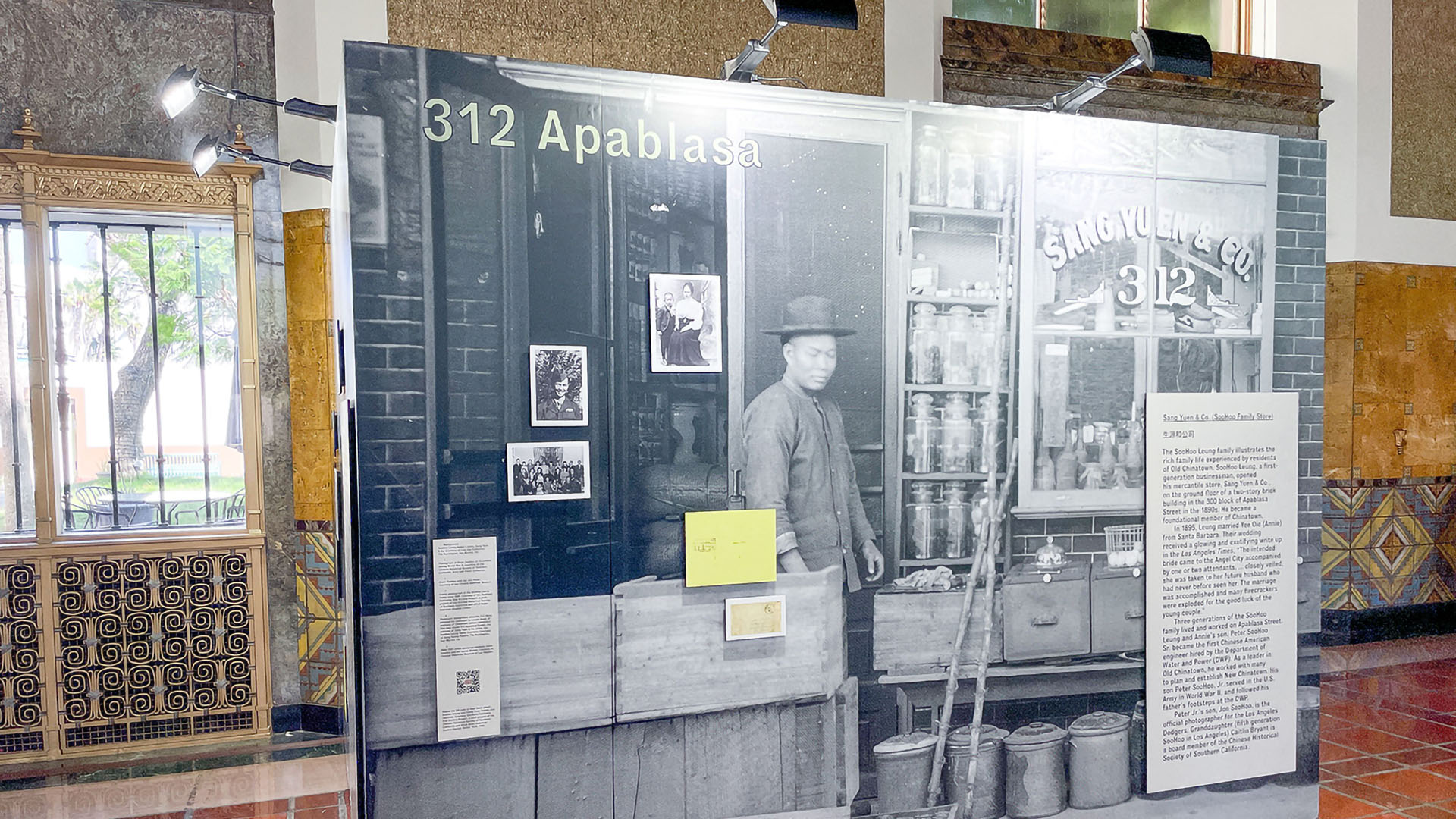
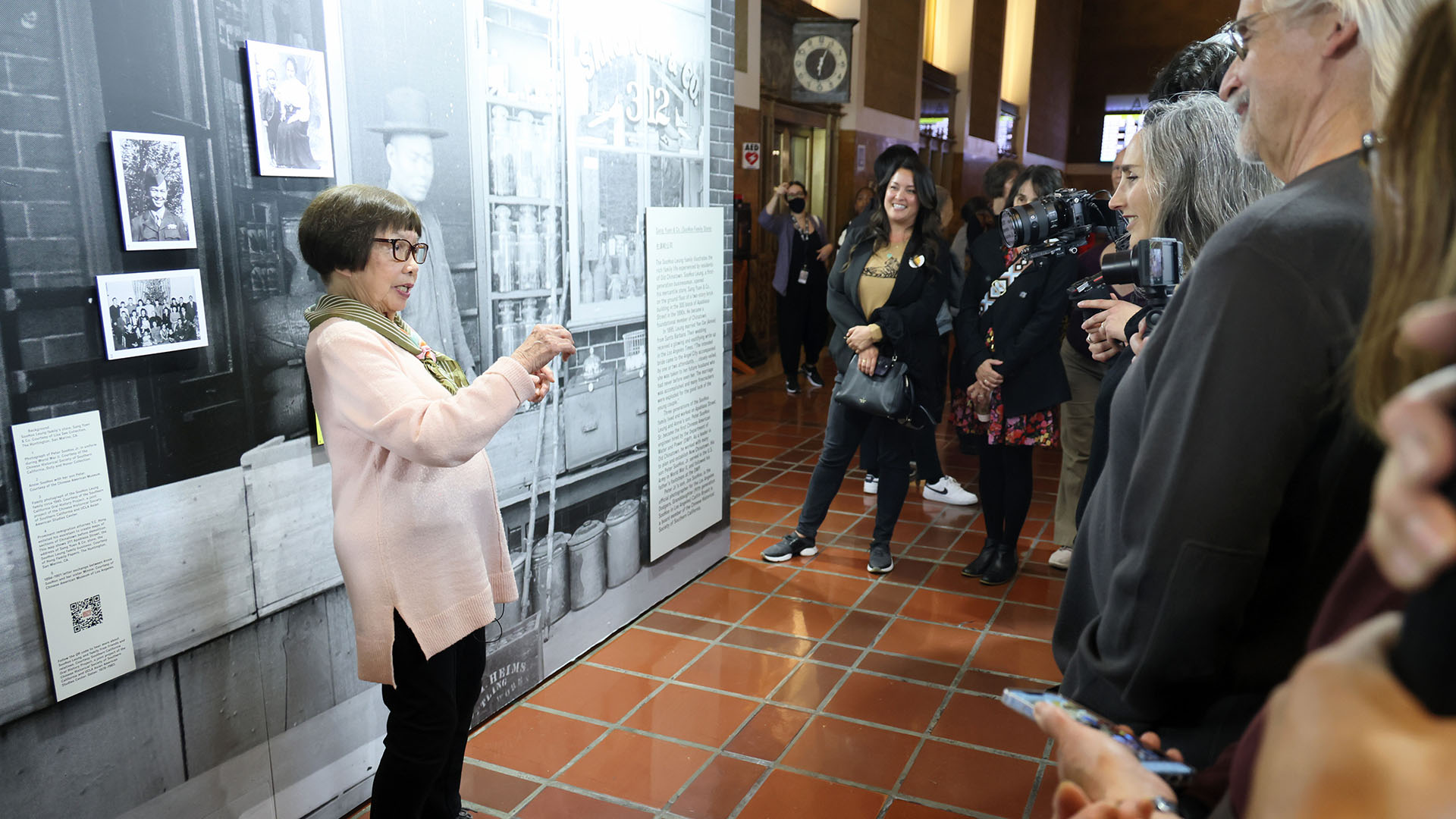
Wall featuring Sang Yuen & Co. store, founded by the Soo Hoo Leung family in the 1890s, reflecting deep community roots.
Metro Art, Background wall panel image: Courtesy Lisa See Collection, The Huntington
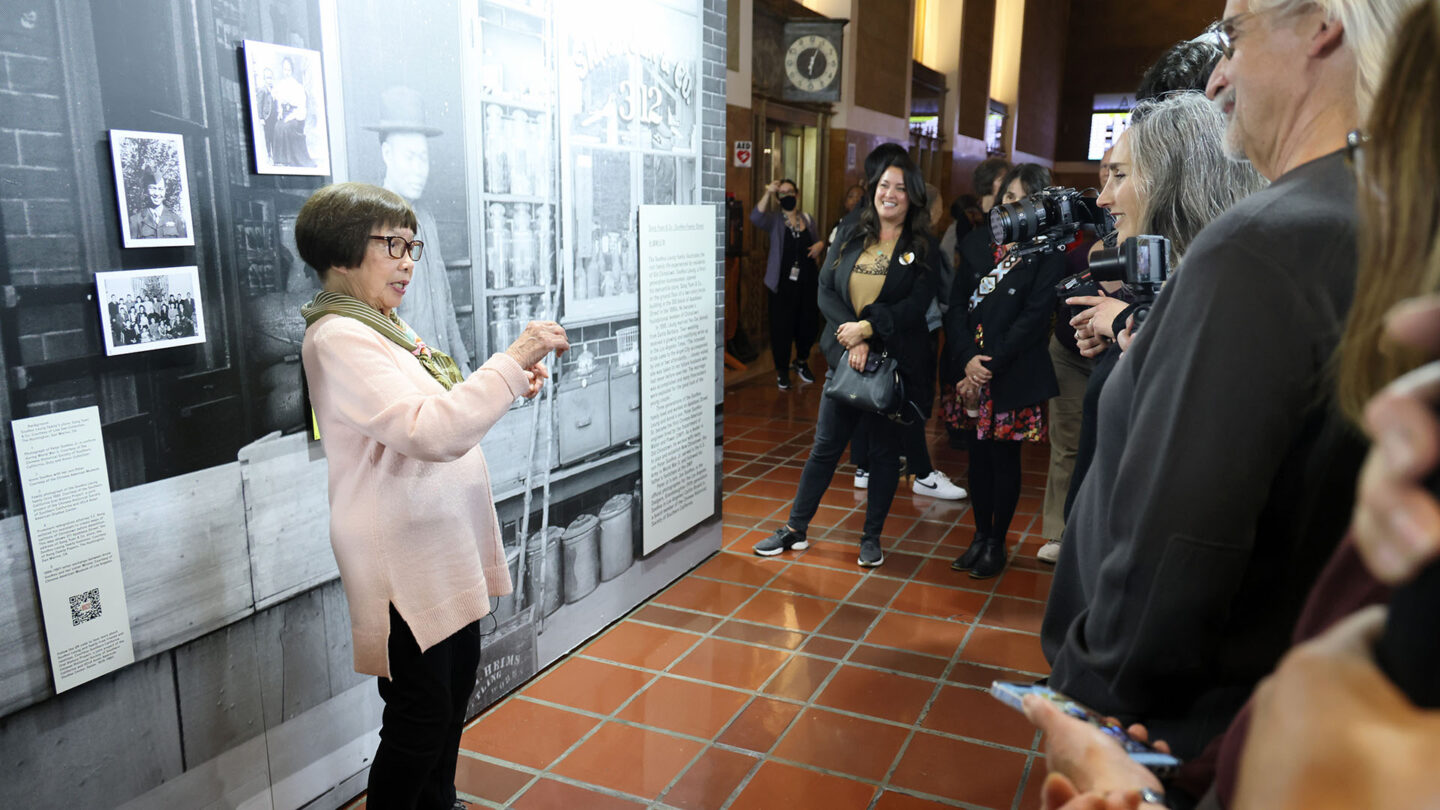
A member of the Soo Hoo family shares stories with the public while standing in front of the wall featuring her family’s store.
Metro Art (Los Angeles Metropolitan Transportation Authority)
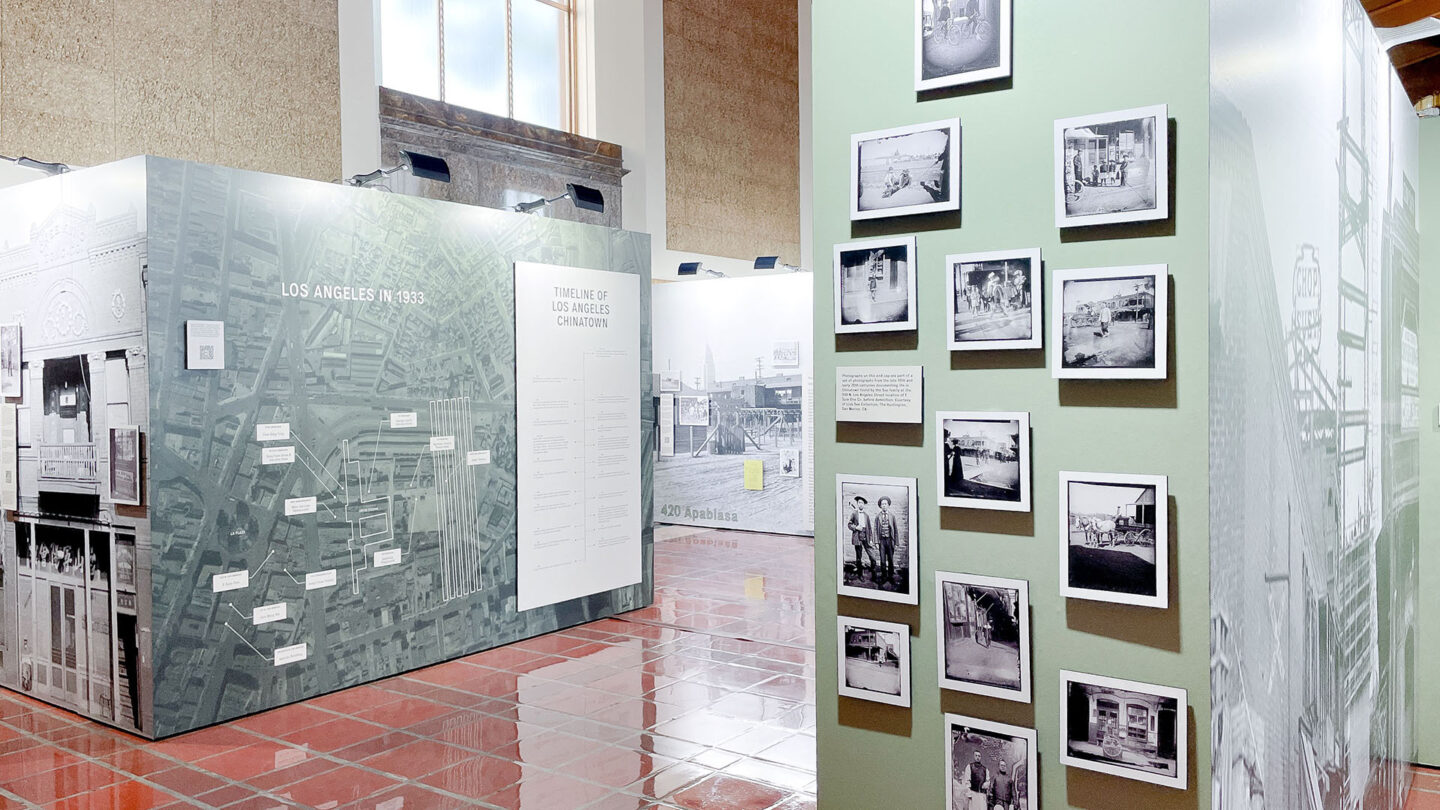
Foreground: collection of candid photographs depicting life in Chinatown. Background: aerial image of original Chinatown with key addresses highlighted and outline of Union Station.
Metro Art, Walls: Courtesy UCSB Library Geospatial Collection, Courtesy Lisa See Collection, The Huntington, San Marino, CA
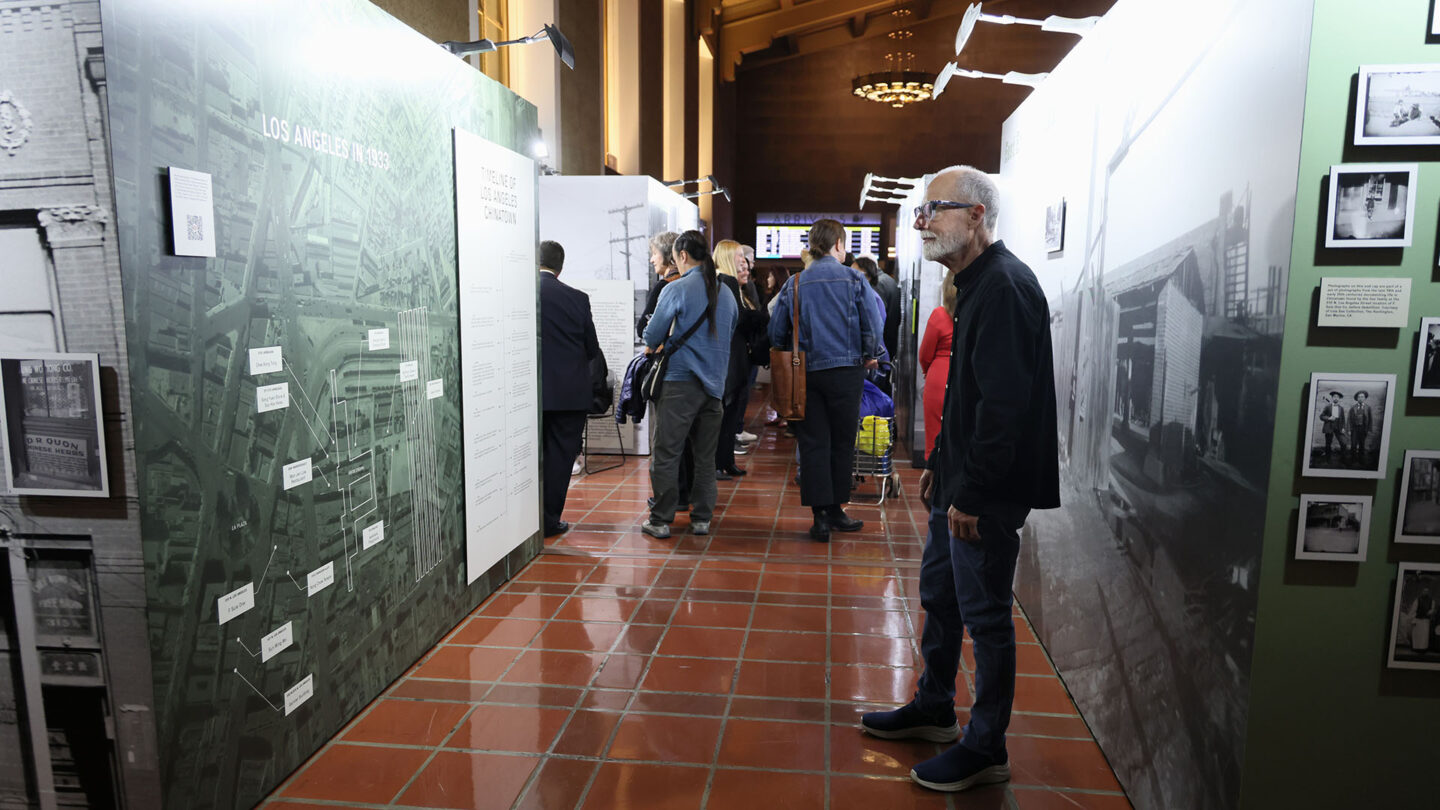
Exhibition celebration on Lunar New Year, with visitors exploring the streets of Old Chinatown, joined by special guests, family members, and exhibition partners.
Metro Art, Wall Image of Map Courtesy of UCSB Library Geospatial Collection
Project Details
Design Team
Metro Art
Photo Credits
Metro Art (Los Angeles Metropolitan Transportation Authority)
Open Date
October 2023