Transforming Grief: Loss and Togetherness in COVID-19
Transforming Grief: Loss and Togetherness in COVID-19 a community-developed, co-curated, mixed-media and transmedia exhibition that embraced PAC’s Inclusive Design methodology, highlighting the impact of COVID-19 on communities often marginalized by museums.
Agency
Prime Access Consulting
Practice Area
Client
Toronto History Museums
Industry
The Challenge
The challenge of this project lay in transforming a site deeply associated with Canada’s colonial and genocidal past into a space for inclusive storytelling, all while working within extremely tight constraints. With a total timeline of just eight months from project kickoff to opening, the team navigated limited budgets and accelerated schedules. Despite these pressures, the goal remained to meaningfully engage historically marginalized communities and ensure their stories were shared through accessible, multimodal formats that invited reflection, dialogue, and collective understanding.
Project Vision
The vision for this project was to center the stories of historically marginalized communities through a fully inclusive and unsegregated experience. By integrating accessibility across both digital and physical aspects of the blended exhibition design, the team aimed to create an environment where all visitors—regardless of ability or disability—could engage meaningfully with the content, fostering a shared and equitable experience for everyone.
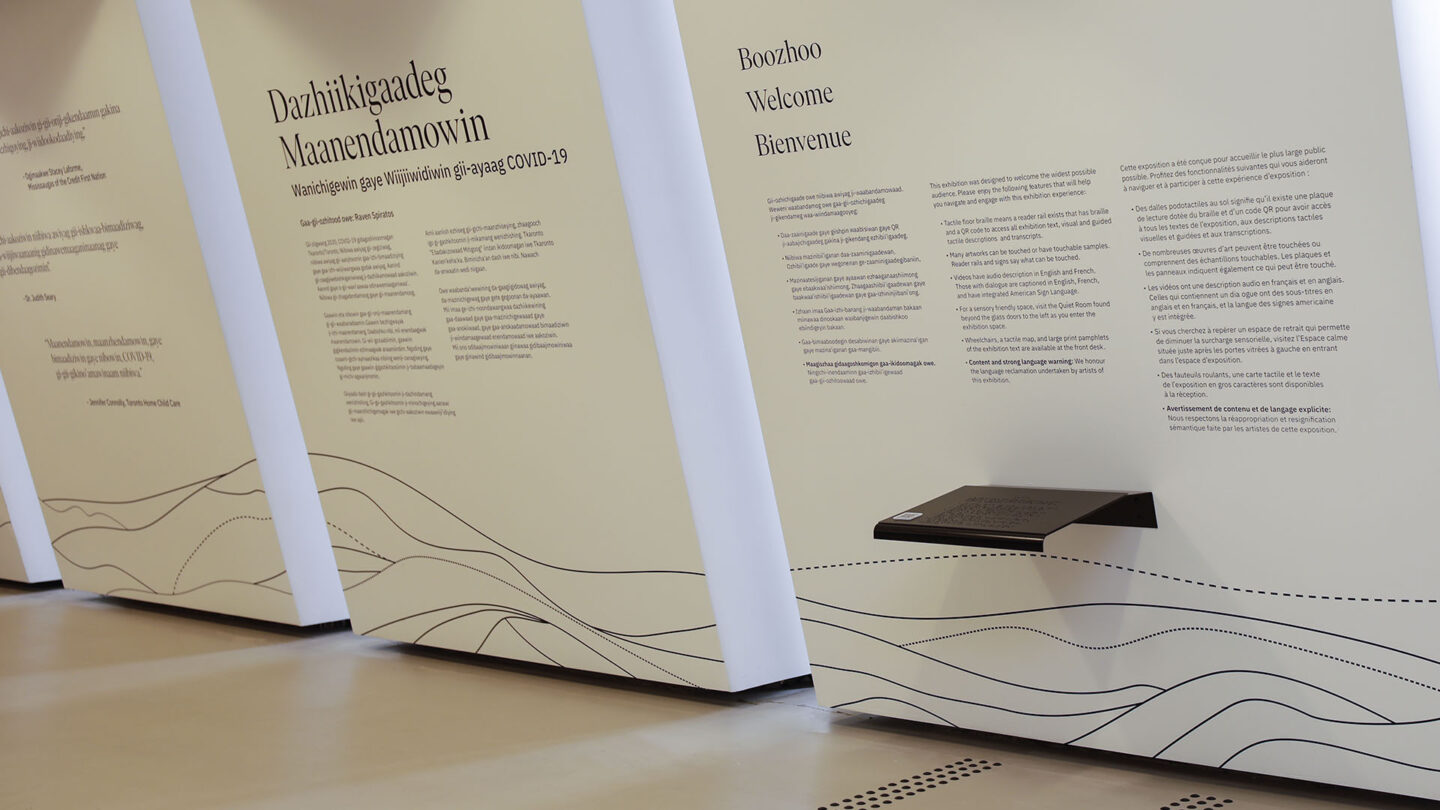
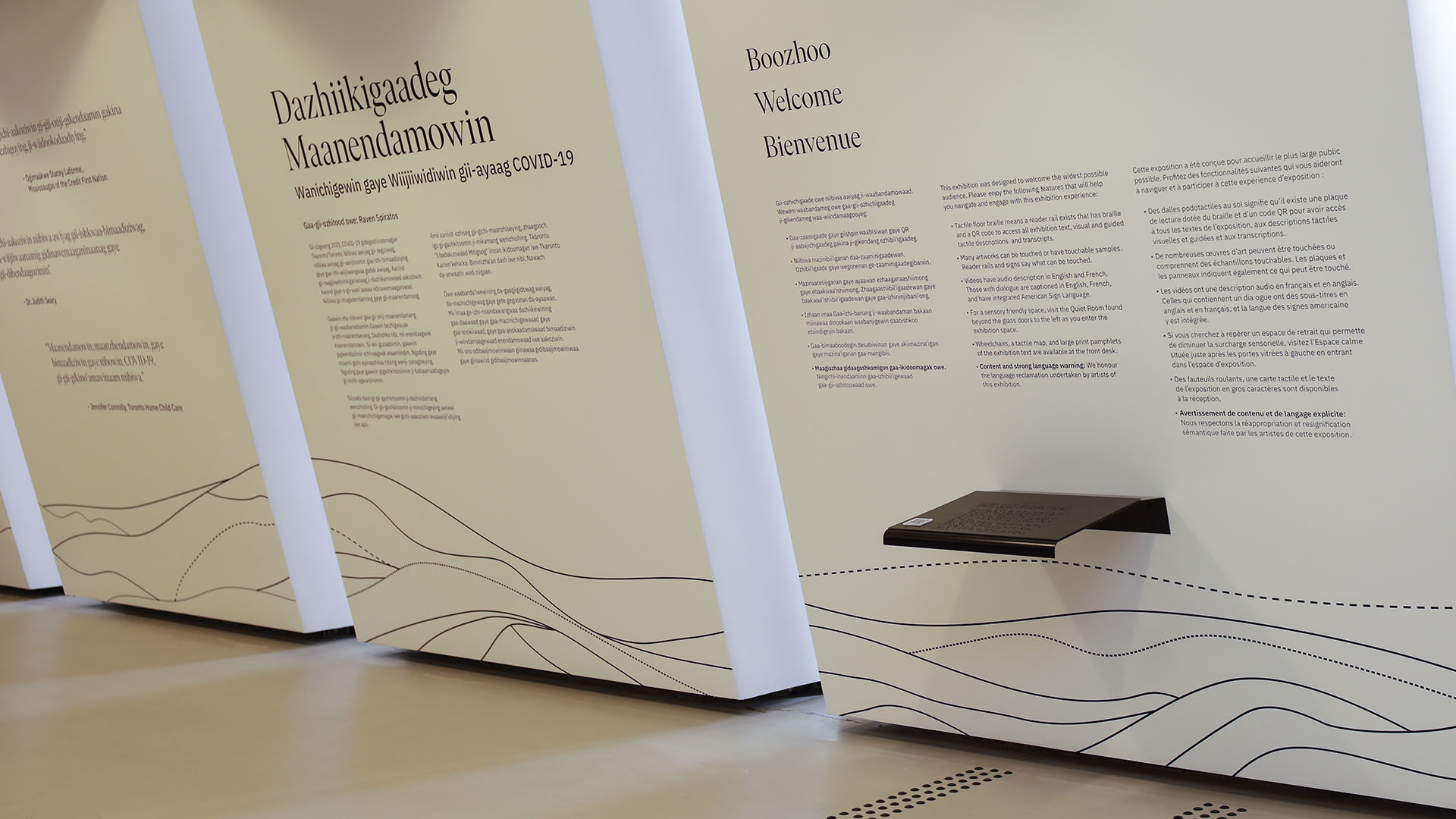
The exhibit at Fort York Historical site in Toronto, on traditional lands, is presented in Anishinaabemowin, English, and French, aiding its decolonization.
Prime Access Consulting
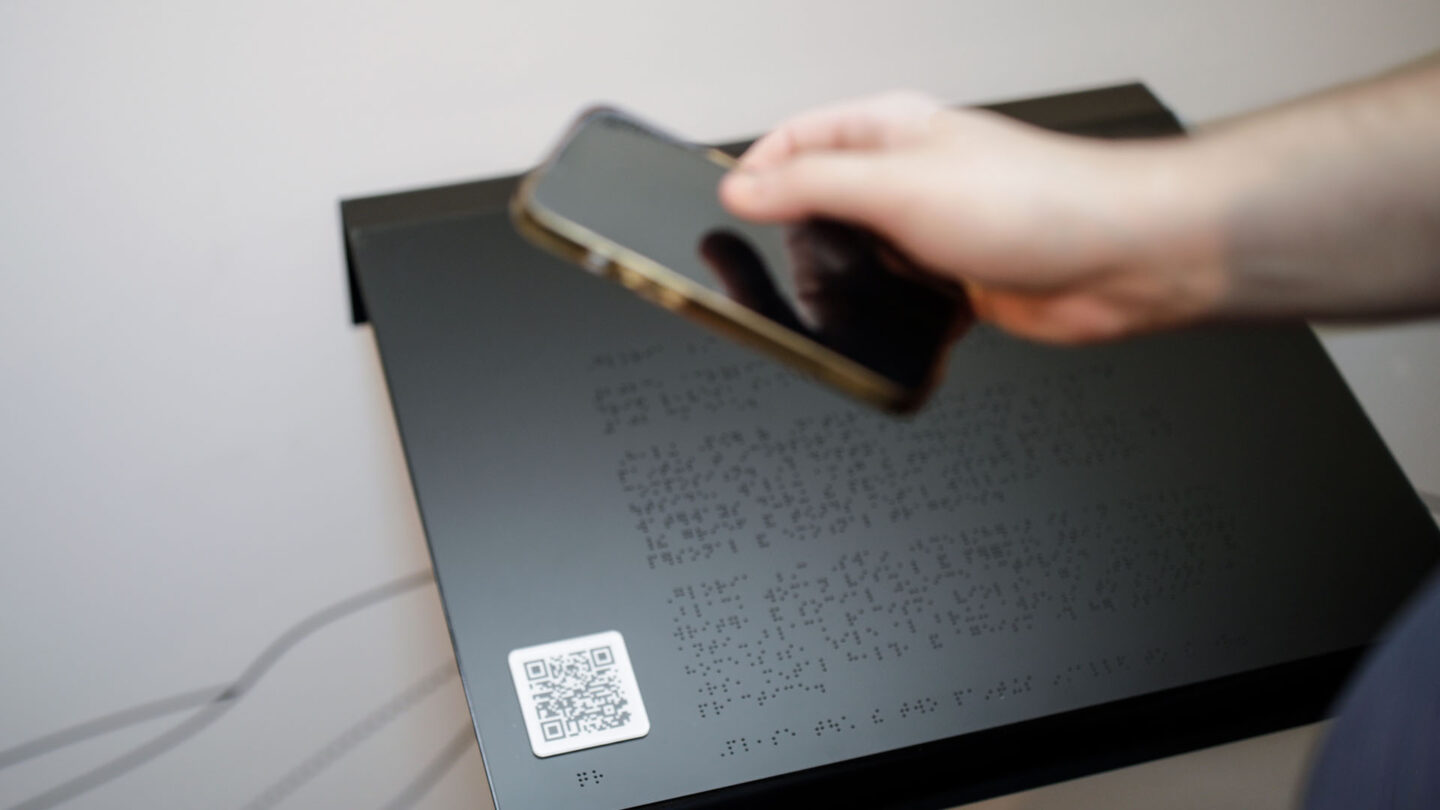
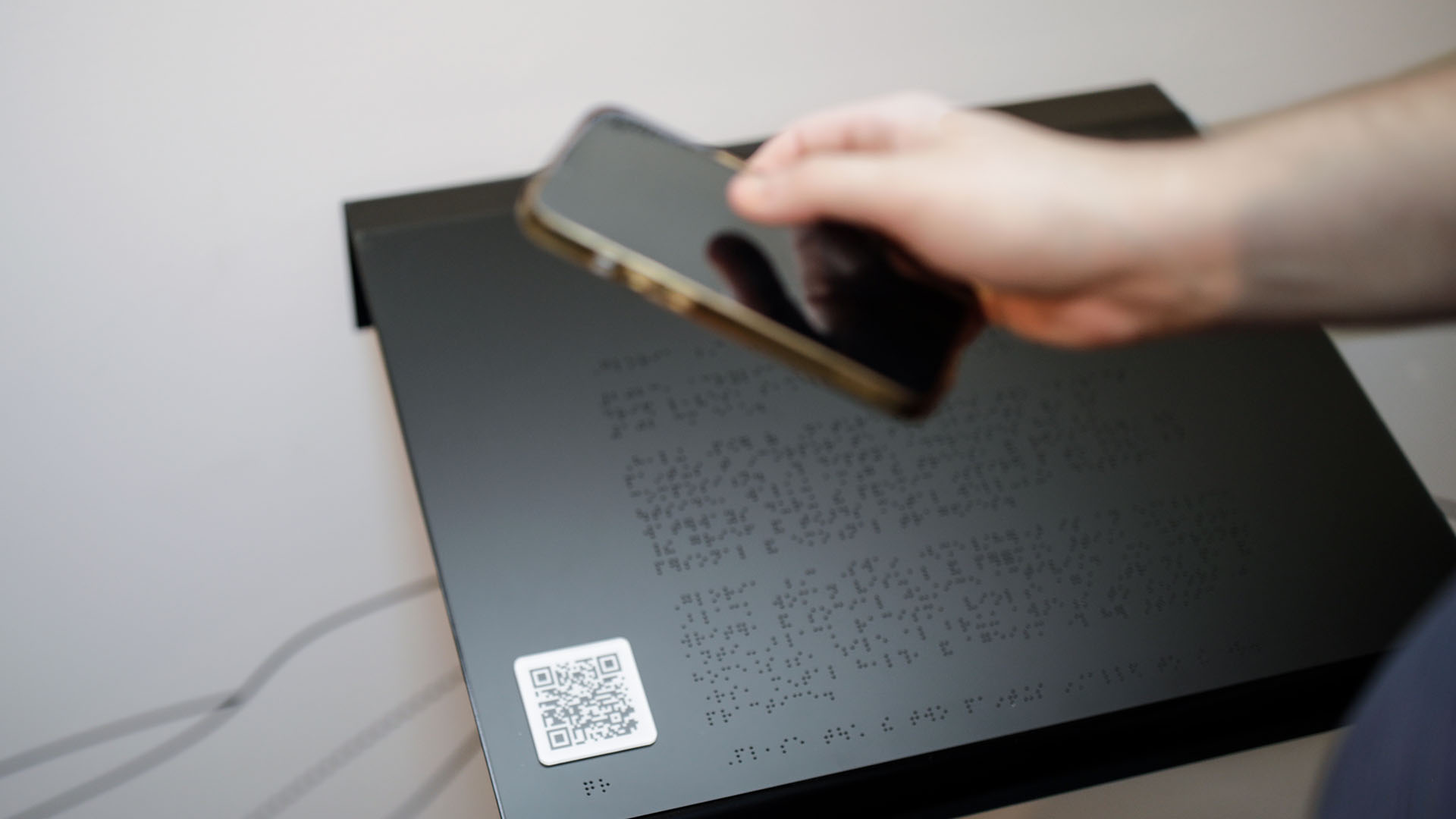
A close up of a blind user autonomously using the tactile QR code, sitting on a reader rail containing braille, to access visual description information of this installation’s corresponding artwork.
Prime Access Consulting
Design + Execution
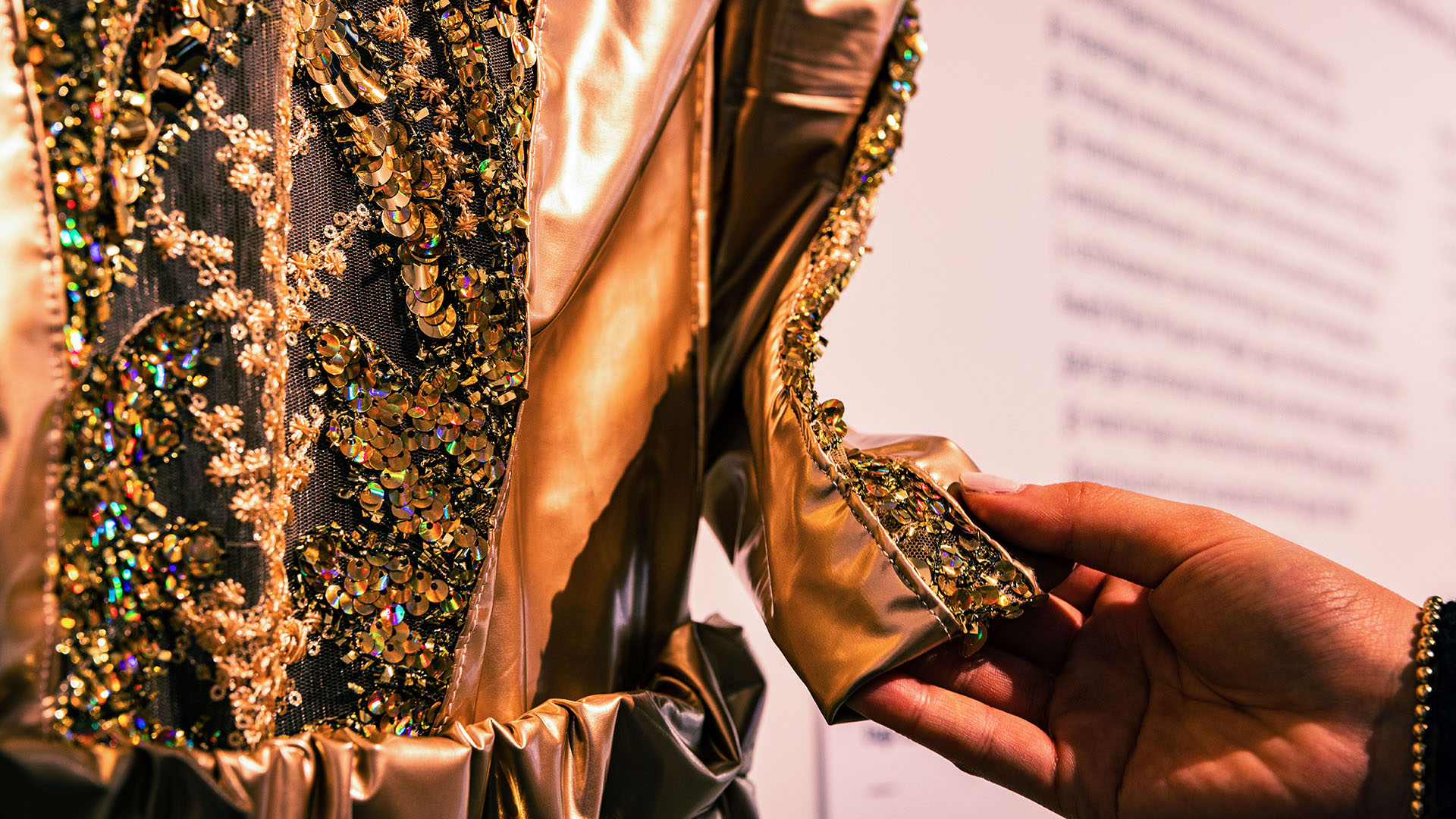
The project was designed and executed with a focus on inclusive access across all facets of the visitor experience. Content was carefully developed with attention to reading level, anticipated dwell time, and cultural translation, including translation between Anishinaabemowin, English, and French. Presentation strategies accounted for in situ, online, and collateral formats, incorporating graphic design that addressed size-to-distance readability, viewing angles, visual hierarchy, and color contrast ratios. Accessibility features were integrated throughout, including Braille on all text panels, high-contrast graphics, tactile maps, ASL interpretation, captions, audio description, text-to-speech functionality, and zoom capabilities. Artefacts were also enhanced with touch affordances to support multimodal engagement.
A close up of a blind user autonomously using the tactile QR code, sitting on a reader rail containing braille, to access visual description information of this installation’s corresponding artwork.
Prime Access Consulting
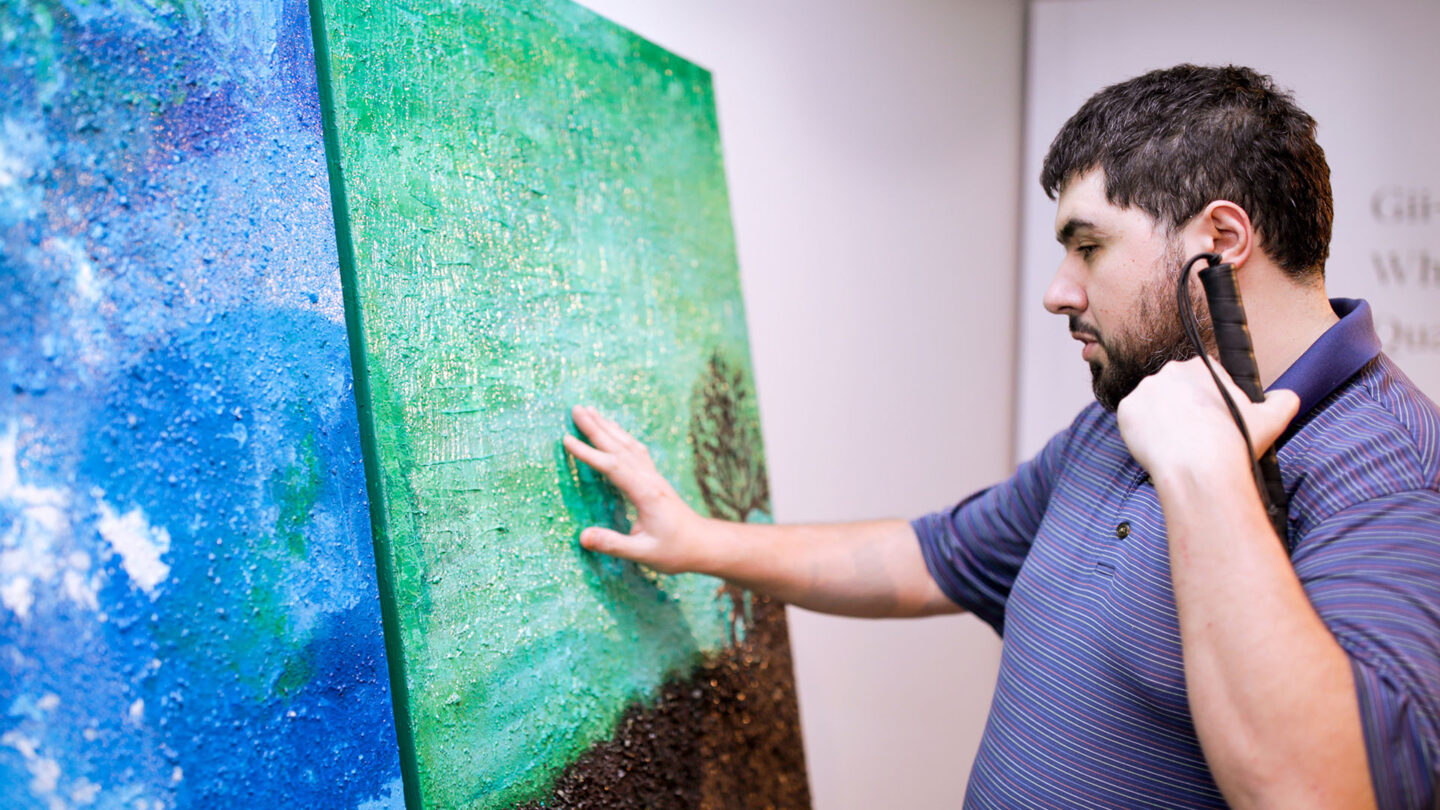
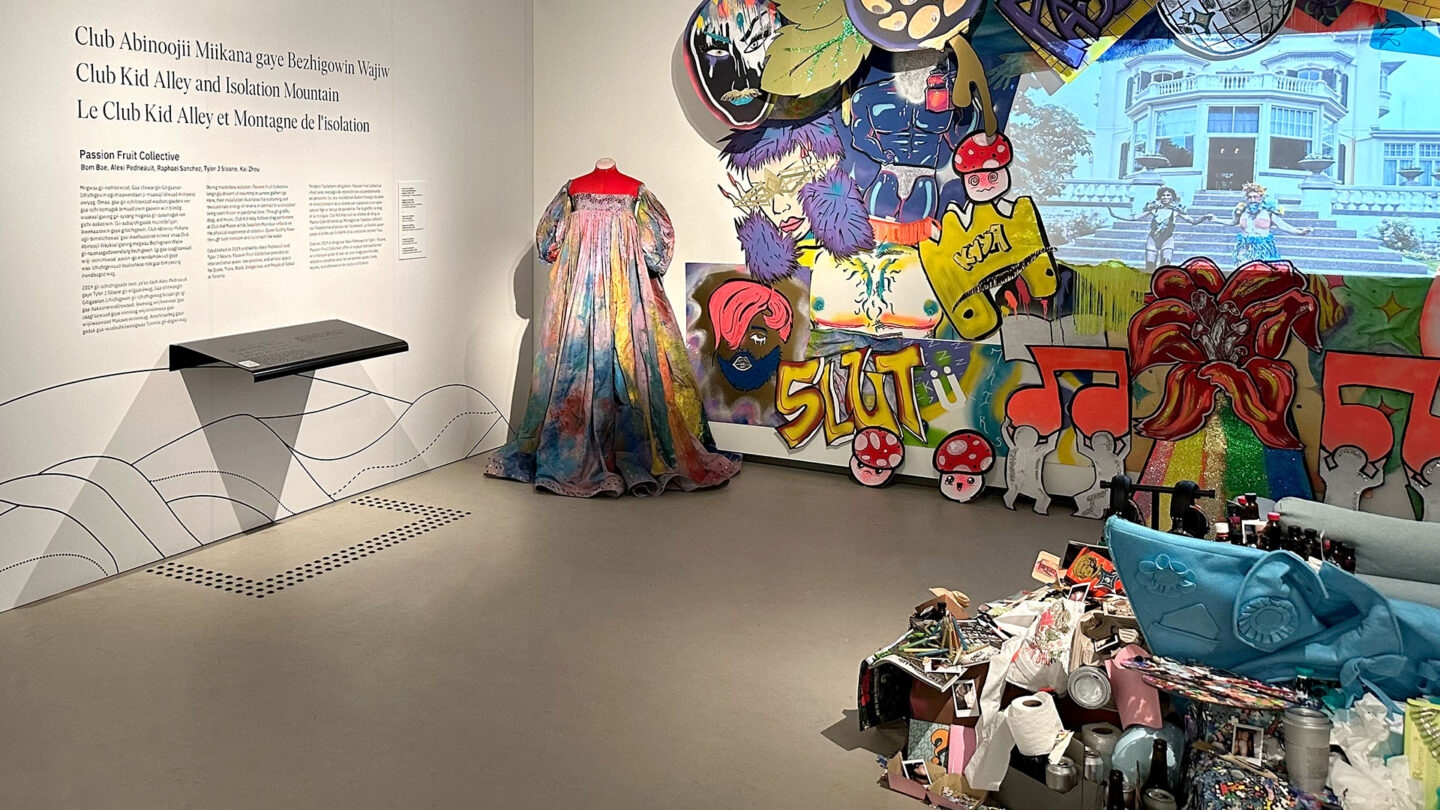
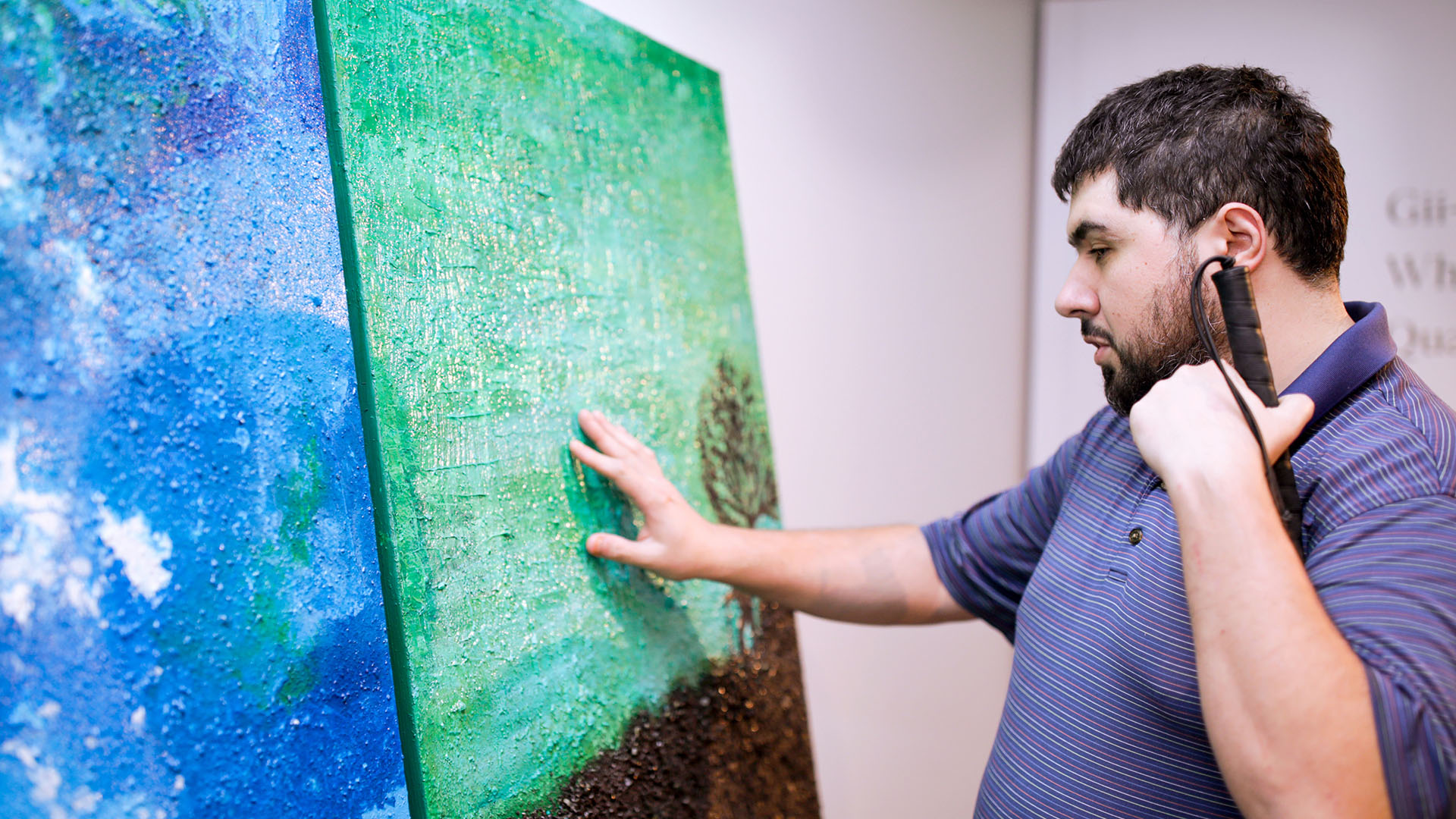
The commissioned 2D artwork was designed to be touchable, accompanied by visual and tactile descriptions accessible via QR code and website, allowing all audience members to explore comfortably.
Prime Access Consulting
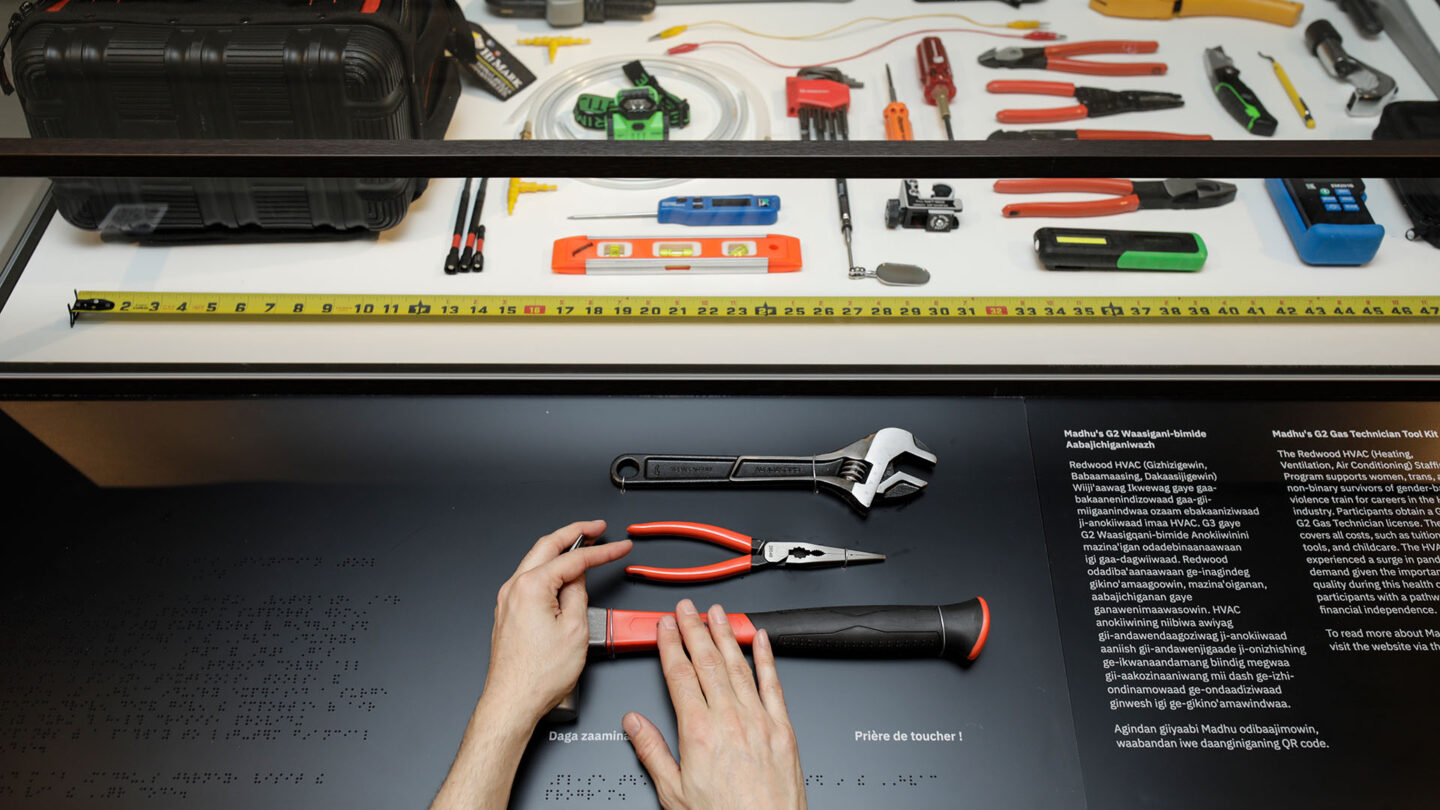
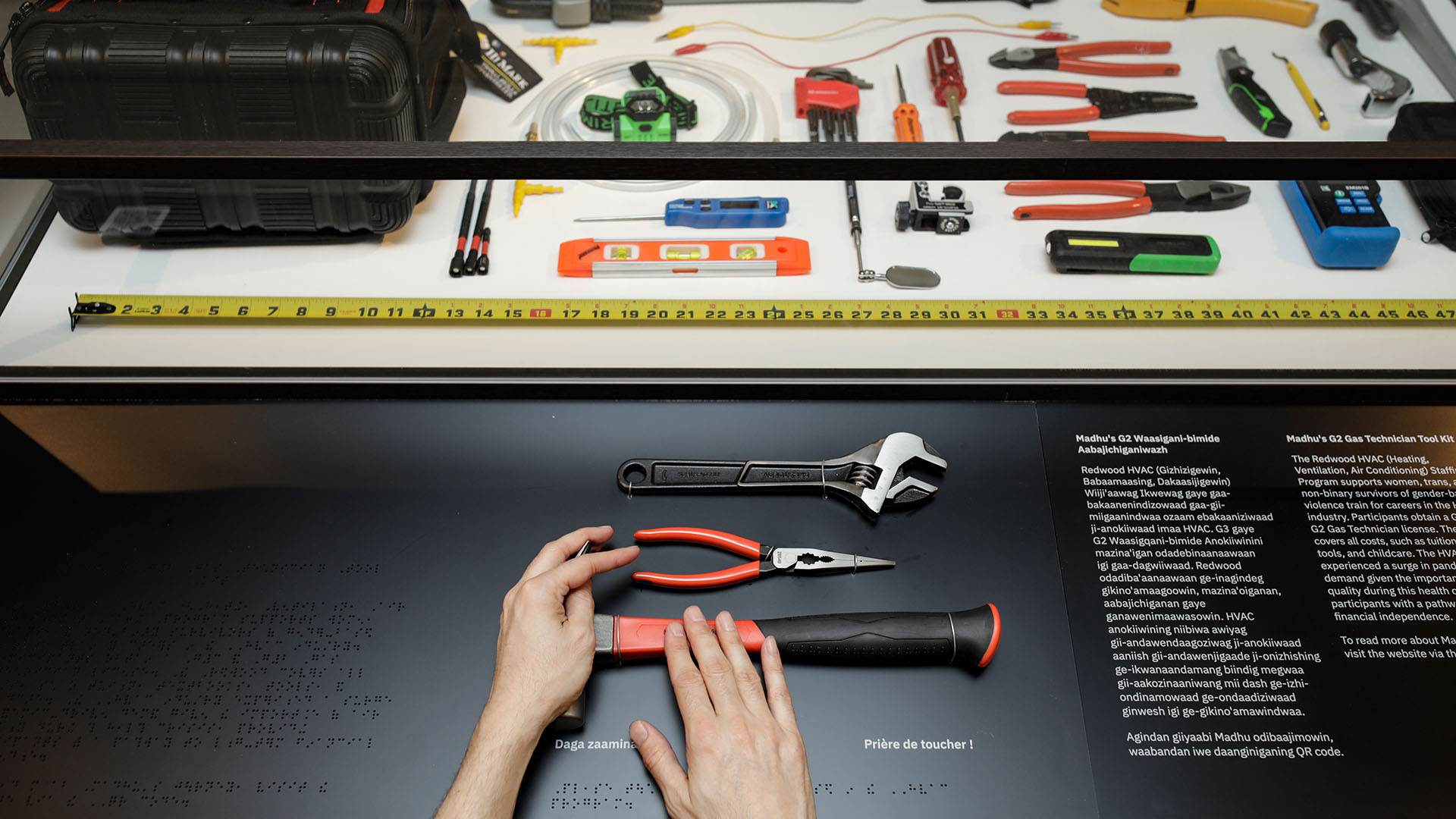
Artifact cases display objects with clear edge and shape detection, high-contrast trilingual text, braille, and touch objects. A tactile QR code offers more affordances for all visitors.
Prime Access Consulting
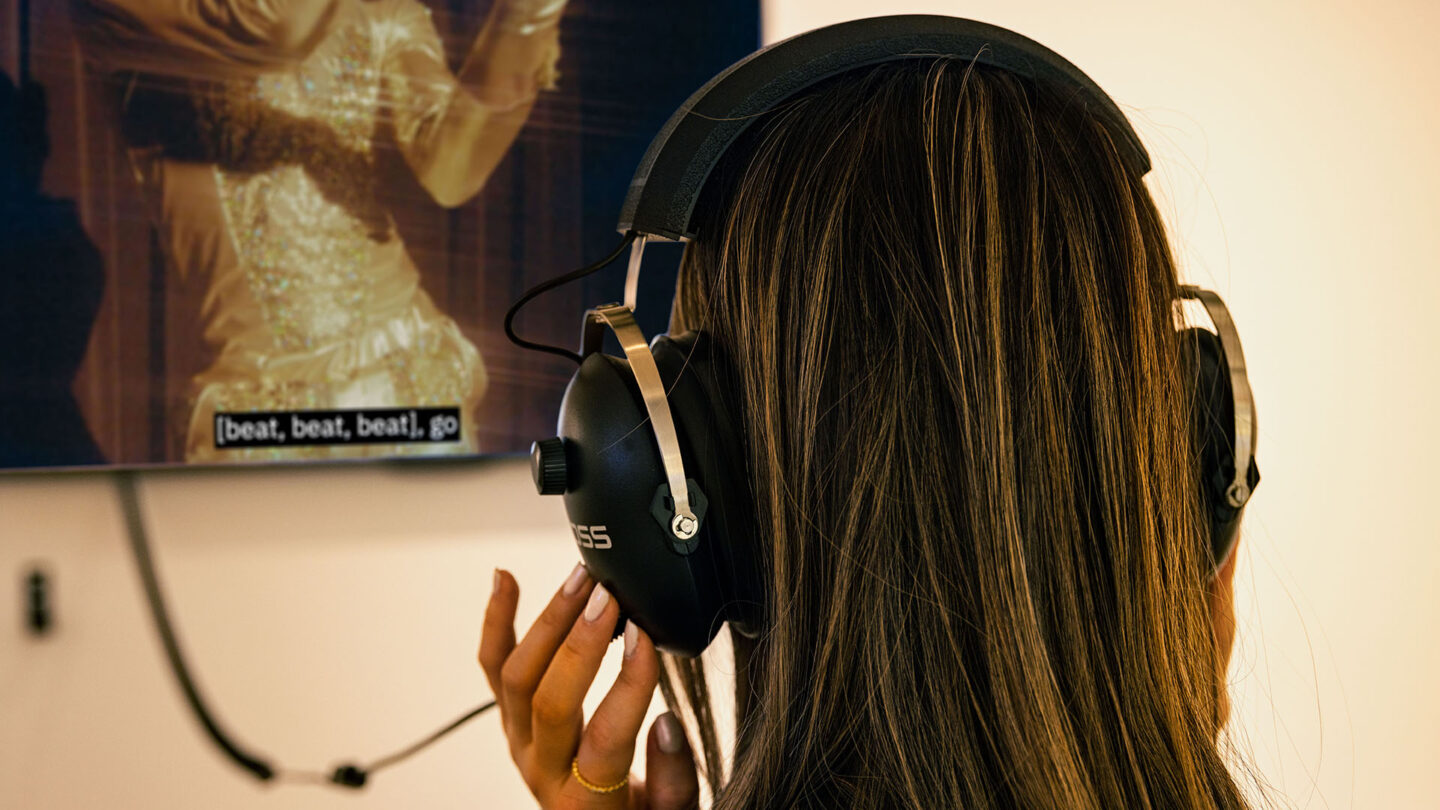
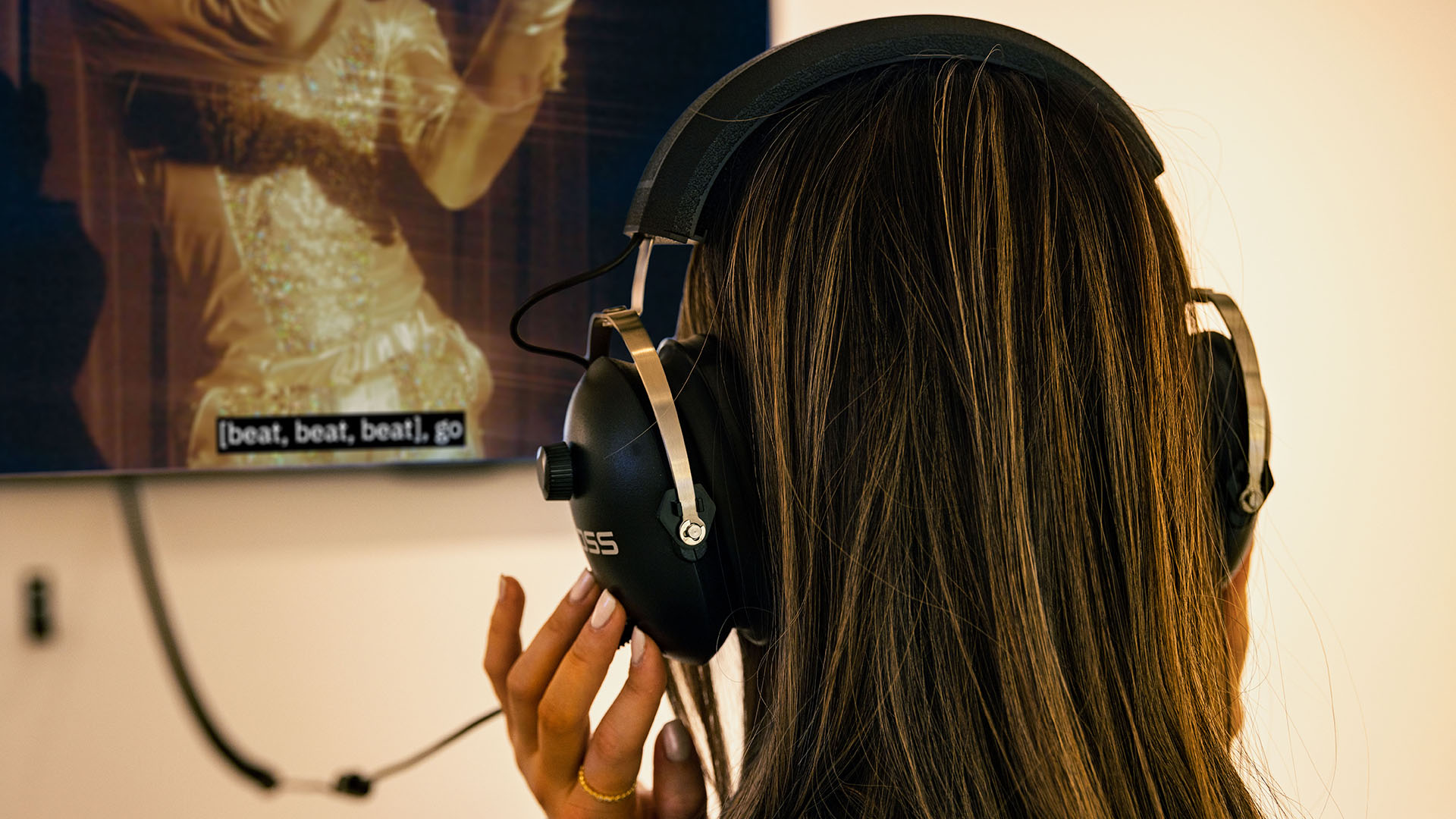
Importantly, all linear media (multilingual) contain full suite of access affordances (i.e. captions, signed interpretation, audio description, audio ducking and volume adjustment) while transcriptions are available via the tactile QR code.
Prime Access Consulting
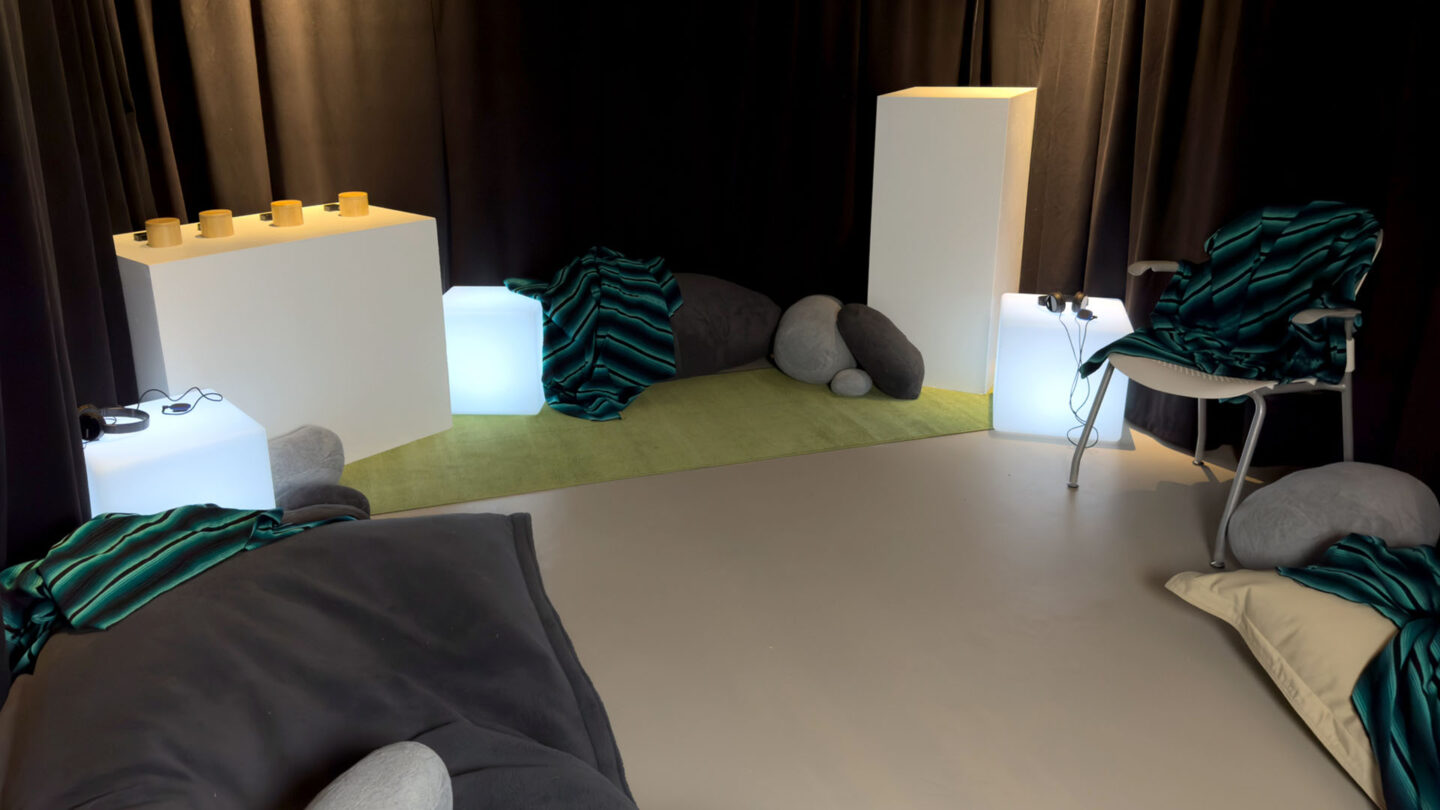
The mixed media installation is touchable and provides various seating features, including arms, backrests, adjacency spacing for chair users, and incidental seating without armrests for transfer seating.
Prime Access Consulting
Project Details
Design Team
Corey Timpson (project director)
Sina Bahram (project director)
Rob Itri Vincent (creative director)
Robin Marquis (content director)
Anna Chiaretta Lavatelli (project manager)
Maria Braswell(inclusive designer)
Heather George (sensory room designer)
Collaborators
Kubik Maltbie (physical fabrication)
Photo Credits
Anna Chiaretta Lavatelli (photography)
Open Date
March 2023