The Hive
The Hive is a community-led redesign of a city-owned alley in Albany’s West Hill neighborhood. It transforms an underutilized alley within a residential block into an open-ended, programmable community space designed with and for West Hill. The flexible, fully accessible layout allows neighbors to use the space however they need—accommodating farmers’ markets, local events, assemblies, spiritual reflection, and play. Rather than prescribing a single use, the design creates a platform for the community to take over and make entirely their own.
Agency
The Urban Conga
Practice Area
Client
City of Albany, Van Alen Institute
Industry

Background
For three years, community members of all ages participated in shaping the alleyway’s redesign by sharing ideas, stories, experiences, and aspirations. Workshops incorporated play methodologies, including play therapy techniques, to foster a space where people felt welcome, hopeful, and open to discussing the future of this new communal environment.
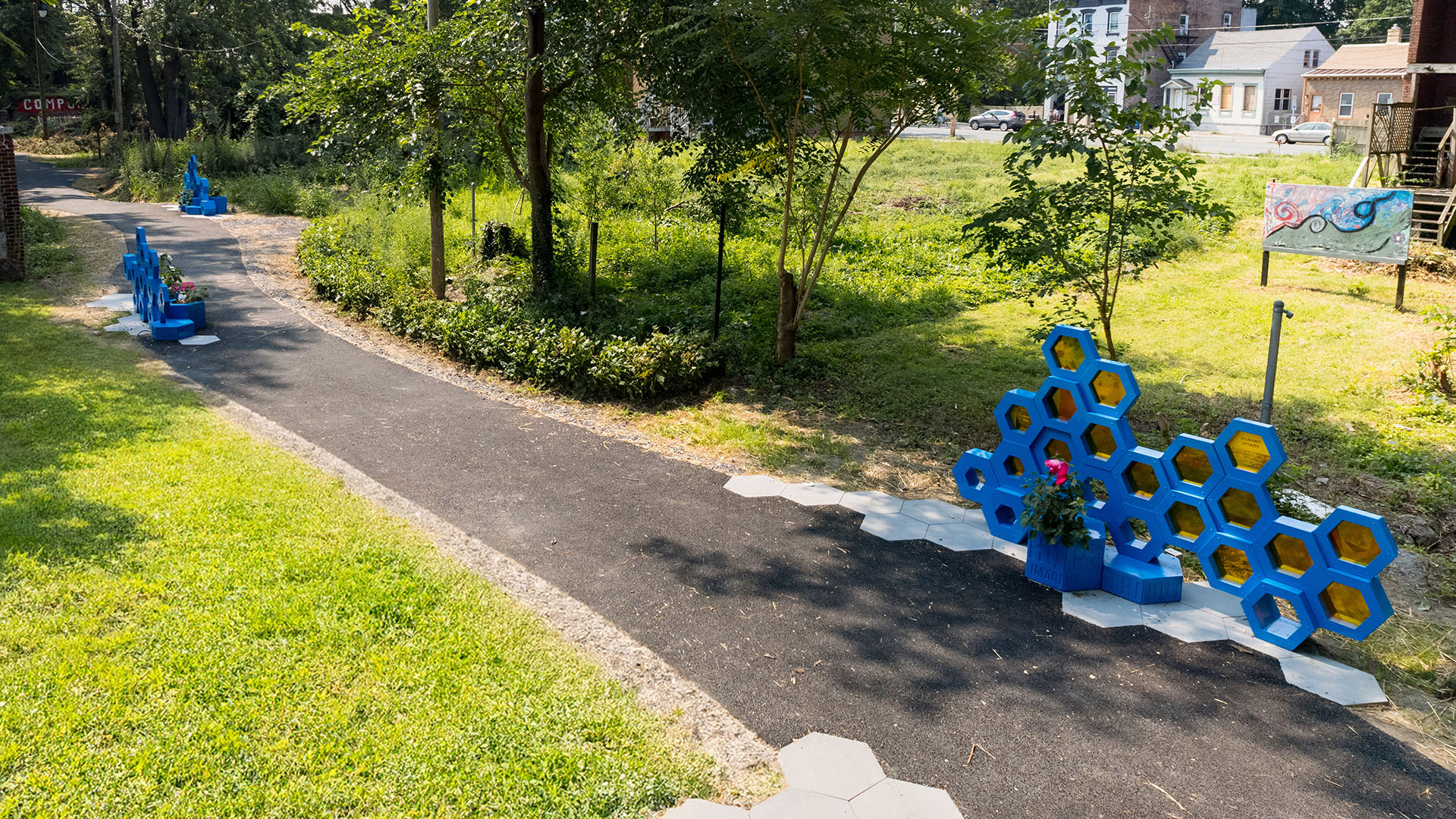
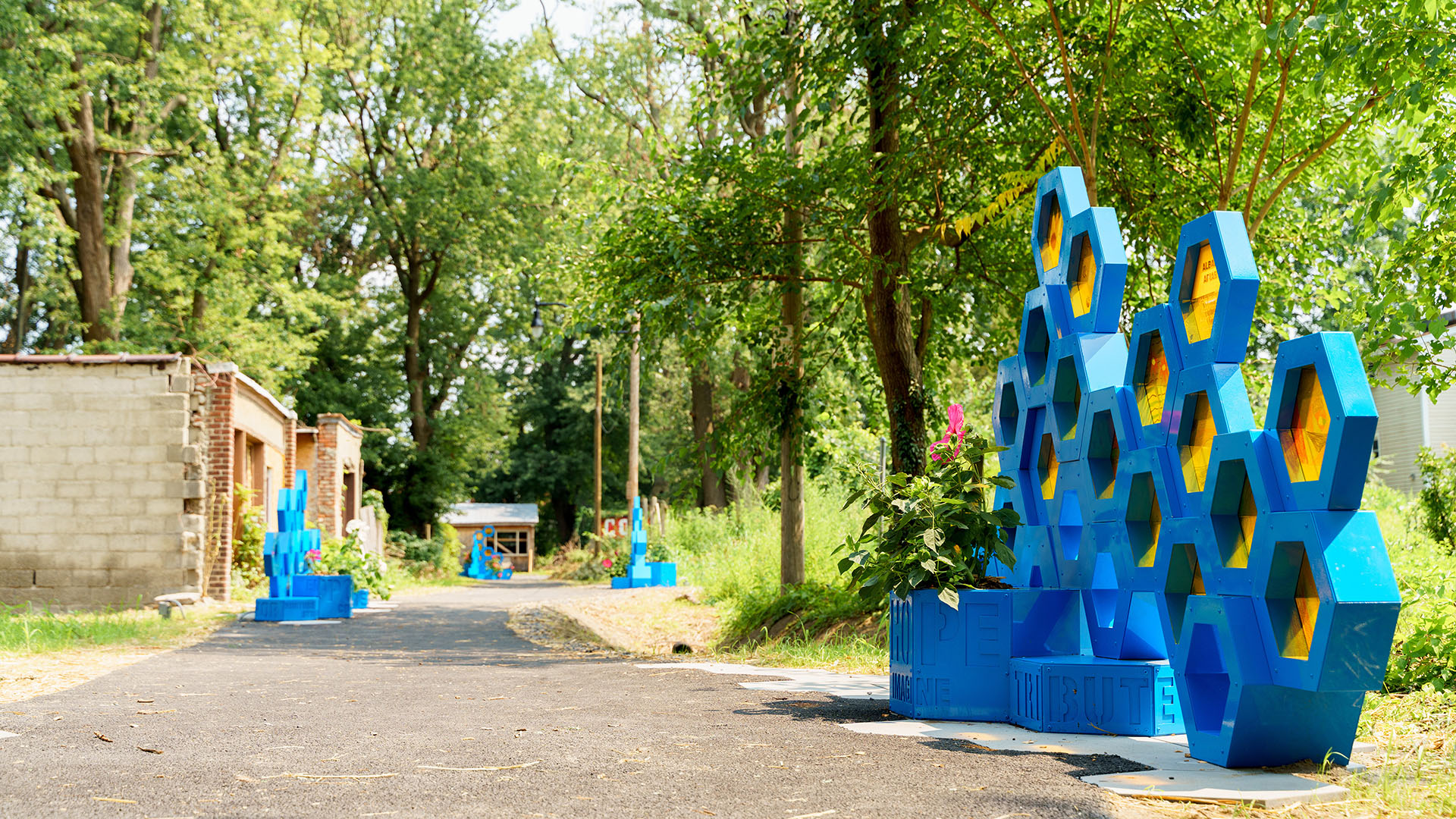
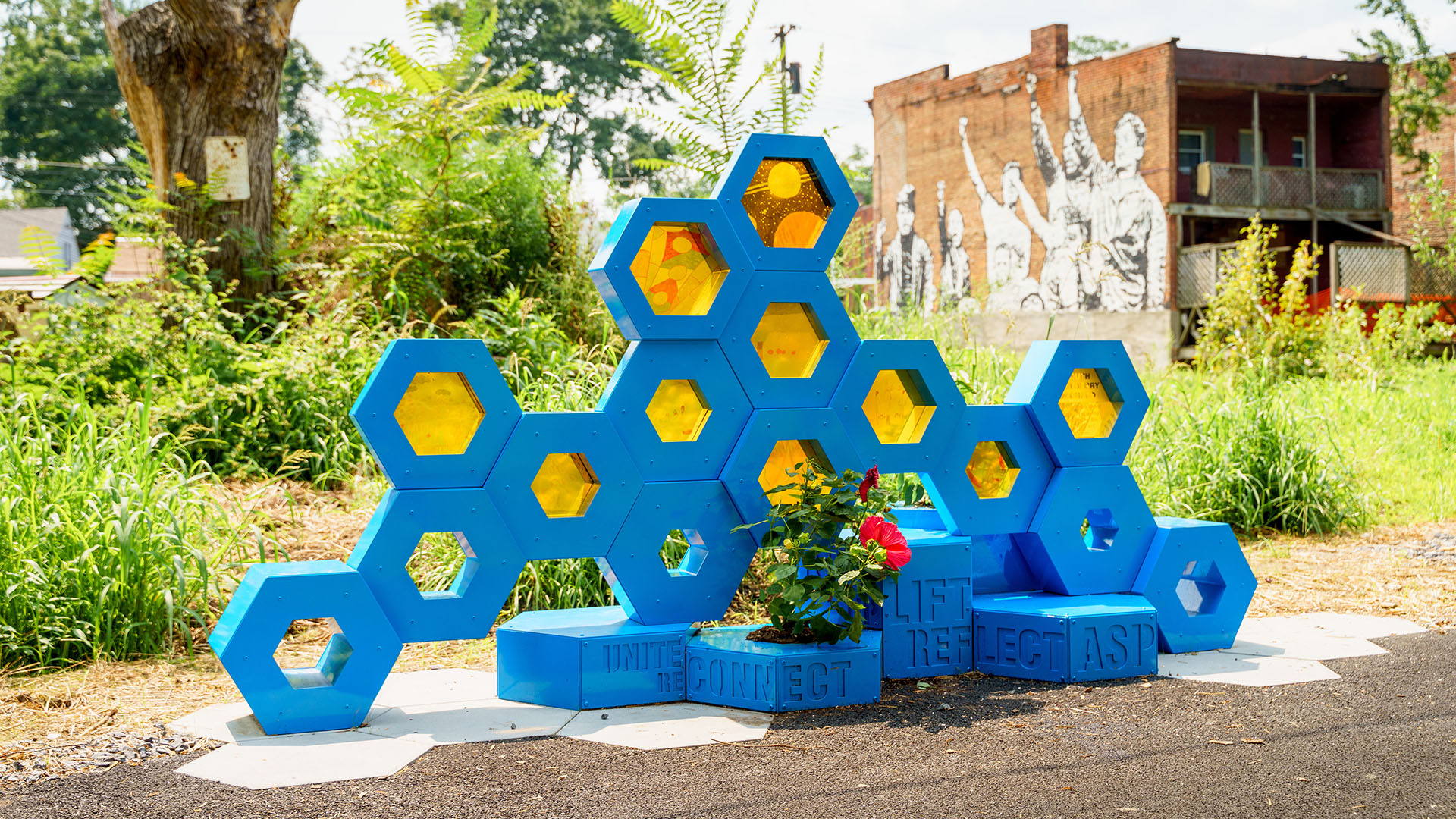
The redesigned alley is lined with six programmable nodes—honeycomb-like structures that serve as zones of reflection on the area’s past, present, and future. Inside each structure is artwork created by neighborhood youth, printed on yellow polycarbonate panels that produce a stained-glass effect, casting vivid color onto the pathway. At night, the nodes illuminate the space from within, creating a colorful cascade along the alley, complemented by street lighting above.
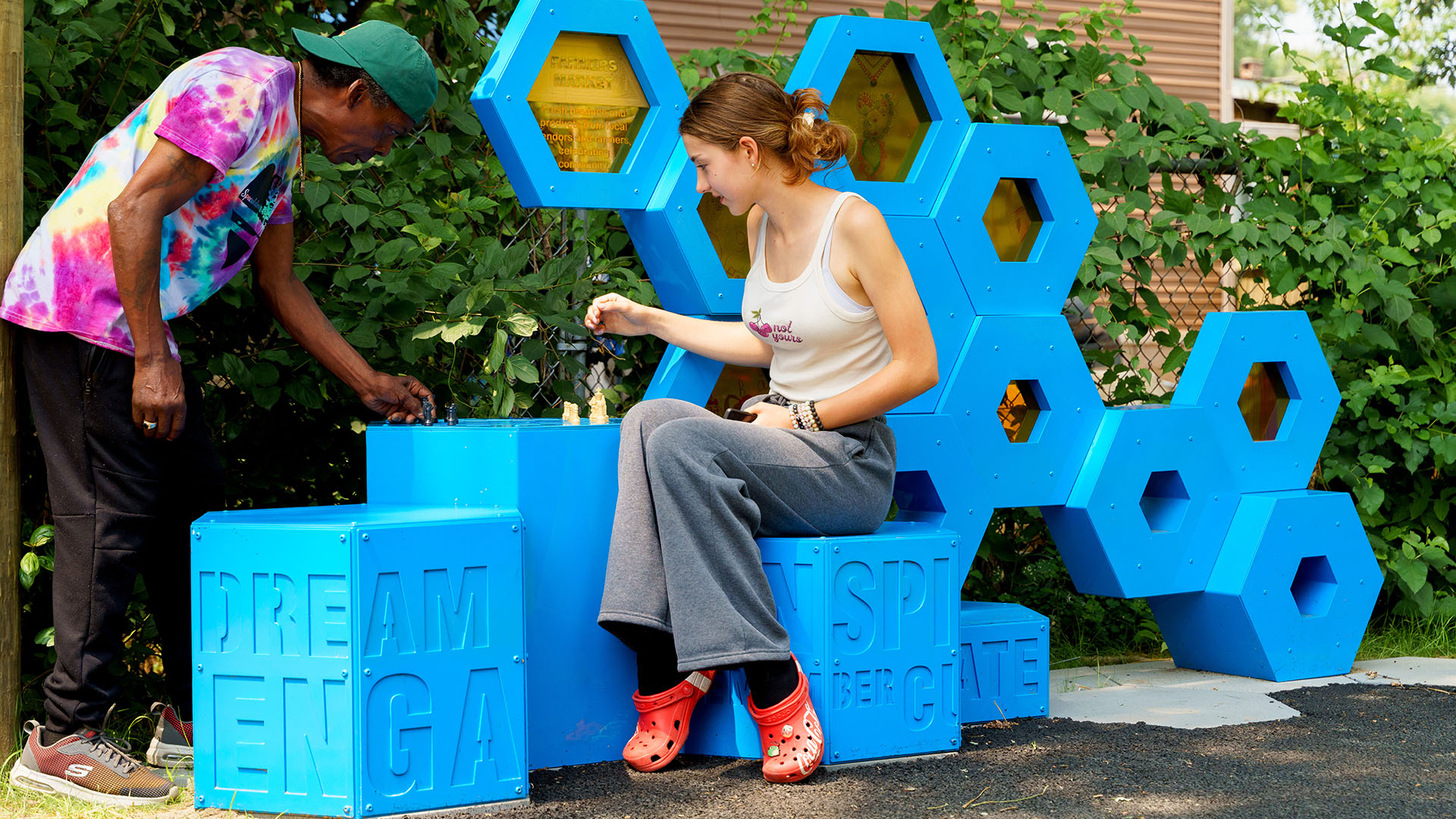
Each honeycomb structure also incorporates community-driven wayfinding, highlighting local assets such as the community garden, compost station, and farmers market. Additional features include a chess table, seating areas, performance and gathering spaces, and planters dedicated to remembering community members lost to gun violence. Words of aspiration, chosen by residents, are etched at the base of each structure to evoke positivity and hope.
The pathway combines asphalt and hexagon pavers, guiding movement and creating opportunities for future programming. The alley’s entrances are marked with The Hive signage and project information, reinforcing that this is a space built by the community for the community—an inviting “Hive” for gathering, sharing, connecting, and playing together.
The Challenge
The Hive occupies a city-owned alley within a residential block in West Hill. Although the alley sits beside thriving community-led initiatives—Albany Victory Gardens, created by local nonprofit Eden’s Rose Foundation, and a weekend farmers market—it had long suffered from poor conditions. Inadequate drainage, an overgrown canopy that blocked sunlight, illegal dumping, and accumulated debris made the alley unsafe and unusable.
Across Albany, similar alleys exist, but these publicly-owned spaces are typically left to residents to maintain. Wealthier neighborhoods are able to manage them, while lower-income communities like West Hill lack the resources. The condition of these alleys is a direct reflection of inequity in the public realm.
This project exposed systemic flaws in how the city viewed and managed in-between spaces in lower-income areas. It provided a new model for reinvesting in such underutilized spaces by prioritizing community needs and giving residents the resources required to shape the environment around them.
Project Vision
The project’s vision centers on community leadership and equitable access to the public realm. The Hive offers a new model for rethinking city-owned alleyways by following the guidance of those directly impacted at every stage of the process.
Before the redesign, the alley had become a dumping ground for outside waste—including piles of construction materials (some containing asbestos), used drug needles, abandoned cars, and other debris—harming both residents and the natural ecosystem. The Hive project focused on cleaning and restoring the space, transforming it into a vibrant communal greenway that celebrates the hope and positivity of the neighborhood.
Because West Hill is a community deeply impacted by the traumas of gun violence, the project also sought to create a space of safety, reflection, and connection. In collaboration with Albany Victory Gardens, The Hive became part of a larger “green walk” that introduces neighbors to gardening and growing their own food. Community-driven wayfinding links the alley to the farmers market, blueberry orchard, and garden plots—connecting previously disparate but active sites of community life.
What was once a hazardous area that residents avoided has now become a daily route for many—a pathway alive with meaning, memory, and possibility.
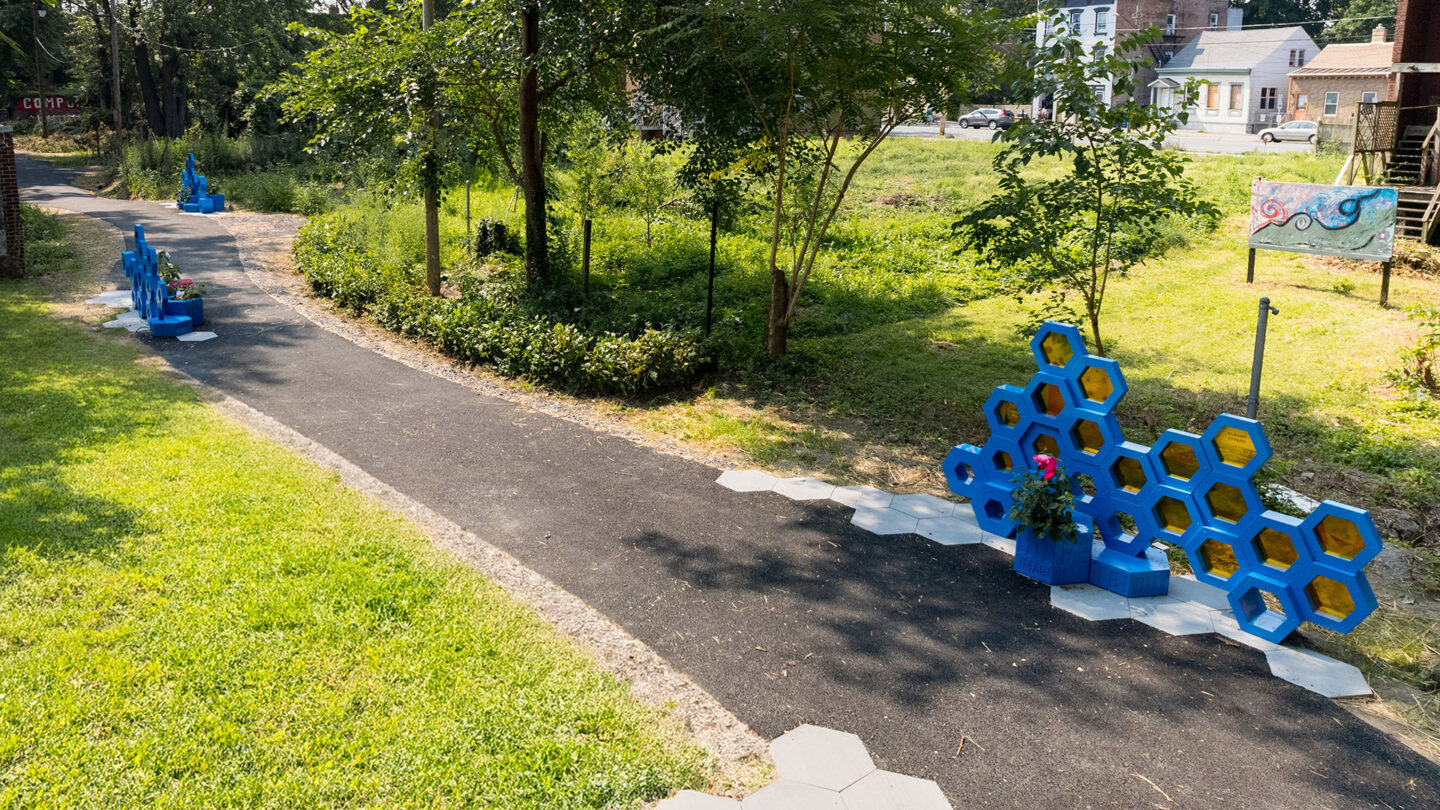
This public alley space was once underutilized and filled with abandoned cars, construction debris, and needles. Now it has become a communal space highlighting the positivity of the neighborhood.
Mars and the Moon Films
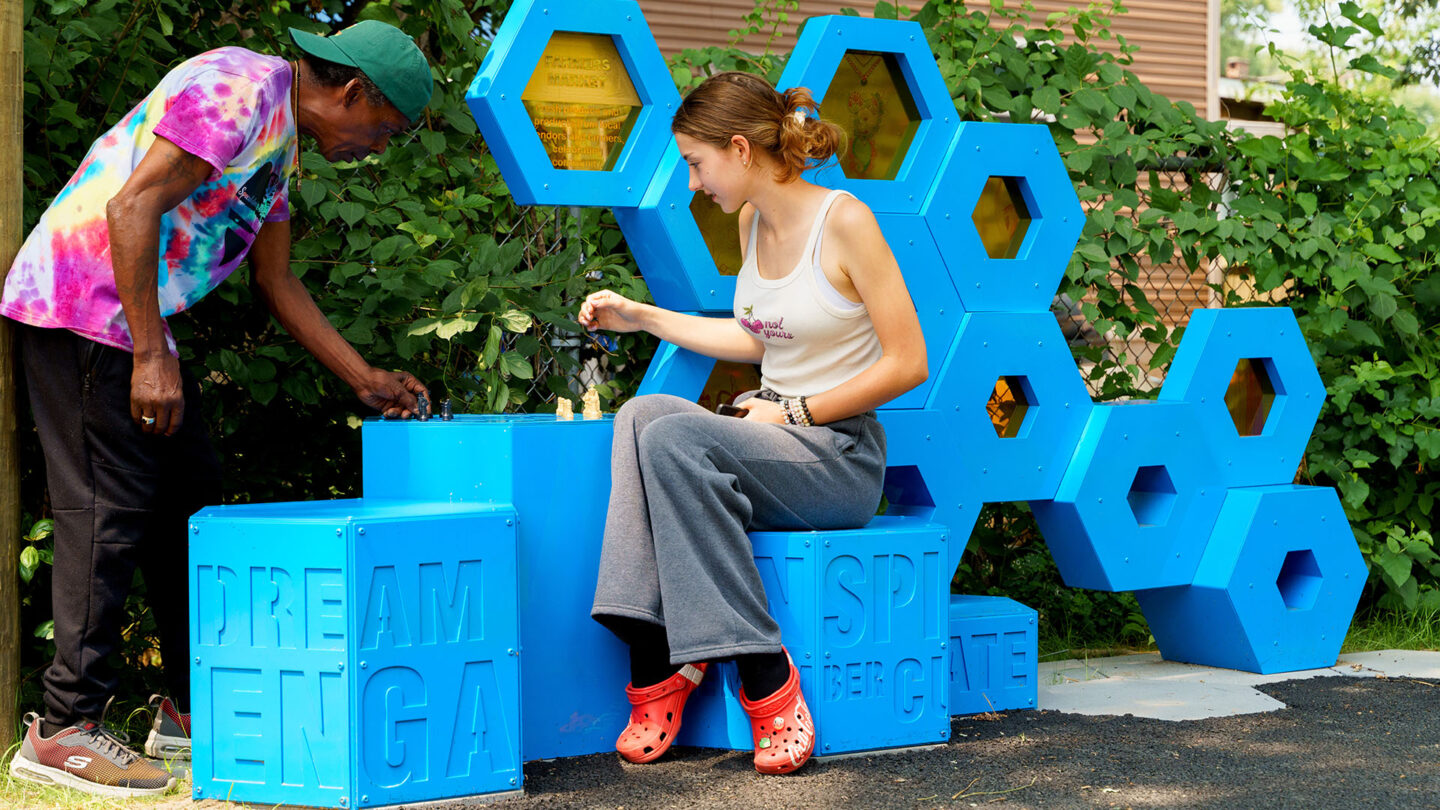
Two local residents can be seen playing chess in one of the honeycomb nodes lining the alleyway. The pieces are line with words of aspiration chosen by the community.
Mars and the Moon Films
Design + Execution
Over three years, community members shaped every aspect of the alleyway’s design, guided by workshops that used play-based methods to support open dialogue around gun violence, inequality, and daily challenges faced by the neighborhood. Engagements ranged from multigenerational block parties and markets to small-group conversations.
The Urban Conga served as a design facilitator, helping residents translate their stories, inspirations, and hopes into the physical form of the space. The honeycomb sculptures, site features, and programmatic elements were informed through extensive collaboration with community groups and more than 200 residents.
This deep co-design process fostered immediate ownership of the space. Even before construction was complete, neighbors were envisioning what would come next. The result is a network of committed stakeholders who are helping the city maintain and program the space over time. The Hive demonstrates the profound impact of community-led design—creating not just a place, but a shared sense of stewardship and pride.
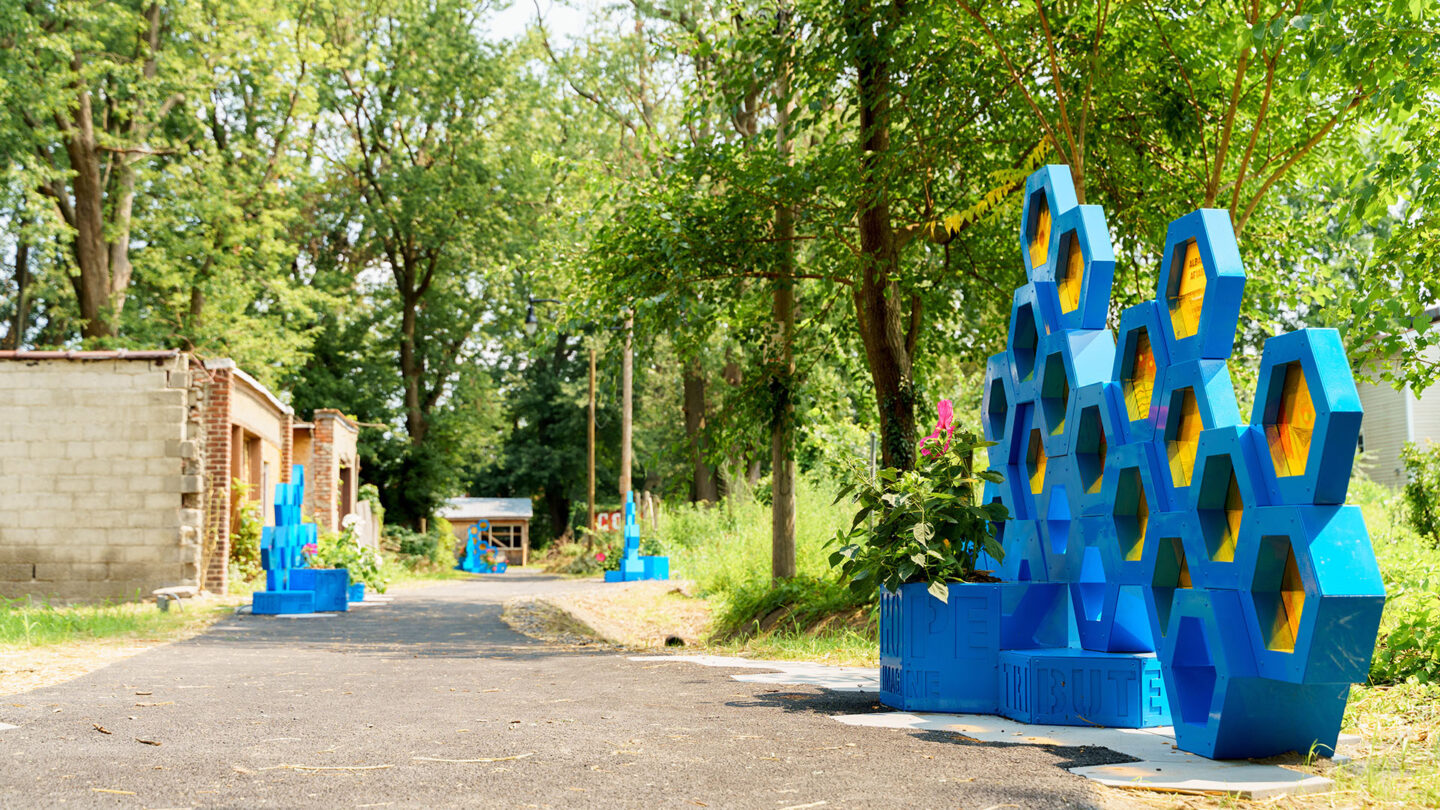
The new community alley contains six programmable nodes lining the alleyway, an asphalt pathway,
pavers, stormwater management system, new lighting, gardens, landscaping, and more.
Mars and the Moon Films

Within the work are markers and wayfinding that light up and identify the amazing things local
organizations are doing like a blueberry orchard, community gardens, composting, and farmers markets.
Mars and the Moon Films
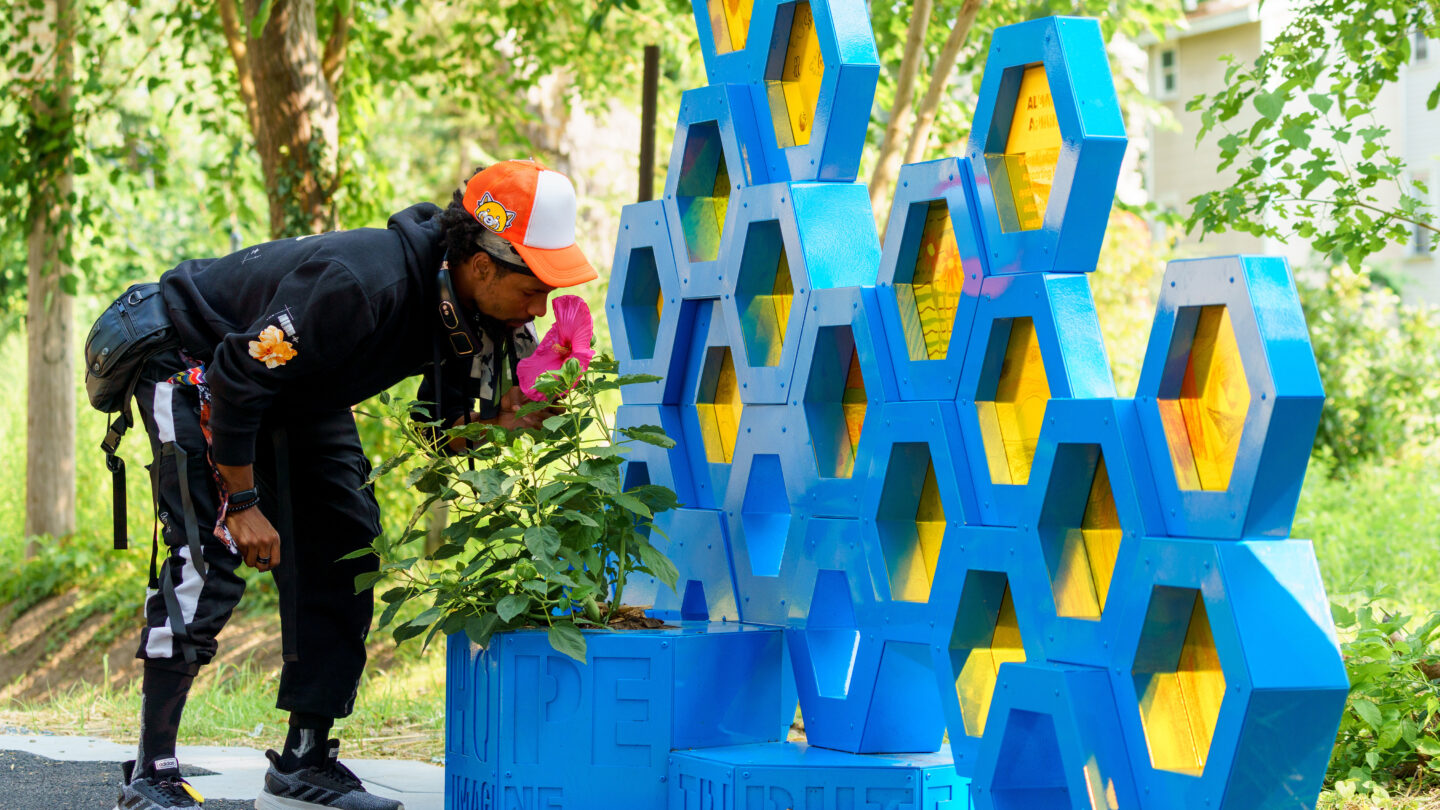
A resident can be seen using the planters to remember those lost by gun violence in the neighborhood. Along the edge of the planter are words of hope and aspiration.
Mars and the Moon Films
Sustainability
The alley’s history as an informal dumping ground had severely damaged both the community and the site’s natural ecosystem. As part of the redesign, contaminated soil was remediated and the entire space was cleared of hazardous materials—including asbestos-laden debris, used needles, abandoned vehicles, and accumulated trash.
Environmental improvements are central to the project:
- The pathway uses porous paving to support natural water infiltration.
- Swales were added to improve stormwater management.
- The landscape was replanted with local species to restore ecological health.
- Planters, a dedicated beehive area, and gardening zones reinforce the alley’s role as a green community corridor.
The result is a healthier environmental system that supports residents, pollinators, and the surrounding neighborhood.
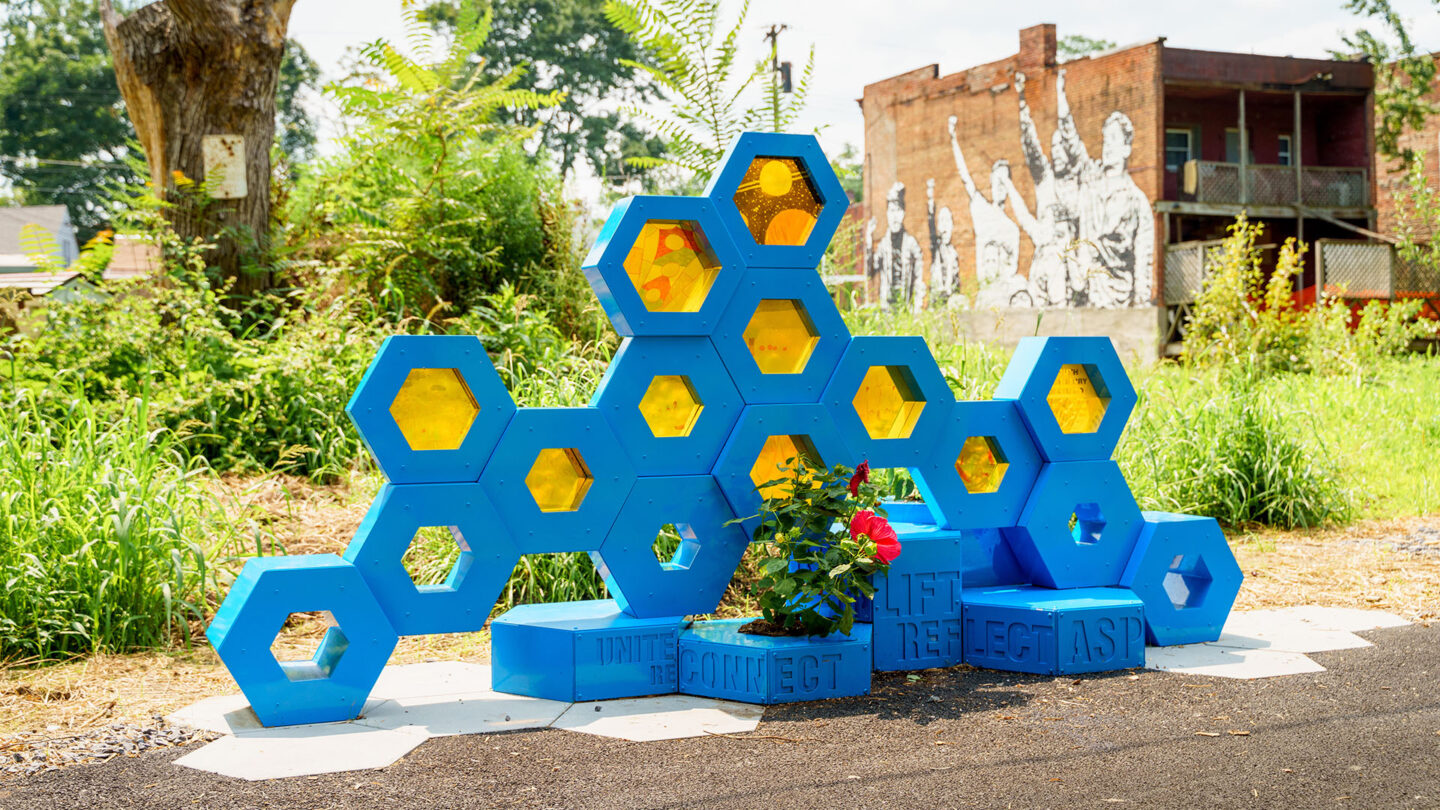
Inside the honeycomb elements is artwork created by the youth in the neighborhood. The artwork is
laminated onto panels to create a stain glass like effect.
Mars and the Moon Films
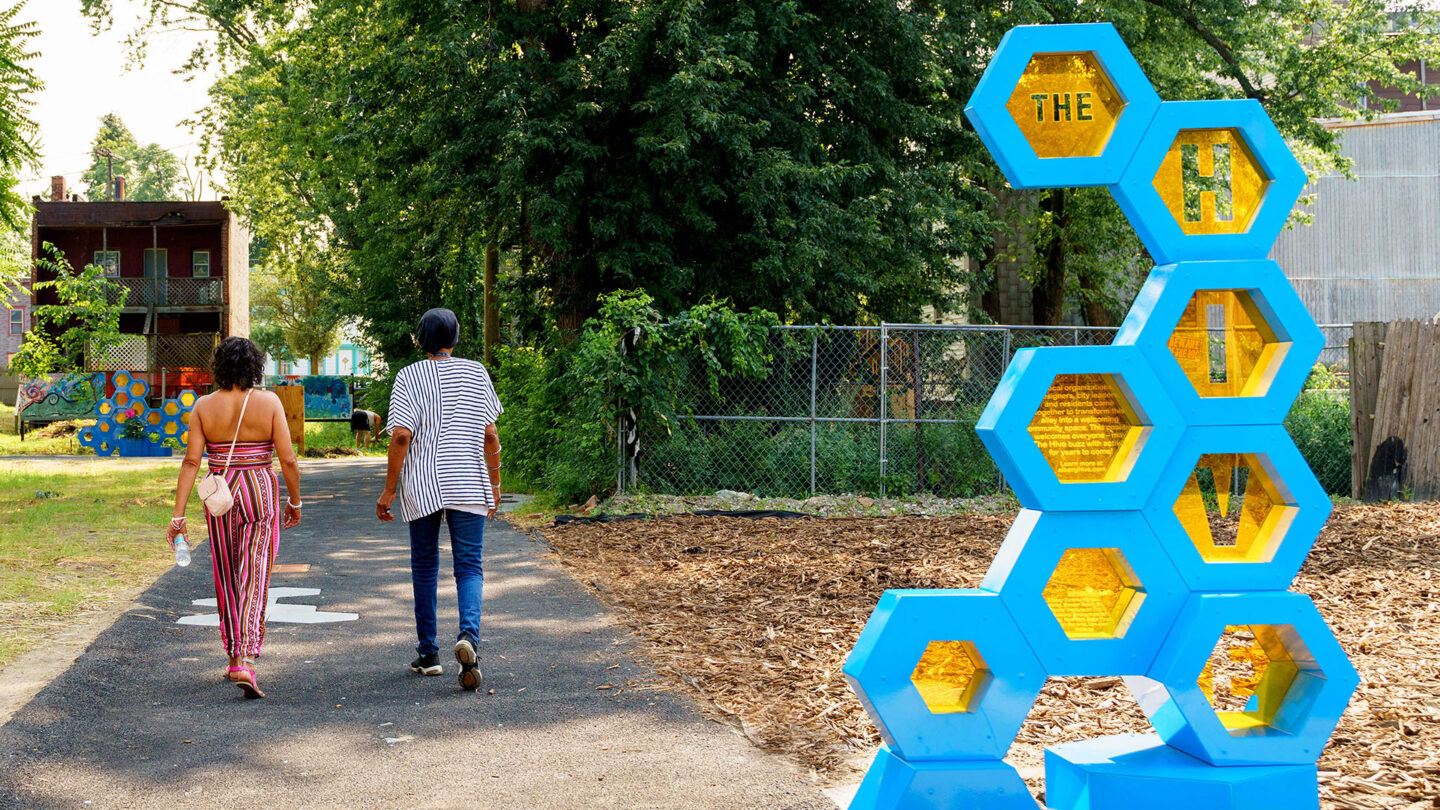
At each entry is a marker identifying The Hive and serving as a reminder that this is a safe space built for the community by the community.
Mars and the Moon Films

Project Details
The Hive is well-deserving of the Sylvia Harris award, designed by and for the community and brought to life by vibrant programming which catalyzes change in the low-income neighborhood. The design is also thoughtful with a modular system, allowing for a great range of activities to take place on these platforms.
The Hive is a testament to the power of community organizing and local leadership in communities where quality design is deprioritized. This project demonstrates the best use of resources, personifying ‘a lot with a little’ – resulting in a high quality place and design. This project is worthy of the Sylvia Harris Award for its clear social impact, the physical transformation of the site, and the integration of cultural and natural beauty for the community.
Design Team
Ryan Swanson (principal designer)
Maeghann Coleman (principal designer)
Alden Copley (designer)
Joanne Wu (designer)
Juan Esparza (designer)
Omar El Feki (designer)
Daniel Swanson (structural engineer)
Gary Schmitt (fabricator)
Collaborators
Van Alen Institute
Albany Victory Gardens
518 SNUG
Bridge Tha Gap
Albany Lions Club
Grateful Villages
City of Albany Planning Department
STANTEC
Rensselaer Polytechnic Institute
Photo Credits
Mars and the Moon Films (photography)
Mars and the Moon Films, Youth FX (videography)
Open Date
October 2024
Project Budget
$380,000 USD
Project Area
4,800 sq ft
More in Public Installation
All Projects-
Read more Carousel for Companionship
Carousel for Companionship
Could Be Design -
Read more On Tap: The Columbia Tap Trail
On Tap: The Columbia Tap Trail
University of Houston, Graphic Design, School of Art and Gerald D. Hines College of Architecture and Design -
Read more Washington School for the Deaf Art Gate
Washington School for the Deaf Art Gate
Mayer/Reed, Inc. -
Read more Monticello Burial Ground for Enslaved Persons / Contemplative Site
Monticello Burial Ground for Enslaved Persons / Contemplative Site
HGA