Reframing Dioramas: The Art of Preserving Wilderness
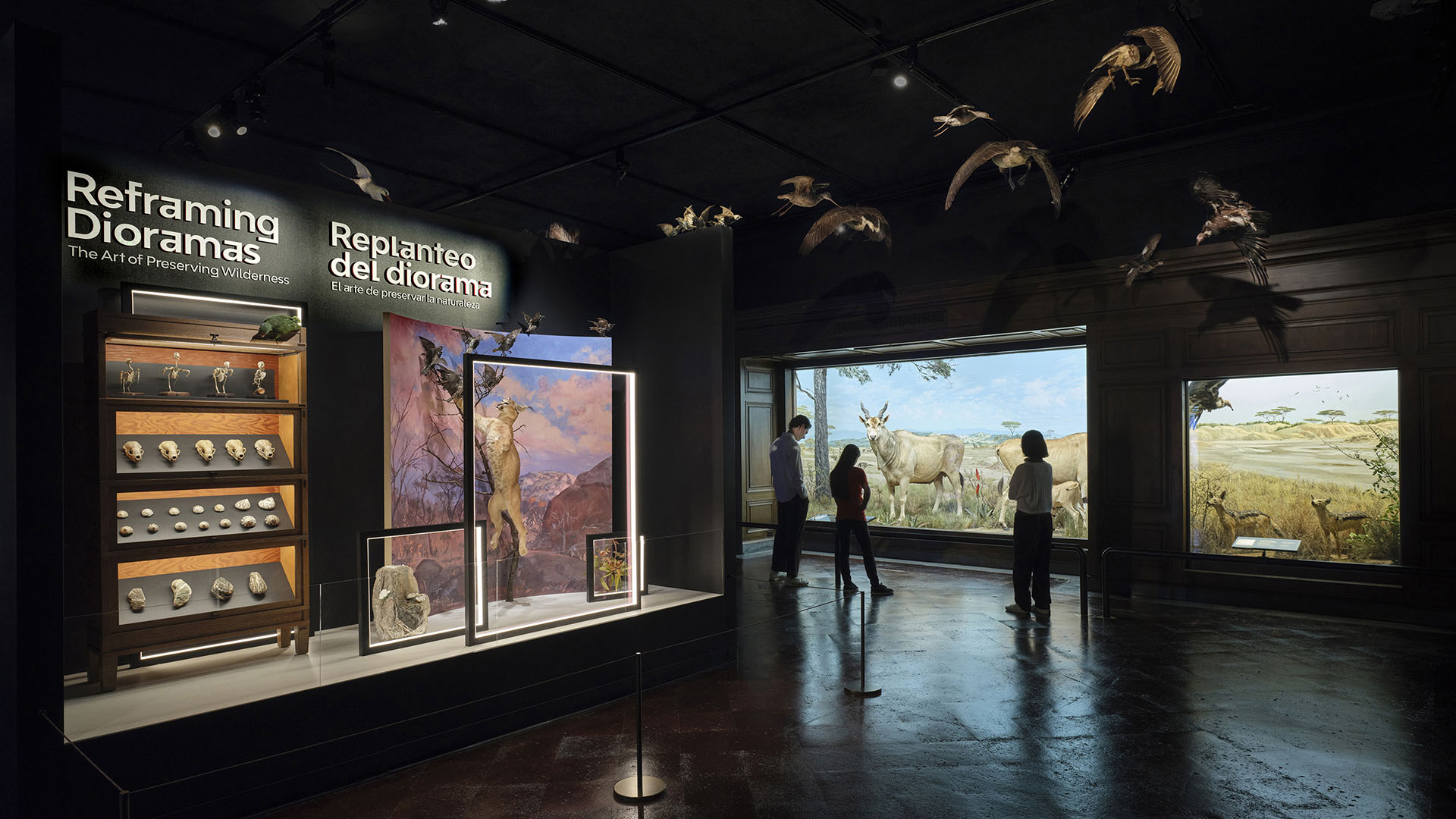
In September 2024, the Natural History Museum of Los Angeles County (NHMLAC) commemorated the centennial of its historic diorama halls, which showcase more than 75 incredibly detailed habitats from around the world. Reframing Dioramas: The Art of Preserving Wilderness celebrates and examines the hundred-year-old history of these dioramas. As part of the wider art initiative PST ART: Art & Science Collide, the exhibition deconstructs the art, and investigates the science that make dioramas so compelling, while taking a critical look at the past, present, and future of the medium.
Agency
Natural History Museums of Los Angeles County (Exhibitions Department)
Practice Area
Client
Natural History Museum of Los Angeles County
Industry
The Challenge
Habitat dioramas are the epitome of old museum displays. While every other exhibit has come and gone, these halls alone have remained standing for 100 years. Visitors love dioramas because they are old, because they are nostalgic. How can we get them to look at something so familiar in new ways? How do we get them to actually think about dioramas and the stories they tell—and the stories they leave out. This was our Challenge: to open visitors up to new, critical viewpoints while still respecting the artistry and nostalgia of diorama
Project Vision
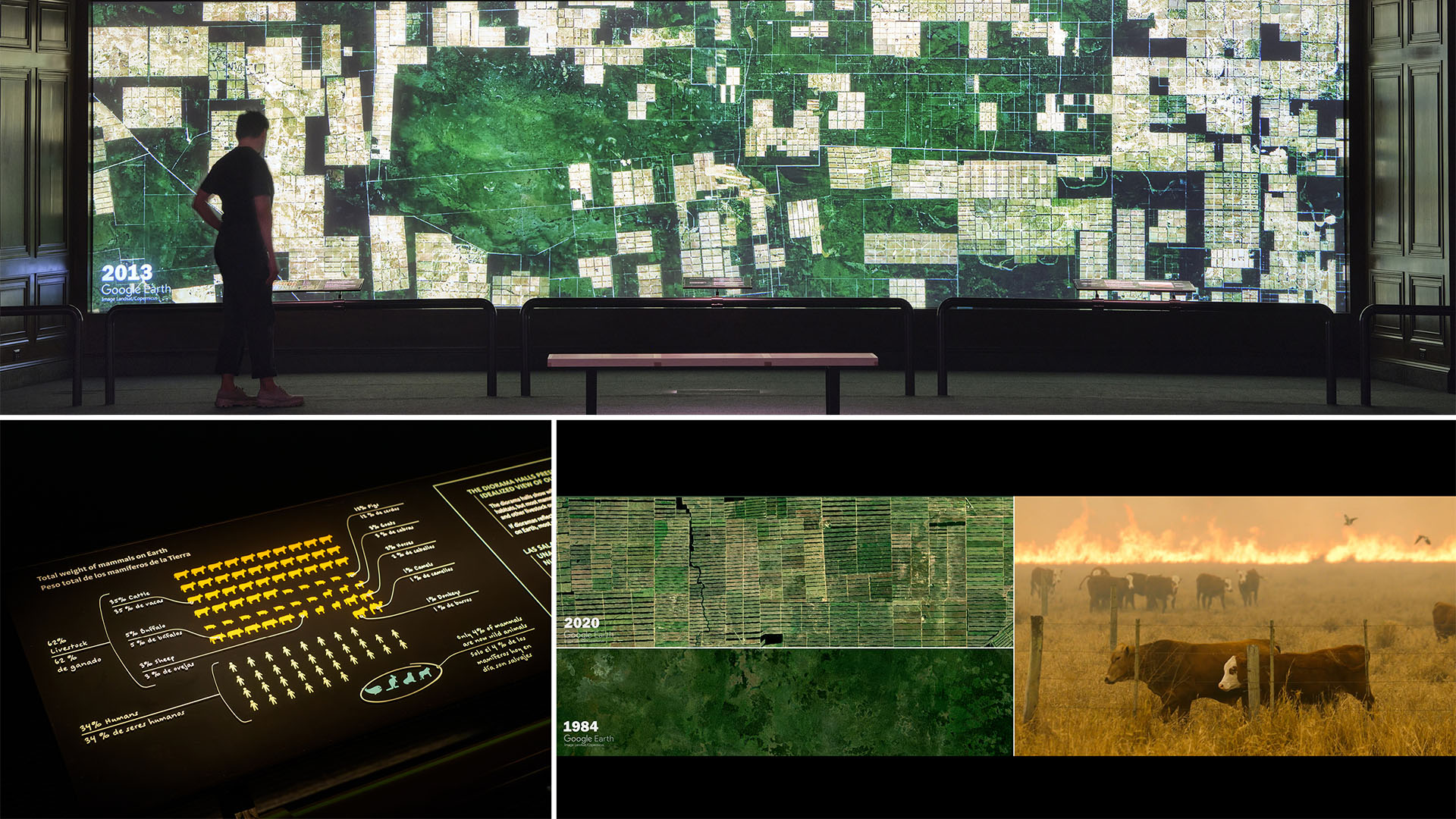
The title of this exhibition was also its Vision: Reframing Dioramas. We wanted to literally reframe dioramas as works of fine art, complex tableaus that embodied the hopes and biases of their all too human creators. Part of this reframing was leaning into the aesthetics and experiences of contemporary art installations rather than traditional natural history displays. We eschewed action-oriented didactics familiar to our visitors (think touchable bear pelts) in favor of contemplative soundscapes and artistic interventions that encouraged reflection through emotional connection. For example, the large projection of satellite images deliberately lacks a scale bar. This purposefully abstract timelapse of overwhelming habitat loss is meant to hit on an emotional, rather than cognitive, level. Visitor evaluation has confirmed the success of this approach. One person, who cried at the display, wrote that “…it displayed emotion through art. It felt both complete and complex.” Compared to our traditional diorama halls, visitors in Reframing Dioramas are 16% more likely to report feelings of “reflection” and 20% more likely to report feelings of “concern.”
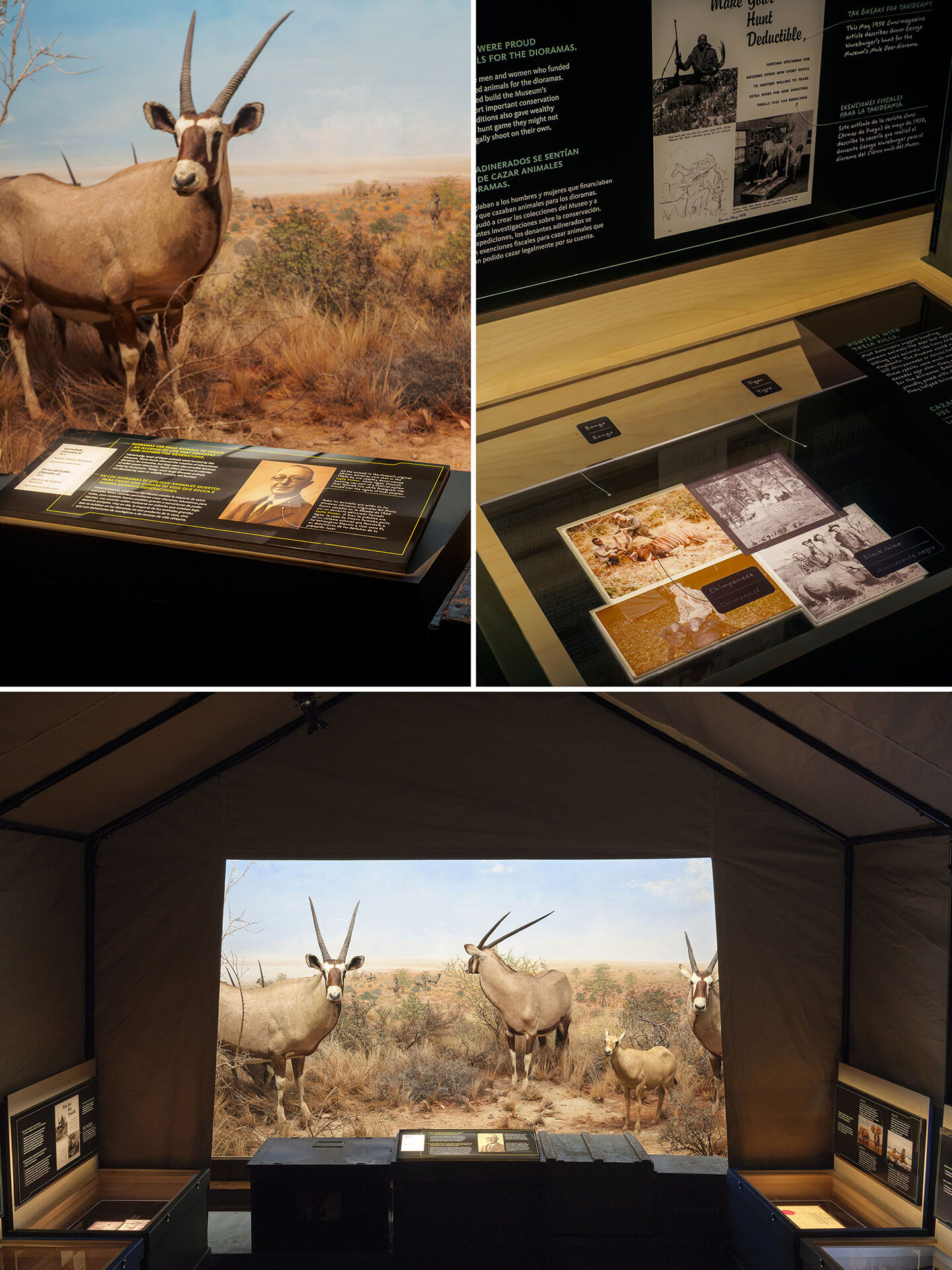
Crates inside the tent at the Gemsbok habitat group protect more sensitive content while also transporting visitors into the history of field collecting.
Elon Schoenholz / NHMLAC

The rear diorama bay transforms into the Gran Chaco region, depicting the reality that dioramas don’t: two-thirds of Earth’s mammals are livestock like cows.
Elon Schoenholz / NHMLAC
Design + Execution
This was a collaborative project from start to finish. Before design began, a long research phase was needed to source narrative themes and identify artifacts for display. We then generated overarching goals and community buy-in by holding a large incubator with internal and external stakeholders including educators, scientists, and tribal elders. Feedback was synthesized into narrative and aesthetic goals, which designers then explored through a series of charettes. Every proposal was dissected and evaluated on its expected feasibility and the perceived immediacy with which it could communicate narrative themes to visitors. Designs were further refined through extensive prototyping and testing before being fabricated and installed by a combination of internal teams and contractors.
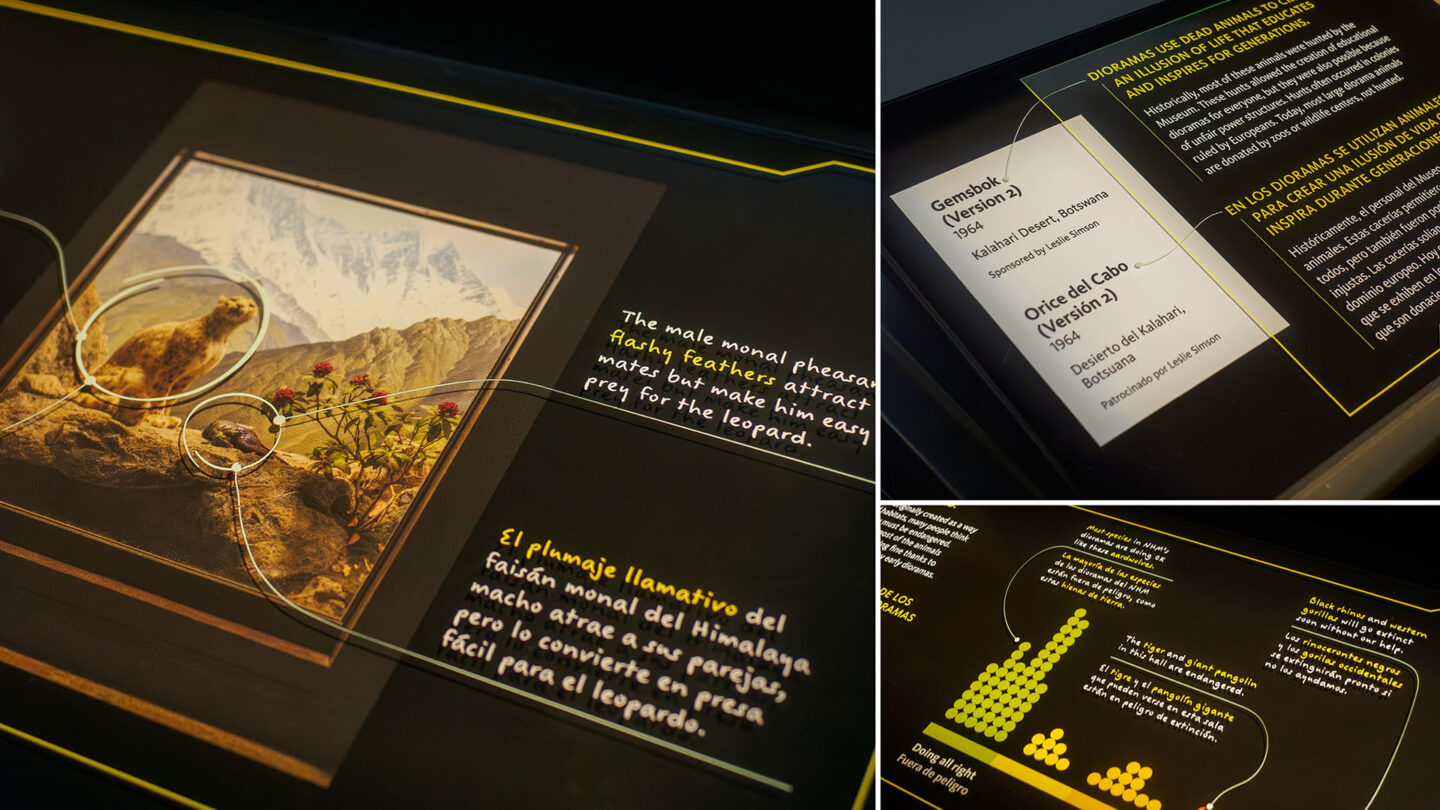
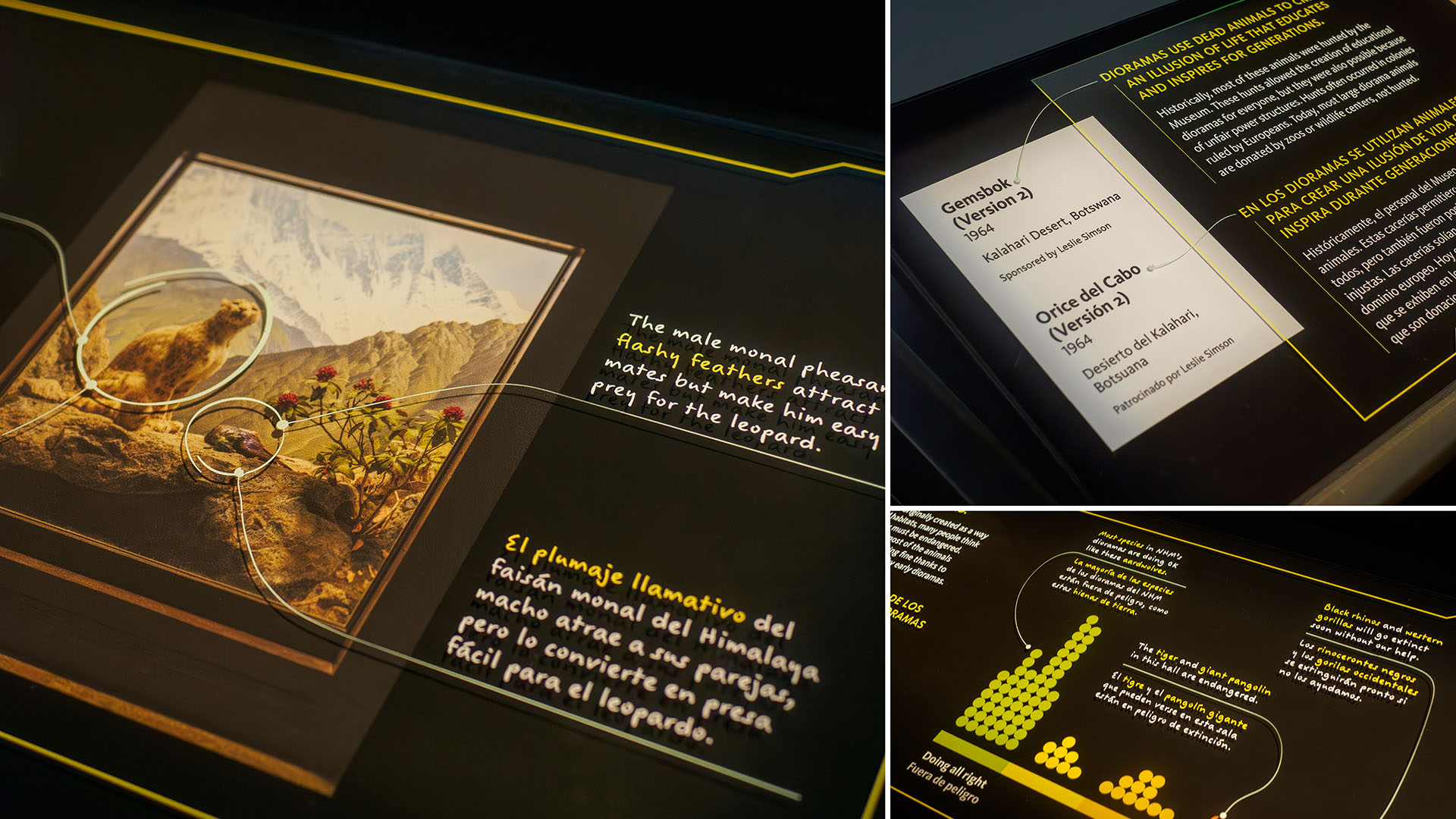
The graphics system uses multi-layered acrylic. Labels and imagery appear on the bottom layer, while the upper layer provides context in a loose, annotative style.
Elon Schoenholz / NHMLAC

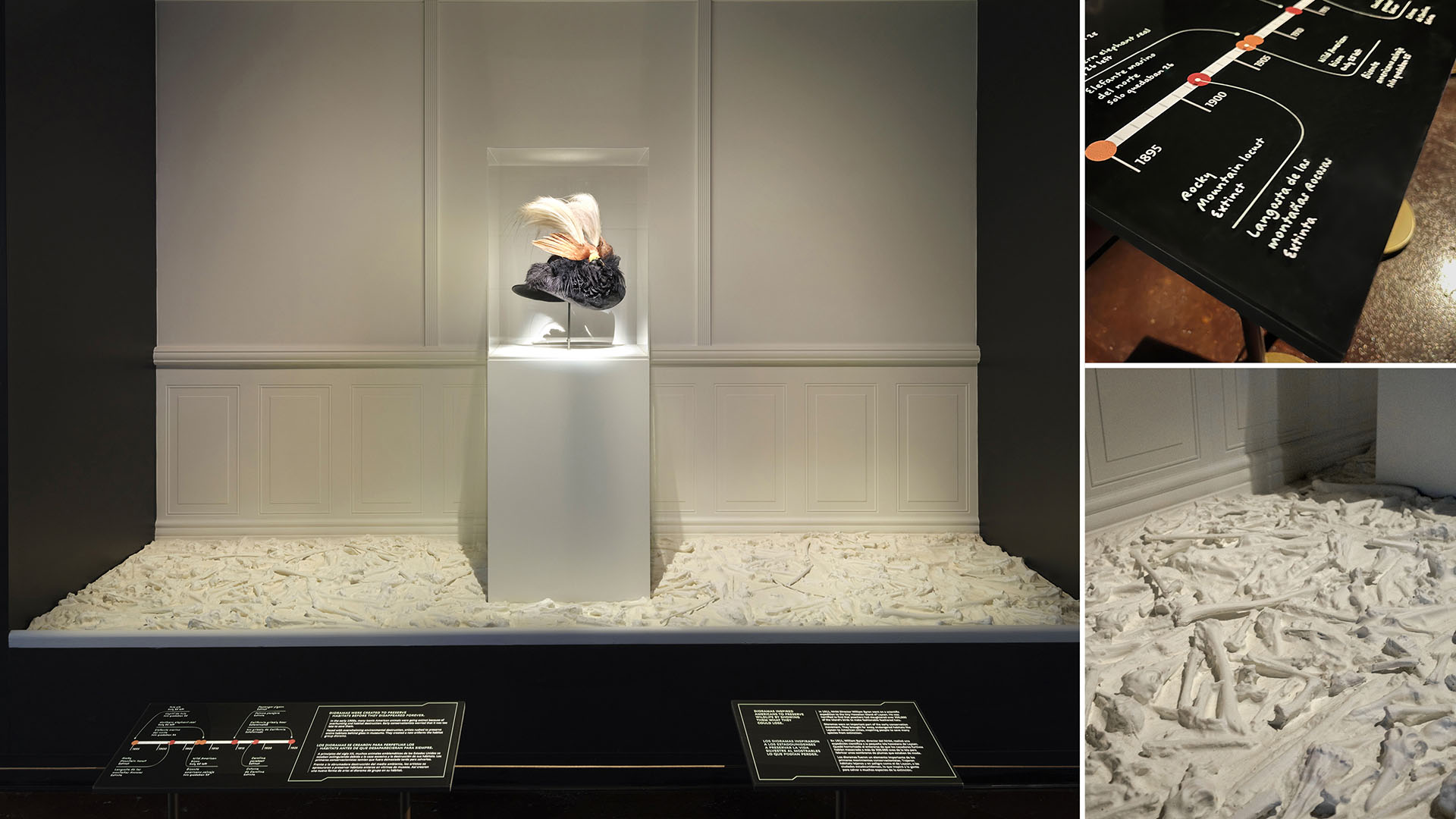
A macabre display of bones surrounds 1920s fashion, with infographics explaining the historic destruction that spurred the development of the diorama medium.
Elon Schoenholz / NHMLAC
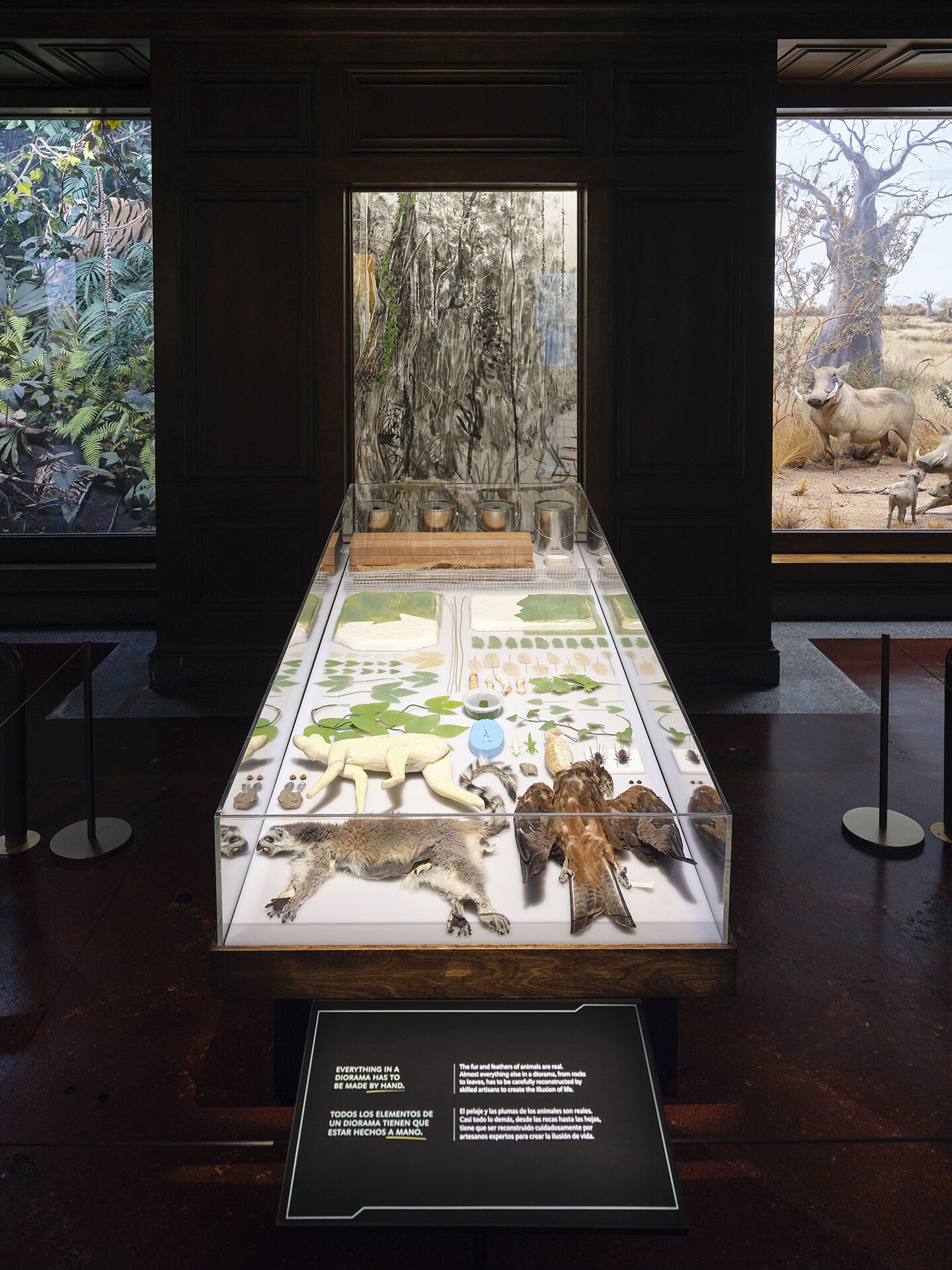
Deconstructing a diorama into its many detailed parts forces visitors to see the scene as a skillful fiction rather than a window into nature.
Elon Schoenholz / NHMLAC
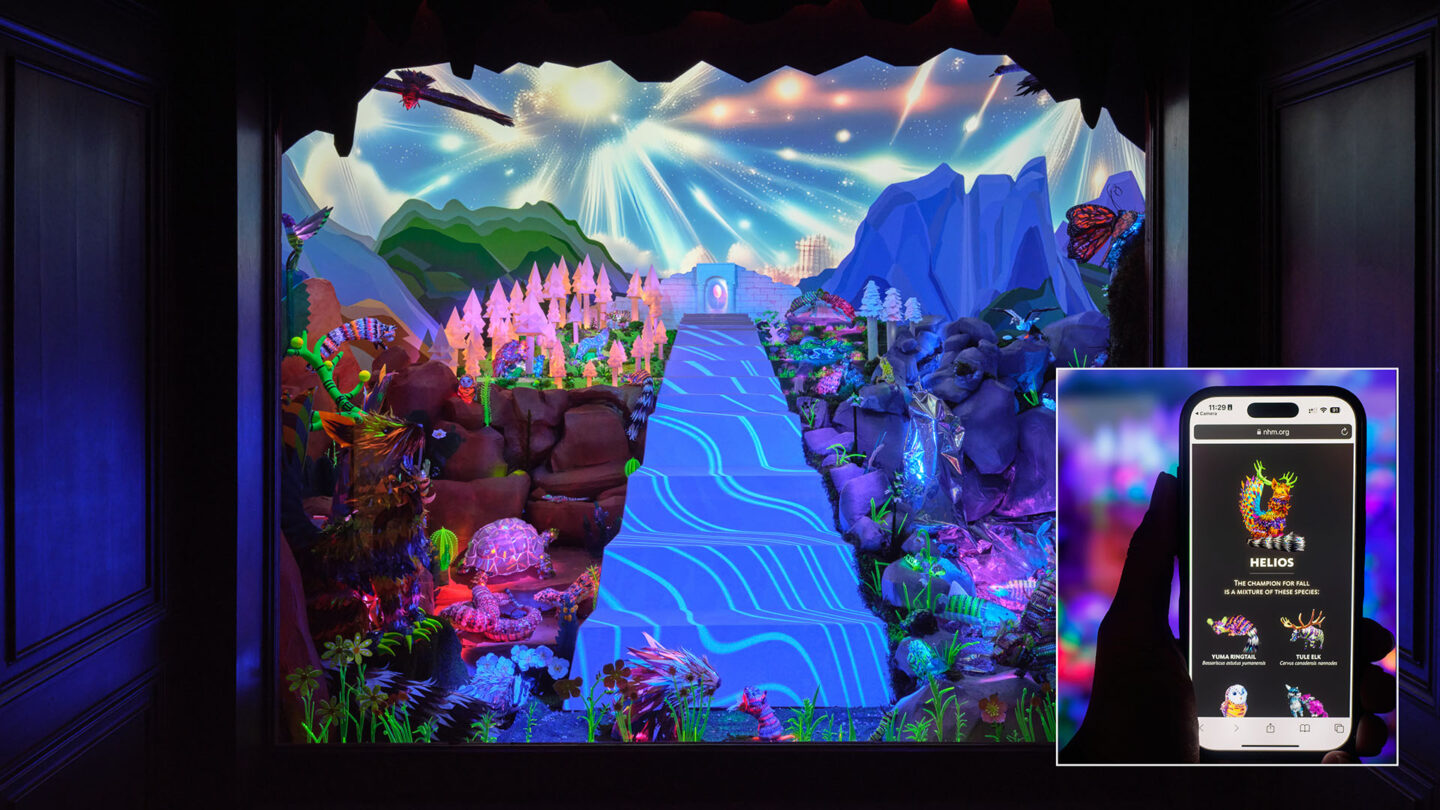
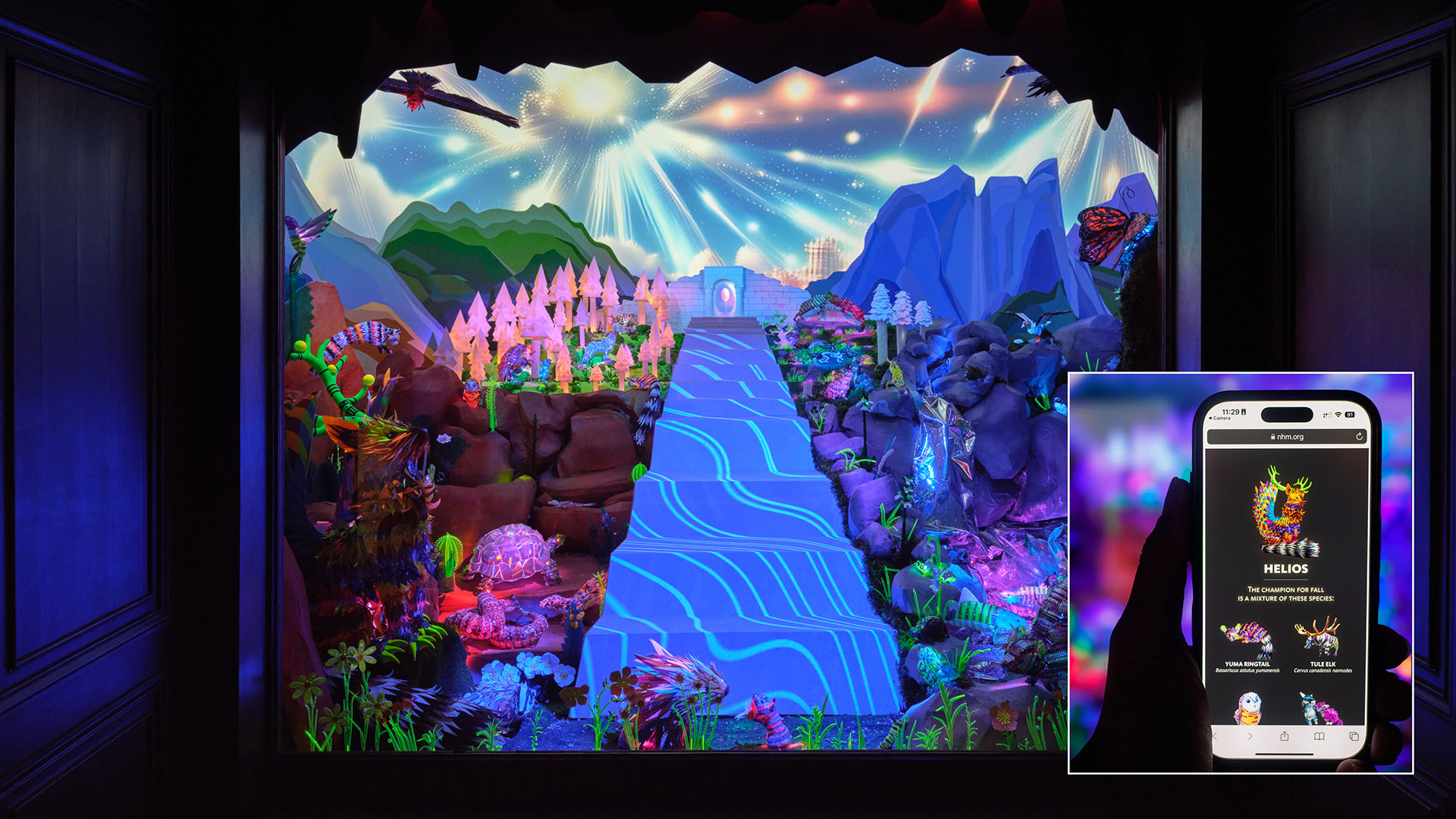
A digital guide helps viewers identify the 60-plus species of fauna and flora depicted in this multi-media installation inspired by Mexican alebrijes.
Elon Schoenholz / NHMLAC
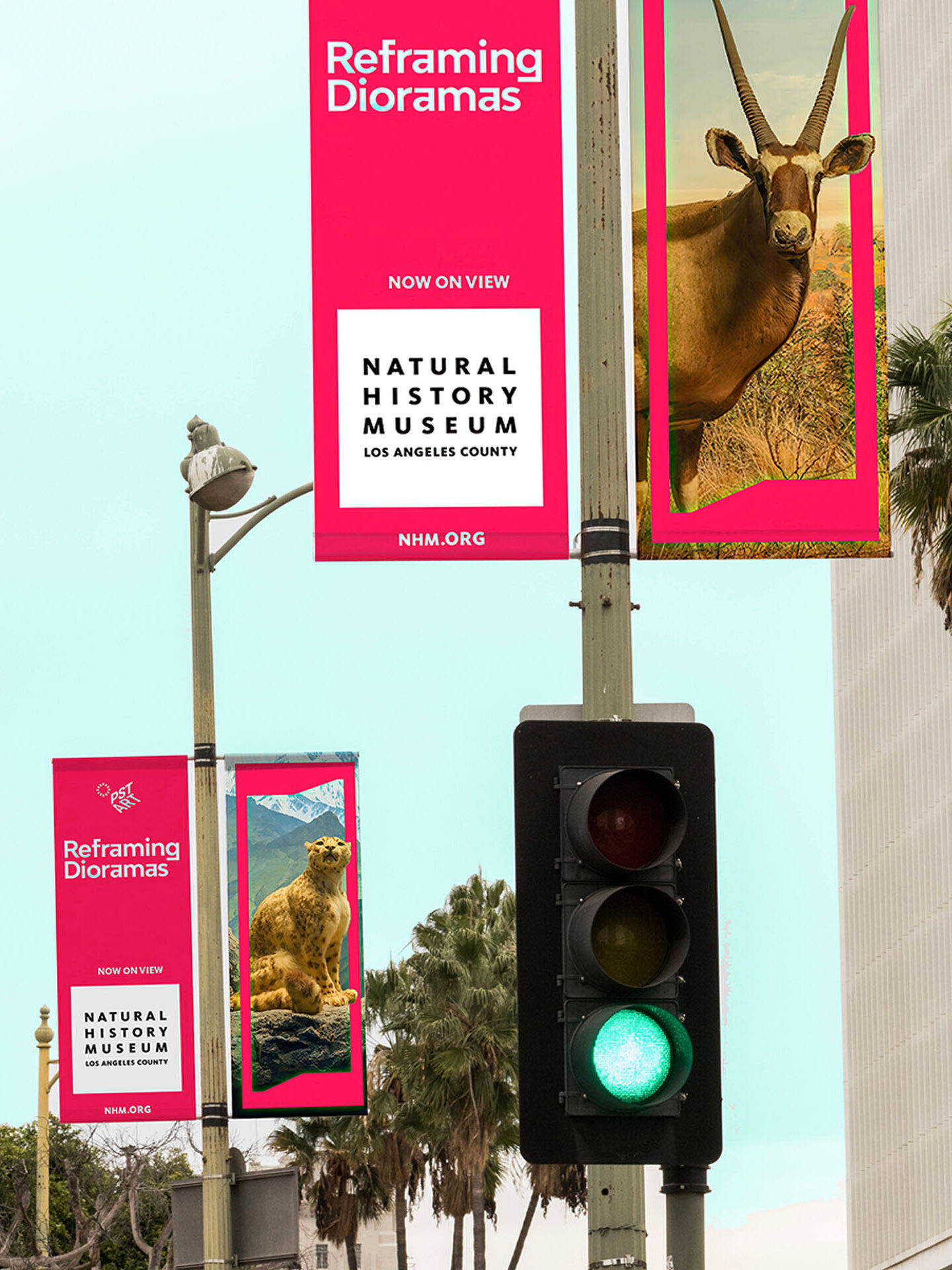
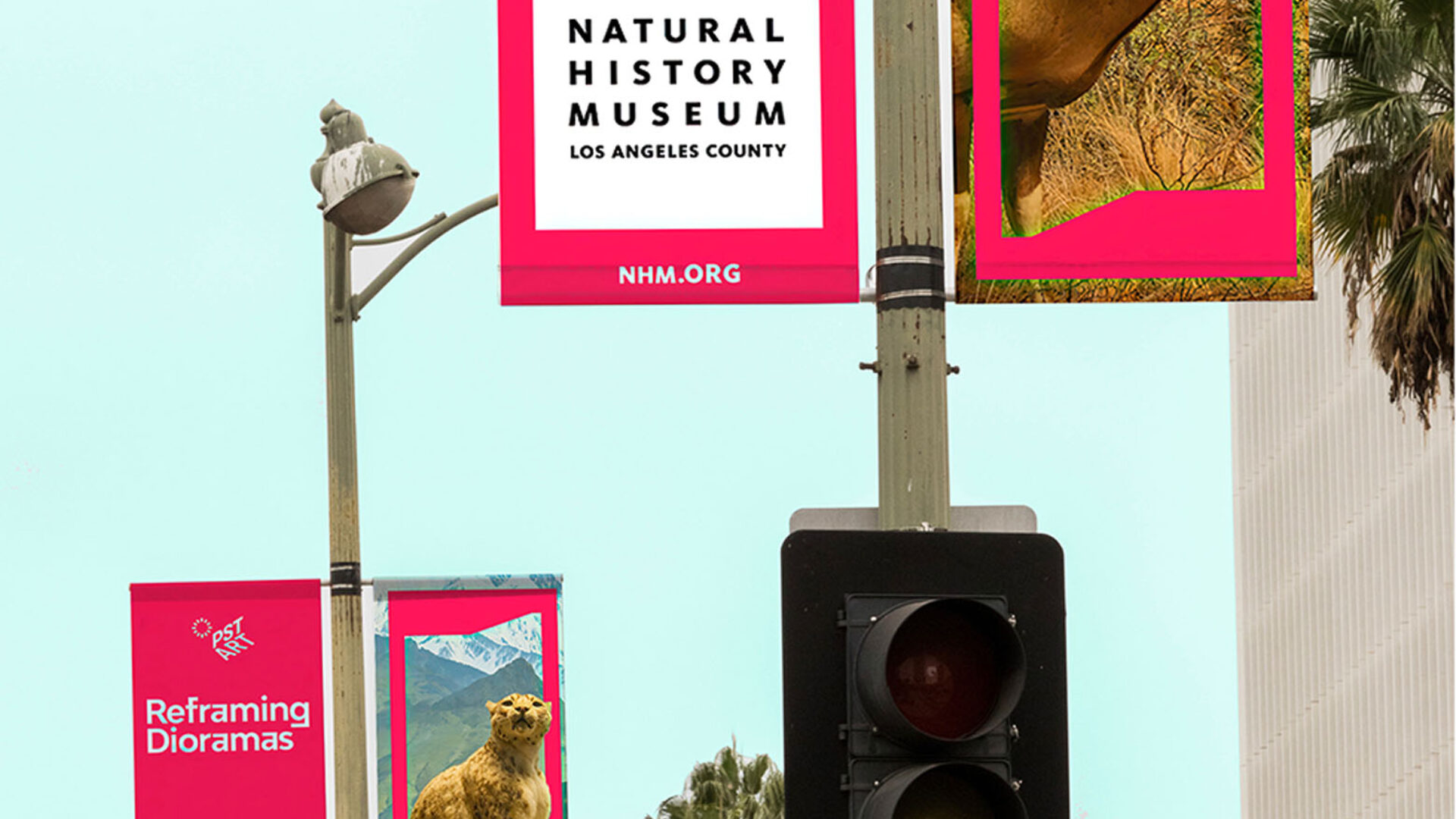
Traditional views of dioramas are reframed by bright magenta in a suite of promotional graphics that include street banners, wayfinding, and digital marketing.
NHMLAC
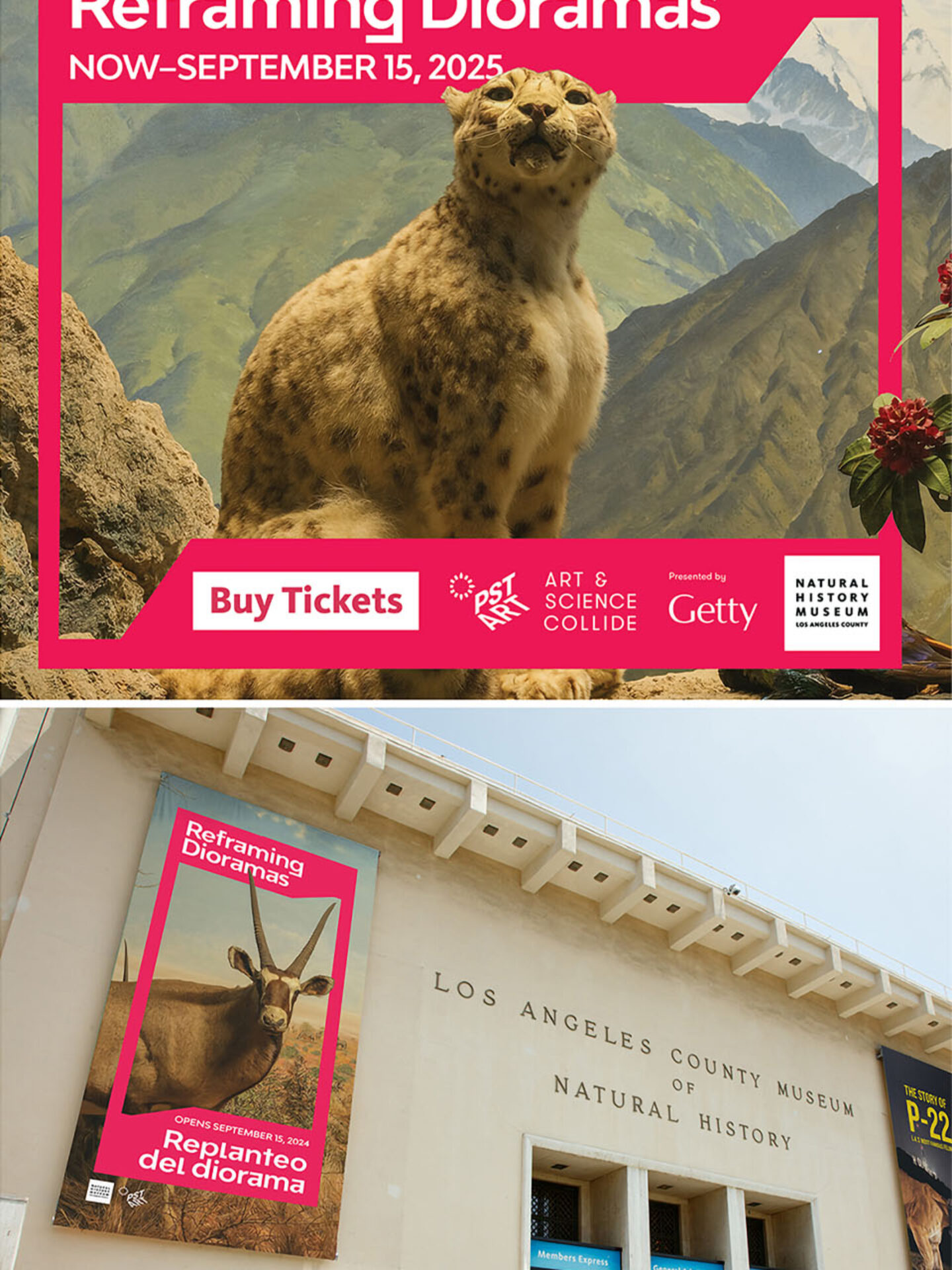
Traditional views of dioramas are reframed by bright magenta in a suite of promotional graphics that include street banners, wayfinding, and digital marketing.
NHMLAC
Project Details
Design Team
David Pullido (exhibition designer)
Donna Pungprechawat (exhibition design manager)
Matt Davis (exhibition developer)
Alexi Chisler (production manager)
Liam Mooney (technical director)
Raphael Peterson (installation manager)
Tyler Nicolas (lighting designer)
Taylor Peterson (senior project manager)
Tim Bovard (chief taxidermist)
Jennifer Morgan (associate director of special projects)
Andrea Mode Andrews (director of exhibitions)
Chris Weisbart (associate vice president, exhibitions)
Natural History Museum of Los Angeles County, Exhibitions Department (fabrication)
Collaborators
Saul Becker (artist)
Lauren Schoth (artist)
Yesenia Prieto (artist)
Joel Fernando (artist)
Jason Chang a.k.a. RFX1 (artist)
Photo Credits
Elon Schoenholz
NHMLAC
Open Date
September 2024