Manhattan Pet Adoption Center
Animal Care and Control’s Harlem facility is a large complex that combines medical care, animal safety, control, and euthanizing with pet adoption. The situation in NYC reached crisis mode as the facility couldn’t keep up with finding adoptive families for the plethora of abandoned dogs and cats. As a publicly funded/managed project, it was 10 years in the making and is LEED Gold.
Agency
Practice Area
Client
Department of Design and Construction
Industry
The Challenge
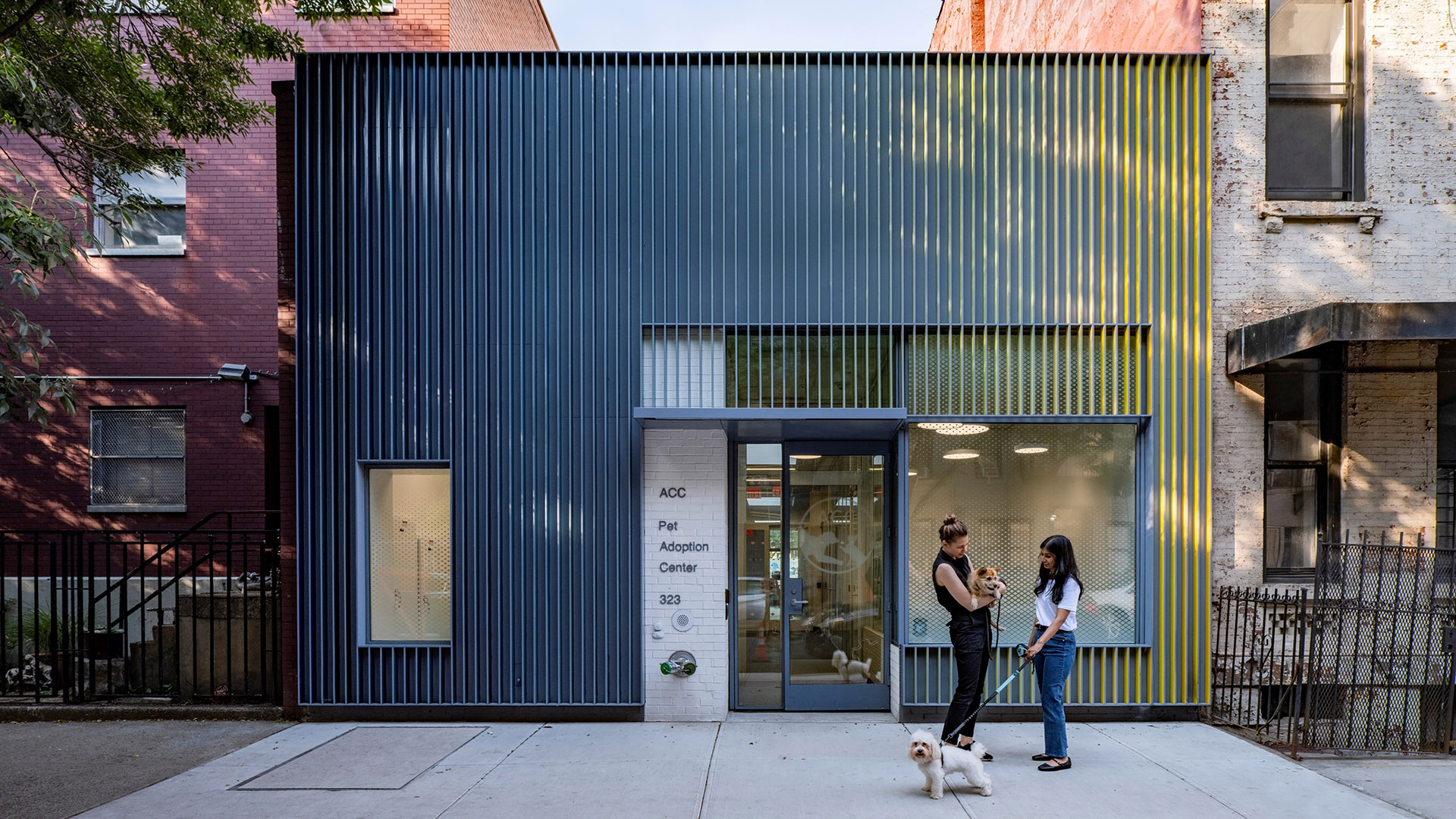
The Pet Adoption Center is in an adaptive reuse of a 1930s garage. Previously used for storage, the brick structure was one of many small-scale buildings in this area of East Harlem. With gentrification, multi-story new construction now dominates. The decision to retain the building was both a sustainable gesture and a desire to create an intimate atmosphere for adoption.
Project Vision
This decade-long project was led by the Department of Health and Mental Hygiene, Animal Care Centers, and NYC’s Department of Design and Construction. The Harlem complex combines medical care, animal control, and community programming—but adoption efforts were limited by the facility’s layout. Through community engagement, the team decided to adapt a nearby storage building into a separate adoption center. This move preserves the street’s original residential scale, provides a brighter, safer environment for visitors, and strengthens the neighborhood’s sense of vitality—especially important as new high-rises reshape East Harlem.
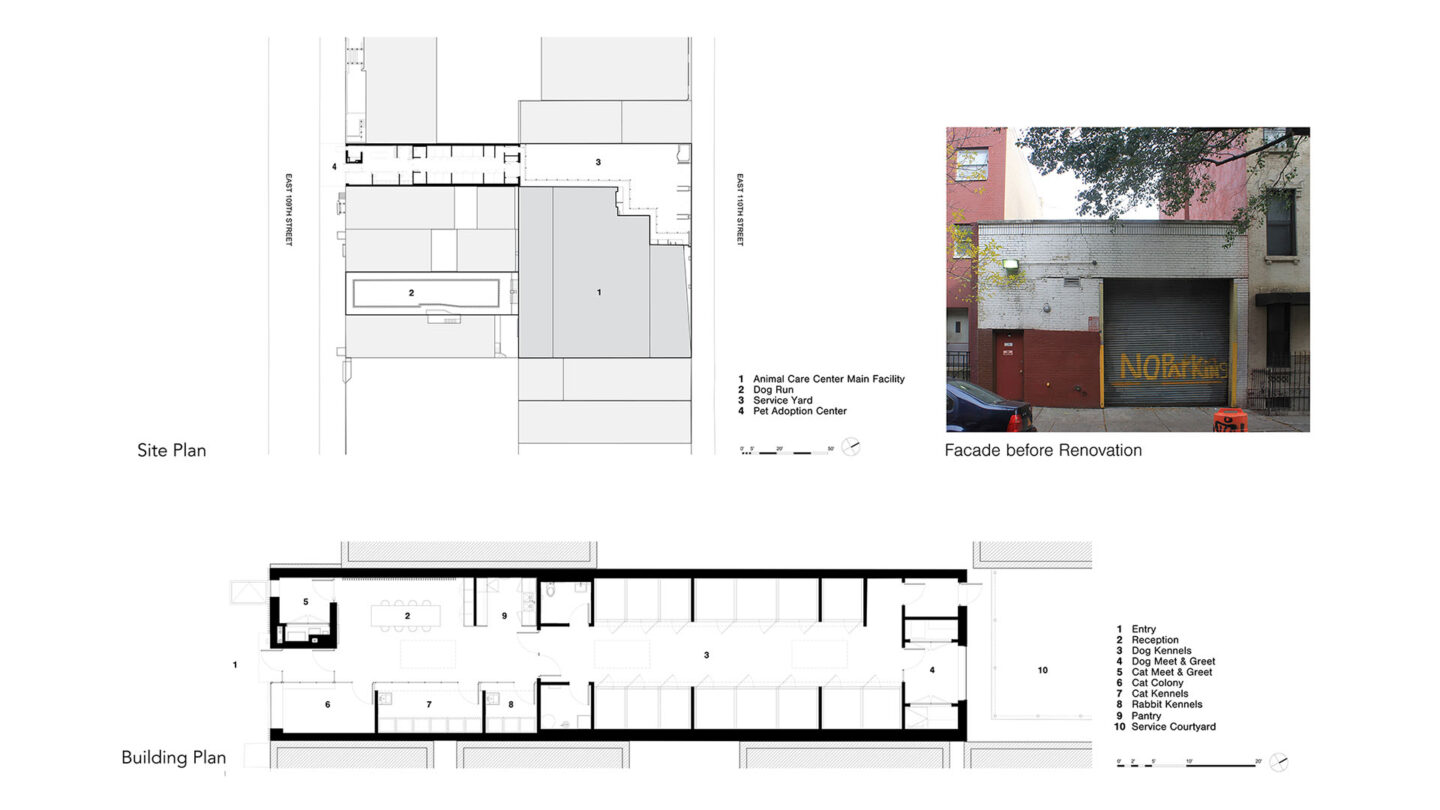
Within a compact 2,500 sf space, efficient planning maximizes pet housing while preserving light from existing skylights. Code restrictions kept original apertures unchanged, revitalizing a long-neglected building for adoption.
Studio Joseph
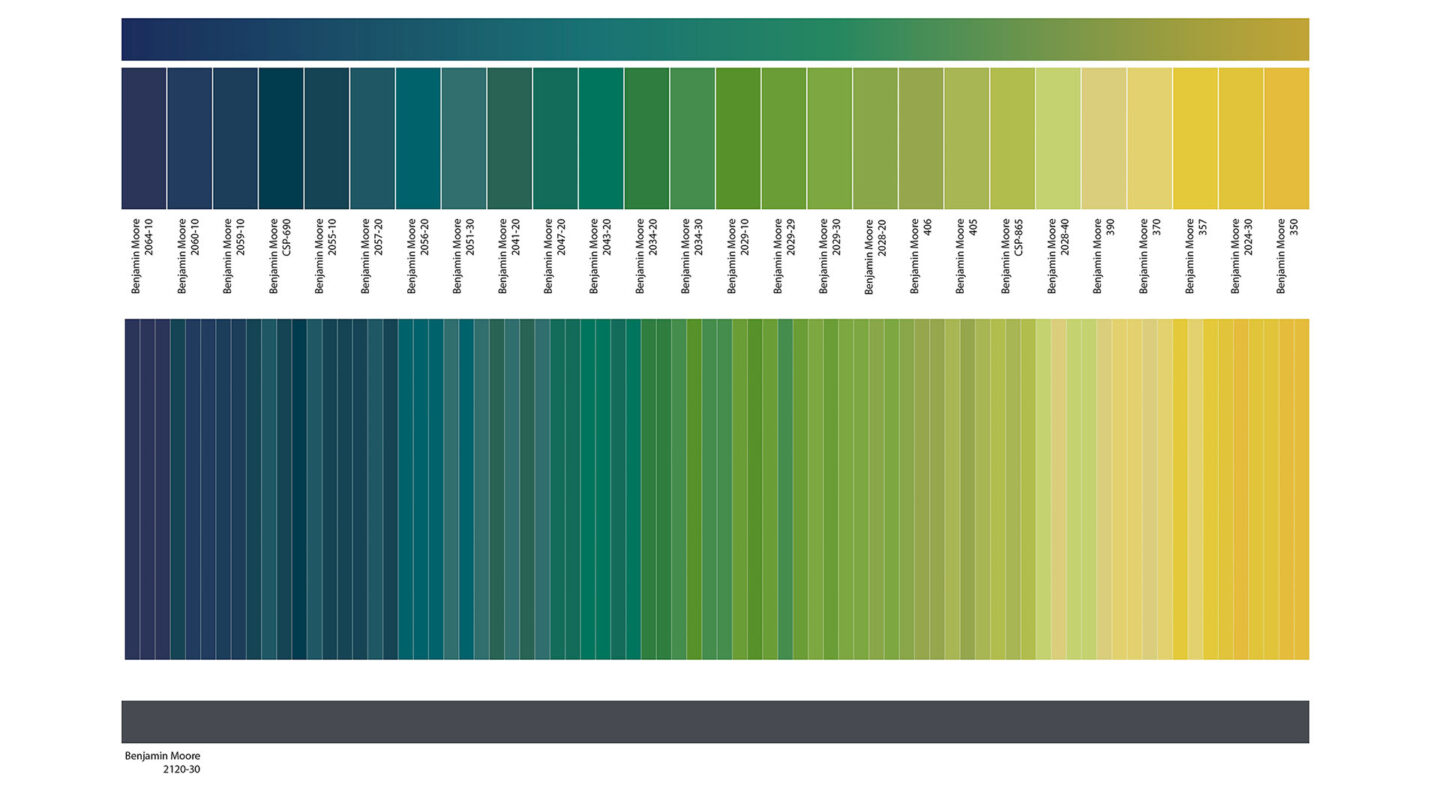
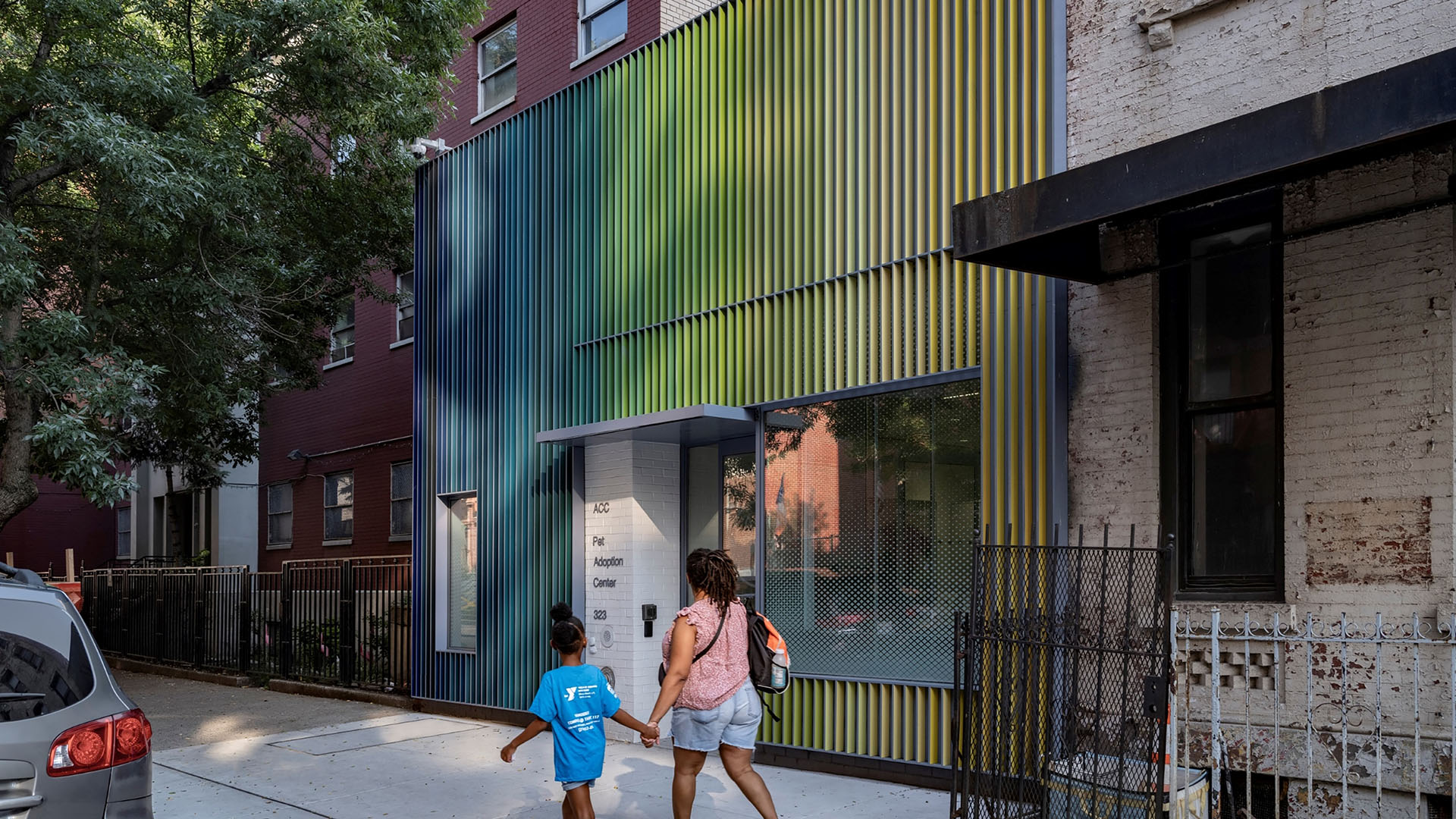
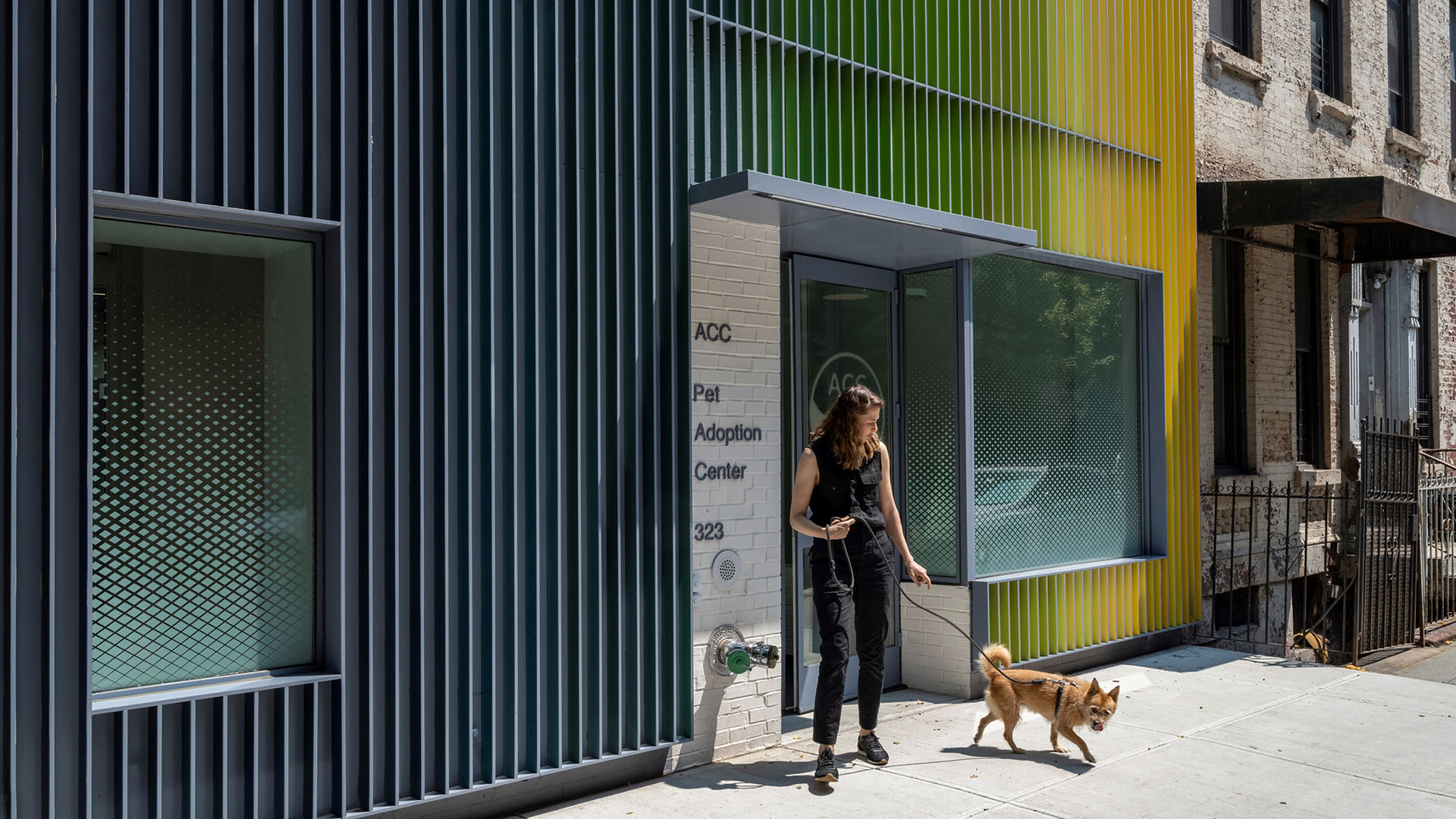
The gray powder-coated steel fins, 4” deep, have color plates on both sides. The array shifts from warm yellows to cool blues, with strategic insertions creating an optical “flickering” effect.
Studio Joseph
Design + Execution
From arrival to pet adoption, the design fosters a safe, friendly atmosphere for adoptive families to meet dogs and cats. By embracing the scale of the existing garage, the design creates a new visitor interface that is a welcoming, bright attraction within the Harlem streetscape. The design emphasizes daylight, interaction between families and staff, and the highest level of animal care.
Retaining the existing 1930s garage meant complying with a zoning code that prevents changing the apertures. The design strategy was to place large glass windows into the area of the existing garage doors on both ends and to open the skylights.
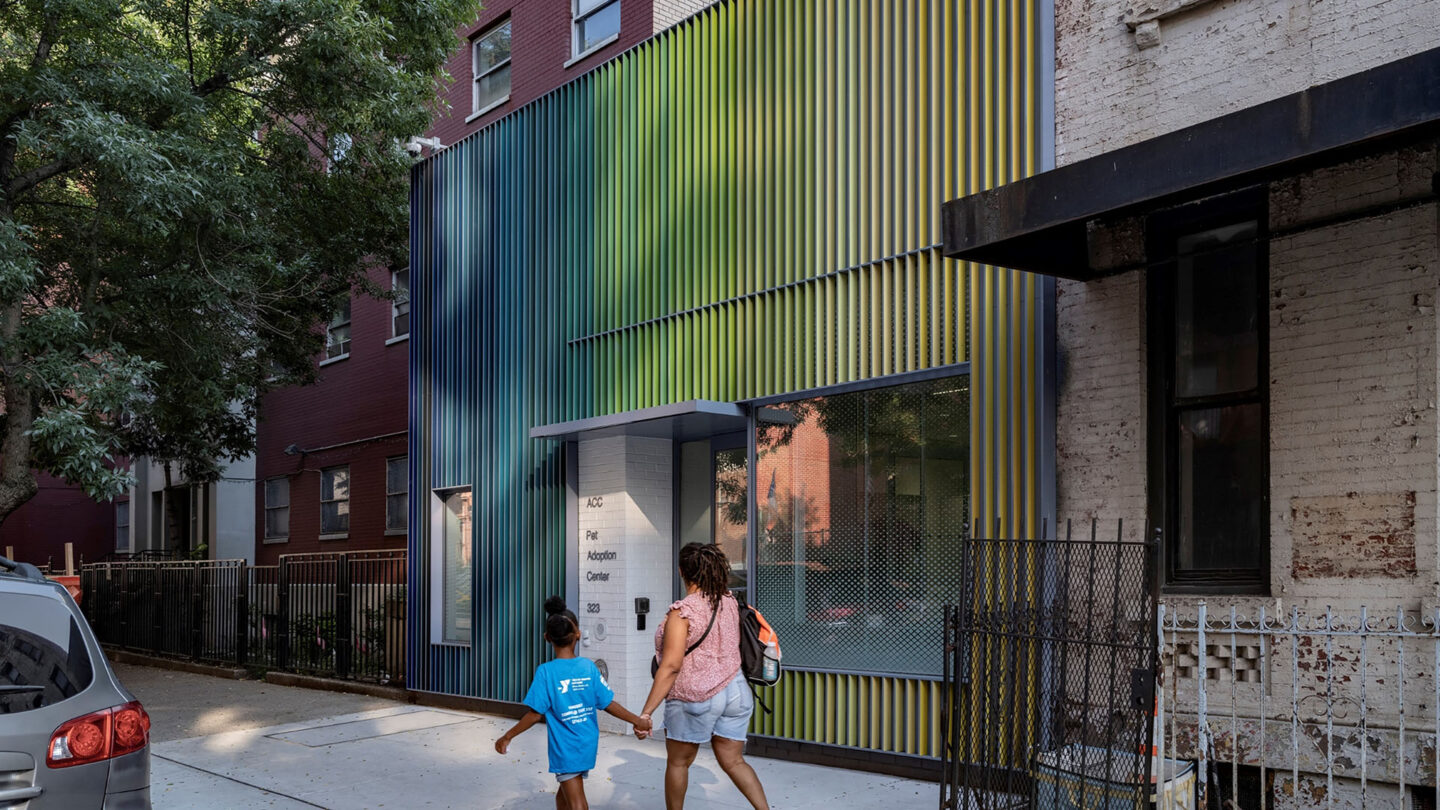
Bold graphic color is rare in architecture. A metal screen preserves the historic structure while creating a playful lenticular effect. A fritted cat colony window invites visitors inside.
Alex Fradkin
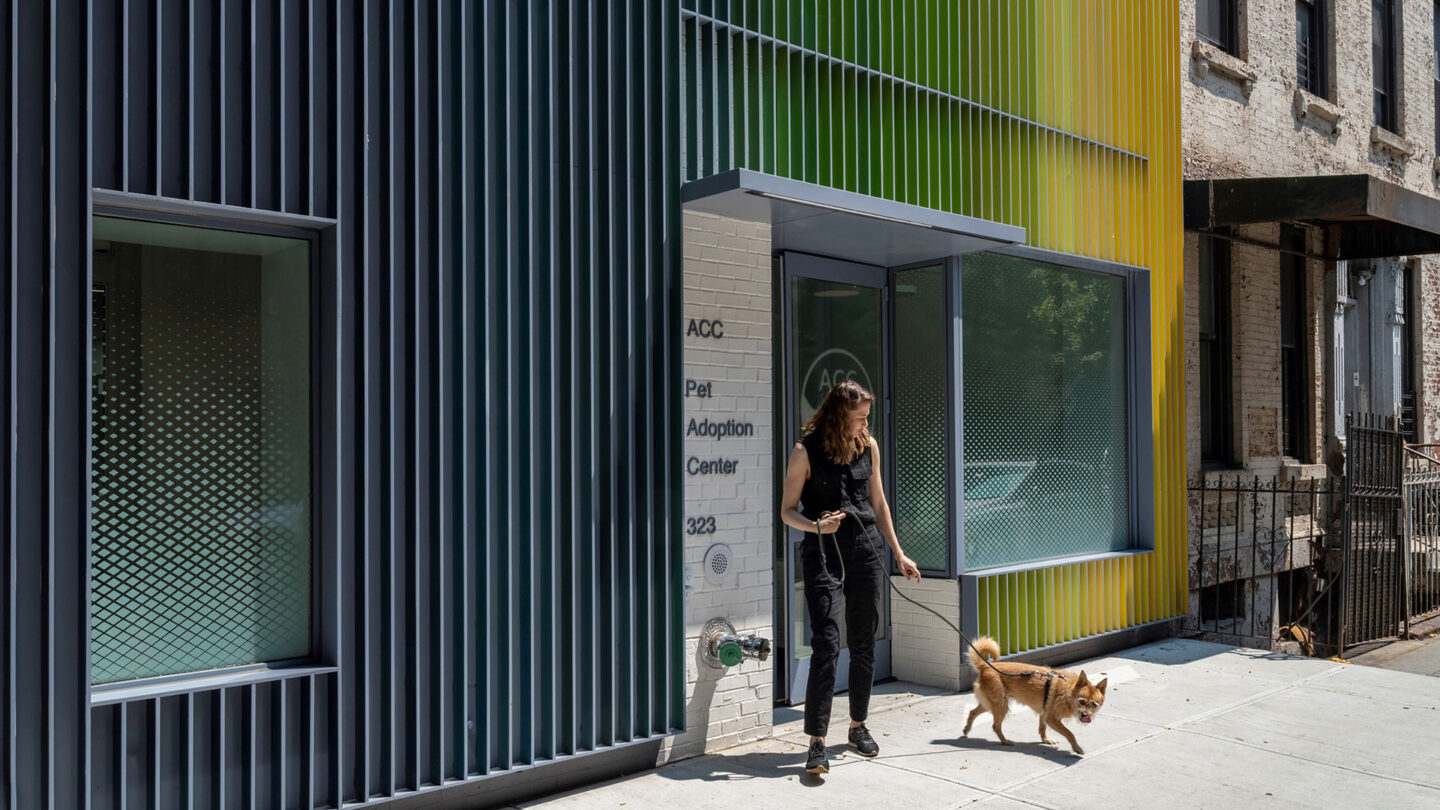
Looking east, the large cat colony window welcomes the neighborhood. A diamond-patterned frit offers cats privacy on the lower level while letting visitors enjoy watching them play.
Alex Fradkin
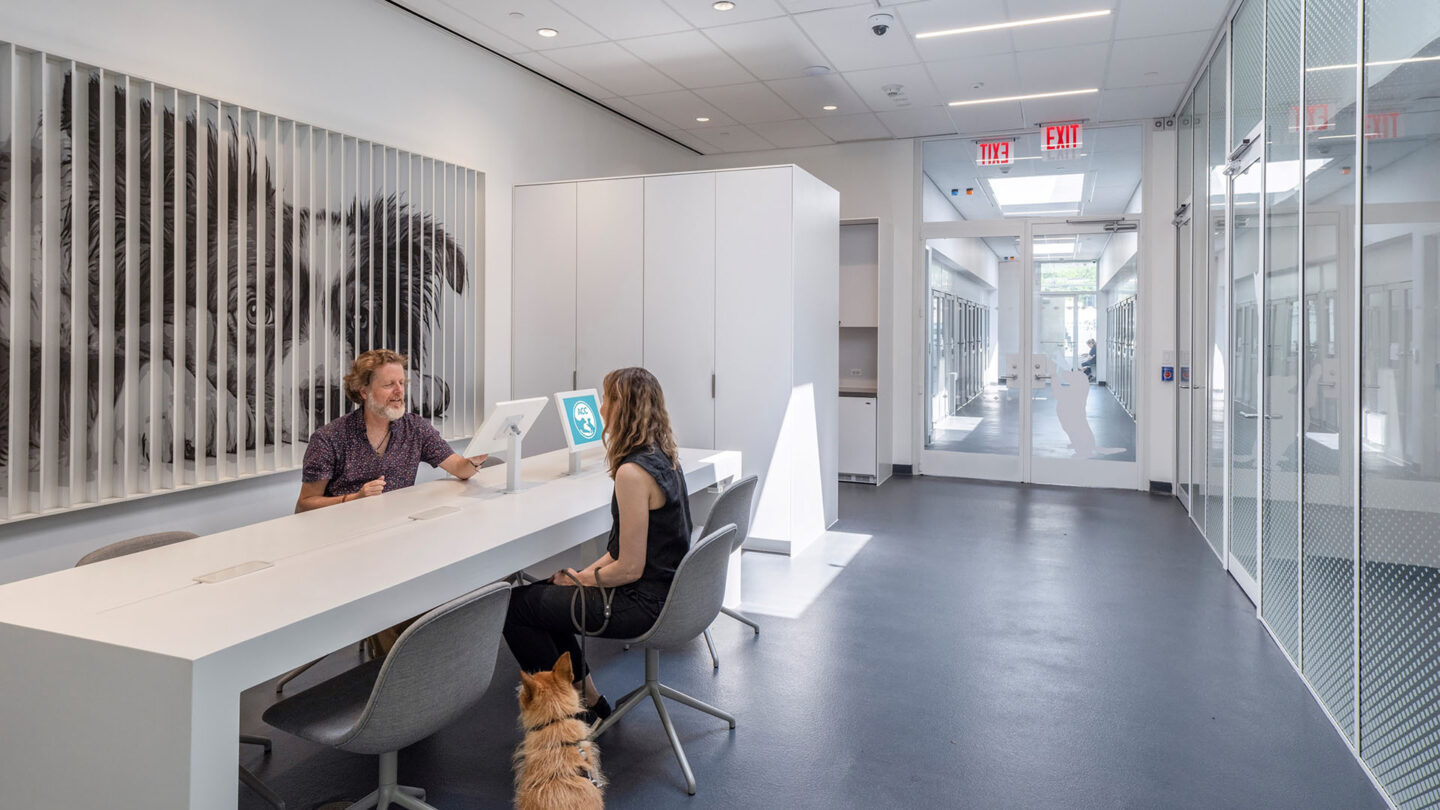
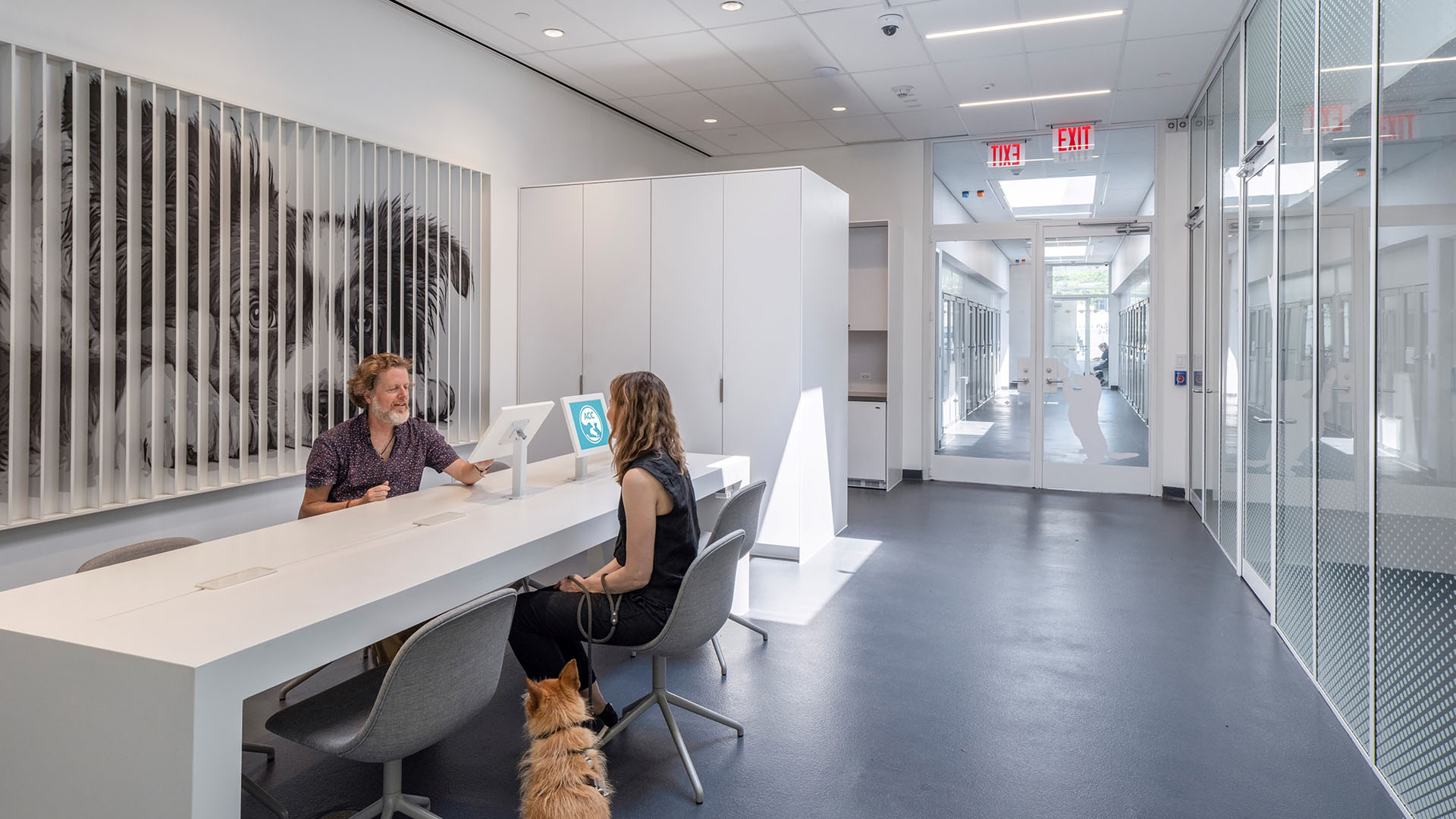
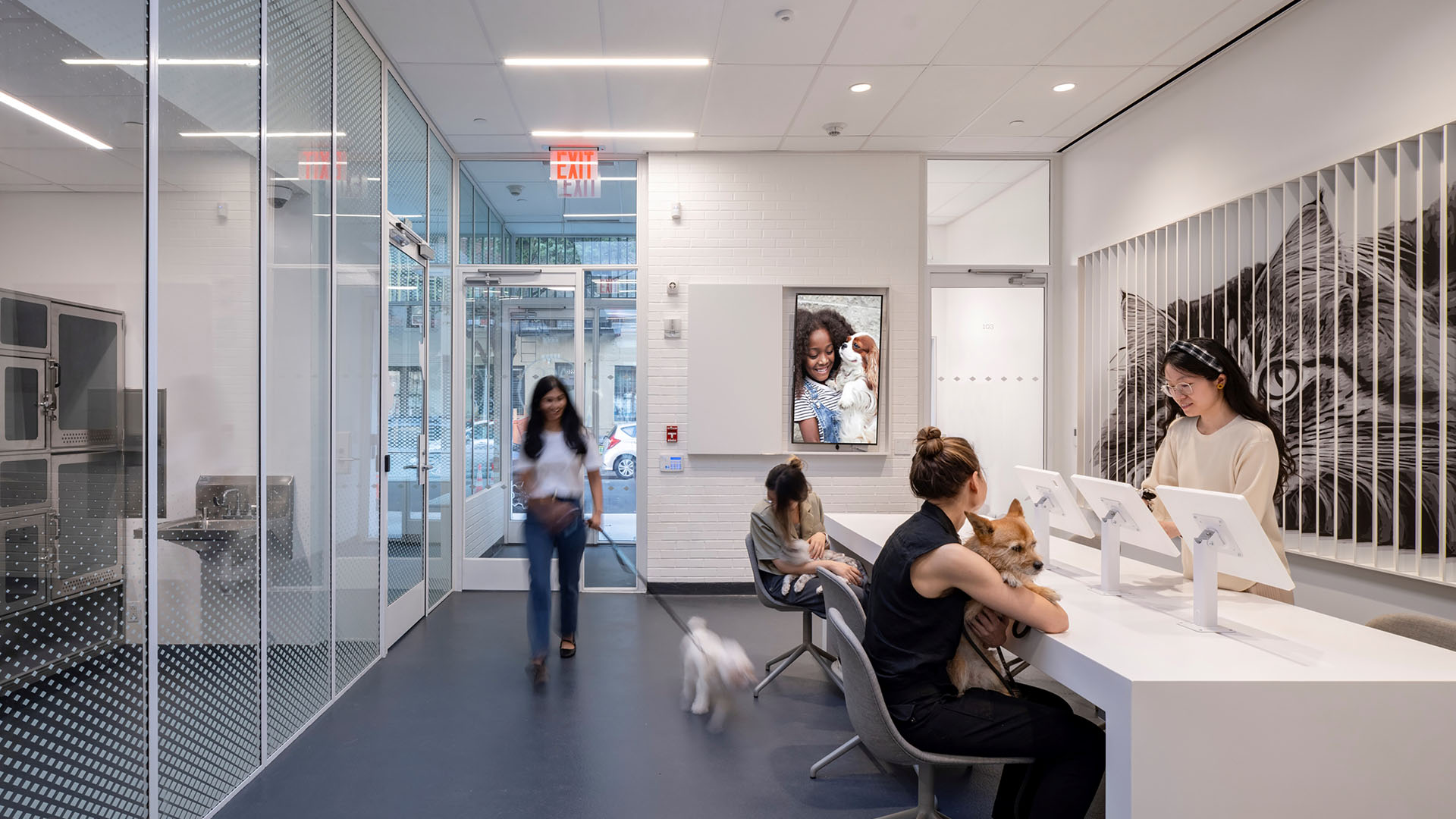
A shared table replaces a traditional reception desk for accessibility and adaptability. Glass partitions with a graphic frit ensure visibility & reducing stress and aggression by preventing direct animal eye contact.
Alex Fradkin
The front façade is playful, reflecting the joy of adoption. The lenticular effect of color on the sides of the fins means that as you walk by, the color flickers from soft grey to brightness. Inside, instead of a front desk, families sit together around a table with the staff for conversation. The use of a frit on all glass surfaces reduces animal anxiety. The design embraces responsible materiality for intensive cleaning but couples that with moments of pattern, graphic whimsy, and brightness. HVAC systems and individual kennel sewage for the dogs all exceed best practices.
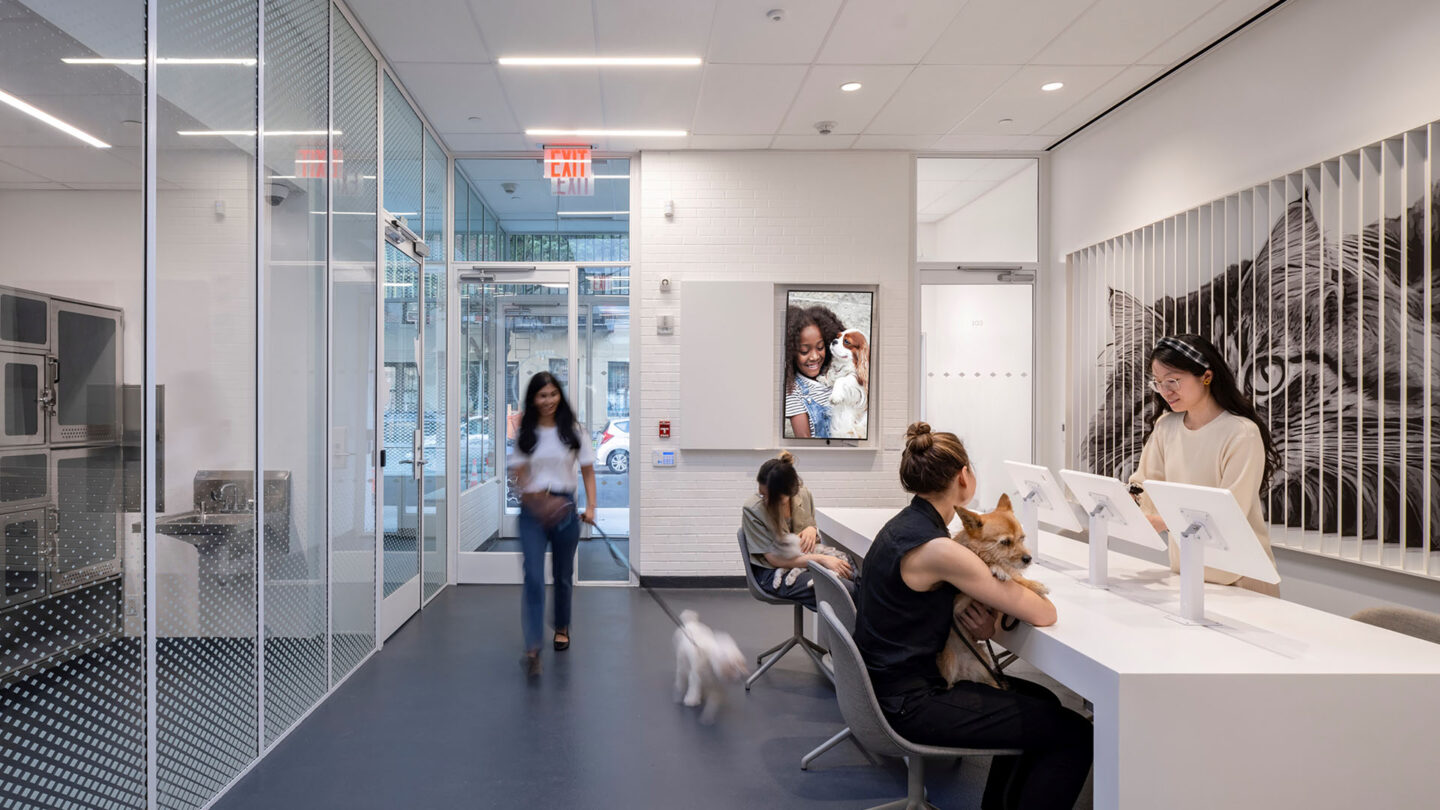
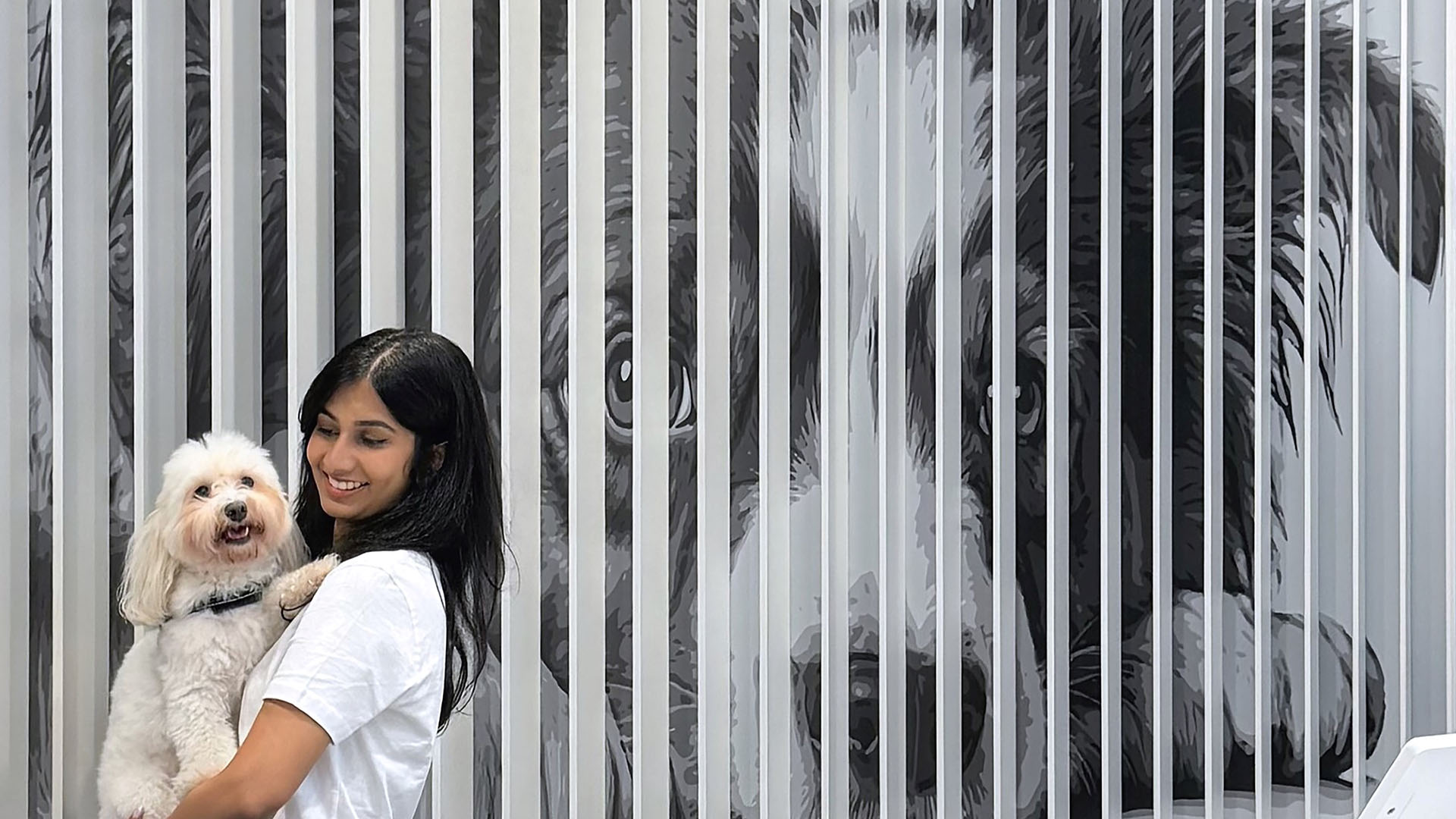
The lobby is a playful 3D mural with a lenticular motif, revealing a cat from the right and a dog from the left. A large skylight enhances natural light.
Alex Fradkin
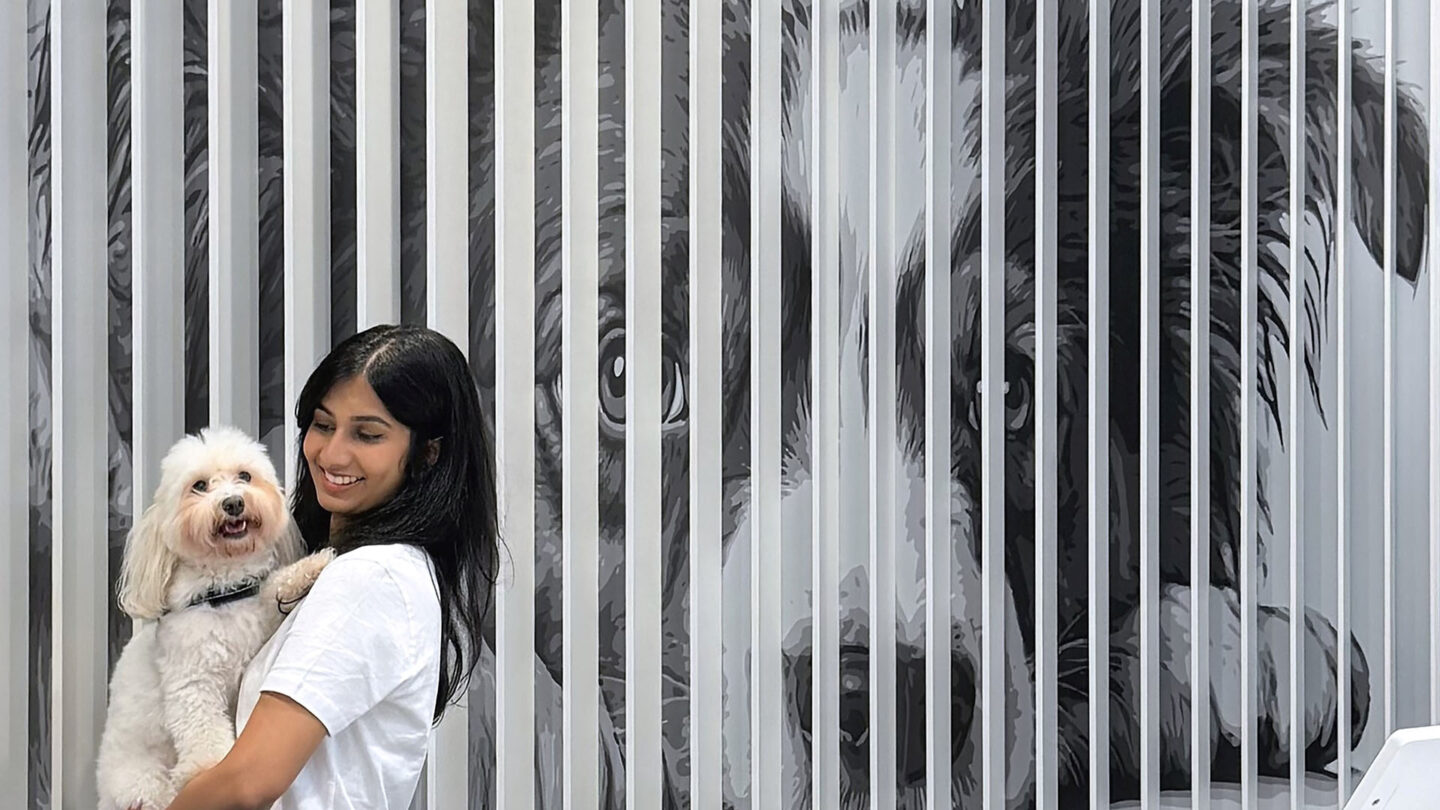
The lenticular graphic strategy encourages adoptive families to move around, share stories, fostering a relaxed sense of community and, yes, a moment to take photos and share with friends.
Alex Fradkin
Project Details
Design Team
Wendy Evans Joseph (principal)
Rafael Herrin-Ferri (project architect)
Alexios Bacolas (project manager)
Connie Wu (architect and project manager)
Chris Raeburn (architect and project manager)
Shuo Yang (designer)
Derek Lee (designer)
Emma Chen (designer)
Collaborators
Silman: Jennifer Chan, Jason Tipold (structural)
Hage: Mark Hage (structural engineer for the concept phase)
Plus Group Consulting Engineering, PLLC: Imtiaz Mulla, Marina Solovchuk (MEP+LEED)
Sighte Studio: Francesca Bastianini (lighting)
Derosier Engineering: Jeffrey Derosier (civil engineer)
Animal Arts: Tony Cochrane (animal care specialists)
Ellana: Rigo Hernández (estimators)
Photo Credits
Alex Fradkin (photography, videography)
Open Date
October 2024