End of Massive Resistance Commemoration
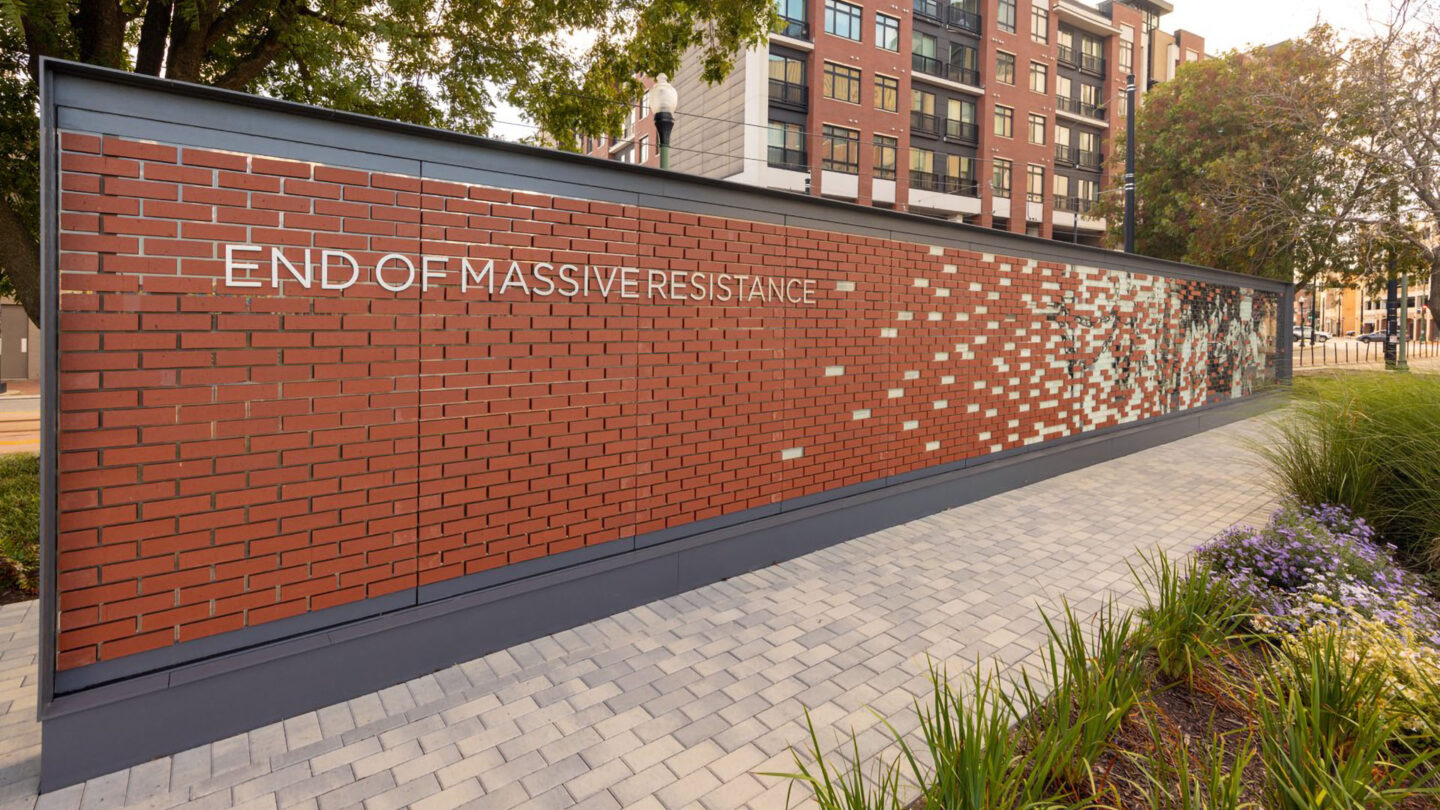
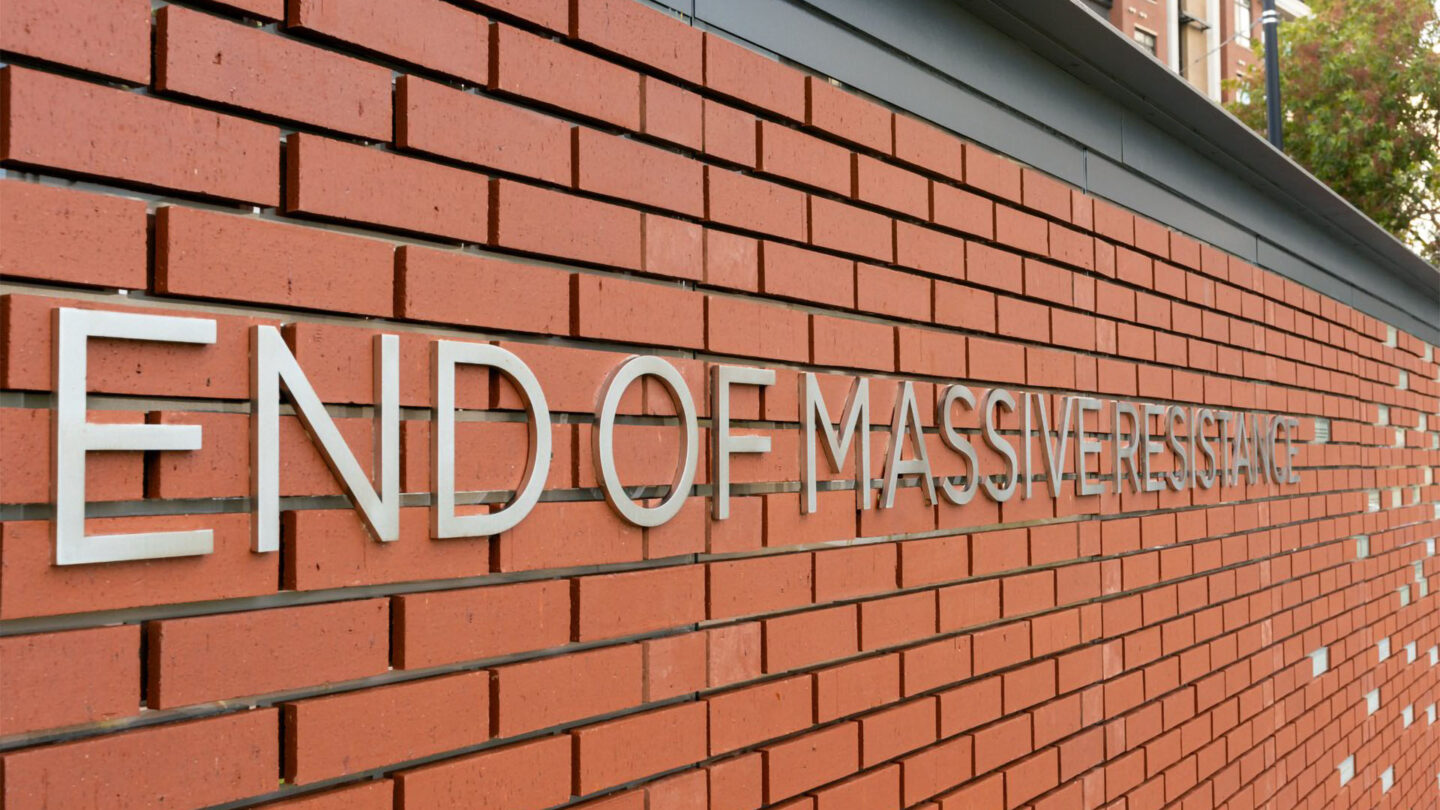
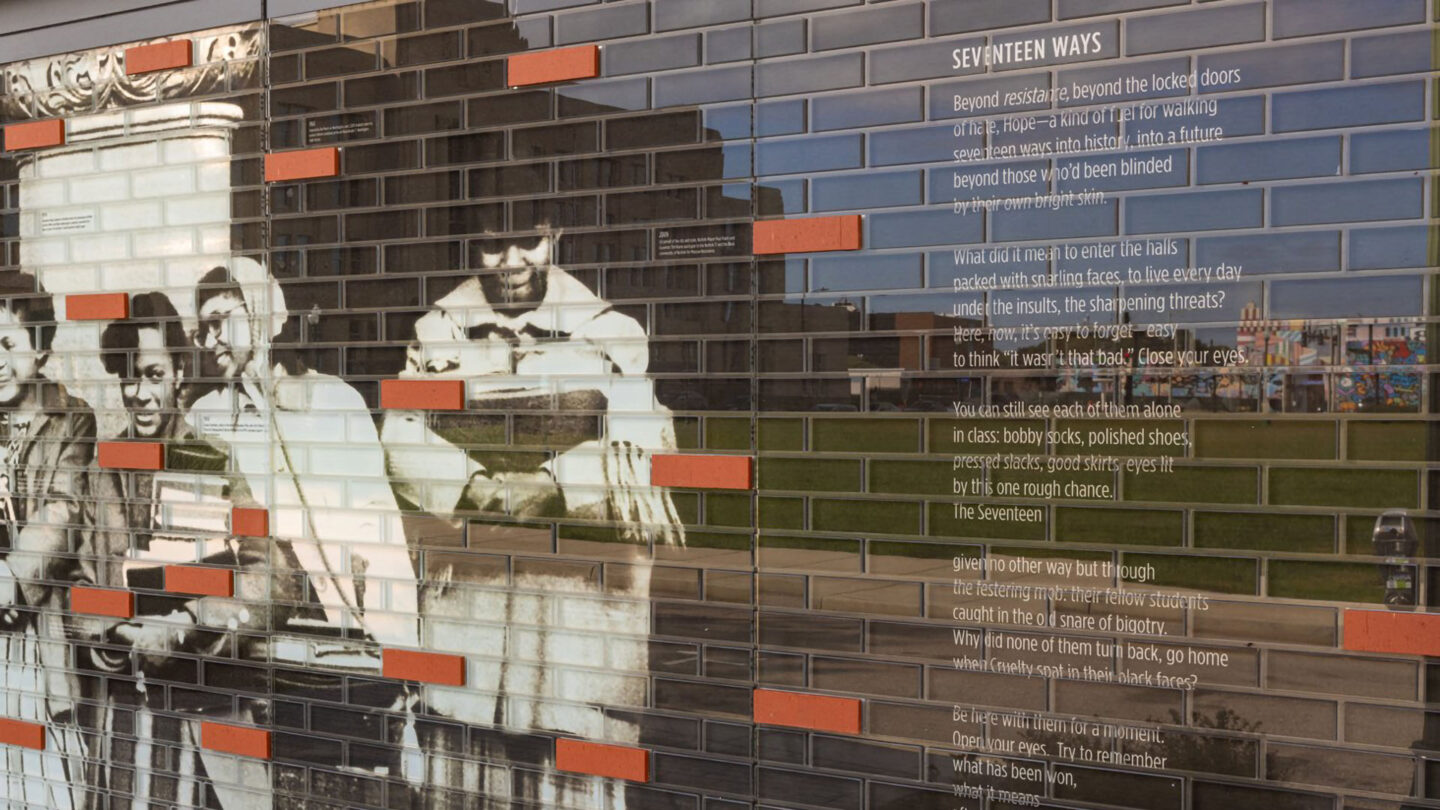
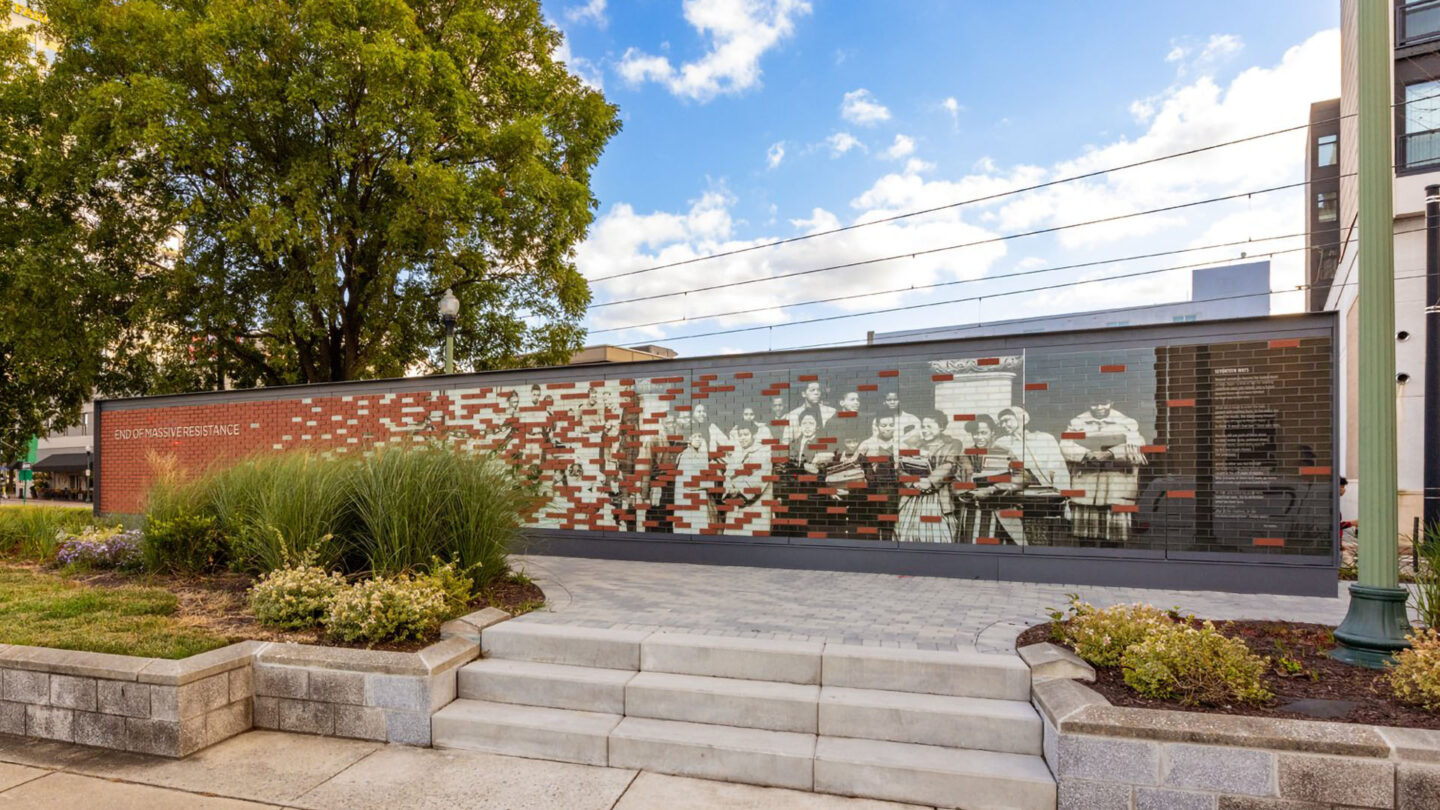
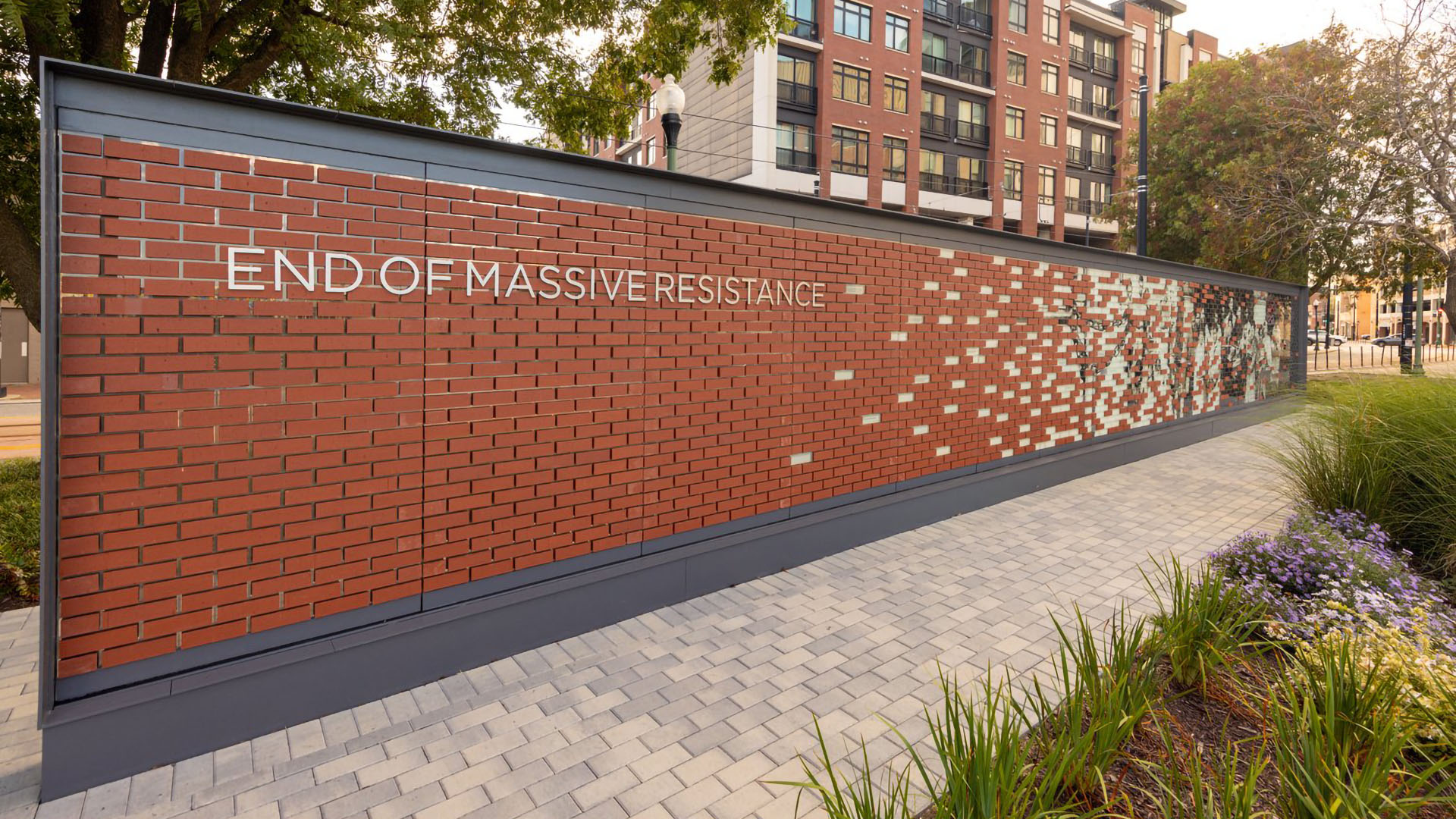
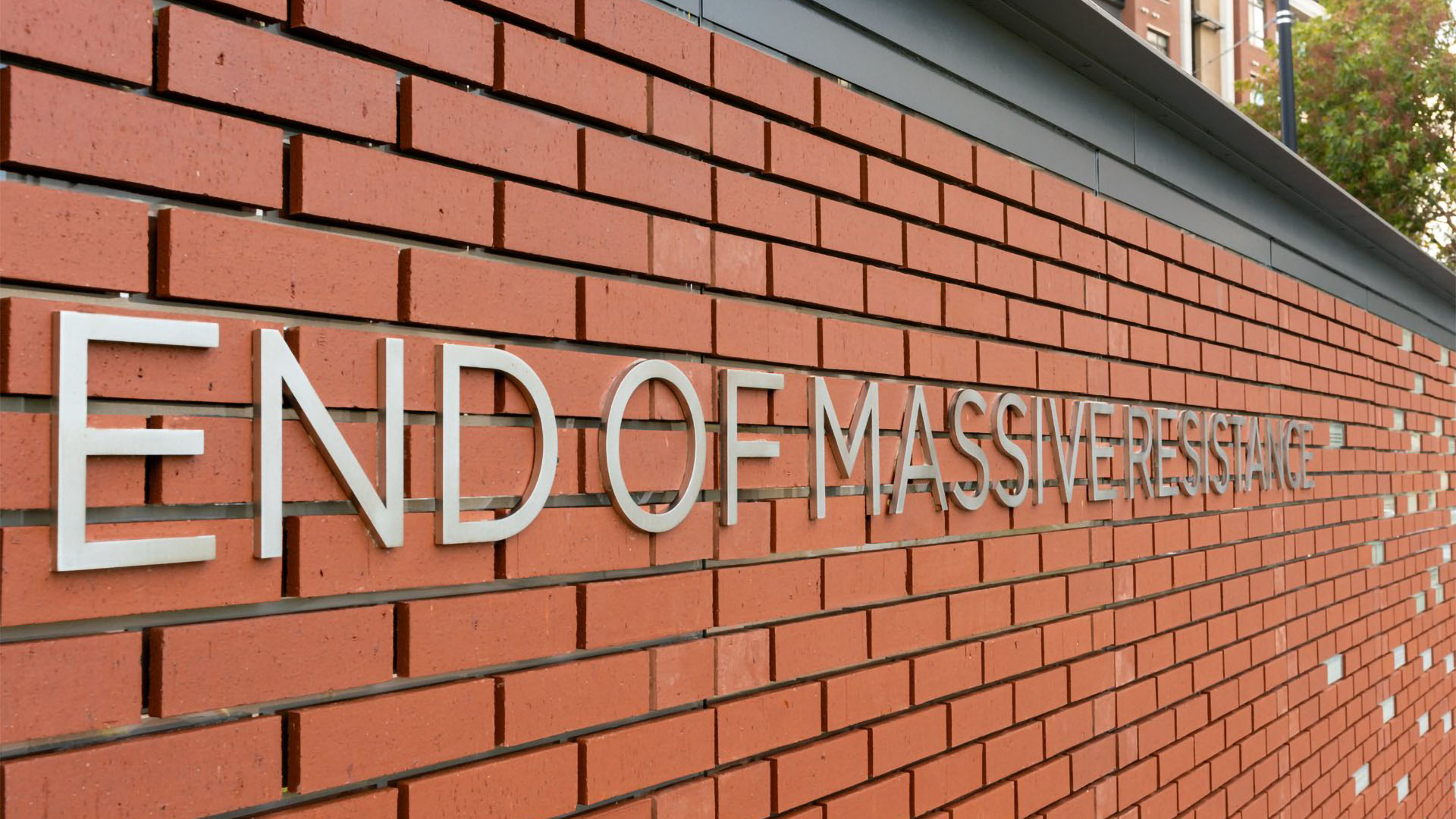
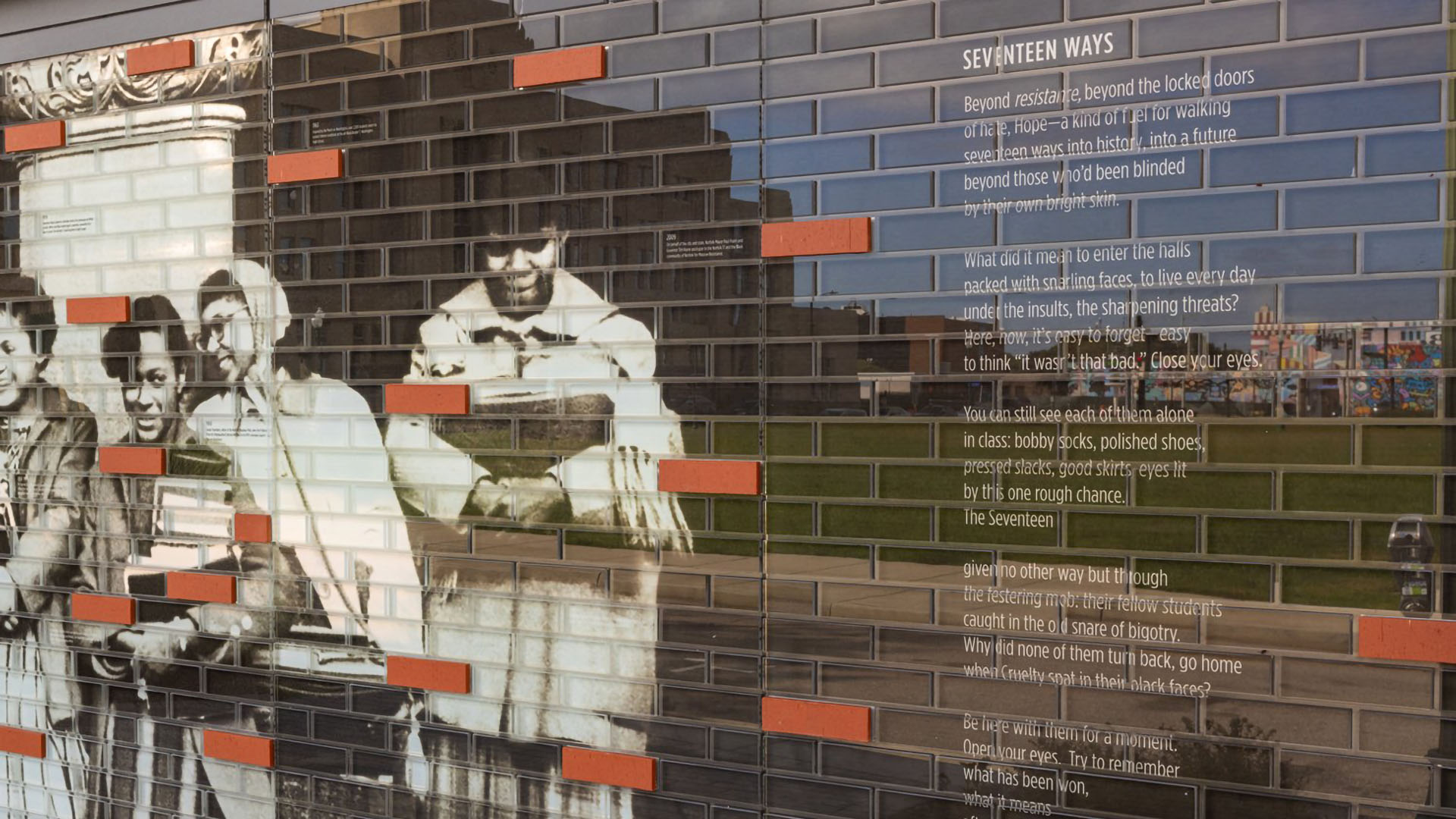
The End of Massive Resistance Commemoration is a piece of landmark work that poetically connects struggles past and present for racial equity in education. The wall evokes brickwork of the mid-century, and the title of the monument, “End of Massive Resistance,” uses signage typography of the same era. Opaque bricks appear through the end of the wall, gesturing towards the ongoing struggle to achieve equitable education for all students regardless of race. The wall also features the poem, “Seventeen Ways,” by renowned poet Tim Seibles, former poet laureate of Virginia.
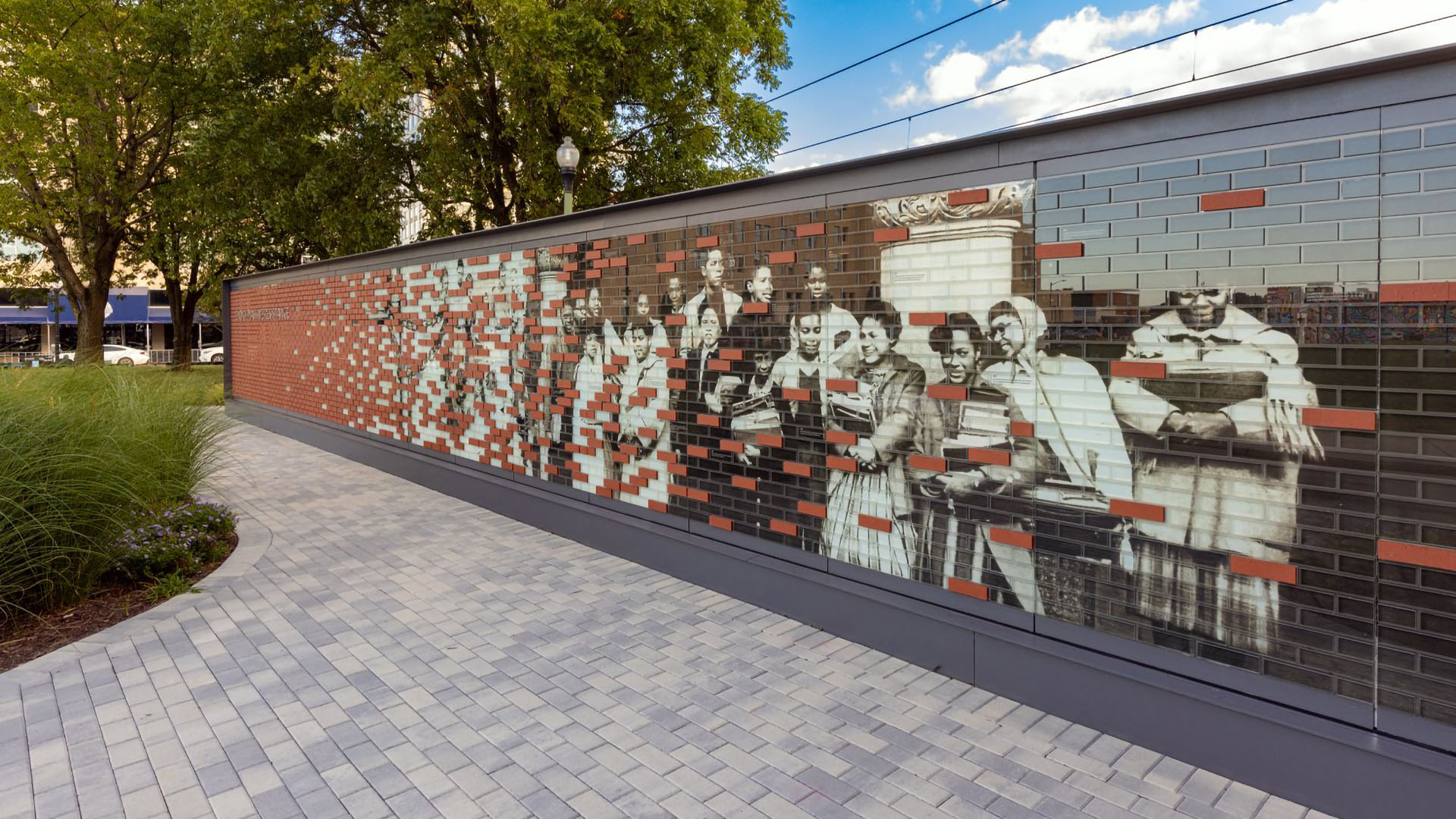
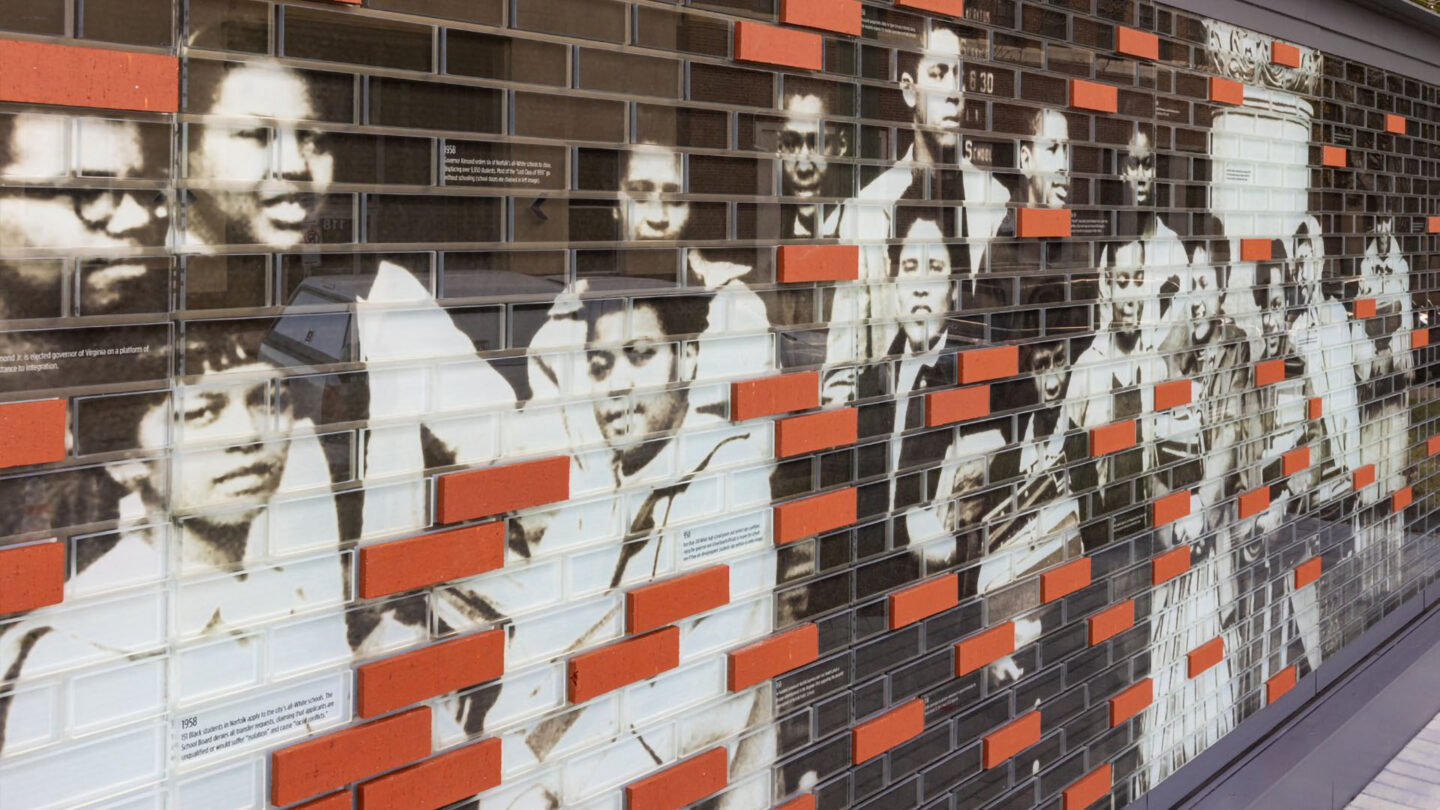
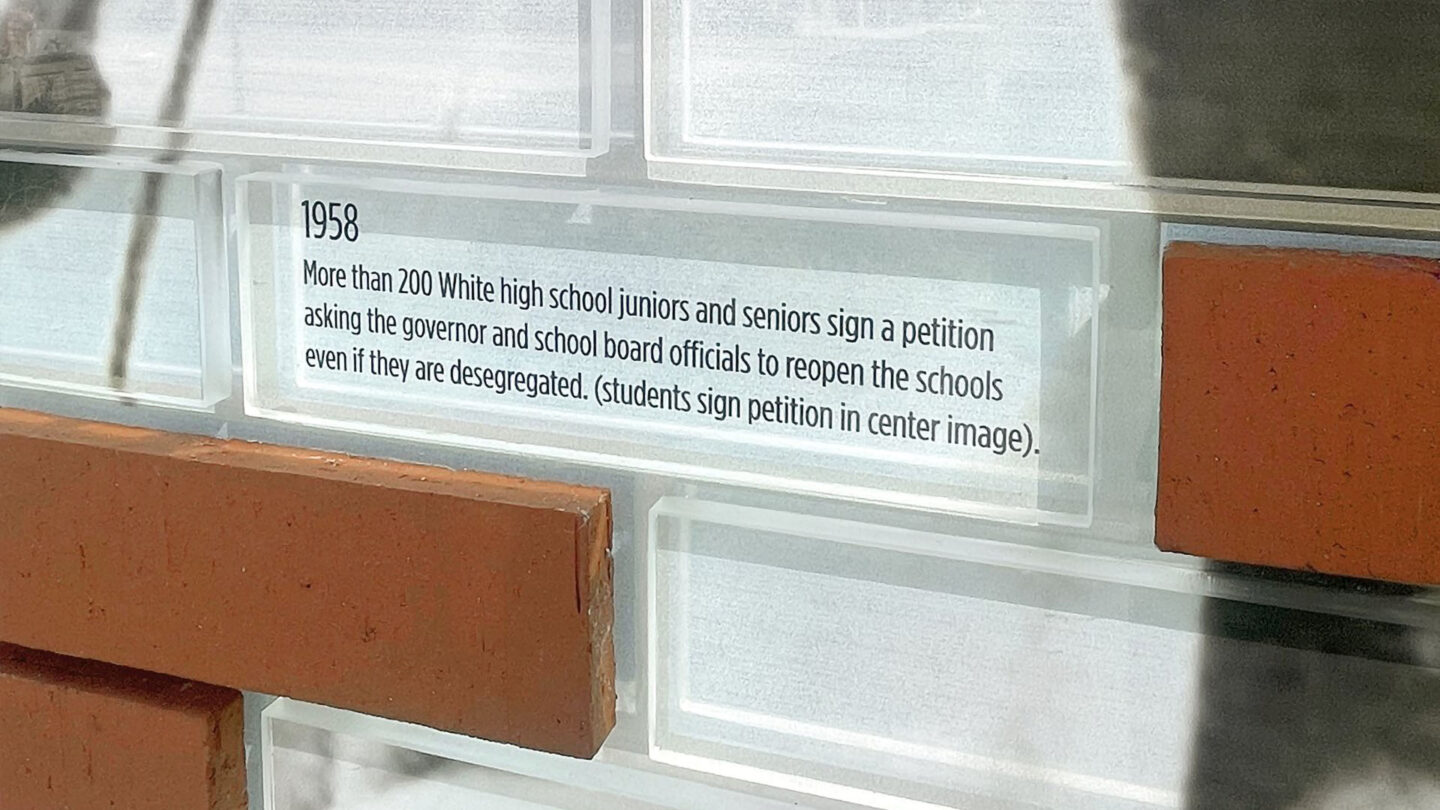
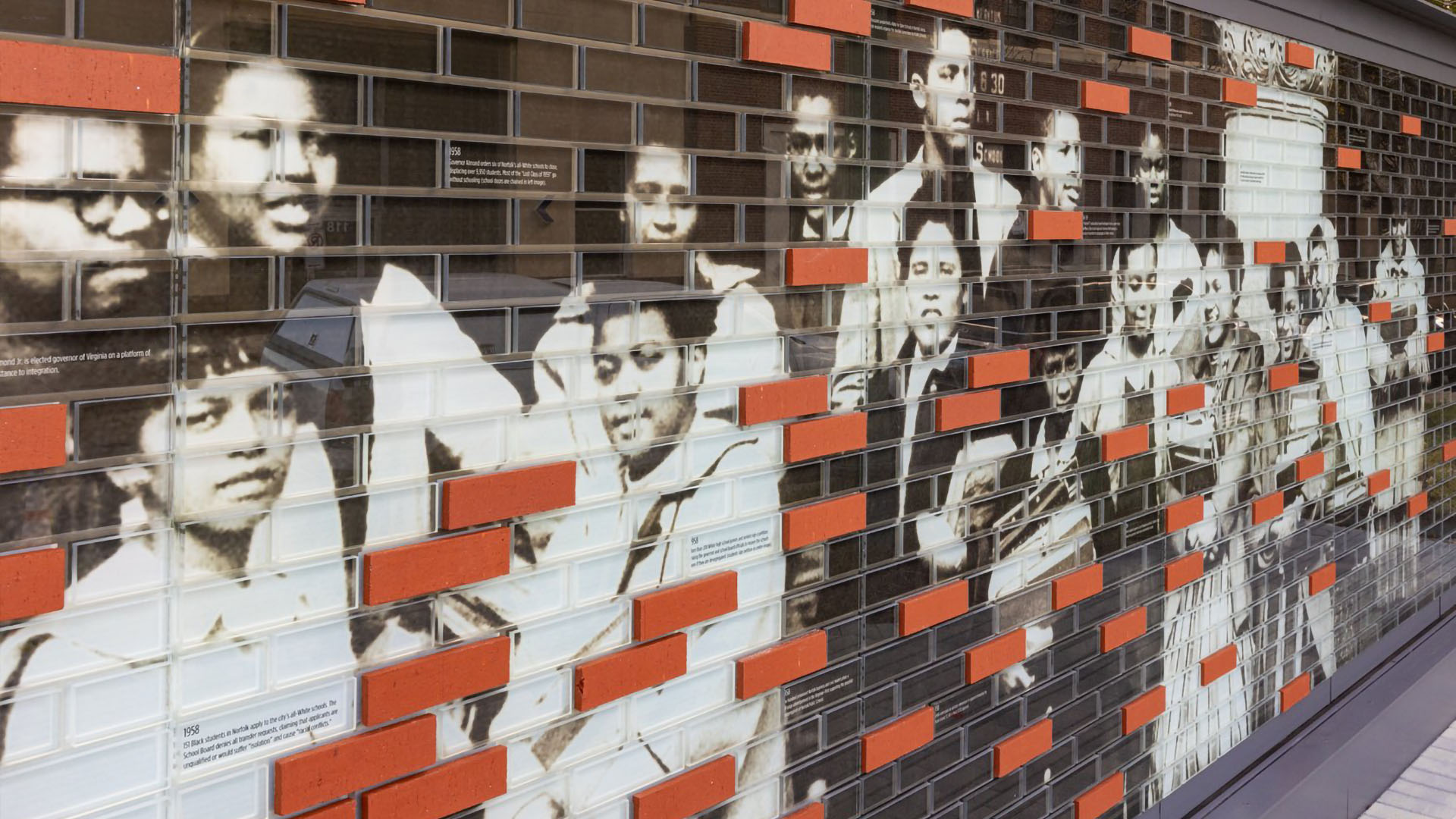
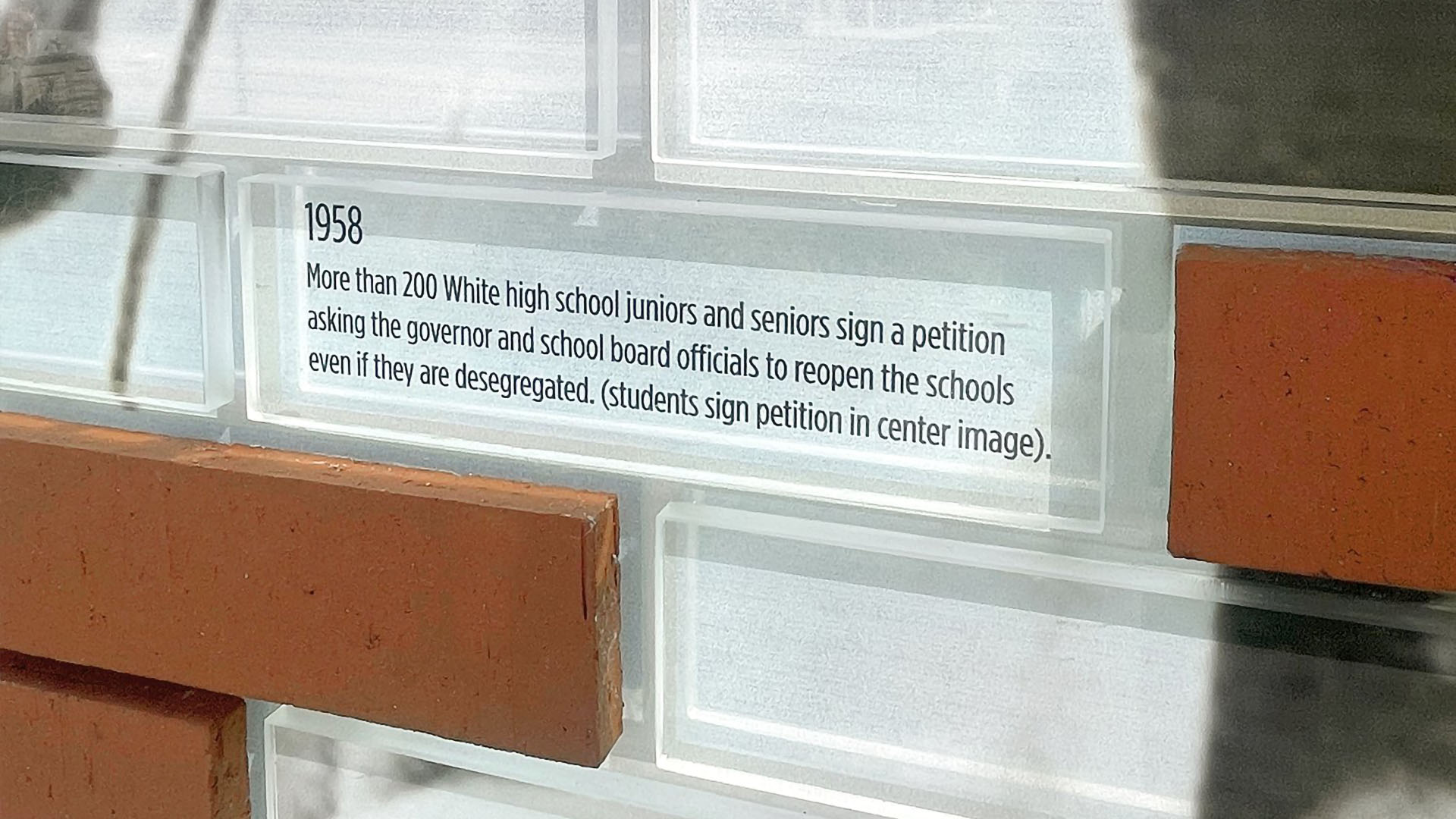
Using the metaphor of breaking down the barrier of a school building wall, the monument features a sculptural “de-materialization” of conventional bricks to translucent bricks. The glass bricks reveal powerful and emotional images telling the story of desegregation in Norfolk. Both sunlight and dramatic nighttime illumination penetrate the transparent areas of the wall, becoming a powerful symbol of the triumph of social justice. As the sunlight passes through the surface, it projects historical photos washing the plaza and visitors with imagery of the Civil Rights Movement. This visually connects our own time with the meaningful events of the past. Much of the wall’s imagery focuses on the inspirational bravery and sacrifice of the courageous students, known as the Norfolk 17, who ended Virginia’s program of “Massive Resistance” to the Brown v. Board of Education Supreme Court decision.
Project Vision
Massive Resistance was a policy adopted in 1956 by Virginia’s state government to block the desegregation of public schools mandated by the Supreme Court in its 1954 ruling in the case of Brown v. Board of Education. In 1958, the US District Court issued a desegregation decree affecting six white public schools in Norfolk, VA. An attempt to substitute public education with segregated private academies ensued which was totally inadequate in the face of Norfolk’s ten thousand displaced white students. In 1959, court rulings found the public school closings unconstitutional. In February 1959, after being closed for six months, seventeen black students who became known as ‘The Norfolk 17’ were finally permitted to enroll in public schools after extensive mental, emotional, and psychological testing. The City of Norfolk commissioned RE:site, to create “End of Massive Resistance”, to honor these voices of those who struggled for justice, freedom, and human dignity during this time.
Eric Lusher
Eric Lusher
Eric Lusher
Eric Lusher
Eric Lusher
Eric Lusher
Project Details
Design Team
Shane Allbritton (Artists)
Norman Lee (Artists)
Collaborators
VIA Design (landscape architecture)
Merge Studios (fabrication)
Tim Seibles (poet)
METALAB (design optimization/management)
Dr. Lydia Bean (writer/researcher)
Photo Credits
Eric Lusher
Open Date
November 2024