Elephantine: Island of the Millennia
The first major exhibition on the island of Elephantine on the Upper Nile in Egypt, Elephantine: Island of the Millennia, presents hundreds of archaeological artifacts found in the archaeological excavations of Elephantine. Visitors are able to experience the international research cooperation that deciphered, translated and made these treasures digitally accessible, and thus enables them to experience the ancient culture of Elephantine. The papyrus and ceramic fragments on display, which contain text in 10 ancient languages, span around 4,000 years and provide insights into the various cultures and religions that have continuously inhabited this unique site and establish a link to life in a multi-ethnic city today.
Agency
Practice Area
Client
Egyptian Museum and Papyrus Collection, Staatliche Museen zu Berlin
Industry
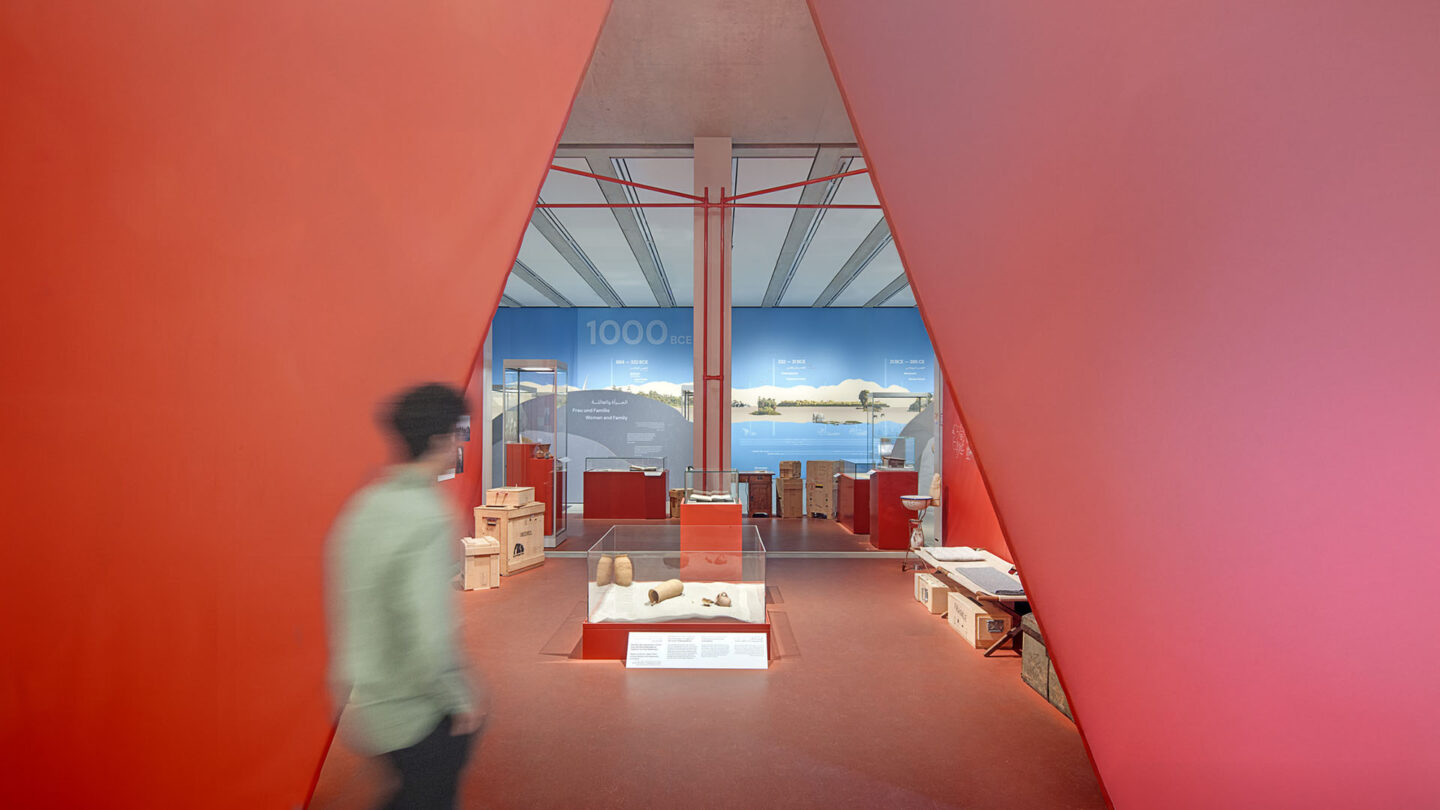
RAA’s design translates the research findings into an immersive and interactive experience that conveys a fascination for the manifold stories that can be explored and discovered through the more than 10,000 papyri and ostraca found on Elephantine Island. The exhibition is divided into the major themes of “Time” and “Space.” Despite the spatial separation of the exhibition areas in the James-Simon-Galerie and the Neues Museum, the exhibition design is based on one scenographic design language and visual identity that makes it possible to experience it as a whole.
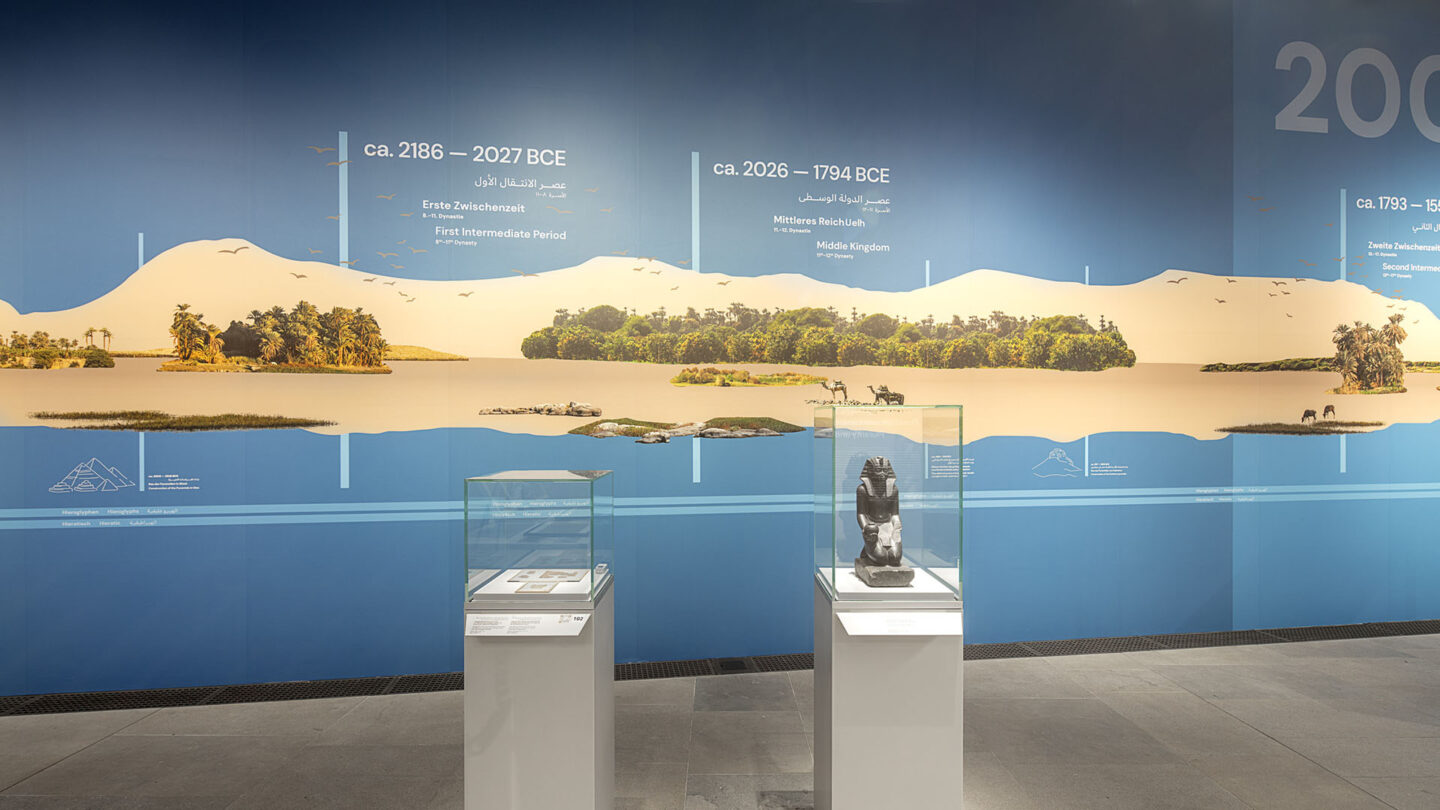
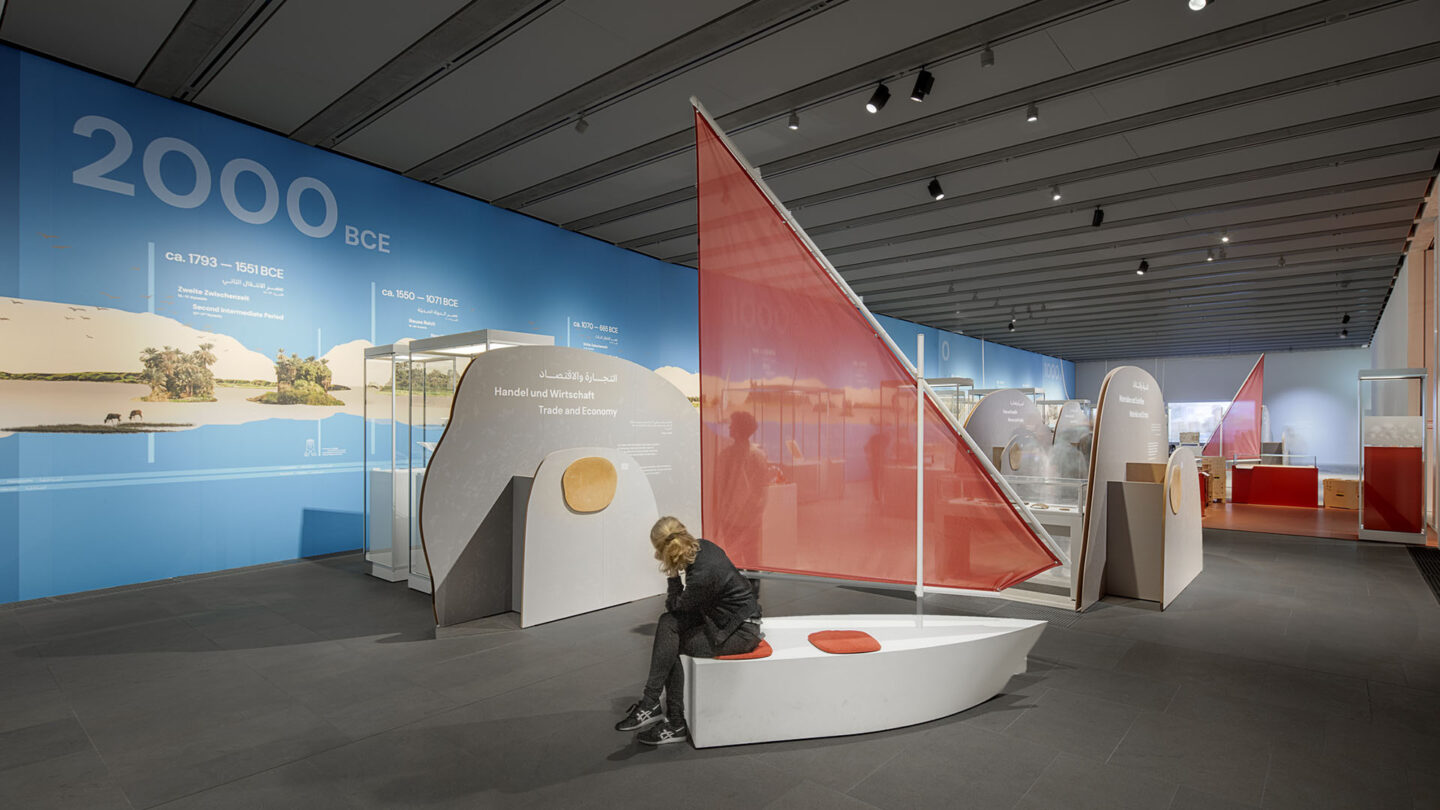
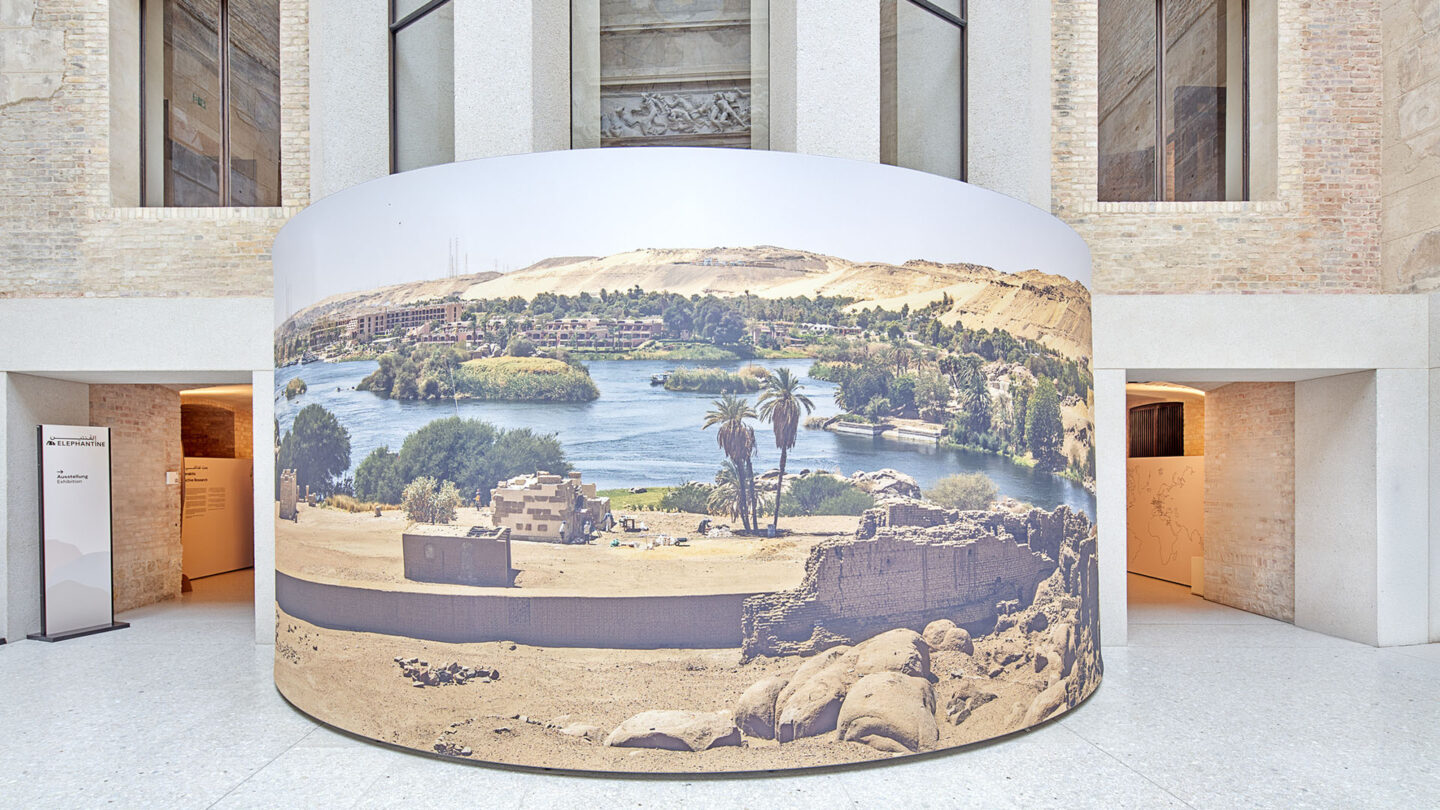
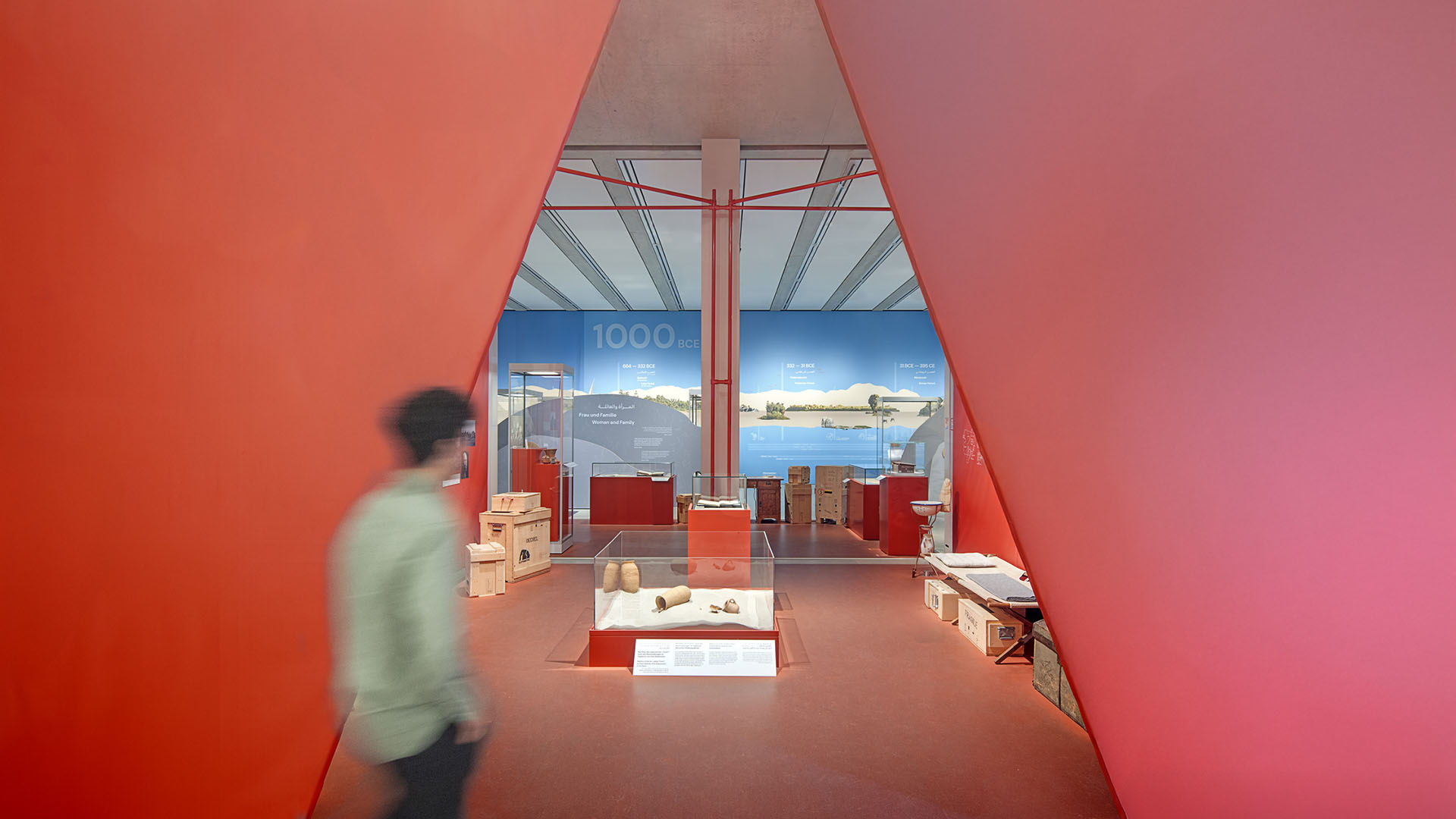
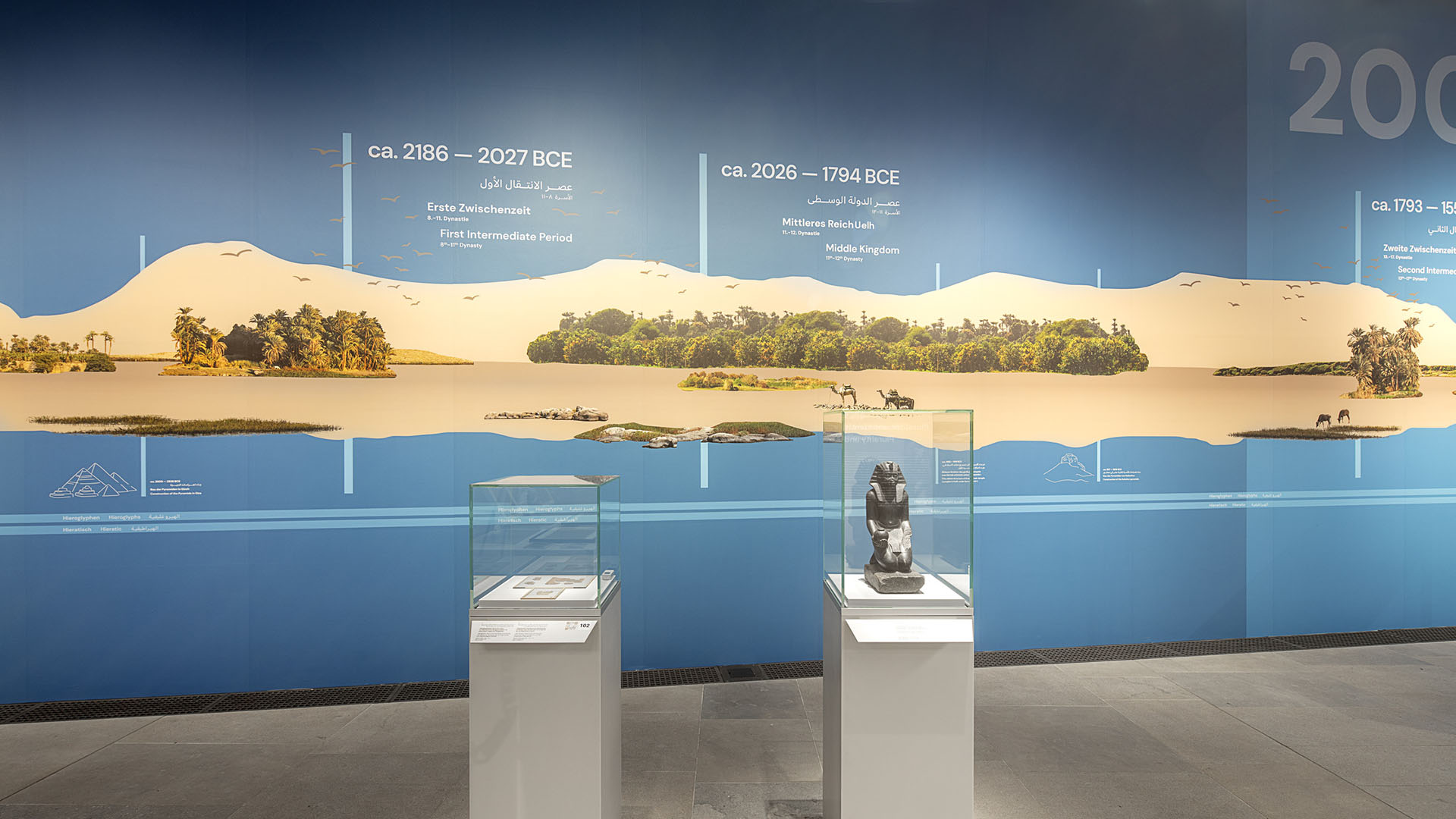
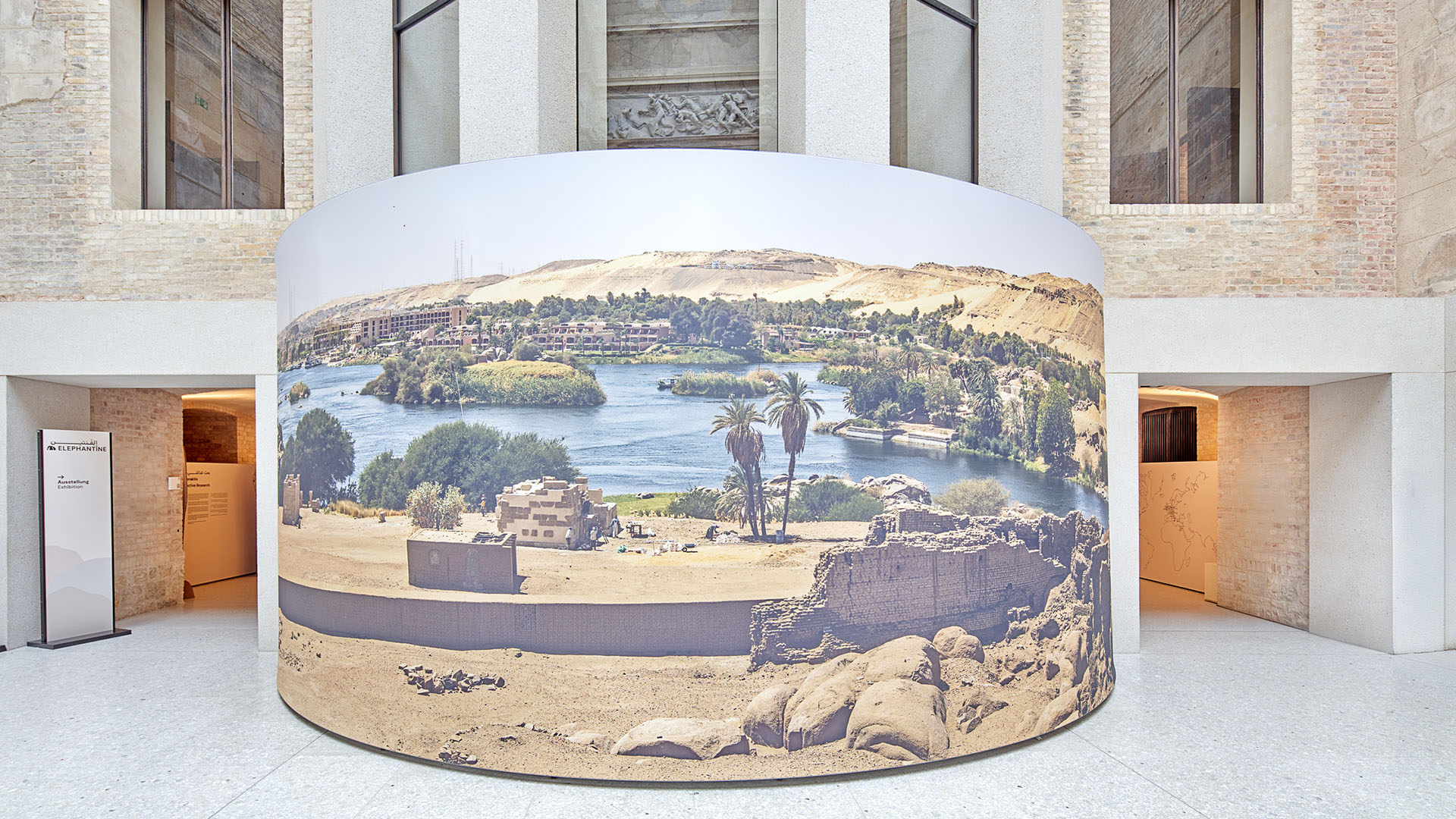
Visitors feel like archaeologists in the entrance area, which is designed like a historical excavation tent, and in the main room of the James-Simon-Galerie, they enjoy an overwhelming view of the unique landscape of Elephantine. The striking, rounded rocks around Elephantine Island have been noted to resemble the outlines of marching elephants, and thus gave the island its name. This visual metaphor gave rise to RAA’s design idea of an abstraction of this landscape with scenographic pop-up elements filling the space and inviting visitors to freely explore the landscape. These “elephant rocks” create different themed islands around which visitors can move freely. A huge timeline combined with a collage of images of Elephantine in the Nile forms the background of the 60-meter-long gallery and tells a 4,000-year history of Egypt like ‘a river of time’. The background and rock elements combine to form a Nile landscape. Reminiscent of a giant pop-up book, the gallery, which is dedicated to the topic of time, is filled with smaller scenographic islands containing showcases with papyri and ostraca.
Daniel Stauch
Daniel Stauch
Daniel Stauch
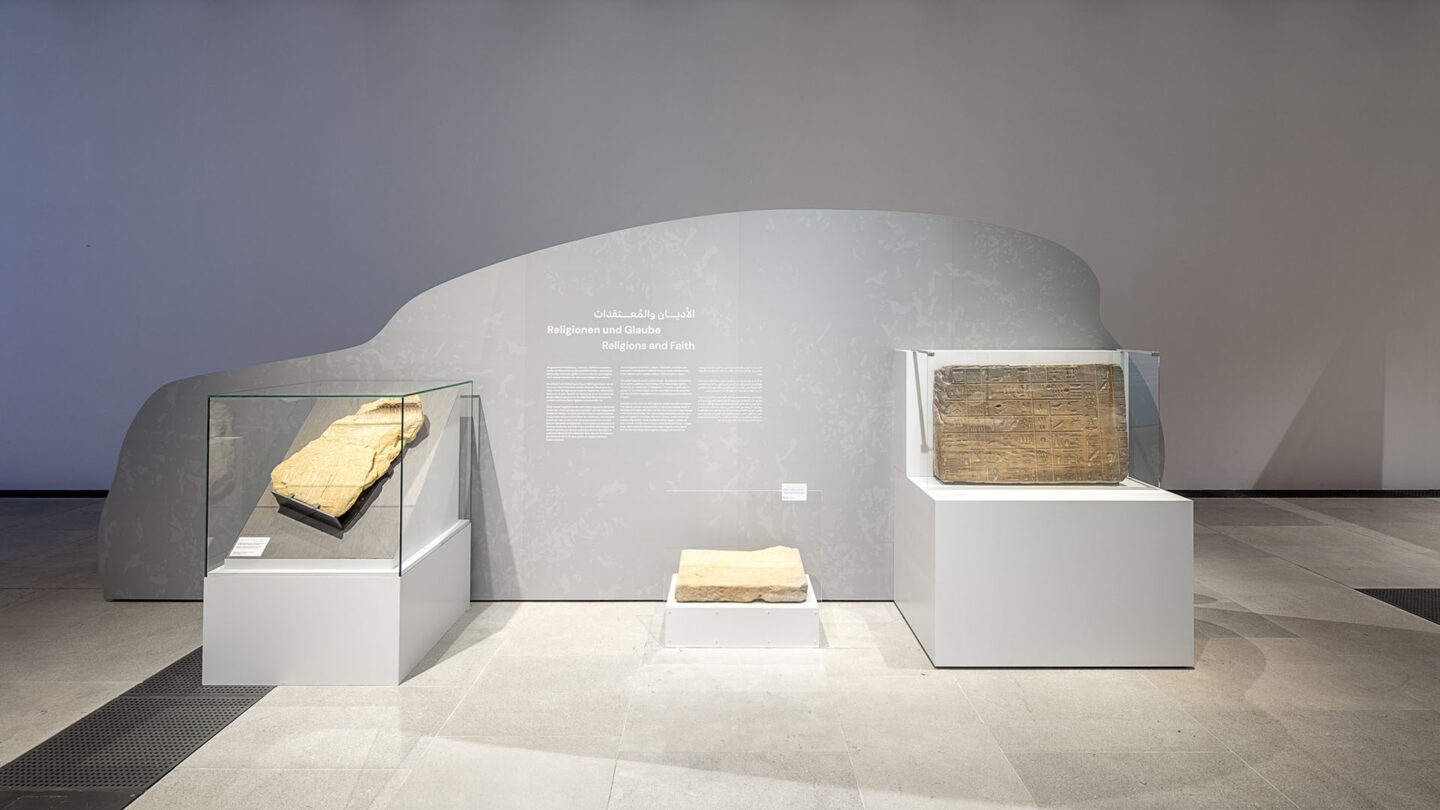
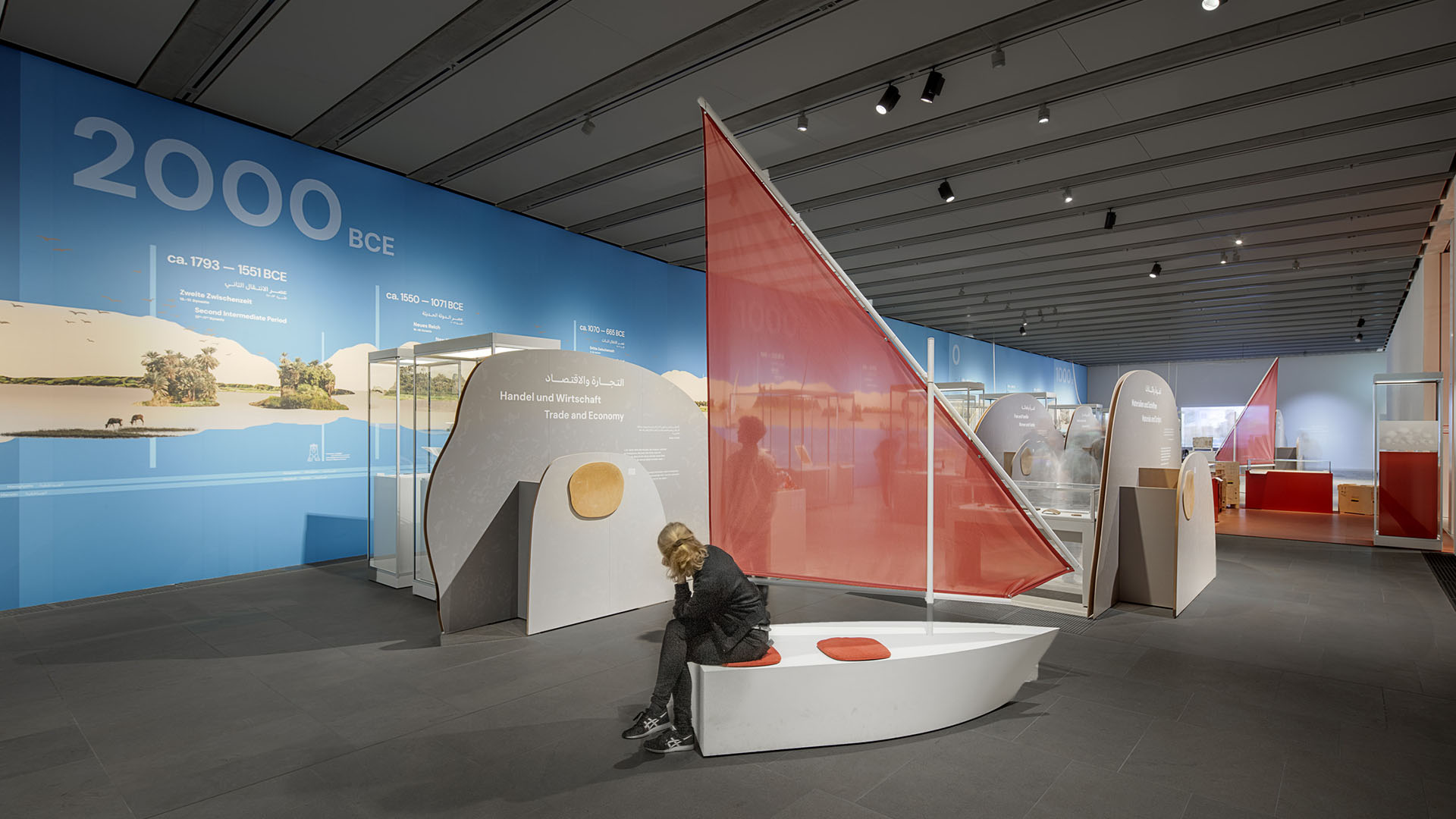
Between the islands, abstract felucca boats give the impression of a voyage on the Nile, inviting visitors to relax and reflect on Elephantine’s 4,000-year history. The objects, graphics, and texts reflect the themes of diversity, family, religion, trade, law and medicine, and offer insights and connections to today’s understanding of these topics. Interactives and tactile objects, including special scent stations developed in collaboration with scent artist Sissel Tolaas, make the exhibition truly multi-sensory. Designed under the “Design for All” principle, it offers multiple levels of accessibility and inclusion.
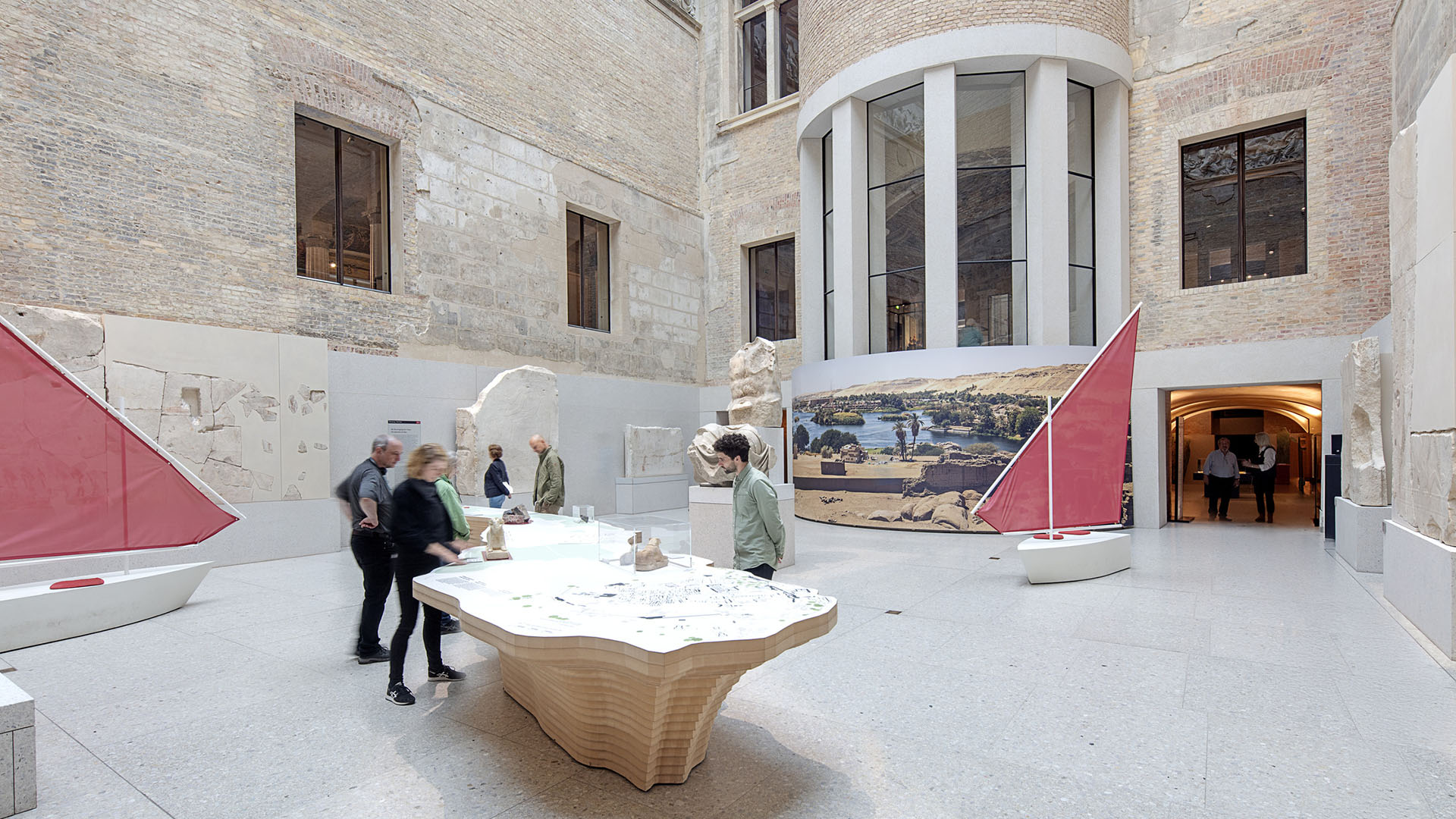
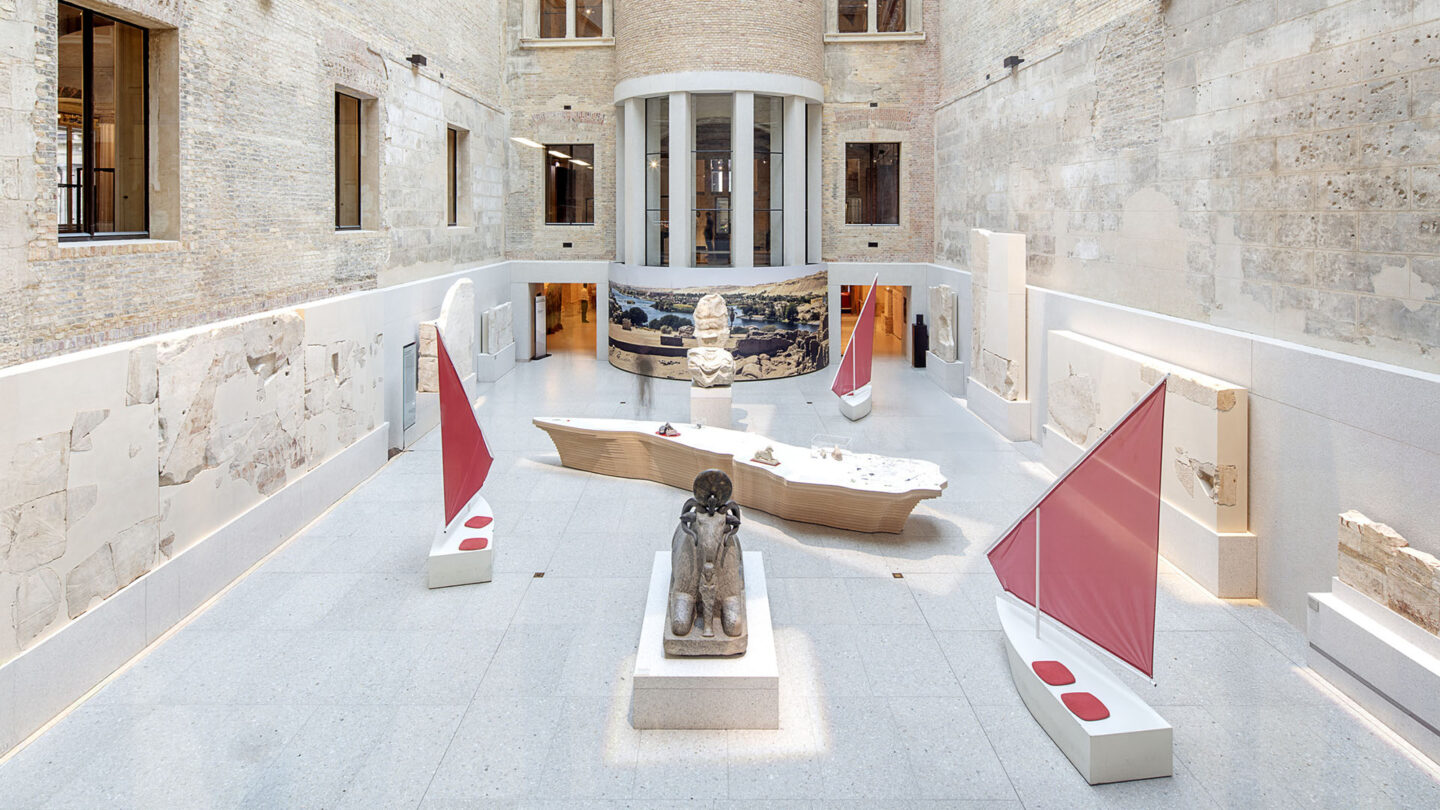
A subterranean passage connects the James-Simon-Galerie with the Neues Museum, where the exhibition continues in the “Greek Courtyard”. In this daylight-filled hall, the topic is ‘space,’ and the view changes to a bird’s eye view of the island of Elephantine. A large model of the island, which visitors can walk around and explore, provides an overview of its dimensions. As in James-Simon-Galerie, there is a series of abstract feluccas, from which visitors can view the island and listen to the sound installation. A panoramic image of Elephantine forms the backdrop to the room.
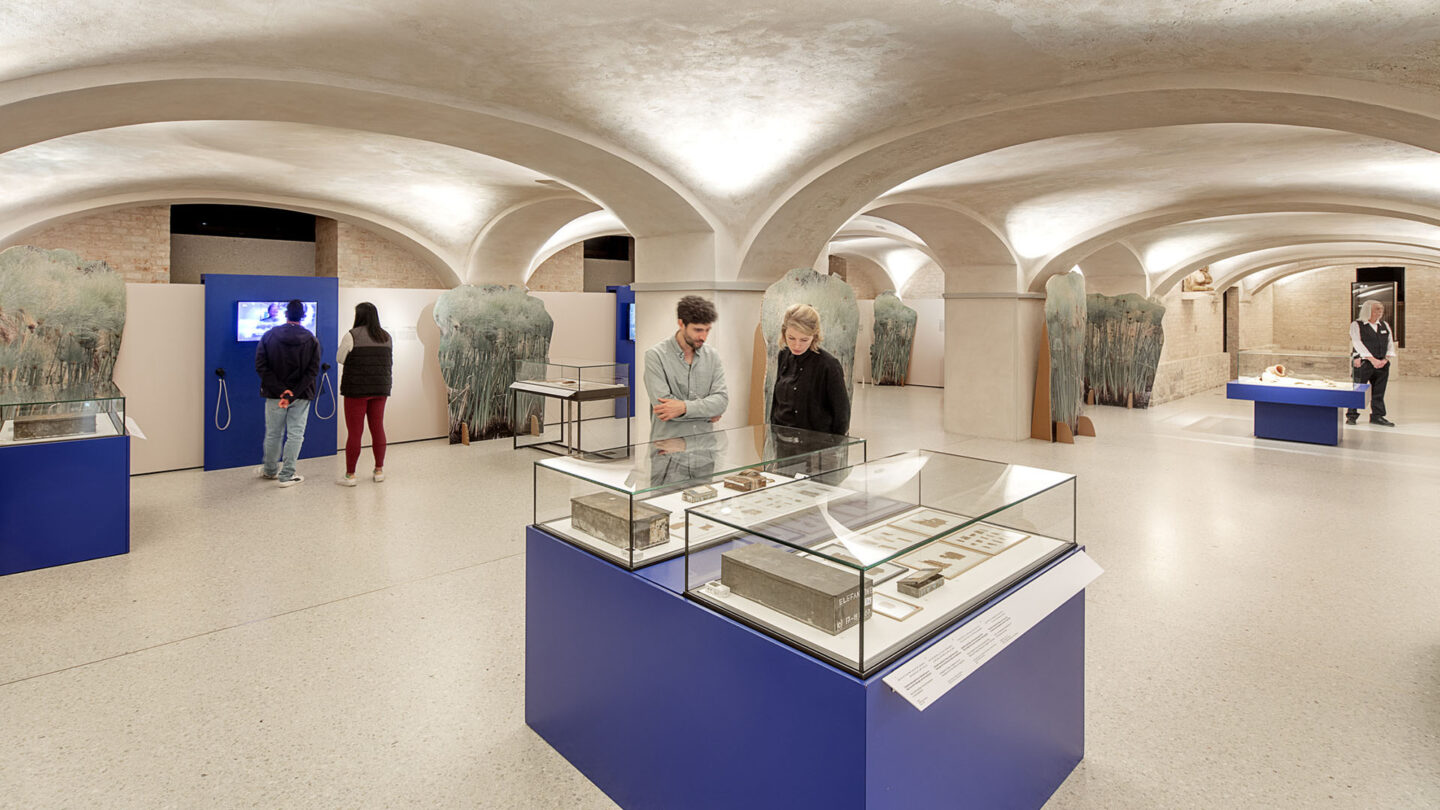
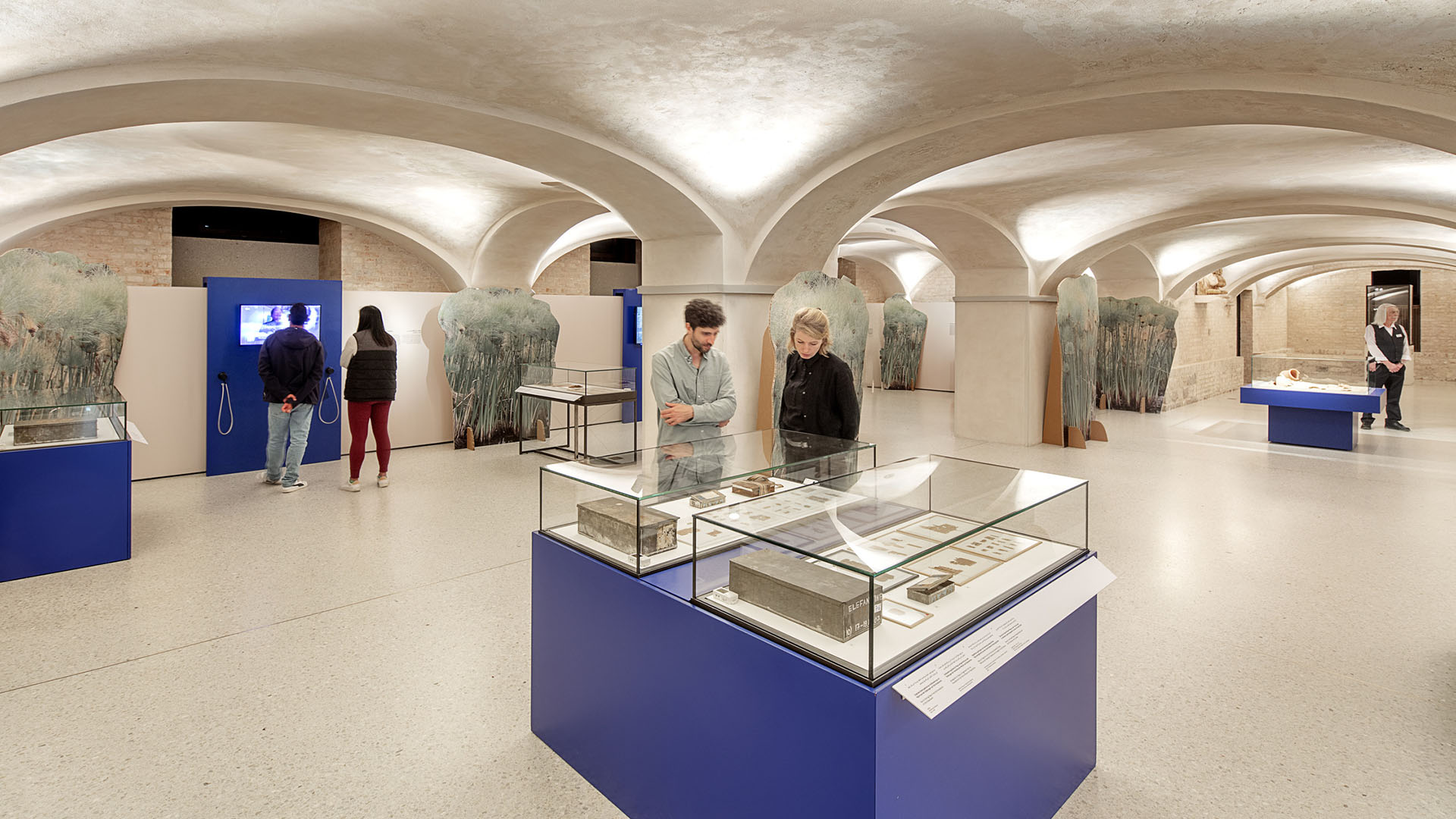
Finally, the exhibition continues in the neighboring lower vaulted rooms, where the international Elephantine research project takes center stage, and the latest findings are presented. Here, international researchers report on their day-to-day research. Visitors can even become researchers themselves and take part with an interactive papyri-puzzle, or they can research finds in the online digital database of the research project.
Daniel Stauch
Daniel Stauch
Daniel Stauch
Daniel Stauch
Project Details
Design Team
Tim Ventimiglia (principal in charge)
Anna Hollstein (project director)
Nicolas Campbell (physical designer and site supervisor)
Daria Wolanska (physical designer)
Johannes Bögle (art director)
Eva Köhle, Ipek Erdöl (graphic designer)
Ann-Sophie Czyull, Lia Bach (graphic design intern)
Judith Ziemer (interaction and media design intern)
Siyu Mao (graphic designer, advertising graphic)
Collaborators
Framegrabber Medien GmbH
Photo Credits
Daniel Stauch
Open Date
April 2024