Agua Caliente Cultural Plaza
Set upon an ancient site in what has become known today as Palm Springs, the Agua Caliente Cultural Plaza immerses visitors in the history and culture of the Agua Caliente Band of Cahuilla Indians through a cultural museum, trail, plaza, and spa. The Agua Caliente have been stewards of these lands and the 12,000-year-old Hot Mineral Spring, Séc-he, over millennia.
Agency
JCJ Architecture, RLMG
Practice Area
Client
Agua Caliente Band of Cahuilla Indians
Industry
“The Cultural Plaza shares our story. From our history and culture to our traditions and the incredible work that the Tribe is engaged in today, visitors from across the world can learn about the resilience of the Agua Caliente,” Tribal Chairman Reid D. Milanovich says.
Project Vision
The Plaza, one of the country’s largest Indigenous cultural centers, transcends its physical footprint as a dynamic and deeply immersive place for sharing and preserving the history and culture of the Agua Caliente. All design elements are drawn from culture and the Tribe’s land and water.
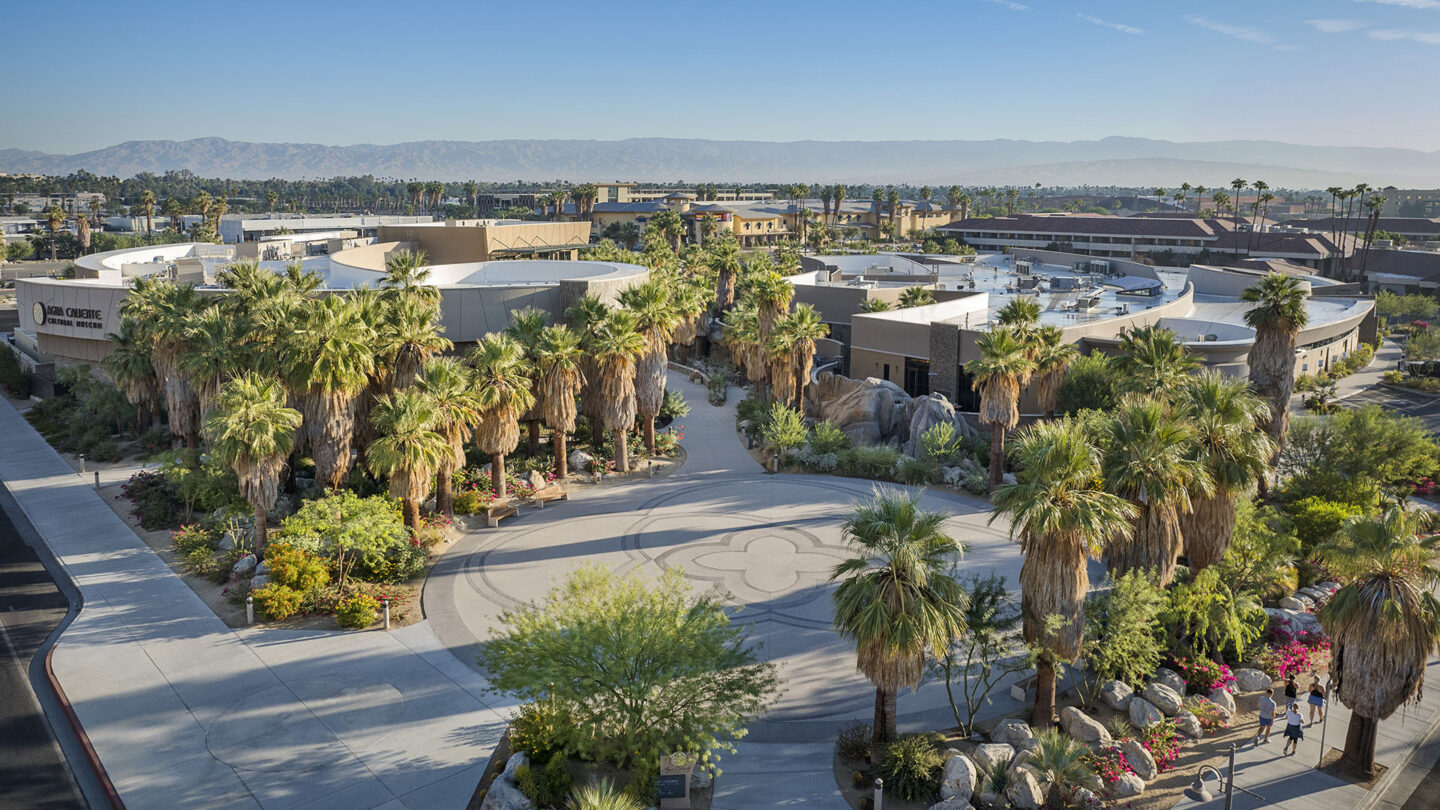
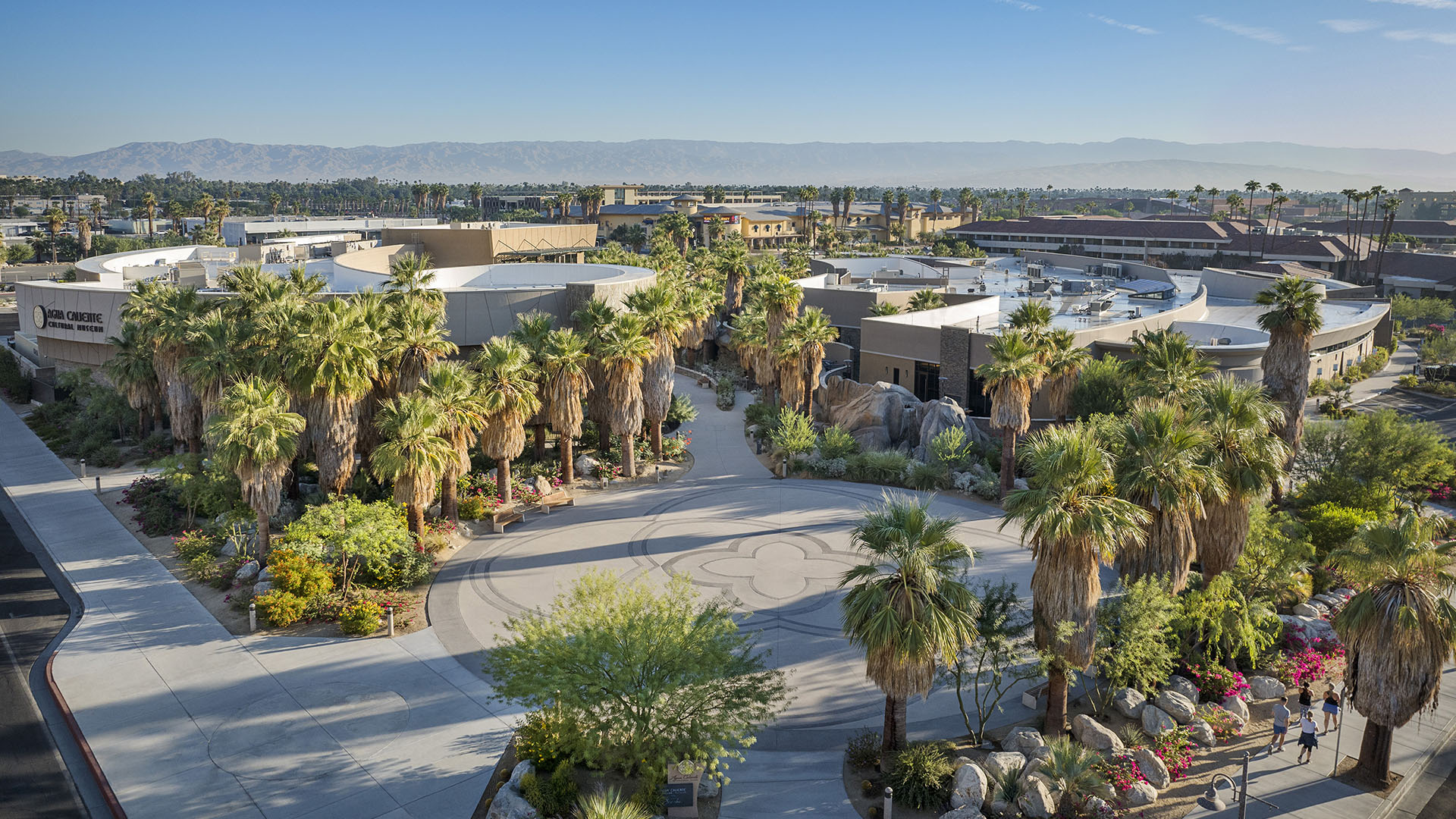
The Cultural Plaza creates opportunities to share traditions with other tribes and a basket pattern defines a space of welcome. The site is an oasis set in downtown Palm Springs.
Chipper Hatter Photography
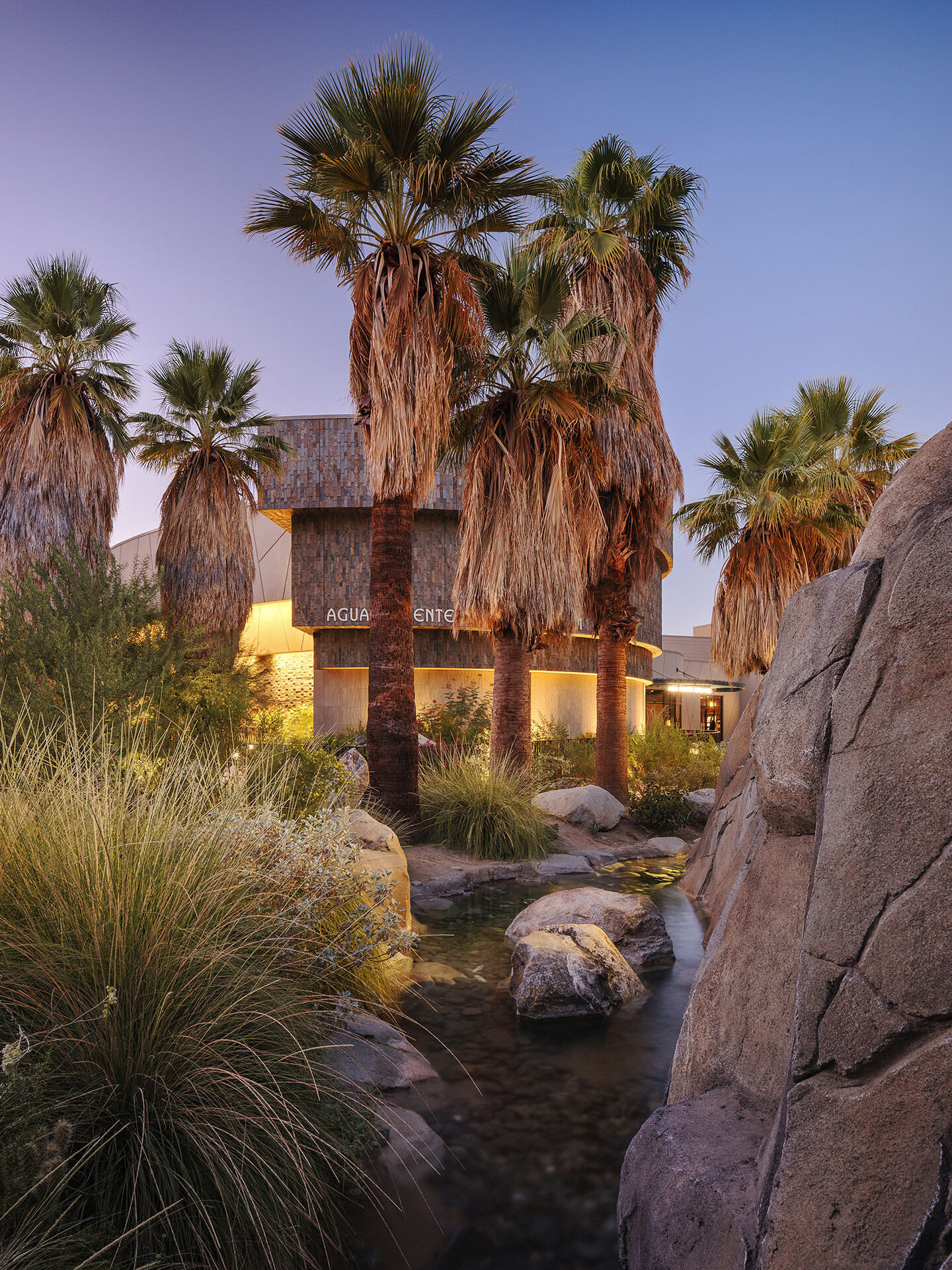
The Oasis Trail draws inspiration from ancestral Tribal lands and creates a meaningful connection to the environment. Existing Washingtonia filifera palm trees were restored to the site following construction.
Chipper Hatter Photography
Design + Execution
Gathering Plaza and Oasis Trail:
An interpretation of a large-scale basket pattern incorporated into the Cultural Plaza welcomes visitors. Nature is the primary design reference. Surrounded by palm trees and rock formations inspired by ancestral lands, visitors on the Oasis Trail encounter gigantic specimens of the California desert’s only native palm tree, the Washingtonia filifera, hear the sound of water and engage with native plants, many that were essential to how the Agua Caliente survived and thrived in this place for thousands of years. References to these natural elements also appear throughout the interior spaces.
Agua Caliente Cultural Museum:
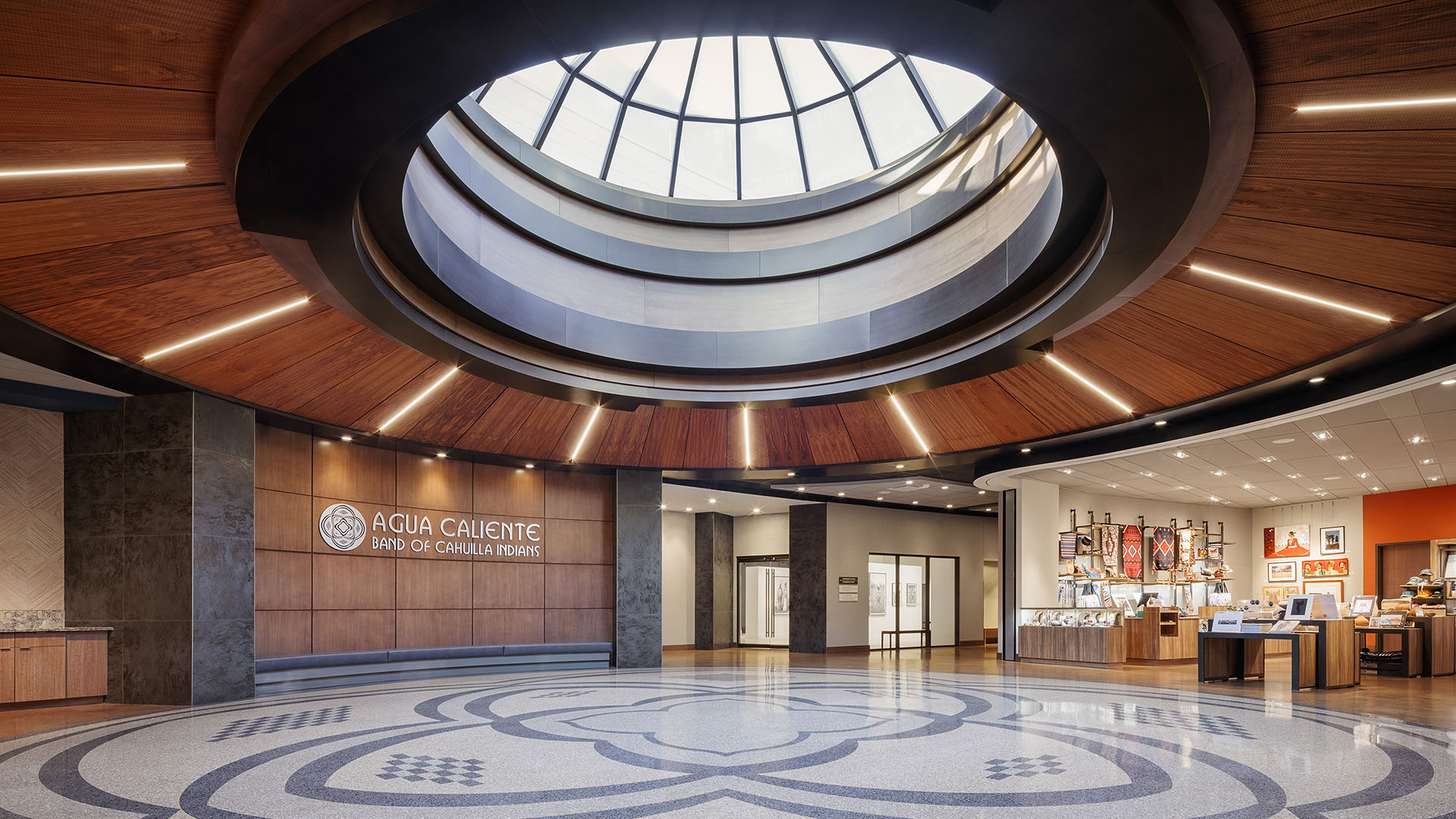
The museum serves the Agua Caliente Tribal membership and is an educational institution that preserves, shares, and conserves the culture and story of the Tribe. The building incorporates colors, patterns, textures, and imagery of significance and is a seamless backdrop for exhibitions.
The nearly 10,000-square-foot exhibit space contains information and artifacts that inform visual design elements throughout the plaza. Immersive digital experiences take visitors to places and times that they cannot otherwise go, telling the stories and history of the Tribe and its presence in the region. A 360-degree theater, 35-feet in diameter, features an animated version of the Creation and Migrations stories. Soaring visuals, floor projections, and a 16-channel soundscape immerse viewers in the clashes of the creator brothers, the scheming of Coyote, and the world that the ancestors of the Agua Caliente inhabited. (This story is sacred and meant to be experienced on location. Images and video are not included with this submission).
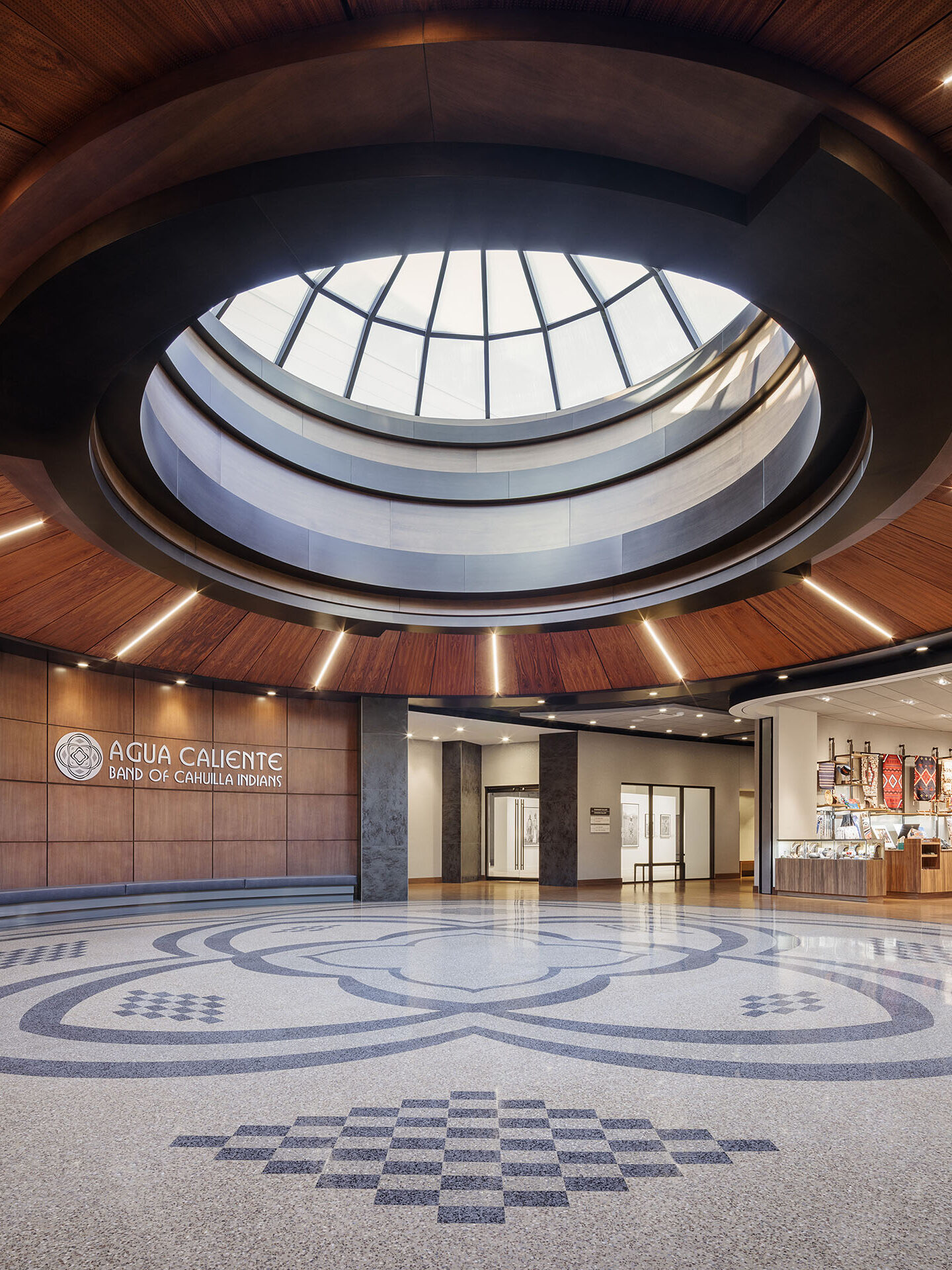
The museum’s sweeping circular floor plan and interwoven basket design represent the tightly connected community.
Chipper Hatter Photography
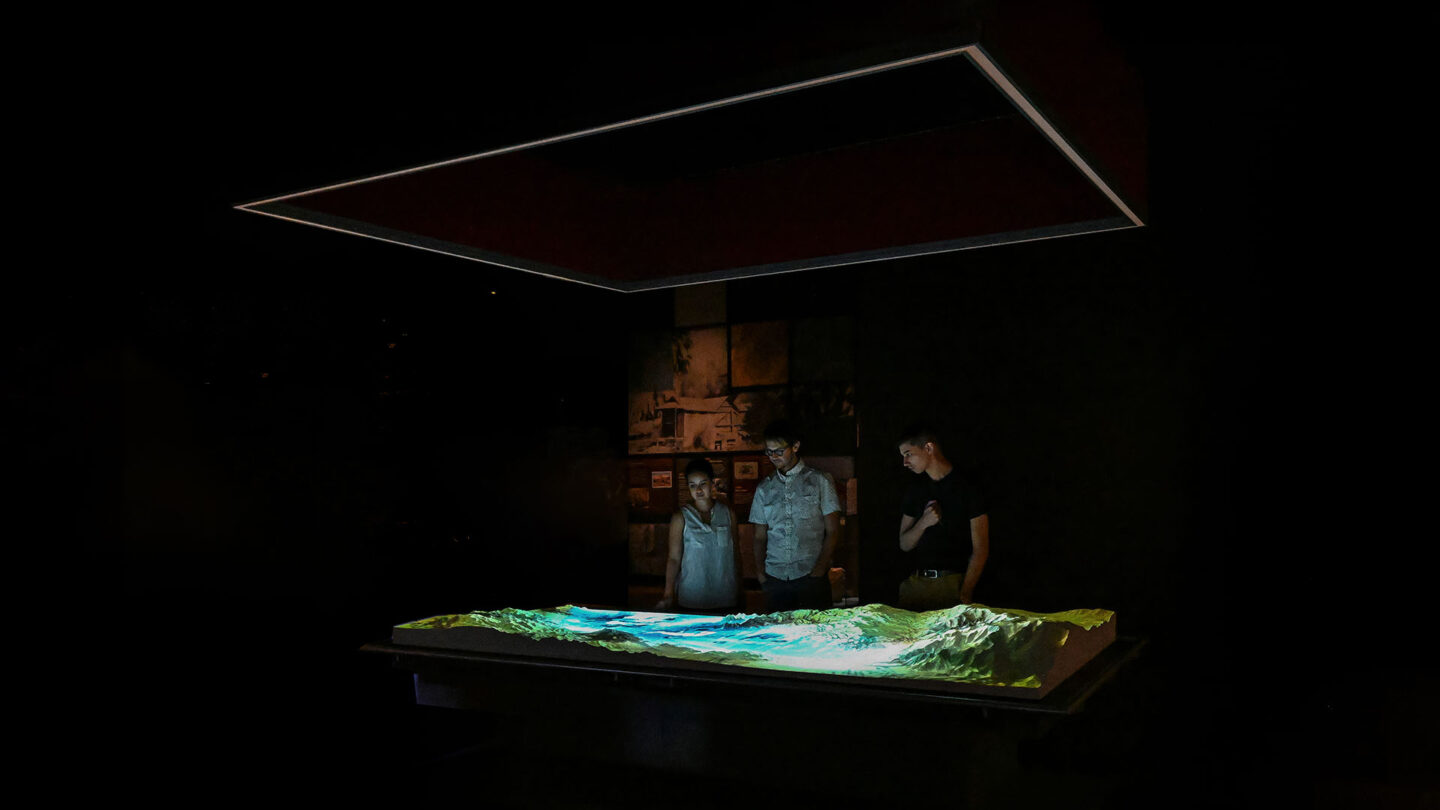
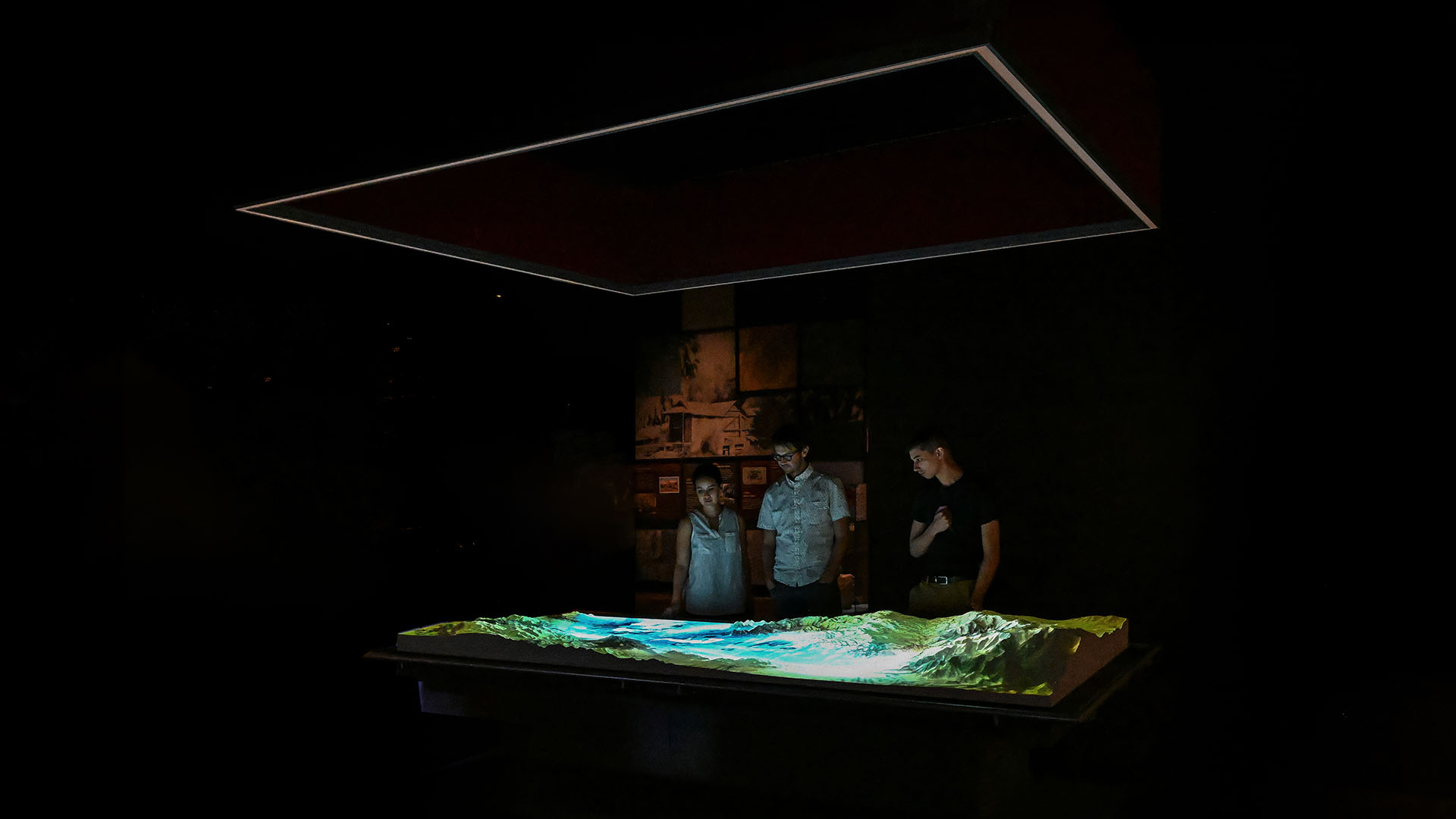
The story of the Tribe’s presence in the Coachella Valley since time immemorial is projected onto a ten-foot by five-foot dimensional model of the valley.
RLMG
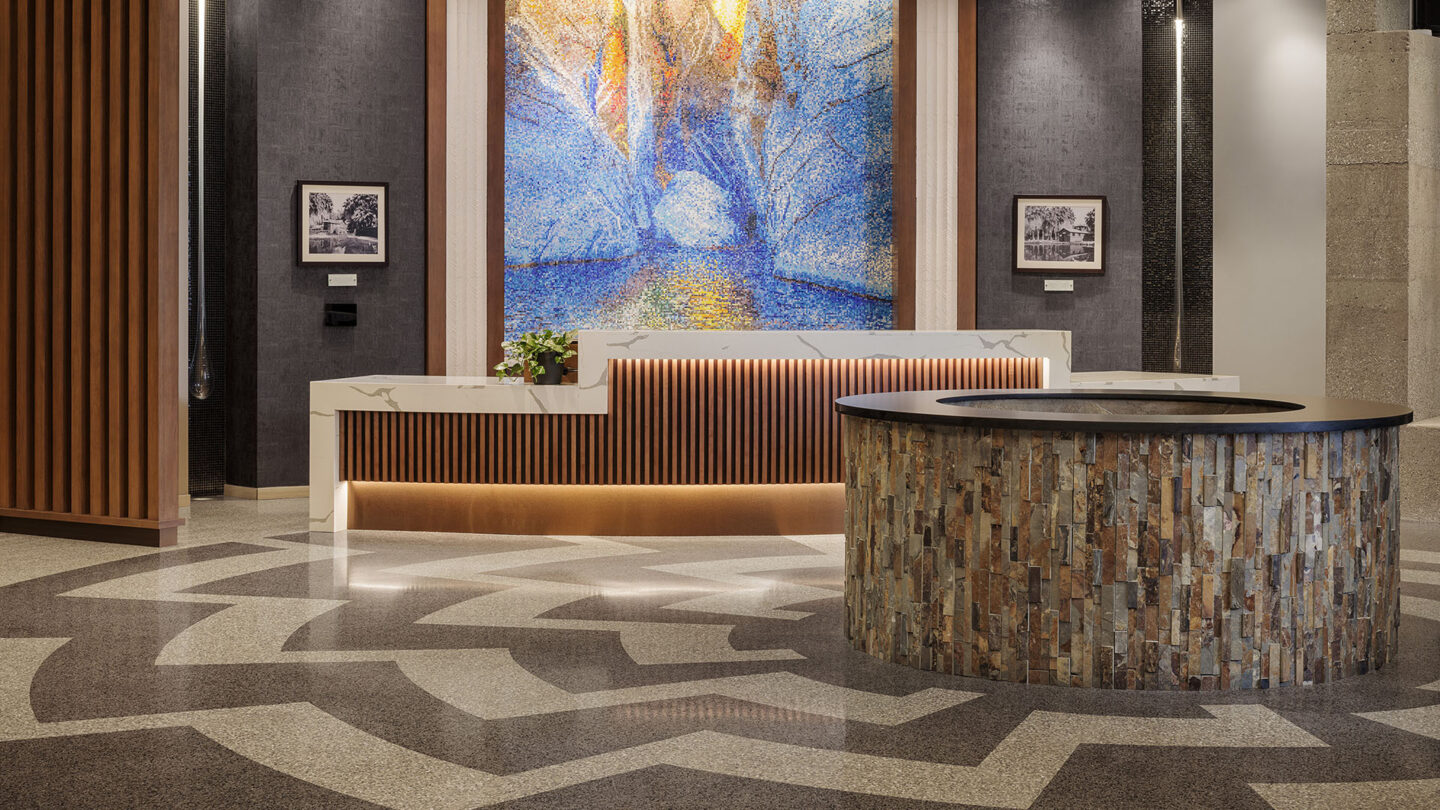
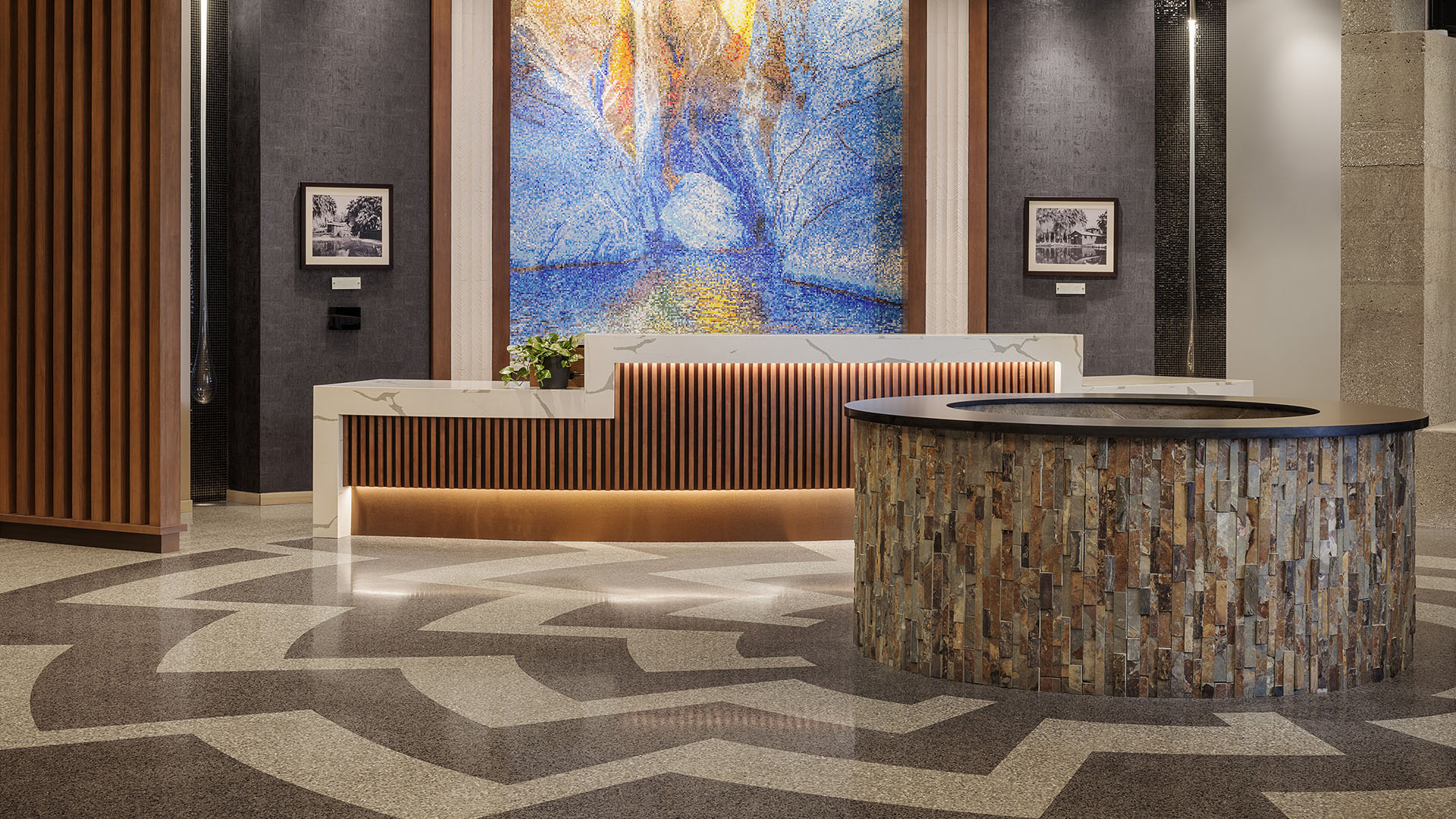
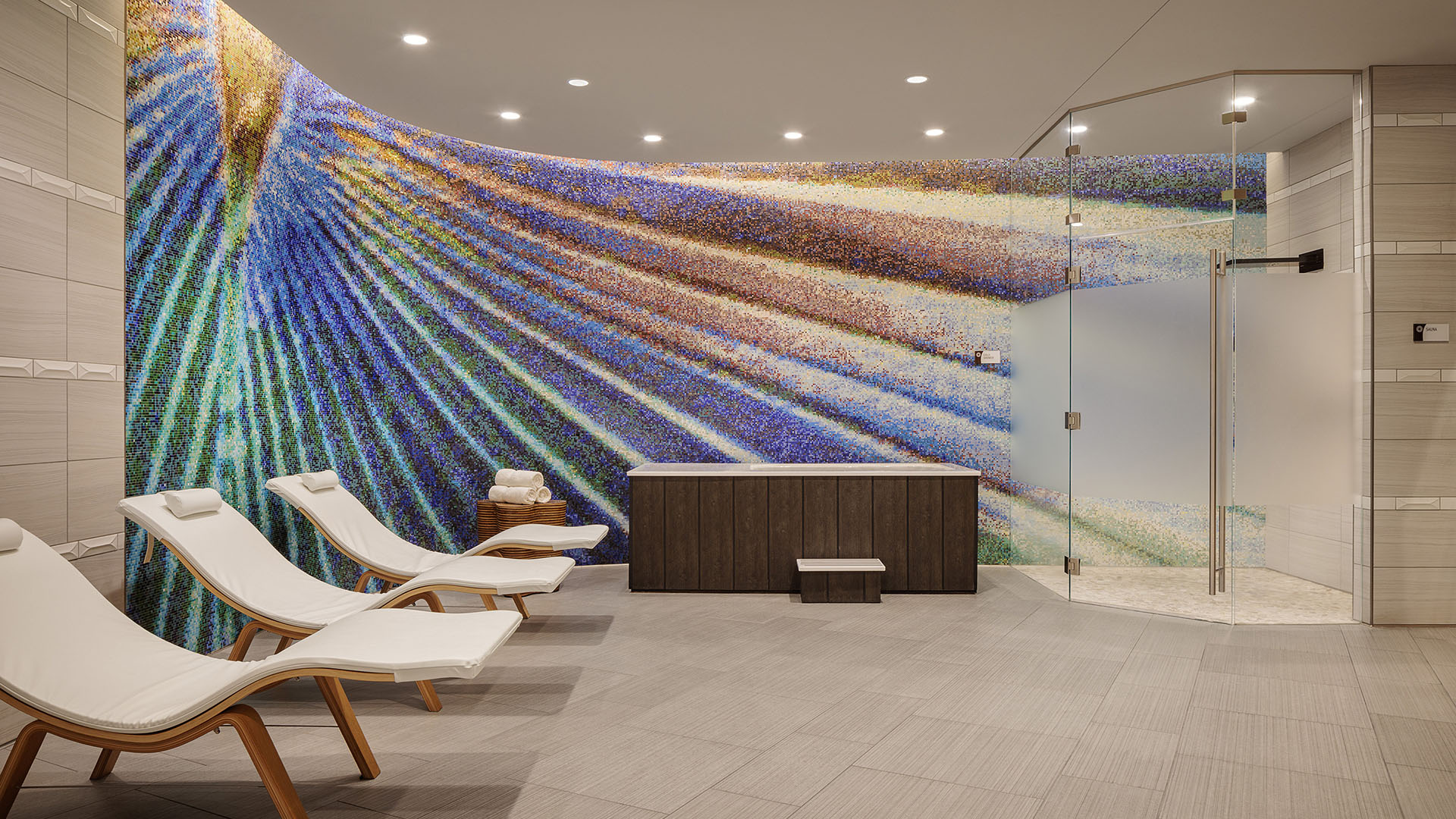
The Spa at Séc-he interiors reflect the colors of the surrounding desert landscape and patterns important to the Tribe. Custom mosaic feature depicts Tahquitz Falls in Tahquitz Canyon.
Chipper Hatter Photography
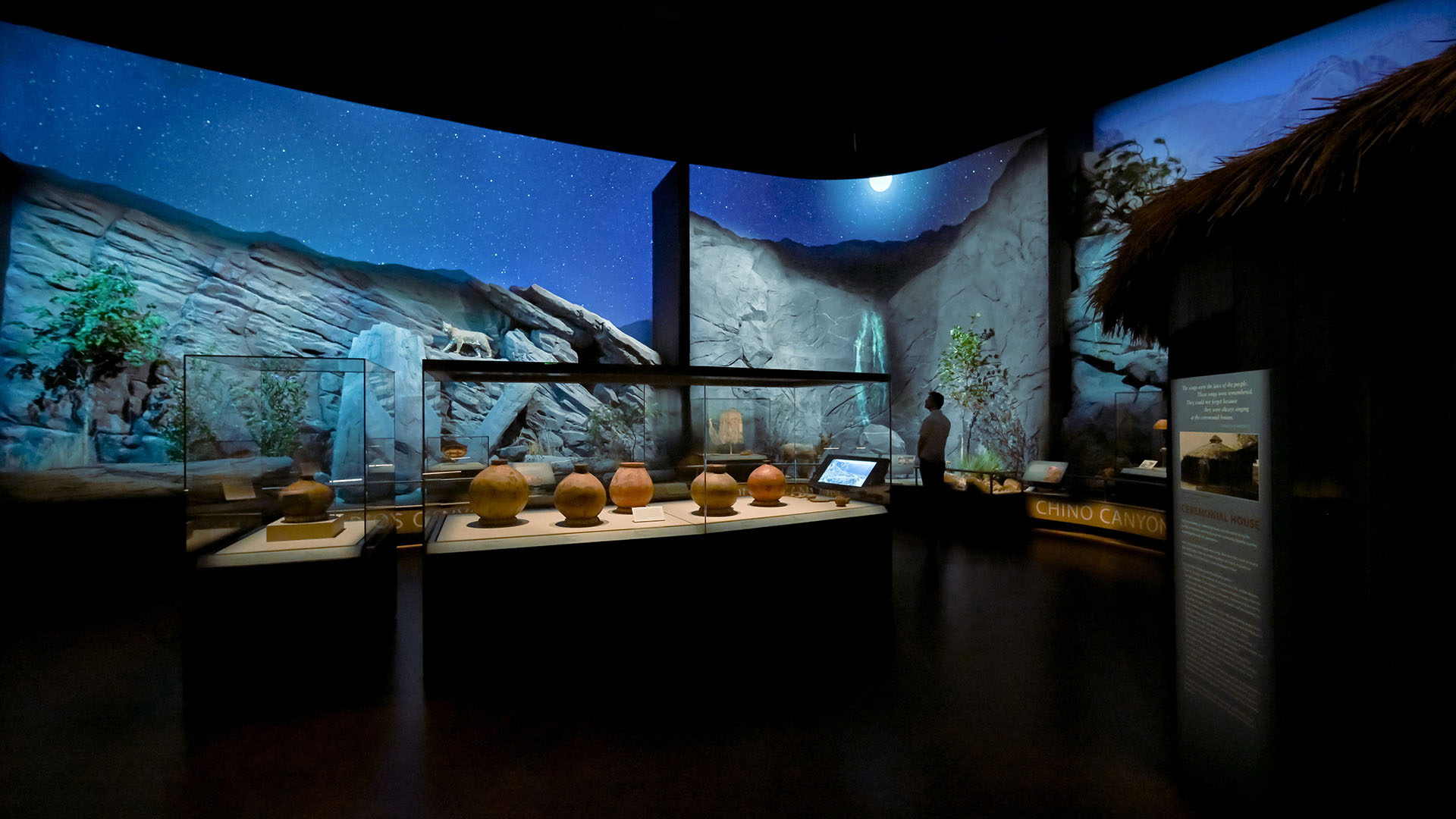
Upon exiting the theater, visitors are immediately immersed in the area’s Indian Canyons, Tahquitz Canyon, and Chino Canyon. Integrated with scenic elements, incorporating an ambient soundscape, and synched with gallery lighting, a 60- foot-long animated show features the drama of the skies. Bighorn sheep walk the ridgelines. The sun sets. Birds fly. A thunderstorm rolls through.
In another gallery, the story of the Tribe’s presence in the Coachella Valley since time immemorial is projected onto a ten-foot by five-foot dimensional model of the valley. We watch as lands covered by native trade routes are altered by wagon trails and train tracks. The lands are divided. The checker-board pattern of the Reservation is imposed. The City of Palm Springs expands.
Another gallery displays artifacts recovered during the excavation of the Cultural Plaza site. Some artifacts have been dated as far back as more than 8,000 years.
The Spa at Séc-he:
Drawing upon a history of deep reverence for the Agua Caliente Hot Mineral Spring, named Séc-he, and a tradition of “taking the waters,” The Spa at Séc-he is a place of wellness, restoration, and repose. The Hot Mineral Spring has provided the Tribe with water for drinking, cooking, bathing, and irrigating for centuries. Twenty-two private mineral baths serve as the centerpiece to this location, which also features 15 treatment rooms, a cryotherapy chamber, two float pod suites, a boutique fitness area, a grounding room, an acoustic wellness lounge, tranquility garden, menthol dry sauna, eucalyptus steam room, two halotherapy salt caves, resort-style pool, luxury cabanas, full-service salon, a café and a poolside bar with food service. Terrazzo floors, specially fabricated to minimize the joints between the color fields, interpret basket patterns on display in the museum.
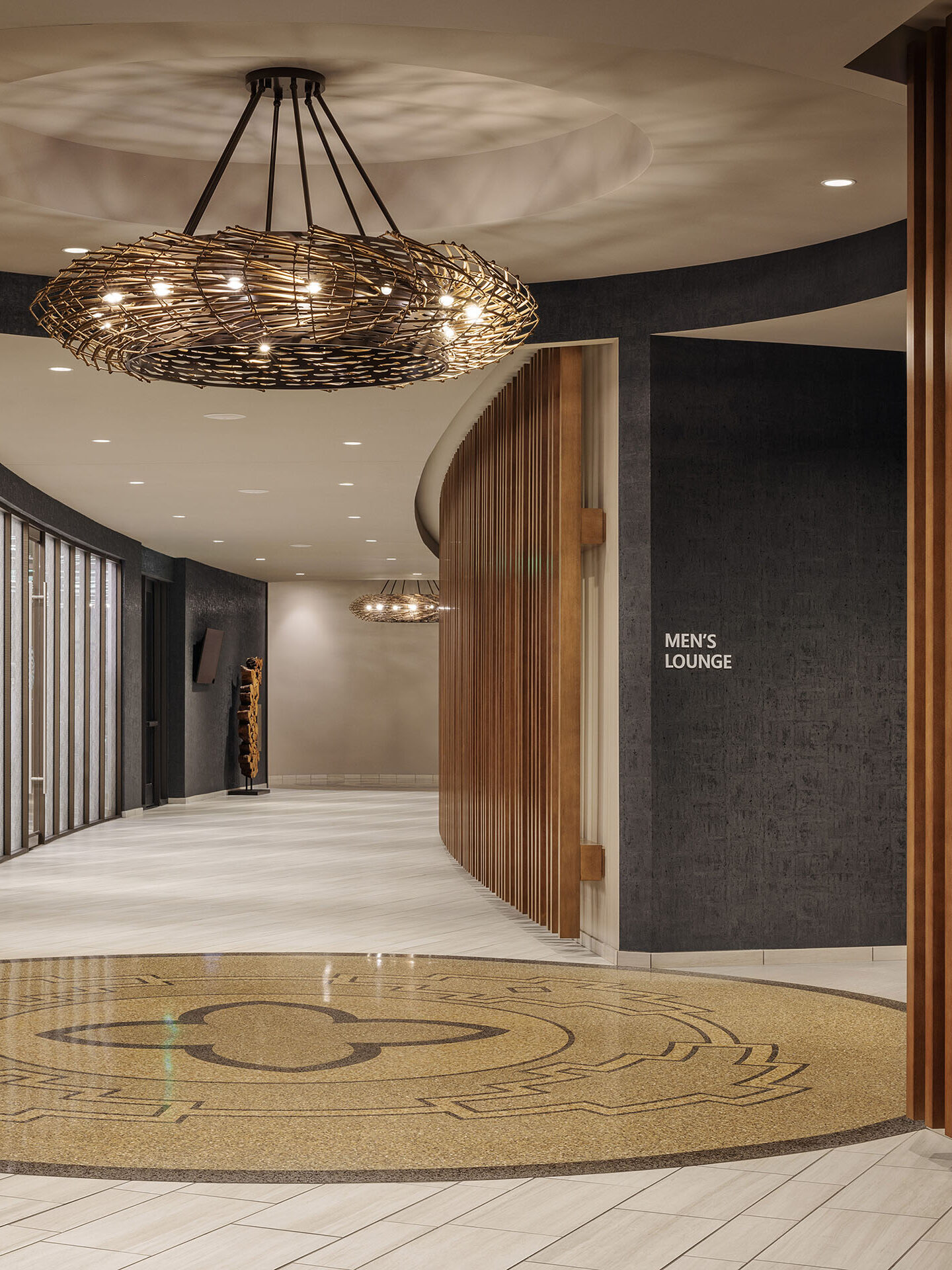
Terrazzo floors depicting traditional basket patterns occur at each major entry node within The Spa at Séc-he. The color palette and material treatment evoke tribal basketry.
Chipper Hatter Photography
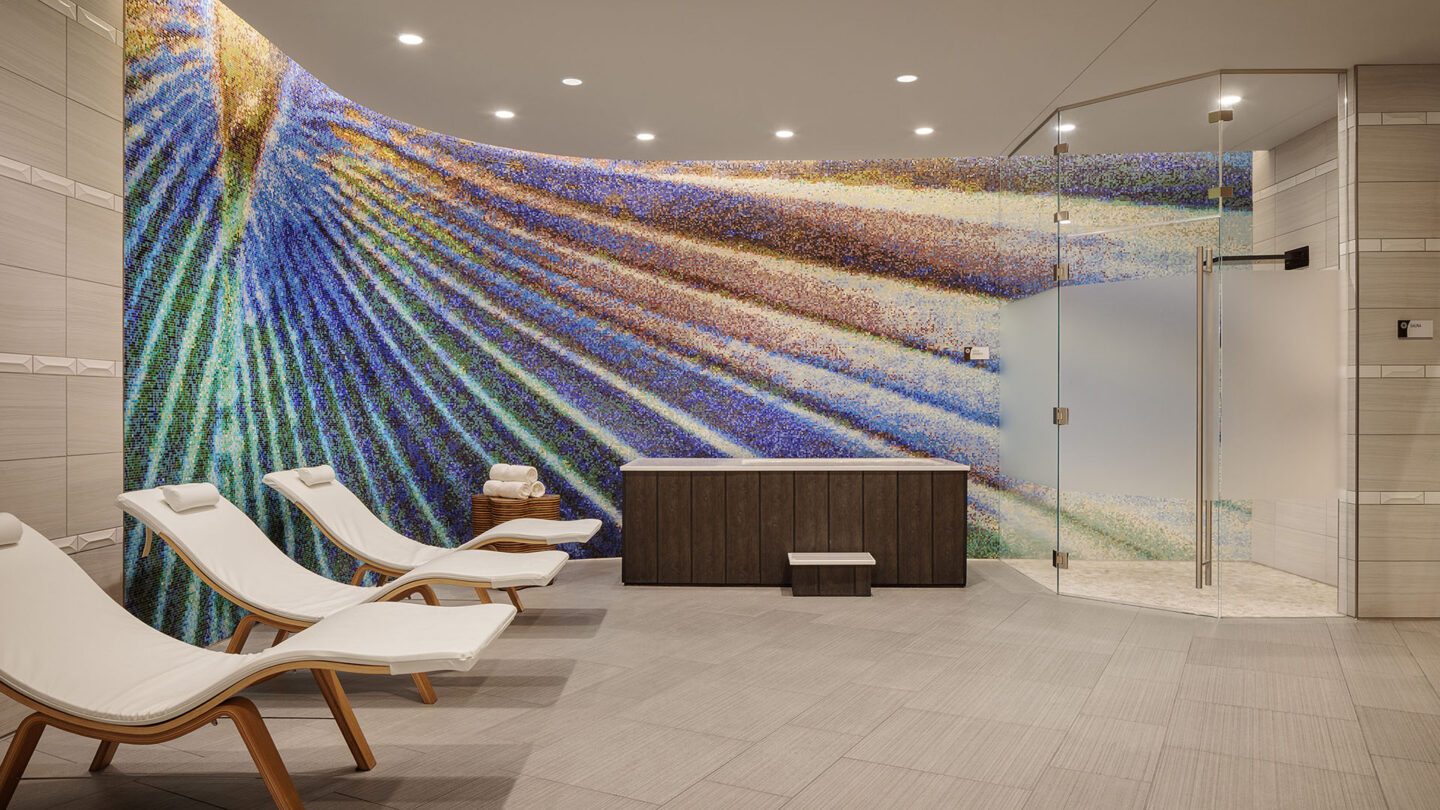
With reverence for the Hot Mineral Spring, the Tribe shares the spa is a place of restoration. Palm fronds and desert colors inspire the tilework throughout.
Chipper Hatter Photography
Project Details
Design Team
JCJ Architecture
RLMG
Photo Credits
RLMG
Chipper Hatter Photography
Open Date
November 2023