2026 SEGD Fellow: Donna Lawrence
Donna Lawrence, founder and Creative Director of Donna Lawrence Productions, has been named a 2026 SEGD Fellow—honored for her pioneering contributions to immersive storytelling and experience design. She received her recognition at the 2026 SEGD Conference Experience Kansas City on Saturday, October 24.
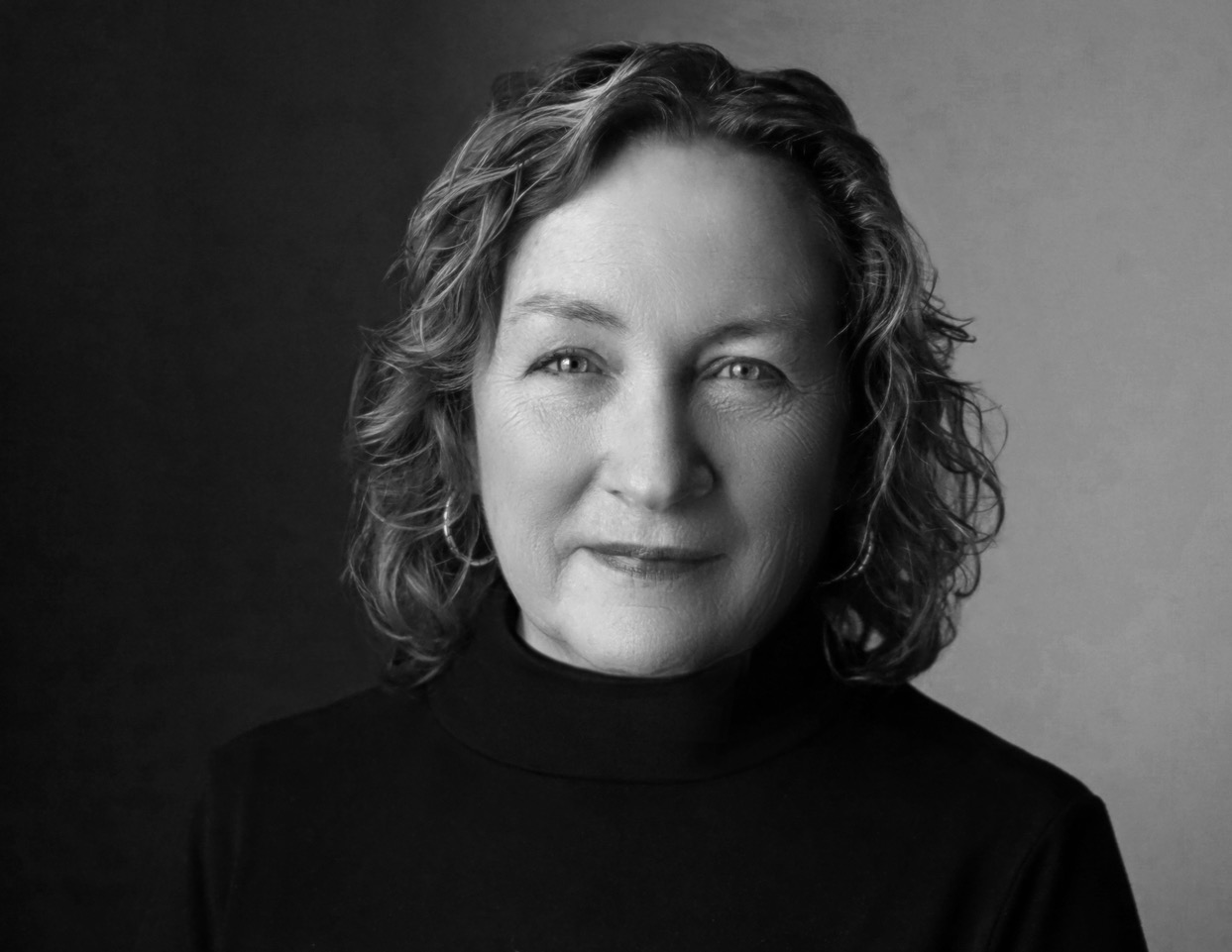
Donna Lawrence has spent four decades shaping how audiences encounter history, science, and culture inside museums, visitor centers, and cultural spaces, often through cinematic experiences unlike anything found in a traditional theater. As founder of Donna Lawrence Productions (DLP) in Louisville, Kentucky, she has helped define what immersive, place-based storytelling can be, from the earliest large-scale multi-projector installations to the theatrical, large-format, and multi-sensory work that shapes the field today.
Born out of the need to connect audiences with sweeping stories in relatively few minutes, a form she refers to as haiku, her practice is based on a simple principle: connect visitors with the unique convergence of forces at the heart of a story, in a deep and authentic way, and you connect them with the larger, reverberating, ongoing world of that story.
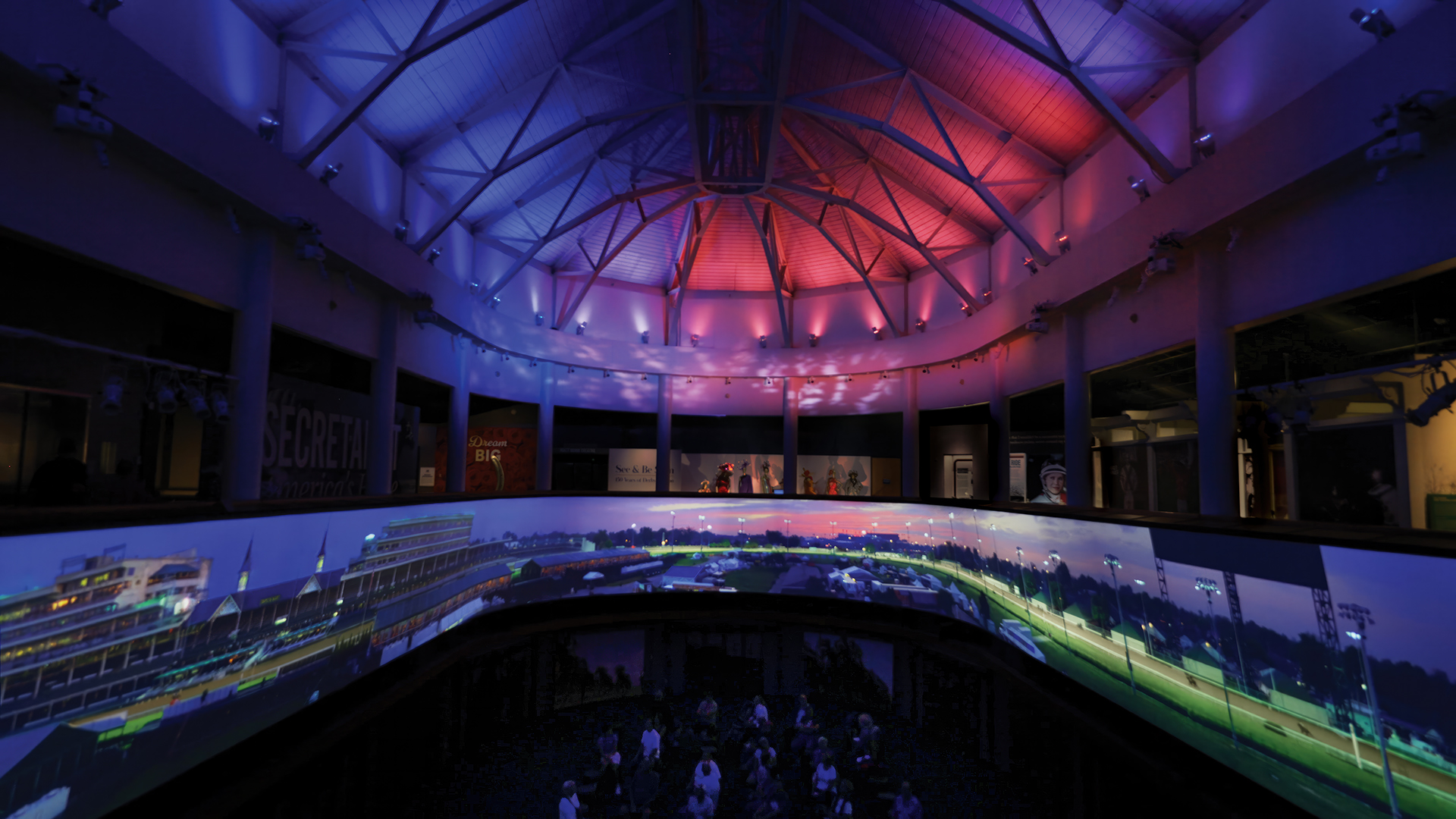
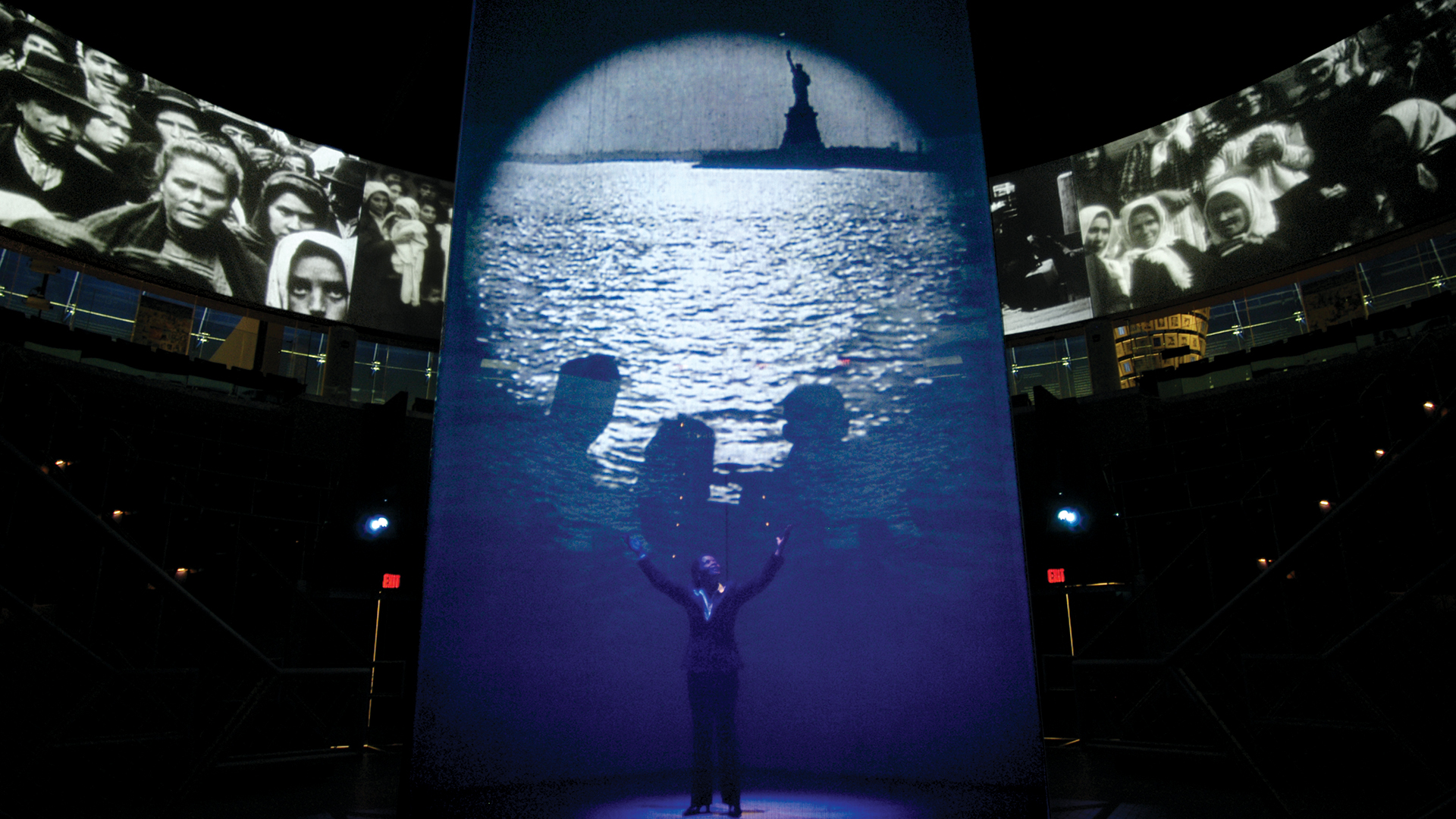
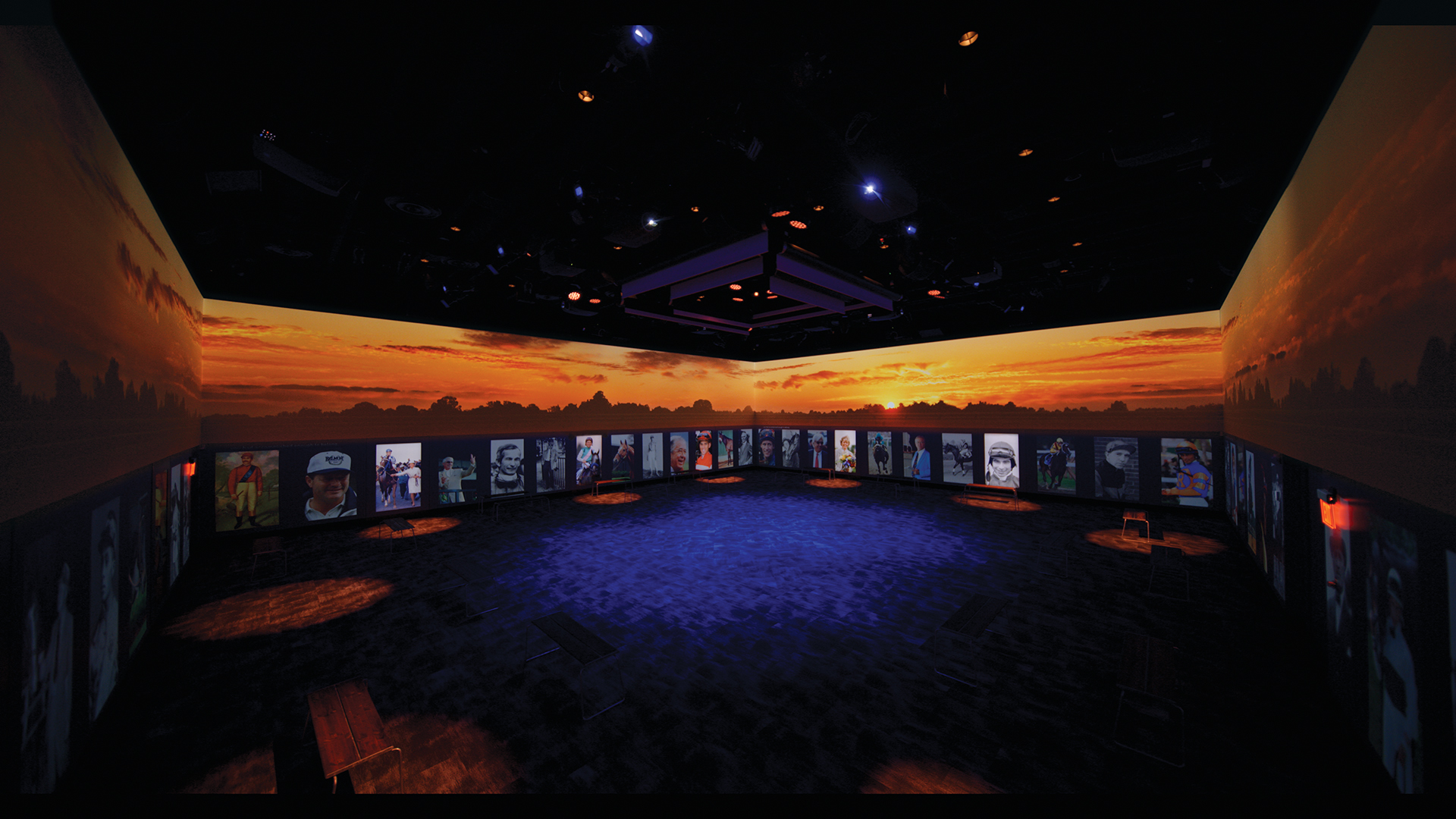
DLP’s 1985 installation at the Kentucky Derby Museum, choreographing 97 slide projectors around a 360-degree space, had no precedent anywhere in the world. Nearly two decades later, animating the vision, DLP brought live actors and theatrical staging into the National Constitution Center. In between and since, Lawrence’s films and installations have covered subjects ranging from the Civil War and civil rights to the future of energy, often becoming the primary way they encounter a place’s story.
DLP has remained independent throughout, headquartered in a historic 160-year-old building in Louisville, reconfigured to support the evolving creative and technical requirements of a close-knit team of longtime collaborators spanning the country.
That philosophy has made Lawrence one of the field’s most respected voices on how to tell difficult, high-stakes stories with both rigor and heart.
Her work reminds us that the most powerful experiences are rarely about spectacle. They are about finding the “root of the root” of the story, the unique convergence of forces out of which the larger story flows.
In this conversation, Donna reflects on her creative process, the collaborations that have defined her career, and what four decades of independence have taught her about staying true to the work.
How did you find your way into this field, and what led you to found Donna Lawrence Productions in Louisville in the 1980s?
I grew up playing and incessantly listening to music, fascinated by how music travels and changes across cultures and centuries. That interest led me toward documentary radio production. I moved to Louisville and took a temporary job working on educational media. The producer I was assisting unexpectedly left town, and I ended up finishing his project, working with sound and picture for the first time. I was hooked. Within eight years, we’d built a 360-degree, 96-projector surround sound production, the first of its scale in the world for the Kentucky Derby Museum.
You’ve talked about getting to “the root of the root” of a story. What does that process look like?
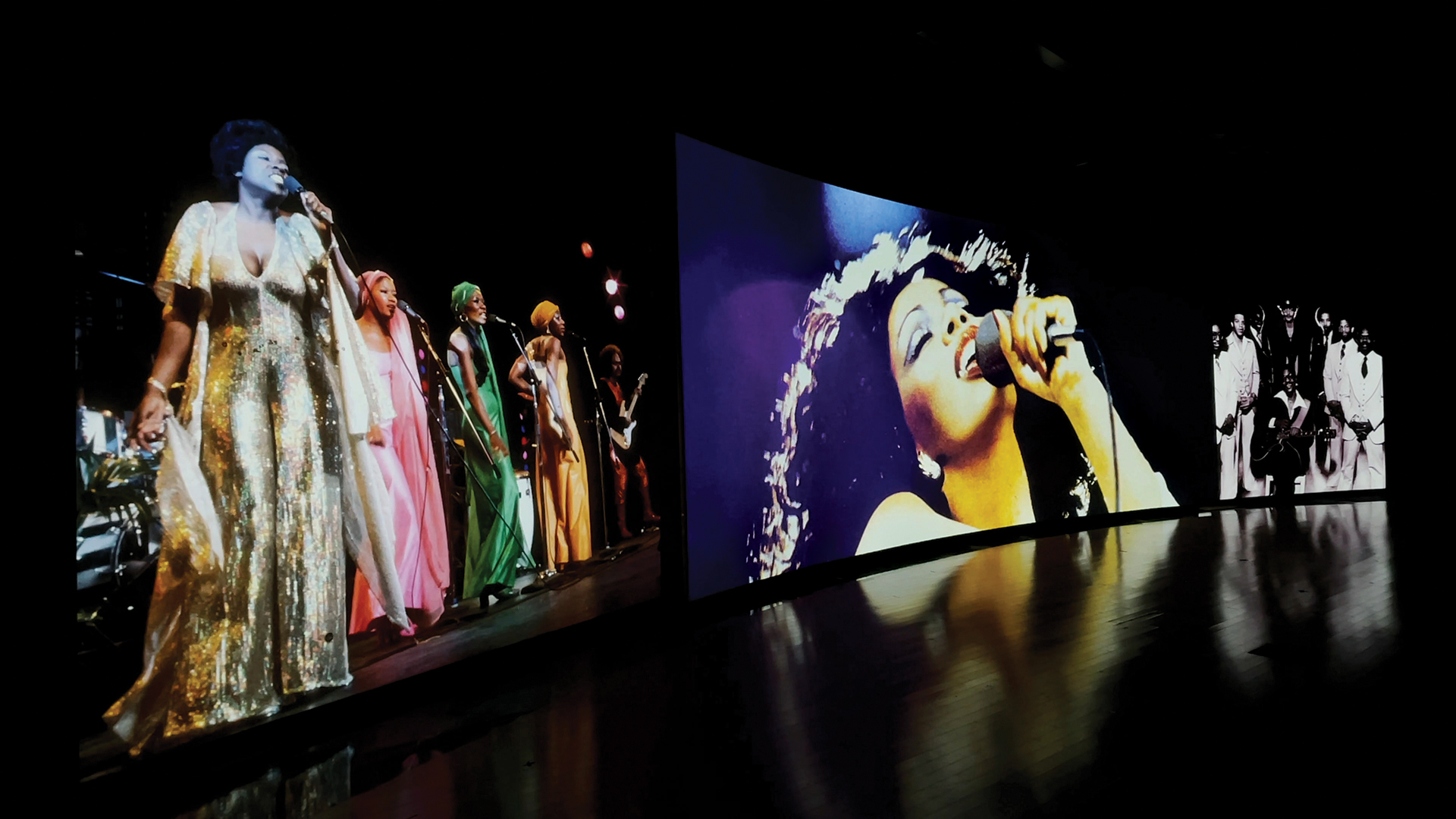
Many of our projects challenge us to connect the audience with a huge story, in a fraction of the runtime of a feature film, often fifteen minutes or less. Over time I noticed a pattern: keep asking what the ” root of the root”…of a story is, and you arrive at a unique combination of factors, or forces, whose convergence drives what follows. Take Motown. It exists because a successful farmer in Georgia heard about the manufacturing jobs in Detroit and moved his family there at a particular cultural moment. Then he started his own business with his sons, but one of them, the young Berry Gordy, was mesmerized by the sounds playing on speakers outside record shops and jazz clubs in Detroit. That kind of convergence makes a story powerfully coherent, rather than arbitrary.
At a time when museum storytelling leaned on traditional documentary film, you brought theatrical elements, and eventually live actors, into the work. What made you push in that direction?
We’ve been fortunate to work with collaborators who were open to seeing their own work as a starting place for what we could bring to the party. At the National Constitution Center, the original concept called for a docent who would speak to visitors sitting in a circular space while scenic images were projected on the 360 wall behind them. Once we saw the shape of that space for the welcoming in “We the People,” it inspired the idea of using a full theatrical experience with narrative structure. The docent became an actor, and over the course of the show, projections expanded until every surface in the room was activated in service of the story of the U.S. Constitution.
Much of your work deals with contested or emotionally difficult history. How do you approach storytelling when the stakes of getting it right are so high?
There are two things at work. The first is what we’ve already talked about: digging down to the deepest forces that drive a story takes you to a place that tends to transcend differences in surface observations.
Few people argue with those root forces once you pull back the curtain. In fact, most people find their own experiences in that story if you go deep enough. The second thing at work is more practical. The audience in many museums is often the subject of the story itself, so if any part of the experience doesn’t ring true, we hear about it immediately. Fortunately, that immediate feedback and collaboration usually happens over the course of working on the project, keeping the community’s voice at the center of every phase of a project, and long after opening day.
You’ve sustained an independent company for four decades. What has it taken to keep evolving while staying independent?
Our tools have moved through four technical evolutions, from early multi-image projection to multi-source video, and digital workflows to the blend of digital and theatrical environments we see today. What hasn’t changed as much is our team. We’ve added people slowly and built an extraordinary group of collaborators and creators based here in Louisville and located across the country.
What still brings you joy in this work after all these years?
It’s those moments of discovery, at every stage of a project. It can be the first time you’re learning about a subject hands-on, walking a site, or sitting with scientists talking through the future of energy. It’s the moment you finally see through to how an enormous story can be conveyed simply. The hardest thing is to find simplicity, and it’s exhilarating when that happens.
What do you hope the next generation of storytellers and designers of experiences carry forward from your approach?
The only words that really come to mind are “make it count,” whatever that means for you, in your discipline, with the resources you have. It’s still about how you connect people with a story, whether you have words at your disposal or are letting an environment do the talking.
What does SEGD mean to you as a community?
SEGD is a community built around a single, remarkable factor: the environment itself, the “z-axis,” which opens up nearly infinite ways to enrich an experience. I hope the conversations that come out of this recognition, this one included, explain the way this community has been useful to me.
People also viewed
-
2026 SEGD Fellow: Jonathan Jackson
2026 SEGD Fellow: Jonathan Jackson
-
2026 SEGD Fellows: Despina Macris and Mark Ross
2026 SEGD Fellows: Despina Macris and Mark Ross
-
Meet the 2026 SEGD Fellows
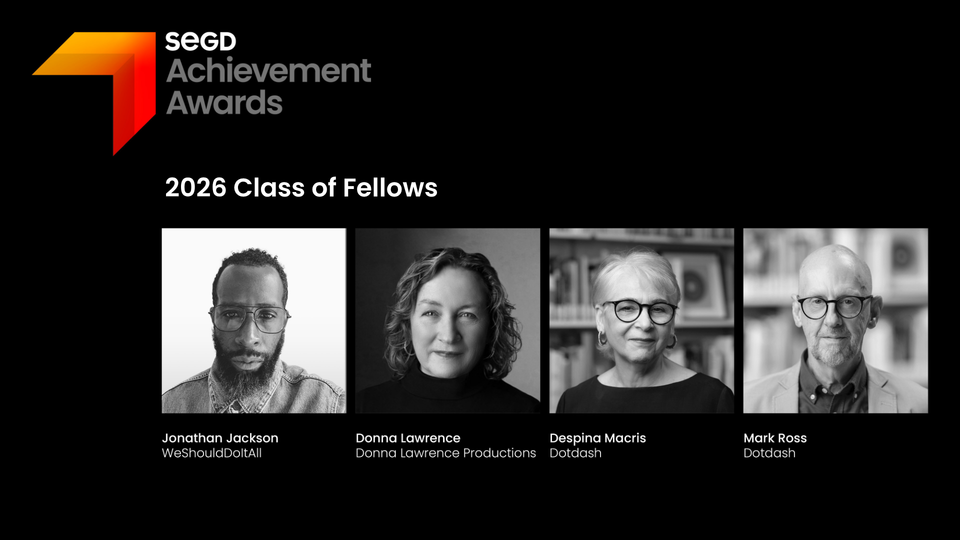
Meet the 2026 SEGD Fellows