Shaping the Future of Experiential Design: The 2026 SEGD Academic Summit
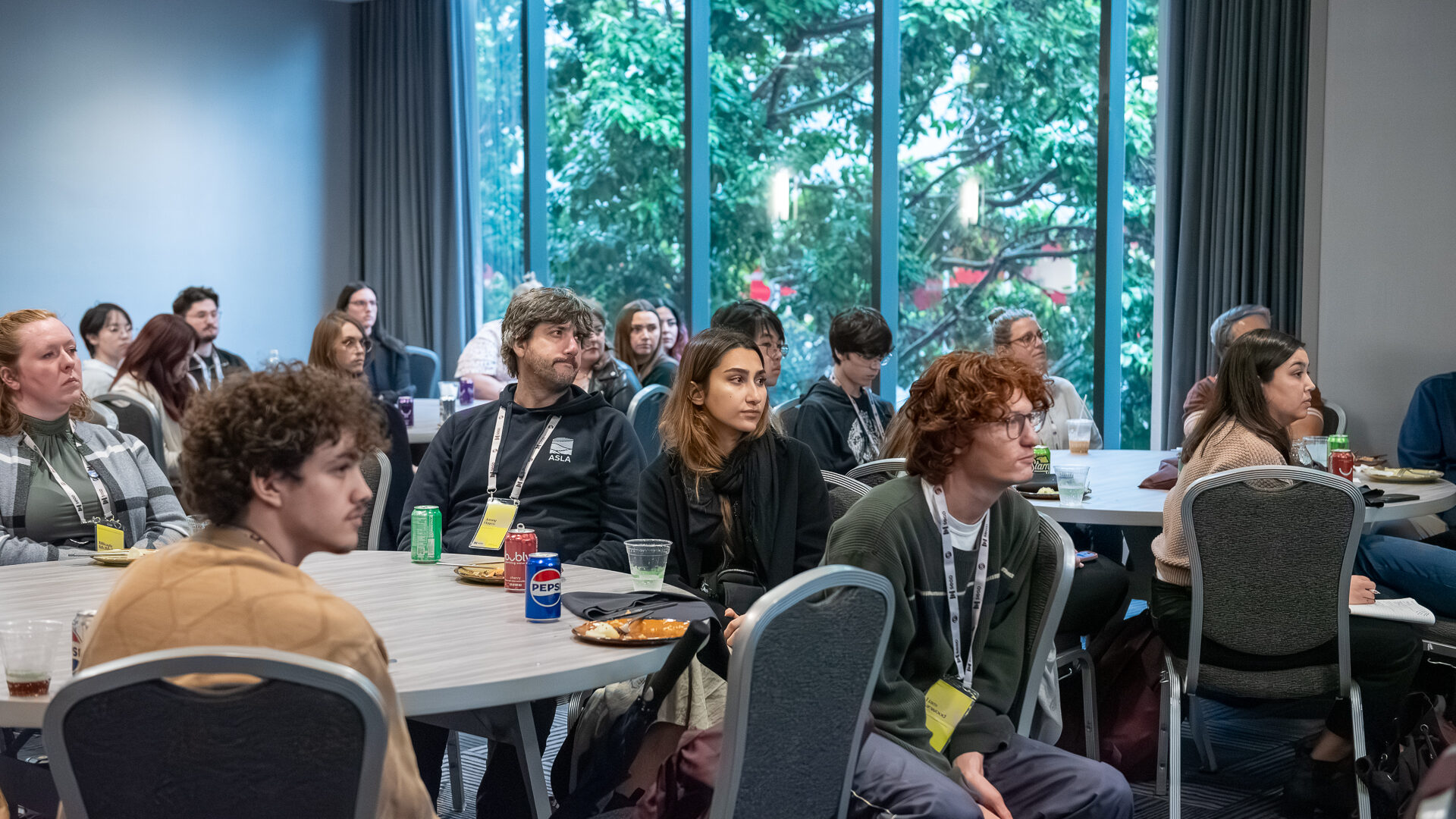
Shaping the Future of Experiential Design: The 2026 SEGD Academic Summit
June 24–25, 2026 | 12:30–5:00 PM EDT each day
The 2026 SEGD Academic Summit brings together leading educators, practitioners, researchers, and students to examine what design does and what it can do at a moment when the discipline is being asked harder questions than ever. Over two afternoons and four richly programmed sessions, sixteen speakers will share work that challenges inherited assumptions, reimagines the classroom, and pushes the boundaries of experiential and environmental graphic design.
From contested histories to generative AI, from intergenerational co-design to participatory public typography, this year’s program reflects a field in active conversation with itself and with the communities it serves.
DAY ONE: Wednesday, June 24
Session 1: Questioning Historical Narratives in Design
The summit opens with a session that asks designers and educators to look honestly at how history has been told and who has been left out of that telling.
Dori Griffin (University of Florida) leads with a self-reflexive, critically situated account of teaching graphic design history through a pluriversal lens, narrated through a series of annotated historical objects. Her work confronts the institutional barriers and systemic inequities that make this kind of teaching both necessary and difficult.
Savli Divekar (National Institute of Design / NID Ford Foundation) presents an interactive archival project built around oral histories of the 1947 Partition, focusing on the spatial micro-histories of Sindhi women in Bombay/Mumbai. The project treats archives as living, empathy-based environments that prompt reinterpretation rather than closure.
Heidi Dargle (University of Notre Dame) investigates how exhibition design can function as feminist historiography, a method for decoding what has been omitted from dominant narratives and making those omissions visible through spatial, interactive, and embodied experience. Her central case study traces the intertwined histories of weaving and computation, using them as a lens to examine the systemic erasure of women’s labor in science and technology.
Christopher Cote (University of Tennessee, Knoxville) rounds out the session by arguing that publishing itself can function as a core mode of experiential graphic design. His Framework for Making Others Public offers a transferable model for designers working with archives, communities, and contested histories, activating under-circulated material while generating new social relations.
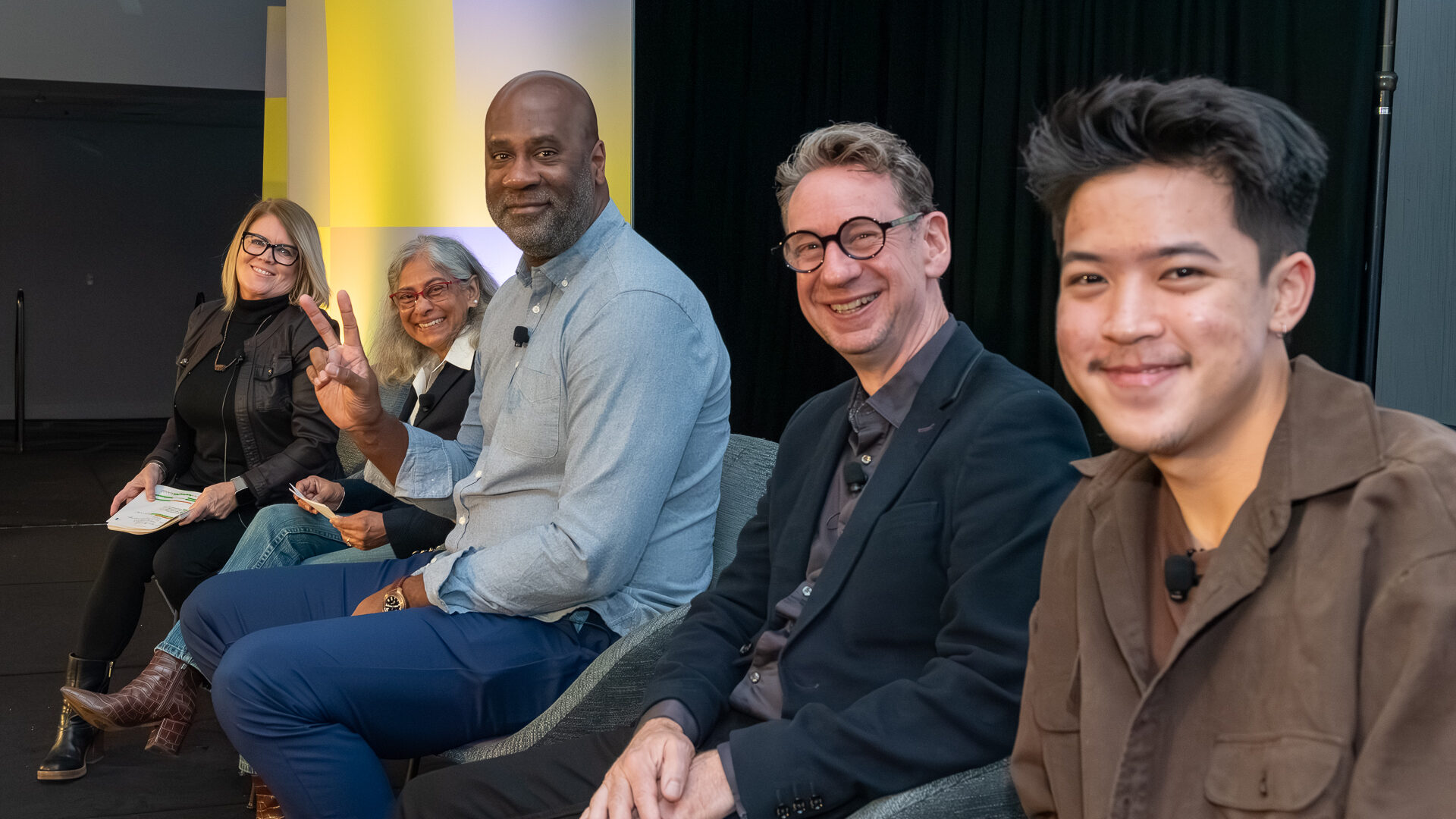
Session 2: Learning Through Participation
The afternoon session turns to the classroom and the studio, exploring how experiential learning can shift students’ understanding of design’s relationship to people, place, and community.
Timothy McNeil (University of California, Davis) makes the case for engaged, hands-on pedagogies within university museums, arguing that academic museums are uniquely positioned to take creative risks and that physical making carries irreplaceable cognitive value.
Kimberly Mitchell (University of Tennessee, Knoxville) presents a case study in intergenerational co-design, in which sustained community engagement with older adults produced measurable shifts in student perceptions of age and broadened students’ understanding of who belongs in the designed public.
Samantha Perkins (Arizona State University) introduces the concept of ThirdPlaceSpace, approaching exhibition environments not as containers for completed knowledge, but as pedagogical spaces in motion, activated by the way people encounter, inhabit, and interpret designed space.
Marwa Alkashif (Wartburg College) presents a framework for transforming a traditional typography course into a scaffold for interdisciplinary and experiential learning, bridging foundational design education and socially engaged placemaking through spatial thinking and community engagement.
Breakout Discussions: Wednesday
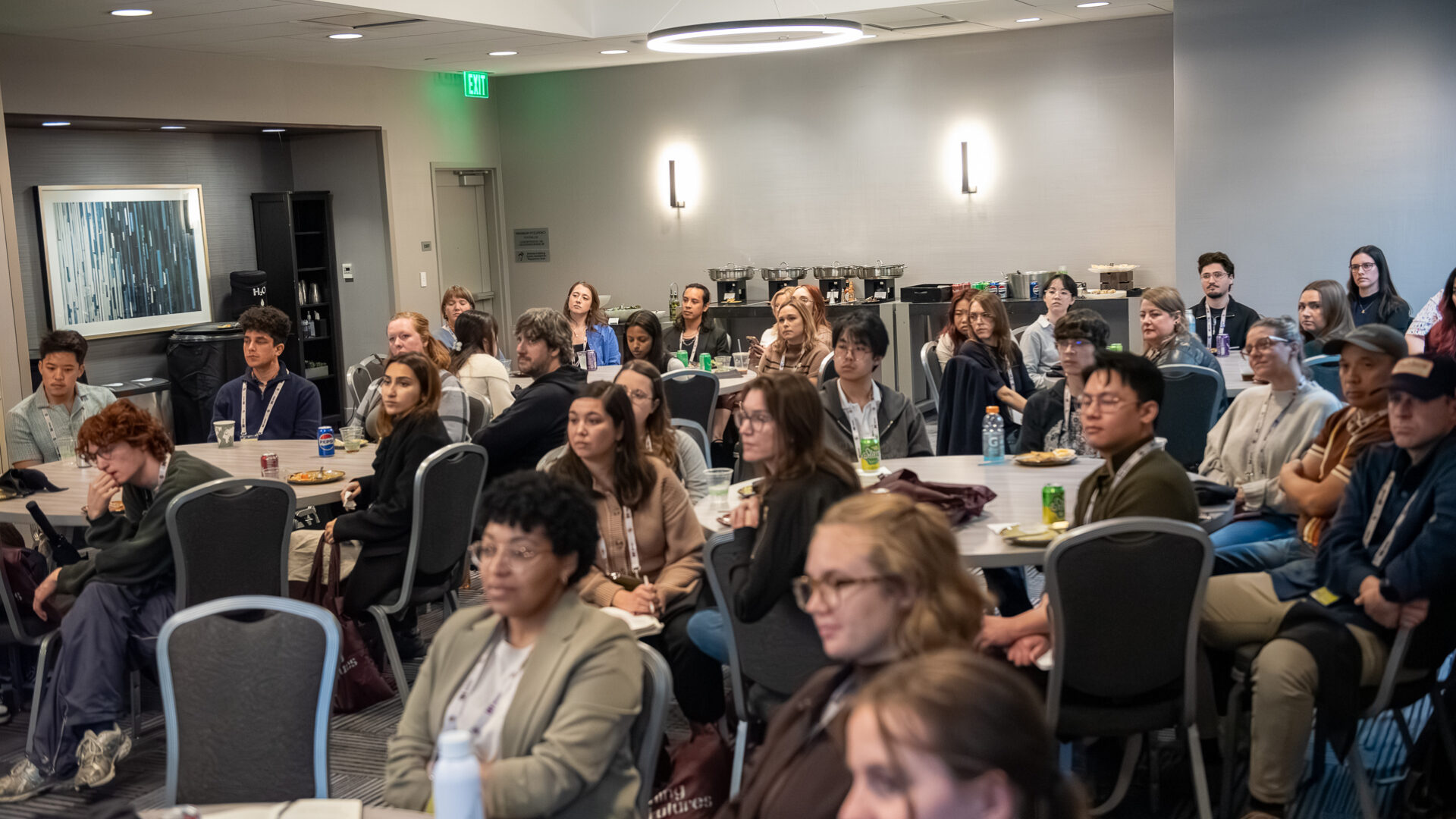
Two concurrent conversations close out the day: Education + Practice: Building the Bridge examines the persistent gap between design education and professional practice, and Shifting Workplace Experiences takes up what firms have learned from the post-2019 reshaping of work and what it means for mentorship, junior designers, and design curricula.
DAY TWO: Thursday, June 25
Session 3: Transforming Prescriptive Norms Through Design
Thursday opens with a session that challenges the fixed assumptions embedded in how we design spaces and experiences and asks what becomes possible when those assumptions are set aside.
Andrea Benatar (Interior Architects) proposes reframing spatial design entirely around the visitor experience rather than industry typology, asking what unexpected beauty emerges when we remove the category labels and design purely for how people feel and move through space.
Nathan Lachenmyer (Sitara Systems) introduces social legibility: the ways experiential environments shape what visitors infer about others’ beliefs and readiness for collective action. His paper asks how designers can make shared states perceptible in public space, particularly in social-impact contexts.
Soumya Kalhan (Fashion Institute of Technology) presents a music-driven, multisensory exhibition concept exploring how immersive environments can transform personal memory into shared spatial experience, designing storyfeeling, not just storytelling.
Kristin Lilley (Fashion Institute of Technology / Kristin Lilley Design) examines the physical and physiological effects of color on children in learning environments, with particular attention to students with color deficiencies, ADHD, trauma histories, and autism spectrum conditions.
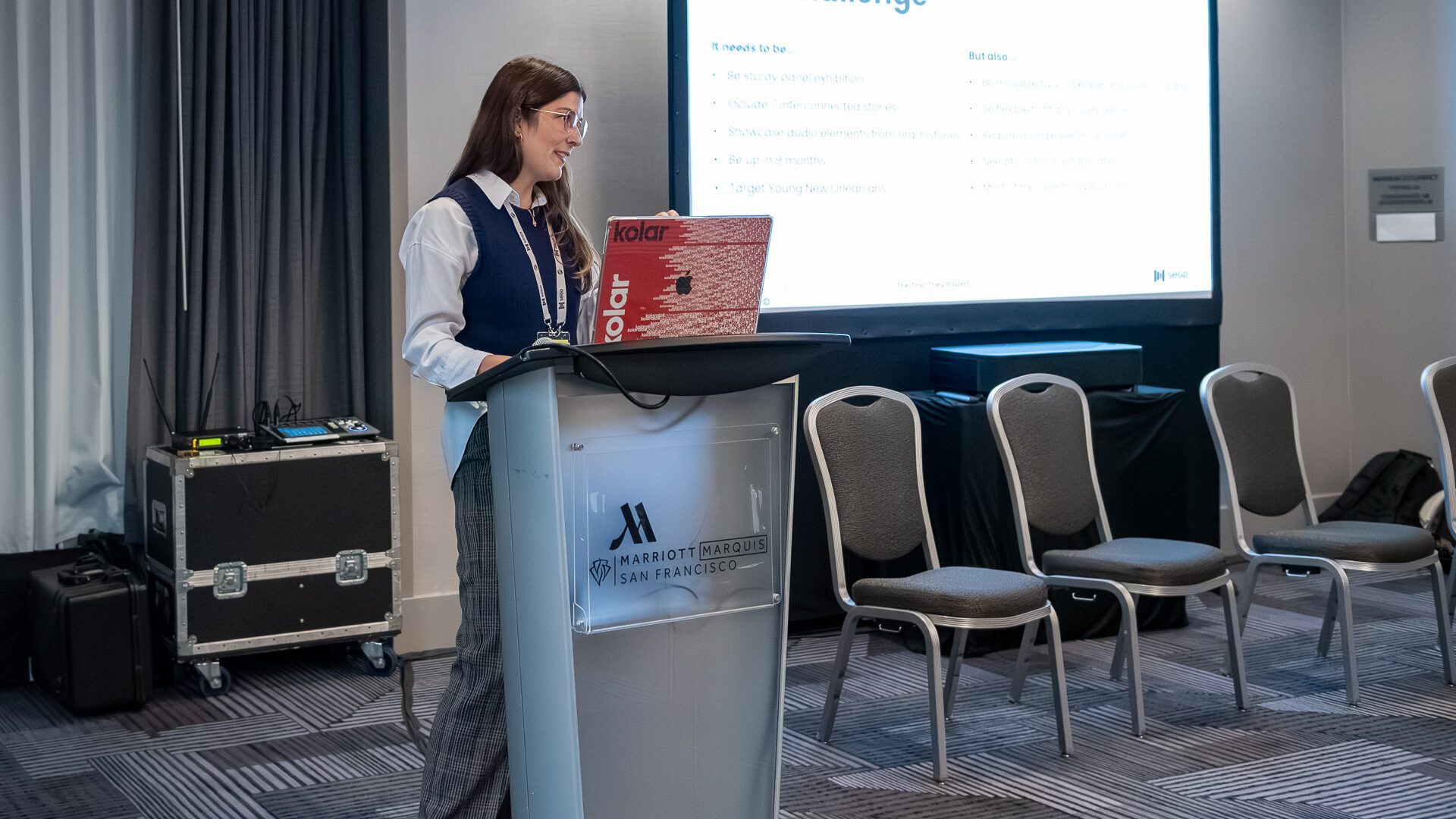
Session 4: Designing Beyond Boundaries
The final session showcases work that crosses disciplinary lines, expands the definition of the designed public, and reimagines what design education can ask of students.
Muhammad Rahman (University of Cincinnati) presents a studio model centered on a single constraint-driven question: What can a bus stop sign pole become? The work integrates functionality, storytelling, and aesthetics as an interconnected civic system.
Huiwon Lim (Iowa State University) shares a cross-disciplinary studio project integrating experiential graphic design and UX design, developed around hypothetical interactive digital experiences and on-site kiosk concepts for zoo visitors.
This year’s GDA Student Award goes to Joanna Brauer (Georgia Institute of Technology) for Air Play, a children’s museum exhibition built around open-ended experimentation with intangibles, tested twice at the Children’s Museum of Atlanta. Her work reflects hard-won lessons about thinking like a child and designing for discovery.
Dain Won (University of Florida) closes the session with a participatory typography project that brought the lived experiences of international graduate students into a shared public space, framing that space as a platform for listening, recognition, and collective emotional expression.
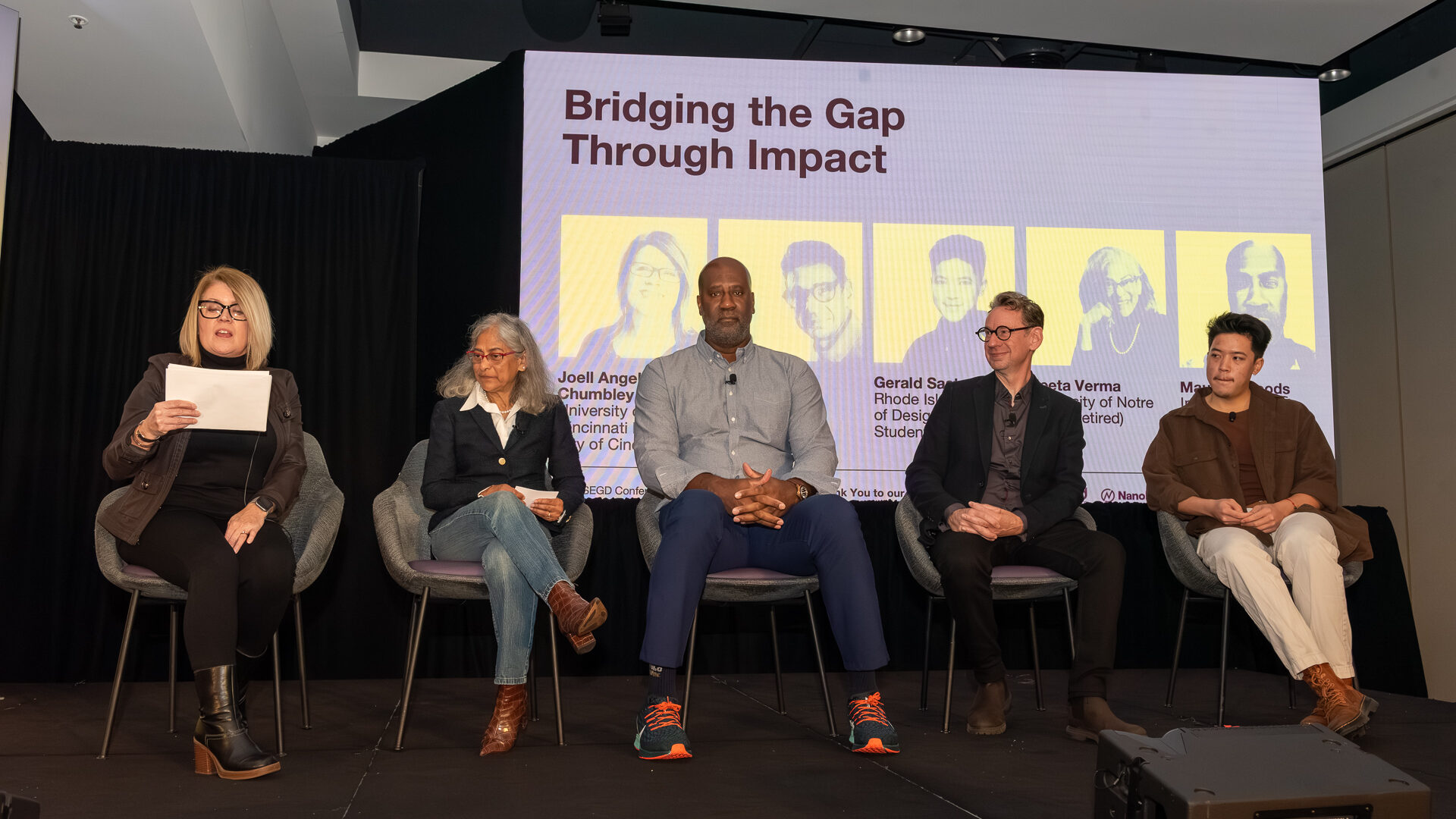
Breakout Discussions: Thursday
Thursday’s conversations focus on the question shaping every creative field right now. AI and Generative Tools in EGD Pedagogy examines how faculty and students are navigating AI integration in design education, covering its ethics, opportunities, and tensions. AI and Generative Tools in EGD Practice turns to the profession, asking how industry leaders are building AI into workflow and where the field needs clearer guidance.
The 2026 Summit is a rare opportunity to engage in conversation with the educators, practitioners, and researchers who are defining what experiential design is and can be. Whether you are navigating higher education, professional practice, or the increasingly porous boundary between them, this program was built with you in mind.
We look forward to seeing you there.
People also viewed
-
2026 SEGD Academic Summit
2026 SEGD Academic Summit
-
2026 SEGD Xlab New York
2026 SEGD Xlab New York