Hyperquake Brings the Library of Congress Collections to Life for Young Researchers Through Digital Interactive Design at The Source
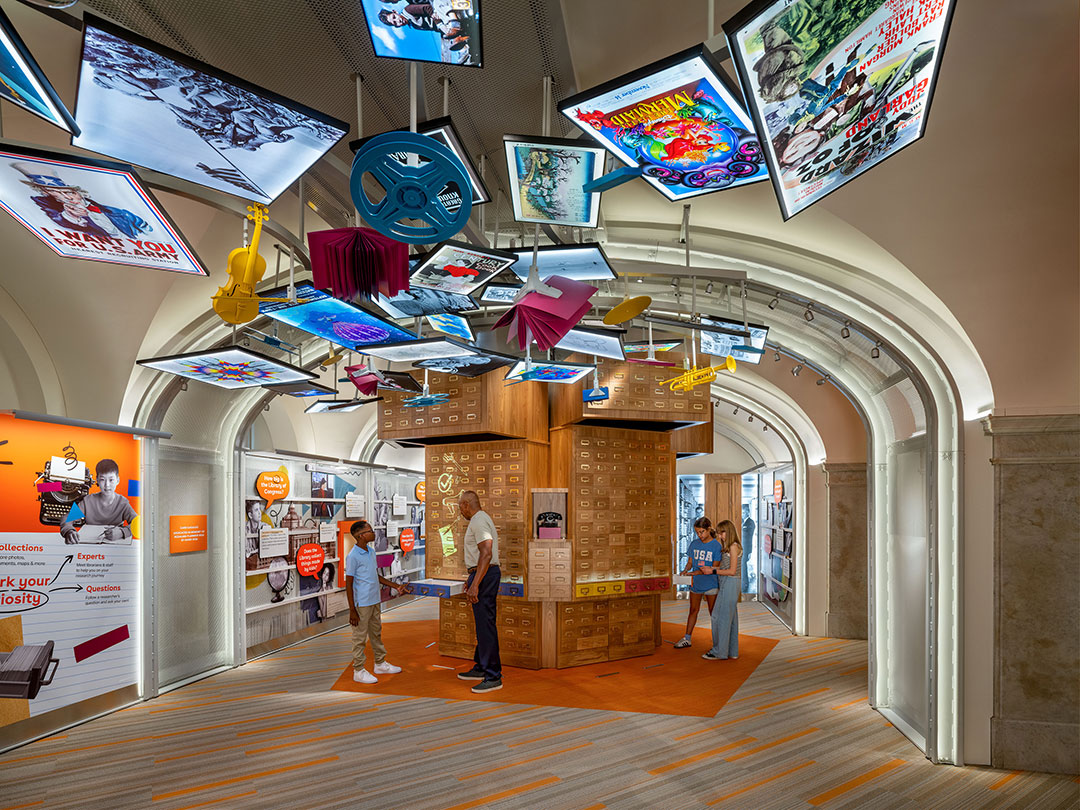
The Library of Congress has opened The Source: Where Curiosity Sparks Discovery, a 4,000-square-foot experiential research gallery designed for children ages 8 to 15. Developed as part of the Library’s broader A Library for You initiative, The Source introduces young visitors to a selection of the Library’s more than 184 million items and gives them hands-on access to primary sources in film, text, sound, and image. SKOLNICK Architecture PLLC led the interpretive planning and exhibition design, selecting Potion (now Hyperquake) to create the gallery’s suite of digital interactive installations forming the core of the experience.
Making Library Research Accessible to Young Visitors
The Source fulfills a longstanding Library goal by opening its research process to younger audiences. These visitors do not yet qualify for a Reader Card. Shari Werb directs the Library’s Center for Learning, Literacy, and Public Engagement. As she explained, people come to the Library to read to learn, rather than learn to read. The Source helps children practice the observation, questioning, and analytical skills that support research with primary sources.
Potion initially led media development for The Source. Hyperquake acquired the acclaimed digital storytelling studio in 2024. Founder Philip R. Tiongson guided the project, while longtime Potion team members, including Claire Bradley, led its production. Their work reflects the studio’s legacy of inclusive, research-driven interactive design. Today, these creators form the core of Hyperquake’s Experiences Team and carry Potion’s heritage into Hyperquake’s expanded practice.
“Our team was honored to take on the responsibility of this project,” Bradley confirmed. “We worked closely with the Library to ensure every interaction felt intuitive and empowering for young researchers. Seeing this work come to fruition has been wonderful.”
Designing Digital Interactives for The Source
Hyperquake’s team designed and developed digital interactives that guide visitors through the Library’s research methods. The Experiences Team collaborated closely with SKOLNICK’s interpretive planners and the Library’s content experts. Together, they created physical and digital experiences that allow children to explore real artifacts at their own pace. Along the way, visitors uncover context and build confidence as emerging researchers.
To further illuminate the Experiences Team’s contributions, Hyperquake has shared this new case study video:
Turning Visitors Into Active Researchers
The experience begins in the Welcome Room, where a whimsical five-sided Card Catalog sparks curiosity. As kids open drawers, projection-mapped animations spill across the structure, revealing objects from across the Library’s collections. Nearby, the Librarian Desk introduces seven Library staff members who share how researchers use primary sources and point visitors toward the four Collections Zones.
In the Collections Room, Hyperquake’s digital interactives anchor each zone. More than 200 RFID-enabled objects can be scanned at Investigation Stations, where kids zoom into manuscripts, magnify historic images, scrub audio recordings, and explore film clips frame by frame. Replica Tools provide hands-on encounters with traditional media formats: a film projector, a record player, and a microfilm reader. Each tool delivers quick, intuitive interactions that encourage kids to explore, compare, and follow their curiosity.
At the Researcher Desk, curated archival boxes highlight how real researchers, including young people, used Library materials to pursue their own questions. The experience culminates at the Source Book. There, visitors create digital collages and add their research intentions to an ever-changing projection wall.
“The Source is not an exhibit: it is a center for active research,” said Mary Franck, Creative Director, Experiences, at Hyperquake. “Our goal was to design interactions that feel magical, intuitive, and empowering. By augmenting tactile artifacts with digital layers of discovery, we help kids see themselves as researchers from the moment they walk in.”
The project reflects a strategic partnership between SKOLNICK and Hyperquake, uniting interpretive planning, exhibition design, and digital innovation. SKOLNICK led the design of the environment, graphics, and interpretive framework, while Hyperquake delivered the interactive installations, content systems, and user experience design that bring the research process to life. Complete project credits are available upon request.
The Source is now open to the public in the Library’s Jefferson Building. Weekday mornings are reserved for school groups during the academic year, with regular hours Tuesday through Saturday.