Better Data, Better Decisions: Inside the 2026 SEGD Salary & Employment Report
Planning 2027 salary budgets? Explore SEGD’s first salary and employment benchmark and what it reveals about compensation, hiring trends, pay transparency, workplace flexibility, career growth, and the future of experiential design.

What does career advancement look like in a profession where job titles, responsibilities, and disciplines vary so widely? And how can we build a stronger workforce when the pathways into our field are becoming increasingly difficult to navigate?
For years, experiential design professionals and employers have relied on compensation benchmarks developed for adjacent industries, from graphic design to architecture. But those benchmarks rarely capture the multidisciplinary nature of our work or the specialized skills required to connect people to place.
The 2026 SEGD Salary & Employment Report represents an important step toward changing that. Drawing on 424 practitioner survey responses and 633 SEGD Job Bank postings from 2020 through 2026, the report establishes the first comprehensive salary and employment benchmark developed specifically for experiential design. It examines compensation, benefits, professional development, hiring trends, and career progression, while introducing a new framework for comparing roles based on responsibility rather than job title.
More importantly, it provides our community with a shared foundation for understanding where we stand today and what we need to strengthen for the future.

Why Our Profession Needs Its Own Benchmarks
The need for better data emerged clearly from SEGD’s 2025 membership research. Members wanted meaningful compensation benchmarks, but the existing resources simply weren’t designed for the work they do.
As SEGD CEO Cybelle Jones explained during the 2026 SEGD Conference Experience in Kansas City, “We are not generic graphic designers.”
An experiential designer may work across environmental graphic design, wayfinding, placemaking, exhibitions, branded environments, and digital experiences. Responsibilities frequently overlap with architecture, interior design, storytelling, strategy, and technology.
That complexity makes traditional salary comparisons difficult. A Senior Designer at one firm might carry responsibilities comparable to a Design Director at another. Titles can reflect company size, organizational structure, or internal conventions as much as actual experience and accountability.
The report addresses this challenge by organizing roles into five levels of professional responsibility, mapping titles across disciplines, and providing corresponding salary bands and medians. For individuals, this creates a clearer reference point for understanding their value and planning career advancement. For employers, it provides a more consistent foundation for establishing compensation, defining positions, and developing talent.
For Kelly Kolar, President, CEO, and Founder of Kolar Design, this framework was among the report’s most valuable contributions. Having built a multidisciplinary brand experience firm over 35 years, Kelly described the difficulty of benchmarking salaries against industries that don’t quite reflect her team’s work. Her firm has historically drawn on several different professional resources to make those comparisons.
With the new SEGD framework, she sees an opportunity to evaluate compensation more meaningfully across her organization. The value extends beyond individual salaries. A shared understanding of responsibilities and expertise can also help firms communicate the value of their services to clients, strengthen job descriptions, and establish more transparent expectations for advancement.

What the Research Reveals About Our Workforce
While compensation was the initial motivation for the research, the findings reveal a much broader picture of the experiential design employment landscape.
During the 2026 SEGD Conference, Cybelle joined Kelly for a NEXPO Talk exploring several of the report’s most significant themes and what they mean for design professionals and studio leaders. Their conversation surfaced a series of interconnected challenges that reach well beyond salary.

The Talent Pipeline: Who Is Coming Next?
One of the report’s most concerning findings is the relatively small proportion of early-career professionals represented in the data. Only 12% of survey respondents had five or fewer years of experience, while entry-level positions accounted for a declining share of SEGD Job Bank postings, falling from 8.7% in 2021 to 6.7% in the latest data.
These figures don’t capture every pathway into the profession. Cybelle acknowledged that the survey’s focus on employed practitioners and the possibility of direct hiring through internships or cooperative education programs may influence the findings. Nevertheless, the trend raises an important question: Are we creating enough opportunities for the next generation to enter and grow within experiential design?
If we don't invest in the next generation, we won't have a profession.
The challenge isn’t simply recruiting young talent. It’s creating the conditions for emerging professionals to learn from experienced practitioners, develop technical and business skills, and envision a sustainable career in the field. Kelly reinforced the importance of investing in the talent pipeline, describing the responsibility that established firms have to cultivate future leaders and transfer knowledge across generations.
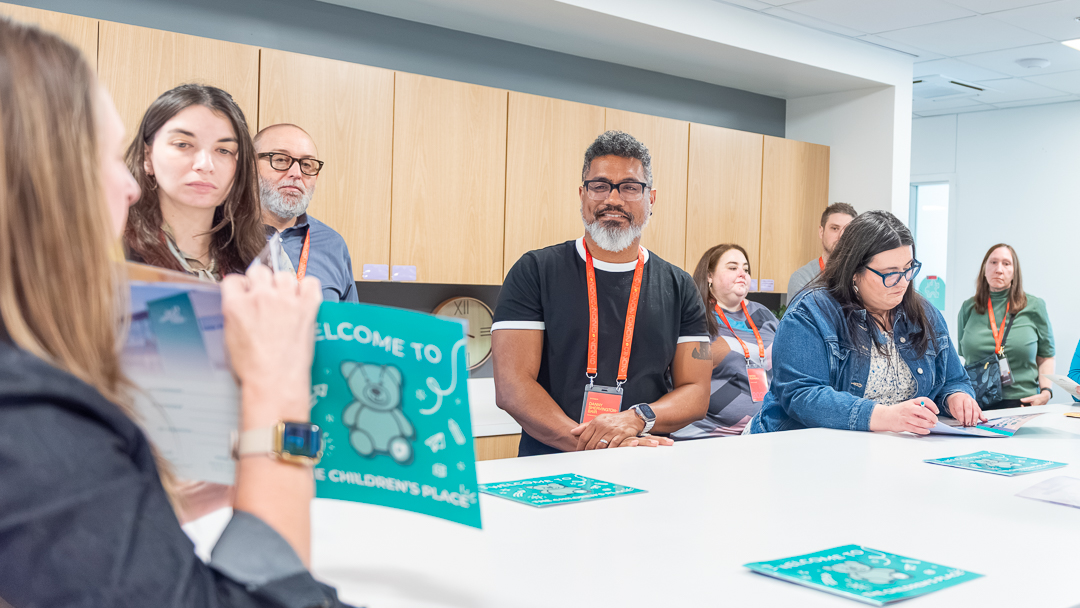
Flexibility, Culture, and the Mentorship Challenge
The research also reveals how dramatically expectations around the workplace have evolved. 55% of respondents work in hybrid arrangements, while only 23% work fully in the office. Flexibility emerged repeatedly as a valued component of employment, and the data showed no visible salary penalty associated with remote work.
Yet the discussion revealed an important tension. The flexibility that experienced professionals value can make it more difficult for emerging designers to receive the informal mentorship and hands-on learning that traditionally happened through daily interactions in the studio. As Cybelle observed, having junior designers in the office accomplishes little if the senior professionals they need to learn from aren’t there.
The challenge for employers is not necessarily choosing between remote work and in-person collaboration. It’s being intentional about how mentorship, knowledge sharing, and professional relationships happen within evolving workplace models.
At Kolar Design, that commitment extends beyond the office. Kelly described how her team participates in studio tours, design education initiatives, community events, and SEGD programming to create opportunities for learning and connection. These experiences reinforce an important idea: workplace culture is not simply a benefit offered to employees. It is something organizations build through shared experiences, professional growth, and meaningful participation.

Professional Development: The Investment Gap
Another significant finding concerns the disconnect between what practitioners want and what employers provide. Professional development emerged as a priority in SEGD’s earlier membership research, yet the Salary & Employment Report found that relatively few employers provide substantial financial support for continued learning.
Only 35% of respondents reported receiving professional development support, despite strong interest in additional training and opportunities for advancement. The need extends beyond technical design skills. Employers identified gaps in business knowledge, leadership development, and understanding the commercial realities of running a design practice.
For Kelly, the issue is closely connected to employee retention and the long-term health of a firm. She discussed her organization’s efforts to create structured learning pathways and the challenges of transferring knowledge that often resides with a small number of experienced employees.
Kolar Design is now exploring how new tools, including AI-supported learning systems, might help make institutional knowledge more accessible to employees across the organization. The broader takeaway is clear: professional development cannot remain an occasional perk. It is an investment in the capabilities, continuity, and future leadership of our profession.

Pay Transparency and the Value of Clear Career Pathways
The report also documents a major shift in compensation transparency. In 2020, approximately one in 13 SEGD Job Bank postings disclosed salary information. By 2023, that figure had risen to roughly one in two, reflecting the growing influence of pay transparency requirements and changing expectations among job seekers.
But publishing a salary range is only part of the equation. Employees also need to understand what distinguishes one level of responsibility from another, what skills they must develop to advance, and how compensation relates to their contributions.
This is where the full report’s five-tier leveling framework becomes especially valuable. By organizing roles according to responsibilities rather than inconsistent titles, it offers employers and practitioners a common language for discussing career growth.
The research also offers an encouraging finding for individuals navigating those conversations: three out of four respondents who negotiated compensation during the previous three years reported successfully securing an increase. At the same time, survey responses highlighted the frustration of employees who felt they needed to leave their organizations to achieve meaningful salary growth.
For employers, the implications go beyond compensation budgets. Transparent career pathways, consistent evaluation criteria, and opportunities for advancement can play an important role in retaining experienced talent.

From Data to Action: Building a Stronger Profession
Throughout their conversation, Cybelle and Kelly returned to a central theme: the future of experiential design depends on how we invest in people.
For studio leaders, the report offers a practical resource for evaluating compensation, strengthening hiring practices, developing career pathways, and identifying gaps in professional development. For practitioners, it provides industry-specific information to support salary conversations, career planning, and a clearer understanding of how responsibilities evolve. For educators and emerging professionals, the findings offer a window into the skills, expectations, and opportunities shaping the employment landscape.
And for the profession as a whole, the research creates an opportunity to move beyond individual assumptions and begin building a more consistent understanding of the value of experiential design.
The report is also a starting point, not a final answer. SEGD intends to continue this research, building on the initial benchmark and expanding the conversations it has started.
As Kelly reflected on the responsibility of developing future talent, “If it’s got to be, it’s up to me. But now it’s up to us.”
That collective responsibility is ultimately what makes this research meaningful. The numbers help us understand where we stand. What we do with that knowledge will shape where we go next.

Explore the Research
2026 SEGD Salary & Employment Report
Developed from 424 practitioner responses and 633 SEGD Job Bank postings, the report provides the first comprehensive compensation and employment benchmark specifically for experiential design.
SEGD Member Preview | Free for Members
Explore key findings, emerging workforce trends, early-career insights, and the challenges of comparing roles across our multidisciplinary profession.
Full Report | Available for Purchase
Access the complete research, including salary bands and medians, a five-tier role leveling framework, discipline and regional comparisons, benefits, negotiation findings, hiring trends, and insights for employers and practitioners.
Watch the Conversation: What the Data Tells Us
Cybelle Jones, CEO, SEGD, in conversation with Kelly Kolar, President, CEO, and Founder, Kolar Design
Recorded at the 2026 SEGD Conference Experience Kansas City | October 23, 2026
What happens when research meets the realities of running a design business? In this candid conversation, Cybelle and Kelly explore the findings of the 2026 SEGD Salary & Employment Report, discussing compensation, the emerging talent pipeline, workplace flexibility, professional development, pay transparency, and the responsibilities employers share in developing the next generation.
Hear how the research connects to real decisions about people, culture, and the future of experiential design.
People also viewed
-
Read more SEGD Salary & Employment Report

SEGD Salary & Employment Report
-
On Belonging—Help Us Build a Better Picture of Our Field

On Belonging—Help Us Build a Better Picture of Our Field