Local Projects Camouflage Exhibition Design Explores Visual Deception
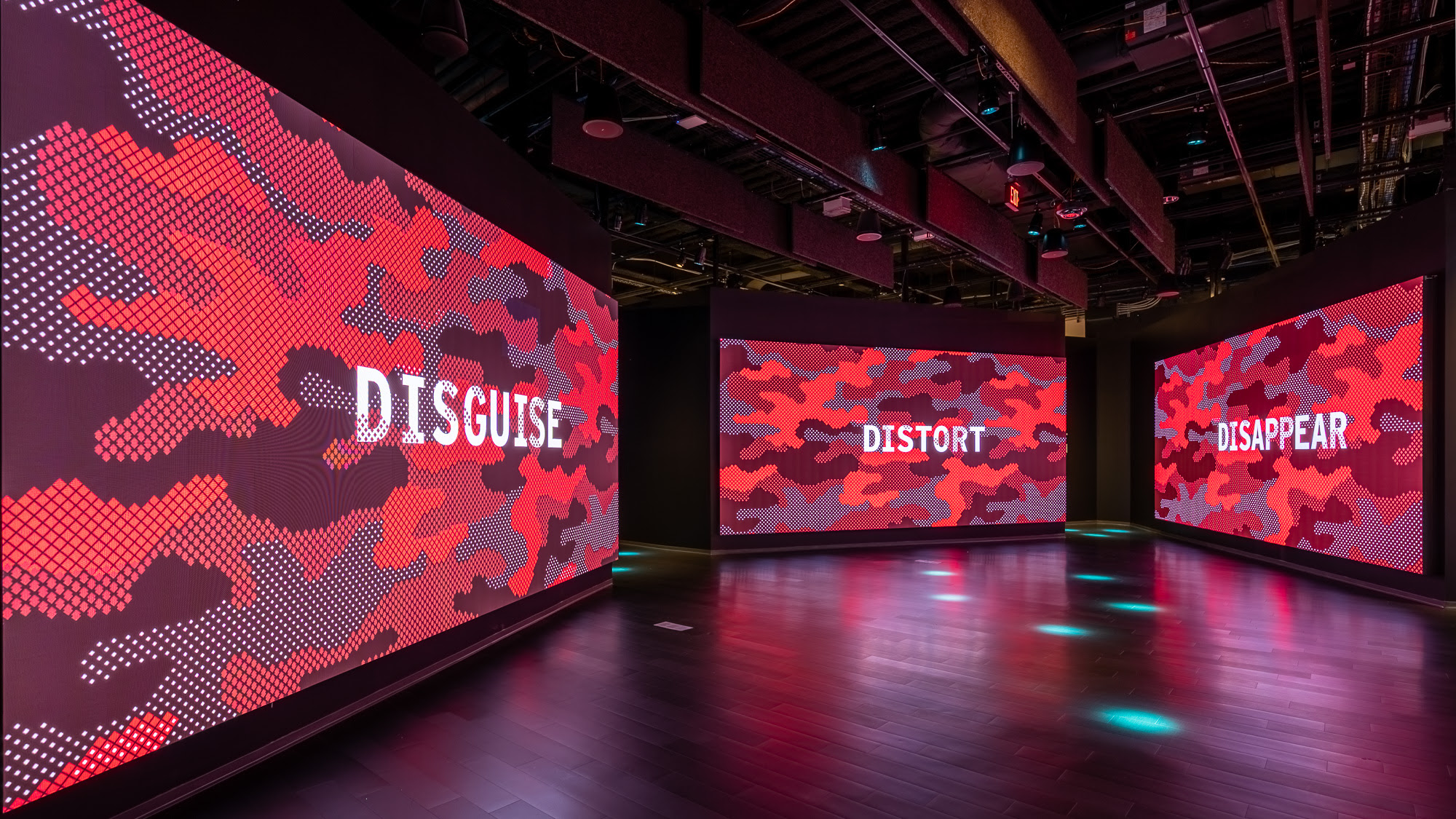
The Local Projects camouflage exhibition design at the International Spy Musuem turns the story of camouflage into an immersive gallery experience. The project was featured in a Fast Company article titled “How Camouflage Became the Original Deception.” The exhibition explains how camouflage moved from military use into modern design.
Local Projects created the media environment for the exhibition. Large digital screens display bold camouflage patterns and short words such as “DISGUISE,” “DISTORT,” and “DISAPPEAR.” As a result, visitors quickly see the main ideas behind camouflage.
Visitors walk through moving patterns and strong color. This environment shows how camouflage can hide objects or break up shapes. In addition, the changing visuals help explain how designers use contrast and pattern to guide what people see.
According to Fast Company, camouflage first appeared during World War I. At that time, artists and designers helped hide military equipment from enemy aircraft. They used pattern, color, and visual tricks to make objects harder to detect.
Today, these same ideas appear in many areas of design. For example, camouflage influences fashion, graphic design, and digital media. Through this exhibition design, Local Projects helps visitors understand how visual deception works.
To learn more about the history and cultural impact of camouflage, read the full article in Fast Company.