Designing With Purpose: Celebrating Sustainability Through SEGD Award-Winning Projects
SEGD Award-winning projects show how experience design can embed sustainability through community, narrative, and place—creating work that supports long-term social and environmental impact.
Sustainability in experience design is not a single strategy or outcome—it’s a way of thinking about how design intersects with people, place, and the living systems that surround us.
Across exhibitions, public spaces, workplaces, and cities, SEGD Award-winning projects demonstrate that sustainability can be embedded through many lenses: community-led processes, meaningful storytelling, responsible material choices, and deeper connections to local ecosystems. These projects reflect an evolving understanding of design responsibility—one that extends beyond aesthetics and function to consider long-term impact, equity, and care.
Through recognitions such as the Sustainability Impact Recognition and the Life-Centered Design Award, SEGD celebrates work that reimagines how experiences are conceived, built, and sustained over time. Together, the projects highlighted here offer inspiration for designers seeking to create work that is not only engaging, but regenerative—socially, culturally, and environmentally.
Life Centered Design Award
The following project is the first to receive SEGD’s Life Centered Design Award, which recognizes a holistic approach to experience design that considers social, ecological, and spatial systems together.

The Hive — Albany, New York
Design: The Urban Conga
Award: 2025 SEGD Global Design Awards — Merit Award, Sylvia Harris, Life Centered Design Award
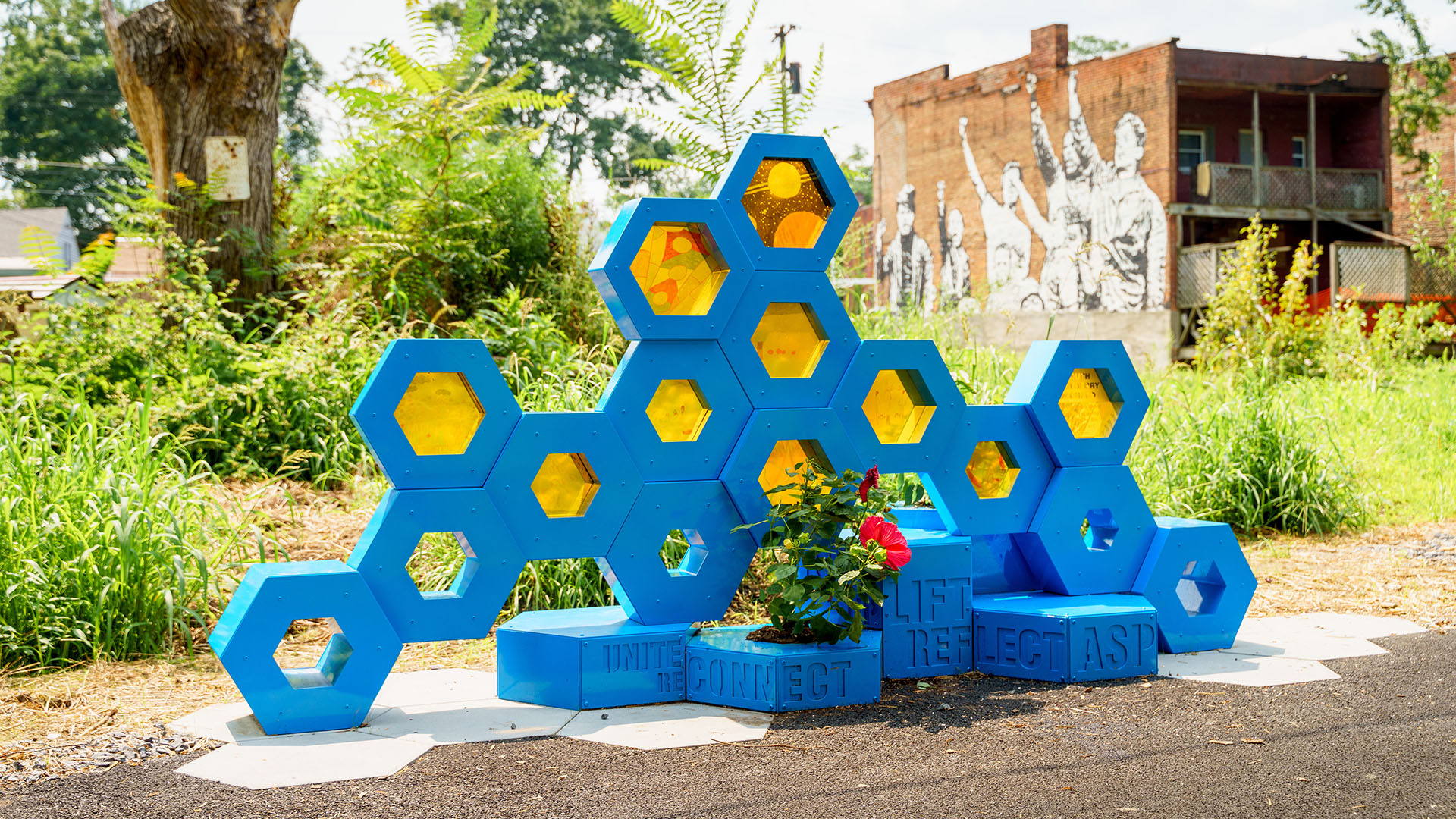
The Hive is a community-led transformation of a city-owned alley in Albany’s West Hill neighborhood, reimagined as an open-ended, fully accessible public space shaped directly by the people who live there.
Developed through years of collaboration with residents of all ages, the project centers community leadership and equitable access to the public realm. Rather than prescribing a single function, The Hive creates a flexible platform for gathering, reflection, play, and everyday use—allowing the space to evolve alongside the neighborhood it serves.
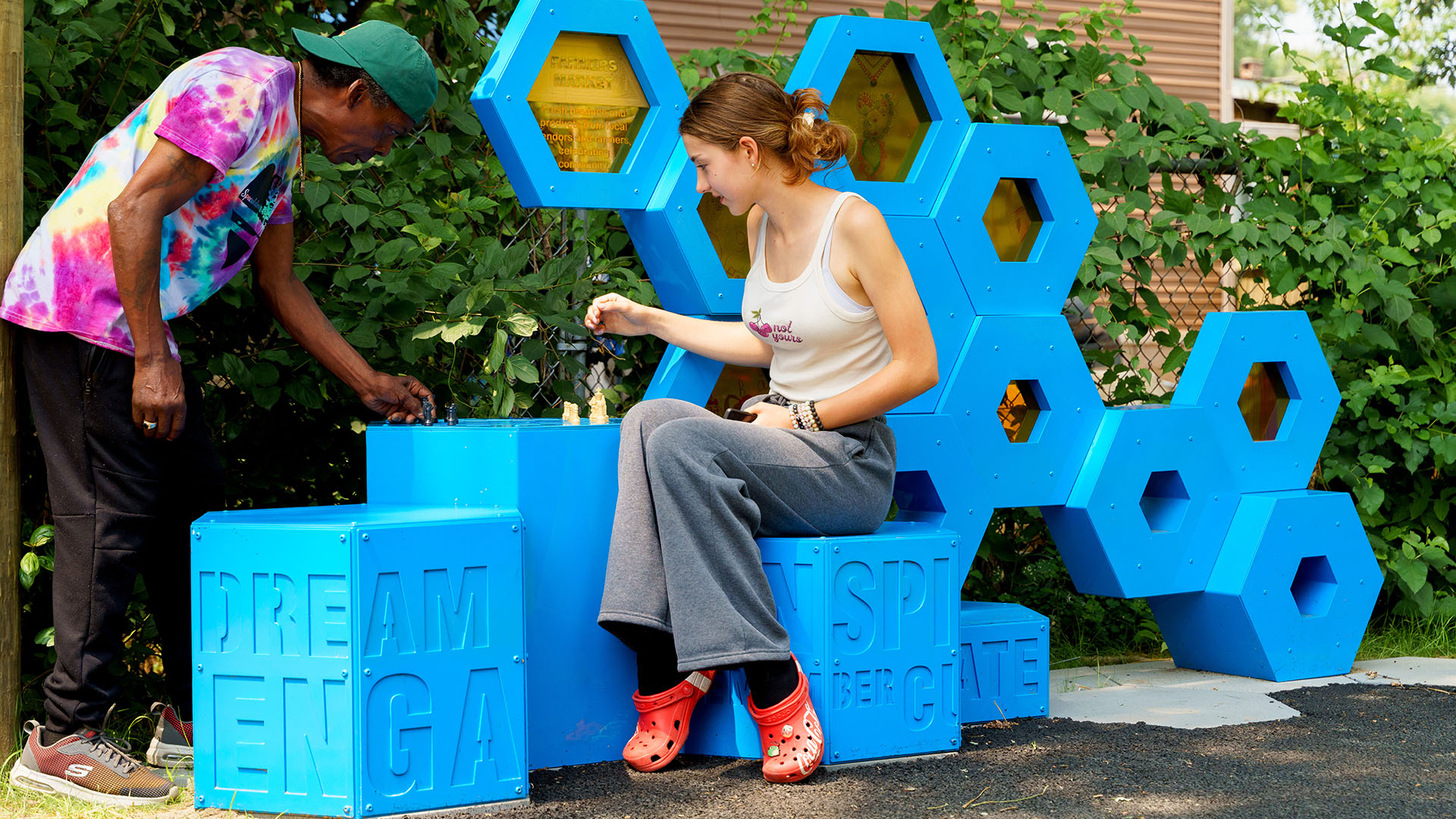
Honeycomb-like structures line the alley, each incorporating artwork created by neighborhood youth, residents’ chosen words of aspiration, and community-driven wayfinding that highlights local assets such as gardens, compost stations, and farmers’ markets. Together, these elements transform a once-neglected corridor into a vibrant greenway rooted in memory, connection, and care.
Recognized for its holistic integration of process, narrative, and place, The Hive exemplifies life-centered design by addressing social equity, environmental restoration, and collective authorship as inseparable parts of the design outcome.
Sustainability Impact Recognition
The following projects represent the first cohort to receive SEGD’s Sustainability Impact Recognition, reflecting the many ways sustainability can be expressed through process, narrative, and place.
Climeworks Visitor Centre — Mammoth Facility
Design: Gagarin
Fabrication: Irma Studio
Award: 2025 SEGD Global Design Awards — Merit Award, Sustainability Impact Recognition
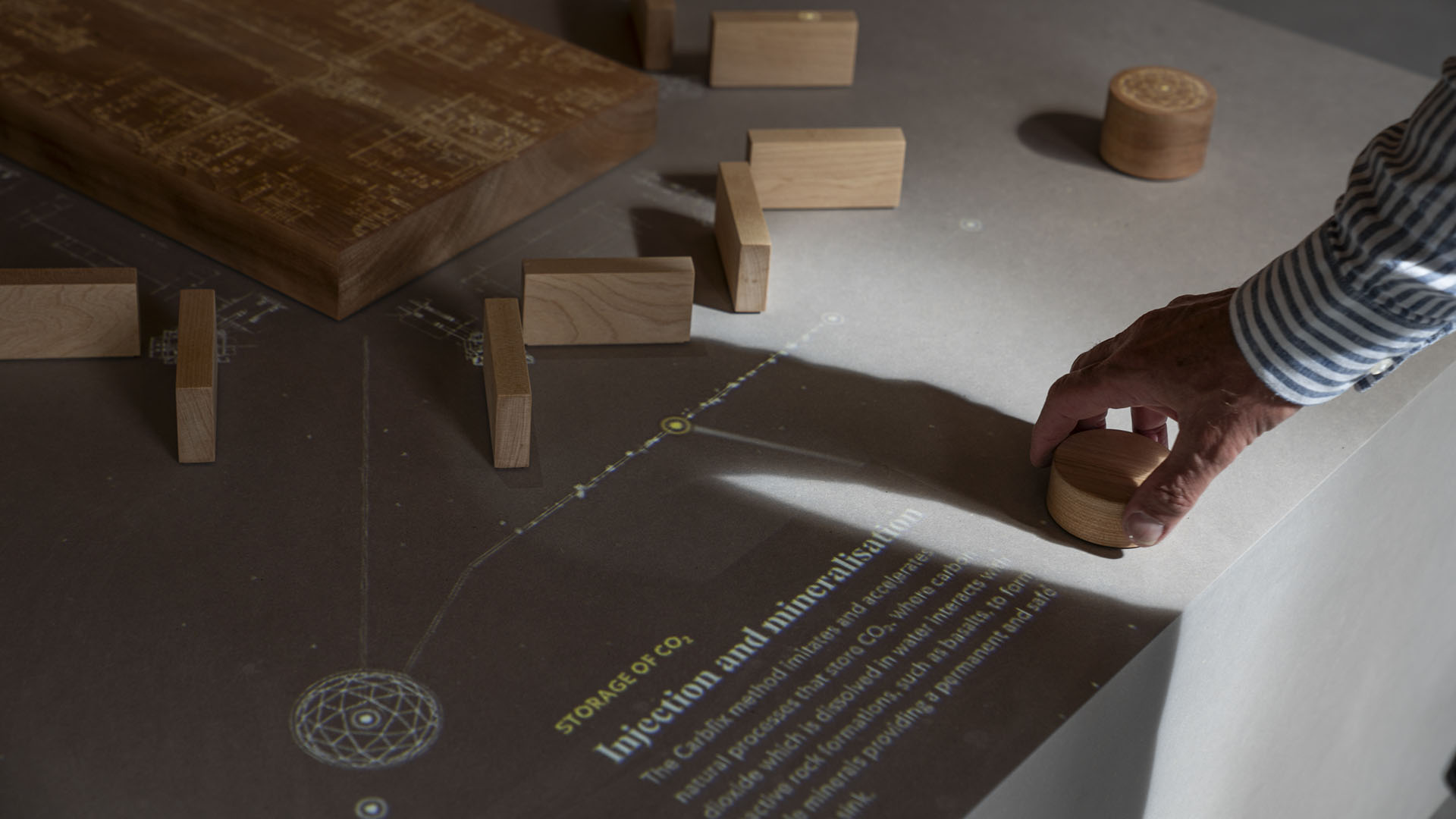
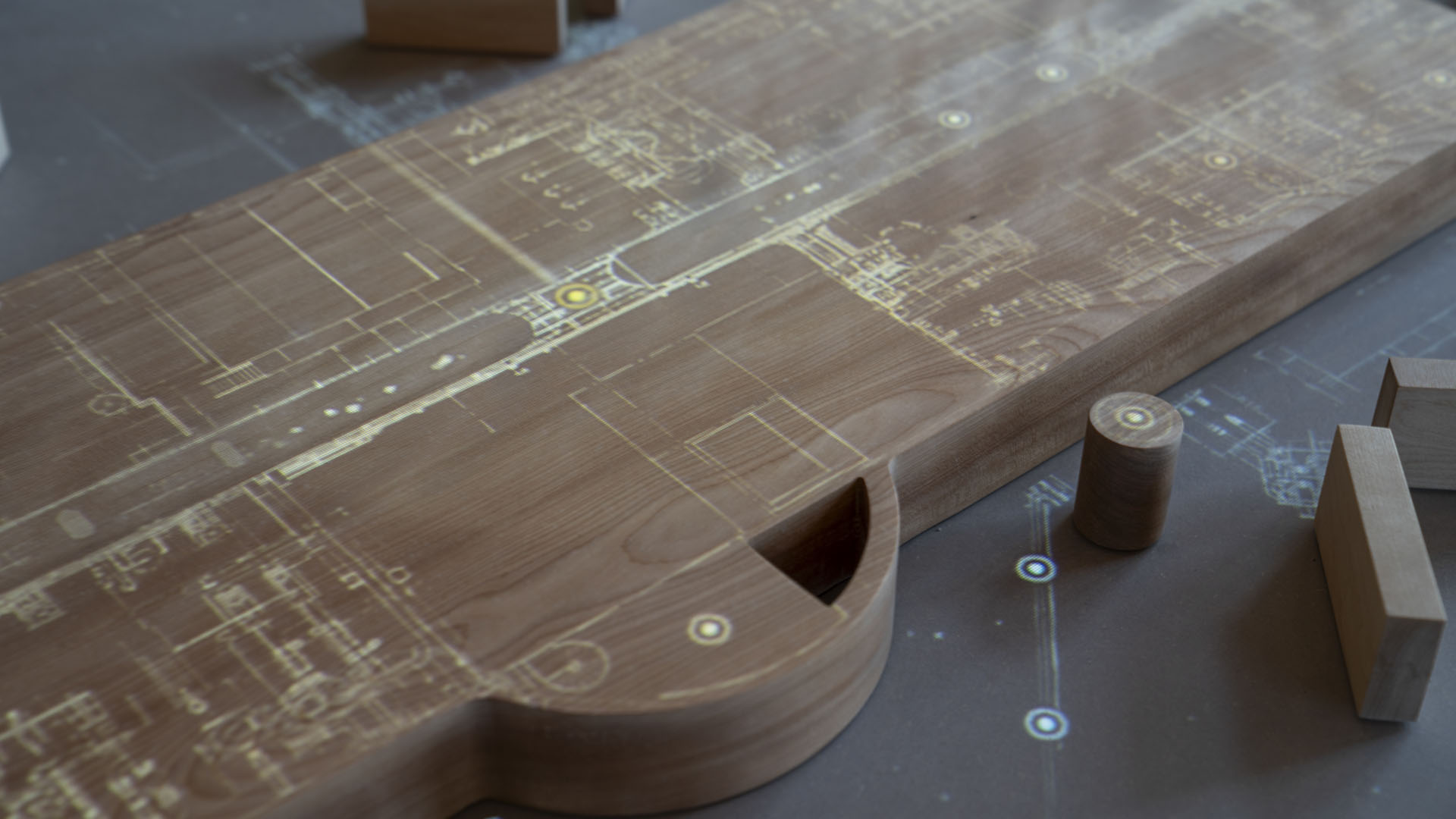
Opened alongside Climeworks’ Mammoth DAC+S plant in 2024, the Climeworks Visitor Centre translates complex carbon capture processes into an accessible, hands-on learning experience. A physical model of the facility allows visitors to engage through tangible controls, activating detailed explanations of each module’s role in carbon capture and making invisible systems legible and engaging.
The table structure is made from Valchromat MDF using sustainable wood fibres, while the model and interaction knobs are crafted from locally sourced birchwood and fabricated by local producers to minimize transport. The installation operates on 100% renewable energy.


Australia Post Support Centre — Richmond, Victoria
Design: Diadem
Award: 2025 SEGD Global Design Awards — Merit Award, Sustainability Impact Recognition
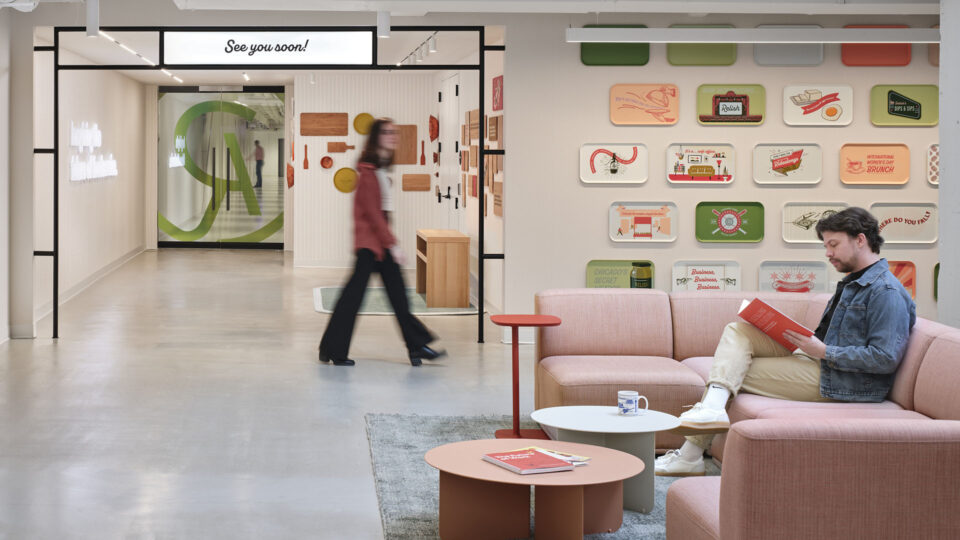
Australia Post Support Centre’s relocation from Melbourne’s CBD to Richmond reflects a strategic shift toward operational efficiency and cultural realignment. Designed as a “support office” rather than a traditional headquarters, the workplace embraces an open, industrial aesthetic that mirrors the organization’s logistics roots. The wayfinding system supports accessibility and usability across eight floors, reinforcing a workplace culture grounded in transparency, connection, and responsible resource use.
Sustainability and circularity informed key design decisions, including the use of recycled and low-impact materials such as saveBOARD—demonstrating how workplace design can meaningfully reduce environmental impact while supporting long-term sustainability goals.

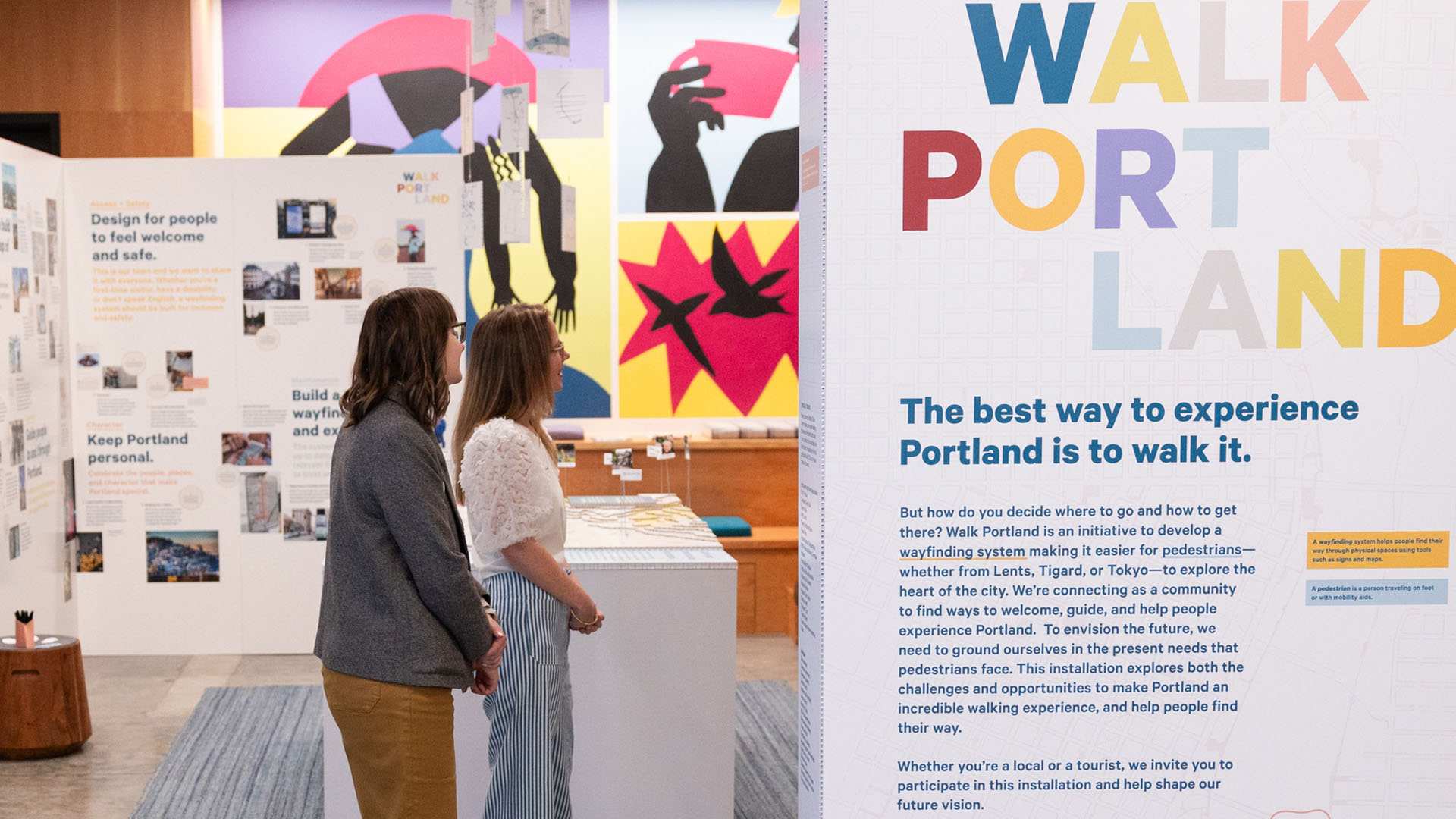
Walk Portland — Portland, Oregon
Design: sparks+sullivan
Fabrication: PVS Graphics
Award: 2025 SEGD Global Design Awards — Honor Award, Sustainability Impact Recognition
Walk Portland reimagines pedestrian wayfinding as a tool for sustainability and access. Developed in collaboration with Travel Portland and PBOT, the system helps people navigate the city on foot—whether they are longtime residents or first-time visitors.
By making walking easier and more intuitive, the project supports active transportation, strengthens neighborhood connections, and reinforces the environmental and cultural benefits of exploring the city at a human pace.
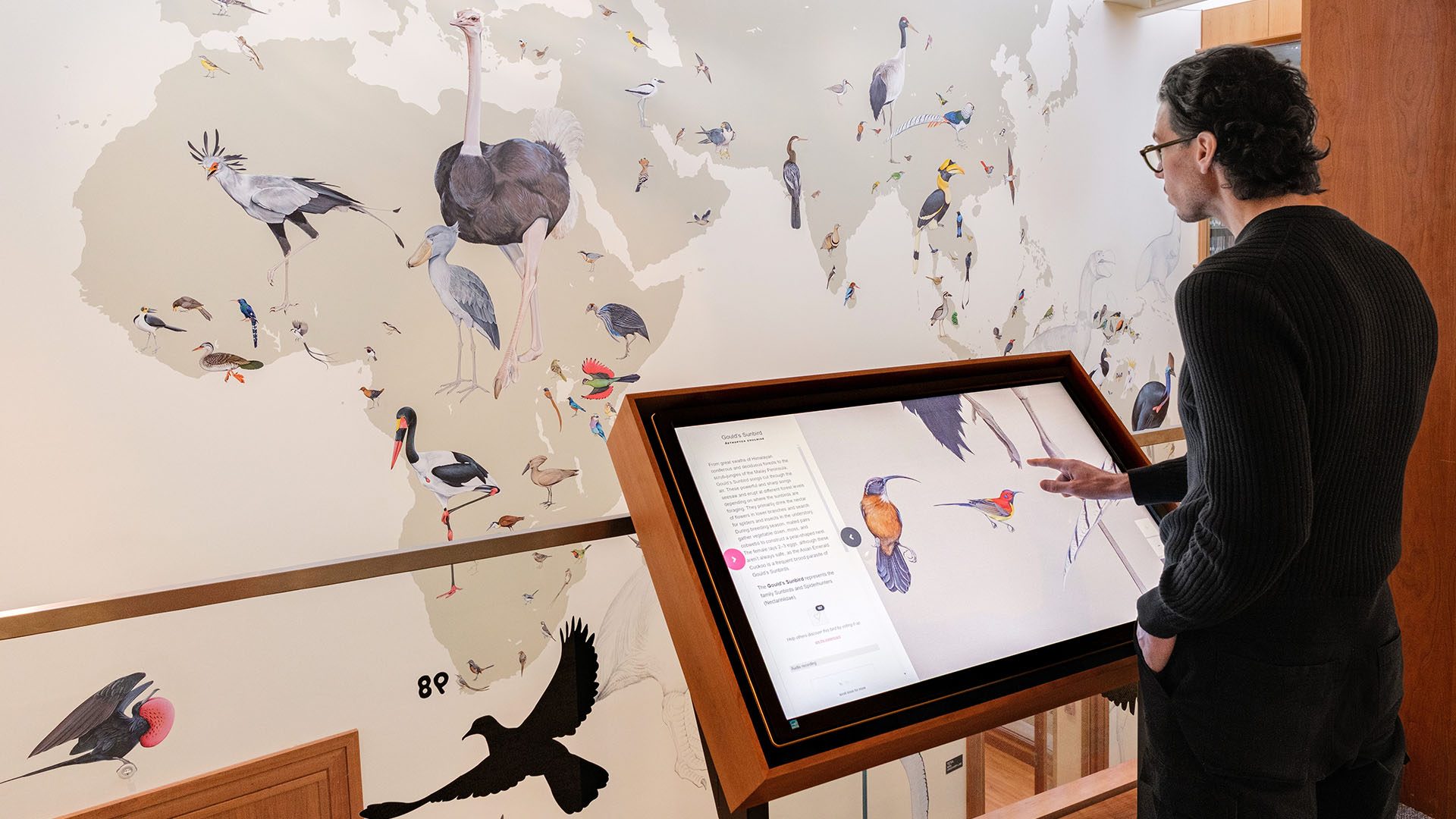
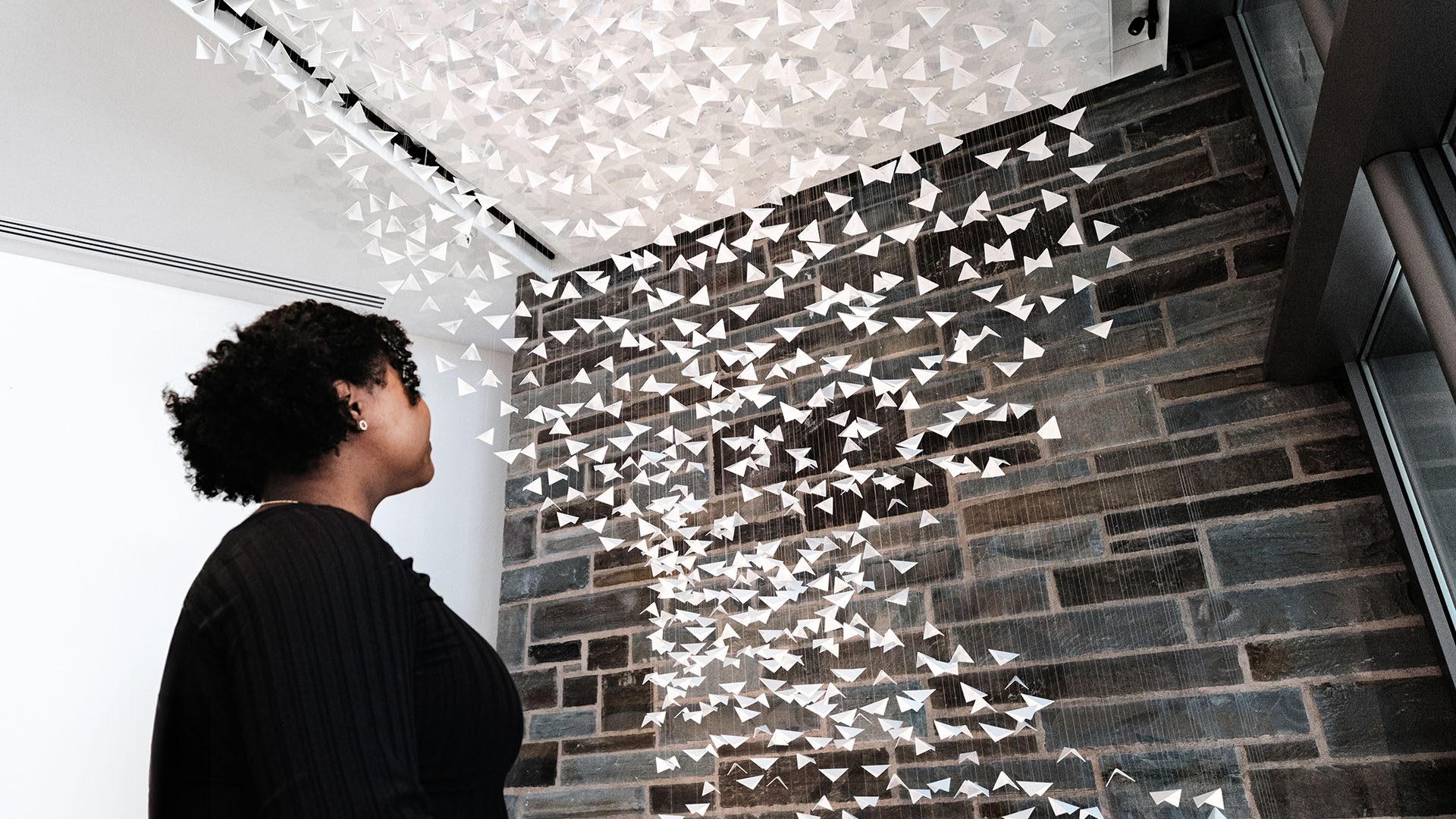
Cornell Lab of Ornithology Visitor Center — Ithaca, New York
Design: C&G Partners, Cornell University
Fabrication: Hadley Exhibits
Award: 2025 SEGD Global Design Awards — Merit Award, Sustainability Impact Recognition
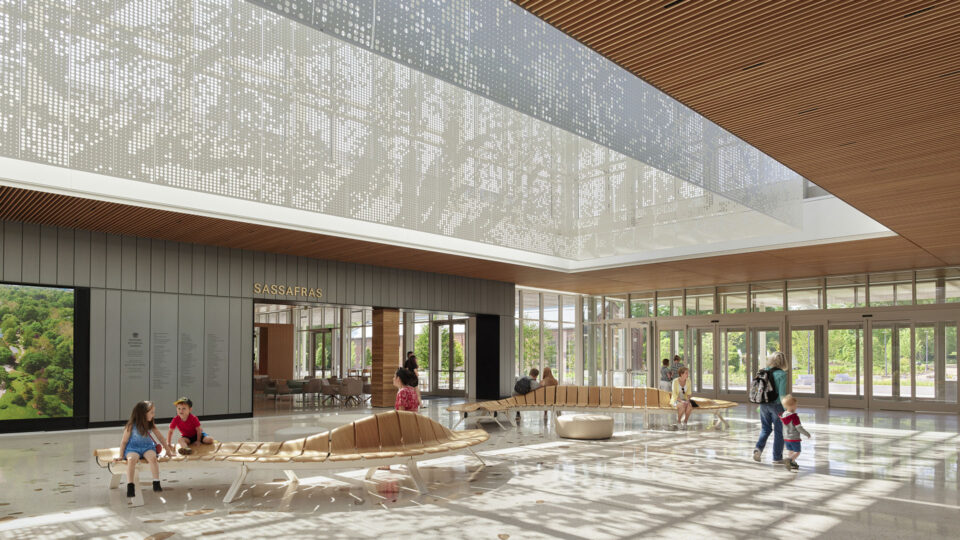
C&G Partners designed exhibits, interpretive graphics, and interactive experiences for the Cornell Lab of Ornithology Visitor Center, translating complex research into engaging public-facing experiences. The project highlights the vital role birds play in ecological systems while supporting the Lab’s global work in research, education, and citizen science.
Through interactive and informative exhibitions, the design brings the Cornell Lab of Ornithology’s commitment to conserving Earth’s biological diversity to life—connecting visitors to birds, nature, and the importance of participatory science.
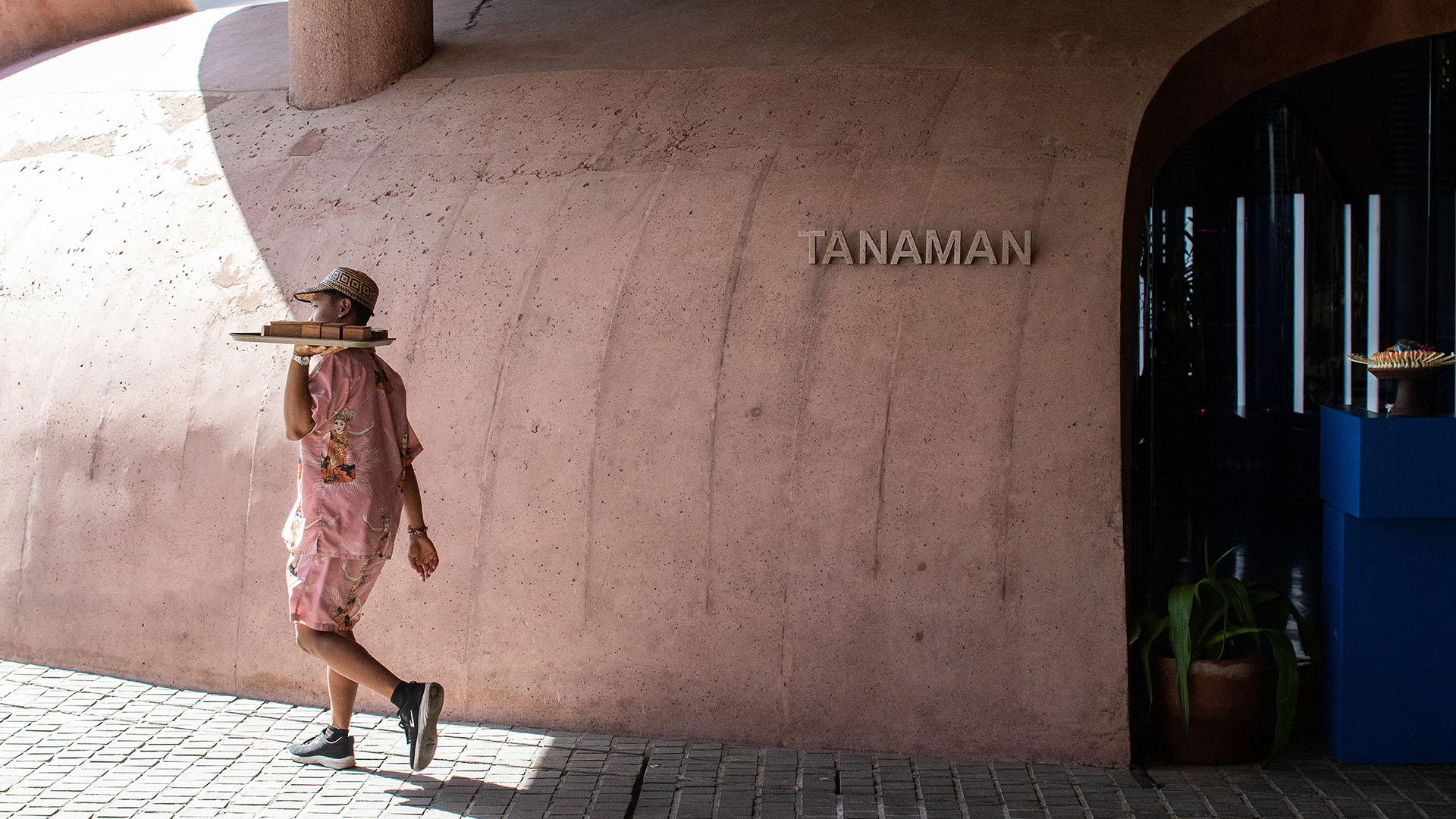
Desa Potato Head — Seminyak, Bali
Design: Studio Ongarato
Fabrication: Potato Head
Award: 2025 SEGD Global Design Awards — Merit Award, Sustainability Impact Recognition
Potato Head Studios is part of a creative village in Seminyak, Bali, that integrates hospitality, culture, and sustainability through a site-wide master plan and wayfinding system. The design reflects Desa Potato Head’s commitment to Balinese culture while supporting long-term ecological responsibility.
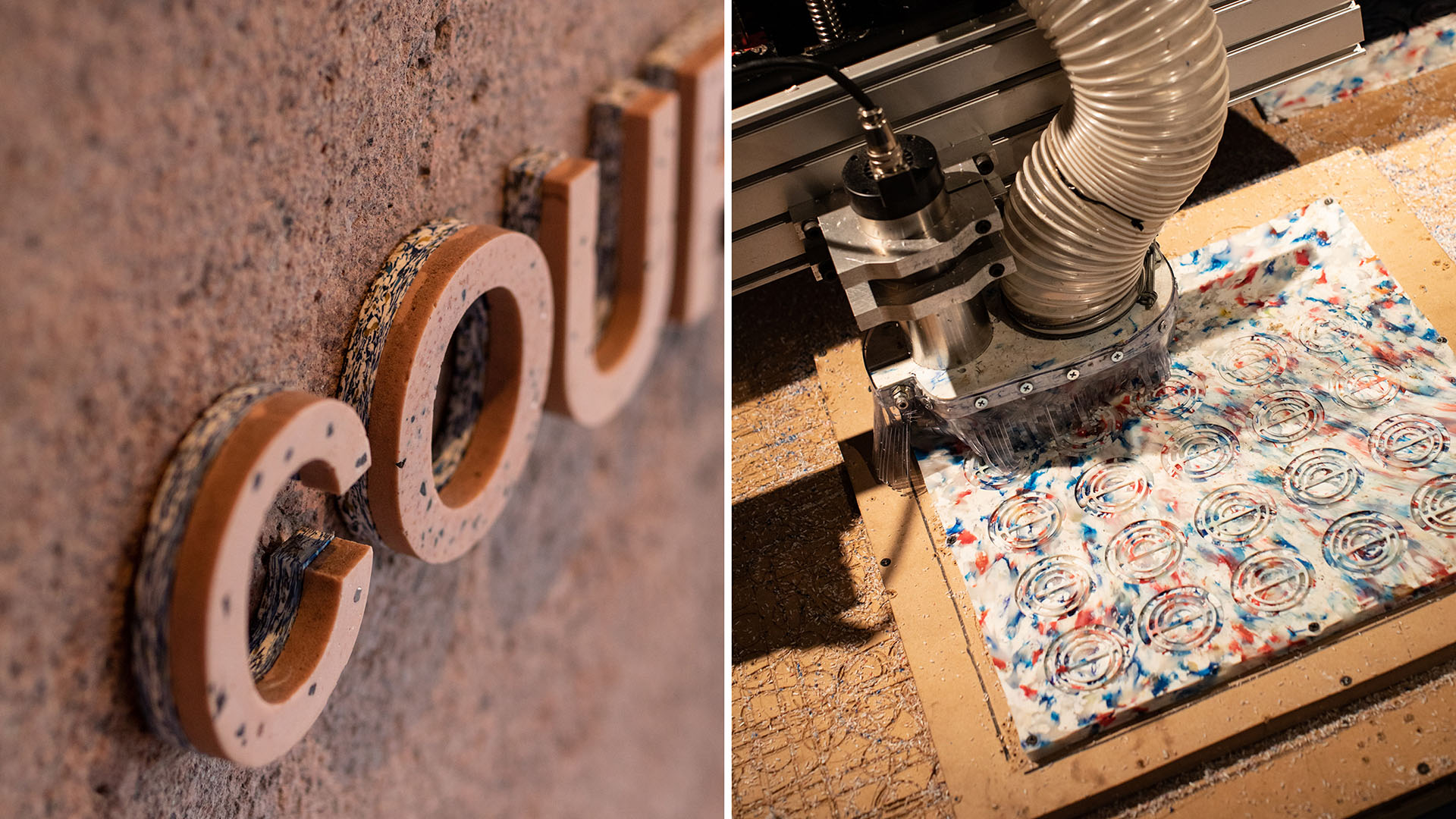
As part of Potato Head’s commitment to becoming a zero-waste operation, the wayfinding system contributes through material reuse and regenerative practices. Wayfinding text is crafted from recycled plastic produced in Potato Head’s sustainability lab and used across directional signage, directories, and amenity symbols. Aggregate material for the concrete totem signage was salvaged from excess building materials, reinforcing a circular approach to material use.

On Tap: The Columbia Tap Trail — Houston, Texas
Design: University of Houston, School of Art & Gerald D. Hines College of Architecture and Design
Award: 2025 SEGD Global Design Awards — Merit Award, Sustainability Impact Recognition
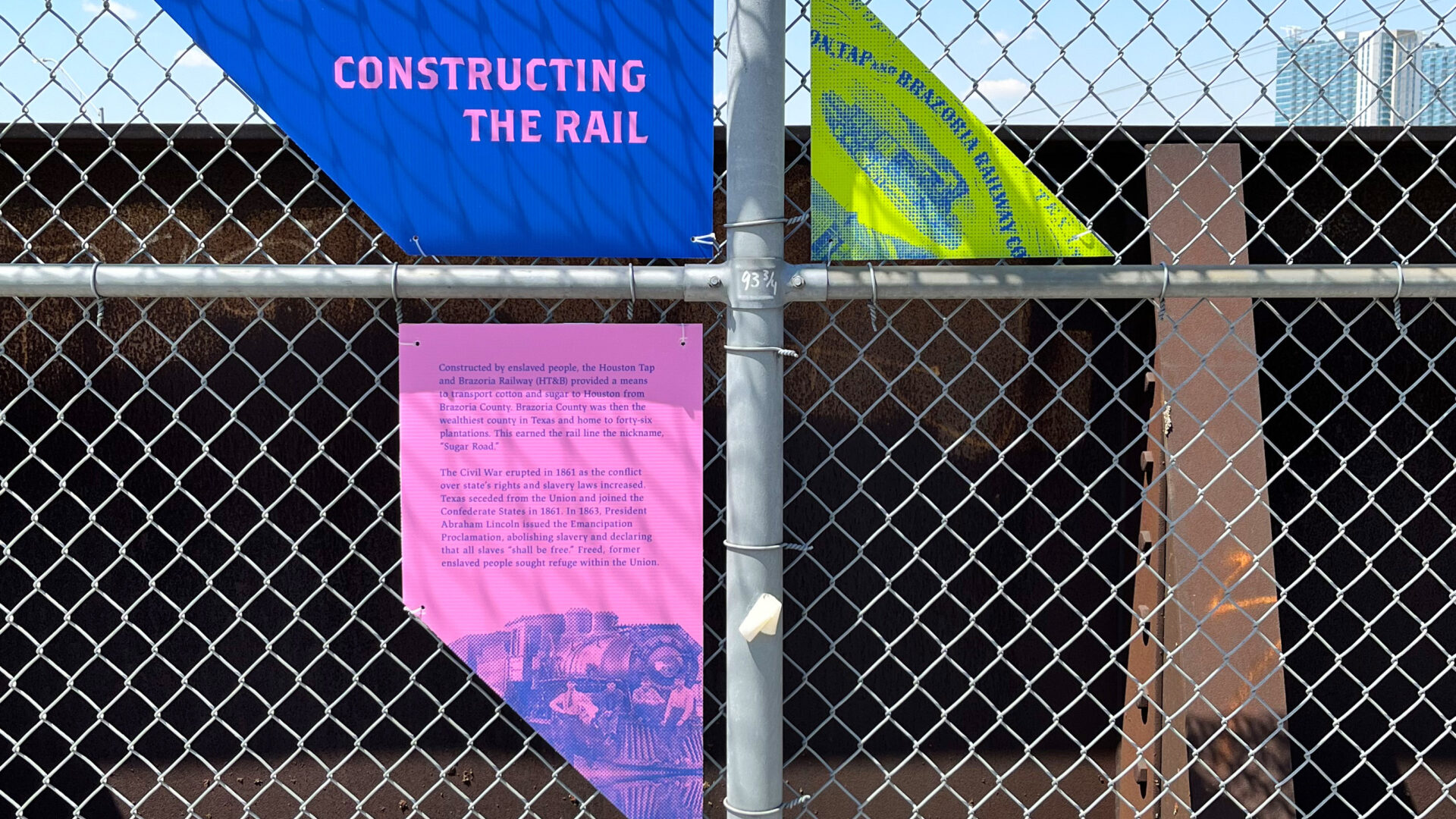
On Tap: The Columbia Tap Trail is a community-engaged, interdisciplinary collaboration focused on Houston’s historic Columbia Tap Trail, exploring its potential to strengthen neighborhood connectivity while supporting well-being and active living. Developed with local partners, the project centers cultural history and community participation as key drivers of sustainable urban futures.
Recycled materials—such as bicycle wheels—were used whenever possible, supported by ongoing visits to the Houston Recycle Warehouse as material needs emerged. This hands-on approach reinforced circular design principles while grounding the project in local resource reuse.
A Call to Design What Comes Next
Together, these projects illustrate that sustainability in experience design is not a single solution, but a spectrum of approaches—rooted in community, education, ecology, and place. The Sustainability Impact Recognition and Life-Centered Design Award are not just honors; they are an invitation to think differently about the role design plays in shaping the world we share.
As the SEGD Global Design Awards continue to evolve, these recognitions aim to inspire designers to push beyond conventional metrics and imagine work that creates lasting, positive ripple effects.
Think your project belongs here?
Submissions to the SEGD Global Design Awards are open through March 15. Designers working across exhibitions, digital experiences, wayfinding, placemaking, and beyond are encouraged to apply and be part of the growing movement toward sustainable, life-centered experience design.
People also viewed
-
SEGD Announces World-Class Jury for the 2026 Global Design Awards
SEGD Announces World-Class Jury for the 2026 Global Design Awards
-
The 2026 SEGD Global Design Awards Entry Portal Is Now Open
The 2026 SEGD Global Design Awards Entry Portal Is Now Open
-
SEGD Announces 2025 Global Design Awards Winners; Debuts New Sustainability Recognitions
SEGD Announces 2025 Global Design Awards Winners; Debuts New Sustainability Recognitions