Designing for Permanence: Content, Context, Cost—and Time
Interpretive experience installations are shaped by many forces—content, context, cost, and time. While some experiences are designed to endure for generations, others are intentionally fleeting, responding to the urgency of the moment.
In this two-part SEGD Weekly series, Keith Helmetag offers timely insights into the opportunities and responsibilities inherent in both permanent and impermanent design. Drawing from decades of practice across cultural, civic, and public landscapes, Keith examines how designers can make intentional choices—whether creating work meant to last, or experiences designed to live briefly but powerfully.
Part One focuses on permanence: interpretive experiences embedded in landscape and architecture, shaped by material longevity, authentic storytelling, and long-term stewardship.
Part Two will explore impermanence, where experimentation, adaptability, and temporal media invite innovation and immediacy. Stay tuned for Part Two.
Together, the series invites designers to consider (im)permanence as a core design criterion—alongside content, context, and cost—when shaping meaningful experiences.
Part One: Permanence
Assignments embedded in landscape and architecture, articulated through timeless stories, account for a high percentage of commissions. When these opportunities arise, it is paramount to embrace the moment for long-term success. Permanence in today’s fast-paced world still thrives.
Five Guidelines for Designing Permanent Interpretive Experiences
1. Integration with context
Integration must begin at the onset of a project—not as an afterthought. To achieve unification with place, landscape, and architecture requires immersion, research, and patience. Spend time at the site, taking cues from seasonal and daily changes. Watch how people interact with their place. Examine past and future landscape and architectural prompts that can be augmented with experience overlays. Avoid veneer solutions; long-lasting impressions require thoughtful integration.
2. Timeless content
Presenting timeless content is challenging. Search for authenticity in the footprint of a place and the actual words spoken. Avoid interpretation shaped by the moment and subject to change over time. Dig deep for firsthand accounts and documentation. Abstain from generic, non-contextual sources.
3. Durable materials
Enduring work requires an understanding of durable materials. Chisel and sandblast in stone. Build with metals and finishes that wear well over ages. The choice of inferior materials will result in degradation and, ultimately, replacement.
4. Cost considerations
Cost is always a factor. Laminating experience gestures atop architecture and landscape is more cost-effective than a freestanding creation. Be prepared to convey the value of a well-executed rendition over immediate implementation.
5. Proven methodologies
Tried-and-true methodology is a wise approach for lasting installations. Use technologies, fabrication methods, and materials with proven efficacy. If new technologies are considered, test them through prototyping to ensure long-term performance and mandate warranties.
Case Studies
Scenic Hudson’s West Point Foundry Preserve
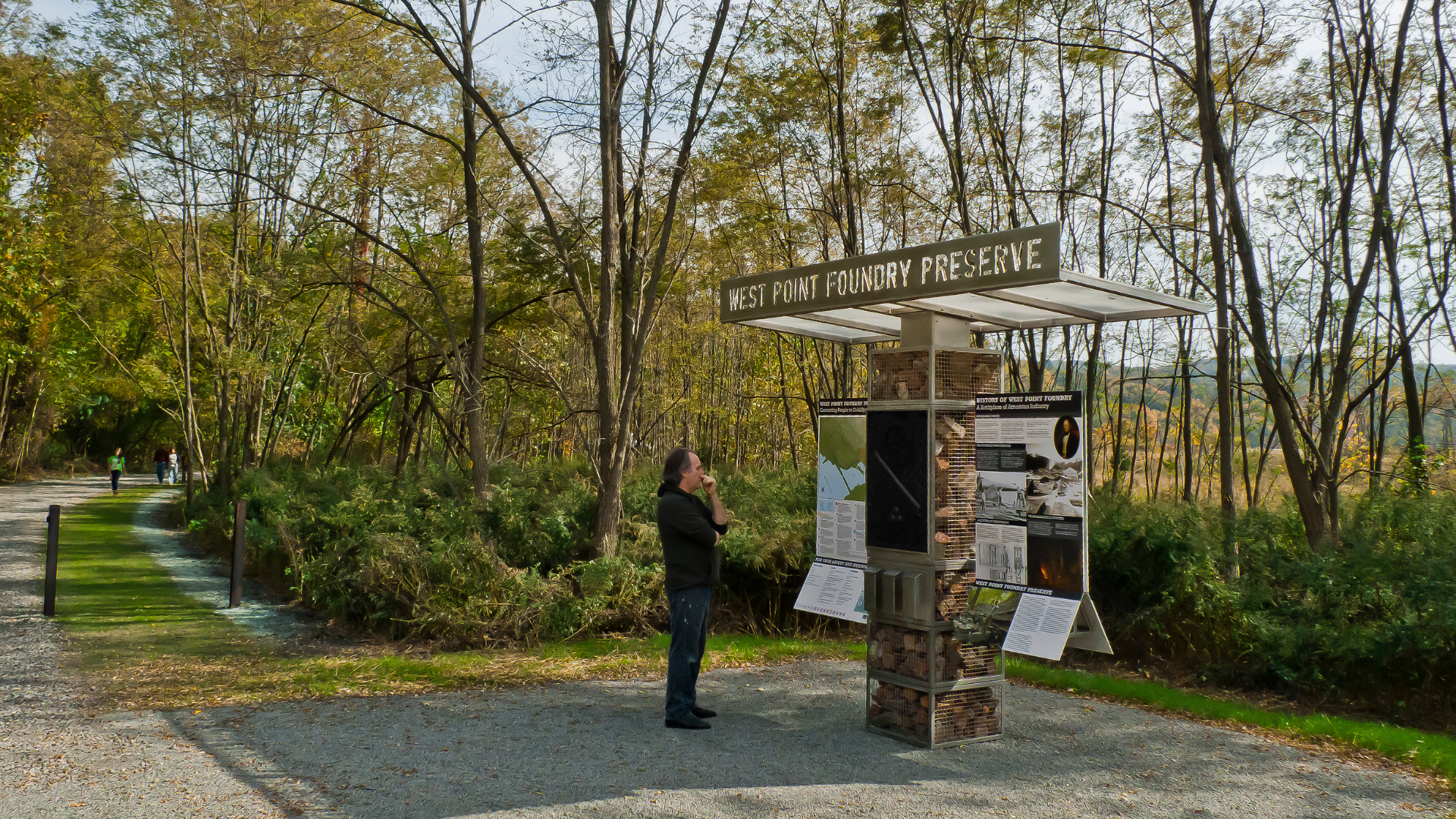
An interpretive landscape experience at the transformed Hudson River site of a foundry that manufactured cannons for the Civil War, as well as a former Superfund reclamation project. A quarter-mile trail follows the vertical process from iron forging to manufacturing to shipment. Interpretive overlays reveal habitat stewardship and the stories of diverse inhabitants. The project is designated as a National Historic Landmark by the National Park Service.
The Preserve has transformed 87 acres of former industrial land into an outdoor museum and heritage destination…utilizing low-impact technologies and abundant materials, such as the former foundry’s bricks…an incredible project.
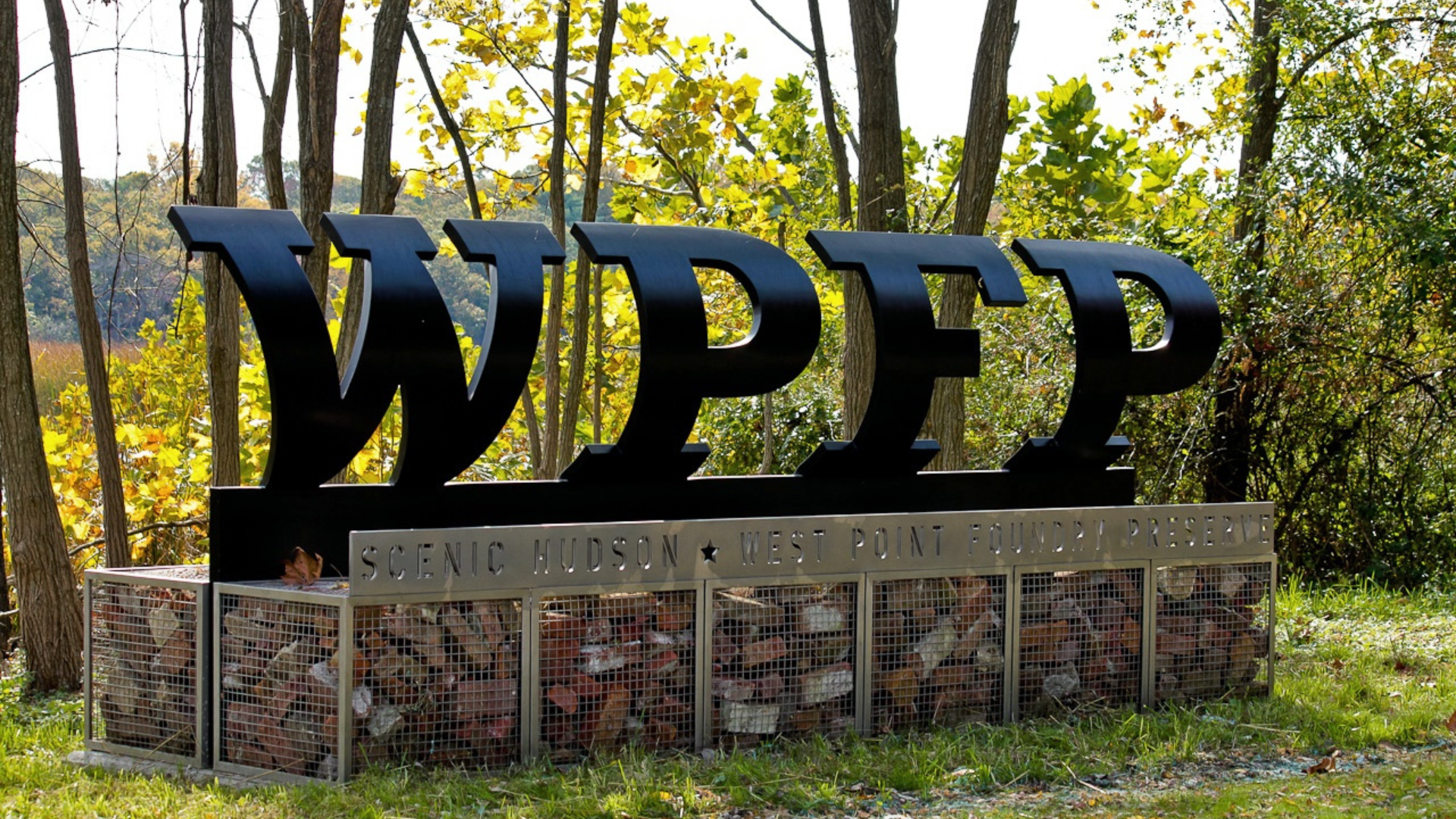
The Preserve’s welcome sign and numerous trailheads feature branding graphics derived from historic Foundry cast-iron stamping, letterheads, and brochures—updated with Preserve iconography. These components are crafted from marine-grade stainless steel, painted cast iron, and grounded by a foundation of reclaimed bricks.
Key Interpretive Features
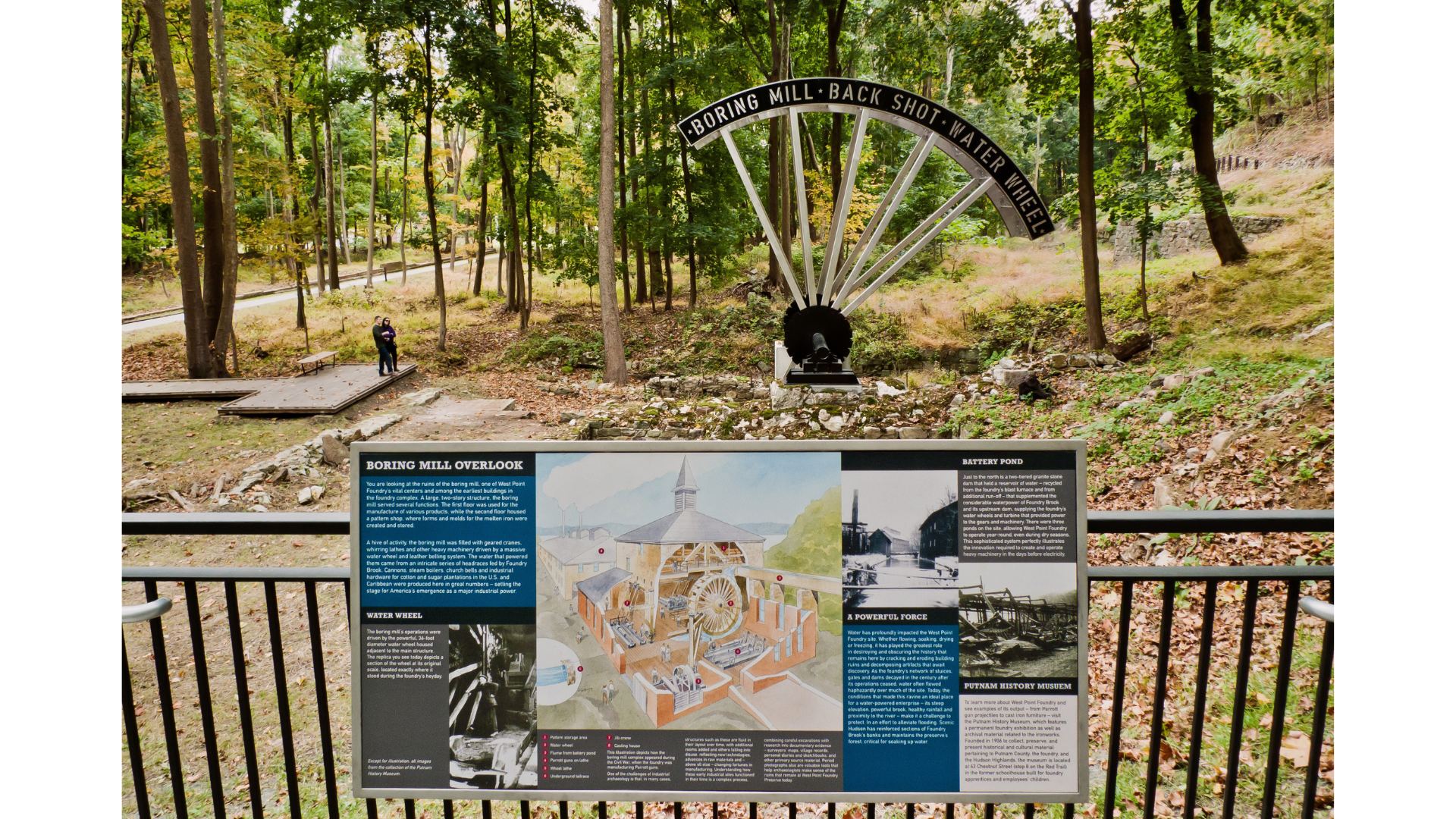
- The Boring Mill: Authentically sited atop the historic waterworks’ foundation using resilient marine-grade stainless steel and powder coating. A nearby stairway overlook features a plein-air watercolor depicting archaeological findings related to the backshot waterwheel’s hydrology.
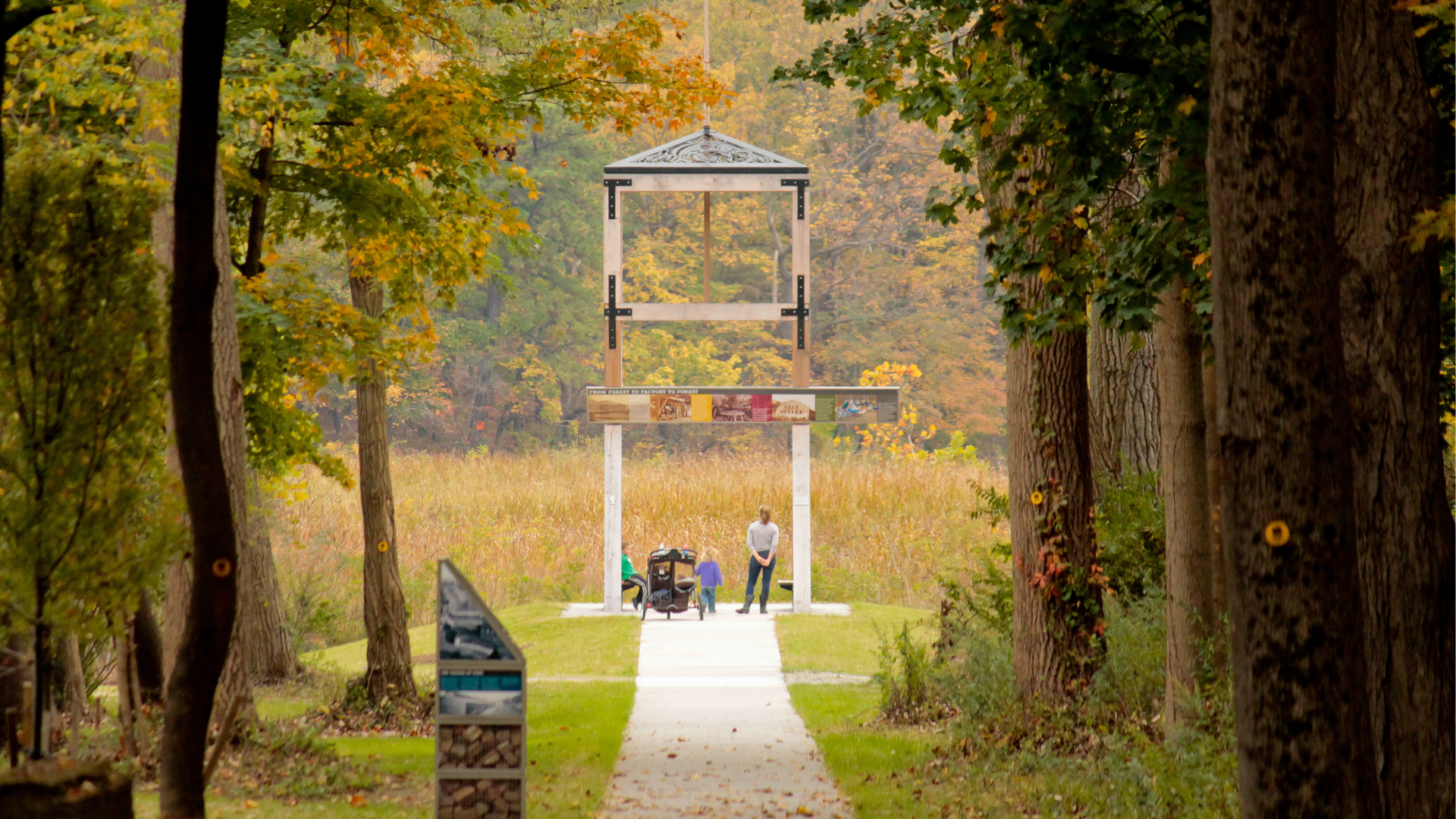
- The Gun Platform: A structure that mimics the historic sighting tower used to calibrate cannons, now adorned with habitat and restoration interpretation. An accurate silhouette of the 300 lb Parrott cannon includes an etched New York Times excerpt from President Lincoln’s visit to the foundry.
Maryland Archaeology Lab’s Seeing the Invisible
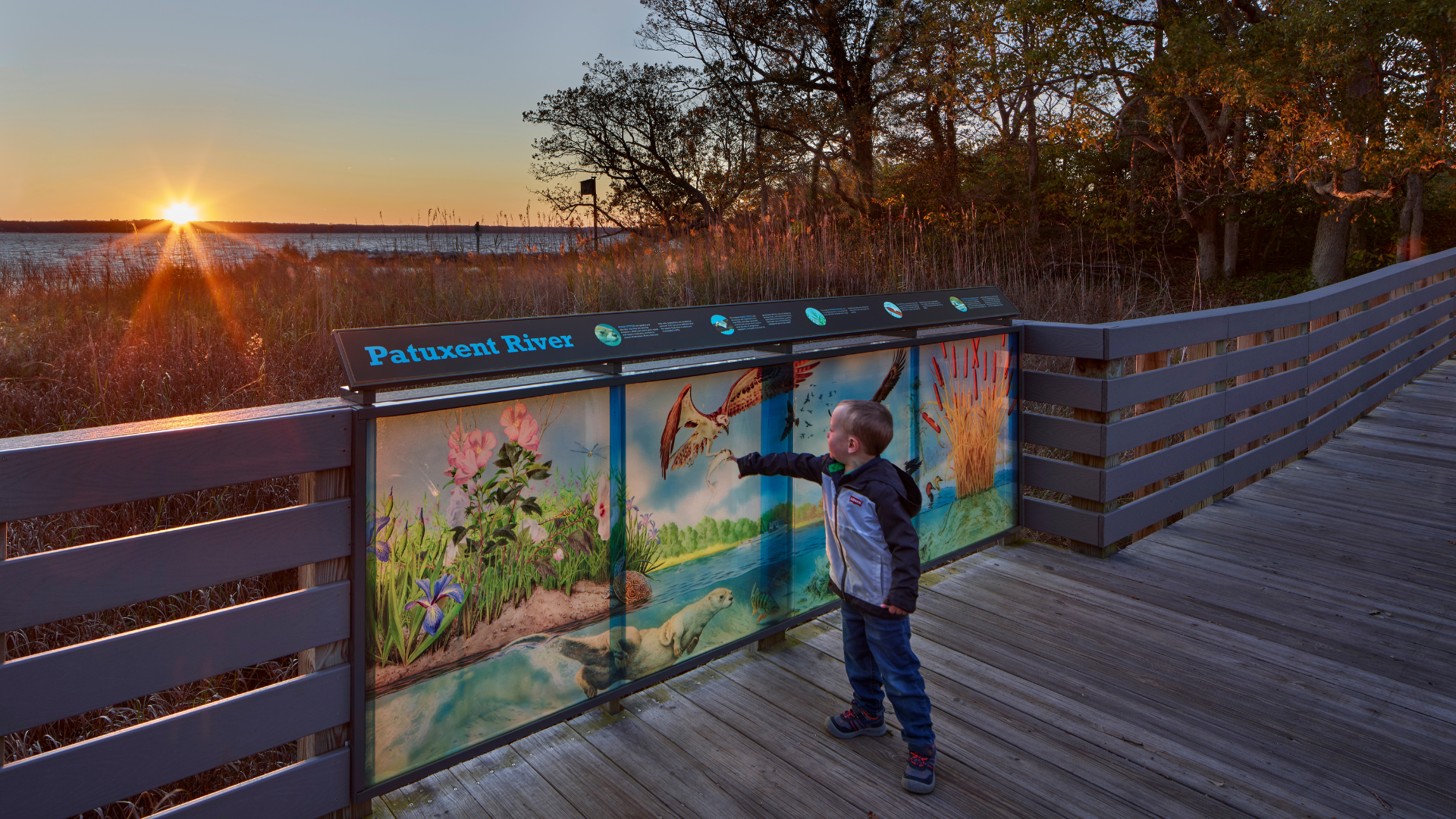
A quarter-mile interpretive trail addressing cession, indenture, and slavery. The “layers of time” experience moves through a re-created Native American village along a boardwalk overlooking the Patuxent River’s habitat, culminating at the Kings Reach installation, which sits authentically atop the ruins of a 1690s plantation.
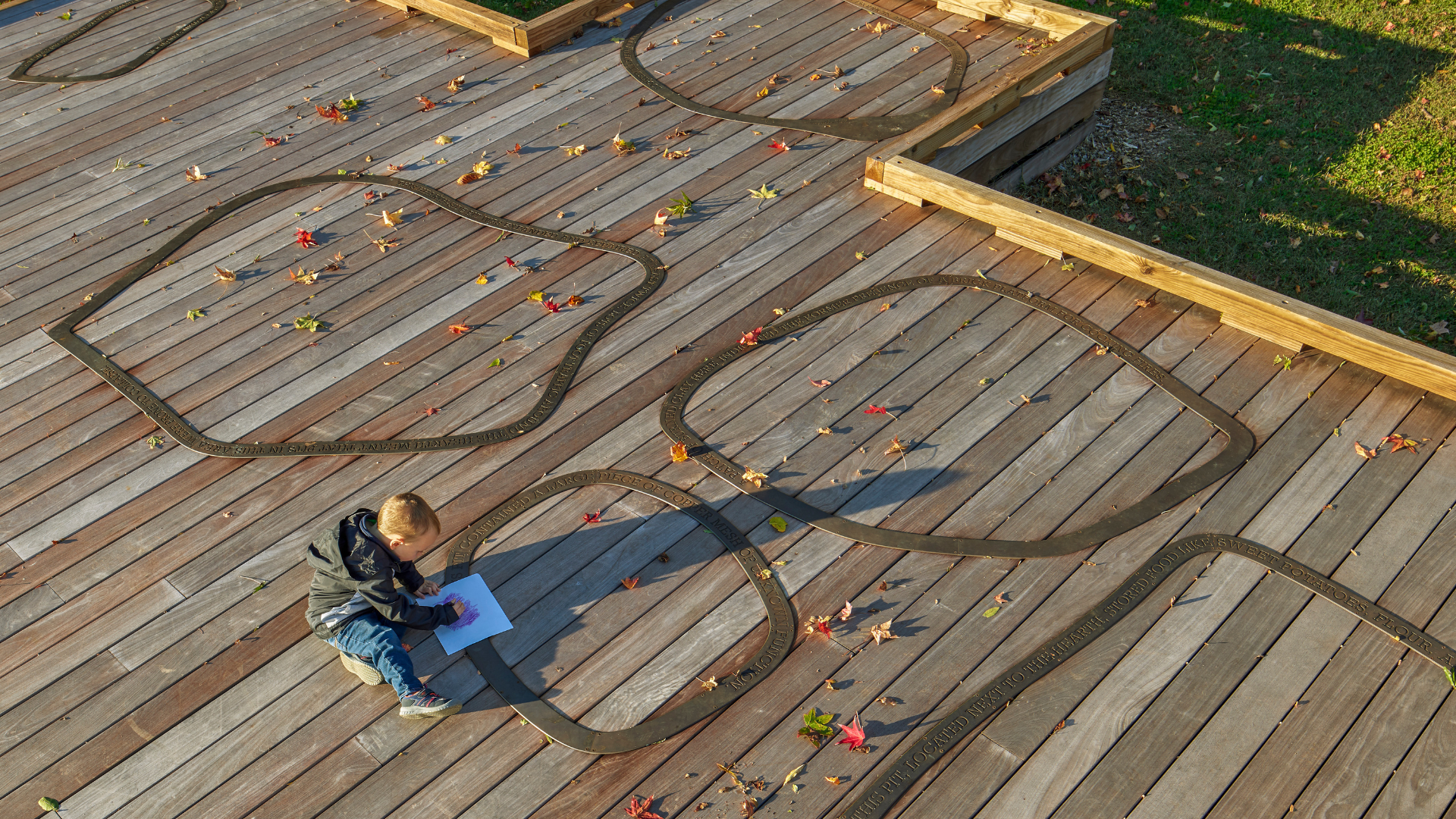
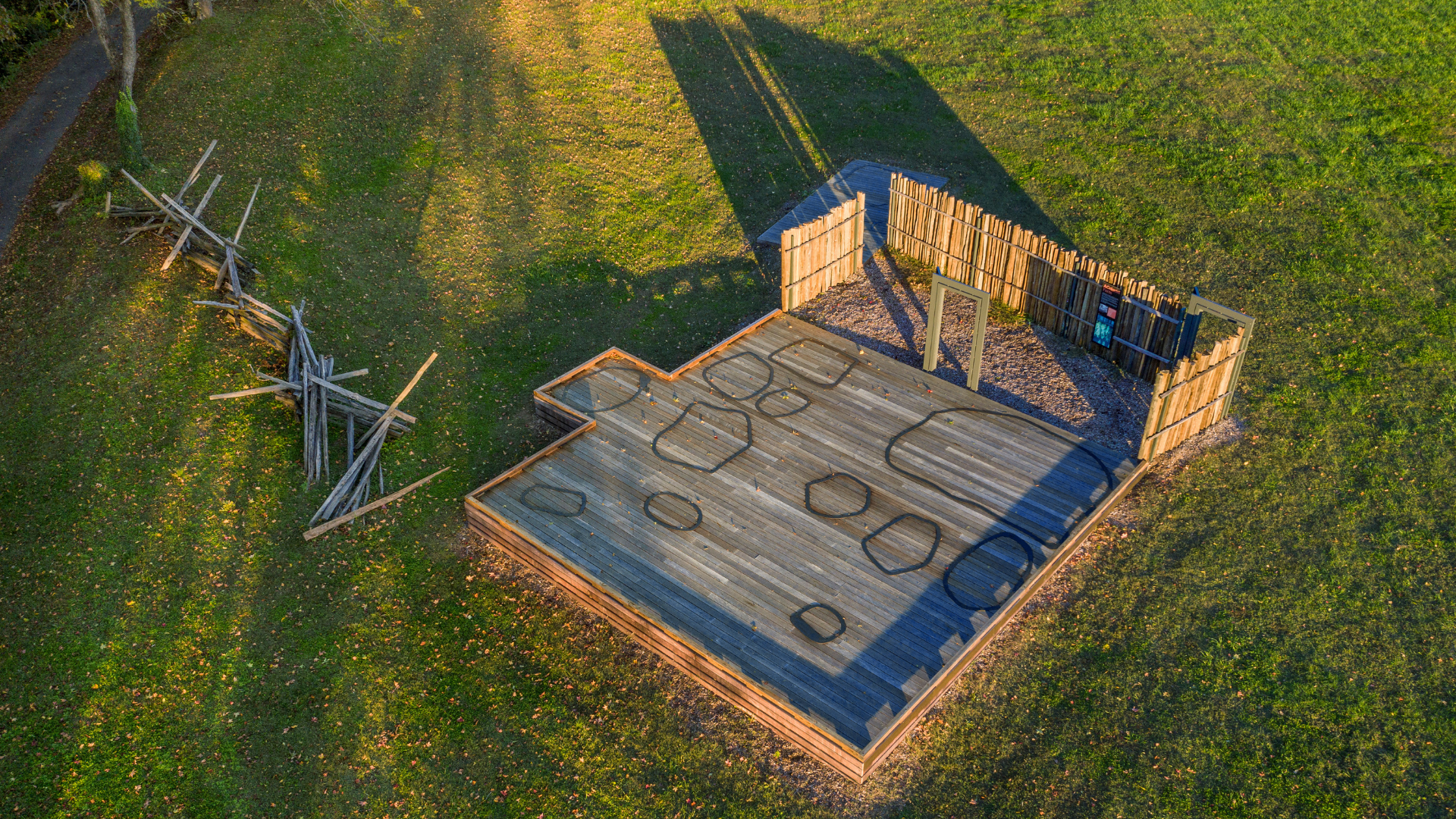
Thirteen underground pit diagrams depicted in the installations’ flooring illustrate archaeologists’ artifact findings, helping visitors understand the site’s Native, African, and Colonial histories. Durable materials—including etched patinated bronze, powder-coated aluminum, and digital graphics embedded in glass and inlaid in teak—ensure the installation will weather for generations.
When you visit, you will be able to learn a lot more about the people and archaeology that took place on that site…the deck has accurate outlines of the underground pits and the plantation’s stockade.
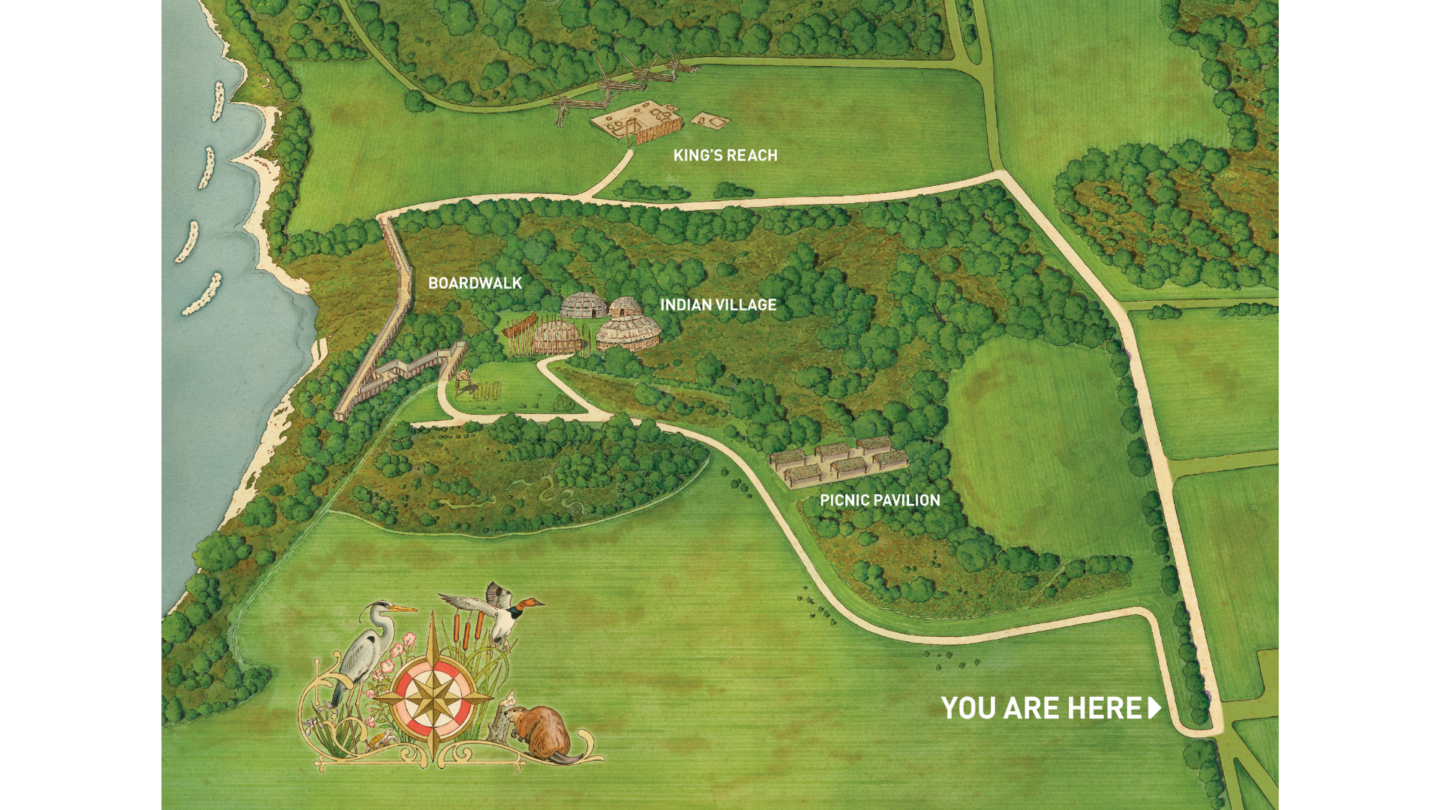
Primary trailhead map introducing the “Seeing the Invisible” experience and orienting visitors to the site’s layered Native, African, and Colonial histories. Design: C&G Partners
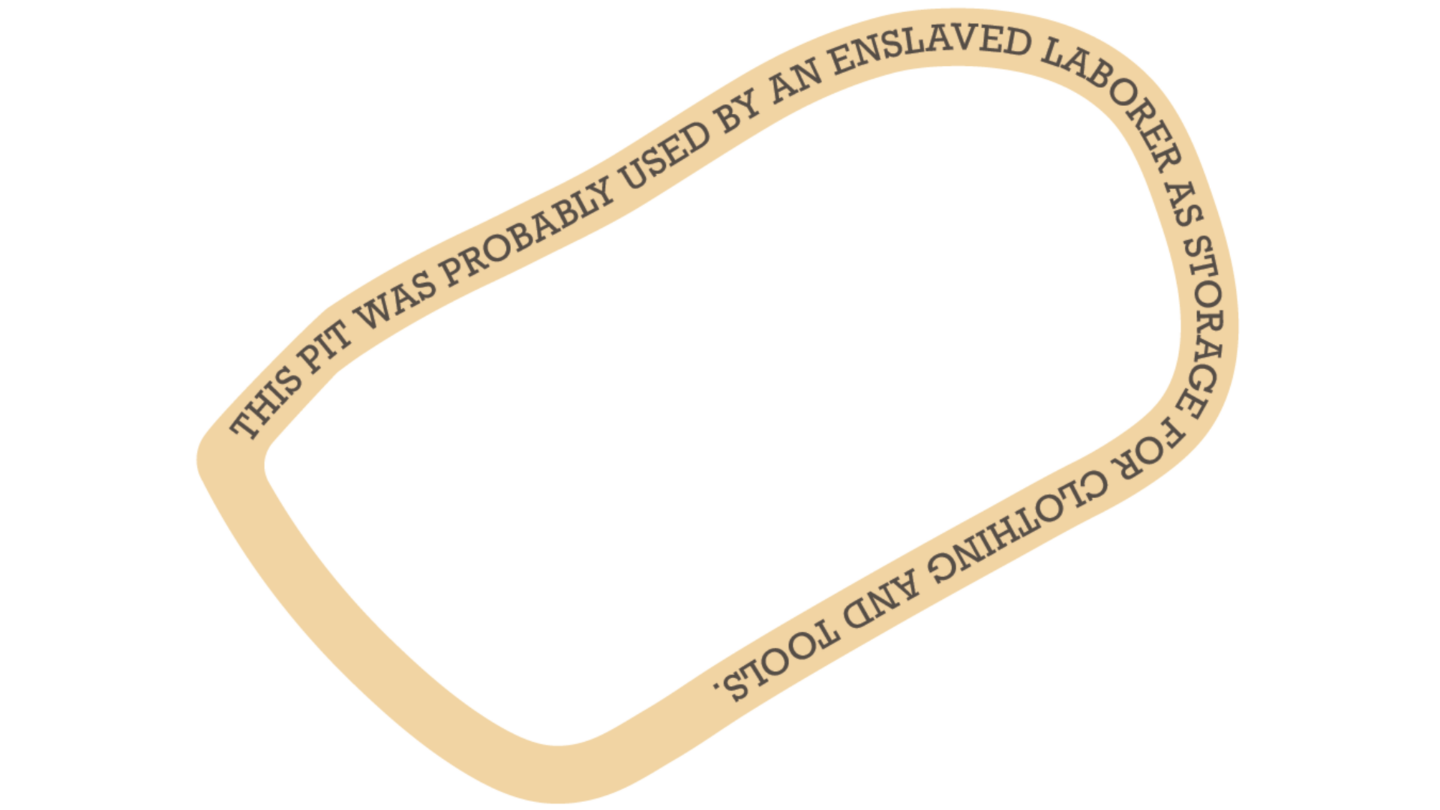
Diagram illustrating the location of underground archaeological pits uncovered at the site and represented within the interpretive experience. Design: C&G Partners
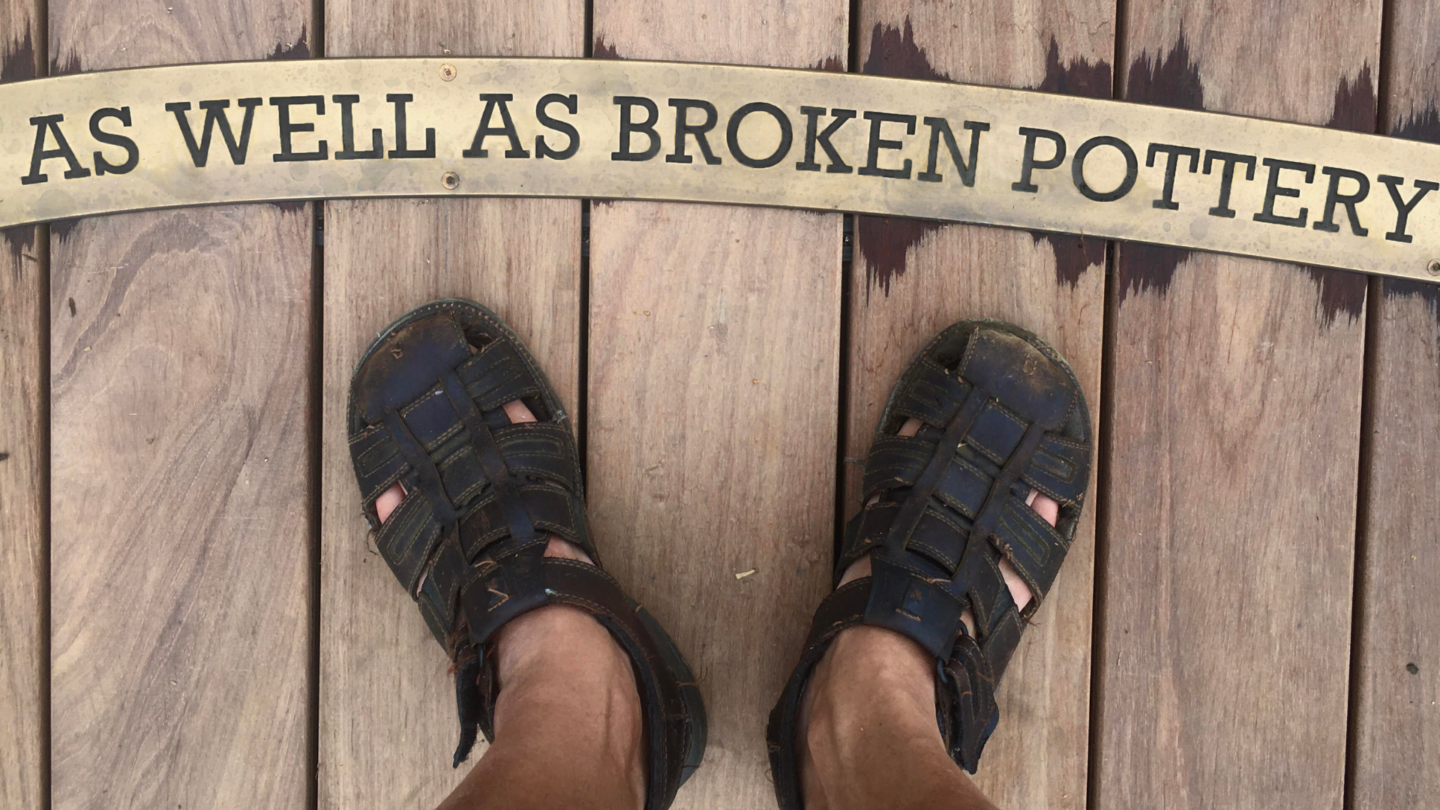
Visitors encounter interpretive text embedded directly into the walking surface, encouraging reflection through embodied engagement. Design: C&G Partners
About Keith Helmetag

Keith Helmetag currently designs exhibits, experiences, media, and installations focused on habitats and inhabitants. He founded—and is Emeritus at—C&G Partners and was formerly a principal at Chermayeff & Geismar. His work addresses world-changing events (the JFK assassination, the Vietnam War, 9/11, and the AIDS epidemic), science (Sanford Underground Research Facility at the Homestake Gold Mine and NOAA’s Rookery Bay Estuarine Research Reserve), gateways (Empire State Trail and Erie Canal Commercial Slip Waterfront), and sports (Yankee Stadium and Major League Baseball headquarters).
Keith was a finalist for the National Design Award, served on SEGD’s Board, chaired and served as a jury member for two competitions, and has received more than twenty awards.
People also viewed
-
BY DESIGN
BY DESIGN
-
The River Runs Through it—Junipero Serra Museum Welcome Center
The River Runs Through it—Junipero Serra Museum Welcome Center
-
DeafSpace Exhibit Design at Gallaudet University’s Maguire Center
DeafSpace Exhibit Design at Gallaudet University’s Maguire Center